
Global monetary reform
 Global Monetary Reform
FUTURE WORLD presents a range of proposals and models which reflect the twin goals of international social justice and sustainability and offer alternatives to those based on economic growth and globalisation.
The Foundation for the Economics of Sustainability (FEASTA) believes that the present world and monetary system is so gravely dysfunctional that it makes the achievement of sustainability impossible. We have three main reasons for this belief:
- The earth is finite, and as all economic growth requires some use of the Earth’s resources, perpetual growth is not compatible with sustainability.
Unfortunately, most of the money used around the world is created on the basis of debt and ceases to exist if that debt is repaid. This means that if the world economy is not to collapse because a lot of the money required to make trading possible has disappeared, it needs to grow continually by enough to ensure that investors can always find attractive opportunities and consequently always borrow more than they repay. In other words, as things stand, the money system is always in direct conflict with social and environmental limits and has to take precedence over them. - National and multinational currencies created by some of the wealthiest countries in the world are used as if they were world currencies.
The countries issuing the pseudo-world currencies gain enormous power and advantages at the expense of the rest of the world. - Individual governments cannot afford to take account of whether the growth required to stop the global system from collapsing is socially or environmentally sustainable because current account money flows are lumped together when the market determines their currencies’ exchange rates.
This gives the owners of mobile capital an excessive amount of power over exchange rates and hence over governments. It also creates instability by allowing speculative financial flows to destabilise the ‘real’ economies of the countries concerned.
The proposals for reforming the world’s financial architecture that we saw in the run up to the World Summit on Sustainable Development only dealt with the symptoms of these problems, rather than their root causes. Accordingly we present our proposals for changes at the Global, National and Sub-National levels in the hope that they will influence the debate. The proposals should be considered as a package. However, the three National and Sub-National level proposals could be adopted by countries in the absence of change at the international level.
Our seven proposals are:
Global
1. A genuine world currency should be established.
2. This new world currency should be issued by being given into circulation rather than lent.
3. The initial distribution of the new currency should be on the basis of population rather than economic power.
4. Over the years, the supply of the new currency should be limited in a way which ensures that the overall volume of world trade is compatible with whatever is considered to be the most crucial area of global sustainability.
National
5. Each country or monetary union should operate two currencies, one for normal commercial exchanges, the other for savings and capital transfers. Each of these currencies would have its own floating exchange rate with the new international currency, and hence a variable exchange rate with the other.
6. The new national exchange currencies would be spent into circulation by their governments rather than being created through the banking system on the basis of debt.
Local
7. The establishment of regional (i.e. sub-national) and local exchange currencies should be encouraged.
The detailed arguments in support of these proposals are not presented here. Brian Davey, author of “Credo – Economic beliefs in a world in crisis” presents a detailed critique of the dysfunctional nature of economics and present global system of wealth creation and distribution. He is also skeptical about the chances of influencing policy-makers to make any meaningful reforms to the present economic system, despite the urgency of the challenges presented by climate change:
“In regard to climate policy (or its absence) the situation has also changed dramatically for the worse because nothing remotely adequate has been done – so that to have a realistic chance of preventing dangerous climate change would now require spectacularly rapid rates of decarbonisation – so fast that I for one think they could occur only in conditions of involuntary economic collapse.
The problem that I have is trying to envisage a situation where a small band of thinkers like those in Feasta have the remotest chance of being heard and our ideas and designs for a better world taken seriously and acted upon. I do think we can do things that make a difference. We can perhaps influence students and young people setting out on their journey in life. In the long term projects that improve the lives of poor people especially can provide a model of a better world and citizens action – but designs for the international monetary order written up for politicians, officials and policy wonks get ignored I fear. The world keeps changing and moving on quickly – and often getting worse.
I see my role as preparing the next generations for the ideas about the limits to growth…and what can be done in small local projects, perhaps networked together”.

A simple water tank in a desert region
A simple water tank in a desert region
 One of the main problems of the Thar Desert Region of southern Pakistan is a lack of a regular water supply. Poor women walk long distances to collect water, which is usually brackish, from deep borewells. Other problems are the shortage of fuelwood and the smoke created by cooking on open fires. The water problem can be alleviated to a large extent by providing families with a 2.4 m deep ‘urn-shaped’ tank below ground level with a capacity of 3,000 litres (nearly 700 gals). These will catch the monsoon rains and usually provide enough drinking water for families during six months of the dry season.
The internal shape of the tank enables it to be constructed using a very thin lining of cement /sand mortar.
How the tanks are constructed:
An urn-shaped hole is hand excavated to a depth of
2.4 m .
The faces of the hole are plastered with cement and water and then lined with a one and a half inch thickness of 1:4 cement/sand mortar.
After 12 hours the hole is filled with sand to enable slow curing. The sand iis then built up above the surface to form a turret.
The turret is plastered with a 75 mm thickness of mortar.
A 75 mm thick slab is formed around the tank to collect monsoon rainwater. (A small hole is made in the turret to channel water into the finished cistern).
The fill material is kept moist for 5 days and then removed
after 7 days.
Tank catchment 21 sq m
Storage capacity 3,000 litres
Costs in 2004:
Materials cost £12
Labour cost £7
Total cost £19
Follow us on Facebook:
www.facebook.com/fiohfund
Follow us on Twitter:
twitter.com/fiohnet
Please share our links with your friends to help us reach a wider audience.
The advantages of cycling
The advantages of cycling
 Why do so many people feel it necessary to acquire cars in the many parts of the affluent world where there are good public transport systems? Even though the public transport networks are good in these regions, they could be so much better were it not for the congestion caused by far too many cars on the road!
For many the car is regarded as a necessity for both social and work demands and they would think that giving up the car would greatly diminish their quality of life. The hope is that the following suggestions will prompt a rethink.
 Whilst poverty and hunger are major causes of ill health for most people in the world, in the rich countries an increasing number of health problems are related to lack of exercise, over eating, drinking excessive alcohol and the over-use of both proscriptive and prescriptive drugs. These are often refered to the ‘diseases of affluence’ but are also even more common amongst the poorer sections of the affluent society and often related to pollution and a poor diet coupled with lack of exercise.
Most people in the West have come to regard the car as a basic necessity. Families without cars are now considered to be poor. Sadly this mentality is now spreading to many so called developing countries, especially in South East Asia, thus making transport a growing cause of respiratory health problems and global warming.
For example air pollution in Beijing has reached a crisis level (2015) .
It is hard to understand this love affair with the car given the stress, health problems, pollution, accidents and congestion it causes. Yes it is often convenient, especially during inclement weather, but do the advantages of car travel outweigh the disadvantages, which include the initial purchase and running costs? Has the car now become an extension of the home, like a new summerhouse, rather than just a means of getting around?
Congestion, pollution, fatal and serious accidents, environmental and aesthetic degradation are reasons enough to abandon cars as a means of transport, but to these must now be added new direct and indirect links car transport has to ill health, especially of children, and global warming.
For a very small number of people the car may be legitimately be regarded as a necessity. However, the purpose of this web site is to urge most people, especially young people, to rethink their attitude towards transport and consider the role cycling has in improving health and reducing pollution and carbon dioxide emissions.
Cycling is good for your health and your pocket and the greater the number of people who give up their cars, or decide not to own one in the first place, the safer will be roads for cycling on and the greater the focus on providing safe routes for cyclists. Also, public transport will become more economically viable and general efficiency will increase for those who must use vehicles for their business activities. Holiday and leisure facilities will become more pleasureable without the environment being spoilt by the presense of large numbers of cars. Traffic congestion will also be reduced.
Cycling is good for your health
Most able bodied people should be able to use a bike for most journeys under 5 miles (Most car journeys are under 5 miles). Among the likely benefits of regular cycling are:
- The chances of getting a heart disease are likely to be cut by a half
- The likelihood of getting strokes, diabetes and some kinds of cancer will be reduced
- Improvement in general health
- Reduces the cost of travel. In the UK alone 72% of all journeys are made by car of which 59% are less than 5 miles in length. These shorter journeys are the most polluting ones and could be very easily shifted to cycling, public transport or walking.
- Bicycles occupy less road space than motor vehicles per person and increase the efficiency of existing roads.
- Bicycles offer door-to-door mobility and you are not constrained by public transport timetables.
- Bicycles can be obtained at reasonable cost, are reliable and economical to operate
- Cycling is a low-cost alternative transport option for people below driving age or without a car, especially in outer metropolitan areas and rural towns.
- Cycling is much faster than walking and, in congested urban areas, is as quick (or quicker) for short journeys as other forms of transport.
- About 16 bicycles can be parked in the space required for one car. Bicycles occupy less road space than motor vehicles per person and increase the efficiency of existing roads, while reducing wear and tear of road surfaces.
- Increased bicycle use by school children would result in savings in school transportation .
- Reduces stress and helps reduce weight. The prevalence of obesity in England has tripled over the last 20 years and continues to rise. Most adults in England are now overweight, and one in five is obese. Nearly two thirds of men and over half of women in England are now overweight or obese. And the problem in the UK is increasing faster than in most other European countries. [ About 40% of older youths were overweight in 2015 ]. One third of the world’s population and are now overweight. One billion people in developed countries are obese. This will significantly increase the incidence of associated diseases, such as coronary heart disease and diabetes. Less than 50% of Americans get any real exercise, and less than 10% get enough.
- Surprisingly a person in a car will breath in more exhaust pollutants than someone riding a bike in the same situation.
- Can increase alertness and reduce tiredness at work.
- Cyclists are a considerable boon to other road users, but do motorists appreciate how little space cyclists take up on the road as opposed to a car?
Cycling can help make you feel good about yourself
Consider for a moment how much better you would feel arriving at the office after an invigorating morning bike ride, rather than a rushed and busy trip through morning traffic. Or how about at the end of your busy work day, letting all of your stress melt away as you take a leisurely ride home on your bicycle, avoiding the even more stressful rush hour traffic? It is likely that your trip home wouldn’t take much more time than traveling by car. Also consider how much time you’ll save by not having to spend so much of it at the health club. You may even decide to save some money and not sign up for membership during your cycling months.
If the money saving aspect is not all that important to you, consider the environmental benefits. Bicycling is very environmentally friendly, and you’d be making a measurable contribution to its preservation. It takes a great deal less of our planet’s resources to build a bicycle than it does to build and maintain a car. Cyclists do not pollute the air with toxic gases or leak dangerous oil and antifreeze into the earth. They also do not contribute to the growing problem of grid lock and noise pollution the UK is facing. And just think how much friendlier people would be to one another if they were all on bicycles. Think of how much less road rage there would be!
Cycling does not require so much exertion as jogging and can be carried on well into old age.
This may be too obvious to mention, but cycling will save you a lot of money. The savings from swapping the car, bus or train for a bicycle are considerable.
Cycling can increase efficiency and profits for employers
Employers should consider the benefits they can gain by promoting bicycling, too. Employees over-all health improves, the number of sick days that your company pays for are likely to decline (and if your employees do get sick, they’ll recover faster). Medical costs decrease, your employees feel better (physically and emotionally), and they’ll be more effective and happier at their jobs.
Obesity accounts for about 18 million days of sickness absence each year and 30,000 premature deaths. On average, each person whose death could be attributed to obesity lost nine years of life. Treating obesity costs the NHS at least 4 billion a year (2011). The total cost to the UK economy is estimated at £47 bil per year. Two bil people in the world are overweight and this is likely to increase to a half by 2030.
Problems for cyclists
For some people the decision to abandon the car in favour of a bike requires some courage. Probably the greatest disincentive to cycling is fear of accidents caused by motorised traffic. Lack of consideration and yobbish behaviour on the part some people travelling by car towards cyclists can also be a problem. However, it must also be said that the behaviour of some cyclists (like night riding without lights and inconsiderate behaviour towards pedestrians) can give cyclists a bad name.
There would appear to be a stong case for promoting the use of the bicycle as the primary means of transport for most journeys made across the world and provide more safe cycling routes in urban areas.
 If you have ever struggled from a supermarket or city centre with a heavy load of groceries on each arm you might consider how much easier it might have been to carry the same load on a bike. The picture on the left shows just how many items can be carried with ease on a bicycle – which can be wheeled around with you as you move from one shop to another.
If you think that using a bike for shopping might be time-consuming, then stop to consider the number of times you spent half an hour or more looking for a parking space and then several minutes to find the ticket machine and take the ticket back to your car.
With increasing concerns about global warming and the growing numbers of people with diseases related to obesity and lack of exercise, does it not make sense to use a bicycle for getting around whenever possible?
Waste and energy
Energy saving and waste reduction
 Although the following suggestions relate to the UK, the general principles behind them can be applied anywhere in developed countries.
Many quite simple actions can result in considerable savings. Penney Poyzer, in her book ‘No Waste Like Home’, suggests that the average family in the UK wastes £430 worth of food every year. Another £200 is spent on wasted energy.
This amounts to a staggering £9 bil that Britons waste on the unnecessary use of energy and good food thrown away every year.
Sadly this waste increases economic growth, but who pays the price!!
These are not the only causes of waste in the home. If all the possible savings are added up for the average family, these could amount to as much as £4,000 each year – £60 bil for the UK as a whole. On average people throw away 7 times their own body weight each year.
All of this waste does of course add to global warming. In 50 years time, as a result of rising temperatures, UN scientists estimate that there will be 10,000 more cases of food poisoning, 5,000 more deaths from skin cancer and 2,000 more cataract operations each year in Britain. Note that this is in addition to the fears that many scientists predict about the effects of global warming which include the possibility of an ice age developing in northern Europe as a result of the Gulf Stream being effectively ‘cut-off’ – an outcome of melting ice in the Arctic.
When we look at some basic statistics, the role we can play in reducing waste and helping the environment can seem obvious. All we need is the will to make the necessary response. Each year in Britain:
- 17 bil plastic carrier bags were given away by supermarkets (290 bags for every person). In December 2015 the government brought in legislation that requires a charge to be made when plastic bags are issued. This is likely to reduce this wasted dramatically.
- 400,000 tonnes of disposable nappies were used (8 mil nappies are thrown away every day).
- the average family throws away 208 Kg of paper
- only 17% of waste is recycled and waste is increasing at the rate of 3% each year
- £5 bil worth of energy is wasted (Note that within the next 20 years Britain is expected to be importing 80% of gas)
- £1.2 bil is spent on running fridges and freezers
- the health impact of traffic pollution amounts to £11 bil (85 % of households in rural areas have at least one car – 70% in urban areas)
The cost of managing household waste is £1.6 bil and this is expected to rise to £3.2 bil by 2020. Of the 7,000 incinerators, 12 burn municipal waste.
20% of what comes through the letterbox is never opened and 60% is never read.
What can be done?
Here are some suggestions:
- Switch to an energy supplier such as Good Energy which supplies 100% renewable energy from sun, wind and rain. It sources from independent generators across the country and it has its own wind farms at Delabole, North Cornwall and Hampole near Doncaster. It also has solar farms at Creathorne Farm near Poundstock, North Cornwall, Crossroads in Dorset and Rook Wood in Wiltshire. It supplies to 55,000 electricity customers and 28,000 gas customers and supports over 93,500 homes, businesses and communities generating their own electricity. Good Energy also operates the feed- in tariff scheme for those with installed solar panels.
More information about energy-saving. - Replace all light bulbs with energy efficient bulbs
- Switch off computers and television when not in use instead of leaving on stand-by.
- Put an insulation jacket around the hot water tank and lagging around hot water pipes.
- Install 250 mm thickness of loft insulation between ceiling joists.
- Install cavity wall insulation.
- Lay fitted carpets over floor boards.
- Replace single glazed windows with double glazing. For windows with wooden frames a relatively cheap way of doing this is to use double glazing units rather than go to the cost of replacing the glass and the frames.
- Eliminate draughts around window frames and doors.
- Turn the thermostat down 1deg C. This could save 10% of the cost of running the central heating.
- Remove furniture away from radiators and place aluminium foil behind the radiators.
- Use a gravity shower connection connected to the bath taps instead of a power shower. Limit your shower to 5 minutes.
- Use heavy curtains with a thermal lining.
- Use a ‘green’ electricity supplier who sources electricity from renewable energy.
- Use energy efficient appliances (A to G rating) – ‘A’ rating is the most efficient. Look out for the blue and orange logo.
- Use a ‘Sava Plug’ to connect fridges and freezers (350 watt max) to siocket outlets. Make sure there is proper seal around the doors and defrost when ice builds up.
- Using a 40 deg C wash rather than 60 deg C will save a third of the amount of electricity used by a washing machine.
- Put lids on cooking pans.
- Run the water from shed roofs into water butts and use for watering the garden.
- Get a plumber to stop all drips from taps and overflows. If you are on a meter you may be surprised at the increase in your water bill if you don’t.
- Install a two-flush toilet cistern. 35% of water is used flushing the toilet and this simple action will reduce the amount of water used in each flush by about a third.
- Take a shower instead of a bath but limit it to 5 mins.
- Wait until you have a large load before washing clothes. This will also save electricity.
- Use re-usable terry nappies instead of disposable ones.
- Put disposable nappies, tampons, sanitary towels, cotton buds, condoms and cigarettes in the bin, not the toilet, otherwise these may cause blockages in the sewerage system.
- Recycle all tins, bottles, paper and clothes.
- Compost most uncooked kitchen and garden waste but dont include cat litter, dog faeces, disposable nappies, diseased plants, meat. fish and cooked food. Try and get a balance of organic material and fibrous material like straw, wood shavings, dried leaves and shredded twigs.
- Buy vegetables loose and not pre- packed. If you can, avoid shopping at supermarkets.
- Use reclaimed timber where possible. This might be superior in some ways for outdoor uses and will usually be cheaper than the equivalent bought at a timber merchants or DIY store.
- If you possibly can, do not have a car or large motorcycle of your own for transport, but instead walk or use a bicycle and public transport.
- If you do own a car then keep it regularly serviced. Keep tyres properly inflated at the correct pressure (under-inflated tyres acn increase fuel use by about 8%). Driving at 50 mph instead of 70 mph is likley tol use 25% less fuel.
- Take your holidays close to home and avoid long distance travel by air.
Energy saving and carbon reduction
Energy saving and carbon reduction

Solar PV panels
Most energy is derived from fossil fuels and hence any personal savings in the use of energy will reduce carbon emmissions.
Two methods of representing proportional household emissions in the UK are shown in the following charts:

The figures shown are for 2006 when the average per capita emmission was 11.6 tonnes, half of which was from direct personal emmissions – air travel 34%; household heating 26%; car use 19%; Household electricity 16%; other transport use 5%.
Emmisssions outside the household but related to househjold activities – Manufacturing and construction 40%; personal travel 29%; housing 20%; services 6%; food 5%.
The figures show that 5 tonnes (out of the total of 11.6) are caused by travel and 2.3 tonnes by manufacturing and construction.
Household electricity accounts for about 0.9 tonne and household heating 1.5 tonnes. Hence the greatest reductions are to be made from reducing travel. The impact of international air flights can be determined from the CHOOSE CLIMATE CALCULATOR .

Return flight from London to Douala (Cameroon) – 4995 km
The diagram on the left shows the results from the calculator for a return flight from London to Douala (Cameroon) – a distance of 4,995 km. Note that this resulted in a per capita emission of approximately 3.5 tonnes.
Greenhouse gas emissions from aircraft flying in and out of Britain in 2030 are estimated to then contribute nearly half the UK total. Aircraft from UK airports alone emitted 9.8 million tonnes of carbon in 2005 – equivalent to 36 million tonnes of carbon dioxide.
What level of emissions should we be aiming for? Dr Hillman, Senior Fellow Emeritas at the Policy Studies Institute (2010) suggests levels shown in the following table (note that the target for 2005 was not achieved) :

An idea of household and individual annual carbon emissions can also be obtained by measuring gas and energy use in Kw hrs, heating oil in litres and transport in Km then using the following chart:
 Do not include miles travelled as a passenger in a car
Another assessment can be made with this CARBON CALCULATOR
Further information can be obtained from the National Energy Foundation
Anyone considering solar heating might find the following links useful:
There is also information on ENERGY EFFICIENT HOMES and CARBON FOOTPRINTING on the National Energy Foundation web site.
Ethical investment

Ethical investment
An increasing number of individuals are concerned that the money they invest is not used to support governments and organisations:
- that do not uphold basic human rights
- that produce indiscriminate weapons or weapons sent to oppressive regimes or torture equipment
- that advocate discrimination and incitement to hatred
- that take an irresponsible approach to the payment of tax
- whose core business focuses on irresponsible gambling
- whose core business is the provision of payday loans
- whose core activity contributes to climate change via the extraction of fossil fuels and certain biofuels
- that manufacture of chemicals that are persistent in the environment, bio-accumulative in nature or linked to long-term health concerns
- that harvest natural resources, including fish and timber, unsustainably
- that develop genetically modified organisms where there is evidence of uncontrolled release into the environment, negative impacts on developing countries or patenting e.g. of indigenous knowledge
- that develop nanotechnology in circumstances that risk damaging the environment or compromising human health
- that fail to implement basic labout rights and the rights of workers to freedom of association e.g. in a trade union
- that impede acces to safe drinking water or vital medicines
- that engage in irresponsible marketing practices e.g. with regard to tobacco products and manufacture.
These are a summary of some of the commitments in the Ethical Policy of the UK Co-operative Bank developed after concerns following the near collapse of the bank due to financial mismanagement and its ownership by mainly US hedge funds. This showed a commitment to the pre-crisis policy. The Co-operative Group now owns only 20% of the bank.
The bank also states that it will seek to support businesses involved in developing alternatives to animal experimentation and farming methods that promote animal welfare. There are also commitments to support projects which protect the environment and international development and social development in the UK. The complete policy can be seen here:
coop-bank-ethical-policy
Many may feel that these commitments do not go far enough, but at least they can form the basis for assessment of the bank’s ethical performance in the future. Also, the Co-operative Bank as of 2015 is the only high street bank with a clearly articulated ethical policy.
However, the Bank is ranked only 24th for its ethical performance in the Ethical Consumer
Top ten ranking:
- Ecology Building Society
- Charity Bank
- Triodos Bank
- Cumberland Building Society
- Principality Building Society
- Coventry Building Society
- Leeds Building Society
- Newcastle Building Society
- Metrobank
- West Bromwich Building Society
The Triodos Bank has a high rating but potential customers should be aware of its links to the ideas of Rudolf Steiner and his occult religion/movement he named anthroposophy . In its Articles of Association it states “Triodos Bank is – at its sole discretion – associated with anthroposophy, this being the humanities science initiated by Rudolf Steiner that accordingly forms an important basis for the work of Triodos Bank”.
The bank supports Waldorf/Steiner schools, biodynamic farming and Camphill communities and has links to a biodynamic organisation
The FIOH Fund uses the Co-operative Bank and the Ecology Building Society
Community tree planting in Oku, NW Region

Nursery Development for Environmental Education and Forest Regeneration at the Emfve-Mii Community Forest
In 2014 the FIOH Fund provided grants of £500 each for community tree planting to two non-government organisations with offices based in Oku on the edge of Kilum Ijim natural forest, in the NW Region of Cameroon:
- Cameroon Gender and Environment Watch (CAMGEW) and
- Future in Our Hands Womens Co-operative, Oku
This report which was prepared by Wirsiy Emmanuel Binyuy (CAMGEW Director) and Ngum Jai Raymond (CAMGEW Project Officer) describes the project undertaken by CAMGEW.
ABBREVIATIONS AND ACRONYMES:
CAMGEW: Cameroon Gender and Environment Watch
FMI: Forest Management Institution
MINFOF: Ministry of Forestry and Wildlife
OCR: Oku Community Radio
FIOH: Future In Our Hands
Acknowledgment
CAMGEW is grateful to Future In Our Hands (FIOH) for the financial assistance. This assistance was used to develop a tree nursery at Manchok-Oku. CAMGEW is thankful to the Ministry of Forestry and Wildlife (MINFOF) for Oku for technical assistance in forest regeneration process. The participation of community members, youths, and forest stakeholders in nursery development and tree planting was also highly appreciated.
Introduction
CAMGEW is a non profit organisation created in October 2007 with authorisation number N° 000998/RDA/JO6/BAPP to work locally and think globally, integrating gender issues in solving environmental and social problems in Cameroon. CAMGEW believes that the future of our mother planet-earth is in our hands (men and women, young and old) and also that the planet can be sustained by putting social and environmental justice at the centre of development using a participatory approach. CAMGEW seeks to achieve her objectives by liaising with other likeminded organisations worldwide. She has resolved to function according to core values of honesty, engagement and dedication in total respect of its constitution. CAMGEW has as vision “Changing lives of women, children and communities while protecting the environment and as mission to fight poverty; promote sound environmental management, gender balance and economic sustainable development.
Presentaion of the project area
Emfve-mii Community forest is part of the Oku forest and Oku is found in Bui Division of the North West Region of Cameroon. The population is English speaking. Oku has the largest remaining portion of Bamenda Highland Montane Forest with a large crater lake called Lake Oku at altitude around 2500m. The Oku Community Forest is the first community forest in Cameroon. The forest has a unique ecosystem and is the largest remaining habitat for Bannermans turaco-a red feathered bird that is only found in the Bamenda Highland Region and is classified by IUCN Red list as endangered. Kilum Mountain with altitude 3011 meters is the second highest mountain in Cameroon, central and West Africa after Mount Cameroon. Honey from Oku Forest is white in colour and is commonly called Oku White Honey. It is cherished nationally. It is certified as a Geographical Indication Product.
Oku has a rich culture. Carving is highly practiced in Oku. Oku is a tourist destination. Oku has a population estimated at about 130,000 inhabitants. It has a total surface area of about 800 km2 of which 300km2 are covered by the forest. This gives the locality a population density of about 162 persons per km2.
The Kilum Mountain Forest is rich in non-timber forest products such as herbs for medicine, rodents, wood for carving, bamboo which is used locally for construction and the Oku honey with its peculiarity of being white in color.
Presentation of the project
CAMGEW received a grant from FIOH in 2014 of 611,753 FCFA for nursery development and environmental education. CAMGEW supported this project by planting the nursed trees in the Emfve-mii community forest with the community and young people. The nursery was developed at Manchok –Oku. CAMGEW developed a tree nursery with 2000 trees of different varieties. The nursery was used for environmental education with community members and youths. CAMGEW had to label the trees with local names, scientific names and the use of the tree for easy learning.
CAMGEW in this project helped the community members know the importance of each tree in honey production; promoting bird and other animal diversity; watershed protection; and medicinal properties and uses. The nursery was set with the participation of community members and seeds collected with them.
This project had to bring together traditional authority, administrative authority, groups of forest users (bee farmers, firewood fetchers, hunters, etc) and community members to work for the conservation of their forest. Tree planting was done with different tree species to promote a bio-diverse forest with a variety of trees.
Forest regeneration activities
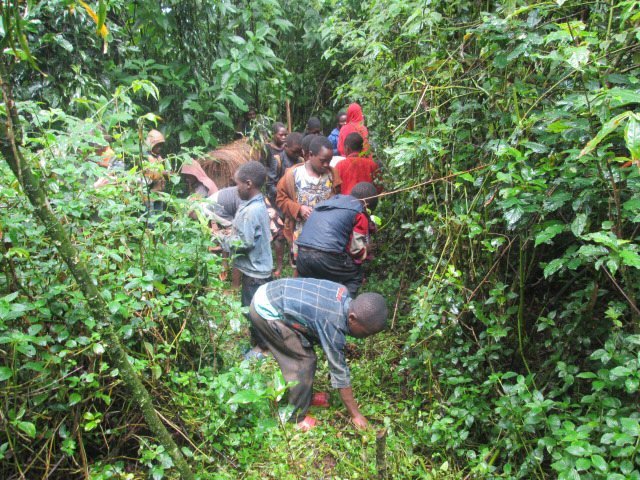 Forest regeneration is an important activity with a global interest.
CAMGEW started this project with nursery development. The nursery fence was constructed and trees nursed. The types of trees nursed were Prunus africana, Carapas grandifolia, Pittosporum mannii, Zyzigium staudtii, Croton macrostachyst, Maesa lanceolata, Schefflera abyssinica, Bridelia speciosa, Psychotria penducularis, Solanecio mannii, Polysias fulva and Psydrax dunlapii. CAMGEW has more than 60,000 trees in this nursery and 2000 trees were nursed for FIOH-UK. These trees play vital role in watershed protection, promotion of biodiversity, sustaining livelihoods, promotion of apiculture and fighting climate change. The trees were shaded, weeded from too much sun and watered during the dry season. Weeding was a continuous activity to reduce weed competition for nutrients with nursed trees. Two types of nurseries were developed- bare root nursery and nursing of seeds in polythene pots.
Environmental education
 CAMGEW used the nursery for environmental education for children, youths and adults. The community learned about nursery development and importance of each tree to man and nature. CAMGEW labeled the trees with local names, scientific names and the use of the tree to man and nature for easy learning. CAMGEW carried out forest education with children inside the forest too.
Tree planting
 CAMGEW from 29th of May to 27th July 2015 carried out tree planting in the forest, tree maintenance, and field base environment lessons where children learn-by-practicing in tree planting. On the 29th May 2015 CAMGEW had a forest regeneration planning meeting with forest stakeholders. During the tree planting exercise children learned how to transport trees to the forest, dig holes and plant the trees. The children took part in site selection for forest regeneration. They considered areas with no trees for regeneration by planting trees of different types in one area. There were some community members with experience who joined CAMGEW to guide young people in the exercise. We were happy to have teachers of schools participate in the activity and this assured the transfer of this knowledge to classrooms by making practical learning feature in their lessons. In May 2015, community members cleared the area where trees were planted and in June 2015 they planted 1,500 trees for FIOH project as CAMGEW’s contribution in the forest regeneration process. 500 trees were planted by children.
Selection of trees for planting in the forest
On the 14th and 16th August 2015 CAMGEW organised field based environmental education with children and youths in the forest.
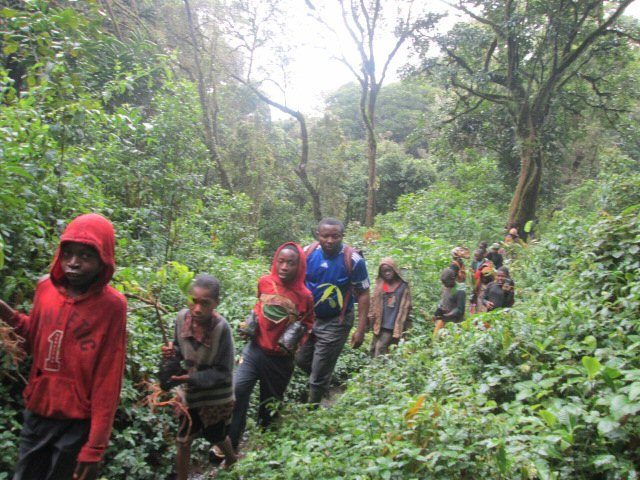 On 14th August 2015, 210 students with 11 teachers that gave the children holiday lessons joined CAMGEW in the nursery to learn about forest regeneration. The students and their teachers carried 300 nursed trees from the CAMGEW nursery to the forest for planting. These trees included Prunus africana, Carapas grandifolia, Pittosporum mannii, Zyzigium staudtii, Croton macrostachyst, Maesa lanceolata, Schefflera abyssinica, Bridelia speciosa, Psychotria penducularis, Solanecio mannii, Polysias fulva and Psydrax dunlapii. They learned about the importance of these trees to man and nature. They had forest education, dug holes and planted the trees. It was great joy for many as they were planting their first tree in life. Some had not been to the forest before. They called on CAMGEW to make this a regular long vacation (holiday) event.
On the 16th of August 2015, 20 other children joined CAMGEW with their parents and planted 200 trees of different types. They carried trees to the forest and planted together with CAMGEW. All these young people learned about forest problems like bush fires, the presence of goats in the forest, unsustainable bee farming that cause bush fires, over trapping of rats and the cutting of fresh wood for firewood by community members. The young people were asked to propose solutions to these problems and make resolutions on a personal basis to keep the forest live. They also helped CAMGEW to collect seeds of trees from the forest to nurse in the CAMGEW nursery. These seeds went to replace the seedlings taken to plant in the forest.
Tree planting with young people in the forest
The clearing of the forest was part of IUCN-France project to keep trees earlier planted clean but the replacement of dead trees in World Bank Project site was done with trees from FIOH-UK. The planting of 1,500 trees was done on a voluntary basis by CAMGEW and community. Trees planted in 2013 with government funds were still maintained and dead ones replaced with government funds in 2014. 5,000 trees were planted in the Emfve-mii forest in 2015 with funds from Cameroon government, FIOH-UK, CAMGEW, IUCN-France and forest users.
Seed collection from the Kilum forest for nursery development
Wirsiy Emmanuel B. coordinated the activity. Ngum Raymond was field supervisor and community leader was Berinyuy Sebastian.
Monitoring of planted trees
CAMGEW has made monitoring of planted trees in the forest a regular activity. Monitoring of these trees is done on a daily basis by forest users like bee farmers, hunters and firewood fetchers who updated us on the state of the forest and planted trees. CAMGEW makes regular patrols and monitoring too on a weekly basis.
Challenges
- The greatest challenge in the regeneration of the Oku forest is the presence of animals in the forest (goats). These animals kept by community members in the forest have been destroying planted trees and other seedlings that are regenerating naturally.
- Land close to the forest is used by community members for farming. They do slash-and-burn to prepare the farm for cultivation. This exposes the forest to bush fires. There will be a need for continuous monitoring of the regenerated area and the whole forest.
- There is the cutting of fresh wood for firewood or for fencing of farms and gardens by forest users. This has disturbed the regeneration process as it is a threat to the fate of planted trees by CAMGEW
Successes
- This project has ended with CAMGEW owning a solid fenced nursery that will be continuously used for forest regeneration. This nursery has a capacity of 100,000 trees. CAMGEW has nursed over 60,000 trees of different species like Prunus africana, Carapas grandifolia, Pittosporum mannii, Zyzigium staudtii, Croton macrostachyst, Maesa lanceolata, Schefflera abyssinica, Bridelia speciosa, Psychotria penducularis, Solanecio mannii, Polysias fulva and Psydrax dunlapii.
- CAMGEW used a participatory approach in tree planting and has seen an increase in community solidarity. Community members after participating in tree planting have understood the importance of the Oku forest and the need to protect it. Youths’ participation in tree planting increased their understanding of the forest and need to protect it. CAMGEW by involving youths in tree planting instils love for nature in youths.
- Through sensitization in the Community Radio, many people have changed their negative attitude towards the forest. People have removed goats from some parts in the forest. Community members, especially those who took part in the regeneration process, are now patrollers (volunteers) monitoring the trees that they planted with CAMGEW’s supervision.
Conclusion
Forest education has been a success in the Oku Community Forest in 2015. CAMGEW succeeded in planting 2,000 trees in the forest under FIOH-UK funding. Children and youths learned-by-doing in planting trees. This activity gave CAMGEW the opportunity to carryout field-based environmental education on sustainable forest management and use. The Oku community Radio was used to reach out to the population on the need to protect the forest. C AMGEW hopes to make the tree planting event an annual activity.
The Oku forest is a large forest. The forest is over exploited and needs to be regenerated. This Forest is important not only for its endemism but also for water catchment, food, medicine and for the livelihoods of community members living around the forest. We must protect it.
Recommendations
- CAMGEW sees the importance for field based environmental education with forest users, women, farmers, youths and children of school age to be regular activity. Environmental education with schools in and around Oku will help protect the planted trees and instil the spirit of love for nature in school children.
- CAMGEW recommends that tree planting should be a regular event.
- CAMGEW recommends that all goats found in the forest be removed to permit the growth of planted trees and the natural regeneration of the forest. Goats eat up planted and natural seedlings of Prunus and other tree species. The goats prevent the natural regeneration process of the forest. The absence of goats from the forest will permit young seedlings to grow and increase their rate of survival.
- CAMGEW recommends sanction to the owners of goats living in the forest. General patrols carried out and goats found in the forest caught. The tradition is encouraged to get involved in the catching of goats. There is a zone of pasture at the top of the forest where they could keep their animals.
- CAMGEW sees the need for a demarcation between the forest and the savannah land at the top of the forest. This will prevent the movement of animals from the top savannah land to the forest. The absence of domestic animals in the forest will promote the regeneration process.

Follow us on Facebook:
www.facebook.com/fiohfund
Follow us on Twitter:
twitter.com/fiohnet
Please share our links with your friends to help us reach a wider audience.
Homeopathy
 QUESTIONS ABOUT IDEAS WHICH CANNOT BE RATIONALLY OR SCIENTIFICALLY VERIFIED
Homeopathy is a system based on the principle that a much diluted preparation of a substance that causes symptoms in healthy individuals can cure disease that causes the same symptoms in a sick person. It was developed in the late 1700s by a German doctor named Samuel Hahnemann as an alternative to the then pre-scientific conventional medicine of the day such as bloodletting, and other practices designed to balance the body’s four “humours” which were thought to be: phlegm; blood; yellow bile; and black bile.
His disillusionment with the severe treatments being used at the time, was well founded.
In a BBC report Branwen Jeffries explains in a simple way how homeopathic medicines are little more than water. The report also outlines the objections of a group of UK MPs to the funding of homeopathy on the NHS.
The House of Commons Science and Technology Committee said using public money on the highly-diluted remedies could not be justified.
The cross-party group said there was no evidence beyond a placebo effect, when a patient gets better because of their belief that the treatment works. But manufacturers and supporters of homeopathy disputed the report, saying the MPs had ignored important evidence. It is thought about £4m a year is spent on homeopathy by the NHS, helping to fund four homeopathic hospitals in London, Bristol, Liverpool and Glasgow and numerous prescriptions. Homeopathy is a 200-year-old system of treatment that uses highly diluted substances – sometimes so none of the original product is left – that are given orally in the belief that it will stimulate the body’s self-healing mechanism.
Despite scientific reports showing that ‘homeopathy is nonsense’ many people believe that it has cured their ailments. Americans spend $3 bil a year on homeopathic medicines.
In the UK homeopathy is getting some influential backing. In a series of letters Prince Charles lobbied ministers to change public spending plans in favour of complementary and homeopathic medicine.
It could be said that medicines which are little more than sugar water can at least do no harm (other than waste money), but there have been claims made for its curative benefits which could have had serious outcomes. In April 2008, Neal’s Yard was investigated by the BBC for claiming that the homeopathic preparations they sell can help prevent and treat serious fatal diseases such as malaria. It was reported that this practice was “highly dangerous and it puts people’s lives at risk.” Neal’s Yard accepted there was no proof that it worked and discontinued the product. There have also been claims that homeopathic medicines can reduce or safeguard against the effects of radiation.
An undercover study showed that 1754 Britons caught the mosquito-borne parasitic infection in 2014 and 11 died. Many of the deaths were caused by the holidaymakers either not completing the course of tablets given by their GP, or relying on other medicines, which could include homeopathic treatments.
Rudolf Steiner and anthroposophy
Who was Rudolf Steiner

Rudolf Steiner (1861-1925) was a self proclaimed Austrian clairvoyant, who founded a movement/religion which he named anthroposophy in 1913 after he split from the occult Theosophical Society founded by Helena Blavatsky. At the time of his departure the Theosophical Society was led by Anne Besant.
According to Steiner, anthroposophy adds to the scientific knowledge a knowledge of another spiritual world which is in the first instance invisible and lies above the senses. He maintained that through meditative training of ones organ of cognition, each individual can acquire the ability to progress to a higher universal plane. The concepts of incarnation/reincarnation and karma are fundamental to Steiner’s ideas.
The Theosophical Society has its headquarters in Goetheanum (which Steiner designed) in Dornach, Switzerland. Steiner has written many books and articles and may have given as many as 6,000 lectures on issues such as education, medicine, agriculture, the pictorial arts and social care.
Steiner incorporated his ideas into education, science, agriculture, art, medicine, economics and social care. A brief description of some of his ideas are shown below and a more detailed analysis c an be seen here:
WHO WAS RUDOLF STEINER
ANTHROPOSOPHICAL MEDICINE
BIODYNAMIC AGRICULTURE
CAMPHILL COMMUNITIES
WALDORF STEINER SCHOOLS
Anthroposophic medicines
Steiner believed that mistletoe had a role to play in the treatment of cancer. His reasoning was based on his belief that because mistletoe was a parasite, it would help to cure cancer which he regarded as a parasite on human tissues and organs. Anthroposophic mistletoe medicines include those marketed under the names Abnova viscum, Helixor, Iscador, Iscusin, Visorel, Eurixor and Plenosol. Iscador is often touted as having the ability to boost the immune system but there is no evidence that it does so. Mistletoe is listed by the American Cancer Society as an unproven cancer remedy. Controlled clinical studies have indicated that mistletoe does not have any significant effect on the survival of people with cancer. Some people can be allergic to mistletoe medicines.
Biodynamic agriculture
Steiner proposed what he called biodynamic preparations that would stimulate vitalizing and harmonizing processes in the soil through cosmic and terrestrial forces. Initially Steiner proposed eight preparations, two of which involved packing cow manure (preparation 500) or silica (preparation 501) into cow horns, then buried for a number of months before the contents are swirled in warm water and then applied to the field. Cow horns are utilised as antennae for receiving and focussing cosmic forces, which are transferred to the materials inside. The other six compounds(preparations 502-507) are extracts of various plants either packed into the skulls or organs of animals (i.e. deer bladders, cow peritonea and intestines) or into peat and manure, where they are aged before being diluted and applied to compost. The chemical elements contained in these preparations were said to be carriers of terrestrial and cosmic forces and would impart these forces to crops and thus to the humans who consumed them.
Camphill communities
Despite the undoubted dedication and care for the disadvantaged that must be reflected by most of the people running these communities and the external volunteers who help, it should be borne in mind that the foundation for the activities that take place is based on the ideas of Rudolf Steiner and anthroposophy, the religion/movement he founded. Camphill communities could also be regarded as ideal projects for gathering together all of Steiner’s irrational ideas into the same locations. Activities are most likely to include biodynamic gardening, eurythmics, Steiner/Waldorf pedagogy and art and craft activities with Steiner spiritual connotations and even what has been called anthroposophical medicine. The basis of these activities is neither rational nor capable of scientific verification. Biodynamic gardening incorporates organic farming methods and hence Steiner’s occult biodynamic preparations which I have outlined in the section on biodynamic agriculture, are unlikely to result in negative outcomes. The same could be said for eurythmy. They can perhaps be regarded as just a waste of time or better substituted with more rewarding activities.
However, with regard to medical matters, there are clear dangers involved in substituting proven and scientifically verified medical treatments and procedures with those such as homeopathy and anthroposophical medicine which have no such foundation. Robert Smith Hald’s bitter account of the misdiagnosis of his wheat intolerance (which he did not discover until he was 36) and erroneous treatment by anthroposophical practitioners in several Camphill communities in the USA, caused him considerable suffering over many years. He opens the account of his experience with the comment “Anthroposophy is a religion, and Camphill is a sect, a cult of fanatics pursuing spiritual development and ultimately perfection. They believe that sickness is the soul incarnating, and also that it has to do with karma. They don’t believe in inoculations, so I had all the child diseases going around, some twice. My being sick all the time was obviously not just the mumps and the measles and whooping cough, so they had the anthroposophical doctors in all the time, in between punishing me for being sick (thats why I stayed out of the house for as long as I could). There were three doctors, one in Beaver Run, one in The Village, Copake and one that practiced in both places.”
Waldorf/Steiner schools
The degree to which Steiner’s ideas are incorporated into school pedagogy and activities may vary from school to school but many of the teachers will have undergone training in anthroposophy using Steiners publications. School activities may incorporate eurythymy, biodynamic gardening and Steiners spiritual ideas about art. Some schools may also have an anthroposophical doctor and embrace homeopathy.
Eurythmy is a form of dance which Steiner describes as follows: “We pass over to movements representing the possibilities of inner activity, movements which have their origin in the planets. In their sevenfold nature we have synthesized the animal element in man. The nineteen possibilities of sound: the consonants have their source in the Zodiac; the vowels in the dance of the planets. A cosmic activity may be brought to expression by means of human gesture and movement. The word of the heavens is really the being of man. By means of an imitation of the dance of the stars, discovered through spiritual knowledge, we have the possibility of renewing in eurythmy the temple dancing of ancient Mysteries.” (Eurythmy as Visible Speech – Rudolf Steiner Press 1984 from Waldorf Watch.) In the same article Marie Steiner is quoted as referring to Negro dances as ‘decadent’.
One interpretation of Steiner pedagogy is described in ‘An introduction to Steiner Education’ by Francis Edmonds (Sophia Books 2004). Edmonds confirms the idea that humans are composed of ‘body, soul and spirit’. He also states that “Darwin spent much of his time studying the grimaces in animal physiognomies in search of human origins, being so convinced that man is derived from animal origins – a fascinating study, but it led to nothing more conclusive than that animals also have emotions, likes and dislikes, advancing with desires or retreating through fear and antipathy. It belongs to the blindness of our time that we still perpetuate the idea that man is an animal derived from an animal”. This statement reflects not only Edmond’s patronising attitude to a great man’s enlightened scientific discovery, but is perhaps a reflection of the supreme arrogance that has often evolved with the development of the human mind and the human disregard of nature and other living creatures. Other aspects of Steiner pedagogy presented in the book are seriously open to question and perhaps Steiner’s and Edmond’s disregard of science is well reflected in Edmond’s comment that “Modern science has little place in it for man – it leaves him a homeless and lonely figure in the universe”.
Edmond’s repeats many of Steiner’s occult ideas that I have already mentioned and different practical aspects of the pedagogy are explained in occult spiritual terms. Colours are seen as a ‘direct language of the soul’ which is represented in particular colours and shades. For some inexplicable reason black is associated with evil. He repeats Steiner’s classification of groups of children according to their temperaments – (i) blood – sanguine – flighty (ii) black bile – choloric – irrational (iii) yellow bile – melancholic – peevish, jaundiced (iv) phlegm – sluggish. He suggests that children, and the stories they are told, should be grouped according to these temperaments. I find this very idea highly objectionable and open to abuse. There is a suggestion in the book that a girl’s hollow chest had been cured by eurythmy (another of Steiner’s ideas that places spiritual connotations on special dance movements). Steiner even developed ideas for what he called bothmer gymnastics which according to Edmonds “sees the body as a temple from which all other temples have originated, bear witness to the divine”.
Michael Thomas
Cameroon Gender and Environment Watch
Cameroon Gender and Environment Watch (CAMGEW)
 CAMGEW works to see social and environmental justice put at the centre of development. It works with all age groups. It works to see that the social welfare of children in Cameroon is improved, especially the girls who in many communities are deprived of opportunities to grow up to be future leaders.
It sees it necessary also to work to improve the lives of children in many rural and urban areas who lack the means to go to school and to meet their needs. It does this by trying to meet their basic needs, instilling in them the spirit of positive thinking and encouraging them to strive for excellence.
 It seeks also to build the capacity of women especially those in the rural areas where most women are poor farmers. These women lack the agricultural skills and inputs to increase farm yields. They also lack crop storage techniques and facilities. This means they are unable to gain an income sufficient to meet their basic needs and pay for the education of their children. They need to be empowered to be economic and social leaders. Many of them are bread winners of their families. CAMGEW also works to provide women and children with basic needs like water, food, education, energy and shelter.
It works with children, youths and the old to create environmental awareness. and works with children through environmental education to instil in them the spirit to grow up to live in harmony with nature. It educates children about ecology e.g. rivers and lakes; marine ecosystems like the Atlantic ocean; land ecosystems like natural forests, botanical gardens, Zoos; pollution and waste management; gardening and tree nurseries.
It fights poaching, the bushmeat trade, illegal wildlife trade, deforestation, bushfires and climate change by trying to bring about a positive behavioural change in people involved in activities that are environmentally unfriendly. To bring this change CAMGEW carries out sensitisation, lobbying and advocacy at various levels of the society (policy makers, private sector, civil society and grass root populations).
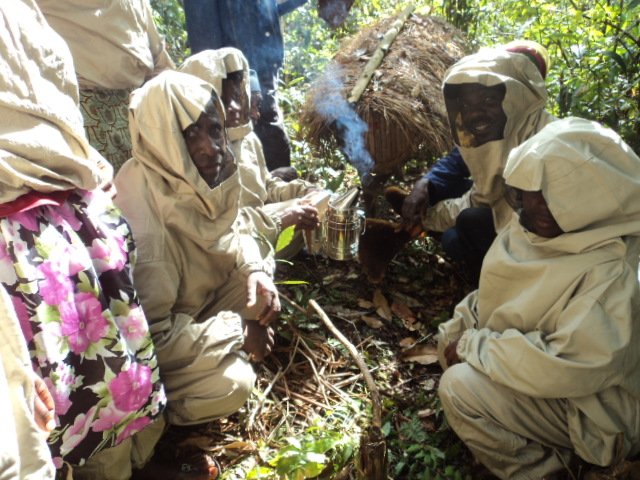
 CAMGEW encourages organic farming by improving on soil fertility with organic matter and encourages household organic waste sorting for use in farms to increase crop yields and also as a means of managing household waste. Agroforestry is another way CAMGEW promotes ecofarming. This was a traditional method used to improve the soil. It promotes integrated organic farming, horticulture (flower, vegetable and fruit farming) and apiculture (bee farming).


To discourage the use of plastic papers which are known to be non-biodegradable and to reduce the aesthetics of our environment, CAMGEW promotes the use of bags and baskets made from locally available materials like bamboo, jute, rattan etc that are biodegradable. These bags and baskets have been used in the past when plastics were not yet common. CAMGEW is building a campaign to see how biodegradable materials could be used for packaging instead of plastics.
The availability and affordability of modern energy is paramount to every development. Many rural areas lack this energy because they are far away from the national grid and also because they cannot afford it. Another, problem faced by Cameroon is the shortage of power due to dependency on one energy source – hydropower that is always affected by droughts brought by the changing climatic.
It promotes decentralised and diverse energy systems like small hyro, solar, wind and biogas systems exploited from the available natural energy sources like river fall, sun, wind and animal waste or plant matter respectively. It also engages in a campaign to reduce dependency on environmentally unfriendly energy sources like fossil fuels.
It takes part in fighting climate change from four key perspectives – mitigation, adaptation, finance and technology as identified in the global Climate Change Conference that took place in Bali, Indonesia in December 2007. During the Bali conference, the UN Secretary General, Ban Ki moon said “no one-rich or poor-can remain immune from the dangers of climate change”.
To achieve all of above, CAMGEW uses media, gatherings, posters, newsletters and organised events like workshops. It therefore, sees creativity and innovations as a way forward to solve the global problems that plague humanity.
These innovations and creative ideas therefore need to be replicated and/or scaled-up to tackle global challenges. It believes that through partnership, networking, research and volunteerism this shared vision for long-term cooperative action among the people of the world to improve on lives and promote sustainable development, can be achieved.
A video showing activities at its vocational training centre in Oku can be seen here:
