CRISIS RECOVERY PROJECT IN THE WEST REGION OF CAMEROON
Website: https://www.iaa-africa.org
Email: info@iaa-africa.org
Tel: +237652130115
1.1) BUDGET: 550GBP, YEAR: 2025
2.) BRIEF OVERVIEW
The scourge of Internal displacement has continued unabated despite international attempts to address its root causes. Ironically the so called anglophone crisis in SW and NW Cameroon has been largely ignored despite the untold misery it has caused the local people, many of whom have been displaced. The human rights of the victims of this violent insurgency have also been conveniently ignored. Questionnaires posed to those involved illustrate that the respondents live in immense fear of losing family members or being killed themselves. Moreover, they have been denied basic freedoms living in indignity with minimal access to water, food or means of subsistence. The greatest aspiration of the respondents is to simply return to their families and resume their livelihoods. The initiatives presented by IAA are an attempt to redress this unacceptable situation.
The situation began in 2014 with instability in Central African Republic which became exacerbated by the impacts of Climate change, unpredictable extremes of rainfall and resultant flooding and soil erosion compounded by unprecedented droughts. Add into the mix the rise of the terrorist sect Boko Haram and you have the perfect storm.
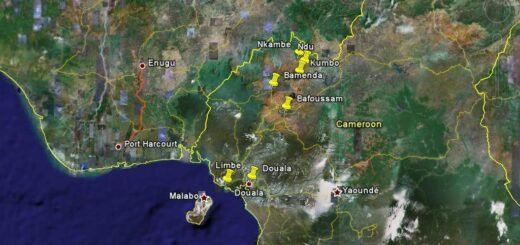
Presented in map form below is a situation analysis produced by UNHCR at the end of February 2025
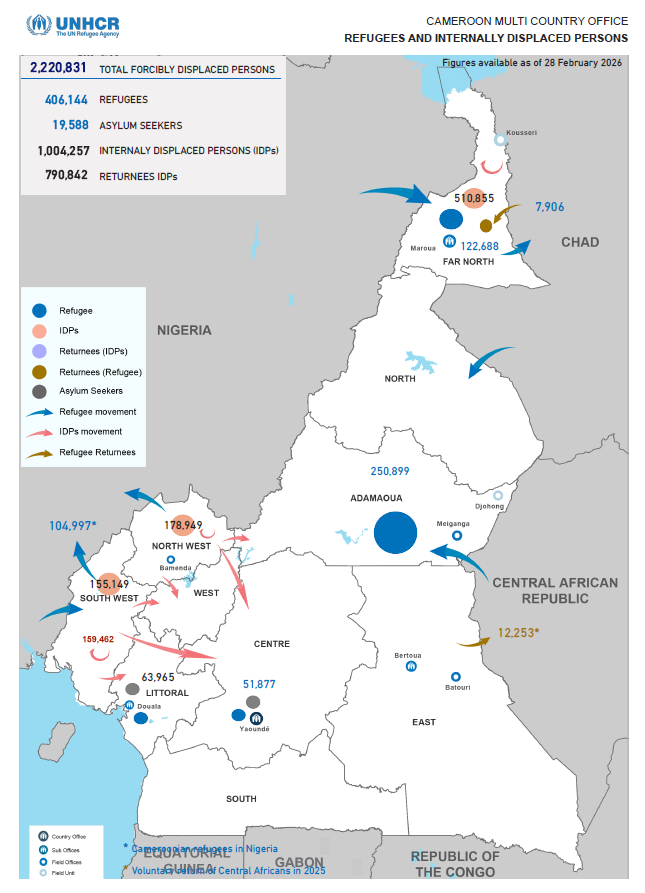
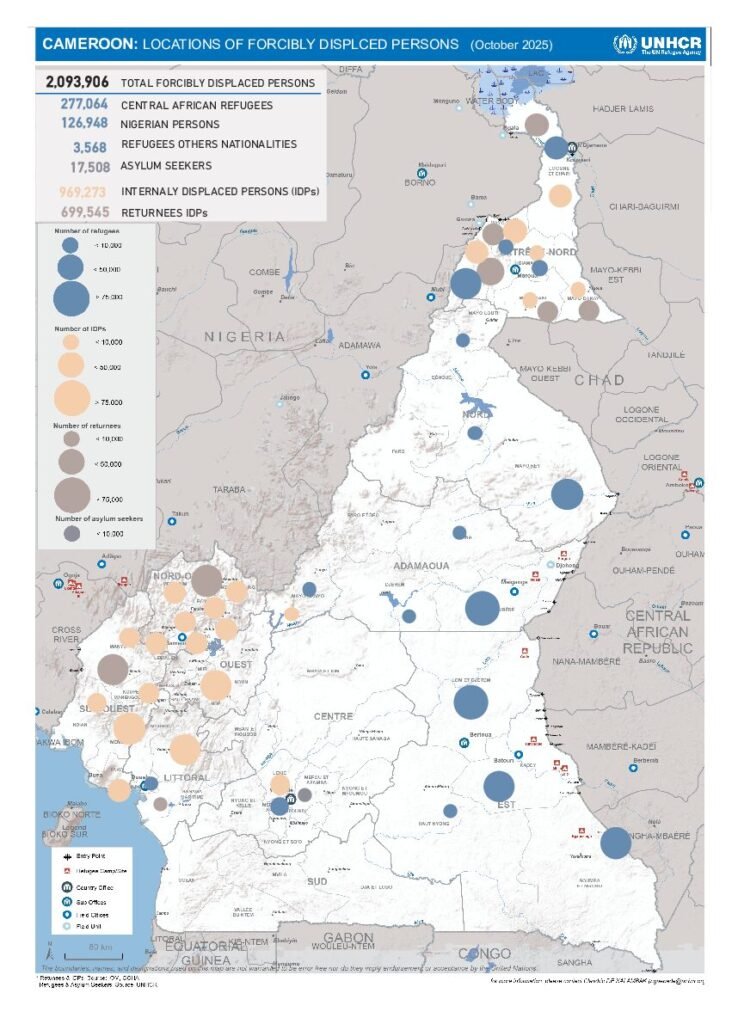
Anglophone region of Cameroon has almost 1 million IDPs to manage fleeing from civil war Oct 2025
The project aimed at addressing food shortage by empowering Internally Displaced Persons (IDP) and their host community of Foumbot through climate-smart agriculture to be able to grow vegetables during the dry season and increasingly during prolonged dry periods. We seek to end seasonal hunger and poverty, focusing activities in Mogny village of Foumbot sub-division in the West region of Cameroon.
The objective of the project was to empower and support IDPs with innovative, sustainable, affordable and locally owned approaches to improve food security and rebuild their lives, and enhance the capacity of 100 IDPs to produce a wide variety of vegetables using sustainable and environmentally-friendly technologies with integrated social ownership, management and involvement while increasing economic capacity and securing livelihoods and the planet for the future.
3.) IMPACT:
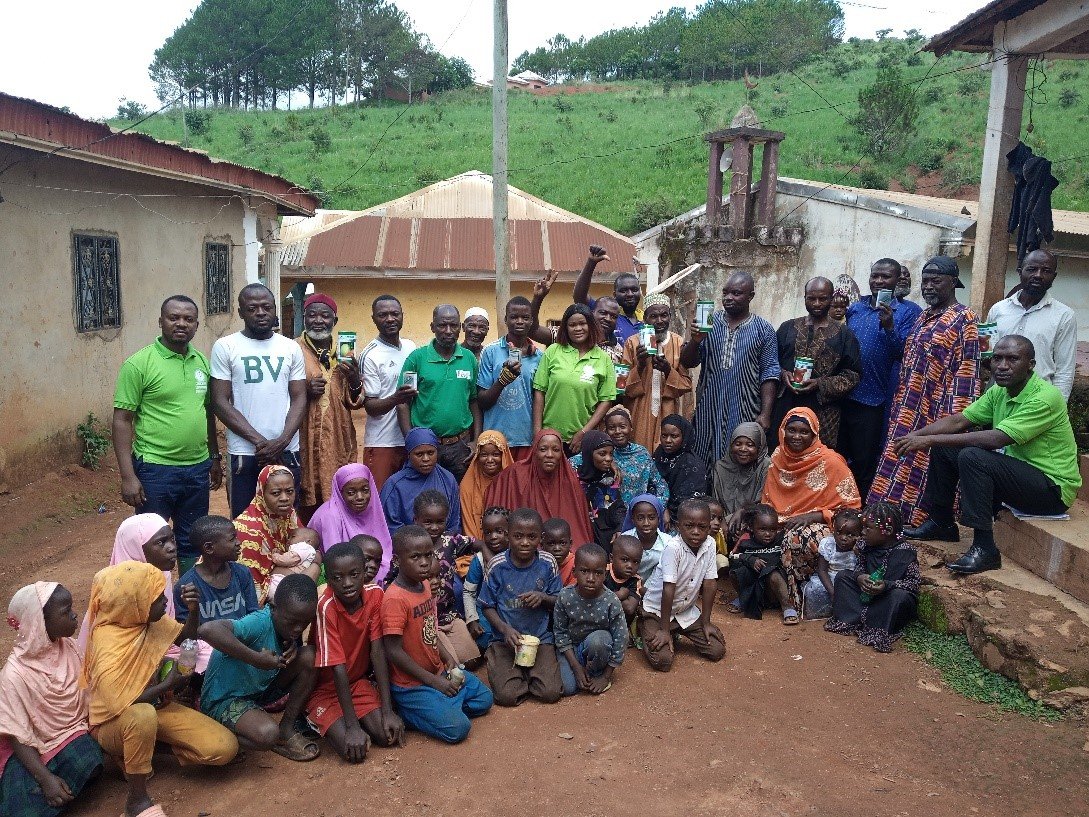
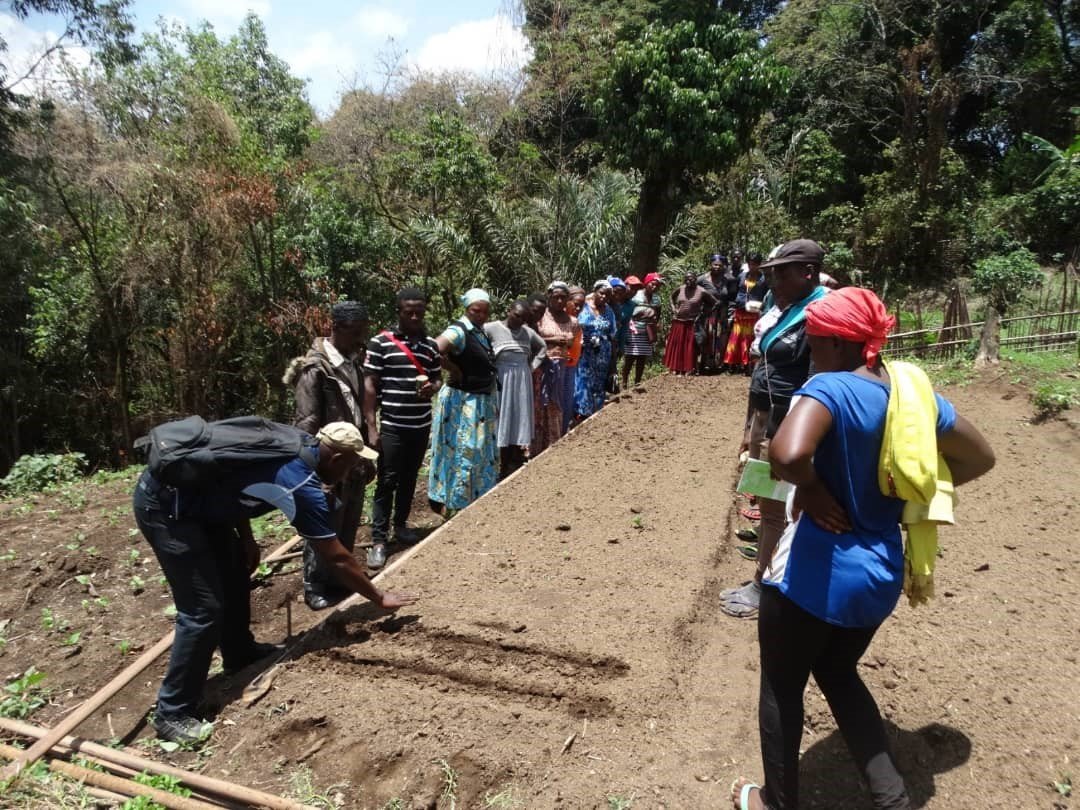
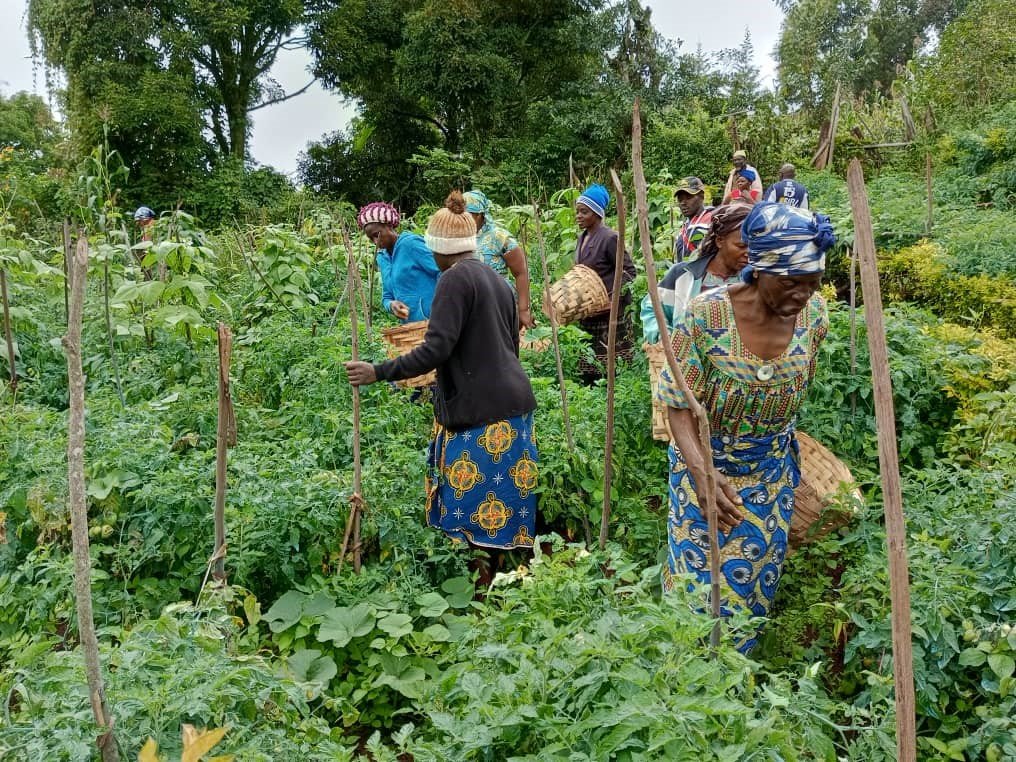
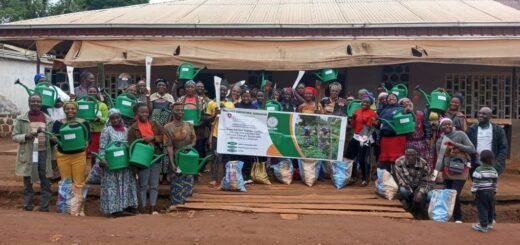
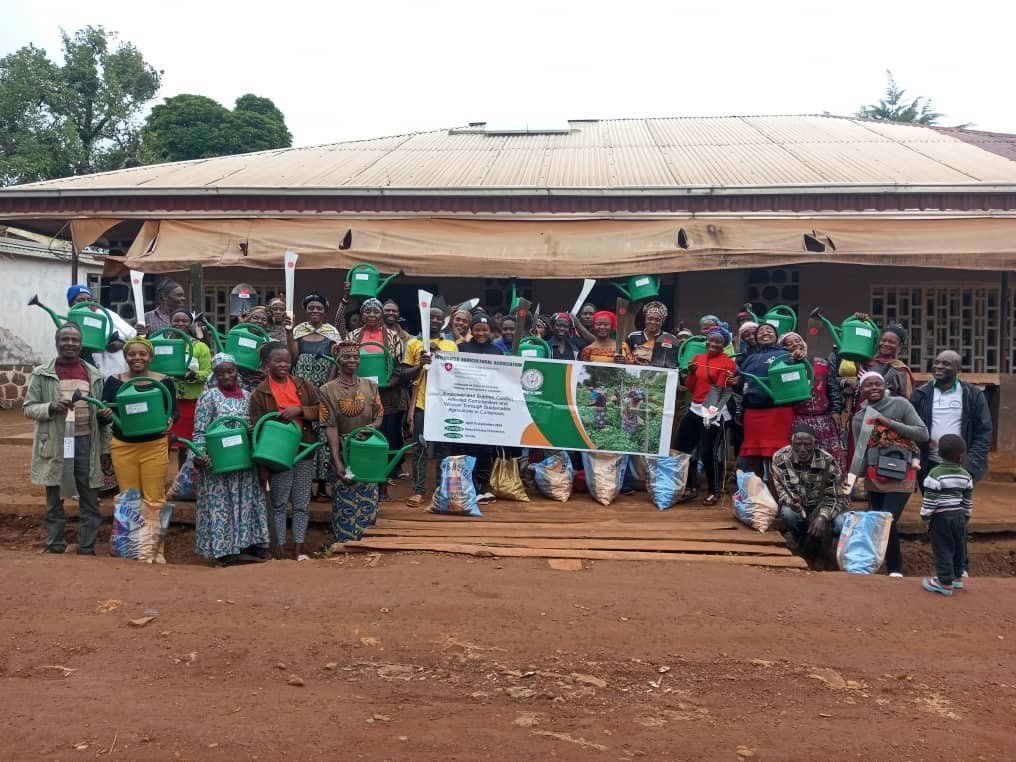
With the funding received from FIOH UK in February, 2025, Integrated Agricultural Association (I.A.A) trained diverse community members on climate-smart agriculture on topics including regenerative vegetable gardening, nutrition, water management, integrated pest management and soil health improvement. 127 people have been directly involved in training activities, with 71% women participation. 60,000 grams of huckleberry seed was donated to 120 IDPs, 500 grams per beneficiary who already had a farm plot of approximately ¼ hectare. 120 gardens were cultivated across 30 hectares of land and each garden generated approximately 1700 GBP per year for a family of 5 members which achieved larger goals including food and nutrition security, gender equality, health and wellbeing and improved livelihood for over 1000 people.
With the help of this funding, I.A.A also trained 34 trainers on climate-smart agriculture to monitor the program and continue to provide ongoing technical support and advice on best practices to smallholder farmers in the area. I.A.A also created a Huckleberry Producers Union in Mogny with current membership of 80 and the registration process is in progress. These efforts aimed at building local autonomy to sustain the project beyond the funding period.
4.) CHALLENGES:
- Inflation in local currency reduced the value of the project budget by 30% which impacted the ability to successfully distribute three different types of vegetable seeds.
- Follow up of program beneficiaries afterward was difficult due to their remote locations, no internet and network, bad roads in the rainy and dry season.
- Farmers often have to travel long distances to access inputs, extension services, or marketplaces, leading to high transaction costs and limited engagement with modern agricultural practices.
- Lack of clean drinking water and irrigation tools to boost productivity, health and nutrition.
5.) WAY FORWARD:
- I.A.A selected only huckleberry to support as many women as possible because of it economic and nutrition value and seeds can be sourced and saved locally. This decision minimized high cost on conventional seeds to focus on indigenous seeds that are locally adapted with moderate prices.
- I.A.A used private motorbikes in remote inaccessible locations and SMS to connect to participants.
- Trainers have been trained to support farmers locally and huckleberry union created to facilitate development, access to seeds, training and markets.
- I.A.A will construct and install a well with hand pump in the community, and provide smallholder farmers with irrigation kits including solar pumps to address water gaps in agriculture and household use.
6.) CONCLUSION:
Climate Change and disasters affect communities to varying degrees. Women on forced displacement and persons living with disabilities face considerable challenges in accessing help. Most disaster and conflict responses focus on short-term needs: shelter, food and medicine. While critical, this approach must be supplemented with medium-term recovery plans to rebuild lives. By working on vegetable-growing programs for crisis relief, IAA aims to bring stability to the lives of the internally displaced persons (IDPs) and empower the most vulnerable to enable sustainable and resilient livelihoods that are self-sufficient and not dependent on aid.
I extend my sincere gratitude to FIOH for supporting me and my team in this incredible mission which I so much have passion and enjoy doing while inspiring others in the same and similar fields.
DUNGRILA PASCAL MBIMENYUY; TEAM LEADER