Global Rehabilitation Services Report Sept 2019
REPORT SEPTEMBER 2019
50 children came for treatment during the long summer holidays, including some who continued from the previous period especially those who need long term treatment. That is why some names are repeated in the two lists below. Of those who continued treatment, most of them successfully completed their treatment and went back to school normally to the satisfaction of their parents. Although the treatments are completed, we still give two to three months’ rendezvous to make sure the deformations do not restart, in which case we intervene to avoid waste of effort and money spent in the treatments.
The number of children coming indicates that the new Centre is being easily located since we moved. There were difficulties initially for some people to find the location.
EVENTS
GLORES was once more invited to the Bafoussam Annual Development Conference. This is an indication that GLORES is getting known for it’s development efforts in the area of social services in the Bafoussam community. The GLORES cultural group graced the occasion with traditional music to the satisfaction of everyone.
We purchased a lawn mower to reduce the expendure on hiring a gardener.
OTHER ISSUES
We noticed that water pressure in the pipes is low and a plumber advised us to raise the water reservoir a few metres up to solve the problem. Arrangements were made to do the work as the dry season starting in October. This is not a problem to get too concerned about but will make the use of water in the building more convenient.
We will organize an information meeting in GLORES new Centre in October during which we will invite some prominent personalities in Bafoussam and the FIOH Network. This will serve as information meeting about disability, the work of GLORES and it should serve as a fundraising occasion.
SOME OF THE CHILDREN BEING TREATED

Mothers of two children being treated both taught how to work with children at home


Nembot, a 7 year old boy with fractured femur, immobalised in plaster


Foudyceu, a 5 year old boy with cerebral palsy undergoing ambulatory training


Check, a 4 year old boy with varus knees underoing preparation for splints


Donfack, a 5 year old boy with windswept deformity successfully treated using splints
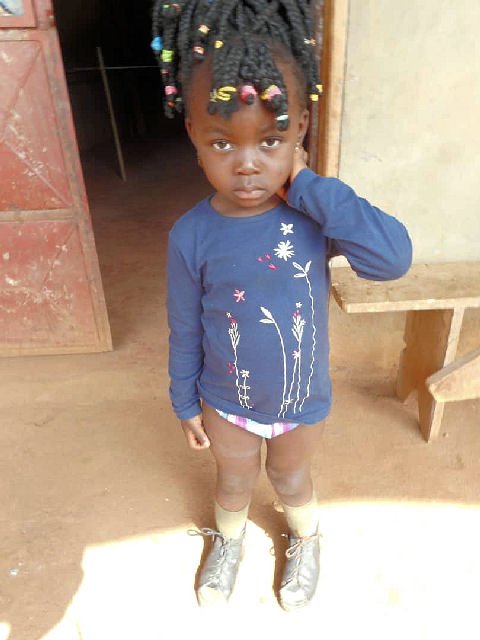

Demanou, a girl with valgus knees before and after treatment
SCHEDULE OF CHILDREN BEING TREATED:
Please support the work of the Future in Our Hands Education and Development Fund whose aim is to help and empower some of the world’s poorest and most marginalised people by:
- UK residents can provide long term support by completing the FIOH FUND DONATION FORM and sending to the address shown on the form:
- Direct grant to the charity’s bank account or by cheque to:
 Bank account details:
Co-operative Bank
IBAN: GB07CPBK08929965050707
BIC: CPBKGB22
Cheques should be made payable to the
Future in Our Hands E&D Fund
—————————————————————————-
Fundraising to help the work of the charities would be greatly appreciated
Integrated Agricultural Association

Integrated Agricultural Association (I.A.A) is a Cameroonian non-profit, non-sectarian and apolitical Organization founded on the 5th of March 2016 by the founder Dungrila Pascal Mbimenyuy to promote social, economic, and environmental well-being by:
(i) helping to create “sustainable economic development in rural communities in Cameroon,
(ii) empower and train youths and women-owned producer cooperatives, and
(iii) educate Cameroonians about the importance of organic farming and organic food.

Dungrila giving demonstration
I.A.A is a Youth led Organization with a main focus on empowering farmers through organic food production and commerce.
I.A.A also transforms subsistence farms into profitable businesses by helping smallholder farmers access good training, affordable capital, quality inputs and better crop prices.
I.A.A is passionate about creating social change and has over two years of experience in nonprofit leadership with a focus on smallholder farmer empowerment, defending indigenous minority rights, education, health care and community development.
Specific Objectives.
To build and strengthen the capacities of peasant farmers through local trainings on cultivation and marketing techniques.
- To ensure the greater involvement of the youths in agriculture through sensitization, trainings and support.
- To promote innovative ideas among farmers which are concerned with soil management.
- To alleviate poverty by working in collaboration with communities and implementing programs and projects that increase their income through the encouragement of collective production and marketing among farmers.
- To strive for socio-economic empowerment of the disadvantaged farmers and other community member groups through improved agriculture.
- To promote farming practices that lead to sustainable agriculture and meet the needs of small scale farmers. That is, discouraging the use of chemicals and encouraging natural farming.

Working on farm
Area of Action: North West, Southwest and West Regions of the Republic of Cameroon and beyond.
Target Groups: Peasant women, Children, Youths, Farmers and Persons living with disabilities.
Values
- Competence
- Accountability
- Justice and equity
- Democracy
- Citizenship
- Responsibility
- Admissibility
Approach
We seek to meet our objectives in two different ways. The kinds of approaches we use are as follows:-
- Participatory approach.
We Provide an enhanced and alternative local livelihoods, including sustainable agriculture and value-added products to support local economies, which engages all stakeholders in the community and other development groups. We foster civic engagement of communities through creative facilitation and other methods of stakeholder involvement (such as, public meetings and community-mapping exercises). - Systematic approach.
We collaborate with like-minded organizations worldwide and create possible partnerships, which can help us mobilize resources needed to address community challenges. These include financial, human and material resources. We collaborate with technicians and development agencies as well as community development associations to help us attain our objectives.
PROGRAMMES:
Integrated Agricultural Association (I.A.A) is working under eight different programme areas which include:
AGRICULTURAL TRAINING AND DEVELOPMENT.
I.A.A helps to transform subsistence farms into profitable businesses by helping smallholder farmers access good training, affordable capital, quality inputs and better crop prices. She also launches food safety awareness raising campaign to educate the public in nutrition.
Many farmers’ livelihoods are stable but vulnerable. When working with these communities, we use conservation agriculture techniques and territorial value-chain development. The goal is sustainable growth while building stronger production and marketing groups, and creating market links between producers and buyers. Our approach enables farmers to access and manage financial services and improve their use of natural resources. We also strengthen the capacity of farmers and field agents to help them plan businesses and evaluate profitability. With our experience, farmers can connect better to markets and use technologies that raise yields. To help farmers and field agents succeed, we developed a digital tool kit called ICT4Ag Suite which facilitates training, business planning, and monitoring and evaluation, making it easier for farmers to grow their businesses.
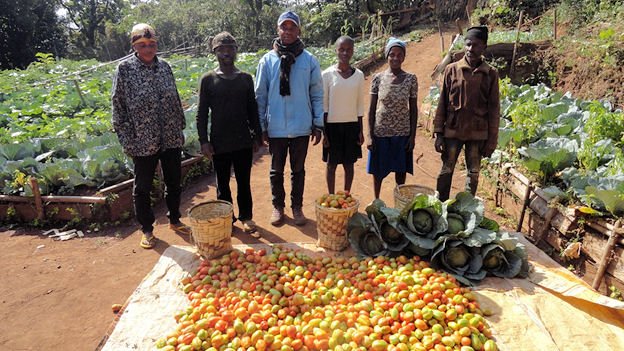
Workers on vegetable plot
METHODS USED.
Territorial approach to value-chain development: We work with farmers to identify and develop products that have potential for local, regional and national markets. We emphasize improving farmers’ production and market opportunities, but we work to improve the entire value chain so it will function more efficiently for all stakeholders. This process increases production, strengthens services for business development, improves post-harvest utilization and builds better market engagement.
Conservation agriculture: In response to global climate change, we help farmers learn techniques for conservation agriculture, which is the foundation of climate-smart agriculture. Techniques include using cover crops, planting with green manure and “no till” practices, conserving water and using native varieties of crops to manage pests. These approaches increase productivity, decrease costs and improve soil fertility.
ENVIRONMENTAL PROTECTION AND MANAGEMENT. We organize meetings to raise awareness of the importance of protecting the local environment and adopting strategies to deal with a changing climate. We carry out tree planting exercises and train local groups and families to establish tree nurseries to supply tree seedlings to the local community, with the aim to foster community engagement in afforestation. We train more than 5,600 people each year in tree planting and care and work with school children to educate them on the importance of trees to the environment and the value of agro-forestry. We also conserve biological diversity, indigenous forests and maintain ecosystem services (water, soil, and carbon sequestration).
EDUCATION AND CAPACITY BUILDING.
We provide scholarship opportunities for children from low income families and marketable skills for those with special needs.
We provide vocational training to children with disabilities and support them with equipment to set up workshops that will enable them to be economically self-reliant, participate in community activities and be socially recognized.
We promote ICT and quality education both in urban and rural communities by equipping schools with computers and books libraries, construction and equipping school classrooms as well as the provision of sanitation equipment and water.
HEALTH EDUCATION.
In Cameroon the rural population does not have access to quality health care and services. The situation remains the same in public hospitals everywhere in the country. The rural population travel an approximate distance of 25 kms or more just to have medical attention, while those visiting public hospitals complain about poor approach by medical personnel. I.A.A strives to overcome these health disparities by training community health workers, building the capacities of hospital personnel, refurbishing and constructing community health facilities and offering nursing scholarship to rural youths especially those coming from poor families.
WATER AND SANITATION.
In Cameroon, water crisis has become the order of the day both in urban centres and rural areas. This is a critical issue that affects mostly women and their children which have had severe consequences on their lives, notably; education and health. Children stay away from school just because they don’t want to carry water on their head every day. And women travel 5 kms or more to fetch dirty water. I.A.A provides access to safe and clean water (water pumps and distribution systems, well drilling, bore holes, spring capping).
HUMAN RIGHTS.
I.A.A is working to advocate for peace through peace building initiatives and humanitarian response, defending children against trafficking, early marriages and forced labour and ensuring that the rights and dignity of women, children and persons living with disabilities are protected and fulfilled.
WOMEN EMPOWERMENT.
Women are often marginalized, less educated, lack access to finances, collateral security and are not always able to participate in decision making processes locally. Opportunities on entrepreneurship, capacity buildings and access to land are always limited. Where these facilities are available, they are not reliable, affordable and accessible. They suffer from domestic violence and their girls fall victims of child trafficking and early marriages. These situations are common in rural areas in Cameroon and elsewhere in the world. I.A.A is empowering women with micro- business skills and supporting them with startup loans for new businesses and improve existing ones. I.A.A assists women with entrepreneurial skills through micro-business training and financing so that they can be able to build wealth for their families and participate in nation building.
APICULTURE
Bees are important insects that play an important role in the environment by increasing ecosystem services through pollination. It remains imperative to understand and manage pollination services; farmers in rural communities have the potential to substantially increase their crop yields and income, as well as safeguarding micronutrient supplies from foods such as fruits, nuts and vegetables. This has important implications for food security, poverty alleviation and global health. However, promoting bee farming increases pollination services and provide progress towards several important UN Sustainable Development Goals. It is important that development and environmental outcomes are closely aligned, such that there is a long-term sustainability. Beekeeping, pollination and ecological farming are important goals of development and environmental protection.

Apiculture
APICULTURE AND FOREST GOVERNANCE PROJECT
We train forest communities in sustainable forest management. Many of these communities depend on agriculture for their livelihood which often results in the destruction of the forest for farm land. We train these communities in bee farming and foster their engagement in aforestation as alternatives to protect the forest and fight poverty. We provide opportunities for rural people in tree nursery management, planting and care, and in agro-forestry techniques. I.A.A. distribute forest seeds, agro-forestry seeds and bee farming materials as well as locally manufactured bee hives to vulnerable people. The goal of this project is to promote apiculture as a strong financial incentive for rural people to alleviate poverty and protect biodiversity.
The objectives of this project are as follows:-
(1) Teaching beehive construction, apiary set-up and maintenance, honey harvesting and tree-planting.
(2) Establishment and capacity building for community-based beekeeper cooperatives.
(3) Establish a honey shop and marketing hub; give advice and training about honey marketing.
EXPECTED OUTCOMES.
- Improved honey-based livelihood opportunities.
- Community led sustainable management of honey bees.
- Increased levels of understanding of different issues relating to honey bees from biological, economical, policy and social viewpoints.
SEXUAL AND REPRODUCTIVE HEALTH PROJECT
In Kumbo, Secondary school girls become pregnant as a result of lack of understanding about family planning. This is also because the information on reproductive health is not widely disseminated for better access by young girls and women of reproductive age. School girls’ records show poor academic performance as a result of menstruation. During this period, these girls stay away from school because of stigmatization and lack of basic menstrual hygiene information and the school administration do not make available a safe environment for these girls to take care of the menstrual situation with dignity. Married women deliver children too close as a result of lack of reproductive health information and family planning which result in poor health, and unsafe abortions. I.A.A has designed this project to increase access to reproductive health information among school girls and the women of Kumbo.
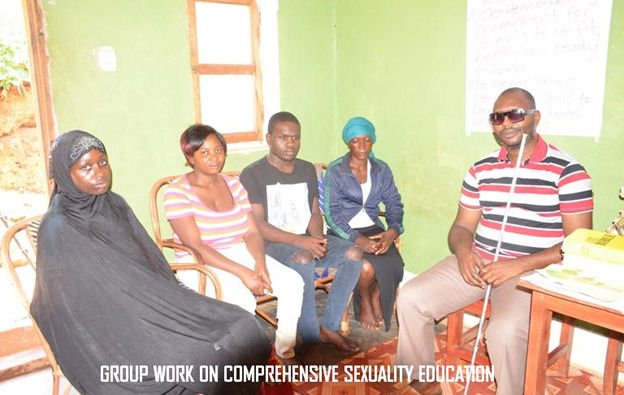
Sex education
I.A.A set-up workshops throughout Kumbo with different groups of individuals in order to discuss reproductive health, and address the questions of the participants. The workshops involved secondary school students (one for male students and one for female students), sex workers, and local communities. For each workshop, every effort is made to make the participants feel that they are in a safe environment.
All workshops usually start with an open question session to answer the sexual health questions of all participants. In addition to these workshops, radio talk shows are held in local languages, which also include a call-in question and answer session.
PROJECT GOAL.
The overall goal of this project is to increase access to reproductive health information by providing young people with the knowledge and skills to promote their health and well-being as they mature into sexually healthy adults.
OBJECTIVES.
- To work with community leaders to widely disseminate reproductive health information among young girls and women.
- To increase access to comprehensive reproductive health services.
- To address stigma and discriminatory social norms related to menstrual hygiene management with health providers, media, parents, teachers and wider community stakeholders.
Integrated Agricultural Association
Foncha Street, Nkwen, Bamenda
Nw Region, Cameroon, Central Africa
EMail: integratedagriculturalass@gmail.com
Tel (+237) 682 v98 51
Perhaps Our greatest achievement ?
Alfred Wingo GLORES and FIOH Fund
Takeo timeline

Takeo is a three and half year old girl with spina bifida. She is under treatment with splints and this will probably have to continue for the rest of her life.
Her splints will need adjustment and replacing as she grows older. This is Takeo when she first arrived at GLORES rehabilitation Centre
The following video shows her under treatment with splints and intensive physiotherapy
Takeo walking unaided for the first time and now able to walk to school
Please support the work of the Future in Our Hands Education and Development Fund whose aim is to help and empower some of the world’s poorest and most marginalised people by:
- UK residents can provide long term support by completing the FIOH FUND DONATION FORM and sending to the address shown on the form:
- Direct grant to the charity’s bank account or by cheque to:
- Bank account details:
Co-operative Bank
Account no 65050707
Sort Code 08 92 99
—————————————————————————-
Fundraising to help the work of the charities would be greatly appreciated
Global Rehabilitation Services Report – January 2019
GLORES TREATMENT CENTRE FOR DISABLED CHILDREN
REPORT – January 2019
Although the civil conflict in the country is not affecting the West Region of Cameroon, the project co-ordinator, Alfred Wingo, had to help his family located in the Northwest Region who were forced to move to a distant location because of the conflict. He located them by having to travel through the bush by foot and motorbike. He found them suffering from a shortage of food and other necessities. They are now out of danger.
Treatment of disabled children
There has been a steady flow of disabled children being brought to the centre for treatment. Currently 24 children are being treated (14 males and 10 females). The most common disabilities involve deformation of the lower limbs. Two with cerabral palsy are currently resident at the Centre undergoing long-term treatment.
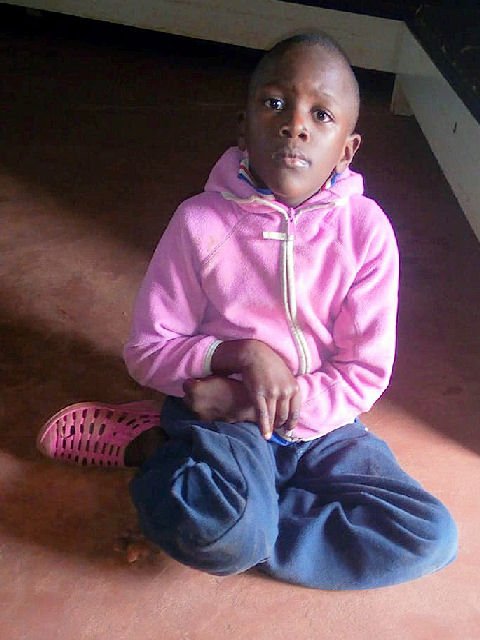
One of these, Nsah R, was brought to the Centre with completely contracted limbs, very hyperactive and spastic. The parents had spent a lot of money on unsuccessful treatment at several hospitals beforehand.
The mother brings him every two months and he stays for one month each time. She is taught practical exercises to perform at home.


His treatment is progressing well and he is now able to stand up straight with support.

GLORES seeks to correct deformities in youths and adults despite the added difficulty as people get older. In the picture above Tchoutchoua G. is underoing stretching treatment by Alfred.


Left: Dsomu Z. is another child with cerebral palsy periodically resident at the centre during treatment.
Centre left: Matie W. undergoes stretching in preparation for splinting.
Centre right: Tuedom M. on microwave diathermy.
Right: Sibefo F. wearing splints.


Fouapong M. with congenital lower limb deformity before treatment and with new calipers during treatment. Fouapong is starting to walk unaided.
A local honour for Alfred Wingo

In recognition of his work he has received a local honour and has been named as a notable. The inaugural ceremony took place in the village in December 2018.
The entire village was there to witness the event which ended with him joining a traditional dance with other notables. His award was presented by the Chief of Bafoussam at his palace.

The Chief of Bafousssam can be seen here dancing at a cultural event with music provided by the GLORES Music Group.
Alfred was one of the organising committee with the Regional Delegation of Social Affairs for the International Handicap Day which took place on 2nd Dec. 2018.
In addition to financial support, the FIOH Fund has sent Alfred a flash drive, a book on basic prosthetics treatment written by disabled people in Mexico and the book ‘Where There is No Doctor’.
During 2018 eighty new children came to the centre and 60 received treatment. See schedule below:

Please support the work of the Future in Our Hands Education and Development Fund whose aim is to help and empower some of the world’s poorest and most marginalised people by:
- UK residents can provide long term support by completing the FIOH FUND DONATION FORM and sending to the address shown on the form:
- Direct grant to the charity’s bank account or by cheque to: Bank account details:
Co-operative Bank
IBAN: GB07CPBK08929965050707
BIC: CPBKGB22
Cheques should be made payable to the
Future in Our Hands E&D Fund
—————————————————————————-
Fundraising to help the work of the charities would be greatly appreciated
FIOH Fund Newsletter – Winter 2017
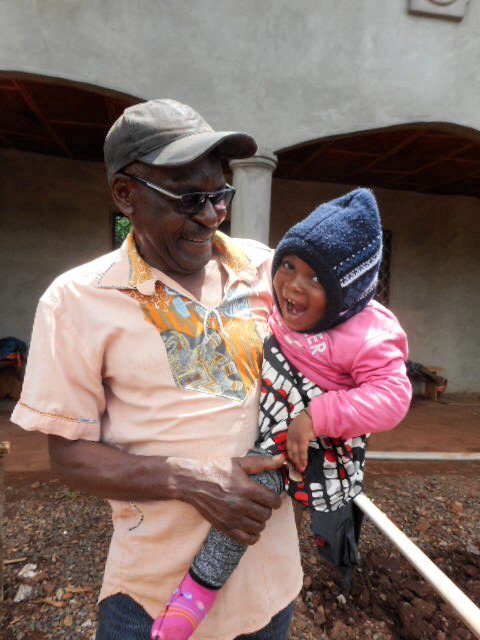

Alfred Wingo,the founder and director of GLORES, is shown here with one of the children being treated.
NEWSLETTER – ISSUE2 – WINTER 2017
FIOH FUND NEWSLETTER 2 – WINTER 2017
This newsletter summarises and illustrates some of the activities which have taken place in a new treatment and rehabilitation centre established in the Cameroon with the financial support of the FIOH Fund. The centre is run by Global Rehabilitation Services (GLORES), a local NGO, which moved from its former rented accommodation in April 2017.
Please support the work of the Future in Our Hands Education and Development Fund whose aim is to help and empower some of the world’s poorest and most marginalised people by:
- UK residents can provide long term support by completing the FIOH FUND DONATION FORM and sending to the address shown on the form:
- Direct grant to the charity’s bank account or by cheque to: Bank account details:
Co-operative Bank
IBAN: GB07CPBK08929965050707
BIC: CPBKGB22
Cheques should be made payable to the
Future in Our Hands E&D Fund
—————————————————————————-
Fundraising to help the work of the charities would be greatly appreciated
Disability survey – West Region of Cameroon
Survey of disabled children in West Region of Cameroon
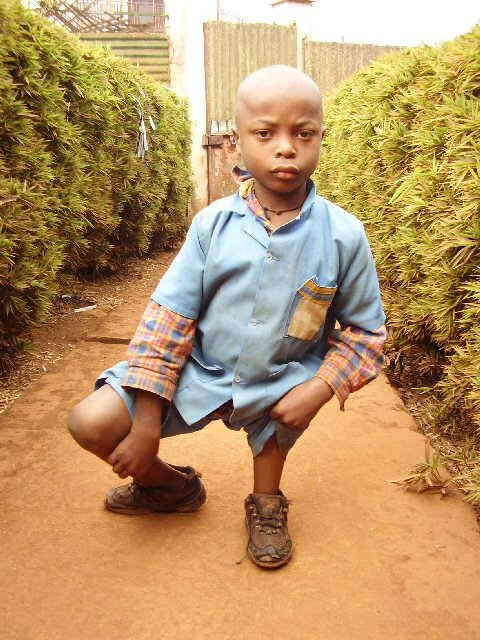 There appears to be little statistical information on disabilities in the West Region and few facilities for treatment. In 2010 the FIOH Fund provided a grant to the non government organisation Global Rehabilitation Services (GLORES) to carry out a comprehensive survey in all 8 divisions of the Region. In the survey below a total of 10,493 disabled children were identified and 21 different types of disability. Over 75% of those surveyed did not go to school and most were from poor families. Many villages are very difficult to access during the rainy season. Most of the children had valgus or varus deformities. The most common causes of disability were malnutrition, lack of health care services and societal beliefs that disabled children are possessed by evil spirits. Parents are sometimes ashamed to have disabled children which are then hidden away out of public view. There were some cases of children being drowned by witch doctors who had claimed they would turn into snakes as soon as they entered the water.
In 2012 Global Rehabilitation Services evaluated 1058 children in the West Region of Cameroon, 1,012 of which had disabilities. 126 of these received treatment at the organisation’s centre in Bafoussam.
A table showing the results of the survey can be seen here:
glores-table-of-disabilities-2012
Please support the work of the Future in Our Hands Education and Development Fund whose aim is to help and empower some of the world’s poorest and most marginalised people by:
- UK residents can provide long term support by completing the FIOH FUND DONATION FORM and sending to the address shown on the form:
- Direct grant to the charity’s bank account or by cheque to: Bank account details:
Co-operative Bank
IBAN: GB07CPBK08929965050707
BIC: CPBKGB22
Cheques should be made payable to the
Future in Our Hands E&D Fund
—————————————————————————-
Fundraising to help the work of the charities would be greatly appreciated
Open day at GLORES Treatment Centre
GLORES NEW CENTRE OPEN DAY
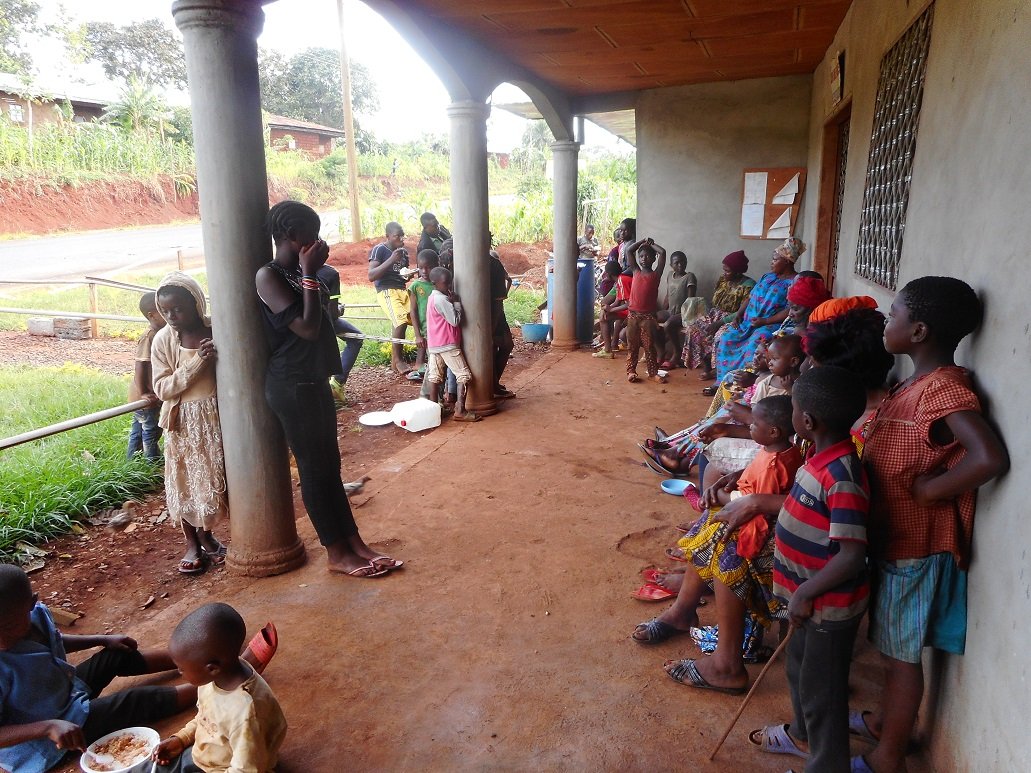 The open day that took place on May 29, 2018 was impromptu. The Sacta quarter notables of the Chieftency of Bafoussam informed GLORES of a visit with the entire quarter inhabitants. For them the building of GLORES New Centre was a big achievement in the village of Njingah and they thought that the Centre should be given a warm welcome by the village.
The gathering was attended by 40 persons from the village with 15 notables present. In a speech delivered by the quarter head (Sub-Chief) of Njingah on the occasion the Chief welcomed GLORES to the village. He said that all the workers in GLORES should feel at home and know that they are now welcomed as inhabitants of Njingah village. He said that GLORES, being the only rehabilitation centre in the West Region of Cameroon and constructed in their village, was a great privilege for the village. He said that the New Centre has contributed to the development of the village.
More importantly it has put their village on the map as people will be coming from all over the West and neighbouring Regions of Cameroon for treatment of their disabled children. He paid tribute to the work GLORES is doing to help disabled children especially those from very poor families. He was particularly impressed by the fact that since he had known the work of the Centre no child has ever been left out for lack of resources.
He concluded that he was going to inform the Paramount Chief of Bafoussam about the warm welcome GLORES gave them during the open day and about the good work being done. He announced a second visit when the Coordinator of GLORES, Alfred Wingo, will be presented as a notable in the village with full rights.
The New Centre was blessed in the traditional way and the ancestors were invoked to guide and protect the Centre.
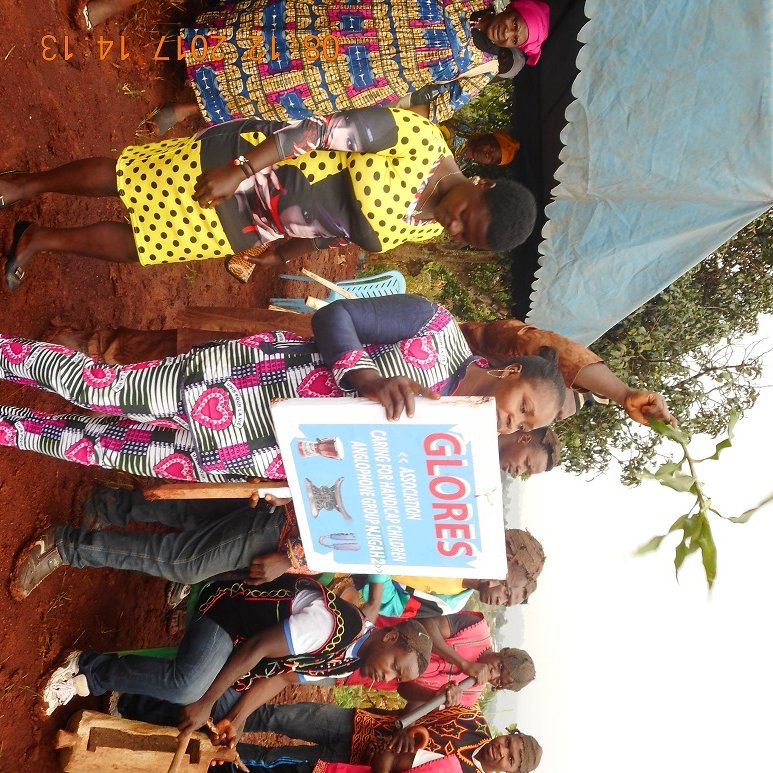 The occasion was animated by the GLORES Association Cultural Music Group and everyone danced to exhaustion. After the dance, many people expressed the desire to become members of the Group.
The open concluded by a reception offered
Please support the work of the Future in Our Hands Education and Development Fund whose aim is to help and empower some of the world’s poorest and most marginalised people by:
- UK residents can provide long term support by completing the FIOH FUND DONATION FORM and sending to the address shown on the form:
- Direct grant to the charity’s bank account or by cheque to: Bank account details:
Co-operative Bank
IBAN: GB07CPBK08929965050707
BIC: CPBKGB22
Cheques should be made payable to the
Future in Our Hands E&D Fund
—————————————————————————-
Fundraising to help the work of the charities would be greatly appreciated
Follow us on Twitter:
twitter.com/fiohnet
Please share our links with your friends to help us reach a wider audience.
Treatment Centre for Disabled Children – Project update
New treatment and rehabilitation centre in Cameroon
Thanks to the generous support we received from our appeal last year, Global Rehabilitation Services (GLORES) has moved in to the newly completed treatment centre. It is 15km from Bafoussam, in the West Region of Cameroon, on the main road to Foumban.
Alfred Wingo with child being treated
The move was slightly delayed because of the rainy season, but the physiotherapy equipment has now been relocated from the old rented building and treatment has now begun. An official opening is expected to take place in September this year.
When our funding appeal launched in November 2016, the walls and roof of the building had already been completed and tree planting carried out on the site.
Donations since November have enabled the installation of toilets, wash basins, ceiling boards, windows and doors. The electricity has been connected and in use and Alfred is waiting for environmentally friendly and economical (low consumption) bulbs to use for lighting. The water supply has yet to be installed by the local water company and temporarily rain water is being used for washing and drinking water is being brought from the town.
What’s happening now?
More than 80 children have been treated so far this year. A number of those have received treatment at the new centre since it opened in May, including:
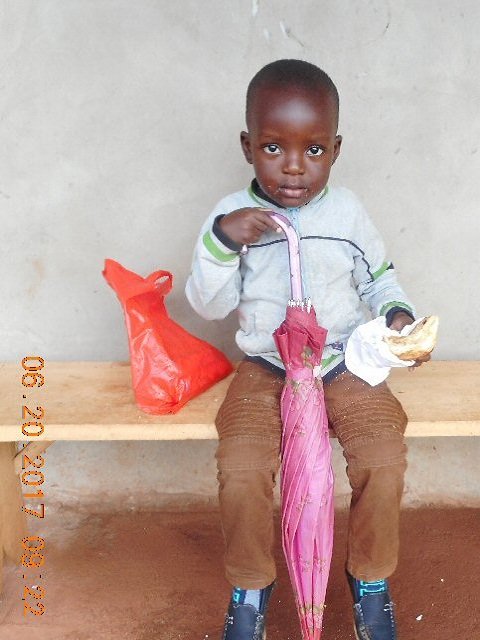
Nde Daryle, age 3, has had physiotherapy for bilateral valgus knees – and is showing continuing improvement. Nde’s mother is a single parent and unemployed, so he is being cared for by his grandparents who are farmers.
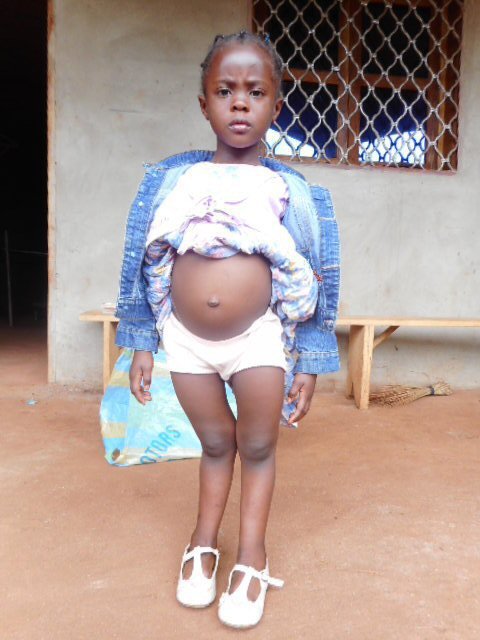

Left: Djonge Anael, age 5, has had calipers applied for bilateral valgus knees and is also showing improvement. Djonge is from a polygamus family of 10, her parents are aged and not working.
Right: Joumessi Frankie, age 4, is from a family of 7. His parents are farmers, 5 children go to school. Joumessi also had bilateral valgus knees and is now able to walk after treatment using splints.
Most of the children being brought to GLORES for treatment can be cured with physiotherapy alone whilst others with severe deformities will require corrective surgery. To understand the difference treatment makes, you can read testimonies of six children treated in the past. Despite the effort involved with shifting equipment and finishing work on the new centre, a limited amount of treatment was still possible in the old rented building.


The children above, whose legs were severely deformed, were successfully treated at the rented building. The girl with the red dress is walking for the very first time since birth, while the picture on the right shows the celebrations when a treated child returned to her village.
What are the challenges now?
Raising funds for the new centre took more than three years and there were many obstacles along the way. During this time Alfred’s wife and two sisters have died. He also lost a brother in June 2017. Despite this, Alfred has continued his vital work whilst supervising and organising construction of the new building.

In 2015 GLORES had to cut back on its activities due to the death of the founder of the Dutch trust providing most of its funding. This support was helping cover the costs of treatment and staff to assist with running the rehabilitation programme. Since then the Future in Our Hands Education and Development Fund (FIOH Fund) has been the main source of support.
One of the FIOH network partners, Wirsey Emmanuel from Cameroon Gender & Environment Watch, visited Alfred in May on our behalf to report on how the work was going:
“GLORES is now free from rent – which is a big relief. To control electricity shortages or blackout there is a need for a generator to supply energy for the workshops and solar panel system for lighting, especially when there is no work in the workshop.
More water harvesting containers are required to secure water in the rainy season, while waiting for the Government to supply water. The Bafoussam municipal stadium is close by and water going to the stadium has to pass by the centre. We are hopeful that the water supply will arrive at the centre before long.
GLORES sees the need for volunteers, either within or outside of Cameroon to give a helping hand. This is an opportunity to identify a reliable, committed and hardworking student or person who can be trained to work at GLORES and get further practical training from Alfred.”
An administrative assistant has been appointed and a system of recording treatment details and providing feedback has been agreed with the FIOH Fund.
What is the key challenge now?
Now the building is ready and operational we are looking at creative ways to sustain the ongoing treatment costs of the centre.
The key challenge is developing a revenue – either as grants from charitable trusts, or generating a monthly income from donations and other means. We would like to establish a Friends of GLORES group of supporters who can make small regular contributions towards treatment costs.
One idea for gaining funds locally is to have a stall at the front of the centre, serving the public and passing traffic. This could operate like a roadside café – selling hot and cold drinks and snacks – and locally made handicrafts or generally useful items for the local community. With the electricity now connected it could also offer a handy mobile-phone recharging service.
Neighbours to the centre could be encouraged to provide rented accommodation for parents of children while they are undergoing treatment. There is also the possibility of renting parts of the building, for example meeting rooms for other community needs.
Please support the work of the Future in Our Hands Education and Development Fund whose aim is to help and empower some of the world’s poorest and most marginalised people by:
- UK residents can provide long term support by completing the FIOH FUND DONATION FORM and sending to the address shown on the form:
- Direct grant to the charity’s bank account or by cheque to: Bank account details:
Co-operative Bank
IBAN: GB07CPBK08929965050707
BIC: CPBKGB22
Cheques should be made payable to the
Future in Our Hands E&D Fund
—————————————————————————-
Fundraising to help the work of the charities would be greatly appreciated
People helped by the work of Global Rehabilitation Services
Global Rehabilitation Services has since its foundation carried out successful prosthetics treatment, including the arrangement of corrective surgery when required, for over 1,500 severely disabled children and youths.
Testimonials of six of these children are given below:
Jackson Kuetche
This child at the age of five had a severe cogenetal deformation (Bilateral valgus knees). The picture on the right shows the boy after corrective surgery and physiotherapy.
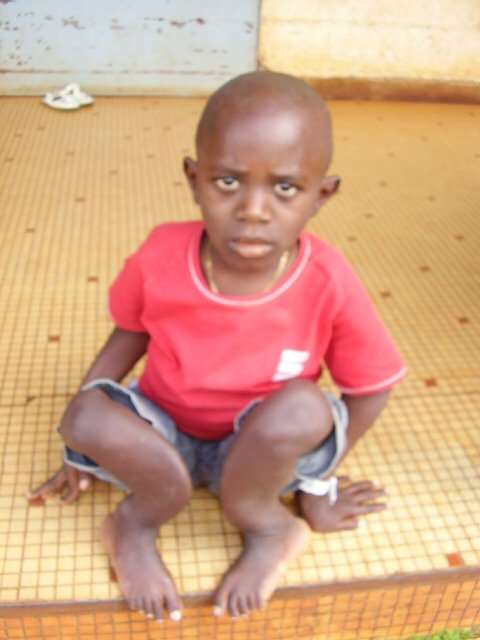

My Name is Jackson Kuetche and I am 7 years of age. My mother told me that when I was born, my legs were normal but later started deforming as I developed.
I went to school like other children until my legs got so serious that I found it difficult to walk to school. There came a time that I could not walk any more. I could only drag my buttucks on the ground to displace myself from one place to the other. Other children were laughing at me at school and I felt so bad and could not stop crying. The problem became so serious that my parents asked me to stop schooling and stay at home. I was sad because my brothers and sisters were going to school and I could not.
My parents were informed in the village meeting that there was a Handicap Treatment Centre called GLORES. The village group helped my parents through contributions to pay transportation to the GLORES Centre in Bafoussam.
In GLORES they told me that my deformations were so serious that surgery was needed. They also told my parents that I had ricketitis, a disease that causes severe deformations of the bones and retards growth and develoment. My parents did not have money for the operation. I started crying with my mother. GLORES worked out a financial assistance for the operation of my legs and put me on medical treatment. My parents only paid a small portion of the operation charges.
My legs are corrected and are straight. I can now go to school. I am happy with my family because I have returned to school. My family and I do not know how to thank GLORES programme.
——————————————————————-
2. Mapta Yomgue
This two days old baby had a severe cogenetal deformity. The picture on the right shows her after one month of physiotherapy.


This testimony was given by the mother of a three year old child who was refered to GLORES for treatment for a severe congenital deformation of the right leg by the Bafoussam Regional Reference Hospital.
Mother’s observation
God still continue to perform miracles today through individual and charitable organizations like GLORES. I believe in what I am saying because of my experience with my little girl whom I brought to GLORES at the age of two days with serious deformation of the right leg after birth. The hospital where the child was born told me that something can only be done through surgery when the child reaches the age of 25 years. They, however, refered the child to the Handicap Treatment Centre called GLORES. If the hospital of that calibre could not do anything, I was left with no choice than to cry.
I brought the child to GLORES in tears. I was comforted and told not to worry. I could not believe what they were saying. They consulted the child and put her on treatment for one month. To my utter amazement the child’s leg returned to normal. I could not believe myself. I thought I was dreaming.
Now my little girl is growing up normally like other children and shows no sign of any problem at birth. This was a miracle to me. I started thanking the therapists in GLORES but they told me that they only treat and God heals.
Thank God for giving us a treatment Centre like GLORES. God through GLORES prevents disabilities in Children! Let God give more inspiration to the Therapists in GLORES so that they can help more handicap children in Cameroon.
Knefack Evelyn Yomgue
« Mother of Mapta Yomgue »
———————————————————————
3. Efone Jacque
This boy was without a left femur. The picture on the right shows him after physiotherapy

My name is Efone Jacques from Bafoussam. My parents did not want to send me to school because I found it difficult to walk due to my left leg that was deformed and shorter than the right leg from birth. They said that going to school was not necessary since I would not be able to walk making it difficult to find a job.
When I went to GLORES they made it possible for me to walk with the help of splints and now I am in school and doing very well with my school work. My parents, villagers and I am happy.
Efone Jacques
Note: The splints this child is using are temporal and he will continue to wear them until the age of 25 when the deformed leg will be amputated and replaced with a permanent prosthesis.
——————————————————————-
4. Freddy Pokam
This boy had a severe limb deformation (bilateral valgus knees). The picture on the right shows him after corrective surgery, physiotherapy and splinting.


I am speechless. I returned to the village after treatment and people could not recognize me again, even my relatives. One of them even asked if I went to the native Doctor for the magic done on my legs. This is really like magic.
It was already getting difficult for me to go to school. My legs were crossing over each other making it hard to walk. The worst thing is that other children in my school were often laughing at me. Some of them called me distorted legs. Things like these made my school grades to go down because I was not at ease at all.
To the utter amazement and to the surprise of the villagers, I can walk normally with no sign of disability any more. I am like other children.
Thanks be to GLORES and to God above all.
Freddy Pokam
——————————————————————
5. Patrick Kenfack
This young man had a cogenetal deformation. The picture on the right shows him after prosthetics treatment.


I am an 18 year old boy from Bafoussam, Cameroon. I was born with my legs deformed. To displace myself from one place to the other I had to creep and roll. I was brought to see the Orthopaedic surgeons from Holland for corrective surgery. They consulted me and said that nothing could be done to my legs. My mother and I started crying in the hospital. The Physiotherapist from GLORES told us not to cry and that we should come to GLORES so they can see what could be done.
We did not have the confidence because the surgeons said that nothing could be done. We, however, went to GLORES treatment Centre in Bafoussam. I was evaluated and internalized there for three months. They were able to straighten my deformed legs, put on prosthesis and trained me to walk.
Now I can walk and go to school and I am the secretary of the handicapped people organization (Arc -En- Ciel) in Bafoussam. I am looking forward to finding a job after my education.
Patrick Kenfack
——————————————————————–
6. Brunhilda Tsakong
This girl had varus knees when she was five years old. The picture on the right shows her with legs straightened by physiotherapy.


My name is Brunhilda Tsakong. I am now 10 years of age. My legs were deformed when I was 5 years of age. I am from a family of 10 children and my father is a village chief with 3 wives. My father is a farmer and his income is so small that he is unable to send all the children to school. The 5 children that go to school are boys. Girls are encouraged to go to the farm with their mothers.
My father could not afford to send me to the hospital for the treatment of my legs. He once attended a village meeting which was organised by GLORES. In the meeting, they talked about disability, treatment of handicaps and showed pictures of treated children. My father was thrilled and took me to the GLORES Treatment Centre in Bafoussam, Cameroon. There I was consulted and referred for corrective surgery followed be physiotherapy.
They invited my parents and encouraged them to send the girls to school with the help of GLORES. Now I am preparing to go to the secondary school. And my legs are straight and normal. As a girl I feel beautiful.
Thanks to GLORES Treatment Centre. Because of GLORES programme I can walk straight, go to school and feel beautiful.
Please support the work of the Future in Our Hands Education and Development Fund whose aim is to help and empower some of the world’s poorest and most marginalised people by:
- UK residents can provide long term support by completing the FIOH FUND DONATION FORM and sending to the address shown on the form:
- Direct grant to the charity’s bank account or by cheque to: Bank account details:
Co-operative Bank
IBAN: GB07CPBK08929965050707
BIC: CPBKGB22
Cheques should be made payable to the
Future in Our Hands E&D Fund
—————————————————————————-
Fundraising to help the work of the charities would be greatly appreciated
k:
www.facebook.com/fiohfund
Follow us on Twitter:
twitter.com/fiohnet
Please share our links with your friends to help us reach a wider audience.
Images – Global Rehabilitation Services treating severely disabled children


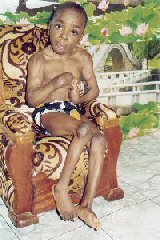


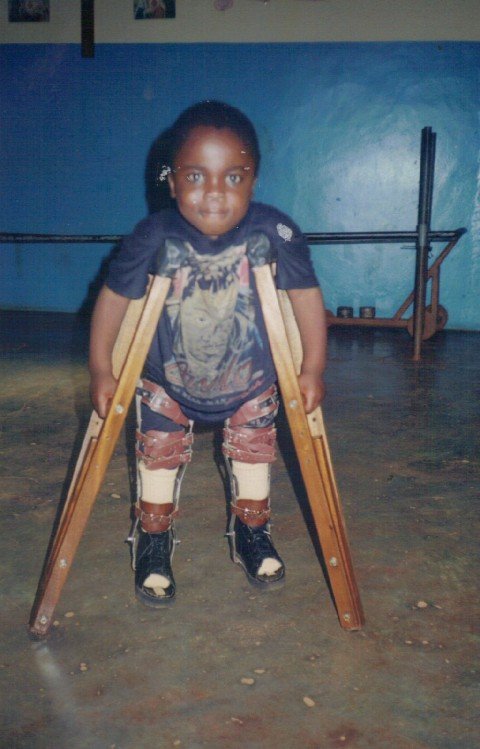


Mike Thomas with some of the children

Treatment and rehabilitation centre elevation

Treatment and rehabilitation plan
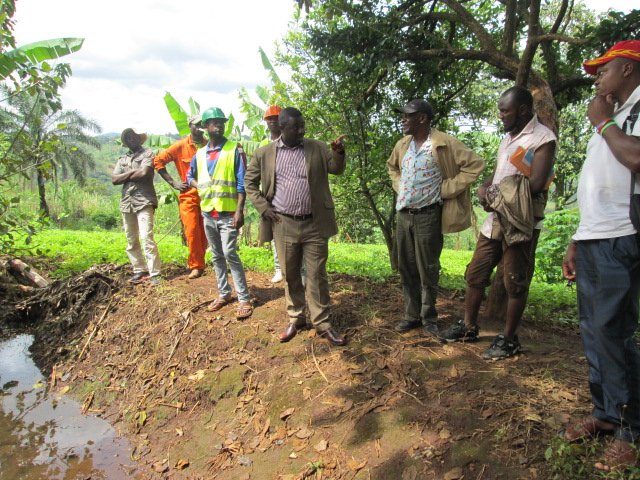




Coordinator – Emmanuel Wirsy

Delivering seedlings

Planting seedlings
Follow us on Facebook:
www.facebook.com/fiohfund
Follow us on Twitter:
twitter.com/fiohnet
Please share our links with your friends to help us reach a wider audience.