
Strategic Humanitarian Services
 Strategic Humanitarian Services (SHUMAS), a Cameroonian Development NGO, after working on its own for sometime, considered possible networking and collaboration with northern NGOs who shared common objectives and methods of approach to development. Between 1997 and 1999, the General Co-ordinator of SHUMAS, Stephen Ndzerem and the President of Plant a Tree in Africa (PATIA)/Co-ordinator of Future in Our Hands Education and Development Fund UK, Mike Thomas, were involved in some intensive correspondence.
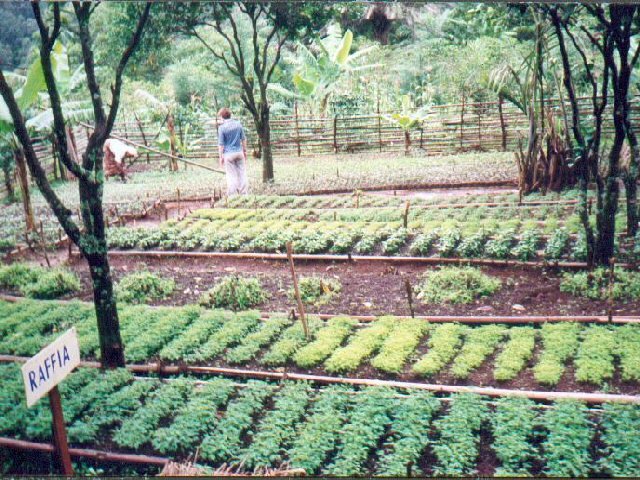 One of the issues they discussed was how to seek a sustainable solution to the adverse effects of eucalyptus plantations on water sources and farming areas. Women were the principal victims.
In 1999 Mike Thomas visited to carry out a site assessment and provided £500 from PATIA (matched by SHUMAS) to establish a nursery for 40,000 tree seedlings (10 species) and fell several thousand eucalyptus.
Because of the encroachment of the trees into existing and potential farming areas, many women have to walk long distances (often 15 miles or more) to find new areas to farm. They will then live in temporary self-made huts for 2 to 4 weeks before returning home with whatever they can carry on their heads. Many will carry babies or take young children with them. People in general, usually women and children, have to walk further and further each year to fetch water. A summary of the project and its outcomes are shown below.
Information gained from the pilot project was used in support of an application to the Big Lottery Fund to fund a large project named the Eucalyptus Replacement Project .
A 10 page brochure summarising the first phase of the project can be seen here:
CAMEROON – EUREP I – BROCHURE
Since then SHUMAS has established partnerships with AidCamps International and Building Schools for Africa both of which have resulted in a comprehensive school building programme involving a partnership between local communities and the schools’ parent teacher associations.
A Buildings Schools for Africa report can be seen here:
BUILDING SCHOOLS FOR AFRICA Newsletter October 2014
SHUMAS is now a well respected organisation in the area and has established many projects, including those summarised below, which have improved the lives of poor people in both urban and rural areas. More details can be seen at the SHUMAS web site:
STRATEGIC HUMANITARIAN SERVICES
SHUMAS integrated organic farming training centre

Another inspirational development has been the establishment of an Organic Farming Training Centre in the NW Region near Kumbo.
Details of the operation of the Centre can be seen in this 34 page report: BIOFARM
Primary health care
A partnership with Spreading Health [Founded by Dr Peter Hearn] is facilitating primary health care training for people in the rural areas. This has included a scheme to sponsor local village candidates to train for three years at the St Louis Higher Institute of Health & Biomedical Sciences in Bamenda (the capital of NW Cameroon).
Womens co-operative network
 During his visit in 1999, SHUMAS gave Mike Thomas an opportunity to present his idea for establishing savings and credit cooperatives to about 300 women. There were some initial setbacks but before 2000 more than five co-operatives had been trained and became fully operational.
By 2014 sixty two autonomous co-operatives all of which have again come under the single umbrella called Future in Our Hands Womens Credit Union Cooperative- Cameroon.
The FIOH co-operatives are quite different from conventional co-operatives. FIOH concentrates on building the capacities of grass roots women through encouraging the spirit of sharing, co-operation and fellowship, rather than on too much external dependency and a quest for individual material gain.
The SHUMAS head office and rehabilitation centre
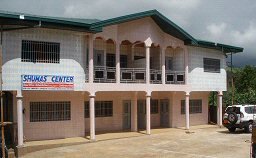 In February 2009 SHUMAS started the construction of an inspirational new building that combined facilities for both staff and vocational training for disabled people. The building was completed later that year. The SHUMAS head office combines facilities for administrative staff with those providing vocational training for disabled people. The object is to provide disabled people with the means to become economically self-reliant and the ability to effectively participate in the development of their communities.
The objectives of the Centre are to:
- Train disabled people in self-reliant skills so that they will be able to carry out economic activities which enhance their self-esteem and enable them to be part of the mainstream of development of their communities.
- Train them in basic management and leadership skills.
- Continuously monitor and evaluate graduates for some years to assess their progress.
- Set up a revolving micro-finance scheme to benefit ex-trainees.
- Advocate for the rights of disabled people.
The Eucalyptus Replacement Project

Project launch
The project was launched in 2000 and was supported by all sections of the community and government authorities and provided the framework for the introduction of new ideas to the women.
The womens network was to play an important role in the day-to-day management of the project which involved the felling of 1,017,200 eucalyptus and the raising of 2,624,000 mainly indigenous African trees (60 species) carried out in two phases between July 2000 and October 2008.
The projects cleared about 463 ha of eucalyptus trees resulting in the recovery of 105 springs and 140 water taps during the dry season. Over 9,000 women who had previously walked long distances to farm and collect water, were able to farm close to their homes.
Statistics in 6 rural health centres and 1 hospital recorded an average 27% reduction in water born disease during the life of the project. It was estimated that an additional 5,153 children were able to go to school because of the increase in family incomes resulting from the projects.
The local authority and many individual farmers copied the example of the project and hence the figures shown above are an underestimate of the project’s impact.


Community tree planting nursery in Oku – FIOH Co-operative
Nursery Development for Environmental Education and Forest Regeneration in Oku
 In 2014 the FIOH Fund provided grants of £500 each for community tree planting to two non-government organisations with offices based in Oku on the edge of Kilum Ijim natural forest, in the NW Region of Cameroon:
- Cameroon Gender and Environment Watch (CAMGEW) and
- Future in Our Hands Womens Co-operative, Oku
This report was prepared by the FIOH Oku co-operative leader, Gangli Mary Nkeng.
1. Presentation of FIOH-Oku and the current project
Future In Our Hands Cooperative is a women’s farming cooperative made up of over 5 Common Initiative Groups (CIGs) representing over five villages in Oku Subdivision. It was created on the 22nd of September 1999. It encourages the spirit of hard work, cooperation and togetherness in women. It is called a women’s cooperative because 95% of members are women. Her creation was thanks to the interest SHUMAS NGO and Future Our Hands–Oku had to empower women and the vulnerable in the Oku community. It has as its motto: educate a man, educate an individual; educate a woman to educate a whole nation. This is because of the socio-economic importance of a woman in the purely African village community like Oku. Since its creation FIOH-Oku has realised the following projects (just summaries):
- Improving the processing and transformation of corn and cassava through mills and haulers donated by SHUMAS and her partners.
- Offering loans to members at very minimal interest rates through a scheme developed by SHUMAS.
- Through SHUMAS there has been the development of community health infrastructure for the village of Lui.
- Regular production of organic food crops and other natural products for income generation and food security.
- Attending agro-pastoral shows to market their produce.
- Training and practising sustainable and integrated farming and livestock productions methods amongst her members.
- Training and application of agroforestry techniques to her membership.
In 2014, FIOH-Oku received a grant of £500 pounds from Michael Thomas of FIOH Fund-UK to develop a nursery of indigenous trees. We developed two nurseries with the funds, one of 3,000 indigenous trees in 2014 and another of 3,500 indigenous trees in 2015.
2. Presentation of the project area
Oku is located in Bui Division of the North West Region of Cameroon. It is made up of 36 village communities mostly living along the slopes of the Kilum Mountain. The people depend mostly on forest resources, subsistence agriculture, cash crop farming, livestock production and local artisan work for their livelihood. The Kilum Ijim Forest found in the community is a naturally preserved moist montane forest with a surface area of about 20,000 hectares. It is located in the Mount Oku Ridge in the Bamenda Highlands and forms part of the High Plateaus Agro-ecological Zone of Cameroon. The geographic location of the area is latitude 6°07’N – 6°17’N and longitude 10°20’E – 10°25’E. It has very important and threatened Afro-Montane endemic animal and plant species such as Prunus africana amongst others. It is an internationally important biodiversity hotspot and a critical zone for carbon sequestration within the High Plateaus Agro-ecological Zone.
The Kilum area is one of the most highly populated locations in Africa and Cameroon in particular, accommodating 144,800 people occupying about 328 km2 (439.3persons/km2); hence, high pressure on resources is inevitable. There has been progressive deforestation and degradation mainly due to agricultural expansion, forest fire and overgrazing. Fuel wood harvesting has also been a major cause of deforestation and forest degradation. The late 1980s decline in coffee prices triggered many farmers to migrate further up the slopes in search of new land to increase income through alternative crops.
3. Project goal and activities
The project goal was to train community members on agroforestry techniques which are soil conserving, fight poverty and hunger and to establish a nursery of indigenous trees for planting in farms and the community forests.
The objective was to offer practical agroforestry skills to at least 50 persons including men, women and children and to enable the participants to set up a nursery composed of indigenous trees for out planting within the community.
4. Project activities
Planning meeting:
After the FIOH Cameroon Network seminar and workshop held on May, 10th 2014 at SHUMAS Head Office Bamenda, FIOH-Oku had a planning meeting on May, 16th whose objective was:
- To report on the conduct of the seminar
- Present to FIOH members the cash gift given by Mike Thomas from FIOH-UK to enable members to nurse and plant indigenous trees
- Plan on when to start work on the project.
Collections of seeds and seedlings:
 On the 29th of May we met to plan on how to get sticks of the nursery fence. It was agreed that each member was to provide five sticks and men in addition will help make the fence. We equally planned on the collection of seeds and young seedlings for the nursery. We agreed to collect from the forest and from our farms. We equally decided to involve school children. The president was assigned to contact the head teacher of the school which she did.
Clearing, tilling and fencing of the nursery site:
The men did the clearing while the women did the tilling. This activity took place in the month of July, 2014.
Formation of nursery beds and nursing of seeds and seedlings:
Formation of beds and planting proper took place in July. Before nursing and planting the school children were taught by their teachers on the spot about the importance of trees to man and nature. The names of the trees in the Oku language were also made known to them. The planting was done with the children and their teacher. They were given some money for food and transport.
Weeding and monitoring of nursery:
Since the cooperative is made up of CIGs, the work was divided into groups and each group had a given task for weeding and monitoring. We jointly sold the young trees to CAMGEW for the sum of 178,000 CFA.
5. Detailed methodology and activities used during the project
We had a planning meeting with our members. Participants were trained by-doing in the field (a small demonstration plot we had at Manchok-Oku) on agroforestry nursery development using many locally sustainable approaches easily understood by the community. They were also trained on the importance of organic manure (compost) and how to produce organic pesticides. Lessons were given on the importance of trees in their farms, the advantages of enclosing their animals (goats, sheep, cows, fowls, pigs etc) to get animal dung to use in their farms for soil fertility improvement and increase food production. Through on-the-spot field work they were able to identify the dangers of Eucalyptus planting and why the trees should be cut down and replaced by agroforestry species and indigenous trees. The training was offered in the local languages (Oku) and in Pidgin English.
The principles of agroforestry were taught in the first part of the field learning. These included lessons on sustainable land management, trees and global climate change, agroforestry technologies (windbreaks, living fences, alley cropping terraces and contour plantings, firebreaks, forest gardening, and integrated production systems) and agroforestry for livestock management, conservation techniques, integrated pest management, composting, perceived needs of the community, income-generating activities, major agroforestry species (Leuceana, Calliandra, Acacia, Tephrosia), seed collection, storage, and pre-treatment, bare root nurseries and bare stem seedlings. Practical work was done on the second part of the training. Participants had to do practical nursery development activities. They tilled the soil; they planted some seeds while getting information on how to plant them. Prunus africana and other indigenous trees were nursed from where the seedlings will be planted into farms and other areas in the community.


6. Participants at the demonstration plot in Manchok, Oku
May – July 2014: 4 men, 36 women and 35 children
June – July 2015: 5 men, 35 women and 45 children
7. Challenges
From the beginning of the project, many of our plants did not germinate or they died after germination, but our team and the participants did not give up. We benefitted from the technical support of the chief of post of forestry just of recent. He is very much willing to work with us. He told us the first error was because we collected the seedlings poorly and the roots got infected or dried up. We were able to nurse over 7,000 trees and 3,000 survived. Some of the trees were out planted during the CAMGEW tree planting exercise in the community forest.
8. Conclusion
Currently we have developed another nursery of 3,500 trees consisting of Prunus africana, Schefllera species and other locally known species. The trainings went on smoothly with the participants learning during the practical steps. We saw that participants were participatory in the activities. Old mothers and fathers who do not know how to speak English raised their hands and asked questions or shared their knowledge on agroforestry techniques using the local language. We learned a lot in the process from indigenous knowledge on agroforestry techniques from participants. There was an integration of the traditional methods of farming and agroforestry techniques by the participants.
If you would like to support the the tree planting projects of the FIOH Fund please make a DONATION:

Follow us on Facebook:
www.facebook.com/fiohfund
Follow us on Twitter:
twitter.com/fiohnet
Please share our links with your friends to help us reach a wider audience.
Environment and Rural Development Foundation
Environment and Rural Development Foundation  (ERuDeF) is a Cameroonian non-profit organization founded in 1999. It is the only indigenous non-profit organization working on research and conservation of great apes in Cameroon.
Background
 The Lebialem Highlands (LH) have a history of poaching and unsustainable agricultural practices over the last several decades. These Highlands are situated in the South West Province, Cameroon. This project seeks to introduce a community-led micro-credit initiative through the creation of an environmental protection fund which will serve both as a revolving fund and provide start-up grants to the most impoverished farming groups that continue to farm and construct on marginal and fragile lands. This is a project of the Environment and Rural Development Foundation (ERuDeF), which was initiated in 2001 to protect and conserve the montane and lowland rainforest ecosystems in and around LH and improve on the quality of living of the local inhabitants.
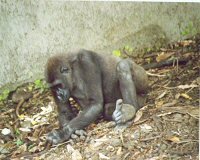
The Highlands cover an area of 1,323 sq km comprising forest lands, sub-montane, montane and grassland habitats. The Highlands lodge many species of endangered plants and animals including elephants, gorillas, chimpanzees, drills, crocodiles, tortoise and red list data plants. It is one of the only three mountain regions in Cameroon still having a continual graduation from 180m to 2510m above sea level.

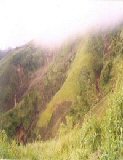 The LH area is one of the poorest areas in Cameroon. Very low levels of income (usually less than $ 0.5 a day), limited land management skills, lack of credit facilities, lack of market access and lack of medical care, characterize all the communities in the region especially those bordering the forest areas and those completely lacking access routes. Their economy is essentially that of hunting, gathering and fishing. Their agricultural potentials are low especially as they continue to farm on marginal lands prone to landslides every year and their economic options are low due to lack of market access. However, the vast non-timber forest products present one of the opportunities for exploration to raise the incomes of the rural people.
The majority of the peasants have no access to credit facilities. The Cameroon Credit Union League (CAMCCUL), the main micro-finance institution in the country field, has offices located very far away from most of these communities and can only serve a very tiny proportion of the over 30,000 indigenous people living here.
Most people here rely on an informal network of money lenders who often charge very high interest rates (> 50%) and will seize poor farmer’s properties if interest payments or debts are not repaid.

 In this context many farmers and young people have no choice but to encroach into the neighbouring protected areas and the marginal lands in search of farm land at little or no cost. Struggling with debts, these local farmers, who for the most part have no access routes, have no choice but to resort to heavy poaching, poisoning of rivers for fishing, illegal logging and land encroachment. This is causing the unsustainable exploitation of the wildlife resources, especially the endangered fauna.
In the Highlands area the continual cropping of marginal lands leads to several landslides each year which have, in the recent past, led to hundreds of deaths and destruction of houses, productive forests and arable land. Research conducted between 1999 and 2002 has shown that game harvesting is twice the sustainable off-take. This research has also shown that one of the legally protected species, the leopard, in the neighbouring wildlife sanctuary, has become extinct. There are fears that another protected species, the giant pangolin, may also have become extinct. This situation can only be reversed through the improvement of the socio-economic environment of the adjacent local communities. The conservation objectives of the area will be compromised if nothing is done.
Within this context, ERuDeF realized that the problem of debt and poverty had to be dealt with if livelihoods and the endangered biodiversity of the region are to be fully protected. It is within this framework that ERuDeF is seeking to establish an innovative community-based led micro-credit system that will be opened to all the local communities and even those having no collateral as required by many micro-finance institutions. ERuDeF is helping to organize the communities across the region into constituted community-based institutions that will facilitate the process of all the local people having access to this credit facility.
This credit system, called the Lebialem Highlands Environmental Protection Fund (LHEPF), will be run by a democratically elected committee that will be composed of at least 50% women. The women are the most affected in terms of poverty and more than 55% of the women are found below the poverty line.
The main objective of the LHEPF is to promote sustainable income generating activities and reduce illegal harvesting of wildlife resources and cropping of marginal lands. This credit system is part of a wider programme of micro-enterprise support, capacity building and sustainability being led by ERuDeF. ERuDeF is seeking financial support to help implement these activities.

 ERuDeF’s sustainable development programme activities are meant to improve livelihood sustainability and increase the local community members’ capacities to repay loans, remain solvent and expand on their existing micro-enterprises. This project will provide both start-up grants to cooperating farmers and youths and credit facilities to enable them to expand on their micro-enterprises.
The micro-credit system operates on the following principles: local people get loans for ecologically beneficial and income generating micro projects provided they do not poach or crop on marginal lands and or log illegally. Very low interest rates of less than 5% will be charged generally. Impoverished farming groups with no collateral will be given start-up grants. Criteria for selecting loan and start-up grants recipients will include the viability of the proposed activity, repayment capacity and market demand. The LHEPF will also establish what actions will be taken if members fail to pay back loans or meet environmental criteria.
ERuDeF will ensure that beneficiaries will focus on mixed cropping and on cultivating products with high market value but with low environmental impact. Such systems involve community forestry, agroforestry and consist of planting a combination of fast & slow growing tree species on marginal lands. This will permit them to get an average minimum income from fast growing species while the high value but slow growing hardwood species will mature with time. This approach will also allow the land to restore itself. The micro-credit initiative will also support a system of local enterprises which yield high-return products with low impact on the fragile highlands environments. ERuDeF will promote such enterprises as beekeeping, mushroom cultivation, livestock, tree nurseries, snail rearing, eco-tourism, non-timber forest products processing etc.
This is an innovative mechanism through which micro-credit initiatives will be interwoven with wider efforts to improve the incomes of lower and most affected impoverished groups and jobless rural youths. Sustainability will be ensured by aligning ecologically sound micro-enterprises with the actual demands of the market and biodiversity management.
This is a three-year pilot initiative which will serve over 30,000 farm families. After this start-up phase, the revolving fund system will become sustainable as money given out during the first year will be repaid in the second year – and the cycle will continue. The main micro-enterprises will include cultivation of cola nuts, tree nurseries and reforestation, beekeeping, NTFP processing and marketing, mushroom farming, snail rearing, wildlife domestication, livestock, agro-forestry and community forestry development and exploitation.
The Environment and Rural Development Foundation (ERuDeF) is a Cameroonian non profit organisation formed in 1999 as a membership organisation. Its mission is to conserve wildlife and protect fragile environments and to improve upon the wellbeing of indigenous peoples in particular and the quality of human life on earth in the regions where it operates. Its focal programmes include biodiversity conservation, forest landscape restoration, sustainable development, women and gender and education and training. ERuDeF staff, members, its associates and partners have over a decade of experience in the implementation and management of conservation and rural development projects in Cameroon. Its expertise expands to include but not limited to finance, project development, sustainable development, conservation, gender and education.

Eucalyptus replacement project, NW Region
 Eucalyptus replacement project

Between 1997 and 1999, the General Co-ordinator of SHUMAS, Stephen Ndzerem and the President of Plant a Tree in Africa (PATIA)/Co-ordinator of Future in Our Hands Education and Development Fund UK, Mike Thomas, were involved in some intensive correspondence. One of the issues they discussed was how to seek a sustainable solution to the adverse effects of eucalyptus plantations on water sources and farming areas.

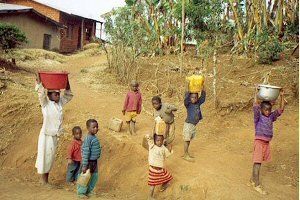

Women were the principal victims. Women and children were forced to walk long distances to fetch water because the eucalyptus trees were taking up large quantities of water and this was lowering water tables and drying up water taps and springs during the dry season.

The adverse social effects of the trees was brought to the attention of SHUMAS by Angela Wirkom, leader of the Bonkeh Womens Common Initiative Group. The women complained that the trees were taking up so much water during the dry season that they were having to walk long distances to collect water and find suitable areas to farm.
In 1999 Mike Thomas visited to carry out a site assessment and provided £500 from PATIA (matched by SHUMAS) to establish a nursery for 40,000 tree seedlings (10 species) and fell several thousand eucalyptus.

 Because of the encroachment of the trees into existing and potential farming areas, many women have to walk long distances (often 15 miles or more) to find new areas to farm. They will then live in temporary self-made huts for 2 to 4 weeks before returning home with whatever they can carry on their heads. Many will carry babies or take young children with them. People in general, usually women and children, have to walk further and further each year to fetch water. A summary of the project and its outcomes are shown below.
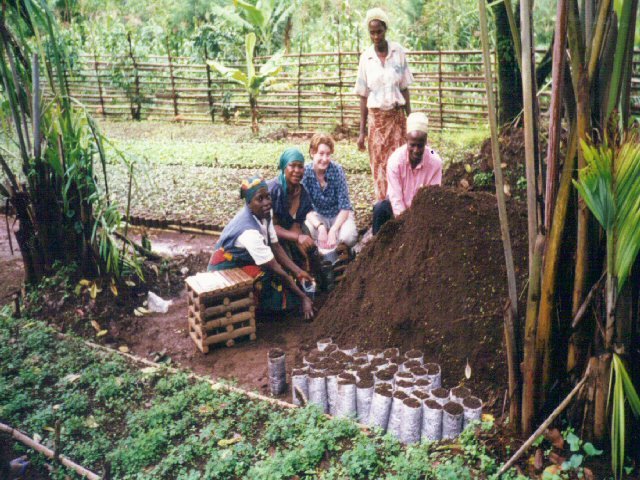 Information gained from the pilot project was used in support of an application to the Big Lottery Fund (previously named the Community Fund) to fund a large project named the Eucalyptus Replacement Project .
A 10 page brochure summarising the first phase of the project can be seen here:
CAMEROON – EUREP I – BROCHURE
Project launch
The project was launched in 2000 and was supported by all sections of the community and government authorities. The project involved the felling of 1,017,200 eucalyptus and the raising of 2,624,000 mainly indigenous African trees (60 species) carried out in two phases between July 2000 and October 2008.
The projects cleared about 463 ha of eucalyptus trees resulting in the recovery of 105 springs and 140 water taps during the dry season.


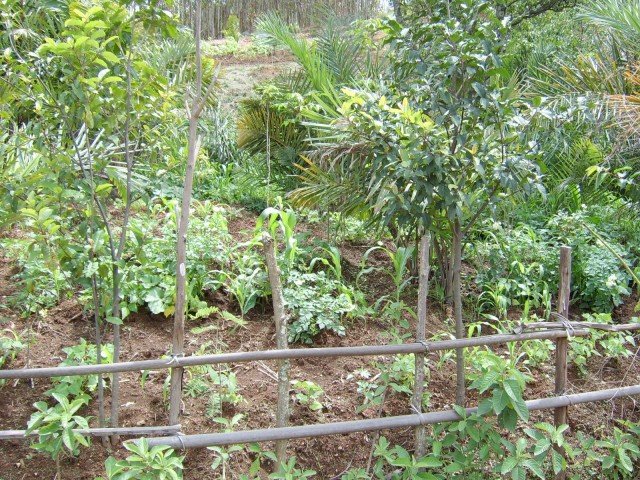


The photos above show (1) a large area of Council land cleared of eucalyptus, (2) women clearing former eucalyptus plantation land in preparation for planting crops, (3) Pygum africanus trees raised from seed in Phase I of the project. This species is nitrogen-fixing and an important cash crop. The bark is used in cancer treatment, (4) part of the large nursery established in Phase II of the project and (5) areas of agroforestry using seedlings outplanted from the nurseries.
Outcomes
Over 9,000 women who had previously walked long distances to farm and collect water, were able to farm close to their homes.
Statistics in 6 rural health centres and 1 hospital recorded an average 27% reduction in water born disease during the life of the project. It was estimated that an additional 5,153 children were able to go to school because of the increase in family incomes resulting from the projects.
The local authority and many individual farmers copied the example of the project and hence the figures shown above are an underestimate of the project’s impact.
Monitoring visits were carried out by Michael and Glenys Thomas for the Phase I project in 2004 and by Alan and Teresa Stewart for the Phase II project in 2008. Mike Thomas visited the project and that of Global Rehabilitation Services in 2009:
EUREP II REPORT – MONITORING VISIT MAR 2009 EUREP II


The photos above show Glenys Thomas helping to sow seeds in the pilot project in April 2004 and Alan and Teresa Stewart who monitored Phase II of the project in 2008.


During his visit Mike Thomas and representatives of SHUMAS accompanied women on a part one of their 15 mile trips to their farming area at Nkuf. The project not only assisted the women, but also provided economic benefits for land owners who were generally men.

A short term benefit came from the sale of the eucalyptus logs for construction timber, fencing a electricity poles. An important outcome of the project was that land owners gained more from growing crops than they previously gained from their eucalyptus trees. Thus many men joined women in planting crops for local consumption rather than cash crops for export. It is also hoped that the project will support long term sustainable development because of greater opportunities for young people to gain employment locally.

If you would like to support the work of the FIOH Fund please make a DONATION:

Schools environmental programme
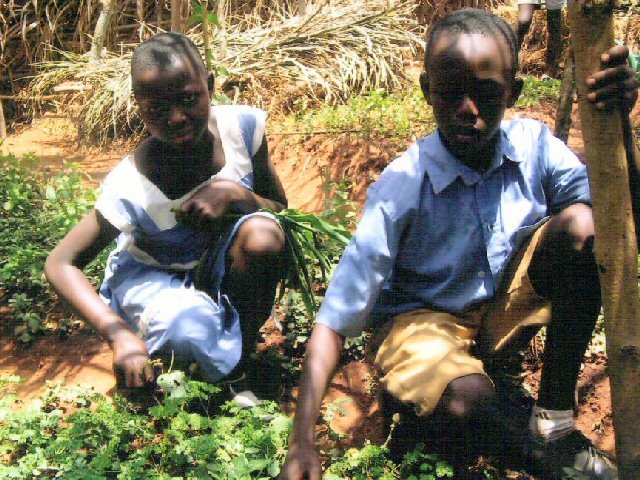 Schools environmental education project
The project established the following programmes in 10 rural primary schools (average of 500 in each school) in the NW Region of Cameroon. The programme involved:
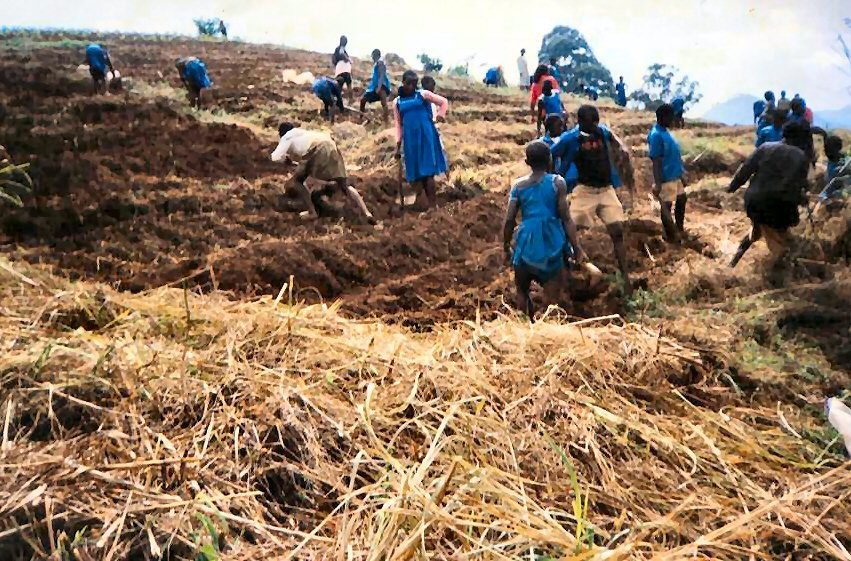
- Establishing a model school farm at each school where children will gain practical farming knowledge (seed selection, planting crops, nursing of seeds, growing crops, harvesting, storing, marketing etc).
- Educating and conveying practical knowledge on the importance of trees in the community; children will also influence their parents concerning environmental issues and rural development.
- Providing skills for employment. The parents of as many as 60% of children will not be able to afford to pay secondary school fees. This programme encouraged many more children to gain skills in sustainable agriculture, so that they find interesting and gainful farming employment in villages.
- Income from the sale of school farm produce was used to pay the salary of at least one more teacher in each of the five schools.
- Some of the income was used to buy educational materials, equipment and teaching aids.
The project was managed and organised by Strategic Humanitarian Services, based in Bamenda. The programme involved:
- Acquiring land for the school farm: The school farm must be situated near the school for ease of mobility of pupils, so as not to waste too much time trekking to the farm.
- Each of the five schools owned a farm of about 1 acre. The land was divided into small plots. Each plot grew a different crop or vegetable. Crop rotation was practiced.
Seeds collection: Pupils were organised to make trips to the forest and taught how good seeds can be gathered. Thereafter there were practical lessons on how to treat the seeds, nurse them in seedbeds, transfer them into polythene pots and finally plant at their permanent site. The children continued to care for the seeds and the plants.
Environmental lectures were organised once a month in each of the schools: The lectures included the economic and ecological advantages of different indigenous species, the social and environmental problems associated with eucalyptus and the danger of using chemical fertilisers.


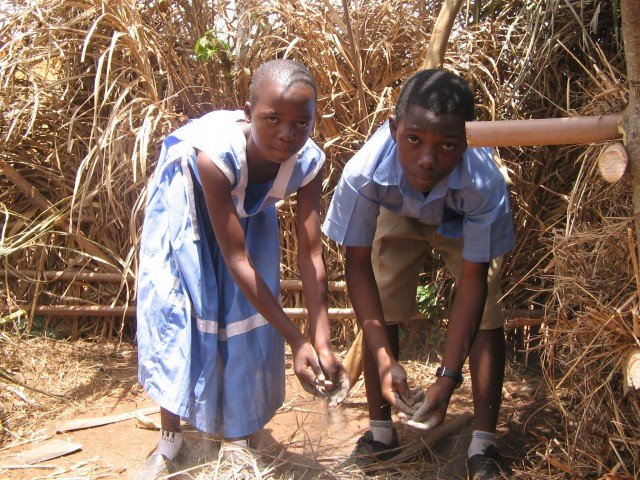



School competitions involved quizzes and prizes were awarded to deserving pupils.
Publication of a hand out: An educational illustrated booklet was produced that can be used in schools.
With the support of the FIOH Fund the NGO Cameroon Gender and Environment Watch (CAMGEW) working in Oku, launched a similar project which expanded the work it was already doing with schools in the area.
The FIOH Fund obtained grants of approx £12,000 from the Funding Network and the Network for Social Change for this project.
If you would like to support the work of the FIOH Fund please make a DONATION: