Global Rehabilitation Services Report – January 2019
GLORES TREATMENT CENTRE FOR DISABLED CHILDREN
REPORT – January 2019
Although the civil conflict in the country is not affecting the West Region of Cameroon, the project co-ordinator, Alfred Wingo, had to help his family located in the Northwest Region who were forced to move to a distant location because of the conflict. He located them by having to travel through the bush by foot and motorbike. He found them suffering from a shortage of food and other necessities. They are now out of danger.
Treatment of disabled children
There has been a steady flow of disabled children being brought to the centre for treatment. Currently 24 children are being treated (14 males and 10 females). The most common disabilities involve deformation of the lower limbs. Two with cerabral palsy are currently resident at the Centre undergoing long-term treatment.
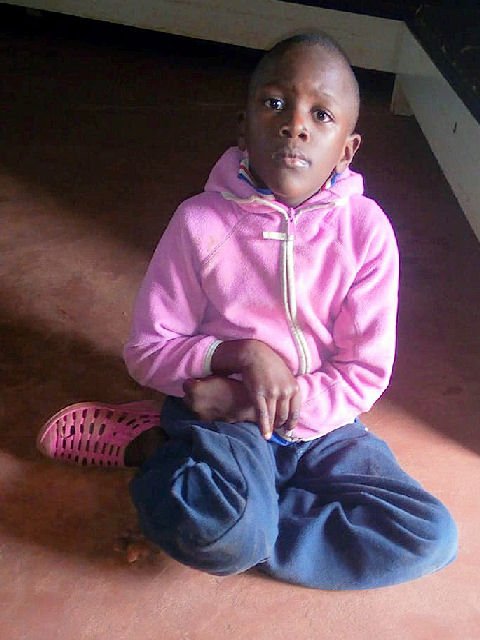
One of these, Nsah R, was brought to the Centre with completely contracted limbs, very hyperactive and spastic. The parents had spent a lot of money on unsuccessful treatment at several hospitals beforehand.
The mother brings him every two months and he stays for one month each time. She is taught practical exercises to perform at home.


His treatment is progressing well and he is now able to stand up straight with support.

GLORES seeks to correct deformities in youths and adults despite the added difficulty as people get older. In the picture above Tchoutchoua G. is underoing stretching treatment by Alfred.


Left: Dsomu Z. is another child with cerebral palsy periodically resident at the centre during treatment.
Centre left: Matie W. undergoes stretching in preparation for splinting.
Centre right: Tuedom M. on microwave diathermy.
Right: Sibefo F. wearing splints.


Fouapong M. with congenital lower limb deformity before treatment and with new calipers during treatment. Fouapong is starting to walk unaided.
A local honour for Alfred Wingo

In recognition of his work he has received a local honour and has been named as a notable. The inaugural ceremony took place in the village in December 2018.
The entire village was there to witness the event which ended with him joining a traditional dance with other notables. His award was presented by the Chief of Bafoussam at his palace.

The Chief of Bafousssam can be seen here dancing at a cultural event with music provided by the GLORES Music Group.
Alfred was one of the organising committee with the Regional Delegation of Social Affairs for the International Handicap Day which took place on 2nd Dec. 2018.
In addition to financial support, the FIOH Fund has sent Alfred a flash drive, a book on basic prosthetics treatment written by disabled people in Mexico and the book ‘Where There is No Doctor’.
During 2018 eighty new children came to the centre and 60 received treatment. See schedule below:

Please support the work of the Future in Our Hands Education and Development Fund whose aim is to help and empower some of the world’s poorest and most marginalised people by:
- UK residents can provide long term support by completing the FIOH FUND DONATION FORM and sending to the address shown on the form:
- Direct grant to the charity’s bank account or by cheque to:
 Bank account details:
Co-operative Bank
IBAN: GB07CPBK08929965050707
BIC: CPBKGB22
Cheques should be made payable to the
Future in Our Hands E&D Fund
—————————————————————————-
Fundraising to help the work of the charities would be greatly appreciated
FIOH Fund Newsletter – Winter 2017
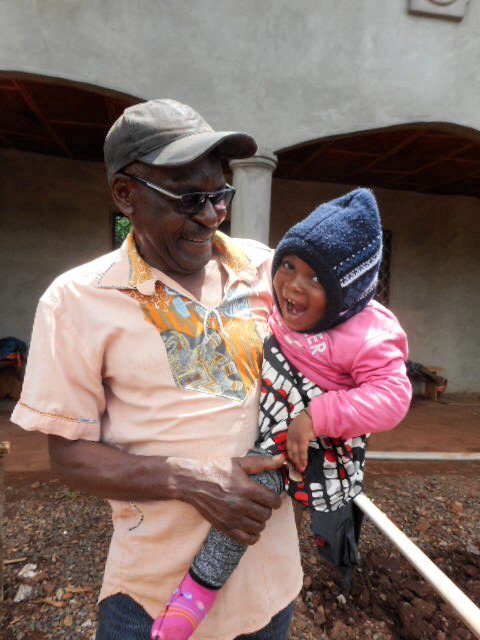

Alfred Wingo,the founder and director of GLORES, is shown here with one of the children being treated.
NEWSLETTER – ISSUE2 – WINTER 2017
FIOH FUND NEWSLETTER 2 – WINTER 2017
This newsletter summarises and illustrates some of the activities which have taken place in a new treatment and rehabilitation centre established in the Cameroon with the financial support of the FIOH Fund. The centre is run by Global Rehabilitation Services (GLORES), a local NGO, which moved from its former rented accommodation in April 2017.
Please support the work of the Future in Our Hands Education and Development Fund whose aim is to help and empower some of the world’s poorest and most marginalised people by:
- UK residents can provide long term support by completing the FIOH FUND DONATION FORM and sending to the address shown on the form:
- Direct grant to the charity’s bank account or by cheque to: Bank account details:
Co-operative Bank
IBAN: GB07CPBK08929965050707
BIC: CPBKGB22
Cheques should be made payable to the
Future in Our Hands E&D Fund
—————————————————————————-
Fundraising to help the work of the charities would be greatly appreciated
Disability survey – West Region of Cameroon
Survey of disabled children in West Region of Cameroon
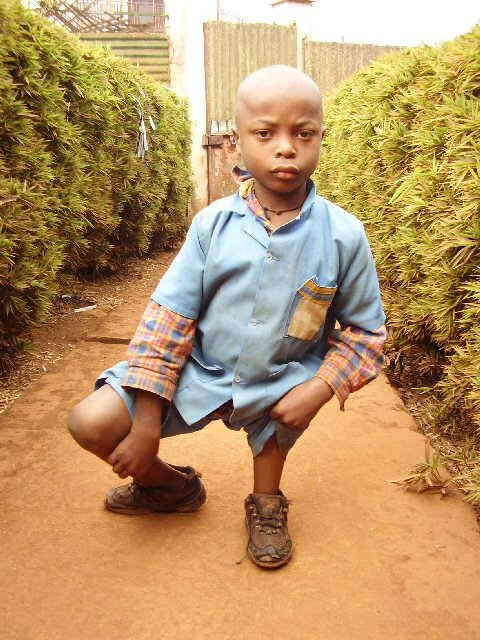 There appears to be little statistical information on disabilities in the West Region and few facilities for treatment. In 2010 the FIOH Fund provided a grant to the non government organisation Global Rehabilitation Services (GLORES) to carry out a comprehensive survey in all 8 divisions of the Region. In the survey below a total of 10,493 disabled children were identified and 21 different types of disability. Over 75% of those surveyed did not go to school and most were from poor families. Many villages are very difficult to access during the rainy season. Most of the children had valgus or varus deformities. The most common causes of disability were malnutrition, lack of health care services and societal beliefs that disabled children are possessed by evil spirits. Parents are sometimes ashamed to have disabled children which are then hidden away out of public view. There were some cases of children being drowned by witch doctors who had claimed they would turn into snakes as soon as they entered the water.
In 2012 Global Rehabilitation Services evaluated 1058 children in the West Region of Cameroon, 1,012 of which had disabilities. 126 of these received treatment at the organisation’s centre in Bafoussam.
A table showing the results of the survey can be seen here:
glores-table-of-disabilities-2012
Please support the work of the Future in Our Hands Education and Development Fund whose aim is to help and empower some of the world’s poorest and most marginalised people by:
- UK residents can provide long term support by completing the FIOH FUND DONATION FORM and sending to the address shown on the form:
- Direct grant to the charity’s bank account or by cheque to: Bank account details:
Co-operative Bank
IBAN: GB07CPBK08929965050707
BIC: CPBKGB22
Cheques should be made payable to the
Future in Our Hands E&D Fund
—————————————————————————-
Fundraising to help the work of the charities would be greatly appreciated
Open day at GLORES Treatment Centre
GLORES NEW CENTRE OPEN DAY
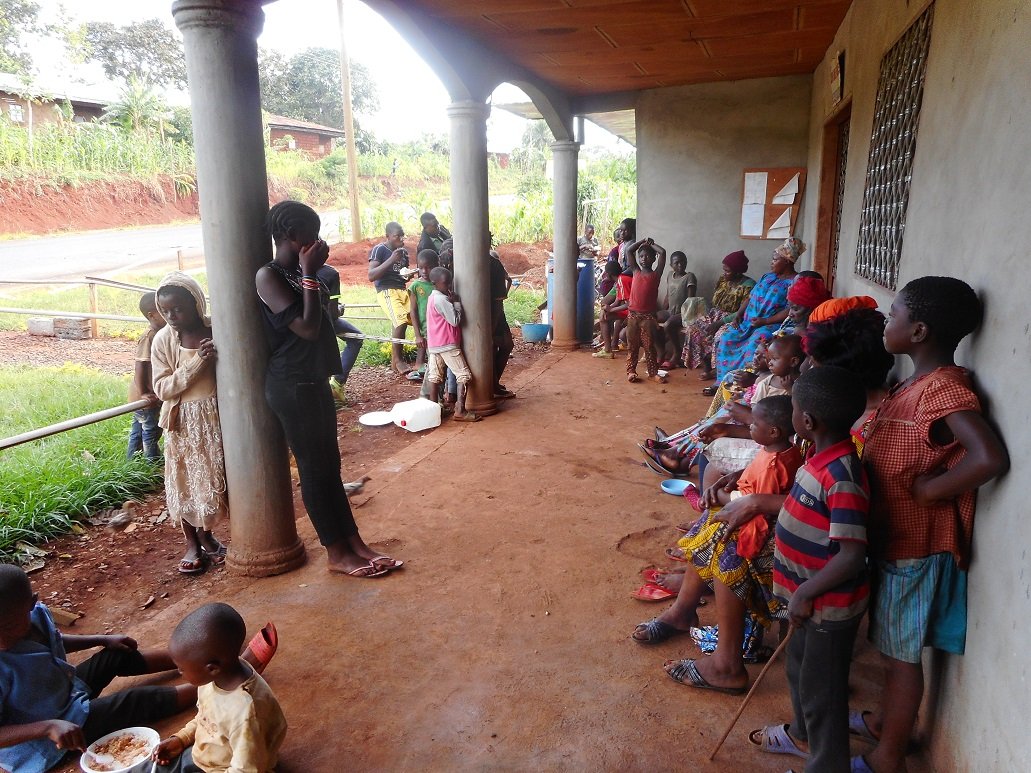 The open day that took place on May 29, 2018 was impromptu. The Sacta quarter notables of the Chieftency of Bafoussam informed GLORES of a visit with the entire quarter inhabitants. For them the building of GLORES New Centre was a big achievement in the village of Njingah and they thought that the Centre should be given a warm welcome by the village.
The gathering was attended by 40 persons from the village with 15 notables present. In a speech delivered by the quarter head (Sub-Chief) of Njingah on the occasion the Chief welcomed GLORES to the village. He said that all the workers in GLORES should feel at home and know that they are now welcomed as inhabitants of Njingah village. He said that GLORES, being the only rehabilitation centre in the West Region of Cameroon and constructed in their village, was a great privilege for the village. He said that the New Centre has contributed to the development of the village.
More importantly it has put their village on the map as people will be coming from all over the West and neighbouring Regions of Cameroon for treatment of their disabled children. He paid tribute to the work GLORES is doing to help disabled children especially those from very poor families. He was particularly impressed by the fact that since he had known the work of the Centre no child has ever been left out for lack of resources.
He concluded that he was going to inform the Paramount Chief of Bafoussam about the warm welcome GLORES gave them during the open day and about the good work being done. He announced a second visit when the Coordinator of GLORES, Alfred Wingo, will be presented as a notable in the village with full rights.
The New Centre was blessed in the traditional way and the ancestors were invoked to guide and protect the Centre.
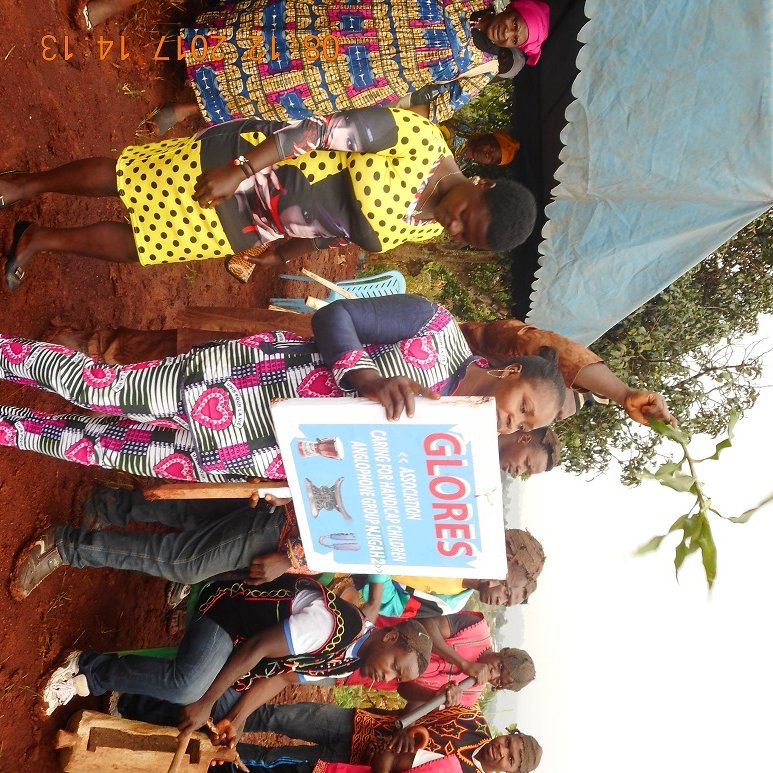 The occasion was animated by the GLORES Association Cultural Music Group and everyone danced to exhaustion. After the dance, many people expressed the desire to become members of the Group.
The open concluded by a reception offered
Please support the work of the Future in Our Hands Education and Development Fund whose aim is to help and empower some of the world’s poorest and most marginalised people by:
- UK residents can provide long term support by completing the FIOH FUND DONATION FORM and sending to the address shown on the form:
- Direct grant to the charity’s bank account or by cheque to: Bank account details:
Co-operative Bank
IBAN: GB07CPBK08929965050707
BIC: CPBKGB22
Cheques should be made payable to the
Future in Our Hands E&D Fund
—————————————————————————-
Fundraising to help the work of the charities would be greatly appreciated
Follow us on Twitter:
twitter.com/fiohnet
Please share our links with your friends to help us reach a wider audience.
Treatment Centre for Disabled Children – Project update
New treatment and rehabilitation centre in Cameroon
Thanks to the generous support we received from our appeal last year, Global Rehabilitation Services (GLORES) has moved in to the newly completed treatment centre. It is 15km from Bafoussam, in the West Region of Cameroon, on the main road to Foumban.
Alfred Wingo with child being treated
The move was slightly delayed because of the rainy season, but the physiotherapy equipment has now been relocated from the old rented building and treatment has now begun. An official opening is expected to take place in September this year.
When our funding appeal launched in November 2016, the walls and roof of the building had already been completed and tree planting carried out on the site.
Donations since November have enabled the installation of toilets, wash basins, ceiling boards, windows and doors. The electricity has been connected and in use and Alfred is waiting for environmentally friendly and economical (low consumption) bulbs to use for lighting. The water supply has yet to be installed by the local water company and temporarily rain water is being used for washing and drinking water is being brought from the town.
What’s happening now?
More than 80 children have been treated so far this year. A number of those have received treatment at the new centre since it opened in May, including:
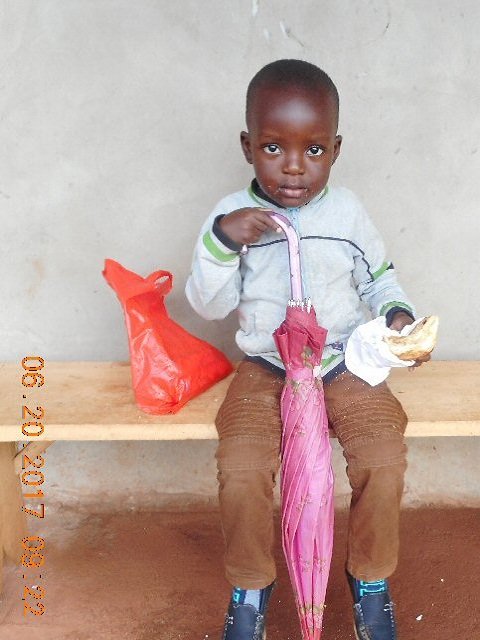
Nde Daryle, age 3, has had physiotherapy for bilateral valgus knees – and is showing continuing improvement. Nde’s mother is a single parent and unemployed, so he is being cared for by his grandparents who are farmers.
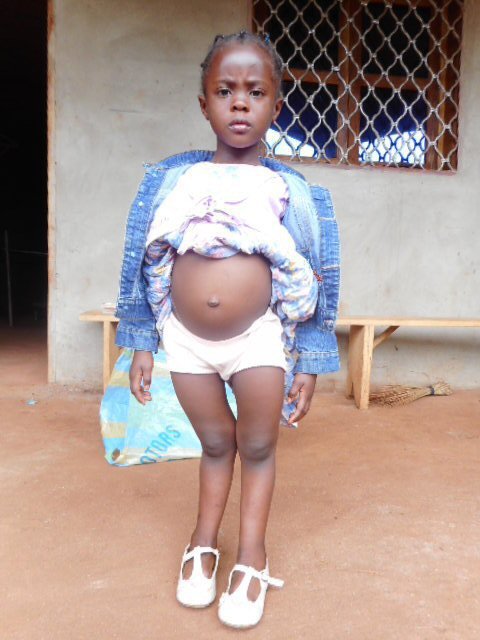

Left: Djonge Anael, age 5, has had calipers applied for bilateral valgus knees and is also showing improvement. Djonge is from a polygamus family of 10, her parents are aged and not working.
Right: Joumessi Frankie, age 4, is from a family of 7. His parents are farmers, 5 children go to school. Joumessi also had bilateral valgus knees and is now able to walk after treatment using splints.
Most of the children being brought to GLORES for treatment can be cured with physiotherapy alone whilst others with severe deformities will require corrective surgery. To understand the difference treatment makes, you can read testimonies of six children treated in the past. Despite the effort involved with shifting equipment and finishing work on the new centre, a limited amount of treatment was still possible in the old rented building.


The children above, whose legs were severely deformed, were successfully treated at the rented building. The girl with the red dress is walking for the very first time since birth, while the picture on the right shows the celebrations when a treated child returned to her village.
What are the challenges now?
Raising funds for the new centre took more than three years and there were many obstacles along the way. During this time Alfred’s wife and two sisters have died. He also lost a brother in June 2017. Despite this, Alfred has continued his vital work whilst supervising and organising construction of the new building.

In 2015 GLORES had to cut back on its activities due to the death of the founder of the Dutch trust providing most of its funding. This support was helping cover the costs of treatment and staff to assist with running the rehabilitation programme. Since then the Future in Our Hands Education and Development Fund (FIOH Fund) has been the main source of support.
One of the FIOH network partners, Wirsey Emmanuel from Cameroon Gender & Environment Watch, visited Alfred in May on our behalf to report on how the work was going:
“GLORES is now free from rent – which is a big relief. To control electricity shortages or blackout there is a need for a generator to supply energy for the workshops and solar panel system for lighting, especially when there is no work in the workshop.
More water harvesting containers are required to secure water in the rainy season, while waiting for the Government to supply water. The Bafoussam municipal stadium is close by and water going to the stadium has to pass by the centre. We are hopeful that the water supply will arrive at the centre before long.
GLORES sees the need for volunteers, either within or outside of Cameroon to give a helping hand. This is an opportunity to identify a reliable, committed and hardworking student or person who can be trained to work at GLORES and get further practical training from Alfred.”
An administrative assistant has been appointed and a system of recording treatment details and providing feedback has been agreed with the FIOH Fund.
What is the key challenge now?
Now the building is ready and operational we are looking at creative ways to sustain the ongoing treatment costs of the centre.
The key challenge is developing a revenue – either as grants from charitable trusts, or generating a monthly income from donations and other means. We would like to establish a Friends of GLORES group of supporters who can make small regular contributions towards treatment costs.
One idea for gaining funds locally is to have a stall at the front of the centre, serving the public and passing traffic. This could operate like a roadside café – selling hot and cold drinks and snacks – and locally made handicrafts or generally useful items for the local community. With the electricity now connected it could also offer a handy mobile-phone recharging service.
Neighbours to the centre could be encouraged to provide rented accommodation for parents of children while they are undergoing treatment. There is also the possibility of renting parts of the building, for example meeting rooms for other community needs.
Please support the work of the Future in Our Hands Education and Development Fund whose aim is to help and empower some of the world’s poorest and most marginalised people by:
- UK residents can provide long term support by completing the FIOH FUND DONATION FORM and sending to the address shown on the form:
- Direct grant to the charity’s bank account or by cheque to: Bank account details:
Co-operative Bank
IBAN: GB07CPBK08929965050707
BIC: CPBKGB22
Cheques should be made payable to the
Future in Our Hands E&D Fund
—————————————————————————-
Fundraising to help the work of the charities would be greatly appreciated
People helped by the work of Global Rehabilitation Services
Global Rehabilitation Services has since its foundation carried out successful prosthetics treatment, including the arrangement of corrective surgery when required, for over 1,500 severely disabled children and youths.
Testimonials of six of these children are given below:
Jackson Kuetche
This child at the age of five had a severe cogenetal deformation (Bilateral valgus knees). The picture on the right shows the boy after corrective surgery and physiotherapy.
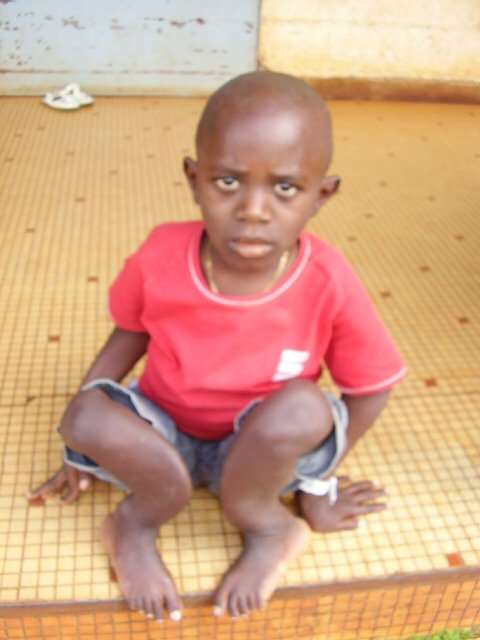

My Name is Jackson Kuetche and I am 7 years of age. My mother told me that when I was born, my legs were normal but later started deforming as I developed.
I went to school like other children until my legs got so serious that I found it difficult to walk to school. There came a time that I could not walk any more. I could only drag my buttucks on the ground to displace myself from one place to the other. Other children were laughing at me at school and I felt so bad and could not stop crying. The problem became so serious that my parents asked me to stop schooling and stay at home. I was sad because my brothers and sisters were going to school and I could not.
My parents were informed in the village meeting that there was a Handicap Treatment Centre called GLORES. The village group helped my parents through contributions to pay transportation to the GLORES Centre in Bafoussam.
In GLORES they told me that my deformations were so serious that surgery was needed. They also told my parents that I had ricketitis, a disease that causes severe deformations of the bones and retards growth and develoment. My parents did not have money for the operation. I started crying with my mother. GLORES worked out a financial assistance for the operation of my legs and put me on medical treatment. My parents only paid a small portion of the operation charges.
My legs are corrected and are straight. I can now go to school. I am happy with my family because I have returned to school. My family and I do not know how to thank GLORES programme.
——————————————————————-
2. Mapta Yomgue
This two days old baby had a severe cogenetal deformity. The picture on the right shows her after one month of physiotherapy.


This testimony was given by the mother of a three year old child who was refered to GLORES for treatment for a severe congenital deformation of the right leg by the Bafoussam Regional Reference Hospital.
Mother’s observation
God still continue to perform miracles today through individual and charitable organizations like GLORES. I believe in what I am saying because of my experience with my little girl whom I brought to GLORES at the age of two days with serious deformation of the right leg after birth. The hospital where the child was born told me that something can only be done through surgery when the child reaches the age of 25 years. They, however, refered the child to the Handicap Treatment Centre called GLORES. If the hospital of that calibre could not do anything, I was left with no choice than to cry.
I brought the child to GLORES in tears. I was comforted and told not to worry. I could not believe what they were saying. They consulted the child and put her on treatment for one month. To my utter amazement the child’s leg returned to normal. I could not believe myself. I thought I was dreaming.
Now my little girl is growing up normally like other children and shows no sign of any problem at birth. This was a miracle to me. I started thanking the therapists in GLORES but they told me that they only treat and God heals.
Thank God for giving us a treatment Centre like GLORES. God through GLORES prevents disabilities in Children! Let God give more inspiration to the Therapists in GLORES so that they can help more handicap children in Cameroon.
Knefack Evelyn Yomgue
« Mother of Mapta Yomgue »
———————————————————————
3. Efone Jacque
This boy was without a left femur. The picture on the right shows him after physiotherapy

My name is Efone Jacques from Bafoussam. My parents did not want to send me to school because I found it difficult to walk due to my left leg that was deformed and shorter than the right leg from birth. They said that going to school was not necessary since I would not be able to walk making it difficult to find a job.
When I went to GLORES they made it possible for me to walk with the help of splints and now I am in school and doing very well with my school work. My parents, villagers and I am happy.
Efone Jacques
Note: The splints this child is using are temporal and he will continue to wear them until the age of 25 when the deformed leg will be amputated and replaced with a permanent prosthesis.
——————————————————————-
4. Freddy Pokam
This boy had a severe limb deformation (bilateral valgus knees). The picture on the right shows him after corrective surgery, physiotherapy and splinting.


I am speechless. I returned to the village after treatment and people could not recognize me again, even my relatives. One of them even asked if I went to the native Doctor for the magic done on my legs. This is really like magic.
It was already getting difficult for me to go to school. My legs were crossing over each other making it hard to walk. The worst thing is that other children in my school were often laughing at me. Some of them called me distorted legs. Things like these made my school grades to go down because I was not at ease at all.
To the utter amazement and to the surprise of the villagers, I can walk normally with no sign of disability any more. I am like other children.
Thanks be to GLORES and to God above all.
Freddy Pokam
——————————————————————
5. Patrick Kenfack
This young man had a cogenetal deformation. The picture on the right shows him after prosthetics treatment.


I am an 18 year old boy from Bafoussam, Cameroon. I was born with my legs deformed. To displace myself from one place to the other I had to creep and roll. I was brought to see the Orthopaedic surgeons from Holland for corrective surgery. They consulted me and said that nothing could be done to my legs. My mother and I started crying in the hospital. The Physiotherapist from GLORES told us not to cry and that we should come to GLORES so they can see what could be done.
We did not have the confidence because the surgeons said that nothing could be done. We, however, went to GLORES treatment Centre in Bafoussam. I was evaluated and internalized there for three months. They were able to straighten my deformed legs, put on prosthesis and trained me to walk.
Now I can walk and go to school and I am the secretary of the handicapped people organization (Arc -En- Ciel) in Bafoussam. I am looking forward to finding a job after my education.
Patrick Kenfack
——————————————————————–
6. Brunhilda Tsakong
This girl had varus knees when she was five years old. The picture on the right shows her with legs straightened by physiotherapy.


My name is Brunhilda Tsakong. I am now 10 years of age. My legs were deformed when I was 5 years of age. I am from a family of 10 children and my father is a village chief with 3 wives. My father is a farmer and his income is so small that he is unable to send all the children to school. The 5 children that go to school are boys. Girls are encouraged to go to the farm with their mothers.
My father could not afford to send me to the hospital for the treatment of my legs. He once attended a village meeting which was organised by GLORES. In the meeting, they talked about disability, treatment of handicaps and showed pictures of treated children. My father was thrilled and took me to the GLORES Treatment Centre in Bafoussam, Cameroon. There I was consulted and referred for corrective surgery followed be physiotherapy.
They invited my parents and encouraged them to send the girls to school with the help of GLORES. Now I am preparing to go to the secondary school. And my legs are straight and normal. As a girl I feel beautiful.
Thanks to GLORES Treatment Centre. Because of GLORES programme I can walk straight, go to school and feel beautiful.
Please support the work of the Future in Our Hands Education and Development Fund whose aim is to help and empower some of the world’s poorest and most marginalised people by:
- UK residents can provide long term support by completing the FIOH FUND DONATION FORM and sending to the address shown on the form:
- Direct grant to the charity’s bank account or by cheque to: Bank account details:
Co-operative Bank
IBAN: GB07CPBK08929965050707
BIC: CPBKGB22
Cheques should be made payable to the
Future in Our Hands E&D Fund
—————————————————————————-
Fundraising to help the work of the charities would be greatly appreciated
k:
www.facebook.com/fiohfund
Follow us on Twitter:
twitter.com/fiohnet
Please share our links with your friends to help us reach a wider audience.
Global Rehabilitation Services

Mike Thomas with some of the children
Global rehabilitation Services (GLORES)
GLORES was started in 2004 by Cameroonian, Alfred Wingo, after receiving prosthetics training in the USA.
The work of GLORES in a poor rented building in Bafoussam, capital of the West Region of Cameroon, was observed by FIOH Fund trustee, Mike Thomas in 2009. He was impressed by what GLORES was achieving with very basic equipment.

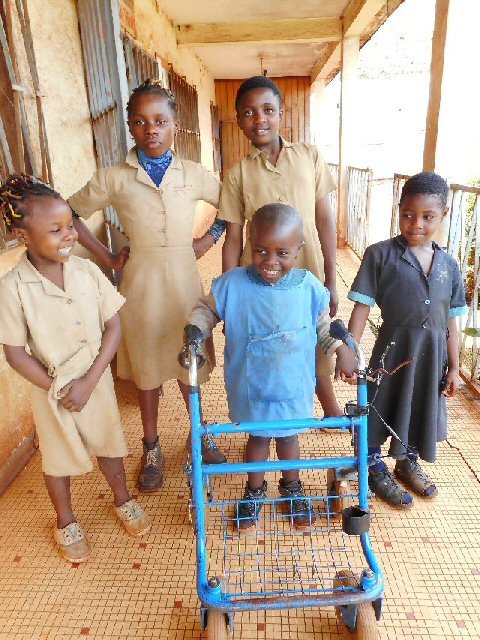

A video showing Mike Thomas interviewing Alfred Wingo.
Disabled people in the West Region of Cameroon, especially children, suffer from neglect and discrimination due to ignorance and cultural beliefs about disability. There is a general lack of care and rehabilitation planning in the country and disabled children, who are mostly from poor families, rarely obtain an education and employment. They are often viewed as being possessed of evil spirits and a curse upon their parents. Hence they may be locked up at home and fed like animals and hidden from society. It is estimated that about 70% of disabled children suffer from neglect and discrimination.
GLORES organises its work in three major sections:
- Prevention of disabilities through health education and encouragement of parents to vaccinate their children against diseases causing disabilities. Part of the education focuses on prenatal/postnatal care, nutrition, hygiene, genetic information and environmental pollution.
- Physical therapy that includes therapeutic exercises, mobility training, functional re-education, occupational therapy and activity training for coping with everyday life.
- Vocational training in 3 trades. The disabled person makes the choice of trade and is then able to undergo training in that trade for one year in a sheltered workshop environment. Younger children who cannot work are sent to local schools for their education. While the child is in school parents will take an active part in its education and prepare to take over responsibility for the child’s welfare later on. After successful completion of the training disabled persons are settled in their individual group ventures or employment and there will be follow-up by GLORES for a few months after treatment and training has finished.
Once a disabled person goes through the GLORES project he or she becomes a member of the GLORES family. GLORES monitors all the outcomes of its work in order to evaluate its effectiveness and introduce improvements where necessary.
The pictures below show some of the disabled youths and children before, during and after treatment:


Moving testimonials of six of the children treated by GLORES
If you would like to support the work of the Future in Our Hands Education and Development Fund please make a donation:
Please support the work of the Future in Our Hands Education and Development Fund whose aim is to help and empower some of the world’s poorest and most marginalised people by:
- UK residents can provide long term support by completing the FIOH FUND DONATION FORM and sending to the address shown on the form:
- Direct grant to the charity’s bank account or by cheque to: Bank account details:
Co-operative Bank
IBAN: GB07CPBK08929965050707
BIC: CPBKGB22
Cheques should be made payable to the
Future in Our Hands E&D Fund
—————————————————————————-
Fundraising to help the work of the charities would be greatly appreciated
Future in Our Hands Sierra Leone update 2018
Update on Eco-Village – Sierra Leone
The eco-village on agriculture and food security was initiated by Future In Our Hands (FIOH) in 2016 having being connected to GEN Africa. The program aims at promoting food and nutrition security and increased income – especially for women farmers through scaling up best practices in crop production, livestock and establishment of women Village Savings and Loans Associations (VSLAs) to sustain and expand project activities. So far, three (3) pilot eco-village sites have being established in three (3) chiefdoms based on eco-village strategies for sustainability and adaptation using agro-ecological principles in farming – composting for zero waste (using kitchen and poultry wastes), organic farming and encouraging farmers to move from upland farming to agro-ecological low lands to reduce deforestation which has targeted four hundred and fifty (450) farmers (three hundred (300) female and one hundred and fifty (150) male).
Project intervention includes:
· Crop production sector
Training of farmer on the cultivation of high protein and micro-nutrient food crops (using good agronomic practices) training on organic agriculture.


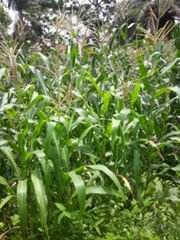
1. Vegetable onion. Irrigation activity
2. Groundnut farmers. Weeding activity
3. Okra crop
4. Sweet potato crop
5. Maize plantation farm
· Livestock sector
Training of women on modern poultry production and improvement of local breeds (chickens) using cross breeding by women farmers.


6. Women involved in poultry production and improvement of local breeds of chicken through cross-breeding
· Nutrition Sector
Training of women on appropriate nutritional feeding methods and practices


7. Rehabilitation of malnourished children through exclusive breast feeding and nutritious food
· Village Savings and Loans Associations (VSLAs)
Establishment of women Village Savings and Loans Associations to provide members access to loan facilities in order to stimulate local economic growth.

8. Loan collection and disbursement meeting by the Womens Village Savings and Loans Association
Cameroon Gender and Environment Watch report 2016
This is a summary of the CAMGEW 2016 annual report a complete copy of which can be seen here:
CAMGEW 2016 ANNUAL REPORT READY

CAMGEW logo
Cameroon Gender and Environment Watch (CAMGEW) reflects its holistic approach to development through the activities described in its 2016 annual report prepared by its director, Wirsiy Emmanuel Binyuy. Most of these activities are located in and around Kilum-Ijim Forest area in the NW Region of Cameroon with her office in Oku.
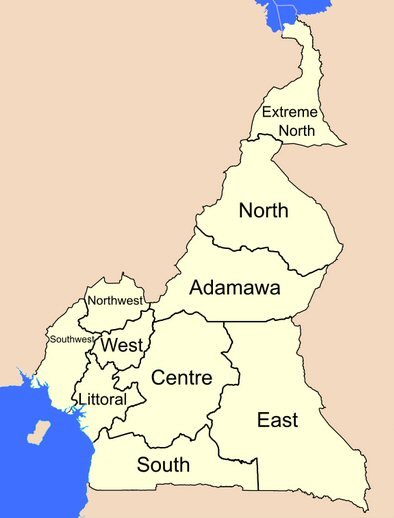 Activities included:
- Planting of indigenous trees to regenerate the important Kilum-Ijim natural forest.
- Training and practical support for bee farming to produce the local distinctive white honey.
- Marketing training and the establishment of a shop in Bamenda (capital of the region of North West) to sell the honey, its products and equipment.
- Training in organic farming methods and raising of nitrogen-fixing trees for agroforestry.
- Vocational training in dress-making, hair dressing, shoe making and repair.
- Establishing a micro-credit and savings scheme for women and training in business management, including the use of computers.
- Training for women in health and nutrition.
- Training for communities in the basic human, statutory and legal rights of women.
- Provision of counselling and advice for women who are subjected to physical and/or mental abuse.
- Environmental and computer education for children.
- Tree planting around the new centre for the treatment of disabled children which is located in Bafoussam, West Region.
Forest regeneration
The Kilum-Ijim natural forest contains several endangered species of flora and fauna, including the Bannerman’s Turaco (fauna), Newtonia camerunensis(flora) and has an important role to play in the mitigation of global warming. Despite these and the many economic benefits which can be derived directly from the forest, a large section of the original forest has been cut down to create farming land.


CAMGEW has played an important role in safeguarding the remaining forest by educating people about the environmental importance of preserving the forest and showing local people how they can gain an economic benefit from the natural products the forest provides.

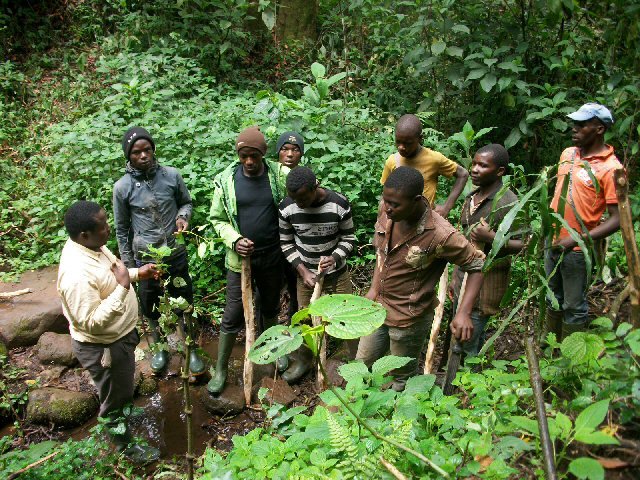

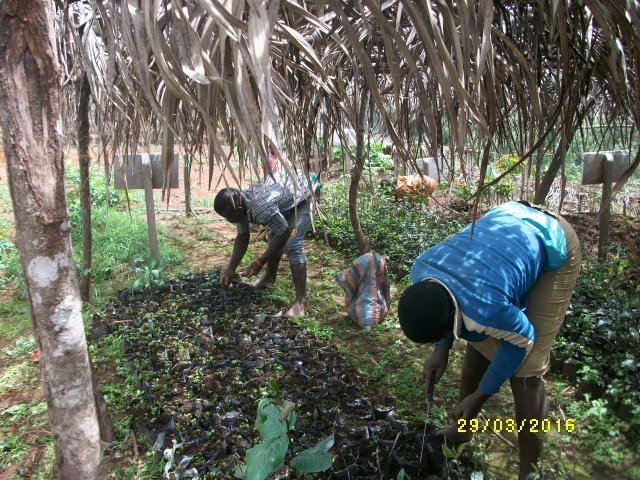
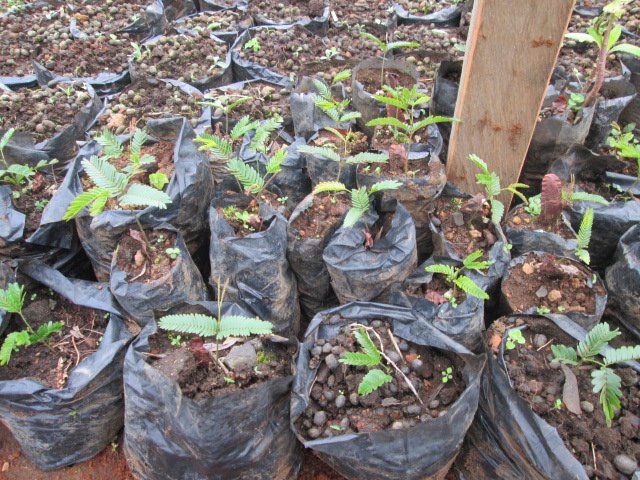

CAMGEW has established nurseries to grow native tree species, including Prunus Africana, Croton Macrotachyst, Carapas Grandifolia, Pittusporum Veridiflorium, Zysigium Staundtii, Solanecio Mannii, Newtonia Camerunensis, Psydrax Dunlapii, Briellia Speciosa, Pyschotria Pendularis, Acacia, Leuceana, Mysposis, Tephrosia, Sesbania and Tree Tomatoes. Many of these have been planted in the forest by children and local community groups to regenerate sections of forest destroyed by domestic animals and fire.


Nitrogen fixing seedlings have been distributed to local farmers who are using agroforestry methods. Three nurseries have been established (Manchok, Mbockenghas and Ikal) with a capacity to raise 200,000 trees. The different species have been labelled with scientific and local names and their uses to educate the local community and school children.

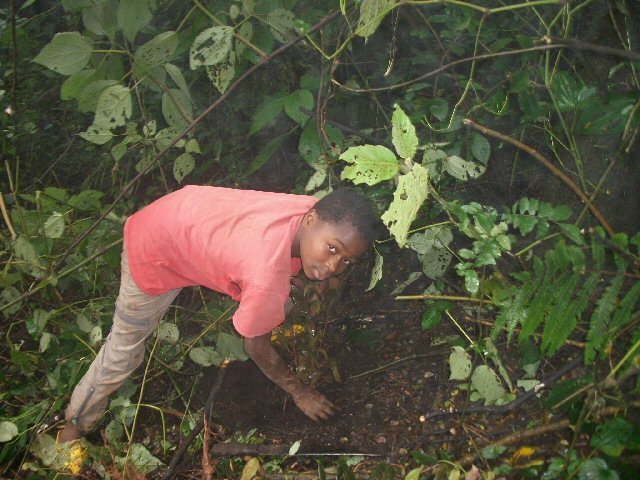

In order to restrict the spread of ferns cuttings of Schefflera abysisinica and Solanecio mannii have been planted in the forest. The fern plants die once the trees grow above them.
Bee farming
Bee farming is an important activity in the preservation of the Kilum Ijim forest as the farmers have a vested interest in preserving the natural flora which provides nectar for the bees and preventing forest fires. CAMGEW has provided hives, training in good bee management activities and organised the farmers into cooperatives/village groups. It has also provided a shop in Bamenda to assist with marketing the honey. The training has involved 212 farmers and 85 cooperative executive members in 22 villages in 2016. CAMGEW has also provided training in the production of bee wax which is more profitable than honey. It also involves full utilization of the honey combs which might otherwise be discarded. 116 community members were trained in 2016, 21 of whom were women.


CAMGEW distributed 10 honey drainers, 100 suits, 30 buckets and provided management training including the establishment of a constitution and by-laws and the production of an instruction manual in cooperative law.
Organic farming and agroforestry training
CAMGEW distributed more than 900,000 seeds of Leucena, Tephrosia and Sesbania (for animal fodder) to over 139 farmers, including 38 women in 7 villages. These species are nitrogen fixing and can be grown together with crops including coffee, potatoes, beans, huckleberry, cabbage, yams, corn. In addition to providing nitrogen for crops, the trees provide shade and help prevent erosion on sloping ground.
CAMGEW also distributed 60Kg of bracharia seeds for obtaining fodder in the dry season when other feed is scarce. This will prevent farmers having to move their animals long distances to find pasture.
Vocational training
Unfortunately the CAMGEW training centre had to close down as a result of the lack of funding. However, the equipment was distributed to the trainers who then located to Elak where there was a greater customer base. Also since the CAMGEW initiative other training centres have been established in the community. Many of the trainees at the CAMGEW centre have established workshops in their own communities.


Health, human rights and nutrition training for women
 CAMGEW has provided training about women rights to health services, nutrition, legal marriage and counselling as a result of physical and psychological abuse. This included education to reduce early pregnancies and nutrition to improve the health of teenage mothers and their children.
Information was also provided about sexually transmitted diseases and the benefits of legalised marriages. Information was also provided with the aim of reducing child trafficking.
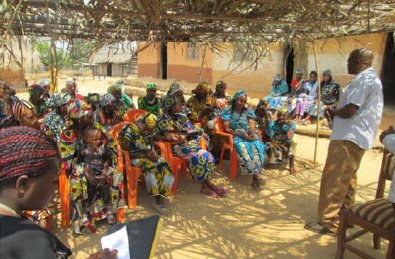

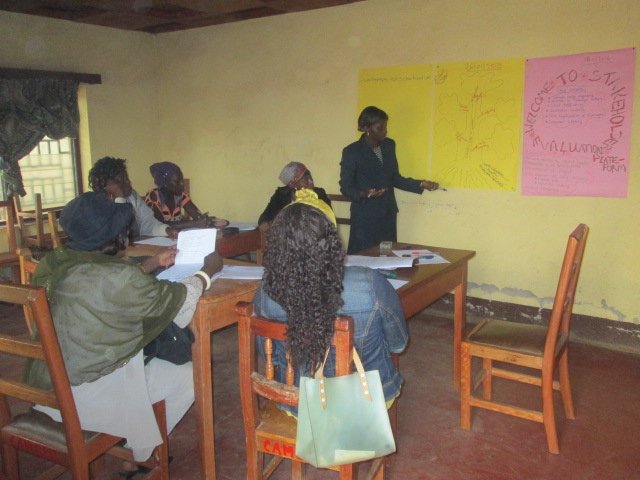
Much of this work has been carried out with the young women of the Muslim Mbororo tribe who are known for high birth rates and low literacy. Most of the men keep grazing animals which are their main source of income. Counselling of the girls involved marital crises physical and psychological abuse, frustration arising from child trafficking, loneliness and stigma from unplanned teenage pregnancy.
Micro credit and savings scheme training for women
CAMGEW has been running a micro-credit scheme for women since 2015. Loans are given at an interest rate of 2% per CFA 1,000 with a 6 month repayment period. Each recipient must have undergone training provided by CAMGEW. 500 women had benefited from the scheme by December 2016.
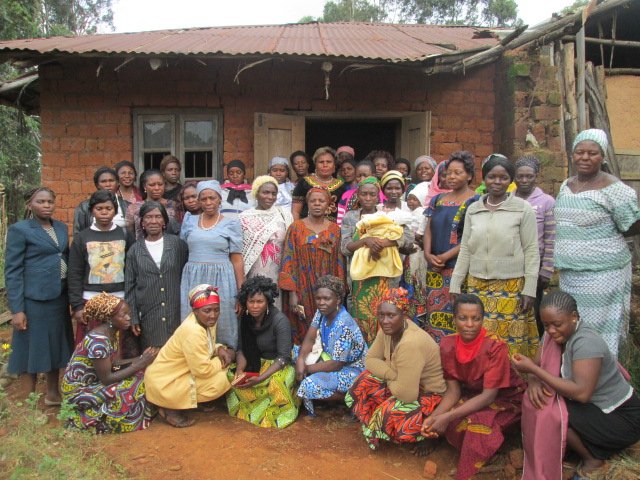 Most women do not have enough the money required to open a bank savings account. The CAMGEW savings scheme enables women to open an account with as little as 500 CFA (about 35p). CAMGEW keeps its funds with the Manchok Credit Union. In 2015 CAMGEW trained 193 women and 153 received loans and in 2016 trained 483 women and gave loans to 390 women. Loans ranged from 30,000 to 120,000 CFA.
Environmental education
The nurseries established by CAMGEW have served as learning areas for children, schools and community groups in types of forest trees and their uses. Children have gained hands-on experience working in the nurseries and also gathering seeds from the forest.
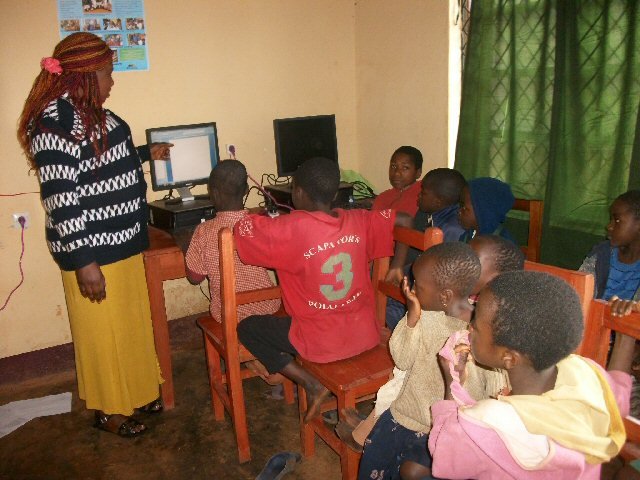
Computer training for women and children
CAMGEW has provided basic computer training for women and children.


Tree planting at the GLORES treatment centre for disabled children
In 2016 CAMGEW planted 500 tree seedlings around a new centre for the treatment of severely disabled children based in Bafoussam in the West Region. These included, prunus africana, pittosporum, ornamental, palms, mangoes, plums and oranges.
Video productions about CAMGEW and its director
The following productions provide clear presentation of the comprehensive range of CAMGEW activities and how they contribute to the inter-relationship between various aspects of sustainable development:
Kilum-Ijim forest apiculture:
https://www.youtube.com/watch?v=TBqEgnjsWSg
Organic coffee farming in Oku:
https://www.youtube.com/watch?v=hHKY15LEuos
Short video featuring CAMGEW director, Emmanuel Wirsy
http://www.dw.com/en/money-for-forest-honey/a-37473719
CAMGEW in other documentaries. (Emmanuel’s work is featured about 9 minutes into the video)
https://www.youtube.com/watch?v=rCVVzGDXQmw&t=129s
CAMGEW FOREST VIDEO. This video is an excellent presentation of the work of CAMGEW and illustrates the link between bee farming and the preservation of the forest. It also shows children actively involved in the both the raising and out-planting of seedlings in to the forest :
https://www.youtube.com/watch?v=4TwdiXGj3zk
CAMGEW GENERAL ACTIVITIES VIDEO. This is a brief overview of activities of CAMGEW including its vocational training: https://www.youtube.com/watch?v=zyM89iaLnHw&feature=youtu.be&hd=1
WEB SITE:
www.camgew.org or www.camgew.com.
Future in Our Hands Kenya activities 2016
FIOH-KENYA REPORT – 2016
- WOMEN CREDIT UNION: The women have been going on well with their loaning program. The money received from Ebay boosted their kitty very well. The capacity building workshop held for the women groups has really motivated them and the results can be seen from their return reports.
- THE YOUTH GROUP: The poultry project by Usoma Shiners youth group is still stable. The group now has 500 hens . This project was co–funded through FIOH-USA in 2013. The group plans to venture into fish farming by putting up a fish pond along Lake Victoria so as to preserve the rare species that are facing extinction due to use of poor fishing methods.
- THE COW PROJECT: This is known as the Poor Man’s Bank Initiative whereby we fund women groups to purchase dairy cows that they can easily manage and take care of. They are taught to use the wastes from the cow to practice organic farming in their gardens so as to help in nutrition. The little money they get from sale of milk is used for subsistence. So far, two groups have been funded and we have proposal for 4 more groups.
- WELLS: The latest well in Wathorego Kibos is complete and is serving the residents well. All the other wells are in good working condition. The well was donated by a volunteer from USA at a cost of $3000. It serves approximately 300 households in this village with an average of 6 people per household. FIOH- K has identified 3 more villages that are in dire need of water i.e Mawego village, Seme Village and Alego. Both Geological and hydrological surveys have been carried out . We are looking for sponsors or donors to fund these projects. The wells that have been dug through donation from FIOH-USA have reached 20 in number.
5.TREE NURSERY: Due to the effect of global warming,
deforestation is rate is alarming. We have started a campaign
for reforestation in Kisumu County .We envisage to start tree
seedling nurseries in each of the 7 sub counties of Kisumu in
order to create awareness on importance of trees. It has not
rained since May. Even the long rains of April and May which
is normally used for planting season failed that people are
facing starvation. A proposal for this too is ready and has been
sent several organizations with no response yet.We are looking
for partners towards this endeavour.
- COMMUNITY LIBRARY AND RESOURCE CENTER:
It was Rom’s wish and dream to have a community Library
and resource center in Usoma village where he taught for his
entire teaching career. This he said would stump out illiteracy
and create awareness among the vulnerable people in the
village. Land has been donated for this, and a proposal ready
for the same. We haven’t submitted the proposal to any
organization.
Our main partner is still FIOH-USA which primarily funds the
orphans education program and HIV and AIDS program.
Their resources are limited as they too depend on donors.
We are very much in contact with Sr.Linda and she visited for
2 months this year with another volunteer.
Paul Odhiambo, Co-ordinator.


Follow us on Facebook:
www.facebook.com/fiohfund
Follow us on Twitter:
twitter.com/fiohnet
Please share our links with your friends to help us reach a wider audience.