
Centre for Community Regeneration and Development
ACTIVITY UPDATE AUG 2016
Education for sustainable development through sports in schools
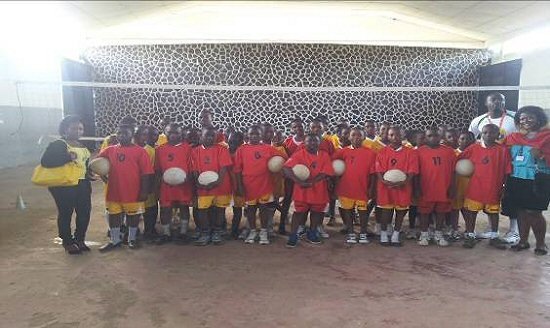 CCREAD-Cameroon in continuation of its Education for Sustainable Development Programme, has mobilized more than 300 children and youths through environmental and conservation leadership camps, with sports as a uniting factor, to educate the children on climate change mitigation and adaptation, sustainable development goals, biodiversity conservation, sexuality and family planning, human rights, leadership and good governance. We need more volunteers for this ongoing programme.
ICT for development programme for youths within poor communities


CCREAD has set up a free ICT daily training unit which serves children, women and youths from extremely poor countries to gain generational skills on computer and ICT skills for development. The facility also trains students daily who are enrolled in schools without computer laboratories so they can be able to take official examinations in computer sciences. This project needs more trainers and those who can support to buy more computers, a projector and more desks for trainees.
Sexual and reproductive health rights education for abandoned teenage and single mothers
 CCREAD volunteers are currently organizing weekly workshops for 25 single and teenage mothers on sexual and reproductive health rights. The aim is to educate teenage mothers to stay away from sexual and different forms of gender base violence, organizing them into action groups and linking them up with mentors for social and economic empowerment.
Supporting women and widows living with disabilities
 CCREAD is currently supporting unmarried women with children living with disabilities and who are not employed through granting of micro financial support to start small micro enterprises which will enable them take care of themselves, send their children to school and meet their health needs. We have identified a total of 320 of such women with pressing needs and have been able to assist 15 of them already. We need more people to help this initiative.
To support any of these ongoing projects, kindly drop an email to: projects@ccreadcameroon.org


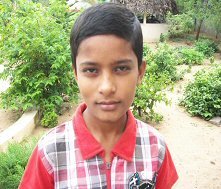
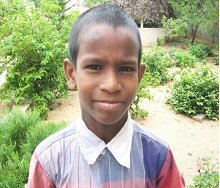
Images – Children helped by HEARTS in India


Follow us on Facebook:
www.facebook.com/fiohfund
Follow us on Twitter:
twitter.com/fiohnet
Please share our links with your friends to help us reach a wider audience.
Children helped by the work of HEARTS – case studies
CASE STUDIES
 Child Name: Jagadeesh Babu Jonnalagadda
Class studying: Polytechnic final year (pre-engineering – 3 years course)
Age: 17 years
Family background: His parents died from HIV/AIDS when he was six years old. He has two elder sisters and an elder brother. Three of them are married and working. His brother used to come to see Jagadeesh but stopped coming since he got married. Jagadeesh doesn’t like the family because they don’t care for him. They don’t even invite him for vacations. Hence he likes to stay in the children’s home even for holidays. Considering his family background, we had to keep him in the home and send to college.
Education progress 2016: Jagadeesh is about to complete year 3 in Polytechnic after successfully securing ‘A’ grade in 10th class final exams. He has joined in Bapatla Polytechnic College in Mechanical branch which is a three years course. In these three years of Diploma, he obtained 95% marks. After completion of three years, he is eligible to upgrade to Engineering 2nd year or to get a job.
Hobbies / other activities:
- He likes drawing, reading, dancing and outdoor games like cricket, kabadi and volleyball.
- In the High School, he won several certificates in Drawing competitions and essay writings.
In the home, as a senior boy, Jagadeesh helps other boys in getting ready to school and related activities.
—————————————————————
 Child Name: Sampath Kumar Guntur
Class studying: 10th class
Age: 15 years
Family background: Sampath’s parents died of Jaundice seven years ago. He has an elder sister and an elder brother. His sister is married and working in a cloth shop. His brother also recently married and is working as a Barber since they belong to this particular community. His grandfather died of a heart attack last year. He used to be visited by a distant uncle who is working in a bank but he got transferred to a neighbouring district hence he could not come to visit Sampath anymore. His sister never comes to see him. His brother and an aunt come to see him occasionally.
Education progress 2016: Sampath passed 9th class in ‘B’ grade in final exams. He is an average student but trying hard to improve for the next class. He goes to Municipal High School in the town by a bicycle provided by Hearts. This year he will come to 10th class which is a public examination.
Hobbies / other activities:
- He likes drawing, dancing and games like kabadi, carom board and cricket.
- In the school he received a certificate and dictionary for the participation of planting trees.
————————————————————–
 Child Name: Bhagya Laxmi Manchala
Class studying: 9th class
Age: 14 years
Family background: Bhagya Laxmi’s father left the house and mother died of Cancer when she was a small girl. In the family they are four girls and one boy. She and her brother Bala Krishna are staying in the children’s home. Considering their family circumstances, Hearts agreed to look after them both. One of the elder sisters is married and died last year. Bhagya Laxmi is visited by her two sisters whenever they can. They go to work for their living. In the recent floods, their house collapsed. At present her sisters are living in a small hut which was built with donations from the community.
Education progress 2016: She has passed 8th class in ‘A+’ grade in the final exams. In the units and half yearly exams she scored from 95% to 98% marks. Bhagya Laxmi is a brilliant student in the entire class. This year she will be studying English.
Hobbies / other activities:
- She likes reading, drawing, dancing and games like skipping, coco and badmington.
- In the school she won several prizes for studies in ‘A’ grade, essay writings and talent competitions.
—————————————————————
 Child Name: Bala Krishna Manchala
Class studying: 9th class
Age: 15 years
Family background: Bala Krishna’s father left the house and mother died of cancer when he was a small boy. In the family they are four girls and one boy. He and his sister Bhagya Laxmi are staying in the children’s home. Considering their family circumstances Hearts agreed to look after them both. One of the elder sisters is married and died last year. Bala Krishna is visited by their two sisters whenever they can. They go to work for their living. In the recent floods, their house is collapsed. At present their sisters are living in a small hut which was built with donations from the community.
Education progress 2016: He has passed 8th class in ‘A’ grade in the final exams. He studies well but due to his interest in sports he got less marks in the units and half yearly exams. This year for class 9th he will be going to high school in the town. He will also be studying English.
Hobbies / other activities:
- He likes drawing, dancing and games like cricket and kabadi.
- In the school he won several prizes for sports and cultural activities.
- In the children’s home he performs well in any drama or cultural programmes.
- He is a helping hand for other children in the home.
————————————————————–
Child Name: Dinesh Kandiyar
Class studying: Degree 1st year
Age: 16 years
Family background: Dinesh’s father left the house nearly 10 years ago. His mother runs a small Tiffin centre left by the father. The family came to know that the father died of tuberculosis last year. Dinesh has an elder brother who is working and a twin sister who has at present discontinued studies. She used to stay in the children’s home but left because her mother wanted her to work.
Dinesh is visited by the mother and brother occasionally.
Education progress 2016: He has passed Intermediate and scored 7.5 points out of 10. He is an average student but trying to improve in college studies. In 2013 he attended 10th class and passed in all subjects. He took the group MPC (Maths, Physics and Chemistry).
This year he is studying Degree (graduation) 1st year with the same subjects. After completion of degree studies, he will be eligible to study university or to get a job.
Hobbies / other activities:
- He likes reading and playing games like cricket, kabadi and carom board.
- He won several prizes for essay writings on national leaders.
————————————————————–
 Child Name: Chenna Kesavulu Maruprolu
Class studying: 10th class
Age: 14 years
Family background: His father died from jaundice 10 years ago. His mother works as a daily labourer. He has an elder brother who has discontinued studies and working due to mother being unwell. The mother and brother live in a small hut beside the canal.
Chenna Kesavulu is visited by the mother occasionally.
Education progress 2016: He is a brilliant student in studies and studying English. He has scored 95% marks in the final exams of class 9th. This year he is studying 10th class and will be writing public exams. He has good handwriting and is a role model for students in the school and children’s home.
Hobbies / other activities:
- He likes reading, drawing and games like kabadi and coco.
- In the school he won several prizes for essay writings and cultural activities.
- In the children’s home he participates in activities i.e planting trees, saving water and energy.
—————————————————————
Child Name: Jhansi Varadala
Class studying: 9th class
Age: 14 years
Family background: Jhansi’s parents are daily labourers. Her father goes to building mason work and mother goes to agriculture works. She has an elder brother studying at home. They live in a small hut in Bapatla town. Jhansi’s parents are very poor and often migrate to neighboring districts to work. Jhansi likes to study and continue education. Her parents also like Jhansi to study unlike them. Her mother comes to see Jhansi whenever she can.
Education progress 2016: Jhansi passed 8th class in ‘B’ grade in the final exams. She is an average student in studies but showing interest to improve. She finds English medium difficult this year because until last year she studied Telugu (mother tongue) medium. She will be studying 9th class this year in English.
Hobbies / other activities:
- She likes reading, drawing, dancing and playing games like skipping and carom board.
- In the school she participated in science exhibition and won a prize and certificate.
- In the children’s home she participated in cultural programmes.
—————————————————————
Child Name: Esther Jangam
Class studying: 8th class
Age: 14 years
Family background: Esther’s mother died when she was a small girl. She has a younger brother who was given for adoption at the age of six months. Then the father left the house and married someone else. Esther was left with her great grandmother who is very aged and could not go to work. Esther is happily staying in the children’s home. She is loved by everyone. Her grandma comes to visit her whenever she can. Recently a distant uncle is also coming to visit her.
Education progress 2016: Esther passed 7th class in ‘A’ grade in the final exams. She is a brilliant student. Since she joined the children’s home in the year June 2009, she is always coming first in her classes. Even though she studied Telugu medium until 2012, she picked up greatly to study English in 2013. This year she will be studying 8th class in English.
Hobbies / other activities:
- She likes reading, drawing, dancing and games like coco and carom board.
- In the school she won several prizes and certificates for essay writings and cultural programmes.
—————————————————————

Child Name: Rafi Shaik Mohammed
Class studying: 10th class
Age: 14 years
Family background: Rafi’s father is an invalid who is suffering from haemophilia. His mother is a daily labourer who works at a limestone factory. He has a younger brother studying at home. His mother has lot of burden to look after the family since the father needs medication very often. Rafi’s parents cannot come to see him but speak to him over telephone. His grandmother visits him whenever she can.
Education progress 2016: Rafi passed 9th class in ‘B’ grade in the final exams. He studies well but at the time of exams he gets nervous. He is studying English and goes to Municipal High School in the town. This year he will be studying 10th class.
Hobbies / other activities:
- He likes reading, drawing and games like cricket, kabadi and coco.
- In the school he won a certificate for essay writing on International Environment Day.
- In the children’s home he likes to do gardening on Sundays.
—————————————————————
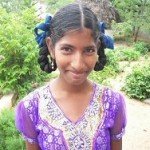
Child Name: Prasanthi Lingala
Class studying: Intermediate 1st year (class XI)
Age: 15 years
Family background: Prasanthis’s father is a drinker and never cares for the family. A few years ago he left the house and came back recently. Still now he is torturing his wife and children. Her mother is a daily labourer who works at the local market. The mother is suffering a lot by physical abuse of the father. Prasanthi has two younger sisters who are staying with the mother. Her father never comes to see her at the children’s home. Her mother visits her whenever she can.
Education progress 2016: Prasanthi passed 10th class in ‘A’ grade in the final exams. She is a brilliant student in studies. She always secures more than 95% marks. This year she will be studying Intermediate 1st year and writing public examinations in English.
Hobbies / other activities:
- She likes reading, drawing, dancing and games like skipping, coco and carom board.
- In the school she won several prizes for essay competitions. She also won a certificate and prize in the science exhibition.
- In the children’s home she participates in cultural programmes and likes to do gardening on Sundays.
—————————————————————

Child Name: Sujit Talatoti
Class studying: 7th class
Age: 12 years
Family background: Sujit’s mother died from tuberculosis when he was a small boy. His father then left the house and married someone else. Sujit has an elder brother who is also staying with him in the children’s home. For several years his father did not care for the family. Very recently he has started communicating with the boys. His grandmother comes to visit Sujit whenever she can.
Education progress 2016: Sujit passed 6th class in ‘A’ grade in the final exams. He has much improved in education because of children’s home regular tuitions. This year he will be studying 7th class in local Government elementary school.
Hobbies / other activities:
- He likes drawing; dancing and games like carom board and cricket.
- In the school he won several prizes for sports and cultural programmes.
—————————————————————

Child Name: Sandeep Talatoti
Class studying: 8th class
Age: 14 years
Family background: Sandeep’s mother died from tuberculosis when he was a small boy. His father then left the house and married someone else. Sandeep has a younger brother who is also staying with him in the children’s home. For several years his father did not care for the family. Very recently he has started communicating with the boys. His grandmother comes to visit Sandeep whenever she can.
Education progress 2016: Sandeep passed 7th class in ‘A’ grade in the final exams. He has much improved in education because of children’s home regular tuitions. This year he will be studying 8th class in local Government elementary school.
Hobbies / other activities:
- He likes drawing; dancing and games like coco, kabadi and cricket.
- In the school he won several prizes for sports and cultural programmes.
——————————————————————————-
Follow us on Facebook:
www.facebook.com/fiohfund
Follow us on Twitter:
twitter.com/fiohnet
Please share our links with your friends to help us reach a wider audience.
Cameroon Gender and Environment Watch
Cameroon Gender and Environment Watch (CAMGEW)
 CAMGEW works to see social and environmental justice put at the centre of development. It works with all age groups. It works to see that the social welfare of children in Cameroon is improved, especially the girls who in many communities are deprived of opportunities to grow up to be future leaders.
It sees it necessary also to work to improve the lives of children in many rural and urban areas who lack the means to go to school and to meet their needs. It does this by trying to meet their basic needs, instilling in them the spirit of positive thinking and encouraging them to strive for excellence.
 It seeks also to build the capacity of women especially those in the rural areas where most women are poor farmers. These women lack the agricultural skills and inputs to increase farm yields. They also lack crop storage techniques and facilities. This means they are unable to gain an income sufficient to meet their basic needs and pay for the education of their children. They need to be empowered to be economic and social leaders. Many of them are bread winners of their families. CAMGEW also works to provide women and children with basic needs like water, food, education, energy and shelter.
It works with children, youths and the old to create environmental awareness. and works with children through environmental education to instil in them the spirit to grow up to live in harmony with nature. It educates children about ecology e.g. rivers and lakes; marine ecosystems like the Atlantic ocean; land ecosystems like natural forests, botanical gardens, Zoos; pollution and waste management; gardening and tree nurseries.
It fights poaching, the bushmeat trade, illegal wildlife trade, deforestation, bushfires and climate change by trying to bring about a positive behavioural change in people involved in activities that are environmentally unfriendly. To bring this change CAMGEW carries out sensitisation, lobbying and advocacy at various levels of the society (policy makers, private sector, civil society and grass root populations).
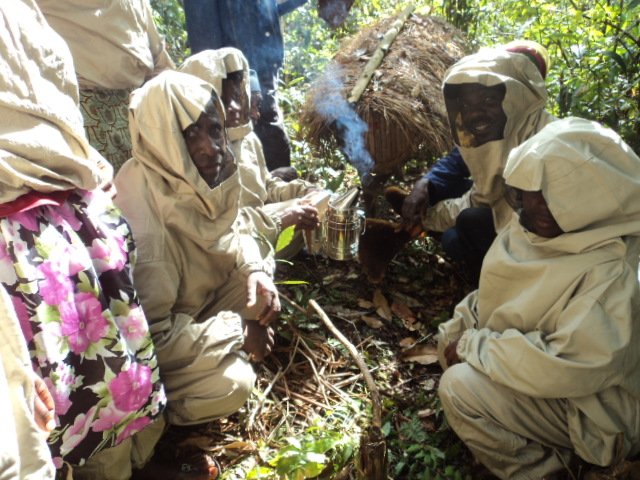
 CAMGEW encourages organic farming by improving on soil fertility with organic matter and encourages household organic waste sorting for use in farms to increase crop yields and also as a means of managing household waste. Agroforestry is another way CAMGEW promotes ecofarming. This was a traditional method used to improve the soil. It promotes integrated organic farming, horticulture (flower, vegetable and fruit farming) and apiculture (bee farming).


To discourage the use of plastic papers which are known to be non-biodegradable and to reduce the aesthetics of our environment, CAMGEW promotes the use of bags and baskets made from locally available materials like bamboo, jute, rattan etc that are biodegradable. These bags and baskets have been used in the past when plastics were not yet common. CAMGEW is building a campaign to see how biodegradable materials could be used for packaging instead of plastics.
The availability and affordability of modern energy is paramount to every development. Many rural areas lack this energy because they are far away from the national grid and also because they cannot afford it. Another, problem faced by Cameroon is the shortage of power due to dependency on one energy source – hydropower that is always affected by droughts brought by the changing climatic.
It promotes decentralised and diverse energy systems like small hyro, solar, wind and biogas systems exploited from the available natural energy sources like river fall, sun, wind and animal waste or plant matter respectively. It also engages in a campaign to reduce dependency on environmentally unfriendly energy sources like fossil fuels.
It takes part in fighting climate change from four key perspectives – mitigation, adaptation, finance and technology as identified in the global Climate Change Conference that took place in Bali, Indonesia in December 2007. During the Bali conference, the UN Secretary General, Ban Ki moon said “no one-rich or poor-can remain immune from the dangers of climate change”.
To achieve all of above, CAMGEW uses media, gatherings, posters, newsletters and organised events like workshops. It therefore, sees creativity and innovations as a way forward to solve the global problems that plague humanity.
These innovations and creative ideas therefore need to be replicated and/or scaled-up to tackle global challenges. It believes that through partnership, networking, research and volunteerism this shared vision for long-term cooperative action among the people of the world to improve on lives and promote sustainable development, can be achieved.
A video showing activities at its vocational training centre in Oku can be seen here:

Centre for Community Regeneration and Development
Centre for Community Regeneration and Development
 (CCREAD-Cameroon) is a youth led development organization established in 2004 and legally registered as a non profit organization in December 2006 with Registration Number: 379/AG/G.42/162/AJPAS under Cameroon Law of 1990 governing non political associations. CCREAD-Cameroon won the 2011-2012 World Bank Development Marketplace Competition on the promotion of good governance, is affiliated to Peace Child International, (UK), MIYC South Korea, an active member of United Network of Young Peacebuilders (Worldwide) and an NGO participant of UN Global Compact. CCREAD-Cameroon is also in Special Consultative Status with UN-ECOSOC
Vision
CCREAD-Cameroon helps to empower marginalised children, youths, women and indigenous populations merged with environmental sustainability through united youth actions.
Mission
Working in response to adopted community driven strategic plans, CCREAD-Cameroon currently has a mission to enhance the social, economic, cultural and political empowerment of children, youths, women and indigenous groups for poverty alleviation, better community organization, improved governance/human rights and environmental conservation and management.
Objectives
The activities implemented by CCREAD-Cameroon are guided by the following objectives:
- Increase the application of good goverance, decentralisation, and democratic practices in hard to reach/marginalized regions.
- Reduce the high incidence of poverty among marginalized women and youths with focus on hard-to-reach forest communities.
- Increase basic education and health facility access for children, women and youths in poor communities.
- Foster peacebuilding and conflict resolution initiatives in selected communities.
- Increase the respect of the rights of children, and women
- Raise environmental sustainability awareness and promote management actions among youths.
Operational area
South West, North West, West and Eastern Regions of Cameroon as core regions.
Activities undertaken
Leadership and peacebuilding training for women and youths. Through this activity, Cameroonian youths in Kupe Muanenguba Division through schools and women were drilled on leadership qualities, peacebuilding and conflict prevention/resolution skills mainstreamed with human resources management abilities/decentralisation education. A total of 4,692 youths and 1,982 women have received training.
Leadership training
Recognizing that corruption remains a key development limiting factor in most sectors in Cameroon, CCREAD-Cameroon has also joined other stakeholders in fighting corruption starting with schools in 2011. A national baseline study on the challenges of corruption and governance was completed and adopted.
A governance Education Manual was developed and 1,200 copies distributed to major stakeholders and 82 school anti corruption campaigns and advocacy forums were organised.
Schools management Boards were instituted and trained to fight and report corruption in schools in the South West Regions.
Governance training and fight against corruption campaigns were organised through youth actions.
Many inter tribal conflicts result from land problems and the marginalization of particular groups. CCREAD-Cameroon has been responding to these problems by organizing communities into groups, educating them and assisting them to start group initiatives for poverty alleviation/solving land conflicts.
Training women and indigenous groups on project planning, fundraising and networking
Started in 2011, this project helps women and youths constituted into development common initiative groups on identifying community problems, documentation, elaboration of micro projects, finding and mobilizing resources, creating relevant partnership monitoring and evaluation/reporting of their result to the general public. CCREAD-Cameroon has organized 12 regional trainings/follow-up workshops reaching 12 groups through 120 group leaders and members in the South West Region of Cameroon
Rise for Nature Programme
This is an integrated environmental sustainability programme which CCREAD-Cameroon launched in 2011 to respond to nature conservation and rural development needs in many hard-to-reach forest communities of Kupe Muanenguba region. Activities were targeted towards forest and wildlife conservation unsustainable practices campaigns, environmental education through schools, climate change and adaptation education, instituting alternative livelihoods activities with indigenous forest communities and advocacy for the respect of the rights to benefits from natural resources. Through campaigns and field actions, 25 communities have been reached, 27 schools covered and 2 regional advocacy forums held by the end of 2012.
In many parts of Cameroon, women still experience violation of their sexual/reproductive rights, cultural and political rights and exclusion from cultural inheritances. By December 2012 CCRead organised 6 regional advocacy and education forums on the rights of women. 30 women leaders were trained on human rights education and counseling and over 2,000 human rights education leaflets were handed to policy and traditional leaders.
Women’ rights activities
 CCREAD-Cameroon has continued the donation of hygiene and sanitation materials (toilets, water, waste management materials and facility management). From 201o-2012, 5 toilets have been constructed for 5 community primary schools, 10 volunteer teachers were sent to teach in schools and 200 water drinking buckets and cups were distributed to school children.
Direct assistance to needy schools in marginalized forest communities
Working to end high mortality rates in rural communities CCREAD has focused on the training of traditional Birth Attendants (TBAs) in rural areas with emphases on communities with no health units. In collaboration with BKFA, CCREAD-Cameroon distributes each month 500 birthing kits to rural women and community centers to help in safe and clean delivery.
Planned projects for the future
- Vocational training for youths and women on ICTs, Tailoring entrepreneurship, and leadership.
- Scaling up of youth leadership and governance training.
- School base peace, human rights, governance and environmental education.
- Start of Rise for Nature Program Phase 3 in 5 communities on environmental sustainability and climate change adaptation.
- Integrated poverty alleviation scheme for women and youths in need.
- Assistance to 10 schools through classroom and toilet constructions.
- Donation of birthing kits to rural women for safe and clean delivery
Team members
 Hilary Ewang Ngide – Executive Director MS.c(Development/Environment, PGC(PPME), BS.c(Geo& planning)
Belinda Menyange – Programs Officer BS.c (Sociology/Anthropology)
Etienne Mponne – Projects officer BS.c (Environmental mgt)
Sylvie E. Epolle – Outreach manager LL.B
Cirus Msumbe Epie – Communications officer B.ED, Dip(Communications)
Ntungwe Remitus – Administrator LLB, Dip in PME
Lucy Etuge – Partnerships BA, Community development
Lyn Tim – Outreach Assist. LLB, Dip HRM
Anna Dressler – Coordinator.
Future in Our Hands Womens Co-operative, Oku
Future In Our Hands Cooperative Oku
 FIOH Oku is a women’s farming cooperative made of over 5 Common Initiative Groups (CIGs) representing over five villages in Oku Subdivision. It was created on the 22nd of September 1999. It encourages the spirit of hard work, cooperation and togetherness in women. It is called a women’s cooperative because 95% of members are women. Her creation was thanks to the interest SHUMAS NGO and Future Our Hands had to empower women and the vulnerable in the Oku community. It has as motto: educate a man, educate an individual; educate a woman to educate a whole nation. This is because of the socio-economic importance of a woman in the purely African village community like Oku. Some of the projects realised by FIOH-Oku:-
- Improving the processing and transformation of corn and cassava through mills and haulers donated by SHUMAS and her partners.
- Offering loans to members at very minimal interest rates through a scheme developed by SHUMAS.
- Through SHUMAS there has been the development of community health infrastructure for the village of Lui.
- Regular production of organic food crops and other natural products for income generation and food security.
- Attending agro-pastoral shows to market their produce.
- Training and practising sustainable and integrated farming and livestock productions methods amongst her members.
- Training and application of agroforestry techniques to her membership.
Oku is located in Bui Division of the North West Region of Cameroon. It is made up of 36 village communities mostly living along the slopes of the Kilum Mountain. The people depend mostly on forest resources, subsistence agriculture, cash crop farming, livestock production and local artisan work for their livelihood. The Kilum Ijim Forest found in the community is a naturally preserved moist montane forest with a surface area of about 20,000 hectares. It is located in the Mount Oku Ridge in the Bamenda Highlands and forms part of the High Plateaus Agro-ecological Zone of Cameroon. The geographic location of the area is latitude 6°07’N – 6°17’N and longitude 10°20’E – 10°25’E. It has very important and threatened Afro-Montane endemic animal and plant species such as Prunus africana amongst others. It is an internationally important biodiversity hotspot and a critical zone for carbon sequestration within the High Plateaus Agro-ecological Zone.
The Kilum area is one of the highly populated locations in Africa and Cameroon in particular, accommodating 144,800 people occupying about 328 km2 (439.3persons/km2); hence, high pressure on resources is inevitable. There has been progressive deforestation and degradation mainly due to agricultural expansion, forest fire and overgrazing. Fuel wood harvesting has also been a major cause of deforestation and forest degradation. The late 1980s decline in coffee prices triggered many farmers to migrate further up the slopes in search of new land to increase income through alternative crops.
Within two years of its formation the activities of the co-operative had a profound positive impact on the lives of the women:
Former situation
- We were scattered and never cared to come together because we did farming far away from our homes because of the eucalyptus trees that were planted around our homes by men.
- We thought that only men had the right to inherit the property of parents. We never attended seminars and training programmes.
- We were shy to express ourselves among men and only played the part of listening.
- Our opportunities for income-generation were very limited.
- We thought HIV/AIDS was a curse from God and an opportunity for white people to sell us condoms.
- We thought that bread and cakes production was the duty of men. We did not know the importance of business – buyam sellam.
- If a woman was illiterate when she married we thought this was the last chance for her to become literate.
- Single parents had to resort to work on farms just to feed the family. They had insufficient income for their children’s education.
- Women believed that only men had the right to determine how many children they should bear.
- Husbands decided which political party their wives should vote for in Elections.
- Only men had the right to erect buildings and got the credit for doing so despite the help of women.
- Men brought in second wives without the consent of the first wife, claiming it is their right.
- Women thought only of their own needs and rarely discussed problems together. We did not engage with women from other villages.
- Widows used to sleep on bare floors in very smokey houses that constituted a breeding ground for germs and diseases.
Current situation
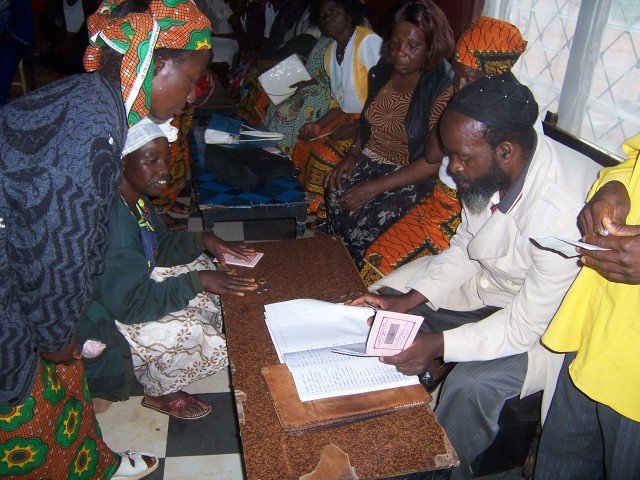
- We now farm around our homes and have enough time to come together. Children now attend school as they do not have to come with us to distant farms. We have gained experience by coming together e.g. joined savings and credit groups with small interest charged on loans. We now have small businesses that help to solve some of our problems like paying for school fees and drugs. We are healthy and do not have to rely on our husbands for money.
- We have attended many seminars organised by SHUMAS and the Diocesan Commission for Justice and Peace, Bishops House, Kumbo, Human Rights agent and the International Federation of Female Lawyers in Cameroon.
- Now we express ourselves freely because of the lectures from SHUMAS and human rights agent who told us that every person is the same before the law and has the right to express his/her views freely.
- We now produce tablet and powder soap and hire a hand cart for transporting items.
- Through seminars we have learned that HIV/AIDS is real. We go out to schools and talk on the rural radio about the dangers and the precautioins that must be taken. There have been significant changes in sexual behaviour as a result.
- We now have our own small bakery and members can take part in bread making and poff poff production. We sell what we make and employ male youths to carry to far distant places by motorbike to sell.
- The eucalyptus replacement project has enabled women to have more time to engage in adult literacy classes. These include married women who were once illiterate.
- FIOH Oku has encouraged single parents to join the co-opertive and learn how to engage in income generating activities. The co-operative has provided them with small loans and they are now able to sell items in the market. Some have been able to send their children to school and have given testimonies on how their lives have improved.
- From the lectures and seminars women became more aware that men and women should jointly agree the number of children they should bear.
- Through the education of the human rights agent and messages from Mike Thomas of the FIOH UK Fund, women now know their rights to vote in their own right.
- Women now realise that they can take the initiative in putting up a building. Our women have bought a plot of land and have erected their own meeting hall.
- Through the co-operative we have taught women the importance of marriage certificates and various types of marriage . If monogamy is the choice then men have no right to bring in a second wife or mistress.
- We now have exchange visits with other womens co-operatives in our network. We exchange ideas and learn from each others experience.
- Now most women, especially FIOH women, do not now sleep in such houses. When their husbands die they sit in a special room with friends who comfort them.
Follow us on Facebook:
www.facebook.com/fiohfund
Follow us on Twitter:
twitter.com/fiohnet
Please share our links with your friends to help us reach a wider audience.
Strategic Humanitarian Services
 Strategic Humanitarian Services (SHUMAS), a Cameroonian Development NGO, after working on its own for sometime, considered possible networking and collaboration with northern NGOs who shared common objectives and methods of approach to development. Between 1997 and 1999, the General Co-ordinator of SHUMAS, Stephen Ndzerem and the President of Plant a Tree in Africa (PATIA)/Co-ordinator of Future in Our Hands Education and Development Fund UK, Mike Thomas, were involved in some intensive correspondence.
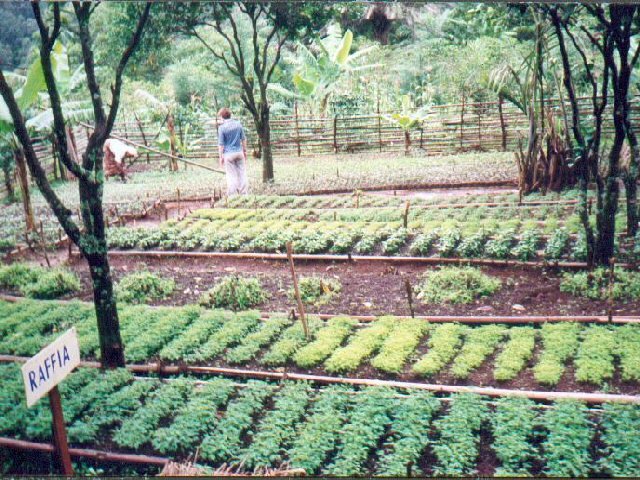 One of the issues they discussed was how to seek a sustainable solution to the adverse effects of eucalyptus plantations on water sources and farming areas. Women were the principal victims.
In 1999 Mike Thomas visited to carry out a site assessment and provided £500 from PATIA (matched by SHUMAS) to establish a nursery for 40,000 tree seedlings (10 species) and fell several thousand eucalyptus.
Because of the encroachment of the trees into existing and potential farming areas, many women have to walk long distances (often 15 miles or more) to find new areas to farm. They will then live in temporary self-made huts for 2 to 4 weeks before returning home with whatever they can carry on their heads. Many will carry babies or take young children with them. People in general, usually women and children, have to walk further and further each year to fetch water. A summary of the project and its outcomes are shown below.
Information gained from the pilot project was used in support of an application to the Big Lottery Fund to fund a large project named the Eucalyptus Replacement Project .
A 10 page brochure summarising the first phase of the project can be seen here:
CAMEROON – EUREP I – BROCHURE
Since then SHUMAS has established partnerships with AidCamps International and Building Schools for Africa both of which have resulted in a comprehensive school building programme involving a partnership between local communities and the schools’ parent teacher associations.
A Buildings Schools for Africa report can be seen here:
BUILDING SCHOOLS FOR AFRICA Newsletter October 2014
SHUMAS is now a well respected organisation in the area and has established many projects, including those summarised below, which have improved the lives of poor people in both urban and rural areas. More details can be seen at the SHUMAS web site:
STRATEGIC HUMANITARIAN SERVICES
SHUMAS integrated organic farming training centre

Another inspirational development has been the establishment of an Organic Farming Training Centre in the NW Region near Kumbo.
Details of the operation of the Centre can be seen in this 34 page report: BIOFARM
Primary health care
A partnership with Spreading Health [Founded by Dr Peter Hearn] is facilitating primary health care training for people in the rural areas. This has included a scheme to sponsor local village candidates to train for three years at the St Louis Higher Institute of Health & Biomedical Sciences in Bamenda (the capital of NW Cameroon).
Womens co-operative network
 During his visit in 1999, SHUMAS gave Mike Thomas an opportunity to present his idea for establishing savings and credit cooperatives to about 300 women. There were some initial setbacks but before 2000 more than five co-operatives had been trained and became fully operational.
By 2014 sixty two autonomous co-operatives all of which have again come under the single umbrella called Future in Our Hands Womens Credit Union Cooperative- Cameroon.
The FIOH co-operatives are quite different from conventional co-operatives. FIOH concentrates on building the capacities of grass roots women through encouraging the spirit of sharing, co-operation and fellowship, rather than on too much external dependency and a quest for individual material gain.
The SHUMAS head office and rehabilitation centre
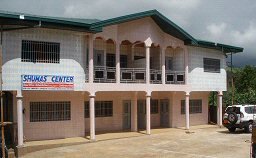 In February 2009 SHUMAS started the construction of an inspirational new building that combined facilities for both staff and vocational training for disabled people. The building was completed later that year. The SHUMAS head office combines facilities for administrative staff with those providing vocational training for disabled people. The object is to provide disabled people with the means to become economically self-reliant and the ability to effectively participate in the development of their communities.
The objectives of the Centre are to:
- Train disabled people in self-reliant skills so that they will be able to carry out economic activities which enhance their self-esteem and enable them to be part of the mainstream of development of their communities.
- Train them in basic management and leadership skills.
- Continuously monitor and evaluate graduates for some years to assess their progress.
- Set up a revolving micro-finance scheme to benefit ex-trainees.
- Advocate for the rights of disabled people.
The Eucalyptus Replacement Project

Project launch
The project was launched in 2000 and was supported by all sections of the community and government authorities and provided the framework for the introduction of new ideas to the women.
The womens network was to play an important role in the day-to-day management of the project which involved the felling of 1,017,200 eucalyptus and the raising of 2,624,000 mainly indigenous African trees (60 species) carried out in two phases between July 2000 and October 2008.
The projects cleared about 463 ha of eucalyptus trees resulting in the recovery of 105 springs and 140 water taps during the dry season. Over 9,000 women who had previously walked long distances to farm and collect water, were able to farm close to their homes.
Statistics in 6 rural health centres and 1 hospital recorded an average 27% reduction in water born disease during the life of the project. It was estimated that an additional 5,153 children were able to go to school because of the increase in family incomes resulting from the projects.
The local authority and many individual farmers copied the example of the project and hence the figures shown above are an underestimate of the project’s impact.

Future in Our Hands Sierra Leone
 Future in Our Hands Sierra Leone
Background
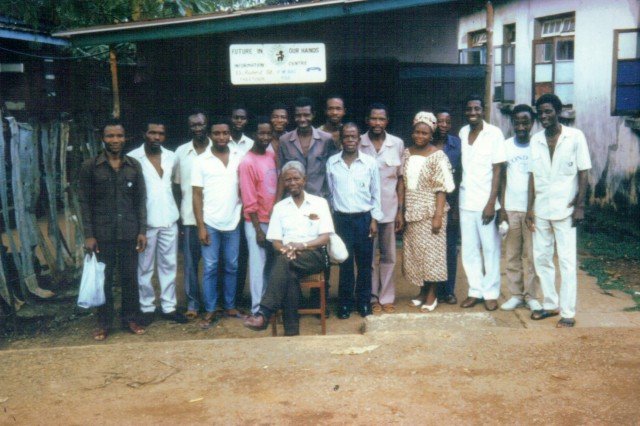 An FIOH group was established by Olatunde Johnson in Freetown in the 1980s and registered as a national non-government organisation by Edward Kargbo in 1995. The first interest in FIOH arose from an article in the New Internationalist and the second from a seminar at Port Loko when Mike Thomas paid a second visit to the country in 1993. Edward, who attended the seminar, formed an association of 13 farmers groups which was then named the FIOH Farmers Union. The name was later changed to FIOH Sierra Leone.
Edward Kargbo testimony: EDWARD TESTIMONY
Mission Statement
The Mission of FIOH Sierra Leone is to co-ordinate and facilitate the efforts of village development groups by enabling them to access farming inputs, modern farming techniques, education and skills poverty alleviation programmes, sanitation and credit facilities for self-sustainability and self reliance.
Programme interventions – capacity building, food security, women and youth empowerment, environment, health and sanitation, advocacy.
Brief History Of The Organisation:
 The Future In Our Hands Sierra Leone (FIOH-SL) is an indigenous non-governmental organization with a Head Office in Makeni (Bombali district) and sub-offices in Kabala town (Koinadugu District) and Mile 91 (Tonkolili District). It was established in 1993 as an offshoot of what was formally the Yoni Farmers’ Union. In 1994, as the situation in Sierra Leone deteriorated, the membership decided that FIOH had a vital role to play in providing assistance to those affected by the escalating conflict. The main focus of the organization during the rebel war was to complement the emergency and relief work of the Government of Sierra Leone, as well as that of international and national NGOs.

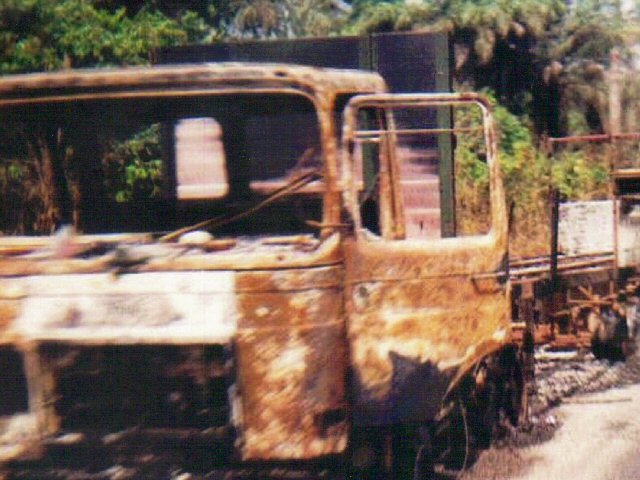
During and immediately after the war, FIOH worked in collaboration with CARE International, Department for International Development (DFID) UK, Voluntary Service Overseas (VSO) UK and the World Food Programme (WFP) UN, distributing food and other relief items to internally displaced persons in their operational areas. Further activities included providing psychosocial support to affected communities and raising awareness on human rights, HIV and AIDS prevention and control.


Edward Kargbo and his family surviving in the bush
Youth group in Freetown
Displaced people queuing for food at Mile 91
FIOH vocational training centre at Mile 91
Following the end of the conflict in 2002, FIOH shifted its focus from emergency relief to development which involved building the capacity of communities for self reliance. It has continued to build partnerships and linkages with a variety of local and international organizations and has implemented two projects (Conservation Agriculture Project (CAP) and Villages Savings and Loans (VS&L) project with CARE-SL in Koinadugu District whilst the Voluntary Services Overseas (VSO) has provided the human resource support. In addition, the FIOH Fund-UK and UN/WFP supported Life Skills Trainings and Community Asset Creation for marginalized youths and communities.
FIOH-SL also enjoys strong links with community based organisations (CBOs) at grassroots level aimed at building their capacities to better serve their communities.
Food for work
 During 2003 FIOH Sierra Leone was able to increase its operational area to include 3 chiefdoms (Kissy Tongi, Njaluahun and Dea) in the Kailahun District and two chiefdoms (Kalansogoia and Sambaia Benduga) in the Tonkolili District.
In August 2012, FIOH Norway member, Nini Haeggernes, visited Sierra Leone and was made aware of the work of Edward Kargbo by Mike Thomas. Subsequent to her visit she wrote an article which appeared in the FIOH Norway magazine, Folkevette: FOLKEVETT-FIOH SIERRA LEONE
Norwegian, Georg Hansen, read this article and decided to visit the country and see the the work of FIOH Sierra Leone. He has raised a considerable sum of money to support a school building programme and has contributed funds to address the ebola crisis in 2015.
Future in Our Hands Sierra Leone
37 Lunsar Road
Makeni City
Northern Region
Sierra Leone
Environment and Rural Development Foundation
Environment and Rural Development Foundation  (ERuDeF) is a Cameroonian non-profit organization founded in 1999. It is the only indigenous non-profit organization working on research and conservation of great apes in Cameroon.
Background
 The Lebialem Highlands (LH) have a history of poaching and unsustainable agricultural practices over the last several decades. These Highlands are situated in the South West Province, Cameroon. This project seeks to introduce a community-led micro-credit initiative through the creation of an environmental protection fund which will serve both as a revolving fund and provide start-up grants to the most impoverished farming groups that continue to farm and construct on marginal and fragile lands. This is a project of the Environment and Rural Development Foundation (ERuDeF), which was initiated in 2001 to protect and conserve the montane and lowland rainforest ecosystems in and around LH and improve on the quality of living of the local inhabitants.
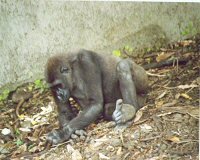
The Highlands cover an area of 1,323 sq km comprising forest lands, sub-montane, montane and grassland habitats. The Highlands lodge many species of endangered plants and animals including elephants, gorillas, chimpanzees, drills, crocodiles, tortoise and red list data plants. It is one of the only three mountain regions in Cameroon still having a continual graduation from 180m to 2510m above sea level.

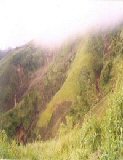 The LH area is one of the poorest areas in Cameroon. Very low levels of income (usually less than $ 0.5 a day), limited land management skills, lack of credit facilities, lack of market access and lack of medical care, characterize all the communities in the region especially those bordering the forest areas and those completely lacking access routes. Their economy is essentially that of hunting, gathering and fishing. Their agricultural potentials are low especially as they continue to farm on marginal lands prone to landslides every year and their economic options are low due to lack of market access. However, the vast non-timber forest products present one of the opportunities for exploration to raise the incomes of the rural people.
The majority of the peasants have no access to credit facilities. The Cameroon Credit Union League (CAMCCUL), the main micro-finance institution in the country field, has offices located very far away from most of these communities and can only serve a very tiny proportion of the over 30,000 indigenous people living here.
Most people here rely on an informal network of money lenders who often charge very high interest rates (> 50%) and will seize poor farmer’s properties if interest payments or debts are not repaid.

 In this context many farmers and young people have no choice but to encroach into the neighbouring protected areas and the marginal lands in search of farm land at little or no cost. Struggling with debts, these local farmers, who for the most part have no access routes, have no choice but to resort to heavy poaching, poisoning of rivers for fishing, illegal logging and land encroachment. This is causing the unsustainable exploitation of the wildlife resources, especially the endangered fauna.
In the Highlands area the continual cropping of marginal lands leads to several landslides each year which have, in the recent past, led to hundreds of deaths and destruction of houses, productive forests and arable land. Research conducted between 1999 and 2002 has shown that game harvesting is twice the sustainable off-take. This research has also shown that one of the legally protected species, the leopard, in the neighbouring wildlife sanctuary, has become extinct. There are fears that another protected species, the giant pangolin, may also have become extinct. This situation can only be reversed through the improvement of the socio-economic environment of the adjacent local communities. The conservation objectives of the area will be compromised if nothing is done.
Within this context, ERuDeF realized that the problem of debt and poverty had to be dealt with if livelihoods and the endangered biodiversity of the region are to be fully protected. It is within this framework that ERuDeF is seeking to establish an innovative community-based led micro-credit system that will be opened to all the local communities and even those having no collateral as required by many micro-finance institutions. ERuDeF is helping to organize the communities across the region into constituted community-based institutions that will facilitate the process of all the local people having access to this credit facility.
This credit system, called the Lebialem Highlands Environmental Protection Fund (LHEPF), will be run by a democratically elected committee that will be composed of at least 50% women. The women are the most affected in terms of poverty and more than 55% of the women are found below the poverty line.
The main objective of the LHEPF is to promote sustainable income generating activities and reduce illegal harvesting of wildlife resources and cropping of marginal lands. This credit system is part of a wider programme of micro-enterprise support, capacity building and sustainability being led by ERuDeF. ERuDeF is seeking financial support to help implement these activities.

 ERuDeF’s sustainable development programme activities are meant to improve livelihood sustainability and increase the local community members’ capacities to repay loans, remain solvent and expand on their existing micro-enterprises. This project will provide both start-up grants to cooperating farmers and youths and credit facilities to enable them to expand on their micro-enterprises.
The micro-credit system operates on the following principles: local people get loans for ecologically beneficial and income generating micro projects provided they do not poach or crop on marginal lands and or log illegally. Very low interest rates of less than 5% will be charged generally. Impoverished farming groups with no collateral will be given start-up grants. Criteria for selecting loan and start-up grants recipients will include the viability of the proposed activity, repayment capacity and market demand. The LHEPF will also establish what actions will be taken if members fail to pay back loans or meet environmental criteria.
ERuDeF will ensure that beneficiaries will focus on mixed cropping and on cultivating products with high market value but with low environmental impact. Such systems involve community forestry, agroforestry and consist of planting a combination of fast & slow growing tree species on marginal lands. This will permit them to get an average minimum income from fast growing species while the high value but slow growing hardwood species will mature with time. This approach will also allow the land to restore itself. The micro-credit initiative will also support a system of local enterprises which yield high-return products with low impact on the fragile highlands environments. ERuDeF will promote such enterprises as beekeeping, mushroom cultivation, livestock, tree nurseries, snail rearing, eco-tourism, non-timber forest products processing etc.
This is an innovative mechanism through which micro-credit initiatives will be interwoven with wider efforts to improve the incomes of lower and most affected impoverished groups and jobless rural youths. Sustainability will be ensured by aligning ecologically sound micro-enterprises with the actual demands of the market and biodiversity management.
This is a three-year pilot initiative which will serve over 30,000 farm families. After this start-up phase, the revolving fund system will become sustainable as money given out during the first year will be repaid in the second year – and the cycle will continue. The main micro-enterprises will include cultivation of cola nuts, tree nurseries and reforestation, beekeeping, NTFP processing and marketing, mushroom farming, snail rearing, wildlife domestication, livestock, agro-forestry and community forestry development and exploitation.
The Environment and Rural Development Foundation (ERuDeF) is a Cameroonian non profit organisation formed in 1999 as a membership organisation. Its mission is to conserve wildlife and protect fragile environments and to improve upon the wellbeing of indigenous peoples in particular and the quality of human life on earth in the regions where it operates. Its focal programmes include biodiversity conservation, forest landscape restoration, sustainable development, women and gender and education and training. ERuDeF staff, members, its associates and partners have over a decade of experience in the implementation and management of conservation and rural development projects in Cameroon. Its expertise expands to include but not limited to finance, project development, sustainable development, conservation, gender and education.

Future in Our Hands Pakistan
Background
 FIOH Pakistan is part of the FIOH International Network. It was established in 2005 as a non-profit civil society organization in Pakistan having national coverage. Provincial offices will be located in all four Provinces of Pakistan at an appropriate time.
FIOH Pakistan has adopted the Principles of the FIOH Movement.
Aims and objectives
- To advance public awareness that development is a matter of right rather than charity.
- To propagate the removal of hunger as a means of establishing peace and tranquility among human beings.
- To develop the capacities of people to honorably and boldly cope with their situation and work towards the establishment of peace.
- To work towards Inter-Faith harmony between all people.
- To promote environmental education for creating conditions for the greening of Pakistan and establishing environmental peace.
- To promote a simple lifestyle by the more affluent people in society so that savings can be invested in social welfare of the poor.
- To campaign for changes in the unjust social, economic and political systems and cultural attitudes which oppress or impoverish people, especially women and children.
- To pursue the principles of the FIOH Movement through the services of an Information Centre and by fostering and co-coordinating the growth of local community groups.
- To work in co-operation with like-minded organizations nationally and globally for the promotion of peace, tolerance, justice and equality of all human beings.
- To develop networking with National and International Civil Society Organizations.
- To disseminate information to all stakeholders including Government and Non-Government Organizations promoting the objectives and principles of FIOH Pakistan.
Help for victims of the earthquake in 2005


FIOH Pakistan, with limited financial resources, collected blankets and clothing to distribute to the victims of the earthquake that occured on 8th October 2005. At the beginning of November 2005 the death toll was estimated at over 73,000.
With a small grant from the FIOH Fund UK, FIOH Pakistan carried out a survey and feasibility study in the area affected with a view to providing longer term help to the victims in 3 or 4 villages by supplying goats, tree and vegetable seeds.
St Joseph’s Grammer School in Karachi helped with emergency supplies.
FIOH Pakistan is working with the Participatory Village Development Programme (PVDP) and has no separate office yet nor staff. It works on a voluntary basis. The activities conducted in 2009 and 2010 included:
- Youth rallies for human rights and environment protection in Pakistan.
- Awareness on the importance of National Identity Cards for government services and security.
- Health and hygiene awareness among youth, women, girls, boys and minority communities.
- Relief Operation in which food and non food items provided to flood affected men, women, children and minority communities in Sindh.
- Formation of Youth Groups and capacity building for advocacy on human right.
- Awareness on the importance of education for social development of poor communities.
- Interactive Theatre used as a mobilization tool for creating awareness.
Pakistan experienced a series of disasters in 2010.
A massive flood engulfed half of Pakistan destroying life and properties all over the country. More than 20 million people were affected, exceeding the combined total of people affected by the 2004 Indian Ocean Tsunami, the 2005 Kashmir earthquake and the 2010 Haiti earthquake. In funding terms, the revised inter-agency appeal disaster (US$ 2 billion) issued on 17 September was the largest ever, surpassing even that for the Haiti earthquake earlier this year with over 10 million children hit by the flooding.
World Environment Day was celebrated on 5 June at Hyderabad District by FIOH Pakistan jointly with the Environment Protection Agency and partner organization Participatory Village Development Programme (PVDP). The purpose of celebrating the event was to undertake initiatives to mobilize communities to take environment friendly initiatives and reduce environment polluting activities. Mr. Dominic Stephen and Mr. Irfan Abbassi were the main speakers after the rally conducted at the Hyderabad Press Club. Speaking on the occasion Mr. Dominic said that it is the responsibility of both the government and the common man to take initiatives to keep the environment clean, otherwise we will have to encounter horrible consequences in future. Mr. Irfan Abbassi official of EPA said the government is making efforts to ensure a clean environment for the public safety. He maintained that local Government is ready to work with the civil society organizations on any environment issue.
In addition to this a theatre performance was presented to the audience at the conclusion of the walk at the Press Club. A theatre team highlighted the common environmental problem caused by carelessness or lack of awareness of the people. They brought it to light that plastic bags are a big problem and cause blockages in sewerage systems which creates health and sanitation problems. They asked the audience to use cloth bags instead of plastic bags for shopping.
To sensitize the community of Thar Desert about the importance of National Identity Cards FIOH and PVDP organized 5 awareness meetings in many villages of the Thar Desert. In these meetings it decided that PVDP’s Khushal Goth Markaz Committees (KGMC) will prepare the list of those adult men and women who have no Computerized National Identity Cards (CNICs) due to various reasons.
PVDP organized 5 Health and Higeine Awareness Workshops in 3 schools and 2 villages of taluka Nagarparkar, District Tharparkar jointly with FIOH. 90 school children and 80 adults including women and youth of the villages attended the workshops. In these workshops people were sensitized about the following health and hygiene interventions.
· Care of teeth and trimming of finger nails.
· Body cleaning/bathing
· Wearing of clean clothes
· Hand washing after defecation/anal cleaning after defecation.
· House and kitchen and cooking pots cleaning
· Cleaning of village
· Clean drinking water/filtration of drinking water.
Youth rally for human rights
A remarkable Youth Rally was organized to sensitize the youth about human and social rights at Ratanabad, Mirpurkhas, Sindh. Mr. Dominic was the speaker in the Rally and highlighted some of the main human and social rights violations taking place in Pakistan. 57 persons, including youth and people from different walks of life, attended the Rally.
Formation of youth groups
FIOH Pakistan formed three youth groups in 2010. FIOH orientated and trained them for human rights advocacy. These groups were formed in Tando Allahyar, Ratanabad and Mirpurkhas Sindh and these groups are active in their areas.
Education for social development of poor communities
Lack of education is one of the main reasons for poverty and this has created obstacles in the way of community development of poor people in Pakistan. Most of the adults, particularly women, are illiterate and are unaware of modern tools and techniques that could enhance their quality of life and standard of living. Very few women are literate and this puts them at the bottom of the social ladder due to the cultural mindset and traditional norms. Due to lack of literacy and awareness the women are considered to be the weakest members of the family.
FIOH Pakistan believes that if adult members of the households are literate and educated, they can contribute towards the formation of an exemplary society in the country which can enable them to cope with their socio economic barriers. FIOH and PVDP therefore, organized 4 seminars to make the people recognize the value and importance of education.
Interactive theatre
As the theatre is one of the best tools to convey the message to communities especially to the youth FIOH Pakistan arranged 5 theatre performances during the year to mobilize and sensitize communities about different aspects of life including environment, human rights, literacy and health.
Response to the flooding
FIOH provided food and non-food items to flood affected men, women, children and minority communities in Sindh.
According to UN sources, 20 million were affected all over Pakistan. About a million houses were submerged. Huge damage was caused to schools, health facilities, community centres, roads and other infrastructure. 40% of livestock and all crops were lost in flooded areas. About 2000 flood related deaths were reported. There were large displacements of people . Millions were forced to live on road sides and in school buildings, health centres and in camps. They lacked food, health facilities, clean drinking water and other basic needs of life.
The worst affected were the women and children. Women in pregnancies and deliveries suffered due to non availability of maternity facilities. Children suffered from various diseases such as malaria, cholera, dysentery, gastroenteritis and diarrhoea due mainly to unclean drinking water and mosquito menace.
PVDP interventions
PVDP made a very quick response to flood affected communities in Sindh and chose Khairpur and Badin Districts which are the most severely affected in Sindh province. PVDP provided dresses to the affected community before Eid-ul-fiter and provided food and non-food items and Mobile Medical Health Services to the affected community of District Khairpur and Badin of Sindh Province. People were still living in the flood relief camps as refugees because their homes were destroyed.
Seminar

FIOH organised a one day seminar on 5th February 2011 on the Responsibilities of Youth in Society at the Danishkad Hall, Caritas Pakistan Hyderabad office.
Speakers: Mr Dominic Stephen, Mrs Lina Khalid and Mr Shamoon Masih. FIOH Pakistan has taken up the challenge to help the younger generation work towards the aim of peace promotion and poverty reduction in the country.
48 people from Hyderabad, Kotri and Mirpurkhas participated in this seminar.
Mr Manshad (volunteer in FIOH) welcomed all the participants and then gave a brief introduction to the seminar.
This was followed by an opening prayer led by Ms Maria.
Mr Yousaf Dominic then gave an explanatory introduction of FIOH Pakistan, its purpose and activities to date.
Mr Dominic explained that Future in Our Hands was an international movement. The vision of FIOH Pakistan is to empower young people to play an active role in creating an environment of peace and a better quality of life for the people of Pakistan. FIOH Pakistan is a partner in the Future in our Hands International Network. It was registered in Pakistan under the Society Registration act of 1860 in 2005 and has been working for the development of the marginalised communities of the Sindh Province with the help of the Participatory Village Development Programme (PVDP). He summarised FIOH Pakistan activities and its aims and objectives.
Dominic Stephen said that poverty is not a destiny but a man-made situation. Poverty should be reduced by quality education, better occupation according to skill, refusing drugs and making and adopting a simple lifestyle.
Poor health is a major cause of poverty. People should therefore avoid drug and alcohol addiction and the smoking of tobacco.
A simple lifestyle is essential for poverty reduction since greed leads society towards unlawfulness, bribery, terrorism, etc If we encourage a simple lifestyle amongst young people then no one can abuse them for their own selfish motives.
A session on gener balance was conducted by Mrs Lina Khalid. She said that in a male dominated society gender imbalance blocked the way to development. In some areas of Pakistan people do not want girls and women to get an education. If some women successfully complete their education they are not allowed to choose any profession. They should be encouraged to participate equally in the well being and support of their families. Men and women should have equal rights and responsibilities in society.
Group activity
Participants were divided into four groups to discuss what they considered to be the main causes of poverty in the country and suggest solutions:

Mr Shamoon Masih said that peace needs to be begin from within us as individuals who should then form a collective movement for establishing peace. Young people should then join with other peace movements and advocate against unlawfulness using participatory approaches. We should condemn activities which cause discrimination, the violation of human rights and extremism.
Mr Yousaf Dominic thanked all the participants and said that FIOH Pakistan intends to arrange more seminars on different topics in the future to promote the culture of peace. All are encouraged join this task of peace building, interfaith harmony and a develop a behaviour of tolerance in society.
On 22nd Feb 2010 at Mirpurkhas, Sindh FIOH and PVDP organisaed a Peace Rally.
About 60 members took part in the rally. The rally walk started from St Teresa Hospital to the Press Club and participants chanted peace slogans along the way. After the walk leaders of non government organisations and community leaders spoke to the participants.
