
Remarkable humanitarian GLORES Director Alfred Wingo (Obituary)
Alfred was a remarkable man who has improved the life chances of thousands of children born with disabilities by adopting physiotherapy techniques. He was instrumental is combating the misinformed beliefs of the local population. There were widely held beliefs that disability was because the parents had done something wrong and that disability was a punishment for previous misdemeanors. The debilitating effects of associated stigmas served to compound the negative impact on these children’s lives. He remained a voice of reason.
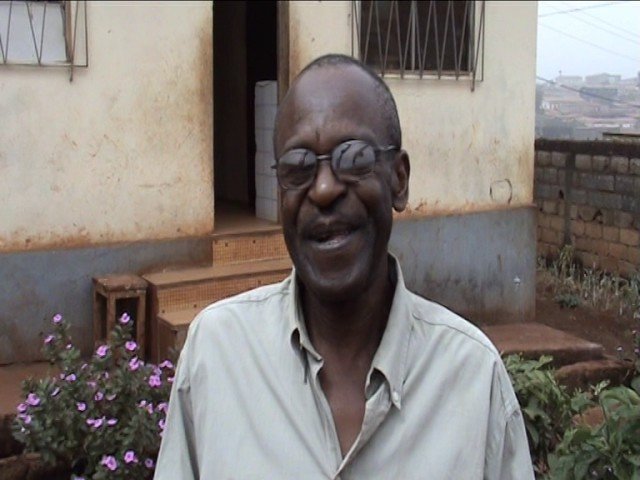
It is with enormous sadness that we report the loss of our main contact in Bafoussam, Cameroon. After meeting Alfred in 2008 we established assistance for GLORES (Global Rehabilitation Services) a unique service provided for the most vulnerable in society. Modelled on United Kingdom National Health Service treatment should be free at the point of access and based on need. We first encountered Alfred in rented accommodation making do with minimal equipment to transform the life chances of disabled children in Cameroon. The photographic record below vividly shows the rudimentary conditions we witnessed first hand.
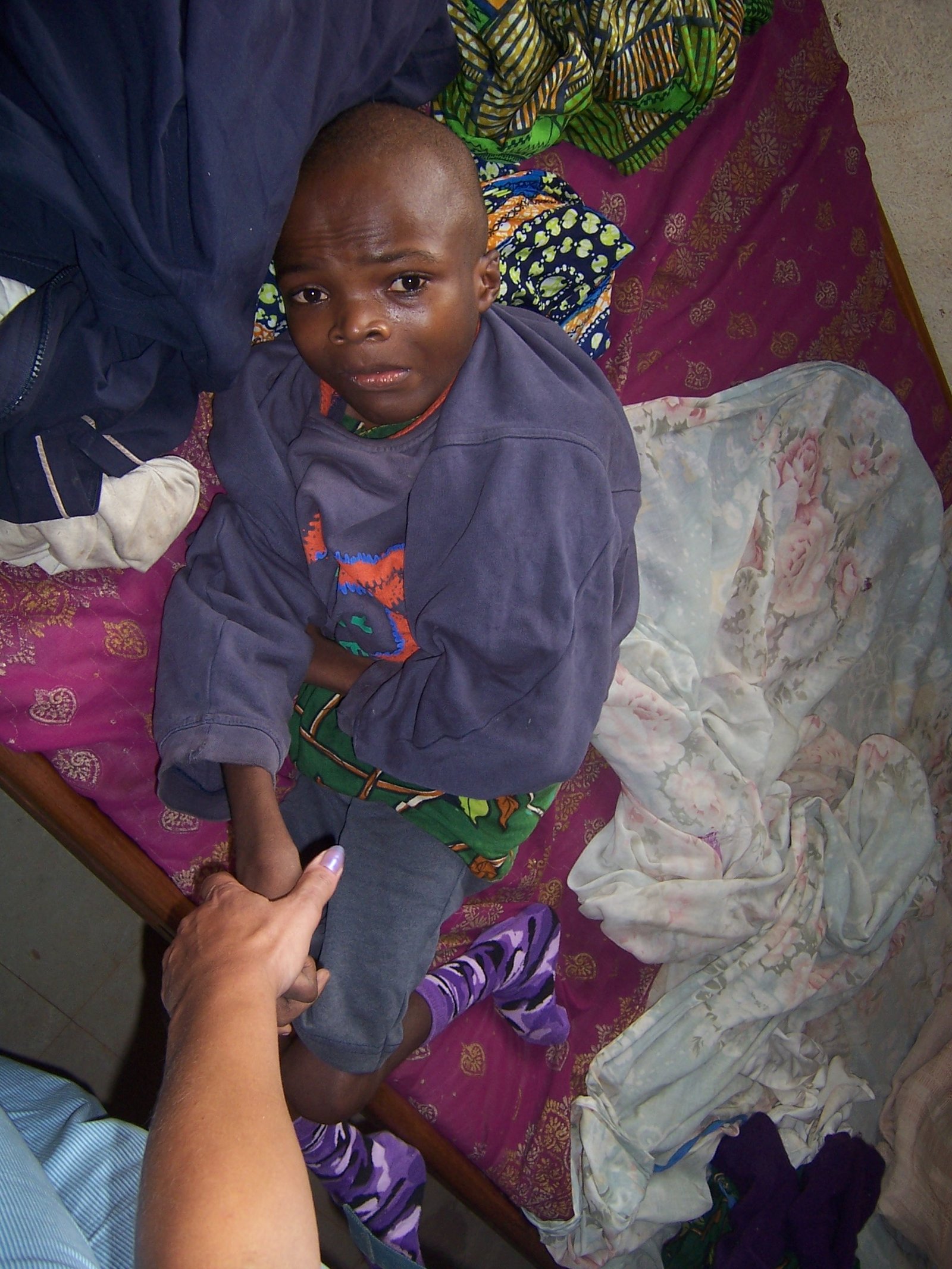
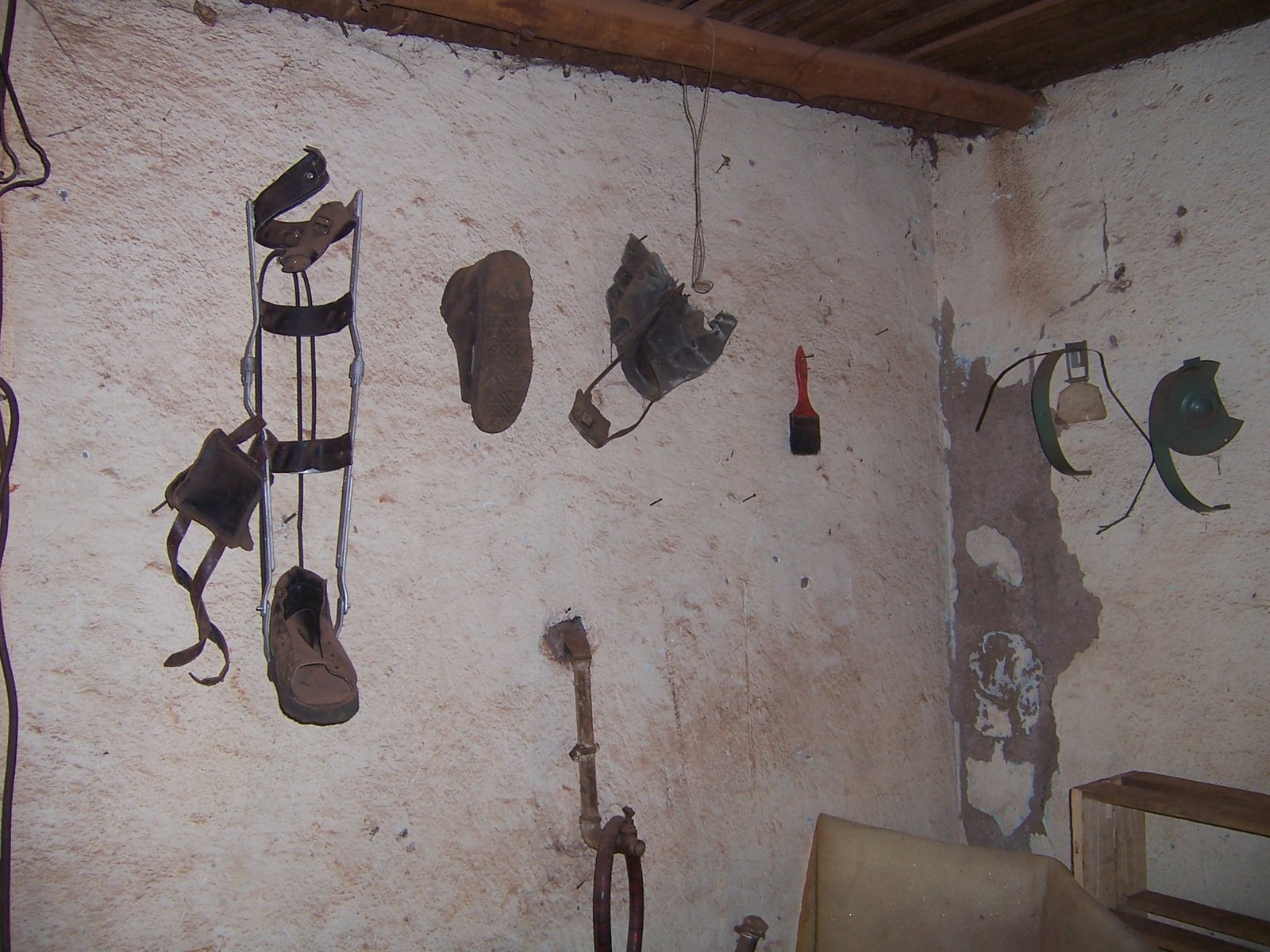
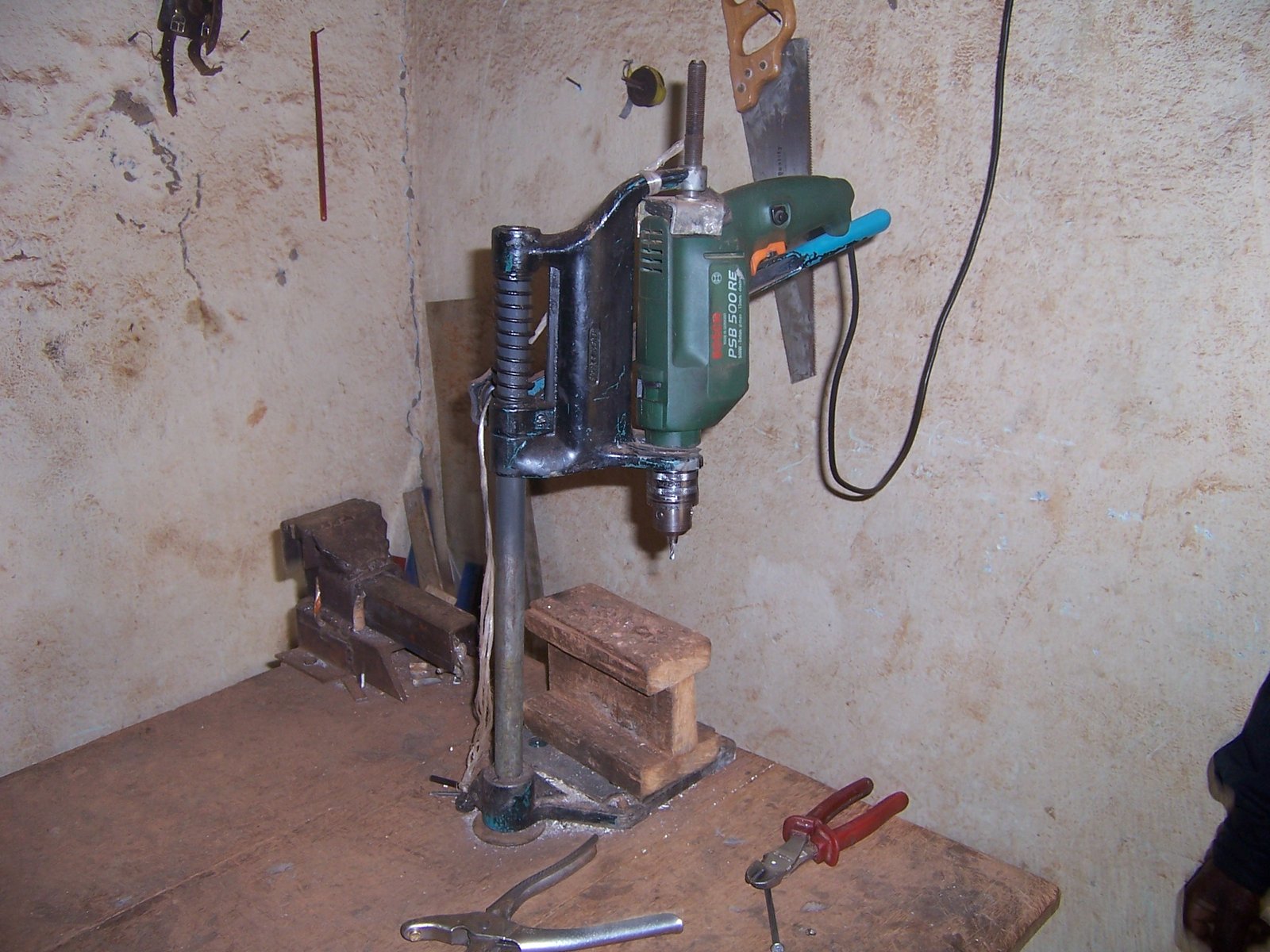
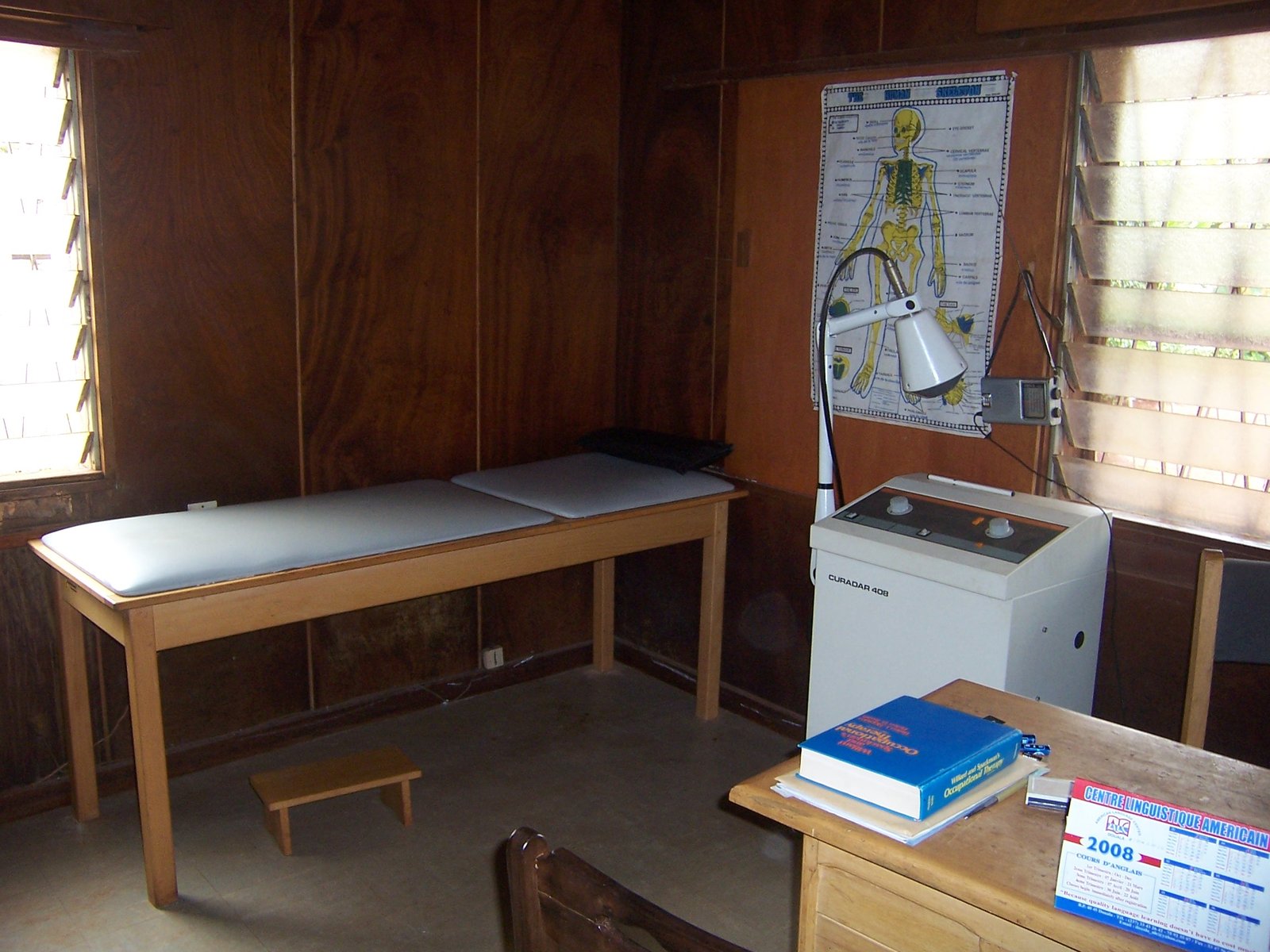
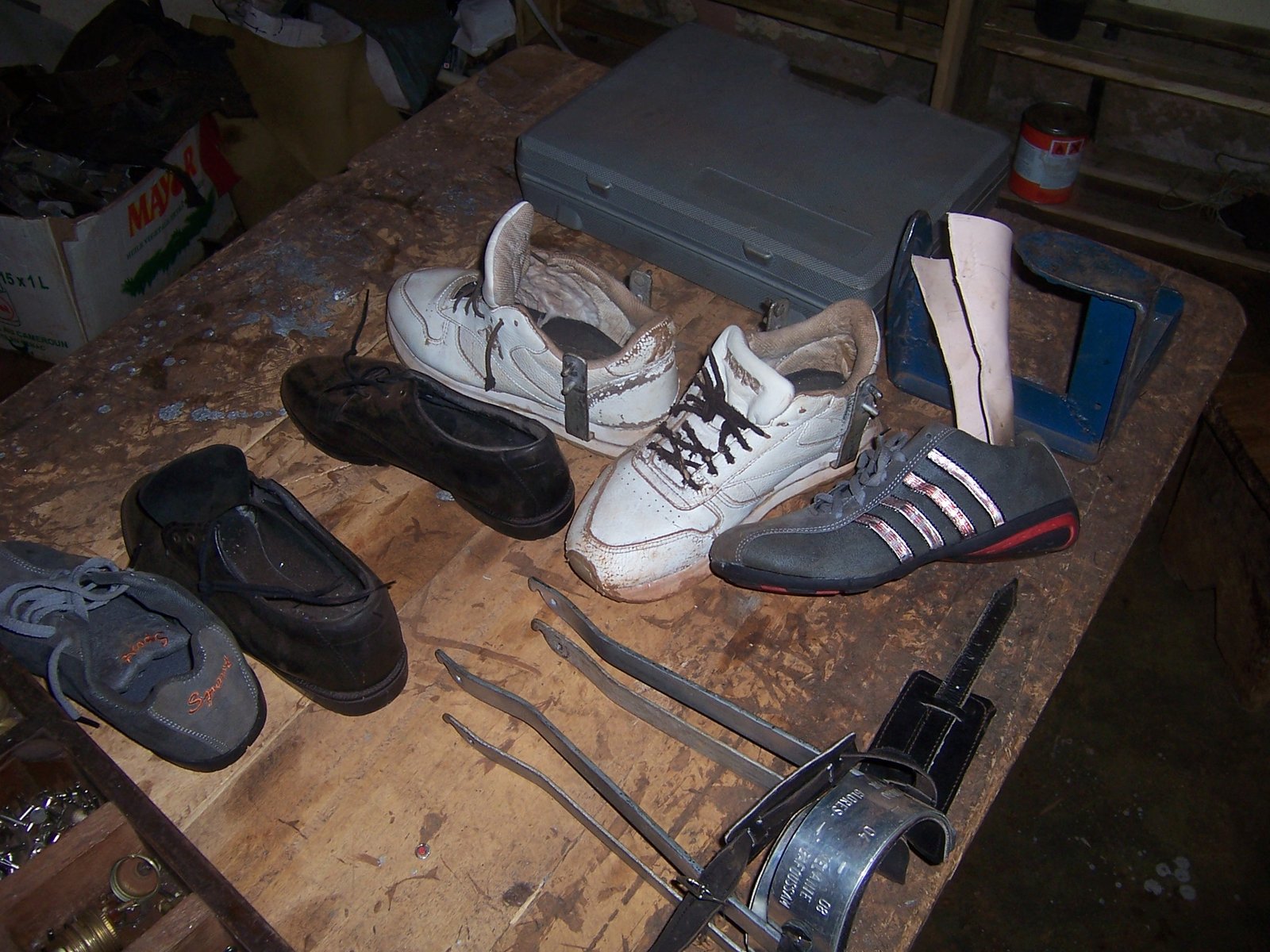
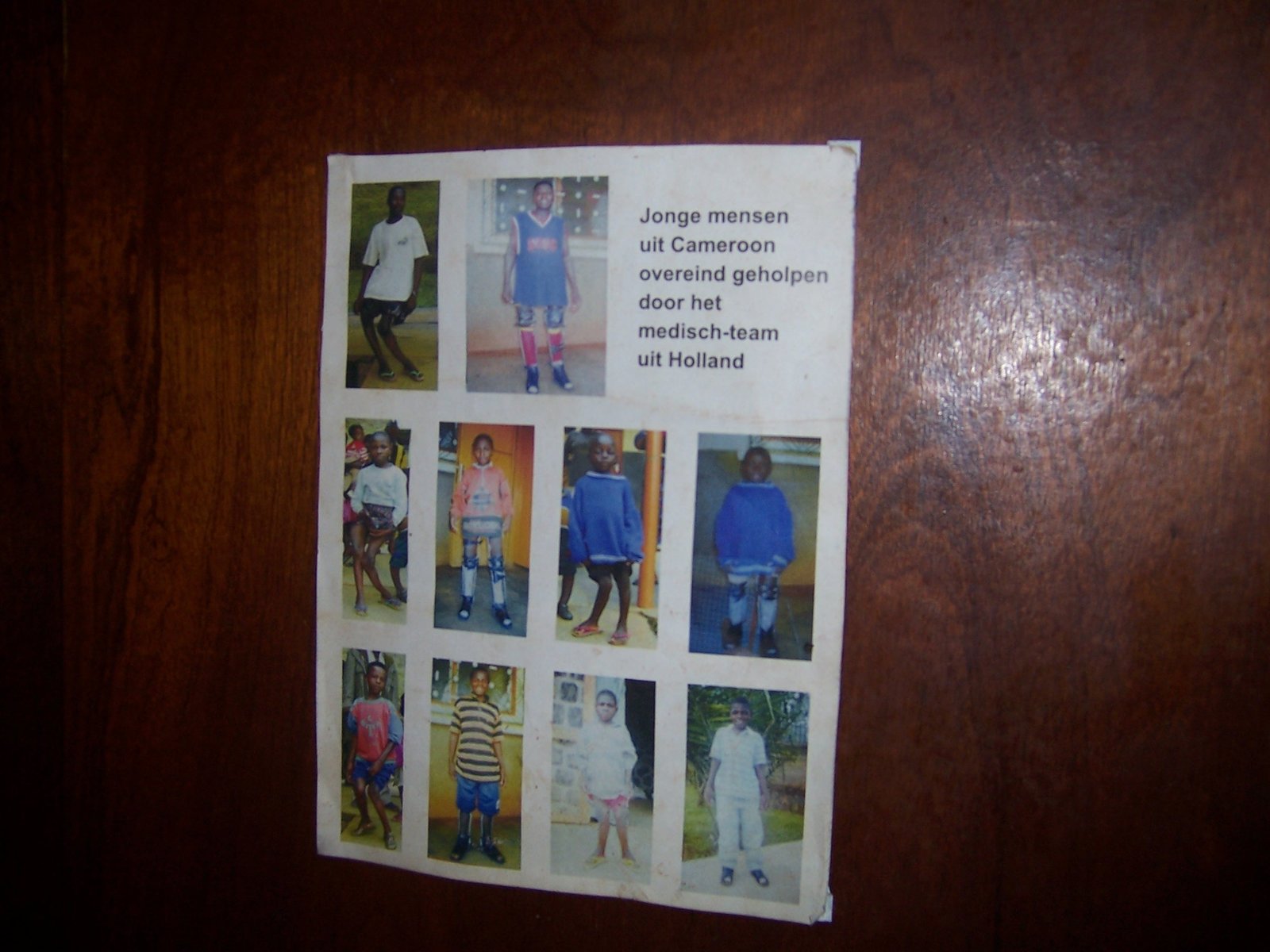
Immediate support required
The need for immediate support was self evident and through a sustained programme of support the FIOH fund financed the development of a new bespoke treatment facility , unique to Cameroon. The construction infrastructure was finally completed in 2016.
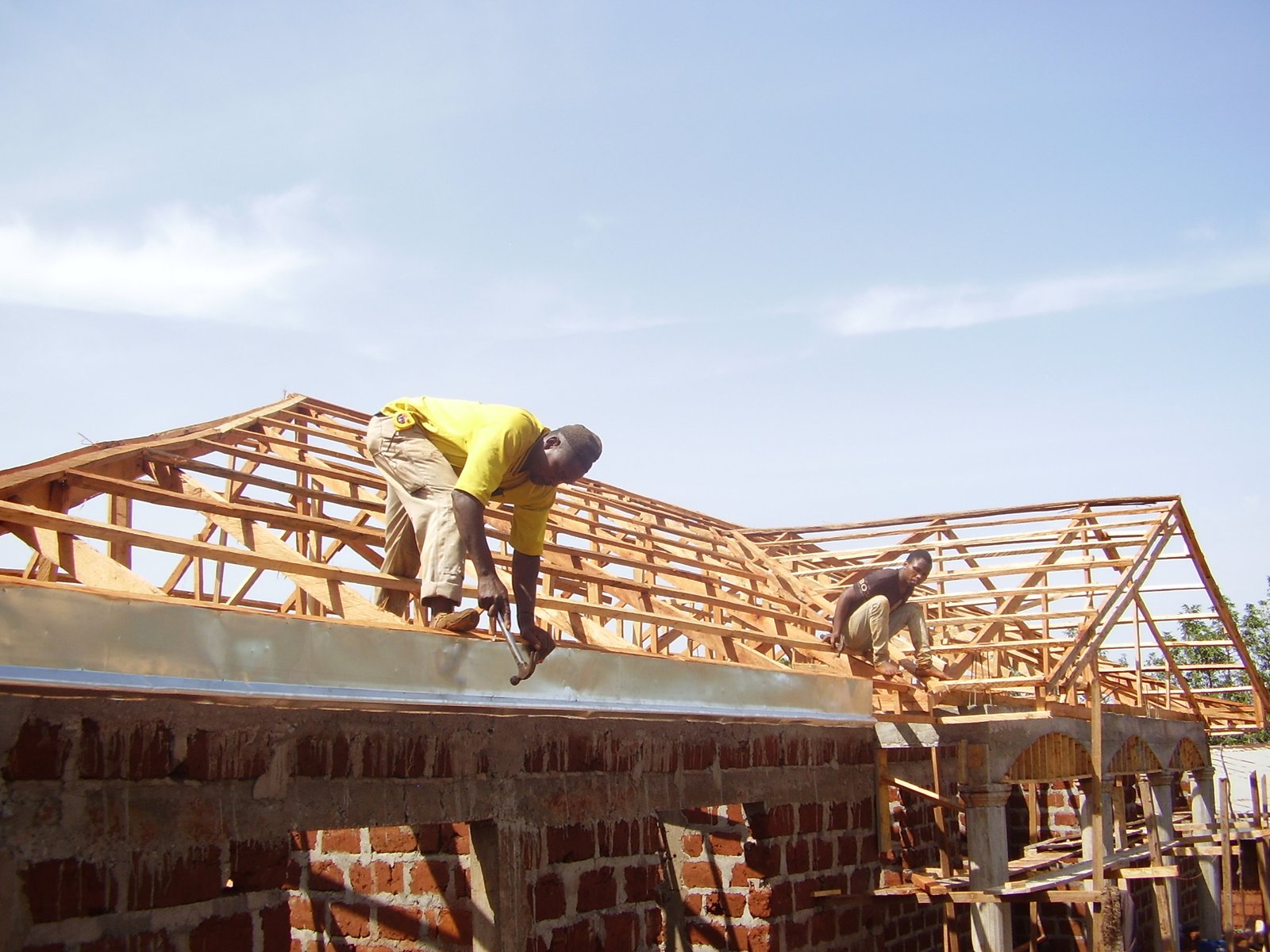
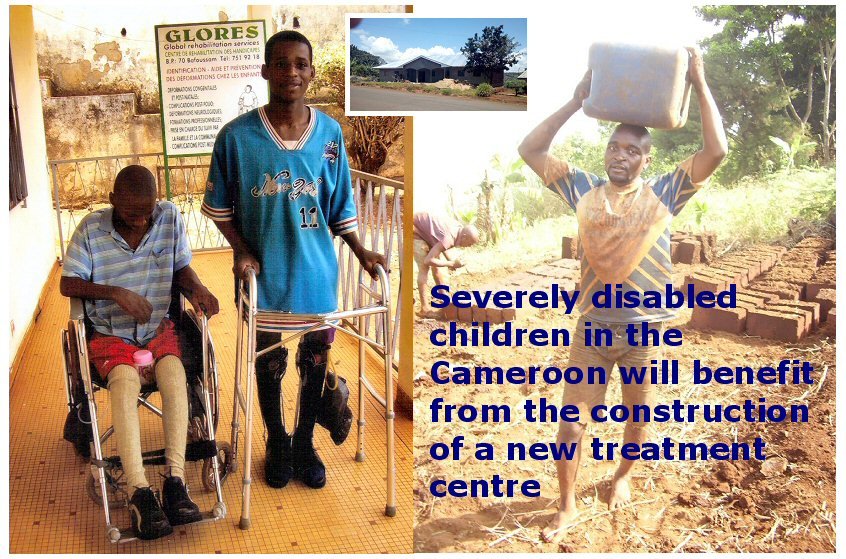
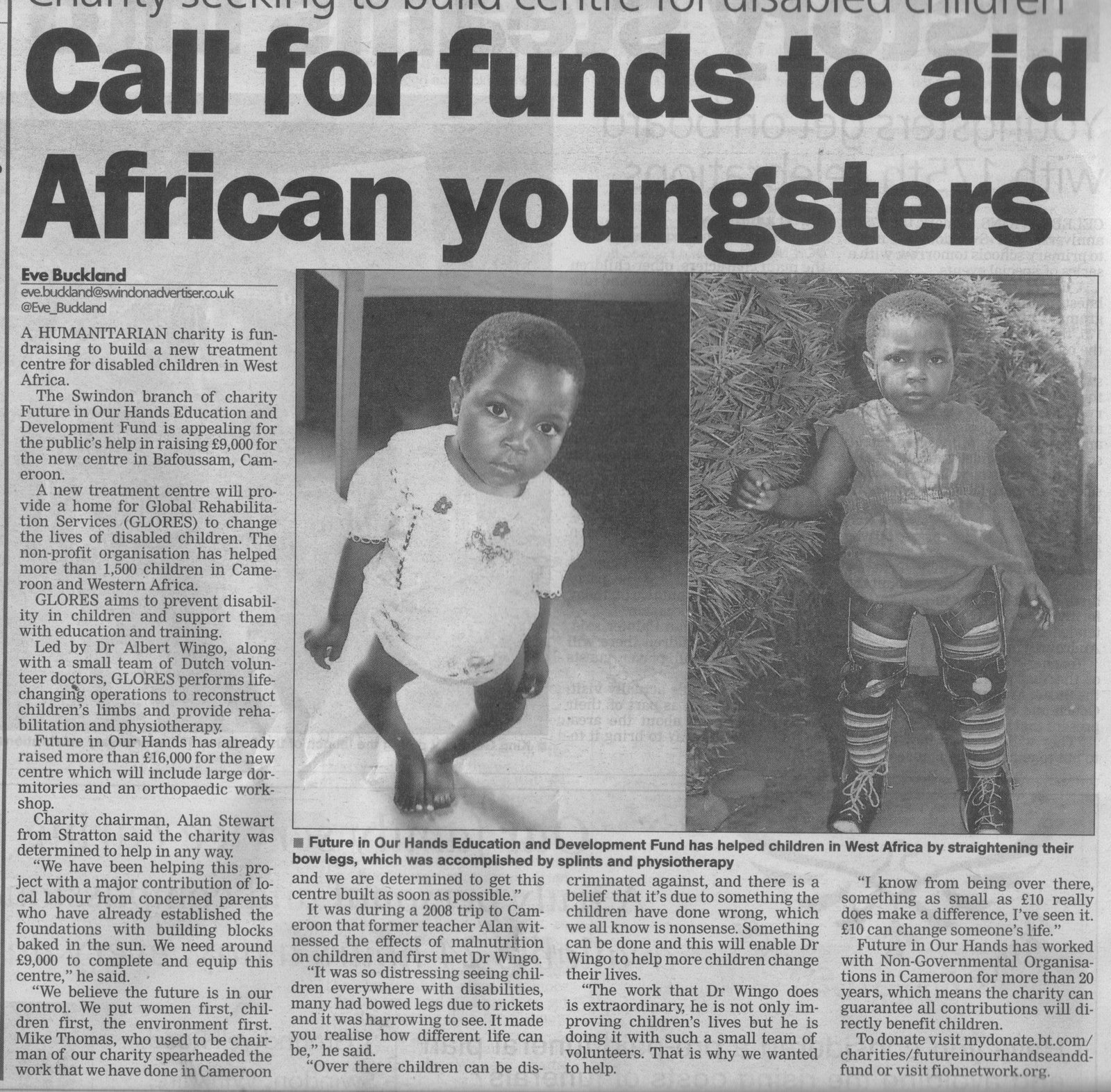
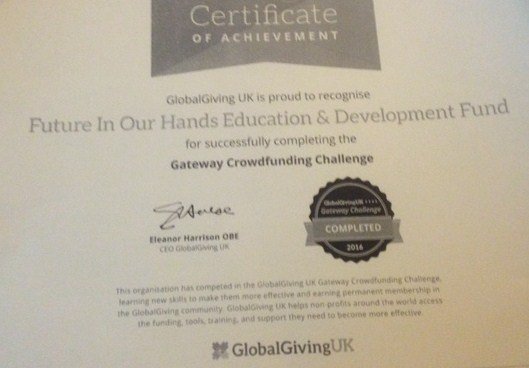
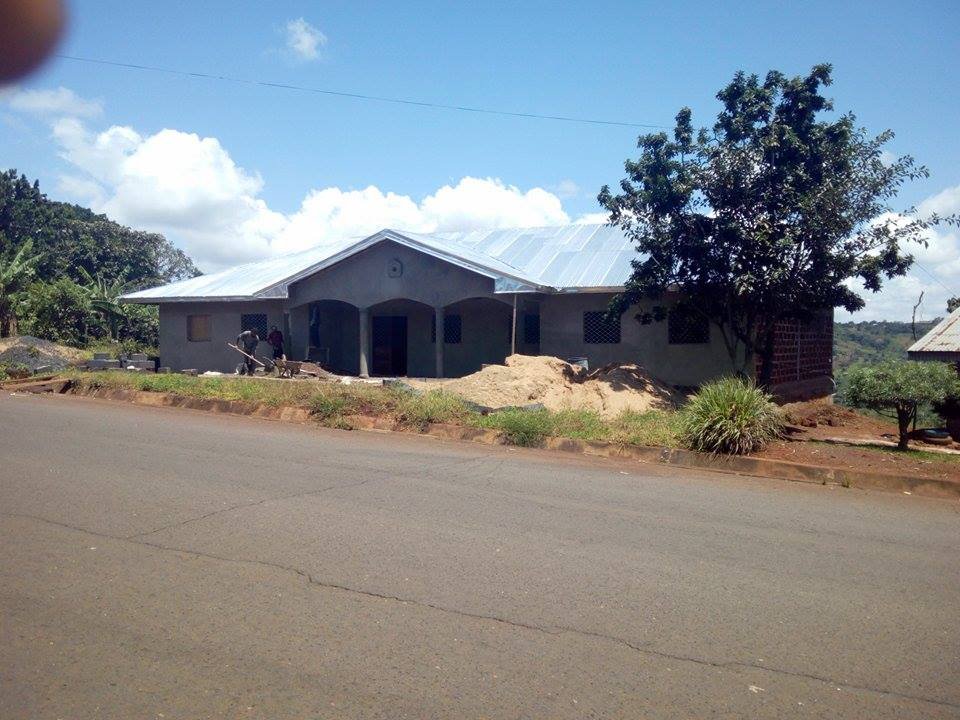
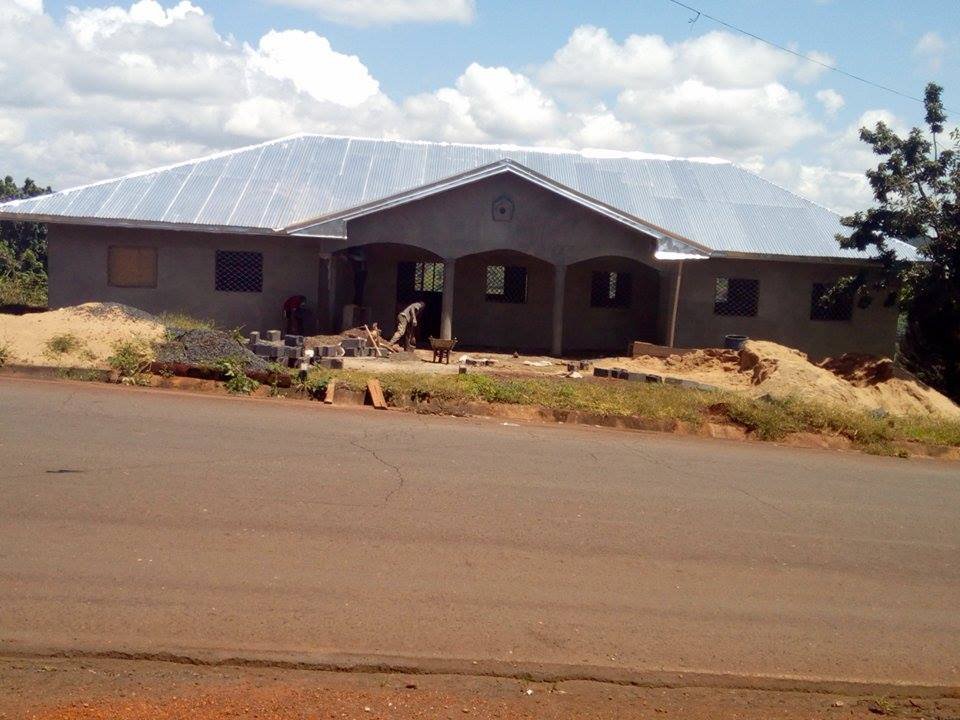
Alfred was instrumental in developing this idea from it’s planning to inception and continued to serve the disabled children of Cameroon until his untimely Death in Nov 2024. We express our condolences to his family and pay tribute to a remarkable humanitarian. FIOH remain honoured to have been a vital part of his story alongside additional support from a team of Dutch doctors who regularly performed the more complex surgery.
Verification of progress
As overseas donors we endeavoured to promote networking to solve issues and problems and so engaged officers from our partner organisation in Cameroon to visit and produce a comprehensive report on the progress towards the final construction of the bespoke facility.
A VISIT TO GLORES IN BAFOUSSAM BY CAMGEW 5th of October 2015 Requested by: Michael Thomas of Future In Our Hands – UK Objective Assess the progress of work in the GLORES CENTRE Contruction site Discuss challenges of GLORES Determine the date when GLORES will come for exchange visit to CAMGEW Discuss on procedure to apply for a service car for GLORES Time CAMGEW through Wirsiy Emmanuel and Sevidzem Ernestine left for Bafoussam to visit.
Methodology
We arrived the GLORES office and prepared a programme of work. The visit started with movement round the various departments of GLORES. We then moved to the GLORES Centre contruction site using CAMGEW car. After working there, Emmanuel and Alfred had a working session to close closely at construction activities, possibility of completion of work, means of mobility for GLORES and possibility of exchange visit. Activities CAMGEW staff visited all the offices and activities of GLORES in the GLORES office CAMGEW and GLORES move to the GLORES Centre construction site. This visit was done together with technicians to do the work. Alfred told us that the technicians will do the work with the assistance of volunteers who are beneficiaries (parents and guardians of patients). I did ask Alfred to call the technicians for us to reflect together on how to proceed with work. There, ALFRED told us that the small two room house constructed to serve as packing store for material collapsed 2 days ago after continuous rain fall and heavy wind storm. With the technician and Alfred we discussed what must have happened and what lessons must have been learned. We saw that the house was poorly built with poor mixture of sand and cement. The builder promised to redo the work on his cost. We also discovered that the wind blowing from down upward was too strong and needed wind breaks. It was agreed that Alfred should plant some fast growing trees to rescue the situation. Alfred said this was to be done the next day. The technicians that came were different from the ones that constructed the collapsed house. These ones looked more professional. The bricks for the house were still to be moulded this dry season starting from November. It was agreed that bricks made out of soil be used. The bricks were to be constructed on site because the soil is good for bricks. We deliberated on how to get water to the construction site. The government was still putting water pipes around the road close to the site but it was not clear when the water will start flowing. There was a small spring that is always available in the dry season and we assessed and saw that the water from the spring was small. We also looked at possibility of digging a well to get water but saw that the area was too rocky with high possibility of meeting a big rock before getting to see water. We also thought of pumping water from the river down in the valley to the construction site but saw that this was costly in pipes to connect the water, in fuel for the pump and in buying the pump. We thought of getting a land down beside the river to mould bricks and pay students during holidays like Christmas holidays to carry the blocks up to the site and saw that the hill was too steep for somebody to climb. We finally agreed that the spring will be used but Alfred will buy 10 containers of 20 Litres each and use them to carry additional water using his small vehicle every day for use in brick moulding and construction. Renting a car to do this work is costly. In terms of construction Alfred and technicians agreed that the centre has to be constructed to be solid since it will be beside a heavily used road by huge trucks. He said he hope that the house should be constructed and roofed before January. Alfred told me he has 5000 pounds at hand to start the work. He says he need an additional 10000 pounds to finish the work. This does not involve the fence construction and I saw the fence very important. Discussing with Alfred and from the reality he need a good secretary to handle finances, secretariat duties and communication We also agreed that Alfred will come to Oku for exchange visit when he comes we will use the opportunity to work on the GLORES MIVA car project. The visit will involve radio programme to advertise and sentise community on GLORES activities. Alfred could do consultation of his target group who needs help and could later be taken to GLORES Bafoussam for further treatment.
I did admire Alfred’s work. I have a soft spot for it. I pray God bless him and give him energy to do this work and take care of his children
Report prepared by WIRSIY EMMANUEL BINYUY Director of CAMGEW 2
Computers on the way for Mike Thomas’s schools

Working in collaboration with Youth Leading the World Sierra Leone
Address 34 Back Street Mile 91 Sierra Leone E mail itzalpha@ gmail.com
Phone +23299900645 Motto Inspire, Inform, Involve
Historic Context
Future in Our Hands Education and Development Fund were responsible for the financing of initial construction of these schools in Sierra Leone. Following several visits in 1990s and 2000s our founder Mike Thomas, working alongside the local NGO (Future in Our Hands Sierra Leone). Whose Founder Edward Kargbo became a close personal friend and organised the planning and original construction using local labour. We have since funded repairs to these schools after extreme weather events and ensured superior building standards to the initial construction. We believe in grass roots initiatives and are delighted that Alpha Kargbo ( son) carries on the humanitarian work and has been pivotal in promoting school improvement. The plan below is the latest proposed innovation to ensure an education fit for the 21st century for these 2000+ local children.
Planned Activities for 2026
Issue of concern
Sierra Leone faces major computer literacy challenges due to lack of infrastructure (electricity, internet), high costs (devices, data), limited teacher training, outdated curricula, and low overall digital skills, this is particularly true in rural areas, hindering economic participation and access to online services.
Project vision
Computer based learning is crucial for economic empowerment, bridging the digital divide for jobs, fostering entrepreneurship, improving education through global access, and enabling women to combat challenges like gender-based violence, ultimately driving personal growth and national development in an increasingly digital world. This would impact directly on more than 2000 current students and many more in the future
Outline of planned activities
Across all five local primary and secondary schools all bearing the name of the original chairman of Future in Our Hands
1. Mike Thomas Secondary School Masingbi Town Sierra Leone Northern Province Sierra Leone
2. Mike Thomas Secondary School Mile 91 Town Northern Province Sierra Leone.
3. Mike Thomas Primary School Rogbetrr Northern Province Sierra Leone.
4. Mike Thomas Primary School Mile 91 Town Northern Province Sierra Leone.
5. Mike Thomas Primary School Masingbi Town Northern Province Sierra Leone
Construction of additional buildings in all five schools
Purchase of projectors and screens for tuition
Purchasing computers for the five schools
Solar installation and battery storage to overcome the local issue of power reliability.
Teacher training
Projected costs
66,000 Leones Current exchange rate March 2026 31 New Le to the GBP so around £2000. More would obviously allow for greater numbers of computers, solar panels, back up batteries and some teacher training.
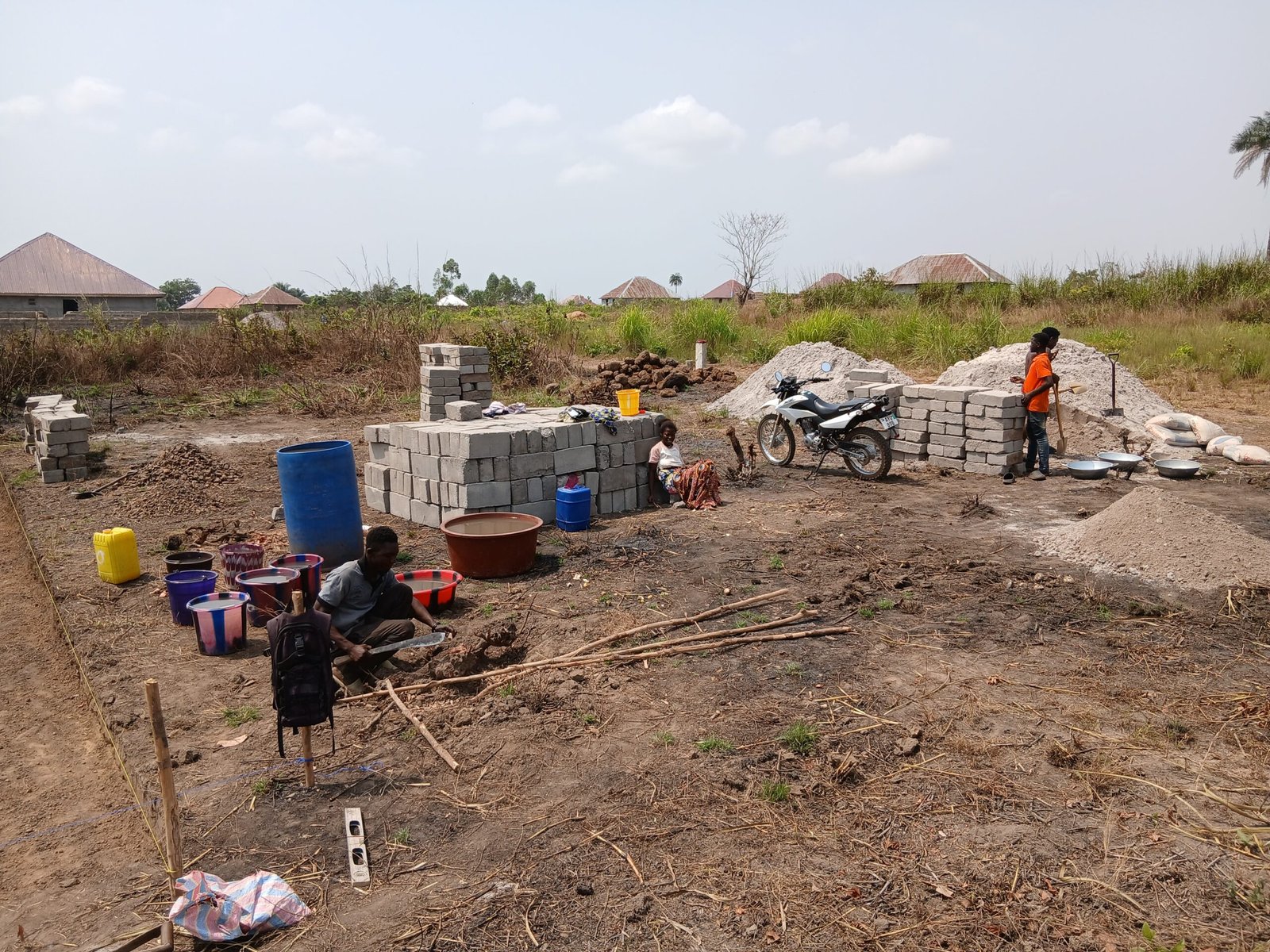
Initial plan of proposed construction
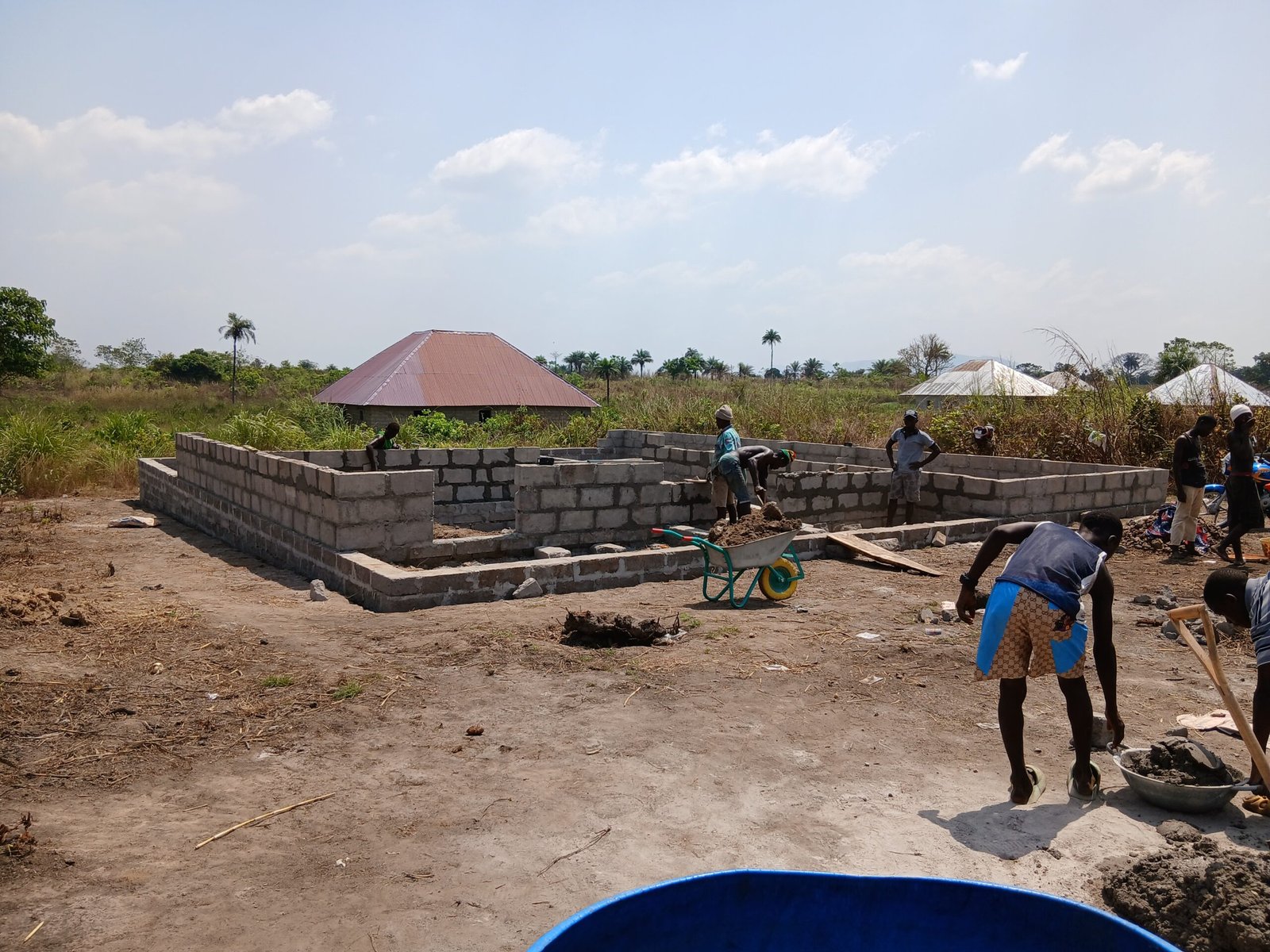
Progress on the fundamental block work
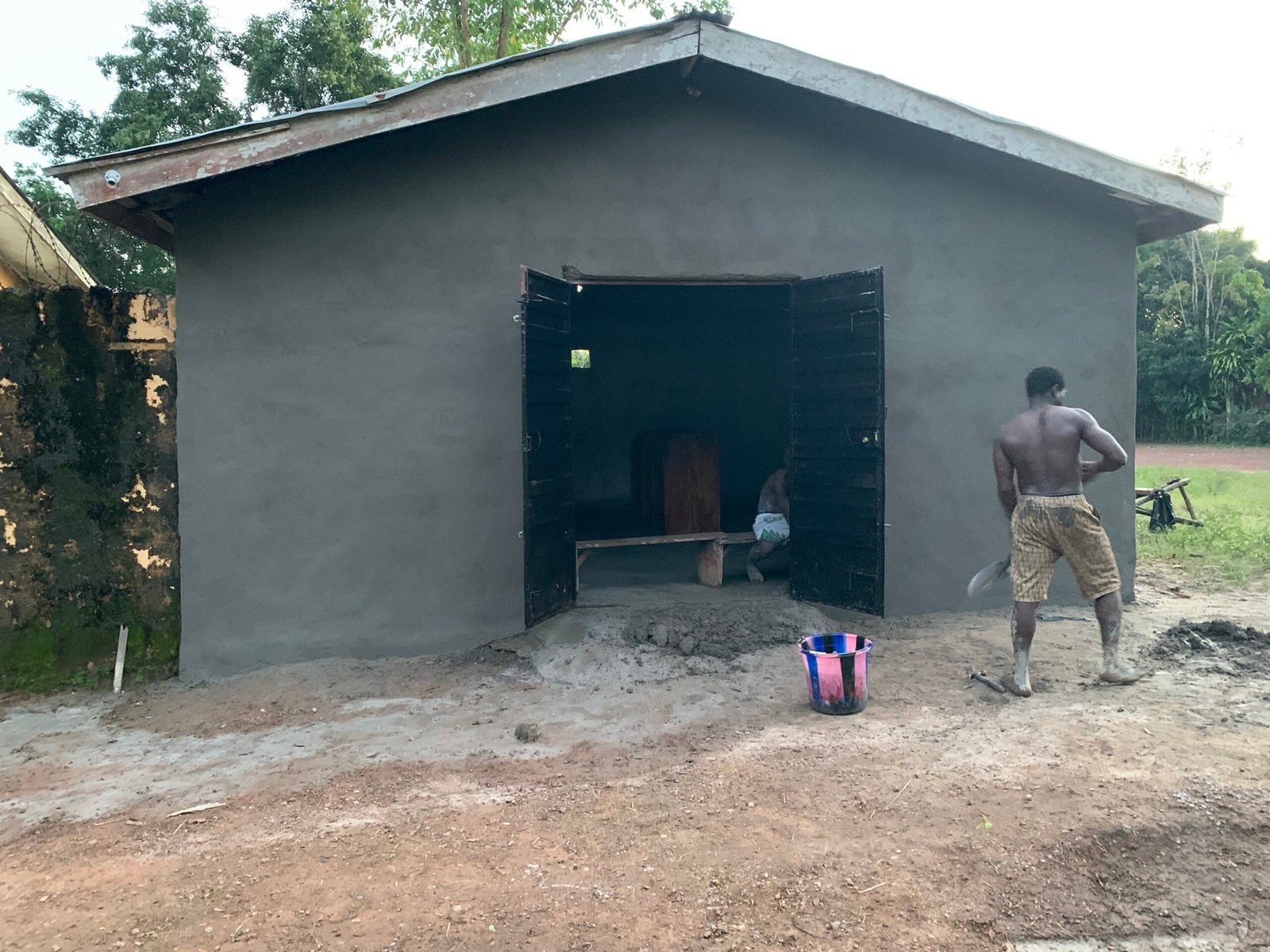
Well on the way to completion
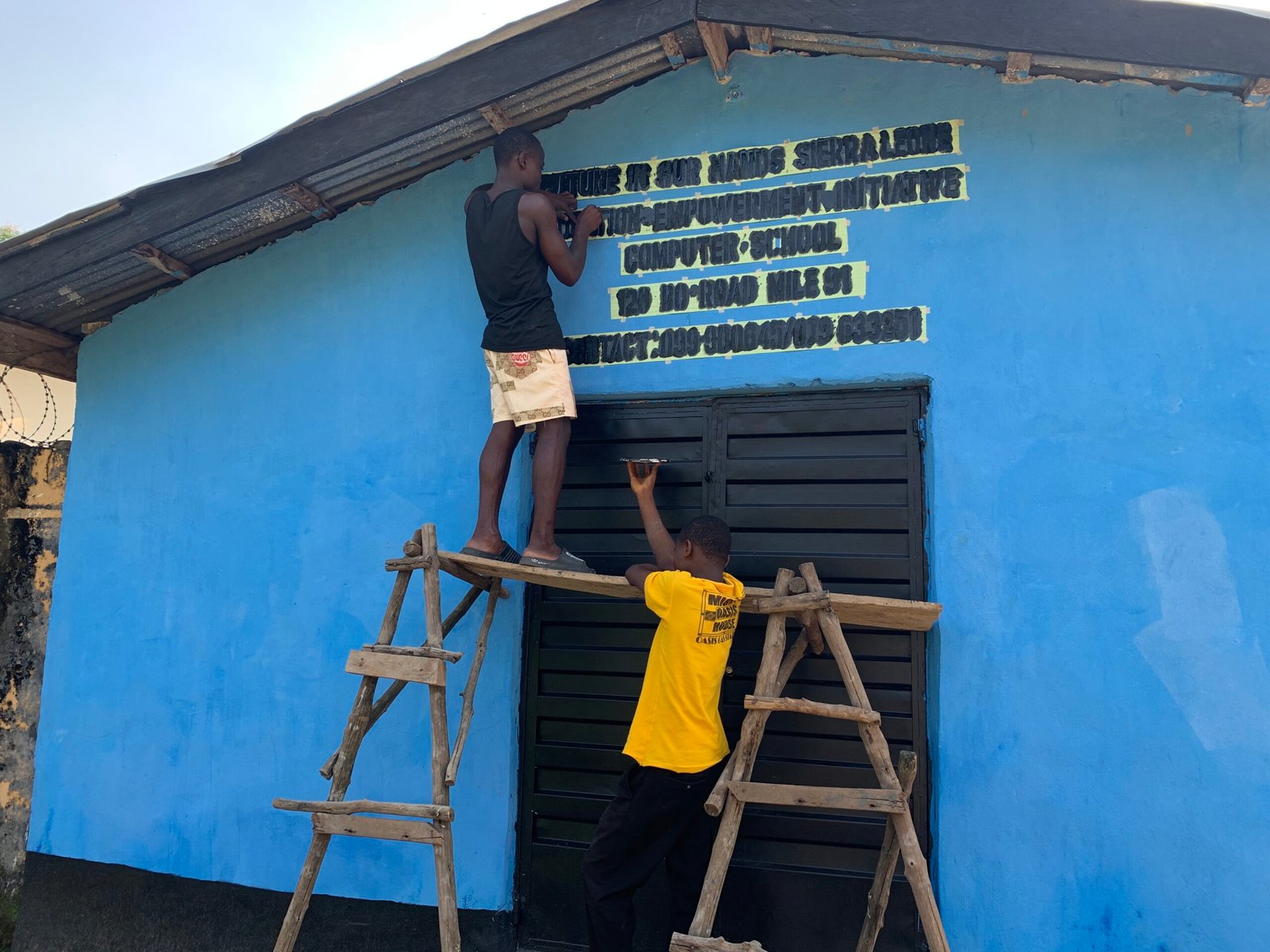
Finishing touches
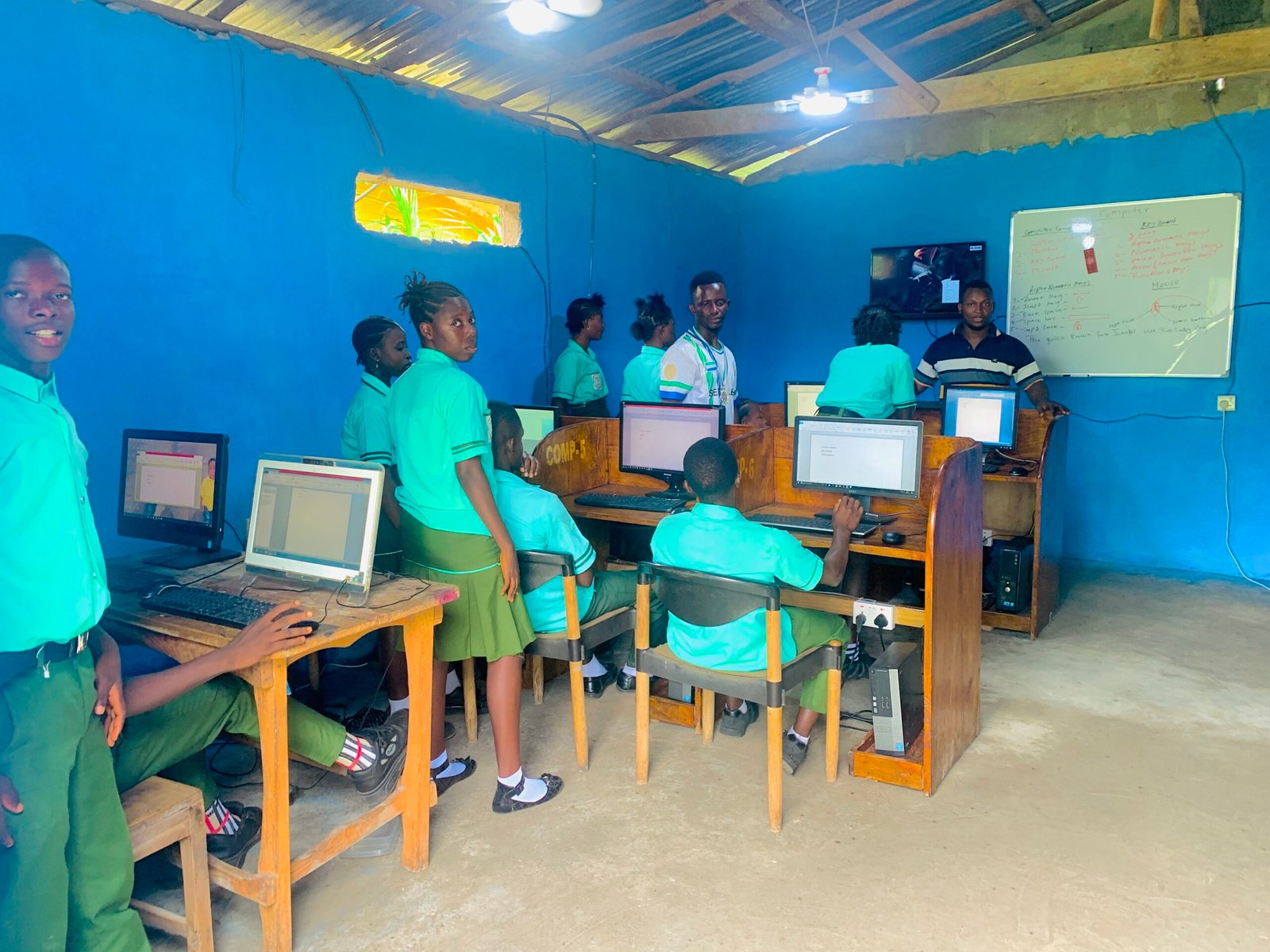
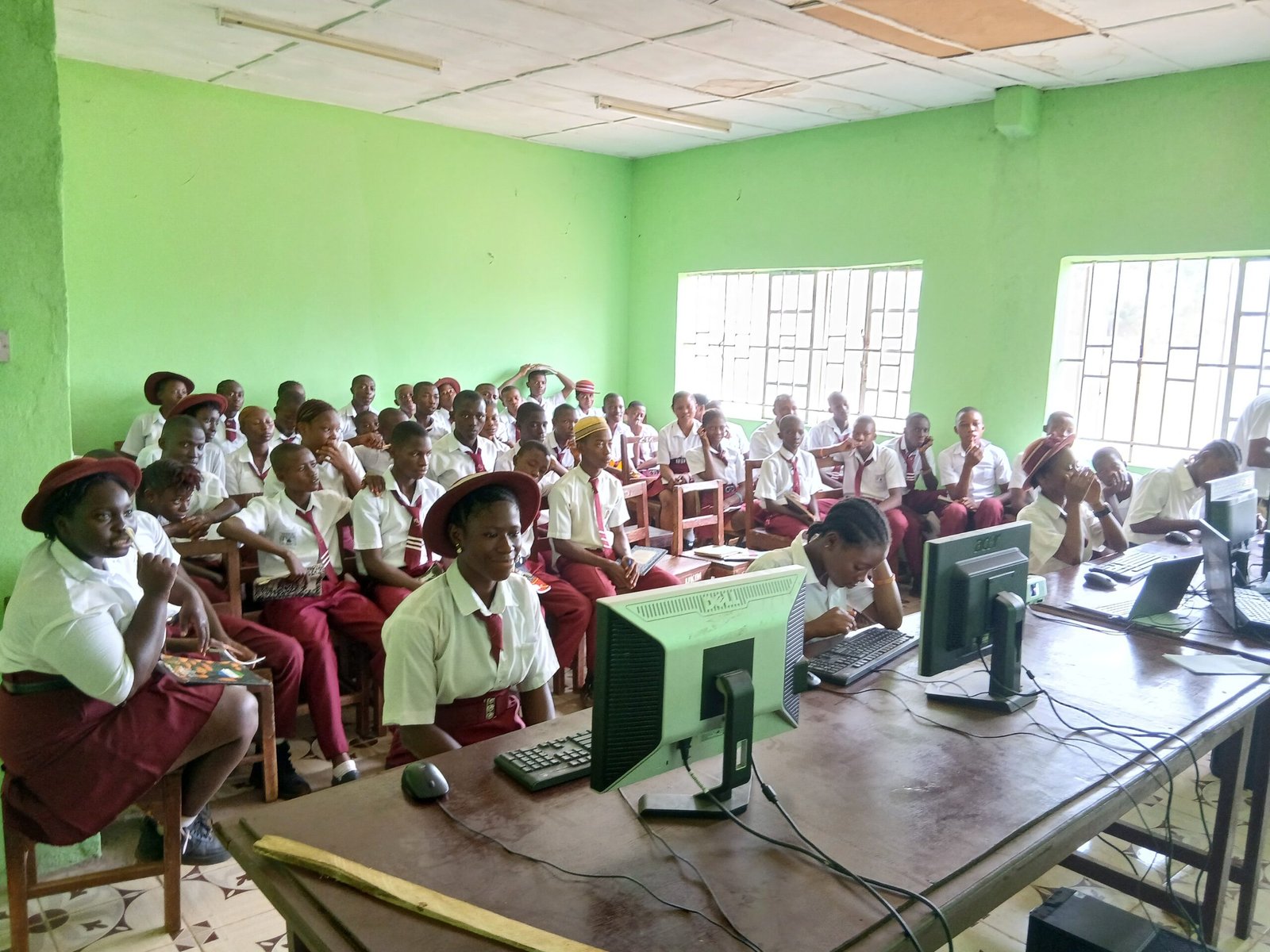
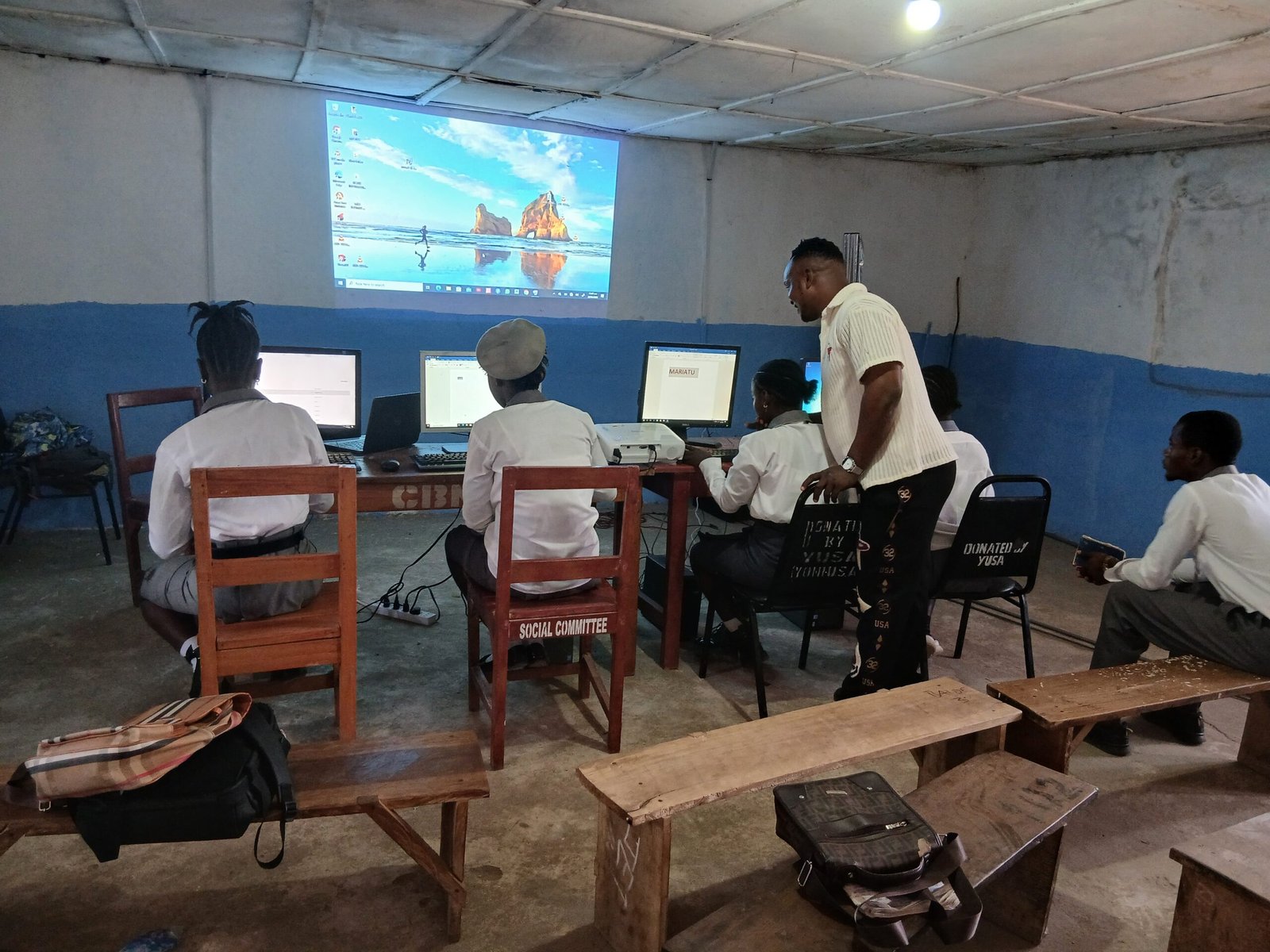
Pupil engagement and pride in the new facility
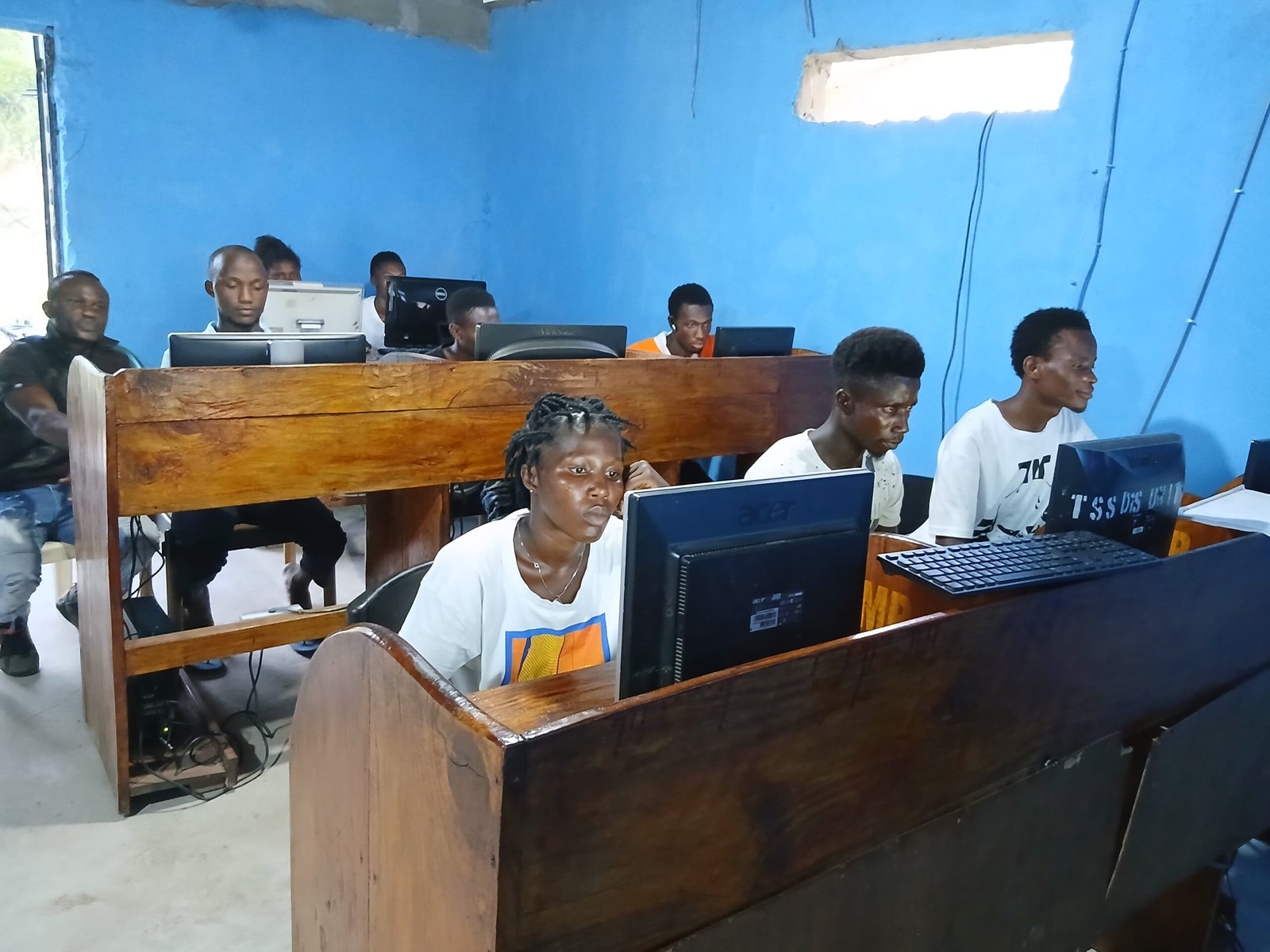
Engaged students
This was the first school equipped and fully working by the end of 2025. We seek to achieve the same in four more schools throughout 2026. If you think you can help the next generation establish the skills needed for the modern world please donate.
The Future in Our Hands Education and Development Fund Logo

The original logo produced, by our founder Mike Thomas, when we were first established as a registered charity in 1995 (1047953). The ethos of the charity being clearly illustrated with the older generation passing on the green planet to the children of the next generation. We had clearly hoped to pass on a planet in a better sustainable state to future generations. Increased understanding of climate change has made this objective very challenging. Whilst our ethos has remained consistent throughout the thirty years. We have consistently attempted to initiate funding for ecologically and sustainably aware initiatives. Developing a network of cooperation through our first hand contacts and NGOs across the most disadvantaged communities.
Our ethos originated from the ideas and perceptions of 1970s authors
Erik Dammann is a Norwegian author, environmentalist and scholar, known for founding the organisation Future in Our Hands. His work challenges Western values and lifestyles in order to promote a more responsible attitude to the environment and the developing world
Ernst F Schumacher an author of Small is Beautiful. Economics as if people mattered is a political non fiction book which centres on the premise that economics should serve us the people, as opposed to the other way round.
Our newly designed logo , was produced by daughters and granddaughters in our organization . The clear objective was to produce a higher definition image which needed to maintain or perhaps enhance the clarity of our mission statement, ethos and purpose. We believe best achieved by pursuit of gender equality and furthermore nurturing biodiversity and sustainability.

The deliberate choice of a female Gaia figure
We endeavour to enhance the status of women and children in the development process.
We seek to enhance ecological awareness and sustainability
We include a strong element of education or training in our projects
We support initiatives that originate from local communities through non governmental organizations.
FIOH news update from Sierra Leone Autumn 2024

The Mike Thomas School at Mile 91, due East of the capital Freetown, near Yonibana. The school suffered a sudden and prolonged extreme wind event which caused severe damage to two classroom roofs.
Alpha Kargbo our link person in Sierra Leone, immediately informed us of the emergency issue. The severe and detrimental impact on the education of the children was obvious.
FIOH agreed that immediate intervention was necessary and sent a grant so work could be expedited to rectify this situation. The following images show the reconstruction with more appropriate building materials to ensure that any further damage would be less likely.

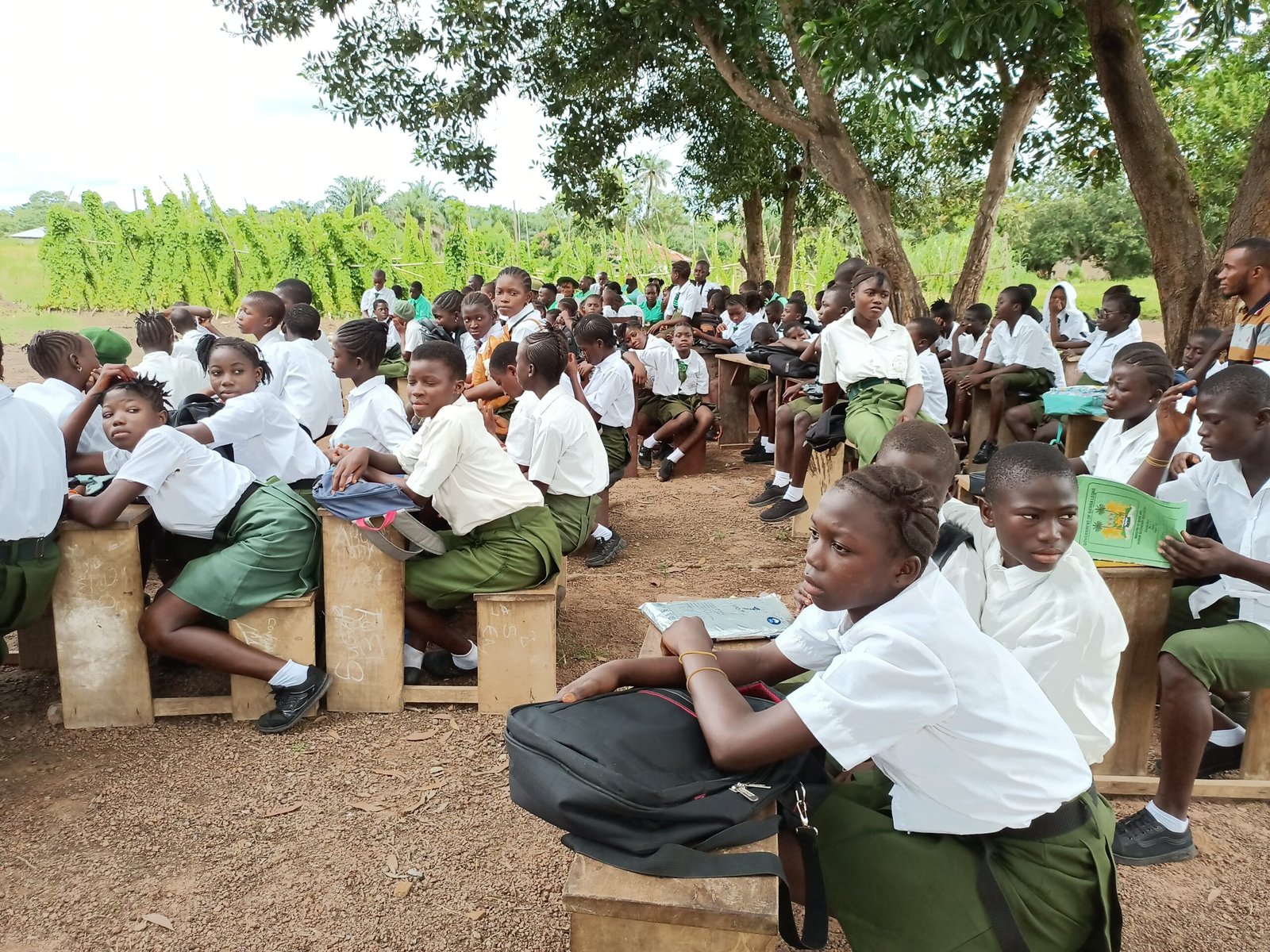
With the new roofing intact the normal daily procedures of schooling could continue, as the photos below illustrate


Students hard at work in the organic school gardens and impressive in their smart, well turned out uniform
Grants made by Future in Our Hands Fund 2017-2024
Grants made in 2022/23
During the year until April 2023, we contributed £7,102 in grants to the following organisations:
Hearts, India – £2,225
GLORES, Cameroon – £2,031
FIOH Sierra Leone – £1,222
CAMGEW, Cameroon – £712
PVDP, Pakistan – £505
SHUMAS, Cameroon – £405
Thank you to all our donors for your continued support and invaluable help.
World History Competition
Prizes were given out to students from the Mike Thomas secondary school in Sierra Leonne who took part in a recent competition presenting their knowledge of history. After teaching “The Usbourne Encyclopedia of World History” in classrooms, it raised a lot of questions so the school organised the competition.
Students took the opportunity to read the book and then present what they had learnt from it – the prizes were given to the two who made the best presentation.
A girl, Mariatu Conteh won the competition, and a boy Lamin Conteh was runner-up.


It can be difficult getting hold of educational materials and factual resources in Africa – and after seeing how well students engaged with the book, the school has now made it part of it’s curriculum.
The encylopedia is a comprehensive introduction to world history from prehistoric times to the start of the 21st century. Including information on dinosaurs, the first humans, Ancient Egypt, Greece and Rome, Medieval Europe, the World Wars and other major events in history.


HEARTS COVID 19 RELIEF SEPTEMBER 2020
HEARTS FOUNDATION
BAPATLA, GUNTUR DIST, ANDHRA PRADESH, INDIA.
COVID-19 (CORONA VIRUS) RELIEF ASSISTANCE
SUPPORTED BY FUTURE IN OUR HANDS, U.K.
BACKGROUND:
The Covid 19 crisis began in January 2020 in Wuhan, China and within days spread across the world and till today has become a major challenging factor and created a global health emergency. India is alerted starting from Kerala by identifying passengers coming to Indian Airports from overseas. The first lockdown in India was started on 20th March, 2020 and till today (15-09-2020) normalcy has not been established. The current Indian population is 1.3 billion people. Everyone feared the impact of Covid-19 if not brought under control. Thanks to the Indian Government and State Governments for tackling this outbreak collectively. An impressive role was played by the Doctors, Nurses, Sanitary Workers and Police in combating spreading of this virus. The Indian Council of Medical Research suggests that it is not over and can be repeated if health related precautions are not taken care of i.e. Mask, Sanitizer, Cleanliness, Social Distance etc. The current statistics in India related to Covid-19 is declining but the virus is still prevailing in a few locations across the country. Our Prime Minister warned the country to not fear the virus and respect the people who are positive and the reality is for everyone to live with it. It can be cured and vaccines are coming shortly to tackle the problem. Current Indian statistics show the total number of positive cases is 5.02 million and deaths are 82,066. In Andhra Pradesh the state total number of positive cases is 514,000 and deaths are 5,041.

Hearts covered relief assistance in four Tribal colonies in and around Bapatla town and rural areas two times till date. The word Tribe is based on Caste reservation system called Scheduled Tribe (ST) and some others are Scheduled Caste (SC), Backward Classes (BC), Minorities (Muslim) and rest are general who are upper caste i.e. Brahmins, Pundits, Merchants etc. India is a huge populated country and illiteracy plays a major role for academic and employment opportunities. Therefore without reservations for underprivileged population, there is no chance at all for their children getting into Universities, Government jobs etc. Under the Caste system, Scheduled Tribes are downtrodden, looked down upon and particularly on those who are illiterate. Usually they live out of the towns especially on river or canal banks. The Government talks about equality for ST population in line with others but in practice it’s not happening.
We have identified four colonies where the population are living in thatched roof palm leaf houses and it is shocking to know the many hurdles they are facing under the lockdown due to Covid-19. In one of the colony, Hearts runs a Day Care Centre for children to come to school.
Colonies helped: Tribal population in four colonies namely:
1) Krupanagar Colony – 85 families
2) Ramnagar Colony – 90 families
3) Venkata Reddy Colony – 60 families
4) Matsyapuri Colony – 30 families
Total – 265 families
A family includes husband, wife, children and grand parents, if any. Approximately on an average we have reached 1,000 people who are children and adults.
Activities: We have carried out following activities:
- Purchasing of food supplies (Rice & Groceries), vegetables, fruits, milk etc.
- Purchasing of masks, sanitizers, medicines etc.
- Distribution of food supplies and other items as per pre plans and discussions with the beneficiaries
- Involving local community resource persons i.e. school teachers, health workers, Pastors etc.
- Creating awareness on Covid-19 precautions
Details:
- Each family received approx. 5 kilos Rice, 1 kilo Red gram dal, 1 kilo Wheat, 1 kilo Sugar, 1 kilo Oil.
- Each family received approx. 1 kilo each variety of vegetables i.e. tomatoes, potatoes, onions, brinjal, beans, chillies, milk and a dozen eggs.
- Each family received a pack of Mask & Sanitizer
- Each family received a pack of first aid medicines i.e fever, cold, cough, diarrhoea, de-worming and multi vitamins.
Apart from Tribal colonies, Hearts also helped children’s parents from Hearts Children Home. Since lockdown the parents or guardians of children are out of work. They have struggled a lot financially. The Government supplied Rice and Dal but they had to buy other ingredients to cook a meal.
Please support the work of the Future in Our Hands Education and Development Fund whose aim is to help and empower some of the world’s poorest and most marginalised people by:
- UK residents can provide long term support by completing the FIOH FUND DONATION FORM and sending to the address shown on the form:
- Direct grant to the charity’s bank account or by cheque to:
 Bank account details:
Co-operative Bank
IBAN: GB07CPBK08929965050707
BIC: CPBKGB22
Cheques should be made payable to the
Future in Our Hands E&D Fund
—————————————————————————-
Fundraising to help the work of the charities would be greatly appreciated
FIOH Sierra Leone – responding to climate change and Covid 19
ACTIVITY REPORT
PROJECT : Local response to climate change and Covid19
Funder : FIOH Fund -UK
COST : GBP 545
REPORTING DATE: 4thJune 2020
Brief background
In a bid to integrate climate change in development projects, FIOH-SL in collaboration with FIOH-UK supported farmers to mitigate climate change through scaling up the adoption of regenerative agriculture. This involved farming practices that work together not just to sustain, but to increase the carrying capacity of the land, restoring the natural fertility of agro-ecosystems. Core practise involves permanent soil cover with living plants, minimum or zero tillage, maximization of biodiversity, composting from zero waste in the farming system and reduction of agrochemicals with a view of their elimination.
FIELD ACTIVITY RESULT
Result of activity 1: Organize community sensitization meetings on climate change:
- Two community sensitization meetings were organized which attracted 50 participants, farmers, stakeholders, facilitator and participants to share learning on the following:
WHAT IS CLIMATE CHANGE?
Following the discussion on the literal understanding of climate change, participants also brainstorm, on the kinds of climate hazards.
- Heavy wind
- Increase in the frequency and magnitude of warm daily temperature (extremes and decreases)/prolong day seasons from October May)
- Frequency heavy precipitation/rainfall.
- Spring/small rivers completely dry up during the day season.
IMPACTS OF CLIMATE CHANGE
- Water shortage
- Floods
- Heat waves
- Droughts
- Outbreak of infectious diseases.
Traditional/cultural practices adopted in the past to mitigate climate change as:
- Establishment of fire belts around forest reserves in March.
- No bush clearing around water catchment areas.
- Secret society bushes as protected as forest reserves.
- Forest reserves known as village green surrounding the entrance of villages protected.
- Bush fallowing for 15 years to encourage regrowth.
RESULTS OF ACTIVITY 2 – Practical training on Agroecological/ farming.
25 farmers (15F,10M) received practical training (5 per session) of farm design, planting methods, plant spacing, zero or minimum tillage practice, composting from zero waste and field application. Monitoring results reveal that farmers are gradually adopting these practices on their own farms.

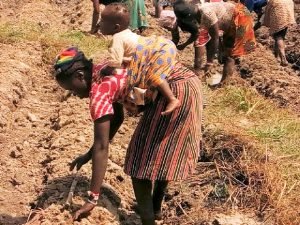
RESULTS OF ACTIVITY 3 – Seeds and tools support. Following the procurement of assorted seeds and tools, these items were distributed to farmer field school representatives.
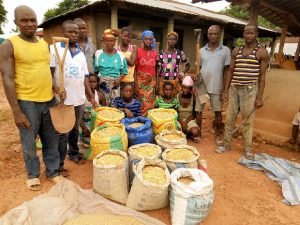


FIOH-SL seeds and tools support to cross-section of farmers.
RESULTS OF ACTIVITY 4 – Seed multiplication and demonstration farms.
Two multiplication and demonstration farms were established in two communities using permaculture/agroecological principles – farmers working with natural forces or farming using natural approaches, the wind the sun and water to provide food, shelter, and everything else including compost, farm/ gardens needs beside seeds and plants. Any farm established using these principles is a permaculture /agroecological farm.

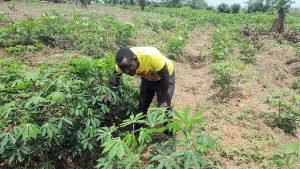
FIOH -SL support to the establishment of two permaculture farms.
CHALLENGES
- Overwhelming demand for the project activities by other FIOH operational communities in Tonkolili and Koinadugu districts.
- Frequent lockdown caused by Covid19 is affecting farm management.
- Lack of on farm hand washing stations to prevent Covid19.
- Farm work rationed with a batch of 5 Farmers per day as a result of Covid19.
WAYS OF OVERCOMING CHALLENGES
- Overwhelming demands
Representatives from the demanding villages were included in the on-farm training and promised to be given some proceeds from the established multiplication farms as starter seeds to establish their own farms. Development of community pilot projects by FIOH-SL is underway to service other communities.
- FREQUENT LOCK DOWN CAUSED BY COVID 19
A detailed concept Note will be shared with National and International donors for possible support.
LESSONS LEARNT.
Household food insecurity exacerbated by the global lock down by Covid19 reveal the extent that existing food systems (and the people underlying them) have been undervalued and under-protected.
Please support the work of the Future in Our Hands Education and Development Fund whose aim is to help and empower some of the world’s poorest and most marginalised people by:
- UK residents can provide long term support by completing the FIOH FUND DONATION FORM and sending to the address shown on the form:
- Direct grant to the charity’s bank account or by cheque to: Bank account details:
Co-operative Bank
IBAN: GB07CPBK08929965050707
BIC: CPBKGB22
Cheques should be made payable to the
Future in Our Hands E&D Fund
—————————————————————————-
Fundraising to help the work of the charities would be greatly appreciated
CAMGEW AWARDED THE EQUATOR PRIZE
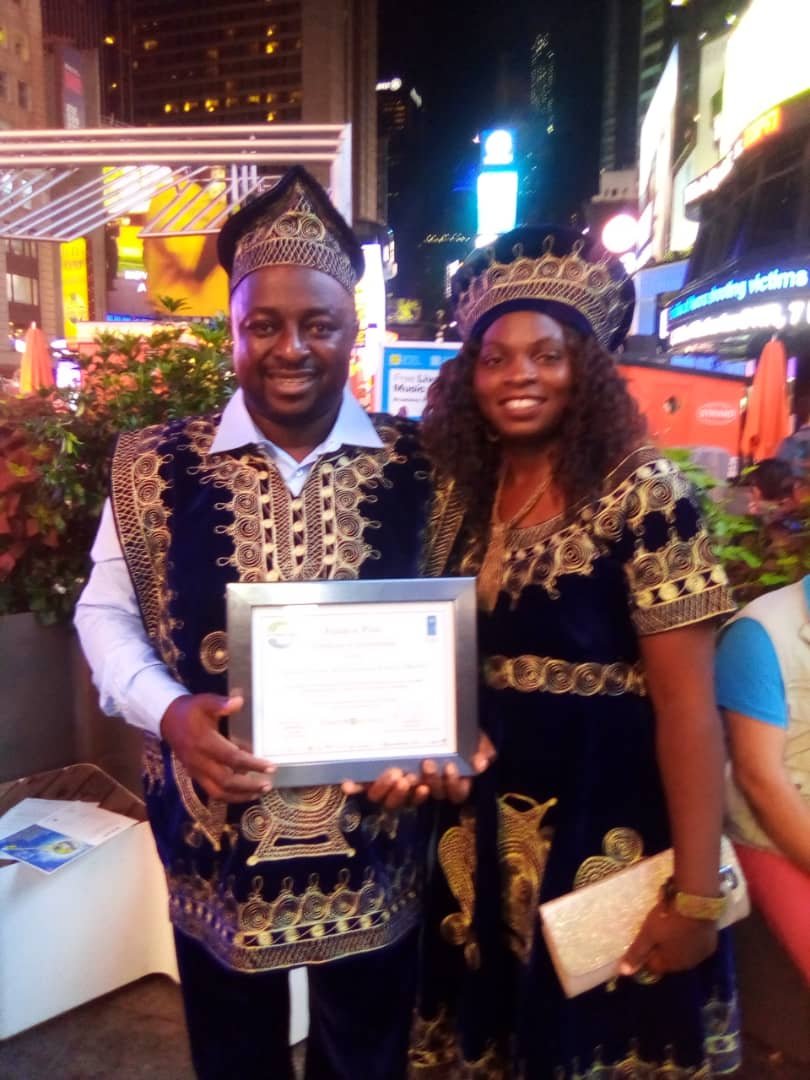
Cameroon Gender and Environment Watch was one of the 21 non-government organisations from around the world to be awarded the Equator Prize.

Created in 2007, Cameron Gender and Environment Watch (CAMGEW) brings together women’s empowerment, community livelihoods, and ecology to address environmental challenges in northwestern Cameroon. Recognizing that local livelihoods are deeply integrated with the health of local ecosystems, the group has planted 75,000 bee-loving African cherry trees (Prunus Africana) in degraded areas of Kilum-Ijim Forest to serve as a carbon sink and protect key watersheds. At the same time, they have trained over 1,000 bee farmers in honey production for market, while a complementary programme has trained 772 farmers on agroforestry to bolster soil health and provide alternative firewood sources. To empower women farmers, CAMGEW offers both business training and microloans through a programme that has, to date, trained 1,580 women and provided 1,325 loans. In a time of ongoing conflict in Cameroon, the organization has made a powerful impact on the health of local ecosystems and the well-being of local communities.
Key Facts
Equator Prize Winner: 2019
Founded: 2007
Location: North West Region, Cameroon
Ecosystem: Forests, Mountains

Please support the work of the Future in Our Hands Education and Development Fund whose aim is to help and empower some of the world’s poorest and most marginalised people by:
- UK residents can provide long term support by completing the FIOH FUND DONATION FORM and sending to the address shown on the form:
- Direct grant to the charity’s bank account or by cheque to: Bank account details:
Co-operative Bank
IBAN: GB07CPBK08929965050707
BIC: CPBKGB22
Cheques should be made payable to the
Future in Our Hands E&D Fund
—————————————————————————-
Fundraising to help the work of the charities would be greatly appreciated