CAMGEW AWARDED THE EQUATOR PRIZE
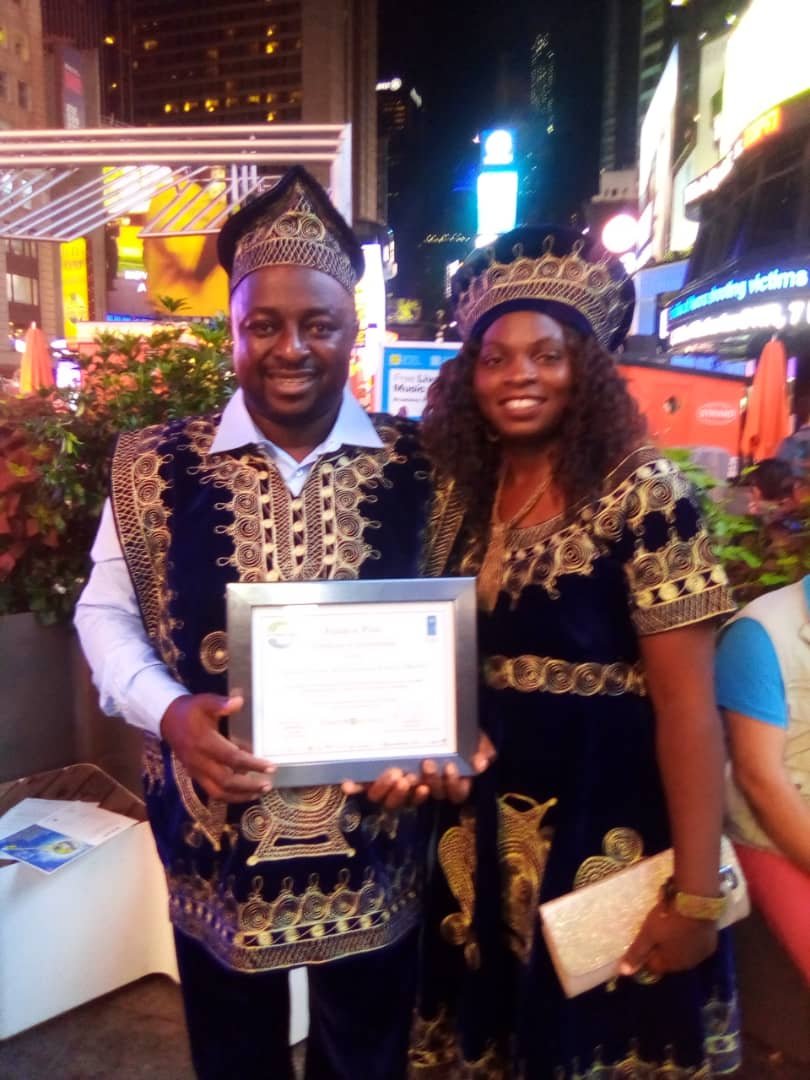
Cameroon Gender and Environment Watch was one of the 21 non-government organisations from around the world to be awarded the Equator Prize.

Created in 2007, Cameron Gender and Environment Watch (CAMGEW) brings together women’s empowerment, community livelihoods, and ecology to address environmental challenges in northwestern Cameroon. Recognizing that local livelihoods are deeply integrated with the health of local ecosystems, the group has planted 75,000 bee-loving African cherry trees (Prunus Africana) in degraded areas of Kilum-Ijim Forest to serve as a carbon sink and protect key watersheds. At the same time, they have trained over 1,000 bee farmers in honey production for market, while a complementary programme has trained 772 farmers on agroforestry to bolster soil health and provide alternative firewood sources. To empower women farmers, CAMGEW offers both business training and microloans through a programme that has, to date, trained 1,580 women and provided 1,325 loans. In a time of ongoing conflict in Cameroon, the organization has made a powerful impact on the health of local ecosystems and the well-being of local communities.
Key Facts
Equator Prize Winner: 2019
Founded: 2007
Location: North West Region, Cameroon
Ecosystem: Forests, Mountains

Please support the work of the Future in Our Hands Education and Development Fund whose aim is to help and empower some of the world’s poorest and most marginalised people by:
- UK residents can provide long term support by completing the FIOH FUND DONATION FORM and sending to the address shown on the form:
- Direct grant to the charity’s bank account or by cheque to:
 Bank account details:
Co-operative Bank
IBAN: GB07CPBK08929965050707
BIC: CPBKGB22
Cheques should be made payable to the
Future in Our Hands E&D Fund
—————————————————————————-
Fundraising to help the work of the charities would be greatly appreciated
Global Rehabilitation Services Report Sept 2019
REPORT SEPTEMBER 2019
50 children came for treatment during the long summer holidays, including some who continued from the previous period especially those who need long term treatment. That is why some names are repeated in the two lists below. Of those who continued treatment, most of them successfully completed their treatment and went back to school normally to the satisfaction of their parents. Although the treatments are completed, we still give two to three months’ rendezvous to make sure the deformations do not restart, in which case we intervene to avoid waste of effort and money spent in the treatments.
The number of children coming indicates that the new Centre is being easily located since we moved. There were difficulties initially for some people to find the location.
EVENTS
GLORES was once more invited to the Bafoussam Annual Development Conference. This is an indication that GLORES is getting known for it’s development efforts in the area of social services in the Bafoussam community. The GLORES cultural group graced the occasion with traditional music to the satisfaction of everyone.
We purchased a lawn mower to reduce the expendure on hiring a gardener.
OTHER ISSUES
We noticed that water pressure in the pipes is low and a plumber advised us to raise the water reservoir a few metres up to solve the problem. Arrangements were made to do the work as the dry season starting in October. This is not a problem to get too concerned about but will make the use of water in the building more convenient.
We will organize an information meeting in GLORES new Centre in October during which we will invite some prominent personalities in Bafoussam and the FIOH Network. This will serve as information meeting about disability, the work of GLORES and it should serve as a fundraising occasion.
SOME OF THE CHILDREN BEING TREATED

Mothers of two children being treated both taught how to work with children at home


Nembot, a 7 year old boy with fractured femur, immobalised in plaster


Foudyceu, a 5 year old boy with cerebral palsy undergoing ambulatory training


Check, a 4 year old boy with varus knees underoing preparation for splints


Donfack, a 5 year old boy with windswept deformity successfully treated using splints
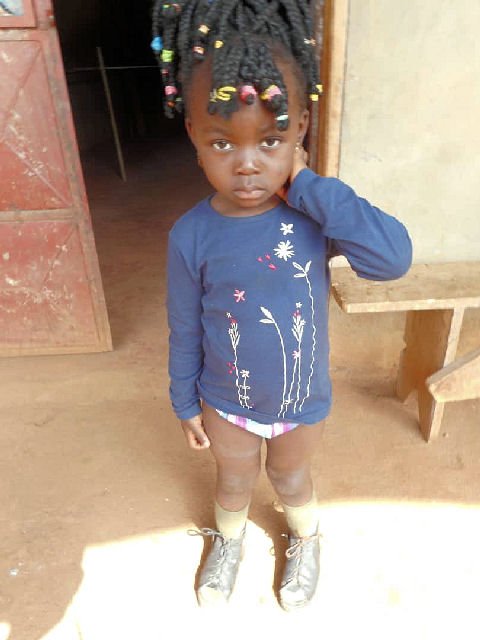

Demanou, a girl with valgus knees before and after treatment
SCHEDULE OF CHILDREN BEING TREATED:
Please support the work of the Future in Our Hands Education and Development Fund whose aim is to help and empower some of the world’s poorest and most marginalised people by:
- UK residents can provide long term support by completing the FIOH FUND DONATION FORM and sending to the address shown on the form:
- Direct grant to the charity’s bank account or by cheque to: Bank account details:
Co-operative Bank
IBAN: GB07CPBK08929965050707
BIC: CPBKGB22
Cheques should be made payable to the
Future in Our Hands E&D Fund
—————————————————————————-
Fundraising to help the work of the charities would be greatly appreciated
Perhaps Our greatest achievement ?
Alfred Wingo GLORES and FIOH Fund
Takeo timeline

Takeo is a three and half year old girl with spina bifida. She is under treatment with splints and this will probably have to continue for the rest of her life.
Her splints will need adjustment and replacing as she grows older. This is Takeo when she first arrived at GLORES rehabilitation Centre
The following video shows her under treatment with splints and intensive physiotherapy
Takeo walking unaided for the first time and now able to walk to school
Please support the work of the Future in Our Hands Education and Development Fund whose aim is to help and empower some of the world’s poorest and most marginalised people by:
- UK residents can provide long term support by completing the FIOH FUND DONATION FORM and sending to the address shown on the form:
- Direct grant to the charity’s bank account or by cheque to:
- Bank account details:
Co-operative Bank
Account no 65050707
Sort Code 08 92 99
—————————————————————————-
Fundraising to help the work of the charities would be greatly appreciated
Global Rehabilitation Services Report – January 2019
GLORES TREATMENT CENTRE FOR DISABLED CHILDREN
REPORT – January 2019
Although the civil conflict in the country is not affecting the West Region of Cameroon, the project co-ordinator, Alfred Wingo, had to help his family located in the Northwest Region who were forced to move to a distant location because of the conflict. He located them by having to travel through the bush by foot and motorbike. He found them suffering from a shortage of food and other necessities. They are now out of danger.
Treatment of disabled children
There has been a steady flow of disabled children being brought to the centre for treatment. Currently 24 children are being treated (14 males and 10 females). The most common disabilities involve deformation of the lower limbs. Two with cerabral palsy are currently resident at the Centre undergoing long-term treatment.
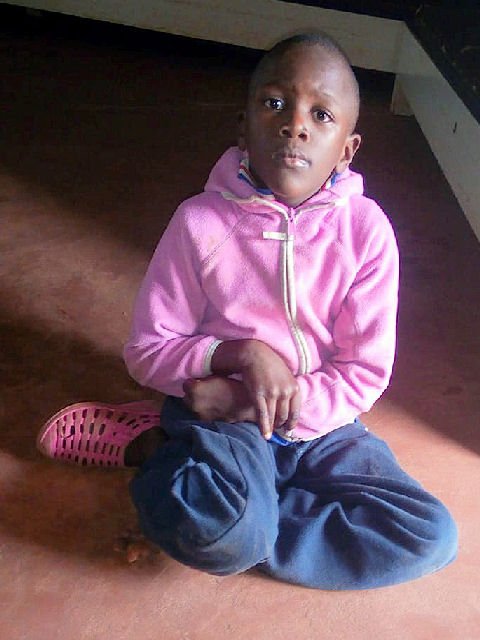
One of these, Nsah R, was brought to the Centre with completely contracted limbs, very hyperactive and spastic. The parents had spent a lot of money on unsuccessful treatment at several hospitals beforehand.
The mother brings him every two months and he stays for one month each time. She is taught practical exercises to perform at home.


His treatment is progressing well and he is now able to stand up straight with support.

GLORES seeks to correct deformities in youths and adults despite the added difficulty as people get older. In the picture above Tchoutchoua G. is underoing stretching treatment by Alfred.


Left: Dsomu Z. is another child with cerebral palsy periodically resident at the centre during treatment.
Centre left: Matie W. undergoes stretching in preparation for splinting.
Centre right: Tuedom M. on microwave diathermy.
Right: Sibefo F. wearing splints.


Fouapong M. with congenital lower limb deformity before treatment and with new calipers during treatment. Fouapong is starting to walk unaided.
A local honour for Alfred Wingo

In recognition of his work he has received a local honour and has been named as a notable. The inaugural ceremony took place in the village in December 2018.
The entire village was there to witness the event which ended with him joining a traditional dance with other notables. His award was presented by the Chief of Bafoussam at his palace.

The Chief of Bafousssam can be seen here dancing at a cultural event with music provided by the GLORES Music Group.
Alfred was one of the organising committee with the Regional Delegation of Social Affairs for the International Handicap Day which took place on 2nd Dec. 2018.
In addition to financial support, the FIOH Fund has sent Alfred a flash drive, a book on basic prosthetics treatment written by disabled people in Mexico and the book ‘Where There is No Doctor’.
During 2018 eighty new children came to the centre and 60 received treatment. See schedule below:

Please support the work of the Future in Our Hands Education and Development Fund whose aim is to help and empower some of the world’s poorest and most marginalised people by:
- UK residents can provide long term support by completing the FIOH FUND DONATION FORM and sending to the address shown on the form:
- Direct grant to the charity’s bank account or by cheque to: Bank account details:
Co-operative Bank
IBAN: GB07CPBK08929965050707
BIC: CPBKGB22
Cheques should be made payable to the
Future in Our Hands E&D Fund
—————————————————————————-
Fundraising to help the work of the charities would be greatly appreciated
FIOH Fund Newsletter – Winter 2017
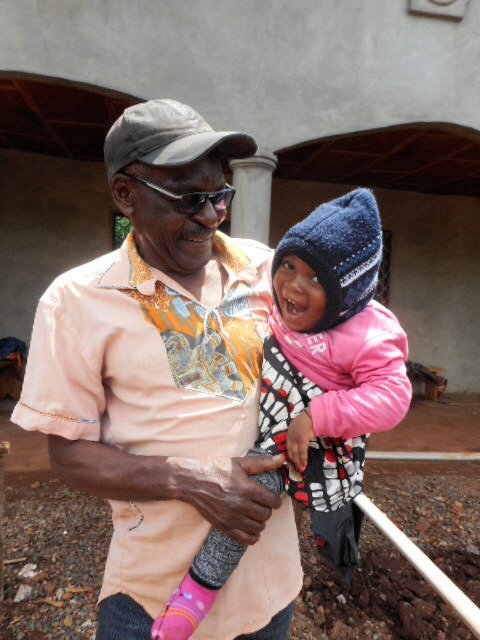

Alfred Wingo,the founder and director of GLORES, is shown here with one of the children being treated.
NEWSLETTER – ISSUE2 – WINTER 2017
FIOH FUND NEWSLETTER 2 – WINTER 2017
This newsletter summarises and illustrates some of the activities which have taken place in a new treatment and rehabilitation centre established in the Cameroon with the financial support of the FIOH Fund. The centre is run by Global Rehabilitation Services (GLORES), a local NGO, which moved from its former rented accommodation in April 2017.
Please support the work of the Future in Our Hands Education and Development Fund whose aim is to help and empower some of the world’s poorest and most marginalised people by:
- UK residents can provide long term support by completing the FIOH FUND DONATION FORM and sending to the address shown on the form:
- Direct grant to the charity’s bank account or by cheque to: Bank account details:
Co-operative Bank
IBAN: GB07CPBK08929965050707
BIC: CPBKGB22
Cheques should be made payable to the
Future in Our Hands E&D Fund
—————————————————————————-
Fundraising to help the work of the charities would be greatly appreciated
Disability survey – West Region of Cameroon
Survey of disabled children in West Region of Cameroon
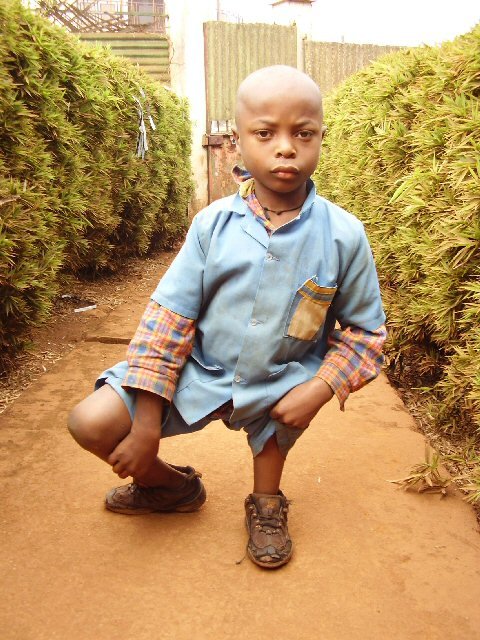 There appears to be little statistical information on disabilities in the West Region and few facilities for treatment. In 2010 the FIOH Fund provided a grant to the non government organisation Global Rehabilitation Services (GLORES) to carry out a comprehensive survey in all 8 divisions of the Region. In the survey below a total of 10,493 disabled children were identified and 21 different types of disability. Over 75% of those surveyed did not go to school and most were from poor families. Many villages are very difficult to access during the rainy season. Most of the children had valgus or varus deformities. The most common causes of disability were malnutrition, lack of health care services and societal beliefs that disabled children are possessed by evil spirits. Parents are sometimes ashamed to have disabled children which are then hidden away out of public view. There were some cases of children being drowned by witch doctors who had claimed they would turn into snakes as soon as they entered the water.
In 2012 Global Rehabilitation Services evaluated 1058 children in the West Region of Cameroon, 1,012 of which had disabilities. 126 of these received treatment at the organisation’s centre in Bafoussam.
A table showing the results of the survey can be seen here:
glores-table-of-disabilities-2012
Please support the work of the Future in Our Hands Education and Development Fund whose aim is to help and empower some of the world’s poorest and most marginalised people by:
- UK residents can provide long term support by completing the FIOH FUND DONATION FORM and sending to the address shown on the form:
- Direct grant to the charity’s bank account or by cheque to: Bank account details:
Co-operative Bank
IBAN: GB07CPBK08929965050707
BIC: CPBKGB22
Cheques should be made payable to the
Future in Our Hands E&D Fund
—————————————————————————-
Fundraising to help the work of the charities would be greatly appreciated
Open day at GLORES Treatment Centre
GLORES NEW CENTRE OPEN DAY
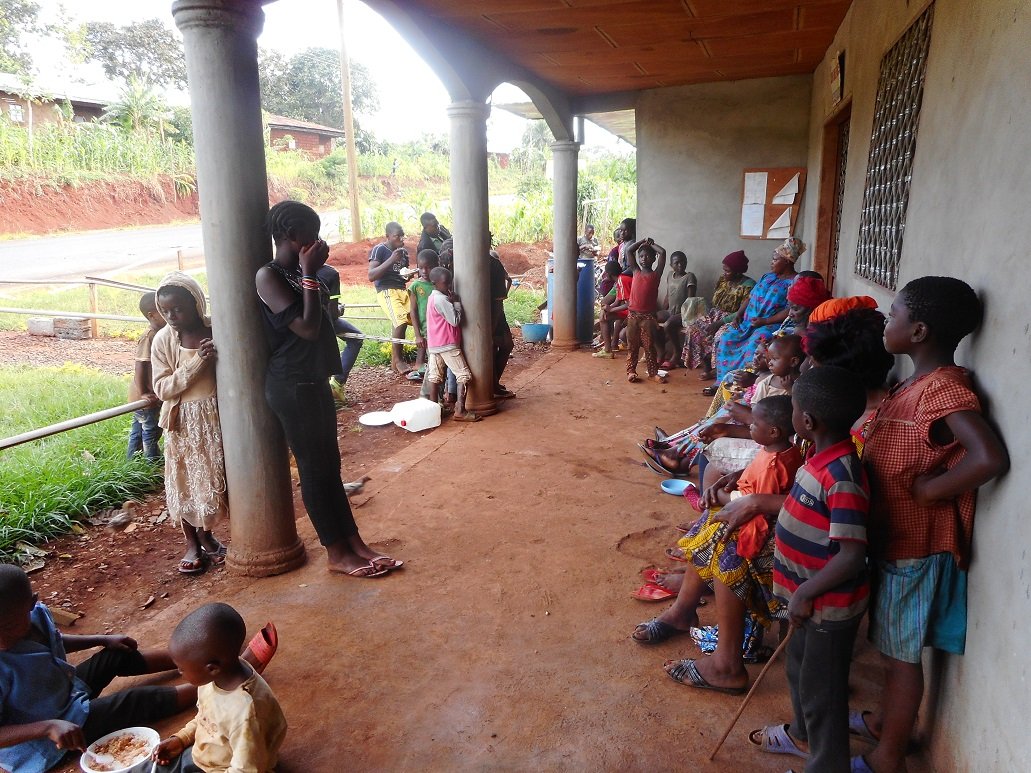 The open day that took place on May 29, 2018 was impromptu. The Sacta quarter notables of the Chieftency of Bafoussam informed GLORES of a visit with the entire quarter inhabitants. For them the building of GLORES New Centre was a big achievement in the village of Njingah and they thought that the Centre should be given a warm welcome by the village.
The gathering was attended by 40 persons from the village with 15 notables present. In a speech delivered by the quarter head (Sub-Chief) of Njingah on the occasion the Chief welcomed GLORES to the village. He said that all the workers in GLORES should feel at home and know that they are now welcomed as inhabitants of Njingah village. He said that GLORES, being the only rehabilitation centre in the West Region of Cameroon and constructed in their village, was a great privilege for the village. He said that the New Centre has contributed to the development of the village.
More importantly it has put their village on the map as people will be coming from all over the West and neighbouring Regions of Cameroon for treatment of their disabled children. He paid tribute to the work GLORES is doing to help disabled children especially those from very poor families. He was particularly impressed by the fact that since he had known the work of the Centre no child has ever been left out for lack of resources.
He concluded that he was going to inform the Paramount Chief of Bafoussam about the warm welcome GLORES gave them during the open day and about the good work being done. He announced a second visit when the Coordinator of GLORES, Alfred Wingo, will be presented as a notable in the village with full rights.
The New Centre was blessed in the traditional way and the ancestors were invoked to guide and protect the Centre.
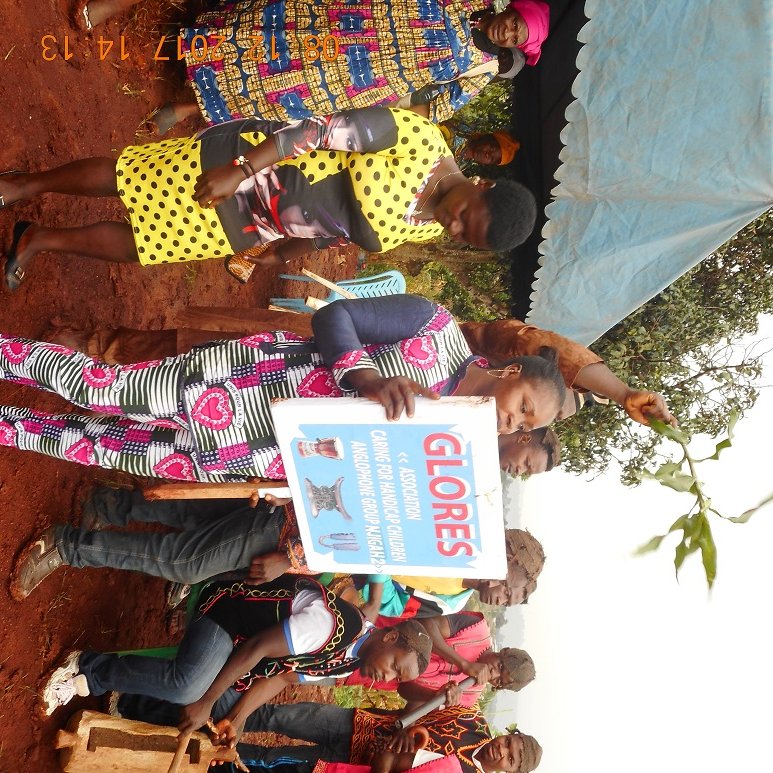 The occasion was animated by the GLORES Association Cultural Music Group and everyone danced to exhaustion. After the dance, many people expressed the desire to become members of the Group.
The open concluded by a reception offered
Please support the work of the Future in Our Hands Education and Development Fund whose aim is to help and empower some of the world’s poorest and most marginalised people by:
- UK residents can provide long term support by completing the FIOH FUND DONATION FORM and sending to the address shown on the form:
- Direct grant to the charity’s bank account or by cheque to: Bank account details:
Co-operative Bank
IBAN: GB07CPBK08929965050707
BIC: CPBKGB22
Cheques should be made payable to the
Future in Our Hands E&D Fund
—————————————————————————-
Fundraising to help the work of the charities would be greatly appreciated
Follow us on Twitter:
twitter.com/fiohnet
Please share our links with your friends to help us reach a wider audience.
Treatment Centre for Disabled Children – Project update
New treatment and rehabilitation centre in Cameroon
Thanks to the generous support we received from our appeal last year, Global Rehabilitation Services (GLORES) has moved in to the newly completed treatment centre. It is 15km from Bafoussam, in the West Region of Cameroon, on the main road to Foumban.
Alfred Wingo with child being treated
The move was slightly delayed because of the rainy season, but the physiotherapy equipment has now been relocated from the old rented building and treatment has now begun. An official opening is expected to take place in September this year.
When our funding appeal launched in November 2016, the walls and roof of the building had already been completed and tree planting carried out on the site.
Donations since November have enabled the installation of toilets, wash basins, ceiling boards, windows and doors. The electricity has been connected and in use and Alfred is waiting for environmentally friendly and economical (low consumption) bulbs to use for lighting. The water supply has yet to be installed by the local water company and temporarily rain water is being used for washing and drinking water is being brought from the town.
What’s happening now?
More than 80 children have been treated so far this year. A number of those have received treatment at the new centre since it opened in May, including:
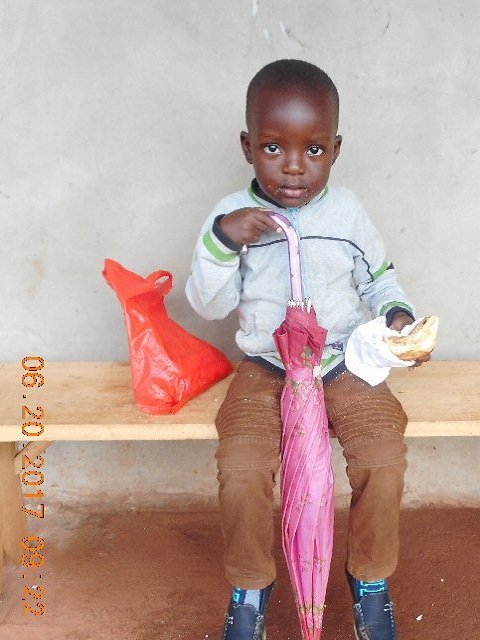
Nde Daryle, age 3, has had physiotherapy for bilateral valgus knees – and is showing continuing improvement. Nde’s mother is a single parent and unemployed, so he is being cared for by his grandparents who are farmers.
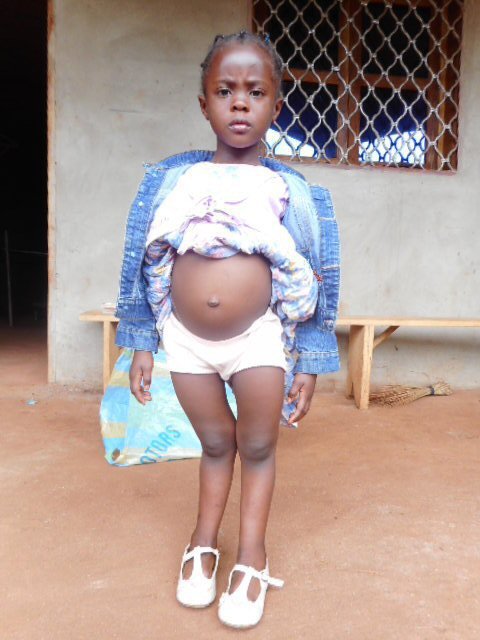

Left: Djonge Anael, age 5, has had calipers applied for bilateral valgus knees and is also showing improvement. Djonge is from a polygamus family of 10, her parents are aged and not working.
Right: Joumessi Frankie, age 4, is from a family of 7. His parents are farmers, 5 children go to school. Joumessi also had bilateral valgus knees and is now able to walk after treatment using splints.
Most of the children being brought to GLORES for treatment can be cured with physiotherapy alone whilst others with severe deformities will require corrective surgery. To understand the difference treatment makes, you can read testimonies of six children treated in the past. Despite the effort involved with shifting equipment and finishing work on the new centre, a limited amount of treatment was still possible in the old rented building.


The children above, whose legs were severely deformed, were successfully treated at the rented building. The girl with the red dress is walking for the very first time since birth, while the picture on the right shows the celebrations when a treated child returned to her village.
What are the challenges now?
Raising funds for the new centre took more than three years and there were many obstacles along the way. During this time Alfred’s wife and two sisters have died. He also lost a brother in June 2017. Despite this, Alfred has continued his vital work whilst supervising and organising construction of the new building.

In 2015 GLORES had to cut back on its activities due to the death of the founder of the Dutch trust providing most of its funding. This support was helping cover the costs of treatment and staff to assist with running the rehabilitation programme. Since then the Future in Our Hands Education and Development Fund (FIOH Fund) has been the main source of support.
One of the FIOH network partners, Wirsey Emmanuel from Cameroon Gender & Environment Watch, visited Alfred in May on our behalf to report on how the work was going:
“GLORES is now free from rent – which is a big relief. To control electricity shortages or blackout there is a need for a generator to supply energy for the workshops and solar panel system for lighting, especially when there is no work in the workshop.
More water harvesting containers are required to secure water in the rainy season, while waiting for the Government to supply water. The Bafoussam municipal stadium is close by and water going to the stadium has to pass by the centre. We are hopeful that the water supply will arrive at the centre before long.
GLORES sees the need for volunteers, either within or outside of Cameroon to give a helping hand. This is an opportunity to identify a reliable, committed and hardworking student or person who can be trained to work at GLORES and get further practical training from Alfred.”
An administrative assistant has been appointed and a system of recording treatment details and providing feedback has been agreed with the FIOH Fund.
What is the key challenge now?
Now the building is ready and operational we are looking at creative ways to sustain the ongoing treatment costs of the centre.
The key challenge is developing a revenue – either as grants from charitable trusts, or generating a monthly income from donations and other means. We would like to establish a Friends of GLORES group of supporters who can make small regular contributions towards treatment costs.
One idea for gaining funds locally is to have a stall at the front of the centre, serving the public and passing traffic. This could operate like a roadside café – selling hot and cold drinks and snacks – and locally made handicrafts or generally useful items for the local community. With the electricity now connected it could also offer a handy mobile-phone recharging service.
Neighbours to the centre could be encouraged to provide rented accommodation for parents of children while they are undergoing treatment. There is also the possibility of renting parts of the building, for example meeting rooms for other community needs.
Please support the work of the Future in Our Hands Education and Development Fund whose aim is to help and empower some of the world’s poorest and most marginalised people by:
- UK residents can provide long term support by completing the FIOH FUND DONATION FORM and sending to the address shown on the form:
- Direct grant to the charity’s bank account or by cheque to: Bank account details:
Co-operative Bank
IBAN: GB07CPBK08929965050707
BIC: CPBKGB22
Cheques should be made payable to the
Future in Our Hands E&D Fund
—————————————————————————-
Fundraising to help the work of the charities would be greatly appreciated
Images – Global Rehabilitation Services treating severely disabled children




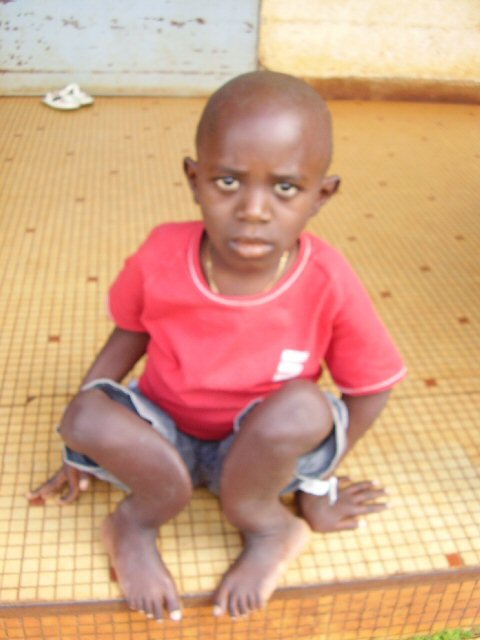


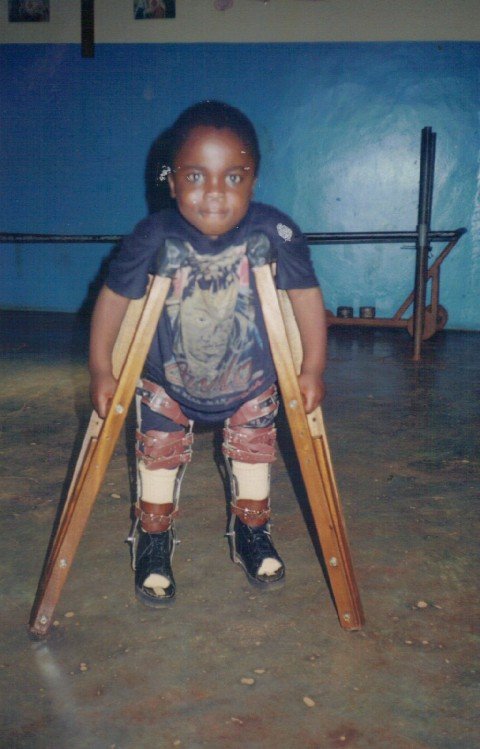


Mike Thomas with some of the children

Treatment and rehabilitation centre elevation

Treatment and rehabilitation plan
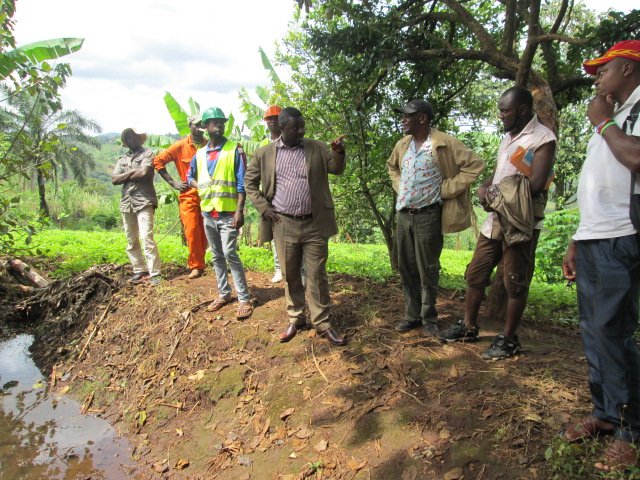


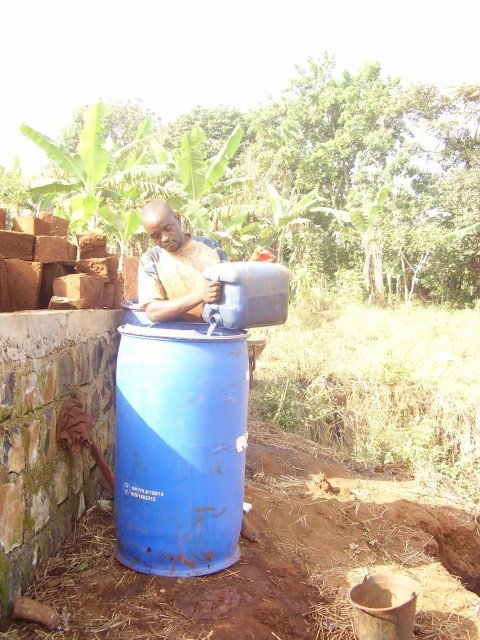


Coordinator – Emmanuel Wirsy

Delivering seedlings

Planting seedlings
Follow us on Facebook:
www.facebook.com/fiohfund
Follow us on Twitter:
twitter.com/fiohnet
Please share our links with your friends to help us reach a wider audience.
New treatment centre for disabled children
Donate
Global Rehabilitation Services (GLORES) is a non-government organisation based in Bafoussam, Cameroon treating severely disabled children. GLORES is badly in need of a new centre to expand its services to meet a growing need.
The sum of £29,770 is needed for this of which £25,721 has already been provided by the FIOH Fund.
 Background
GLORES rehabilitation approach is global, as its name implies. That is, we are not only concerned about treating disability, but ensure that our beneficiaries lead self-reliant and socio-economically independent lives.
GLORES major mission, therefore, is to prevent disability in children; identify and treat those already affected; support education, provide vocational training, placement and follow-up in their communities to achieve effective socio-economic integration.
Global Rehabilitation Services was authorized by administrative order No 238/RDA/F35/BAPP of November 2004 and registered as a non-profit association at the service of disabled children. GLORES is made up of a group of Cameroonians of all walks of life, men and women, concerned about the plight of an increasing number of underprivileged disabled children in the West Region, who decided to make their contribution in the fight against poverty, specifically among disabled children. GLORES is the first comprehensive rehabilitation centre in the region.
GLORES opened its doors to physically disabled children in July 2005. Despite the micro resources available, 1,500 physically disable children have received direct services while 4,500 persons have had indirect services from GLORES.
These beneficiaries came not only from this region but also from the northwest, littoral and central provinces of Cameroon. GLORES organises the following activities from a basic rented building in Bafoussam:
PHYSIOTHERAPY DEPARTMENT
This is the first objective in our rehabilitation process where functional re-education is provided through intensive physical therapy, functional re-education, and mobility training. The aim is to ensure mobility and use of limbs because we believe that without mobility a disabled person cannot lead a productive and independent life. During therapy, parents and the disabled persons are themselves educated to become their own therapists upon discharge from the centre.
ORTHOPAEDIC WORKSHOP
This is where splints and mobility aids are produced including orthopaedic shoes, splints and other assistive devices. This serves as a training place for those disabled who would like to become either shoemakers or orthopaedic technicians.
VOCATIONAL TRAINING
After treatment, beneficiaries choose from such income-generating professions as shoe making, tailoring, hairdressing and cane work. Upon successful completion of the training, beneficiaries are placed in either individual or group business ventures in their communities with follow-up to ensure success.
COMMUNITY BASED REHABILITATION
This is a follow-up programme in which maintenance treatment is also assured. This involves the family and the community at large. In this programme, the families and the disabled become their own therapists. Preventive measures are taken and disabled children are identified and referred for appropriate treatment. Disability prevention services, human rights education, information about discrimination against the disabled are provided and self help, social, and group activities including community development participation are introduced and supported.
ASSISTANCE PROGRAMME
GLORES also runs assistance programmes to sponsor treatment and corrective orthopaedic surgery for those children with severe disabilities who are unable to afford the symbolic treatment fees. GLORES pays particular attention to orphaned disabled children. GLORES hopes to extend the project to include other disabilities other than physical disabilities as the project expands and develops.
The need for the new centre
Despite the successes of the activities of GLORES, the most important difficulty has been the lack of space in the present Centre to accommodate the many children being referred for treatment. The present rented building only has four small bedrooms, a small physiotherapy treatment room, an adapted internal kitchen that is being used as the administrative office and treatment room at the same time and an external kitchen which is being used as the orthopaedic workshop. Besides these, there is a small external traditional toilet, and two internal toilets which often fail to function due to mechanical malfunctioning and shortage of water which is common in the Bafoussam town. In fact the house was conceived as a residential house not for other activities.
GLORES, therefore needs a larger space in order to effectively carry out the many activities as specified above. To summarise, a larger building is needed for the following reasons:
- A larger building will help cut down the high rents we have to pay for the existing house. The heavy rents could be use in purchasing other items for the centre.
- We will be able to serve the many children who are asking for our help from neighbouring regions in Cameroon, GLORES being the only comprehensive rehabilitation centre for physically disabled children.
- A more spacious workshop will help us in the production of more orthopaedic equipments without leaving children to wait for long to get ambulation and other equipments. It will also provide space for the training of disabled children in the production of orthopaedic equipments.
- A larger treatment room will help us better position treatment equipments and consequently we will be able able to treat many children simultaneously. With the present structure children have to be put on the waiting list to have treatment.
- There will be enough dormitories to accommodate children, most of whom come from distant villages and have no place to stay for follow-up treatment.
- The hygiene situation will be solved with available toilets and the water system.
- The New building will be situated by a major surfaced road and is more reachable by public transport unlike the present centre.
- The new building will be more adapted for handicapped persons.
- There will be space to train disabled children to engage in income-generating professions.
- A new centre will provide a conference room which will be rented by the public for meetings thus generating income for the centre.
The land for the centre was purchased in 2014.



Delivering sand
The completed foundations.
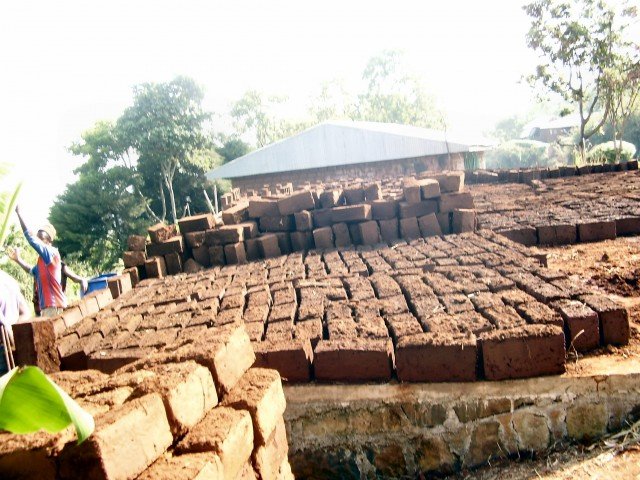
Making blocks.
Wall construction
Water is collected by hand from a local stream.

Roof construction.
Completed roof.
Window protection – September 2016.
Alfred Wingo assists visiting Dutch surgeons with an operation.
Moving testimonials of six of the children treated by GLORES
Mike Thomas with some of the children in 2009
Fo
Please support the work of the Future in Our Hands Education and Development Fund whose aim is to help and empower some of the world’s poorest and most marginalised people by:
- UK residents can provide long term support by completing the FIOH FUND DONATION FORM and sending to the address shown on the form:
- Direct grant to the charity’s bank account or by cheque to: Bank account details:
Co-operative Bank
IBAN: GB07CPBK08929965050707
BIC: CPBKGB22
Cheques should be made payable to the
Future in Our Hands E&D Fund
—————————————————————————-
Fundraising to help the work of the charities would be greatly appreciated
Future in Our Hands Education and Development Fund
48 Churchward Avenue
Swindon, Wiltshire SN2 1NH
United Kingdom
Registered Charity No. 1047953