
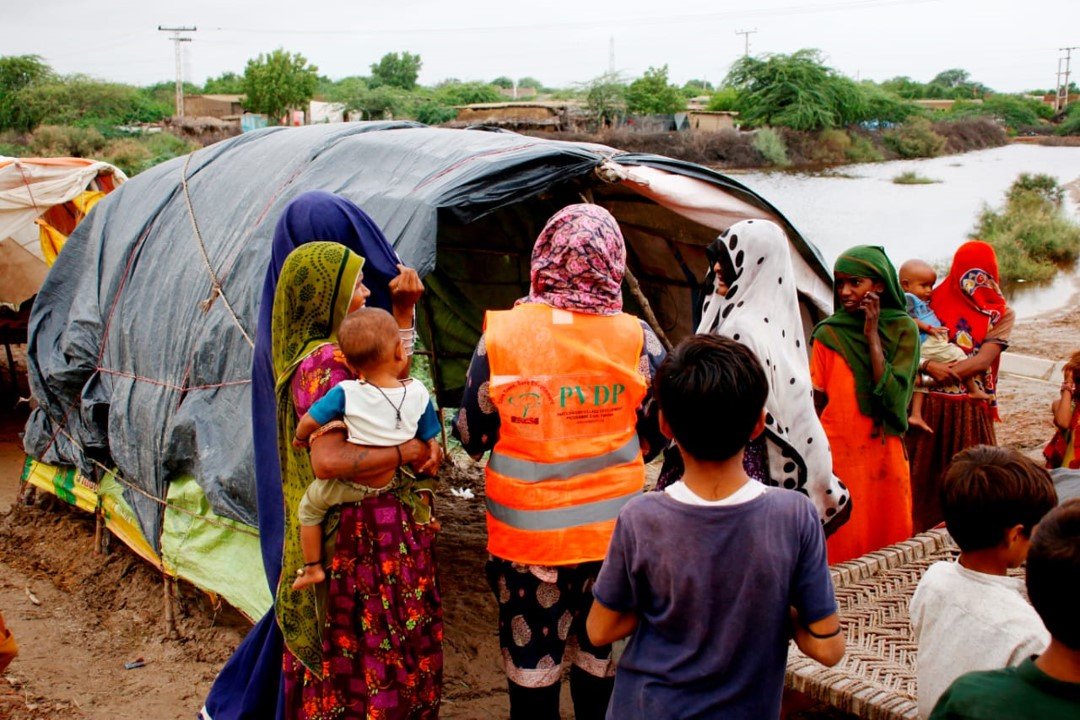
Disaster Relief – Inundation of Sindh province 2022
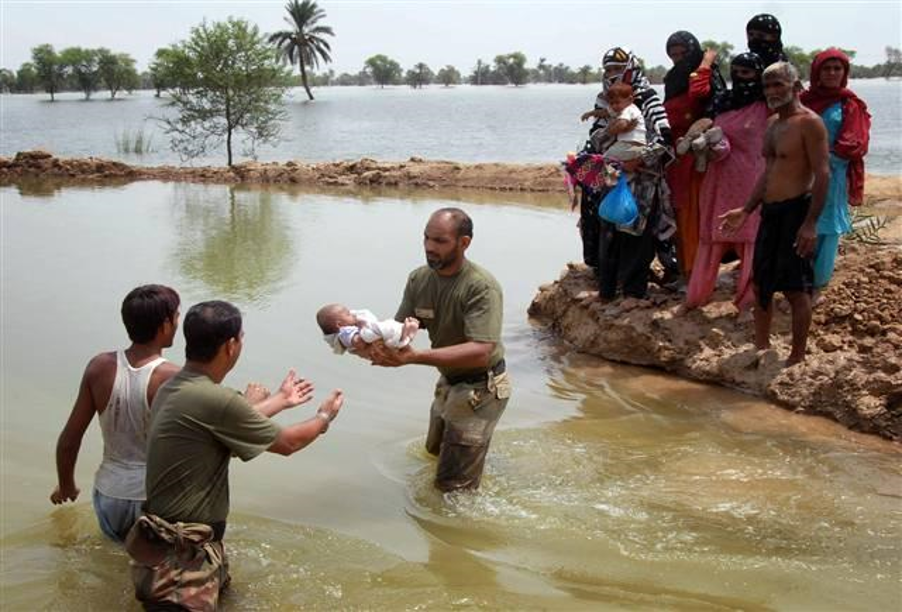
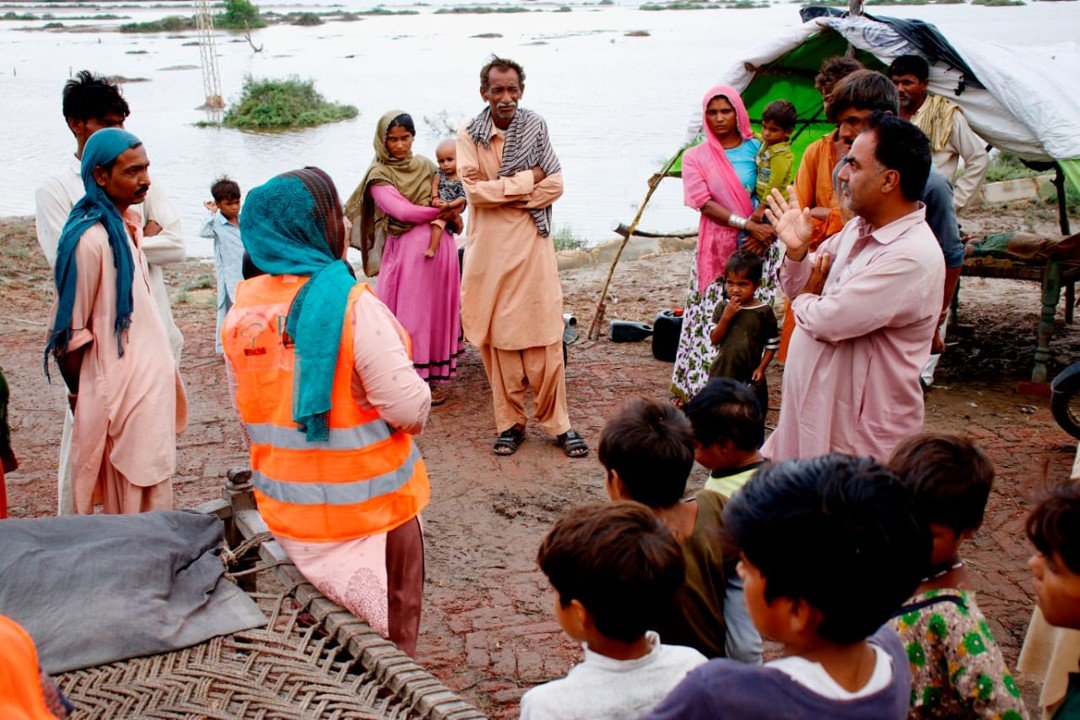
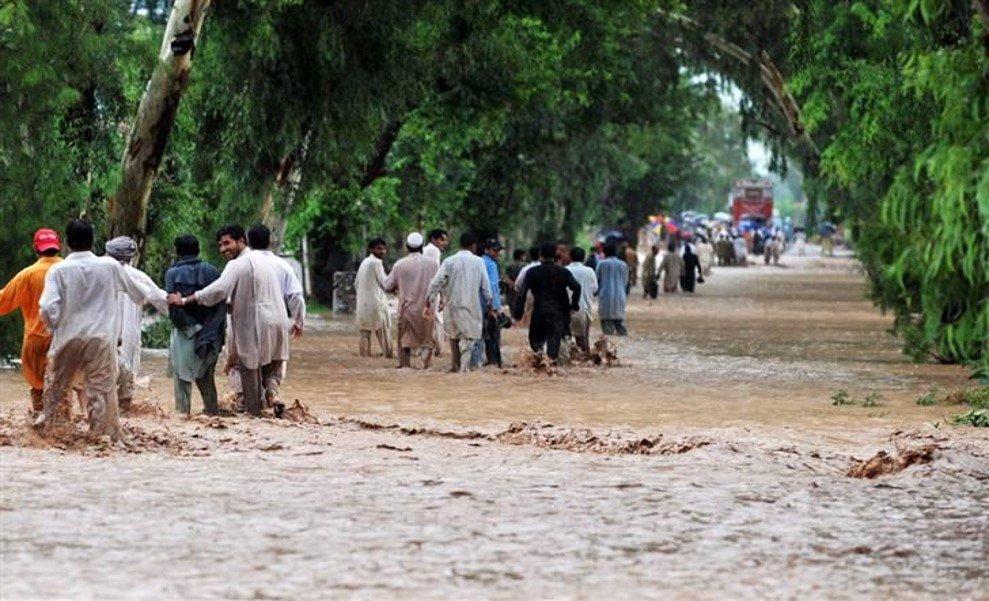
Sindh Province, Pakistan and the aid provided by PVDP with our support for disaster relief.
Introduction of PVDP
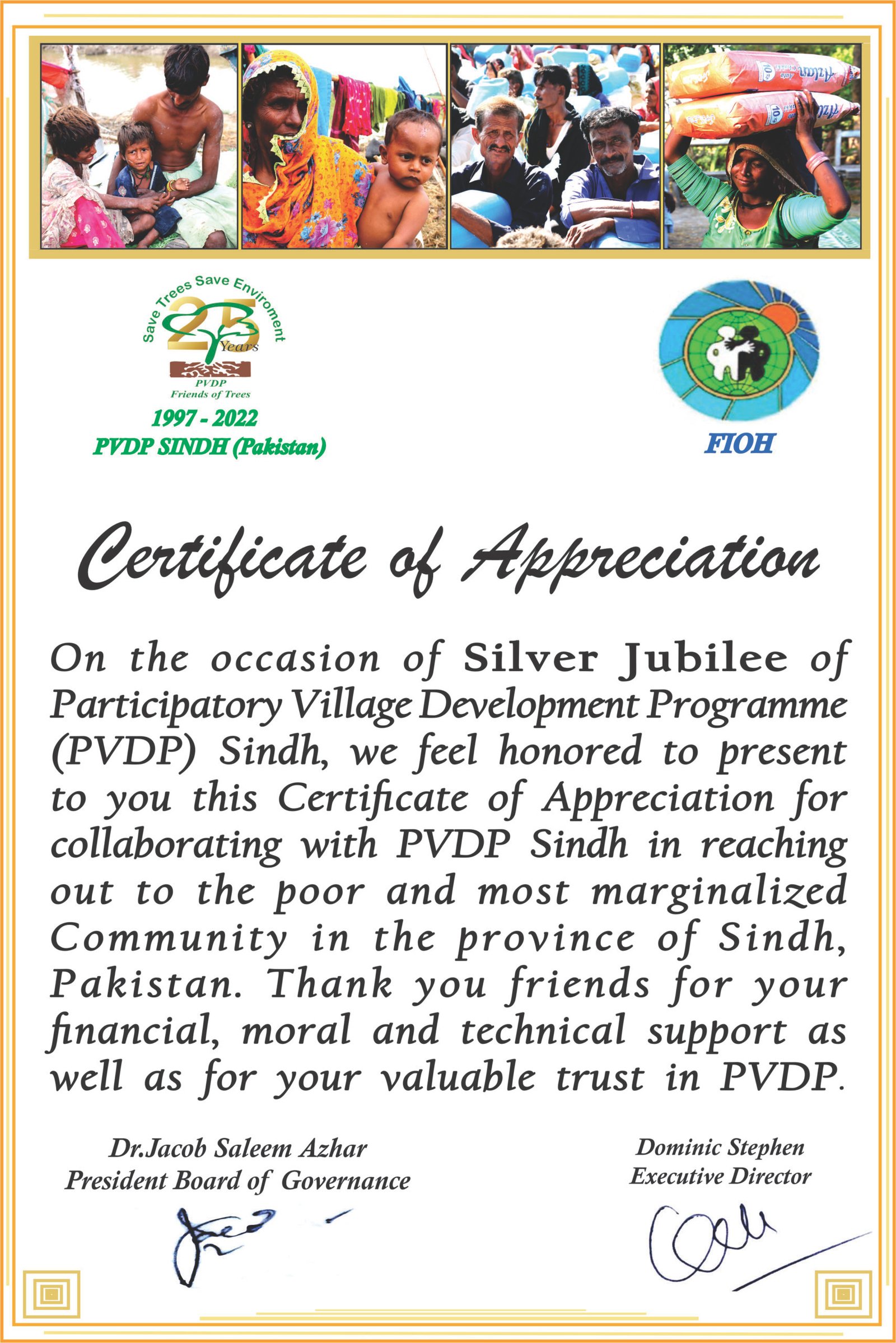
Participatory Village Development Programme (PVDP) established in 1997. PVDP was registered
on 15th June 1998 under the Societies Registration Act 1860 with Registration Number 3830. The
organization was formed with a mission to support the poor and disadvantaged communities in
improving the qualities of their lives, through encouraging people to organize and mobilize
themselves for holistic social change.
Pakistan Flood situation analysis 2022
SINDH FLOODS 2022-OVERVIEW
- According to flood extent mapping using Sentinel-1 satellite images acquired during
22–28 August, over 18% of Sindh’s total area was directly inundated. - In the summer (KHARIF) season, most of the area in Sindh is cultivated under three commercial crops: rice, cotton, and sugarcane. The flood inundation is highest in the rice crop zone, which has resulted in an
overall estimated loss of 1.8 million tons of rice, or an 80% loss of the expected total rice production in Sindh
In economic terms, rice, cotton, and sugarcane together faced a direct loss of USD 1.30
billion (rice: USD 543 million, cotton: USD 485 million, and sugarcane: USD 273 million).
- As per estimates, floods killed 42,174 livestock, causing USD 13 million loss.
- Overall, the province faced a combined loss of USD 1.7 billion in rice, cotton, sugarcane, tomato, onion, chili, and livestock.
- Economic losses in agriculture are much beyond the estimated direct losses to crop production and livestock.
Summary of findings and recommendations
The key findings are compiled in to key humanitarian needs sectors thus:
Food Security, Agriculture and Livestock – Needs
- Food or Cash/Voucher Assistance (CVA) to reduce food consumption gaps, supporting
the most affected and food insecure population while restoring livelihoods and resilience. - Construction/rehabilitation of animal shelters and irrigation infrastructure and
equipment. - Protection of remaining livestock through provision of feed and vaccinations.
- Provision of seeds to restart vegetable crops and support for long-term restoration of
orchards.
Health – Needs - Provision of essential medicine, tents, blankets, medical equipment, face masks, hand
sanitizers and mosquito nets. - Strengthening disease surveillance in flood-affected districts and mitigating the outbreak
and spread of diseases. - Monitoring the health of the affected population.
- Provision of medicines and other medical supplies.
- Targeted repairs of health facilities.
- Support for integrated outreach activities such as medical practitioners, lady health
visitors, medicines and transport.
Protection – Needs - Psychosocial support for the affected population.
- Dignity Kits and other non-food items (NFI) for vulnerable households.
- Scaling up assessments to identify people who may have lost civil documentation.
Water, Sanitation and Hygiene (WASH) – Needs - Emergency Latrines
- Water Purification Tablets
- Bio sand Nadi water filters.
- Hygiene Kits
- Water Tanks
Shelter and Non-Food Items (S/NFI) – Needs
Shelter items including tents, tarpaulins, blankets, mattresses and mosquito nets are needed to
support displaced
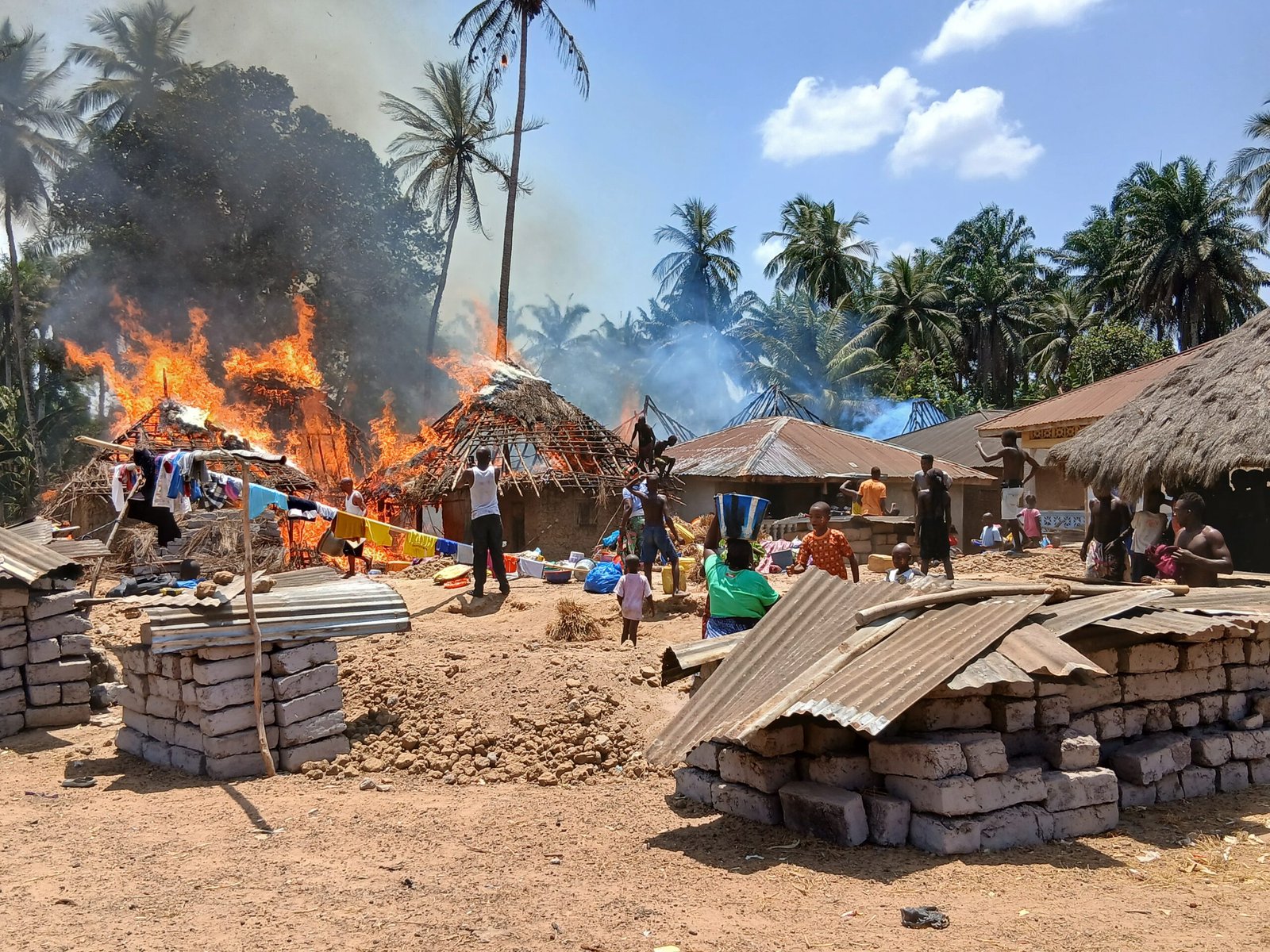
Emergency response provided by FIOH to disastrous fire
How did FIOH respond to disaster relief, fire in Sierra Leone with our network partner Youth Leading the World.
The unreported world as climate induced extreme dry season has devastating impact
I am writing to you today with a very heavy heart. Today, I went to our mother’s village, and what I witnessed there has left me in tears. We all know how harsh the dry season can be, with the sun beating down and the heat becoming almost unbearable—but today, that heat turned into a nightmare.
As we were gathered for a settlement meeting between two villages, the peace was suddenly shattered. We heard shouting and screaming from the back. When we ran toward the noise, the sight was terrible: houses were already being swallowed up by fire.
In the village, our people work so hard. You know how they plant and harvest their rice with such care. They eat what they need and then, with such hope for the future, they store the rest high up in the ceilings of their homes to keep it safe for the months ahead. It is their life savings, their only security.
Today, that security turned to ash.
I stood there and watched as six homes and then a seventh were completely destroyed.
The villagers fought the flames with everything they had, but the fire was too fast. I saw the very rice they had reserved for their children’s meals falling from the burning roofs, blackened and ruined.
Everything—their clothes, their properties, their shelter—is gone.
As I walked through the scene, taking pictures and talking to the families, I couldn’t stop the tears from falling. These people are now homeless and helpless, and the food they counted on to last for months has vanished in a single afternoon.
I am stepping forward as a humanitarian to coordinate help for them. I have documented the damage and the households affected, but the need is far greater than what one person can do alone.
I am pleading with you, on behalf of YLTW SL, that whatever little support you can provide whether it is for food, clothing, or helping them get materials to start rebuilding their roofs would be a blessing beyond measure.
Even the smallest contribution will help a family find their footing again after losing everything.
Please, let us come to their aid in this darkest hour
With love and hope,
Alpha Mohamed Kargbo
Three of the affected extended families
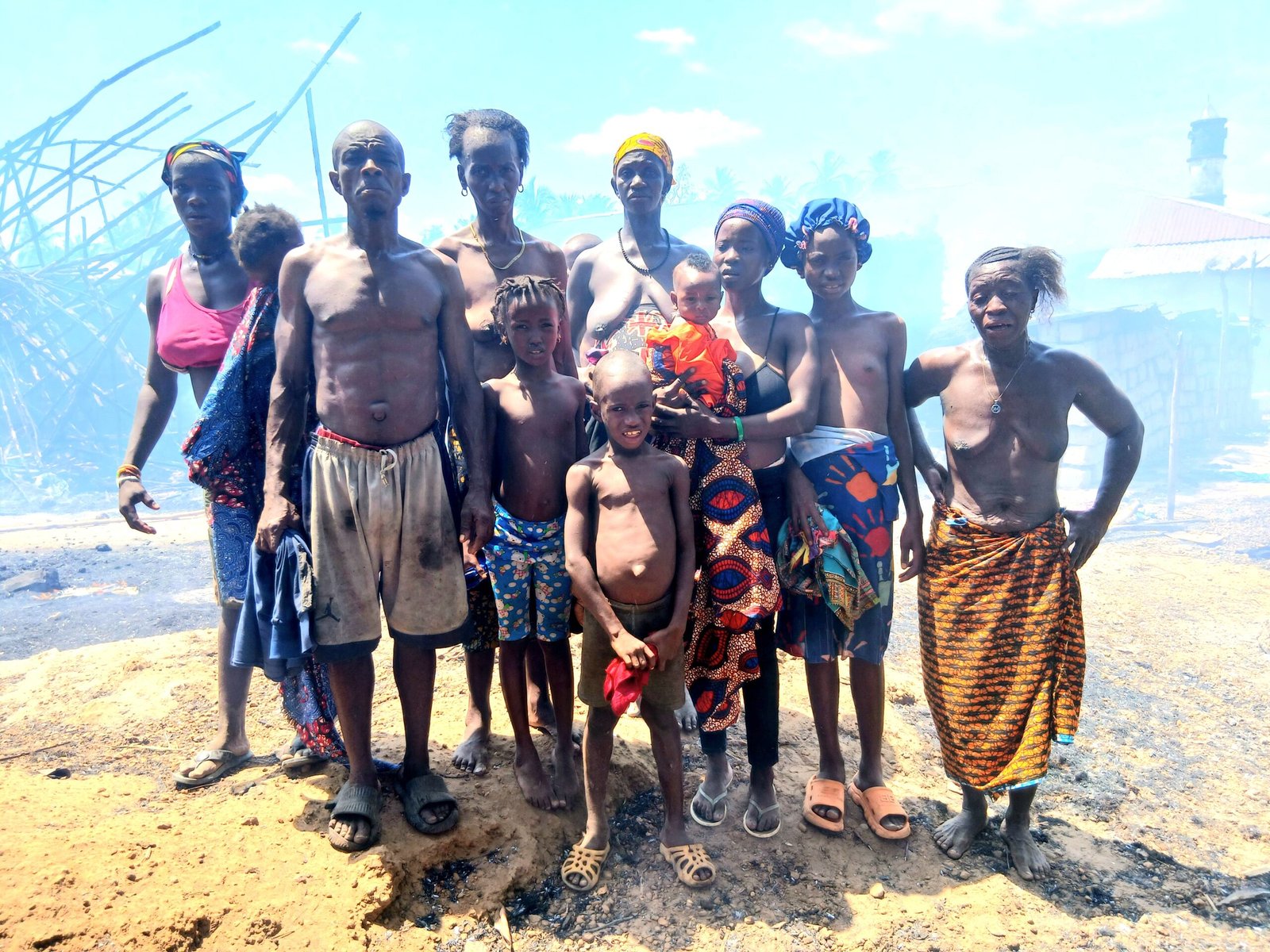
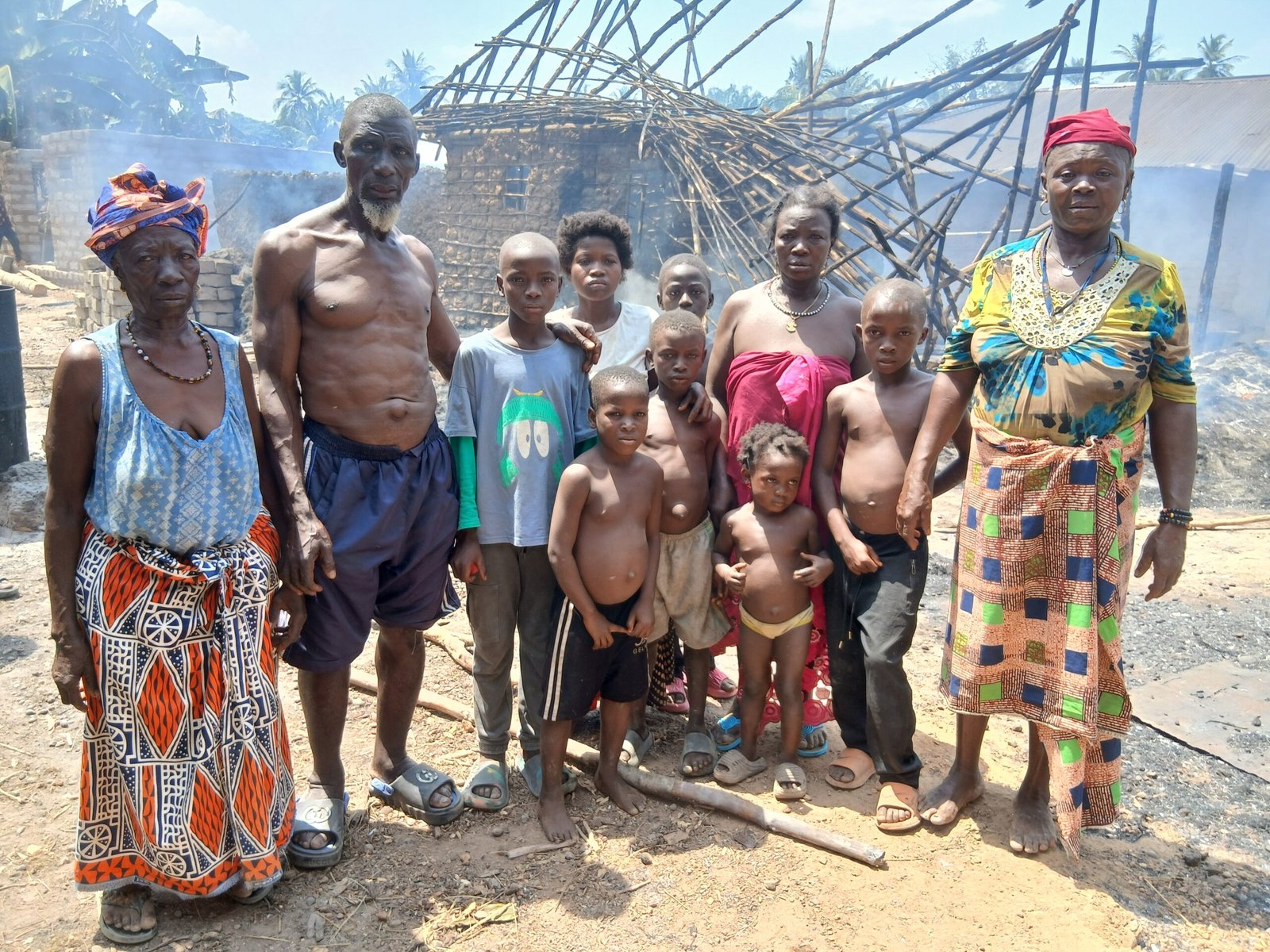
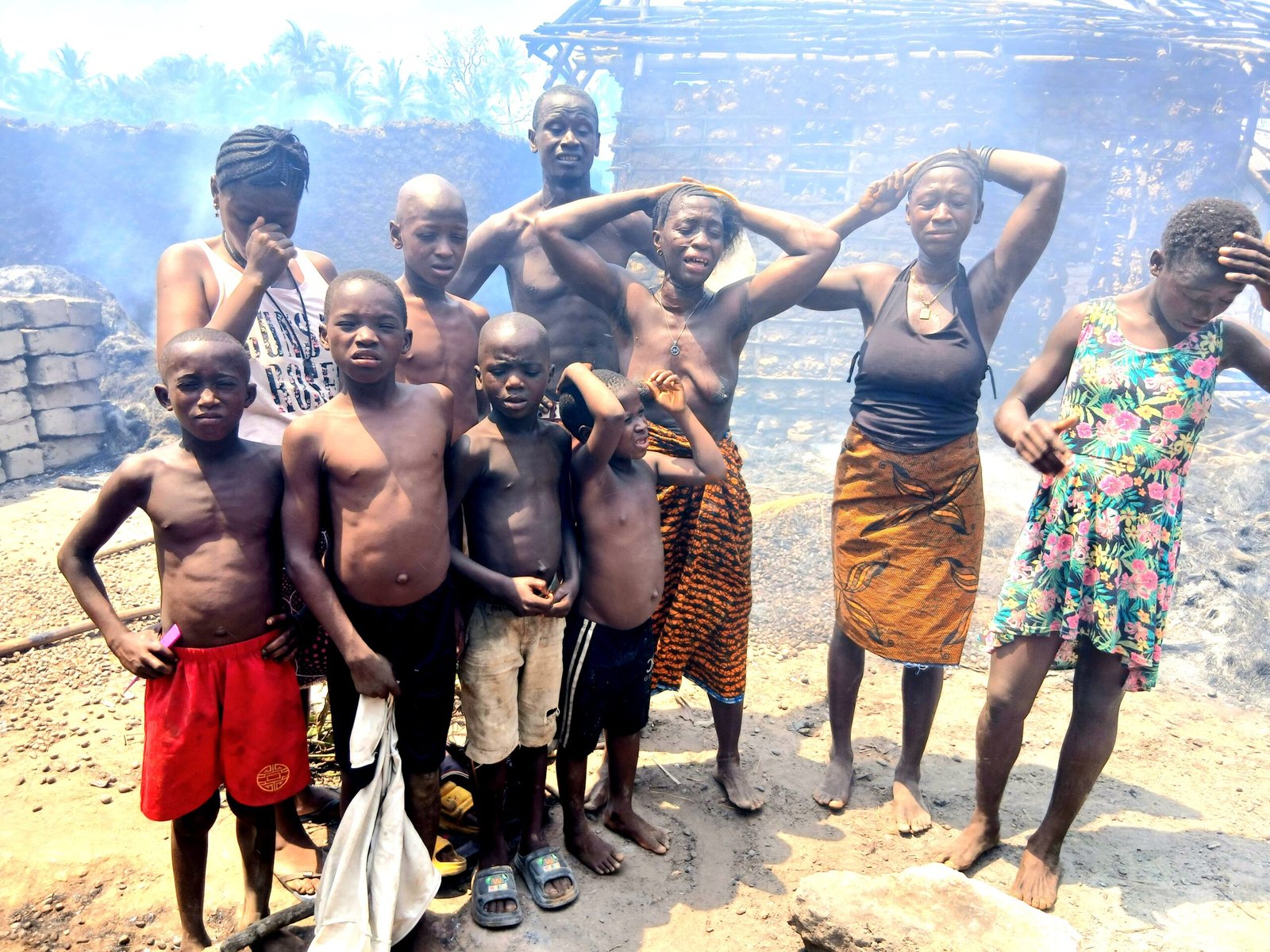
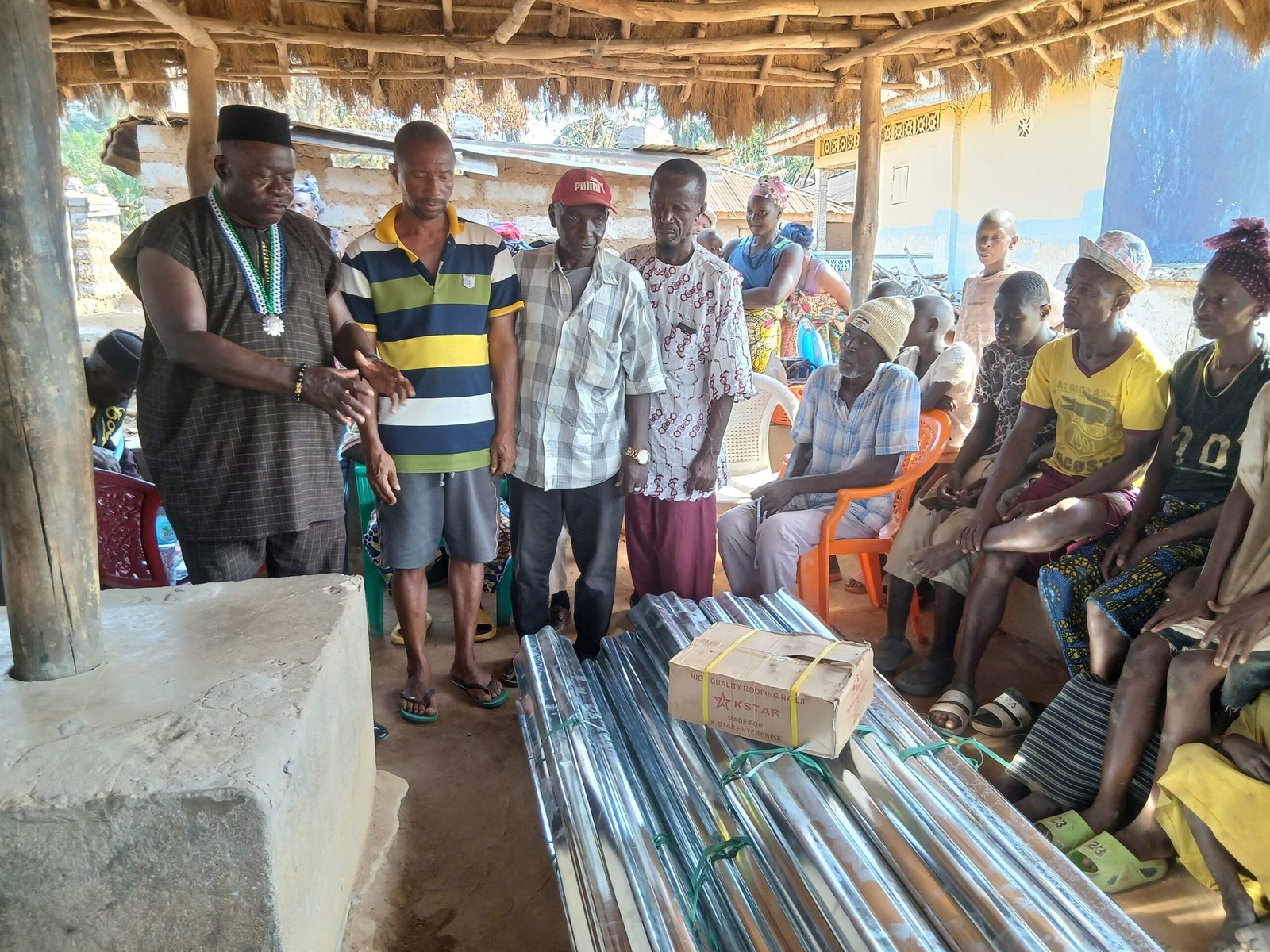
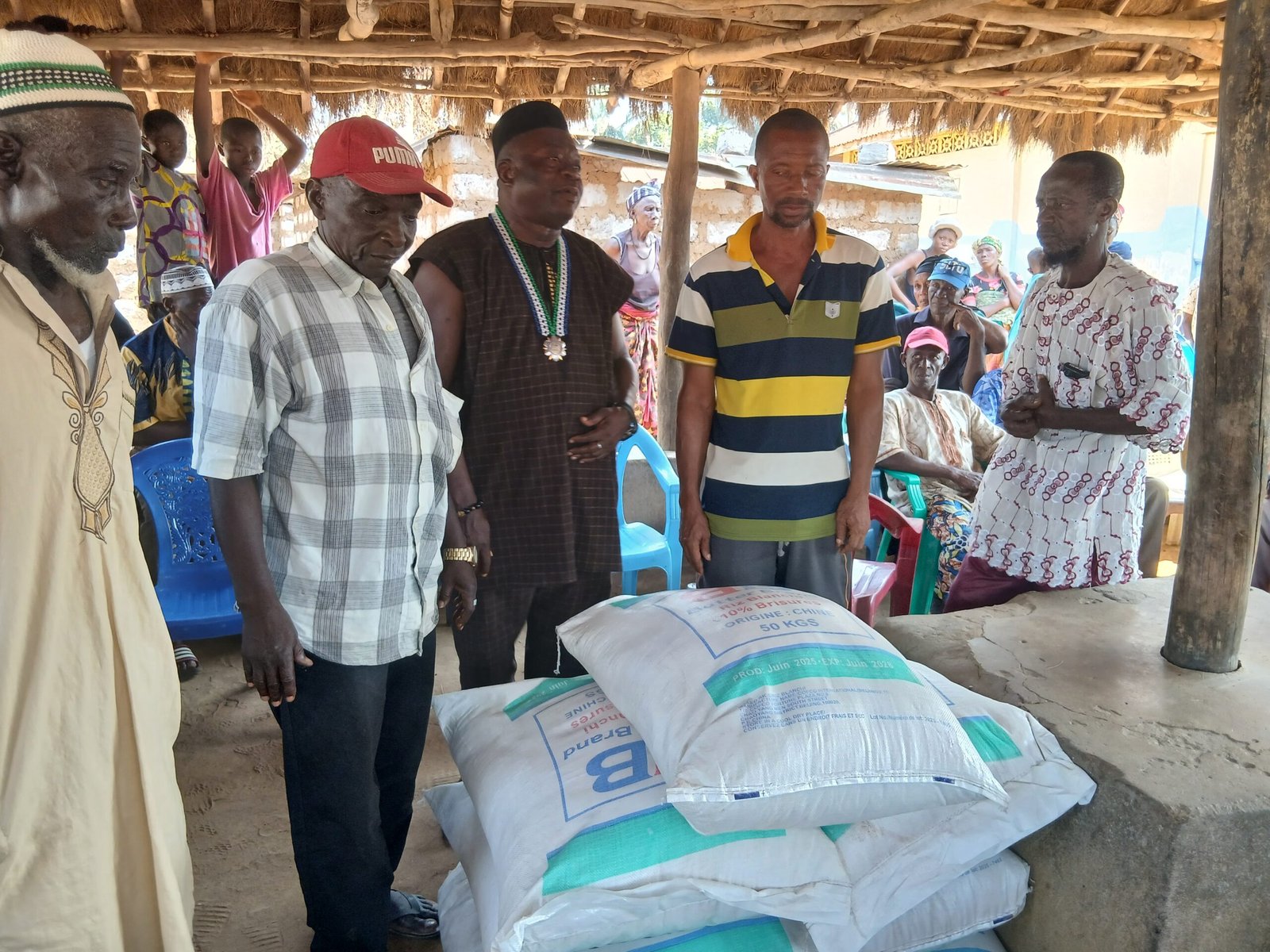
We are pleased to announce that emergency aid was available directly from FIOH through our cooperation with Youth Leading the World in Sierra Leone. Our response was instantaneous, with aid to rebuild the damaged dwellings with more substantial infrastructure and rice to replace what was lost in the fire. The community responded with thanks and celebrations.
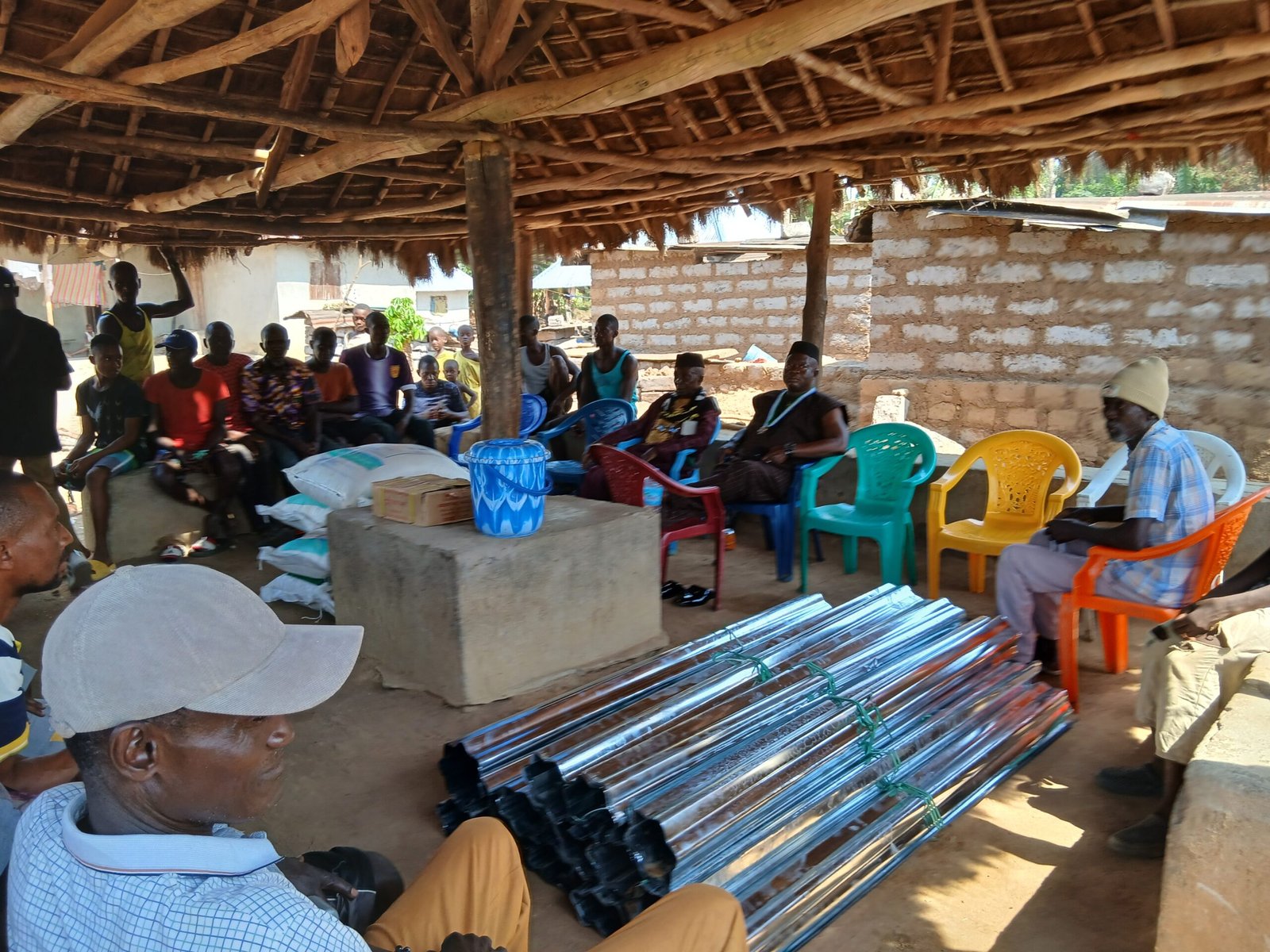
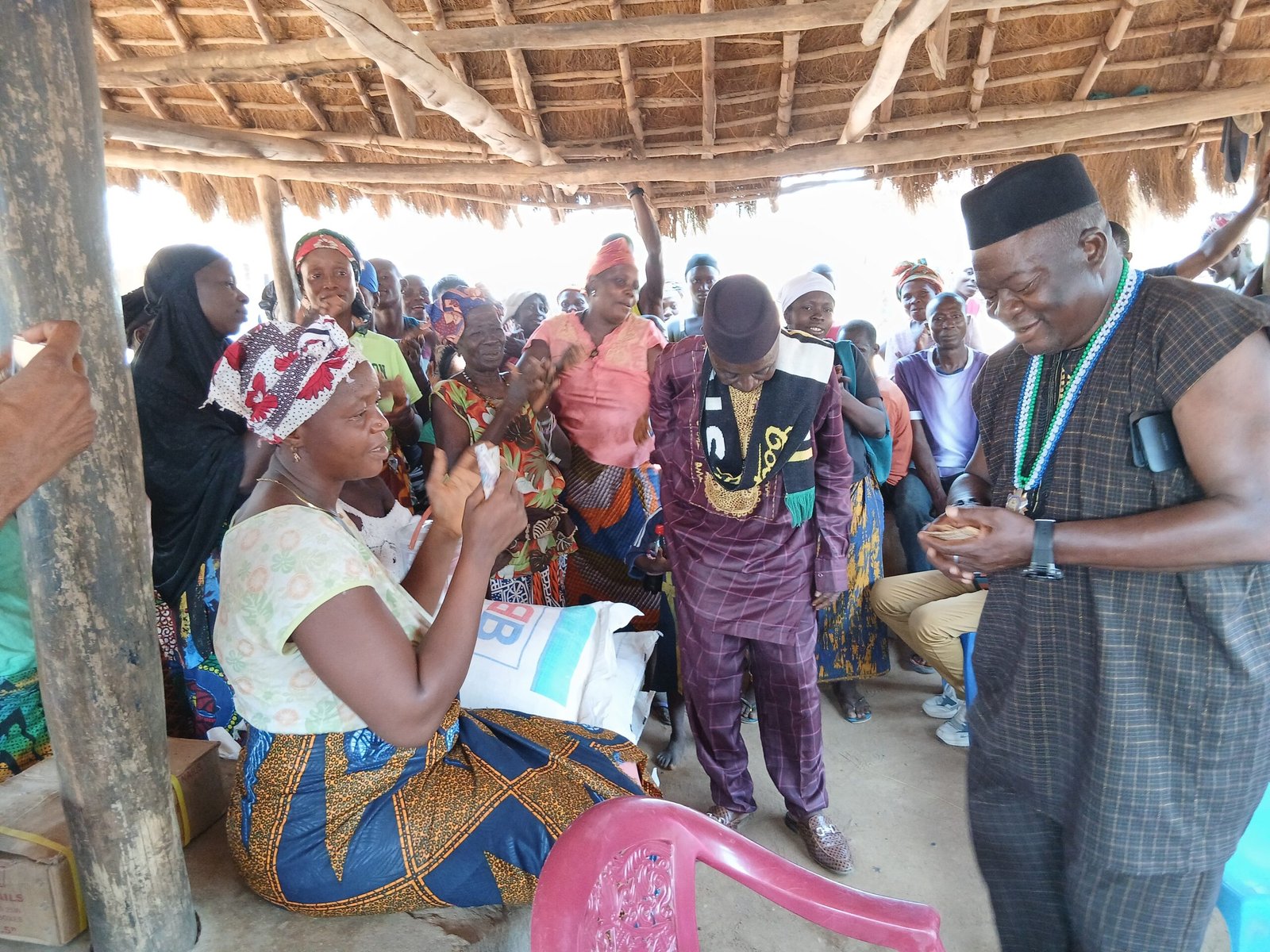
Thank you for reading this article, if you would like to support us please Donate. If you would like to read more articles about disaster relief, try this.
CRISIS RECOVERY PROJECT IN THE WEST REGION OF CAMEROON
Website: https://www.iaa-africa.org
Email: info@iaa-africa.org
Tel: +237652130115
1.1) BUDGET: 550GBP, YEAR: 2025
2.) BRIEF OVERVIEW
The scourge of Internal displacement has continued unabated despite international attempts to address its root causes. Ironically the so called anglophone crisis in SW and NW Cameroon has been largely ignored despite the untold misery it has caused the local people, many of whom have been displaced. The human rights of the victims of this violent insurgency have also been conveniently ignored. Questionnaires posed to those involved illustrate that the respondents live in immense fear of losing family members or being killed themselves. Moreover, they have been denied basic freedoms living in indignity with minimal access to water, food or means of subsistence. The greatest aspiration of the respondents is to simply return to their families and resume their livelihoods. The initiatives presented by IAA are an attempt to redress this unacceptable situation.
The situation began in 2014 with instability in Central African Republic which became exacerbated by the impacts of Climate change, unpredictable extremes of rainfall and resultant flooding and soil erosion compounded by unprecedented droughts. Add into the mix the rise of the terrorist sect Boko Haram and you have the perfect storm.
Presented in map form below is a situation analysis produced by UNHCR at the end of February 2025
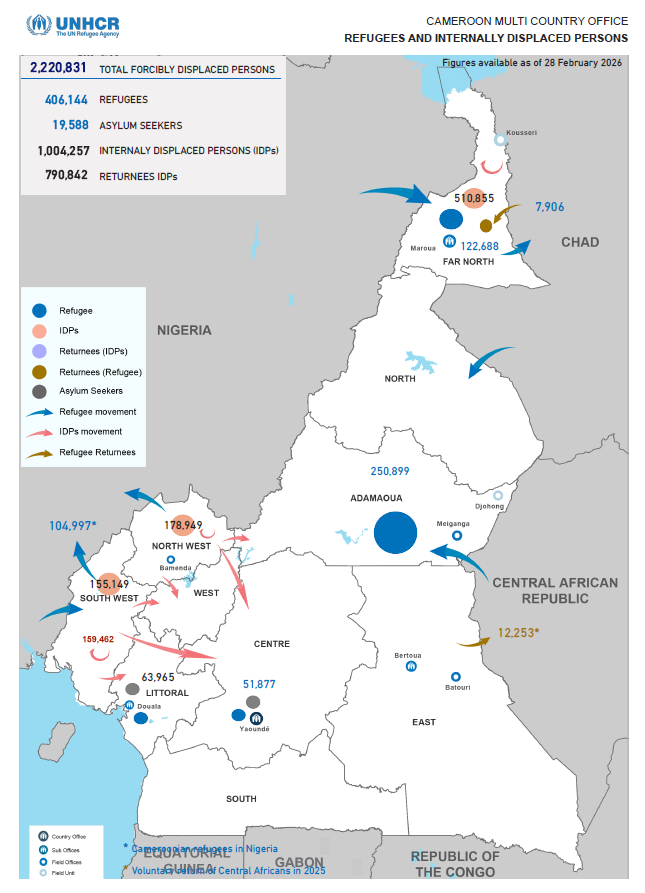
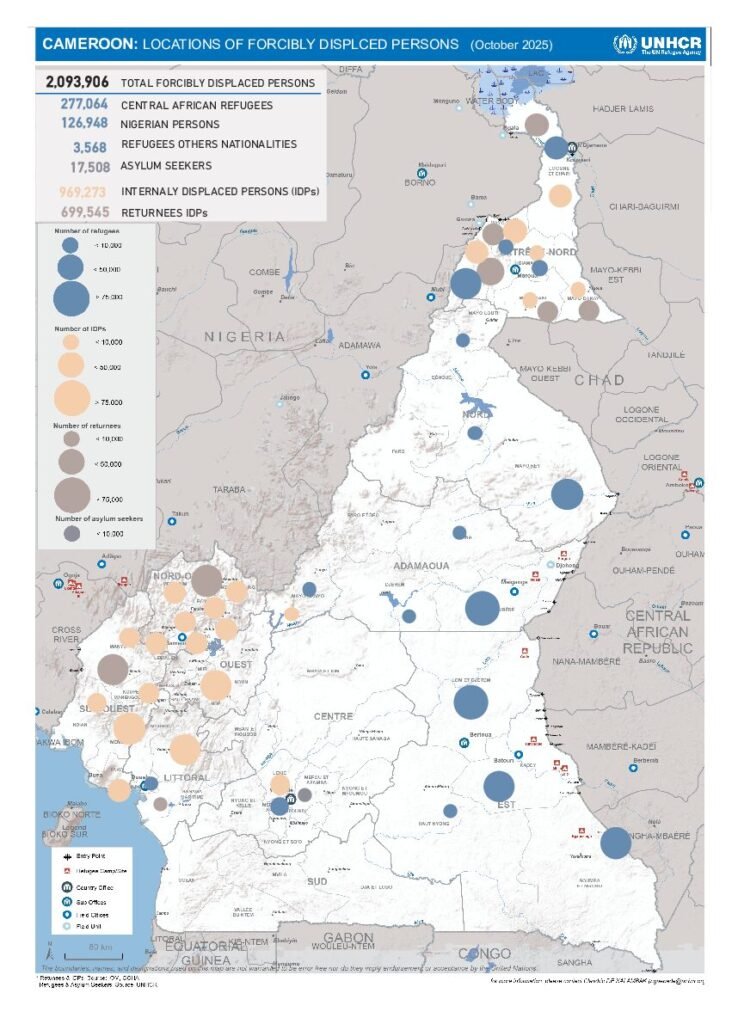
Anglophone region of Cameroon has almost 1 million IDPs to manage fleeing from civil war Oct 2025
The project aimed at addressing food shortage by empowering Internally Displaced Persons (IDP) and their host community of Foumbot through climate-smart agriculture to be able to grow vegetables during the dry season and increasingly during prolonged dry periods. We seek to end seasonal hunger and poverty, focusing activities in Mogny village of Foumbot sub-division in the West region of Cameroon.
The objective of the project was to empower and support IDPs with innovative, sustainable, affordable and locally owned approaches to improve food security and rebuild their lives, and enhance the capacity of 100 IDPs to produce a wide variety of vegetables using sustainable and environmentally-friendly technologies with integrated social ownership, management and involvement while increasing economic capacity and securing livelihoods and the planet for the future.
3.) IMPACT:
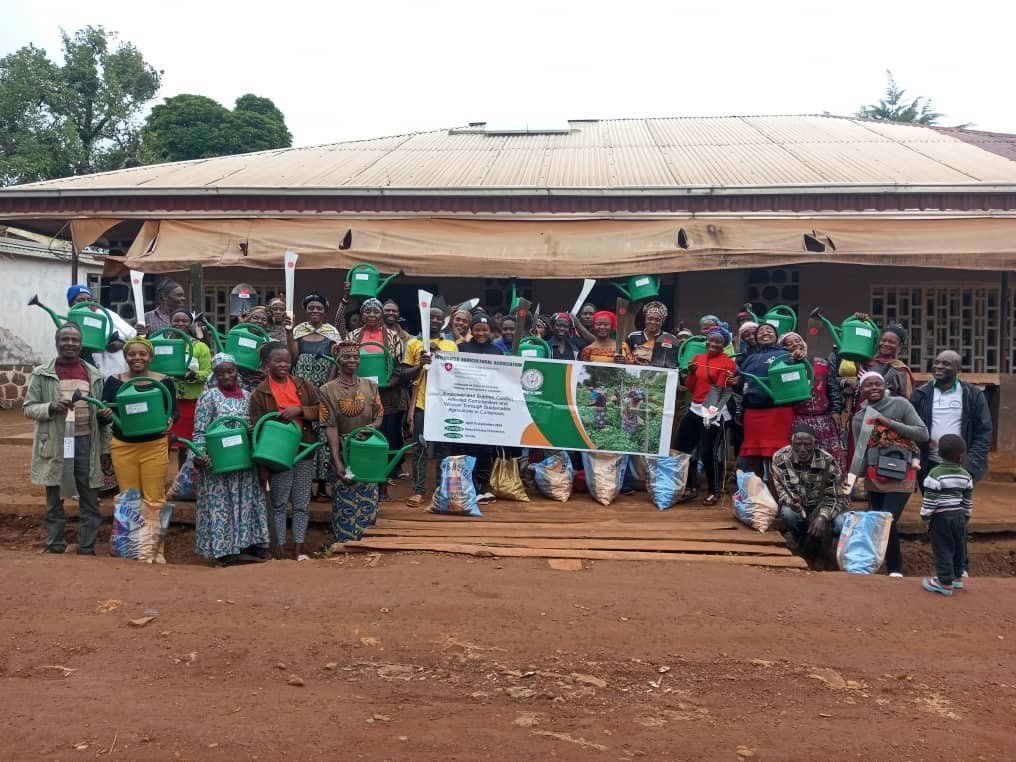
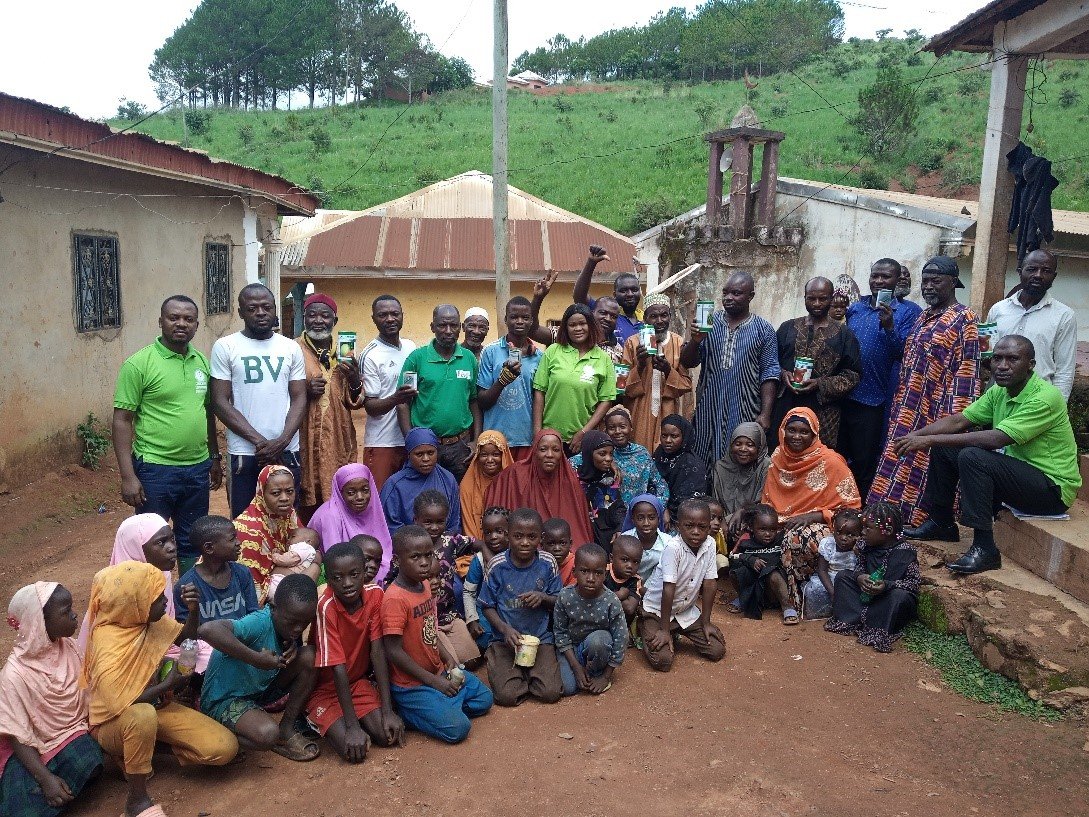
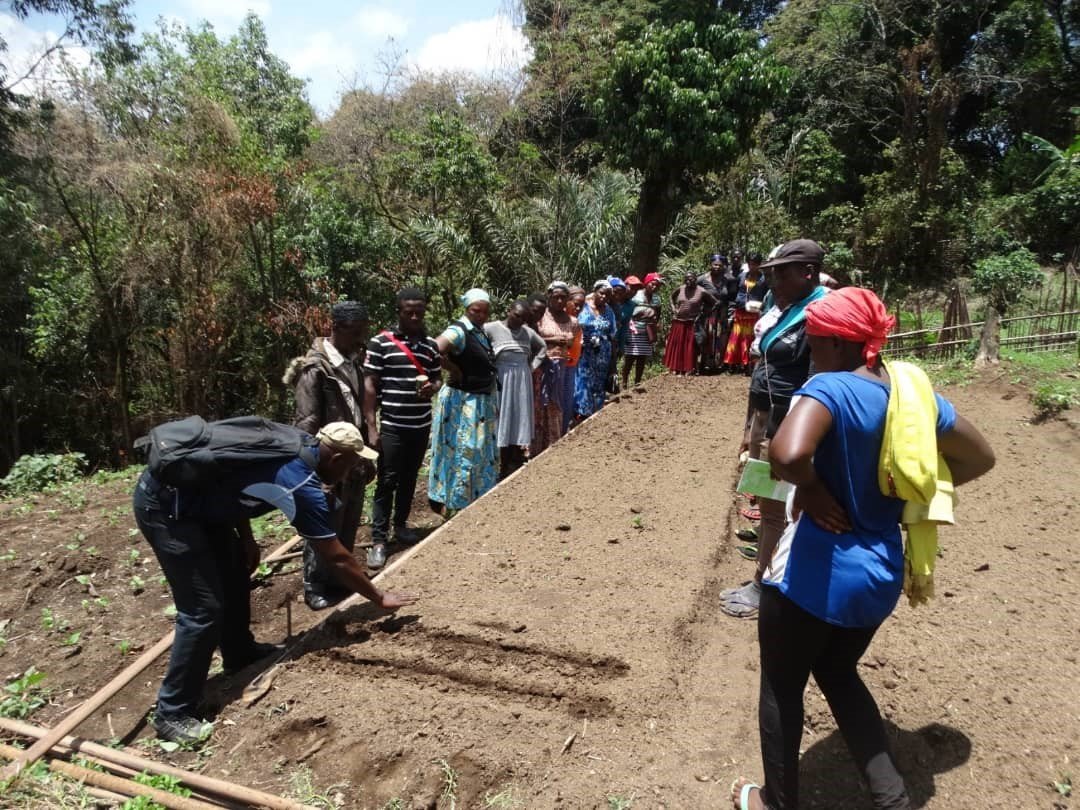
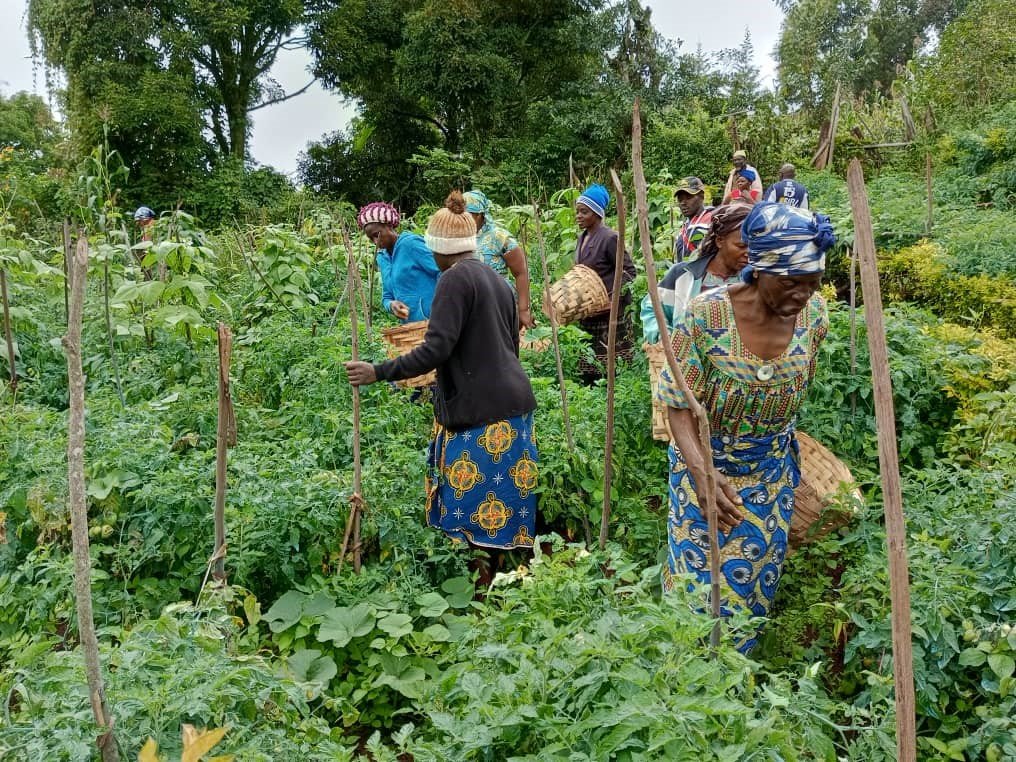
With the funding received from FIOH UK in February, 2025, Integrated Agricultural Association (I.A.A) trained diverse community members on climate-smart agriculture on topics including regenerative vegetable gardening, nutrition, water management, integrated pest management and soil health improvement. 127 people have been directly involved in training activities, with 71% women participation. 60,000 grams of huckleberry seed was donated to 120 IDPs, 500 grams per beneficiary who already had a farm plot of approximately ¼ hectare. 120 gardens were cultivated across 30 hectares of land and each garden generated approximately 1700 GBP per year for a family of 5 members which achieved larger goals including food and nutrition security, gender equality, health and wellbeing and improved livelihood for over 1000 people.
With the help of this funding, I.A.A also trained 34 trainers on climate-smart agriculture to monitor the program and continue to provide ongoing technical support and advice on best practices to smallholder farmers in the area. I.A.A also created a Huckleberry Producers Union in Mogny with current membership of 80 and the registration process is in progress. These efforts aimed at building local autonomy to sustain the project beyond the funding period.
4.) CHALLENGES:
- Inflation in local currency reduced the value of the project budget by 30% which impacted the ability to successfully distribute three different types of vegetable seeds.
- Follow up of program beneficiaries afterward was difficult due to their remote locations, no internet and network, bad roads in the rainy and dry season.
- Farmers often have to travel long distances to access inputs, extension services, or marketplaces, leading to high transaction costs and limited engagement with modern agricultural practices.
- Lack of clean drinking water and irrigation tools to boost productivity, health and nutrition.
5.) WAY FORWARD:
- I.A.A selected only huckleberry to support as many women as possible because of it economic and nutrition value and seeds can be sourced and saved locally. This decision minimized high cost on conventional seeds to focus on indigenous seeds that are locally adapted with moderate prices.
- I.A.A used private motorbikes in remote inaccessible locations and SMS to connect to participants.
- Trainers have been trained to support farmers locally and huckleberry union created to facilitate development, access to seeds, training and markets.
- I.A.A will construct and install a well with hand pump in the community, and provide smallholder farmers with irrigation kits including solar pumps to address water gaps in agriculture and household use.
6.) CONCLUSION:
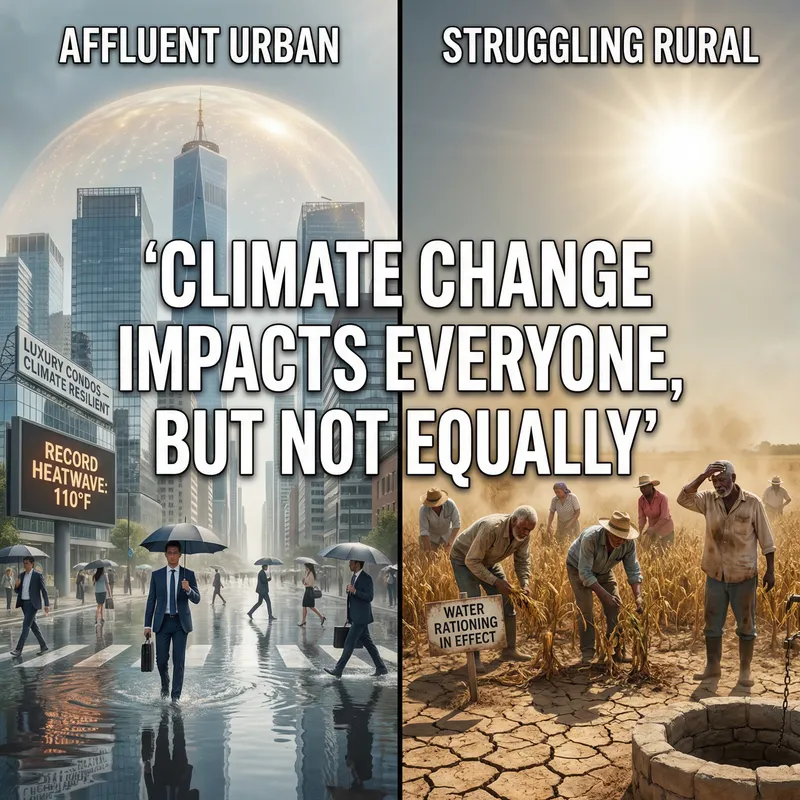
Climate Change and disasters affect communities to varying degrees. Women on forced displacement and persons living with disabilities face considerable challenges in accessing help. Most disaster and conflict responses focus on short-term needs: shelter, food and medicine. While critical, this approach must be supplemented with medium-term recovery plans to rebuild lives. By working on vegetable-growing programs for crisis relief, IAA aims to bring stability to the lives of the internally displaced persons (IDPs) and empower the most vulnerable to enable sustainable and resilient livelihoods that are self-sufficient and not dependent on aid.
I extend my sincere gratitude to FIOH for supporting me and my team in this incredible mission which I so much have passion and enjoy doing while inspiring others in the same and similar fields.
DUNGRILA PASCAL MBIMENYUY; TEAM LEADER
FIOH Sierra Leone – responding to climate change and Covid 19
ACTIVITY REPORT
PROJECT : Local response to climate change and Covid19
Funder : FIOH Fund -UK
COST : GBP 545
REPORTING DATE: 4thJune 2020
Brief background
In a bid to integrate climate change in development projects, FIOH-SL in collaboration with FIOH-UK supported farmers to mitigate climate change through scaling up the adoption of regenerative agriculture. This involved farming practices that work together not just to sustain, but to increase the carrying capacity of the land, restoring the natural fertility of agro-ecosystems. Core practise involves permanent soil cover with living plants, minimum or zero tillage, maximization of biodiversity, composting from zero waste in the farming system and reduction of agrochemicals with a view of their elimination.
FIELD ACTIVITY RESULT
Result of activity 1: Organize community sensitization meetings on climate change:
- Two community sensitization meetings were organized which attracted 50 participants, farmers, stakeholders, facilitator and participants to share learning on the following:
WHAT IS CLIMATE CHANGE?
Following the discussion on the literal understanding of climate change, participants also brainstorm, on the kinds of climate hazards.
- Heavy wind
- Increase in the frequency and magnitude of warm daily temperature (extremes and decreases)/prolong day seasons from October May)
- Frequency heavy precipitation/rainfall.
- Spring/small rivers completely dry up during the day season.
IMPACTS OF CLIMATE CHANGE
- Water shortage
- Floods
- Heat waves
- Droughts
- Outbreak of infectious diseases.
Traditional/cultural practices adopted in the past to mitigate climate change as:
- Establishment of fire belts around forest reserves in March.
- No bush clearing around water catchment areas.
- Secret society bushes as protected as forest reserves.
- Forest reserves known as village green surrounding the entrance of villages protected.
- Bush fallowing for 15 years to encourage regrowth.
RESULTS OF ACTIVITY 2 – Practical training on Agroecological/ farming.
25 farmers (15F,10M) received practical training (5 per session) of farm design, planting methods, plant spacing, zero or minimum tillage practice, composting from zero waste and field application. Monitoring results reveal that farmers are gradually adopting these practices on their own farms.

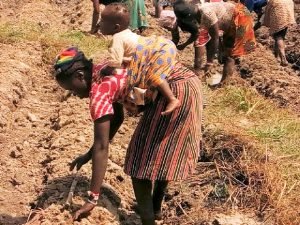
RESULTS OF ACTIVITY 3 – Seeds and tools support. Following the procurement of assorted seeds and tools, these items were distributed to farmer field school representatives.
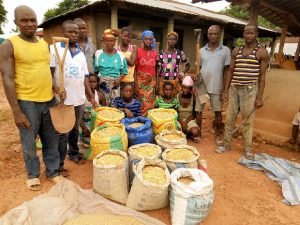


FIOH-SL seeds and tools support to cross-section of farmers.
RESULTS OF ACTIVITY 4 – Seed multiplication and demonstration farms.
Two multiplication and demonstration farms were established in two communities using permaculture/agroecological principles – farmers working with natural forces or farming using natural approaches, the wind the sun and water to provide food, shelter, and everything else including compost, farm/ gardens needs beside seeds and plants. Any farm established using these principles is a permaculture /agroecological farm.

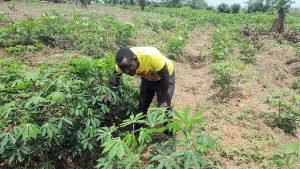
FIOH -SL support to the establishment of two permaculture farms.
CHALLENGES
- Overwhelming demand for the project activities by other FIOH operational communities in Tonkolili and Koinadugu districts.
- Frequent lockdown caused by Covid19 is affecting farm management.
- Lack of on farm hand washing stations to prevent Covid19.
- Farm work rationed with a batch of 5 Farmers per day as a result of Covid19.
WAYS OF OVERCOMING CHALLENGES
- Overwhelming demands
Representatives from the demanding villages were included in the on-farm training and promised to be given some proceeds from the established multiplication farms as starter seeds to establish their own farms. Development of community pilot projects by FIOH-SL is underway to service other communities.
- FREQUENT LOCK DOWN CAUSED BY COVID 19
A detailed concept Note will be shared with National and International donors for possible support.
LESSONS LEARNT.
Household food insecurity exacerbated by the global lock down by Covid19 reveal the extent that existing food systems (and the people underlying them) have been undervalued and under-protected.
Please support the work of the Future in Our Hands Education and Development Fund whose aim is to help and empower some of the world’s poorest and most marginalised people by:
- UK residents can provide long term support by completing the FIOH FUND DONATION FORM and sending to the address shown on the form:
- Direct grant to the charity’s bank account or by cheque to:
 Bank account details:
Co-operative Bank
IBAN: GB07CPBK08929965050707
BIC: CPBKGB22
Cheques should be made payable to the
Future in Our Hands E&D Fund
—————————————————————————-
Fundraising to help the work of the charities would be greatly appreciated
A NEW YEAR REFLECTION

A NEW YEAR REFLECTION – A poem by Mike Thomas
Diminishing gas and not much oil
Would pose a future world of endless toil
Of coal there is yet no dearth
Its use helps to burn a warming Earth
Rising seas wont douse the flames
Yet serve to stifle human aims
As islands drown and defences breach
The centres of power the tide will reach
The seaside is no place of fun
The water’s too deep and the sand has all gone
Half the world soaks in torrential rain
The other suffers endless pain
With drought that seems to have no end
Migration beckons round the bend
An economic system has unfurled
Fuels gross inequality across the world
A spark of hope quickly passes
As the world is cloaked by greenhouse gases
This is no soothing duvet
But heralds instead a future doomsday
But who-oh who, is going to listen
The birds still sing and the raindrops glisten
We fly to the Sun to escape the cold
To sparkling seas and sunsets of gold
Or venture North for lights in the sky
That arouse the mind and delight the eye
What can convince those still in denial
Of a future that looks so ugly and vile?
“No need to worry its all just fake news
Many experts have different views
Climate science has got it so wrong
Fossil fuels make us humans so strong!!”
What have we heard in twenty nineteen?
All the wrong records we have seen
For floods, heat and drought and widespread migration
Victims in almost every nation
To political leaders we cannot turn
If we rely on them the Earth will burn
The pot of solutions almost empty
As we start the year of twenty twenty
Australia starts with fireworks displays
While burning trees form a poisonous haze
And thousands are forced to flee to the beach
To run from their homes the flames will reach
Ice from the Poles the warmth will prise
As ocean sea levels continue to rise
A change in the water from salt to clear
May cause a change many scientists fear
A warming stream changes direction
As northern people engage in deep reflection
Its no longer heat that causes a rage
As they start to experience a new ice age
Many sites and resorts once renowned
Are flooded and then eventually drowned
As one year ends and another begins
We must not hide from all our sins
But embrace the new year in a spirit of hope
We cannot clutch at a saving rope
No prospect of endless electricity
Prepare the way for voluntary simplicity
Acknowledge the gains we made in the past
From coal and oil and natural gas
The future beckons a new approach
The natural world we no longer poach
The wealth we create is there to share
For the poor and sick we must always care
Live as if we understand the natural world on which we depend
Not an enemy from which we try to defend
From the powerful forces of wind and heat
We cannot run, yet alone beat
Say no to fear, competition and greed
And start to sew a different seed
Future kids regarded just like our own
Will benefit from those seeds we’ve sown
We must not reflect on our own self concern
Our Earth will provide what we can never earn
A change in perception has just begun
More renewable energy from the wind and sun
But will this be enough to save us from human insanity?
We must understand the need for growing biodiversity
Crops must be drawn from a wider range
In adapting to the impacts of climate change
From wasteful consumption rich nations must turn
From indigenous peoples we can often learn
Economic growth we cannot sustain
From a simple life the rich world can gain
From wasteful consumption we must run
Humans must begin to act as one
Resist the urge to reach for the stars
Imagine we are faced by a threat from Mars
Greta urges a human desire
“To act as if our house were on fire”.