
Beneficiaries of the Poverty Alleviation in the Thar Desert project
Typical case histories of three people who benefited from the Poverty Alleviation Project in the Thar Desert, Pakistan managed by the Participatory Village Development Programme:
Radha
 My name is Radha. I was selected as one of the beneficiaries of the FIOH PROJECT and I was given project management and handicraft skills trainings by PVDP and 25 fodder trees, 25 bair trees, one water tank, fuel efficient smokeless stove and a loan for handicraft making. I had never in my dream thought this kind of packaged support for reducing our poverty and vulnerability. Not only that my one son and one daughter were admitted in PVDP supported primary school but I also got the chance to learn to read, write and count up to 100 in adult literacy centre that was established by PVDP in our village.
I was one of the members of the Village Development Organisation and took an active part in the meetings and trainings to improve my knowledge and skills which gave me a lot of confidence to make decisions about my life and my children. I felt that I am terribly saved from falling into the trap of my in-laws who would never have given my children the opportunity to go to school. Also they would never had allowed me to join the adult literacy centre, attend community meetings and workshops which opened up my eyes and mind and gave me so much confidence to spend my life peacefully as a free human being.
I really feel that I have come to new life. The loss of my husband has been made good through PVDP support. Today, I am happy that despite serious droughts over last year, I am looking forward to getting some income from the sale of bair fruits in one or two years from the 50% of the trees which I have saved during the drought. I also managed to save 50% of the fodder trees on which my livestock will survive in the future years. I am already getting some income from the sale of embroidery work. I store my water in the tank which saves my time of fetching water from a distant well. The time I save is spent in doing embroidery work, attending community meetings and training workshops. I am also happy with my fuel efficient smokeless stove. When I used the traditional stove, I often used to have sore eyes due to smoke emission. With this smokeless stove I feel very comfortable, my eyes are protected, the stove uses less wood and cooks faster due to two burners. With so much of support from PVDP our family’s life has really changed.
I went to PVDP established vocational center in my village and learned to make purses and sewing clothes on sewing machines provided by PVDP. After the training I am happy that I can sew cloth and can earn money from this skill. I can also make purses which PVDP is trying to find market for. I am hopeful that when purses will sell and I can tailor make clothes for other people and earn handsome money which will help to reduce our poverty. I have become alive again! Thanks to PVDP and the FIOH Project.
——————————————————————–
Indra
 I am Indra. I have entered in the fourth year of this project which is helping to improve my family’s socio economic position. Now I am the active member of my village organization and active member of PVDP. I attended all trainings conducted by PVDP and also attended all programmes organized in our village by our Village Development Committee. Now I have the skills and confidence to give presentation of our community development work to our village people and outside visitors. I was also made aware of the important role of mother in looking after the children and their schooling. Now I take good care of all my children.
I also send my children to school and at home I make them study. I also help them where I can in their studies. I am supporting my community to becoming literate. Adult literacy classes are conducted in which I teach women to read, write and acquire numerical skills. The trainings and seminars I have attended have helped me in becoming aware of community issues which need our action to address them. I also realized that 8th class is not enough for me so I got admission for further studies. I now study at home and go to city to appear in exam. I am hoping to complete my matric over the next two years. I have a government job in which I am working as community health worker. I am helping women in their pregnancies and safe deliveries. PVDP health team regularly update my knowledge and skills about health care. I am very thankful to PVDP and the FIOH Fund that through their support my own and family’s life has changed.
——————————————————————-
Welayt
 I am Welayt. I have entered in the fourth year of this project which is helping to improve my family’s socio economic position. Despite my disability I feel more at ease and involved in various opportunities created by this project. After becoming a member of VDO for four years of this project, I have attended different training programmes and sessions such as handicraft training, livestock management training, and wild food preservation. I can now take care of my livestock and this year we preserved different vegetables which helped to somewhat secure our foods.
My mother and me make embroidery work which get sold in the local market and we earn some income from this activity. It is particularly helpful during drought times when most of our resources deplete. It is my wish that our daughters go to school to get education at least up to primary level to learn some basics of education that could help them in their future life.
We are strictly bound to comply with the set of rules of this culture. The changing of culture is not as easy as changing habits; it needs self persuasion and discipline. Earlier, women in my village were not allowed to attend meetings and trainings. My husband, after attending various trainings of PVDP on civil & political rights, project management, and livestock management etc. inspiringly, motivated to his community to provide same opportunity to their females for becoming active member of VDOs. But no one was agreeing for this change. PVDP in that situation organized more meetings and trainings to convince our community for female participation. Then, PVDP selected 16 households as beneficiary of FIOH Fund UK Project. We were provided with water tanks, bair trees, fodder trees, fuel stoves, and embroidery support loan with informative trainings. We hope to have more income in future through sale of bair fruits and handicraft work.
I am thankful to PVDP for providing embroidery skills to me and my daughters who cannot be educated due to our rigid culture, but they learned skills to earn at home. Another good thing happened is that my daughters can write their name and know counting of numbers by attending classes in Adult Literacy Centre of PVDP.
——————————————————————————

Follow us on Facebook:
www.facebook.com/fiohfund
Follow us on Twitter:
twitter.com/fiohnet
Please share our links with your friends to help us reach a wider audience.
Rudolf Steiner and anthroposophy
Who was Rudolf Steiner

Rudolf Steiner (1861-1925) was a self proclaimed Austrian clairvoyant, who founded a movement/religion which he named anthroposophy in 1913 after he split from the occult Theosophical Society founded by Helena Blavatsky. At the time of his departure the Theosophical Society was led by Anne Besant.
According to Steiner, anthroposophy adds to the scientific knowledge a knowledge of another spiritual world which is in the first instance invisible and lies above the senses. He maintained that through meditative training of ones organ of cognition, each individual can acquire the ability to progress to a higher universal plane. The concepts of incarnation/reincarnation and karma are fundamental to Steiner’s ideas.
The Theosophical Society has its headquarters in Goetheanum (which Steiner designed) in Dornach, Switzerland. Steiner has written many books and articles and may have given as many as 6,000 lectures on issues such as education, medicine, agriculture, the pictorial arts and social care.
Steiner incorporated his ideas into education, science, agriculture, art, medicine, economics and social care. A brief description of some of his ideas are shown below and a more detailed analysis c an be seen here:
WHO WAS RUDOLF STEINER
ANTHROPOSOPHICAL MEDICINE
BIODYNAMIC AGRICULTURE
CAMPHILL COMMUNITIES
WALDORF STEINER SCHOOLS
Anthroposophic medicines
Steiner believed that mistletoe had a role to play in the treatment of cancer. His reasoning was based on his belief that because mistletoe was a parasite, it would help to cure cancer which he regarded as a parasite on human tissues and organs. Anthroposophic mistletoe medicines include those marketed under the names Abnova viscum, Helixor, Iscador, Iscusin, Visorel, Eurixor and Plenosol. Iscador is often touted as having the ability to boost the immune system but there is no evidence that it does so. Mistletoe is listed by the American Cancer Society as an unproven cancer remedy. Controlled clinical studies have indicated that mistletoe does not have any significant effect on the survival of people with cancer. Some people can be allergic to mistletoe medicines.
Biodynamic agriculture
Steiner proposed what he called biodynamic preparations that would stimulate vitalizing and harmonizing processes in the soil through cosmic and terrestrial forces. Initially Steiner proposed eight preparations, two of which involved packing cow manure (preparation 500) or silica (preparation 501) into cow horns, then buried for a number of months before the contents are swirled in warm water and then applied to the field. Cow horns are utilised as antennae for receiving and focussing cosmic forces, which are transferred to the materials inside. The other six compounds(preparations 502-507) are extracts of various plants either packed into the skulls or organs of animals (i.e. deer bladders, cow peritonea and intestines) or into peat and manure, where they are aged before being diluted and applied to compost. The chemical elements contained in these preparations were said to be carriers of terrestrial and cosmic forces and would impart these forces to crops and thus to the humans who consumed them.
Camphill communities
Despite the undoubted dedication and care for the disadvantaged that must be reflected by most of the people running these communities and the external volunteers who help, it should be borne in mind that the foundation for the activities that take place is based on the ideas of Rudolf Steiner and anthroposophy, the religion/movement he founded. Camphill communities could also be regarded as ideal projects for gathering together all of Steiner’s irrational ideas into the same locations. Activities are most likely to include biodynamic gardening, eurythmics, Steiner/Waldorf pedagogy and art and craft activities with Steiner spiritual connotations and even what has been called anthroposophical medicine. The basis of these activities is neither rational nor capable of scientific verification. Biodynamic gardening incorporates organic farming methods and hence Steiner’s occult biodynamic preparations which I have outlined in the section on biodynamic agriculture, are unlikely to result in negative outcomes. The same could be said for eurythmy. They can perhaps be regarded as just a waste of time or better substituted with more rewarding activities.
However, with regard to medical matters, there are clear dangers involved in substituting proven and scientifically verified medical treatments and procedures with those such as homeopathy and anthroposophical medicine which have no such foundation. Robert Smith Hald’s bitter account of the misdiagnosis of his wheat intolerance (which he did not discover until he was 36) and erroneous treatment by anthroposophical practitioners in several Camphill communities in the USA, caused him considerable suffering over many years. He opens the account of his experience with the comment “Anthroposophy is a religion, and Camphill is a sect, a cult of fanatics pursuing spiritual development and ultimately perfection. They believe that sickness is the soul incarnating, and also that it has to do with karma. They don’t believe in inoculations, so I had all the child diseases going around, some twice. My being sick all the time was obviously not just the mumps and the measles and whooping cough, so they had the anthroposophical doctors in all the time, in between punishing me for being sick (thats why I stayed out of the house for as long as I could). There were three doctors, one in Beaver Run, one in The Village, Copake and one that practiced in both places.”
Waldorf/Steiner schools
The degree to which Steiner’s ideas are incorporated into school pedagogy and activities may vary from school to school but many of the teachers will have undergone training in anthroposophy using Steiners publications. School activities may incorporate eurythymy, biodynamic gardening and Steiners spiritual ideas about art. Some schools may also have an anthroposophical doctor and embrace homeopathy.
Eurythmy is a form of dance which Steiner describes as follows: “We pass over to movements representing the possibilities of inner activity, movements which have their origin in the planets. In their sevenfold nature we have synthesized the animal element in man. The nineteen possibilities of sound: the consonants have their source in the Zodiac; the vowels in the dance of the planets. A cosmic activity may be brought to expression by means of human gesture and movement. The word of the heavens is really the being of man. By means of an imitation of the dance of the stars, discovered through spiritual knowledge, we have the possibility of renewing in eurythmy the temple dancing of ancient Mysteries.” (Eurythmy as Visible Speech – Rudolf Steiner Press 1984 from Waldorf Watch.) In the same article Marie Steiner is quoted as referring to Negro dances as ‘decadent’.
One interpretation of Steiner pedagogy is described in ‘An introduction to Steiner Education’ by Francis Edmonds (Sophia Books 2004). Edmonds confirms the idea that humans are composed of ‘body, soul and spirit’. He also states that “Darwin spent much of his time studying the grimaces in animal physiognomies in search of human origins, being so convinced that man is derived from animal origins – a fascinating study, but it led to nothing more conclusive than that animals also have emotions, likes and dislikes, advancing with desires or retreating through fear and antipathy. It belongs to the blindness of our time that we still perpetuate the idea that man is an animal derived from an animal”. This statement reflects not only Edmond’s patronising attitude to a great man’s enlightened scientific discovery, but is perhaps a reflection of the supreme arrogance that has often evolved with the development of the human mind and the human disregard of nature and other living creatures. Other aspects of Steiner pedagogy presented in the book are seriously open to question and perhaps Steiner’s and Edmond’s disregard of science is well reflected in Edmond’s comment that “Modern science has little place in it for man – it leaves him a homeless and lonely figure in the universe”.
Edmond’s repeats many of Steiner’s occult ideas that I have already mentioned and different practical aspects of the pedagogy are explained in occult spiritual terms. Colours are seen as a ‘direct language of the soul’ which is represented in particular colours and shades. For some inexplicable reason black is associated with evil. He repeats Steiner’s classification of groups of children according to their temperaments – (i) blood – sanguine – flighty (ii) black bile – choloric – irrational (iii) yellow bile – melancholic – peevish, jaundiced (iv) phlegm – sluggish. He suggests that children, and the stories they are told, should be grouped according to these temperaments. I find this very idea highly objectionable and open to abuse. There is a suggestion in the book that a girl’s hollow chest had been cured by eurythmy (another of Steiner’s ideas that places spiritual connotations on special dance movements). Steiner even developed ideas for what he called bothmer gymnastics which according to Edmonds “sees the body as a temple from which all other temples have originated, bear witness to the divine”.
Michael Thomas

Cameroon Gender and Environment Watch
Cameroon Gender and Environment Watch (CAMGEW)
 CAMGEW works to see social and environmental justice put at the centre of development. It works with all age groups. It works to see that the social welfare of children in Cameroon is improved, especially the girls who in many communities are deprived of opportunities to grow up to be future leaders.
It sees it necessary also to work to improve the lives of children in many rural and urban areas who lack the means to go to school and to meet their needs. It does this by trying to meet their basic needs, instilling in them the spirit of positive thinking and encouraging them to strive for excellence.
 It seeks also to build the capacity of women especially those in the rural areas where most women are poor farmers. These women lack the agricultural skills and inputs to increase farm yields. They also lack crop storage techniques and facilities. This means they are unable to gain an income sufficient to meet their basic needs and pay for the education of their children. They need to be empowered to be economic and social leaders. Many of them are bread winners of their families. CAMGEW also works to provide women and children with basic needs like water, food, education, energy and shelter.
It works with children, youths and the old to create environmental awareness. and works with children through environmental education to instil in them the spirit to grow up to live in harmony with nature. It educates children about ecology e.g. rivers and lakes; marine ecosystems like the Atlantic ocean; land ecosystems like natural forests, botanical gardens, Zoos; pollution and waste management; gardening and tree nurseries.
It fights poaching, the bushmeat trade, illegal wildlife trade, deforestation, bushfires and climate change by trying to bring about a positive behavioural change in people involved in activities that are environmentally unfriendly. To bring this change CAMGEW carries out sensitisation, lobbying and advocacy at various levels of the society (policy makers, private sector, civil society and grass root populations).
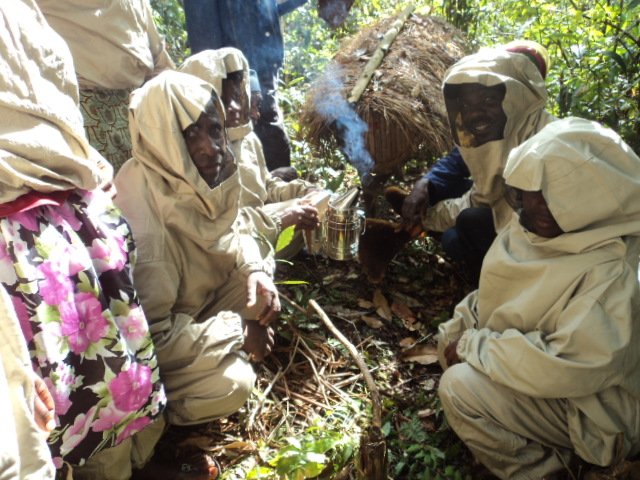
 CAMGEW encourages organic farming by improving on soil fertility with organic matter and encourages household organic waste sorting for use in farms to increase crop yields and also as a means of managing household waste. Agroforestry is another way CAMGEW promotes ecofarming. This was a traditional method used to improve the soil. It promotes integrated organic farming, horticulture (flower, vegetable and fruit farming) and apiculture (bee farming).


To discourage the use of plastic papers which are known to be non-biodegradable and to reduce the aesthetics of our environment, CAMGEW promotes the use of bags and baskets made from locally available materials like bamboo, jute, rattan etc that are biodegradable. These bags and baskets have been used in the past when plastics were not yet common. CAMGEW is building a campaign to see how biodegradable materials could be used for packaging instead of plastics.
The availability and affordability of modern energy is paramount to every development. Many rural areas lack this energy because they are far away from the national grid and also because they cannot afford it. Another, problem faced by Cameroon is the shortage of power due to dependency on one energy source – hydropower that is always affected by droughts brought by the changing climatic.
It promotes decentralised and diverse energy systems like small hyro, solar, wind and biogas systems exploited from the available natural energy sources like river fall, sun, wind and animal waste or plant matter respectively. It also engages in a campaign to reduce dependency on environmentally unfriendly energy sources like fossil fuels.
It takes part in fighting climate change from four key perspectives – mitigation, adaptation, finance and technology as identified in the global Climate Change Conference that took place in Bali, Indonesia in December 2007. During the Bali conference, the UN Secretary General, Ban Ki moon said “no one-rich or poor-can remain immune from the dangers of climate change”.
To achieve all of above, CAMGEW uses media, gatherings, posters, newsletters and organised events like workshops. It therefore, sees creativity and innovations as a way forward to solve the global problems that plague humanity.
These innovations and creative ideas therefore need to be replicated and/or scaled-up to tackle global challenges. It believes that through partnership, networking, research and volunteerism this shared vision for long-term cooperative action among the people of the world to improve on lives and promote sustainable development, can be achieved.
A video showing activities at its vocational training centre in Oku can be seen here:

Centre for Community Regeneration and Development
Centre for Community Regeneration and Development
 (CCREAD-Cameroon) is a youth led development organization established in 2004 and legally registered as a non profit organization in December 2006 with Registration Number: 379/AG/G.42/162/AJPAS under Cameroon Law of 1990 governing non political associations. CCREAD-Cameroon won the 2011-2012 World Bank Development Marketplace Competition on the promotion of good governance, is affiliated to Peace Child International, (UK), MIYC South Korea, an active member of United Network of Young Peacebuilders (Worldwide) and an NGO participant of UN Global Compact. CCREAD-Cameroon is also in Special Consultative Status with UN-ECOSOC
Vision
CCREAD-Cameroon helps to empower marginalised children, youths, women and indigenous populations merged with environmental sustainability through united youth actions.
Mission
Working in response to adopted community driven strategic plans, CCREAD-Cameroon currently has a mission to enhance the social, economic, cultural and political empowerment of children, youths, women and indigenous groups for poverty alleviation, better community organization, improved governance/human rights and environmental conservation and management.
Objectives
The activities implemented by CCREAD-Cameroon are guided by the following objectives:
- Increase the application of good goverance, decentralisation, and democratic practices in hard to reach/marginalized regions.
- Reduce the high incidence of poverty among marginalized women and youths with focus on hard-to-reach forest communities.
- Increase basic education and health facility access for children, women and youths in poor communities.
- Foster peacebuilding and conflict resolution initiatives in selected communities.
- Increase the respect of the rights of children, and women
- Raise environmental sustainability awareness and promote management actions among youths.
Operational area
South West, North West, West and Eastern Regions of Cameroon as core regions.
Activities undertaken
Leadership and peacebuilding training for women and youths. Through this activity, Cameroonian youths in Kupe Muanenguba Division through schools and women were drilled on leadership qualities, peacebuilding and conflict prevention/resolution skills mainstreamed with human resources management abilities/decentralisation education. A total of 4,692 youths and 1,982 women have received training.
Leadership training
Recognizing that corruption remains a key development limiting factor in most sectors in Cameroon, CCREAD-Cameroon has also joined other stakeholders in fighting corruption starting with schools in 2011. A national baseline study on the challenges of corruption and governance was completed and adopted.
A governance Education Manual was developed and 1,200 copies distributed to major stakeholders and 82 school anti corruption campaigns and advocacy forums were organised.
Schools management Boards were instituted and trained to fight and report corruption in schools in the South West Regions.
Governance training and fight against corruption campaigns were organised through youth actions.
Many inter tribal conflicts result from land problems and the marginalization of particular groups. CCREAD-Cameroon has been responding to these problems by organizing communities into groups, educating them and assisting them to start group initiatives for poverty alleviation/solving land conflicts.
Training women and indigenous groups on project planning, fundraising and networking
Started in 2011, this project helps women and youths constituted into development common initiative groups on identifying community problems, documentation, elaboration of micro projects, finding and mobilizing resources, creating relevant partnership monitoring and evaluation/reporting of their result to the general public. CCREAD-Cameroon has organized 12 regional trainings/follow-up workshops reaching 12 groups through 120 group leaders and members in the South West Region of Cameroon
Rise for Nature Programme
This is an integrated environmental sustainability programme which CCREAD-Cameroon launched in 2011 to respond to nature conservation and rural development needs in many hard-to-reach forest communities of Kupe Muanenguba region. Activities were targeted towards forest and wildlife conservation unsustainable practices campaigns, environmental education through schools, climate change and adaptation education, instituting alternative livelihoods activities with indigenous forest communities and advocacy for the respect of the rights to benefits from natural resources. Through campaigns and field actions, 25 communities have been reached, 27 schools covered and 2 regional advocacy forums held by the end of 2012.
In many parts of Cameroon, women still experience violation of their sexual/reproductive rights, cultural and political rights and exclusion from cultural inheritances. By December 2012 CCRead organised 6 regional advocacy and education forums on the rights of women. 30 women leaders were trained on human rights education and counseling and over 2,000 human rights education leaflets were handed to policy and traditional leaders.
Women’ rights activities
 CCREAD-Cameroon has continued the donation of hygiene and sanitation materials (toilets, water, waste management materials and facility management). From 201o-2012, 5 toilets have been constructed for 5 community primary schools, 10 volunteer teachers were sent to teach in schools and 200 water drinking buckets and cups were distributed to school children.
Direct assistance to needy schools in marginalized forest communities
Working to end high mortality rates in rural communities CCREAD has focused on the training of traditional Birth Attendants (TBAs) in rural areas with emphases on communities with no health units. In collaboration with BKFA, CCREAD-Cameroon distributes each month 500 birthing kits to rural women and community centers to help in safe and clean delivery.
Planned projects for the future
- Vocational training for youths and women on ICTs, Tailoring entrepreneurship, and leadership.
- Scaling up of youth leadership and governance training.
- School base peace, human rights, governance and environmental education.
- Start of Rise for Nature Program Phase 3 in 5 communities on environmental sustainability and climate change adaptation.
- Integrated poverty alleviation scheme for women and youths in need.
- Assistance to 10 schools through classroom and toilet constructions.
- Donation of birthing kits to rural women for safe and clean delivery
Team members
 Hilary Ewang Ngide – Executive Director MS.c(Development/Environment, PGC(PPME), BS.c(Geo& planning)
Belinda Menyange – Programs Officer BS.c (Sociology/Anthropology)
Etienne Mponne – Projects officer BS.c (Environmental mgt)
Sylvie E. Epolle – Outreach manager LL.B
Cirus Msumbe Epie – Communications officer B.ED, Dip(Communications)
Ntungwe Remitus – Administrator LLB, Dip in PME
Lucy Etuge – Partnerships BA, Community development
Lyn Tim – Outreach Assist. LLB, Dip HRM
Anna Dressler – Coordinator.

Future in Our Hands Womens Co-operative, Oku
Future In Our Hands Cooperative Oku
 FIOH Oku is a women’s farming cooperative made of over 5 Common Initiative Groups (CIGs) representing over five villages in Oku Subdivision. It was created on the 22nd of September 1999. It encourages the spirit of hard work, cooperation and togetherness in women. It is called a women’s cooperative because 95% of members are women. Her creation was thanks to the interest SHUMAS NGO and Future Our Hands had to empower women and the vulnerable in the Oku community. It has as motto: educate a man, educate an individual; educate a woman to educate a whole nation. This is because of the socio-economic importance of a woman in the purely African village community like Oku. Some of the projects realised by FIOH-Oku:-
- Improving the processing and transformation of corn and cassava through mills and haulers donated by SHUMAS and her partners.
- Offering loans to members at very minimal interest rates through a scheme developed by SHUMAS.
- Through SHUMAS there has been the development of community health infrastructure for the village of Lui.
- Regular production of organic food crops and other natural products for income generation and food security.
- Attending agro-pastoral shows to market their produce.
- Training and practising sustainable and integrated farming and livestock productions methods amongst her members.
- Training and application of agroforestry techniques to her membership.
Oku is located in Bui Division of the North West Region of Cameroon. It is made up of 36 village communities mostly living along the slopes of the Kilum Mountain. The people depend mostly on forest resources, subsistence agriculture, cash crop farming, livestock production and local artisan work for their livelihood. The Kilum Ijim Forest found in the community is a naturally preserved moist montane forest with a surface area of about 20,000 hectares. It is located in the Mount Oku Ridge in the Bamenda Highlands and forms part of the High Plateaus Agro-ecological Zone of Cameroon. The geographic location of the area is latitude 6°07’N – 6°17’N and longitude 10°20’E – 10°25’E. It has very important and threatened Afro-Montane endemic animal and plant species such as Prunus africana amongst others. It is an internationally important biodiversity hotspot and a critical zone for carbon sequestration within the High Plateaus Agro-ecological Zone.
The Kilum area is one of the highly populated locations in Africa and Cameroon in particular, accommodating 144,800 people occupying about 328 km2 (439.3persons/km2); hence, high pressure on resources is inevitable. There has been progressive deforestation and degradation mainly due to agricultural expansion, forest fire and overgrazing. Fuel wood harvesting has also been a major cause of deforestation and forest degradation. The late 1980s decline in coffee prices triggered many farmers to migrate further up the slopes in search of new land to increase income through alternative crops.
Within two years of its formation the activities of the co-operative had a profound positive impact on the lives of the women:
Former situation
- We were scattered and never cared to come together because we did farming far away from our homes because of the eucalyptus trees that were planted around our homes by men.
- We thought that only men had the right to inherit the property of parents. We never attended seminars and training programmes.
- We were shy to express ourselves among men and only played the part of listening.
- Our opportunities for income-generation were very limited.
- We thought HIV/AIDS was a curse from God and an opportunity for white people to sell us condoms.
- We thought that bread and cakes production was the duty of men. We did not know the importance of business – buyam sellam.
- If a woman was illiterate when she married we thought this was the last chance for her to become literate.
- Single parents had to resort to work on farms just to feed the family. They had insufficient income for their children’s education.
- Women believed that only men had the right to determine how many children they should bear.
- Husbands decided which political party their wives should vote for in Elections.
- Only men had the right to erect buildings and got the credit for doing so despite the help of women.
- Men brought in second wives without the consent of the first wife, claiming it is their right.
- Women thought only of their own needs and rarely discussed problems together. We did not engage with women from other villages.
- Widows used to sleep on bare floors in very smokey houses that constituted a breeding ground for germs and diseases.
Current situation
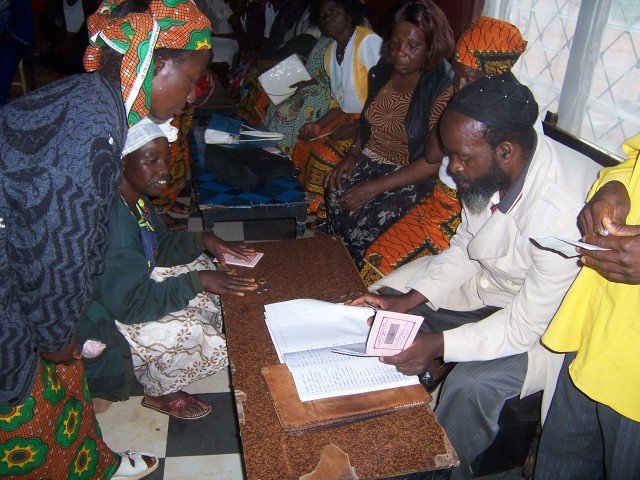
- We now farm around our homes and have enough time to come together. Children now attend school as they do not have to come with us to distant farms. We have gained experience by coming together e.g. joined savings and credit groups with small interest charged on loans. We now have small businesses that help to solve some of our problems like paying for school fees and drugs. We are healthy and do not have to rely on our husbands for money.
- We have attended many seminars organised by SHUMAS and the Diocesan Commission for Justice and Peace, Bishops House, Kumbo, Human Rights agent and the International Federation of Female Lawyers in Cameroon.
- Now we express ourselves freely because of the lectures from SHUMAS and human rights agent who told us that every person is the same before the law and has the right to express his/her views freely.
- We now produce tablet and powder soap and hire a hand cart for transporting items.
- Through seminars we have learned that HIV/AIDS is real. We go out to schools and talk on the rural radio about the dangers and the precautioins that must be taken. There have been significant changes in sexual behaviour as a result.
- We now have our own small bakery and members can take part in bread making and poff poff production. We sell what we make and employ male youths to carry to far distant places by motorbike to sell.
- The eucalyptus replacement project has enabled women to have more time to engage in adult literacy classes. These include married women who were once illiterate.
- FIOH Oku has encouraged single parents to join the co-opertive and learn how to engage in income generating activities. The co-operative has provided them with small loans and they are now able to sell items in the market. Some have been able to send their children to school and have given testimonies on how their lives have improved.
- From the lectures and seminars women became more aware that men and women should jointly agree the number of children they should bear.
- Through the education of the human rights agent and messages from Mike Thomas of the FIOH UK Fund, women now know their rights to vote in their own right.
- Women now realise that they can take the initiative in putting up a building. Our women have bought a plot of land and have erected their own meeting hall.
- Through the co-operative we have taught women the importance of marriage certificates and various types of marriage . If monogamy is the choice then men have no right to bring in a second wife or mistress.
- We now have exchange visits with other womens co-operatives in our network. We exchange ideas and learn from each others experience.
- Now most women, especially FIOH women, do not now sleep in such houses. When their husbands die they sit in a special room with friends who comfort them.
Follow us on Facebook:
www.facebook.com/fiohfund
Follow us on Twitter:
twitter.com/fiohnet
Please share our links with your friends to help us reach a wider audience.
Strategic Humanitarian Services
 Strategic Humanitarian Services (SHUMAS), a Cameroonian Development NGO, after working on its own for sometime, considered possible networking and collaboration with northern NGOs who shared common objectives and methods of approach to development. Between 1997 and 1999, the General Co-ordinator of SHUMAS, Stephen Ndzerem and the President of Plant a Tree in Africa (PATIA)/Co-ordinator of Future in Our Hands Education and Development Fund UK, Mike Thomas, were involved in some intensive correspondence.
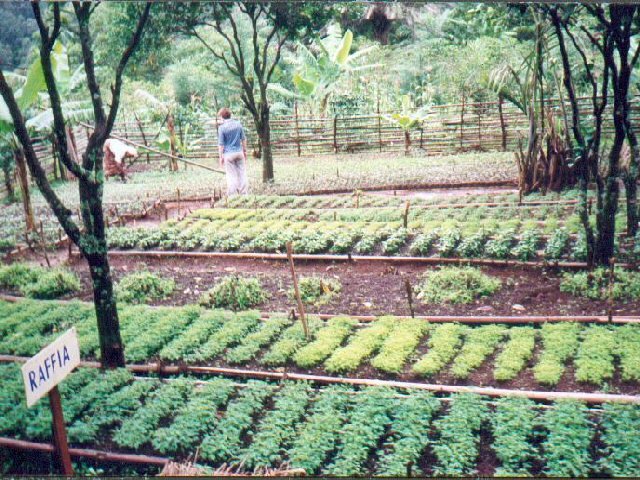 One of the issues they discussed was how to seek a sustainable solution to the adverse effects of eucalyptus plantations on water sources and farming areas. Women were the principal victims.
In 1999 Mike Thomas visited to carry out a site assessment and provided £500 from PATIA (matched by SHUMAS) to establish a nursery for 40,000 tree seedlings (10 species) and fell several thousand eucalyptus.
Because of the encroachment of the trees into existing and potential farming areas, many women have to walk long distances (often 15 miles or more) to find new areas to farm. They will then live in temporary self-made huts for 2 to 4 weeks before returning home with whatever they can carry on their heads. Many will carry babies or take young children with them. People in general, usually women and children, have to walk further and further each year to fetch water. A summary of the project and its outcomes are shown below.
Information gained from the pilot project was used in support of an application to the Big Lottery Fund to fund a large project named the Eucalyptus Replacement Project .
A 10 page brochure summarising the first phase of the project can be seen here:
CAMEROON – EUREP I – BROCHURE
Since then SHUMAS has established partnerships with AidCamps International and Building Schools for Africa both of which have resulted in a comprehensive school building programme involving a partnership between local communities and the schools’ parent teacher associations.
A Buildings Schools for Africa report can be seen here:
BUILDING SCHOOLS FOR AFRICA Newsletter October 2014
SHUMAS is now a well respected organisation in the area and has established many projects, including those summarised below, which have improved the lives of poor people in both urban and rural areas. More details can be seen at the SHUMAS web site:
STRATEGIC HUMANITARIAN SERVICES
SHUMAS integrated organic farming training centre

Another inspirational development has been the establishment of an Organic Farming Training Centre in the NW Region near Kumbo.
Details of the operation of the Centre can be seen in this 34 page report: BIOFARM
Primary health care
A partnership with Spreading Health [Founded by Dr Peter Hearn] is facilitating primary health care training for people in the rural areas. This has included a scheme to sponsor local village candidates to train for three years at the St Louis Higher Institute of Health & Biomedical Sciences in Bamenda (the capital of NW Cameroon).
Womens co-operative network
 During his visit in 1999, SHUMAS gave Mike Thomas an opportunity to present his idea for establishing savings and credit cooperatives to about 300 women. There were some initial setbacks but before 2000 more than five co-operatives had been trained and became fully operational.
By 2014 sixty two autonomous co-operatives all of which have again come under the single umbrella called Future in Our Hands Womens Credit Union Cooperative- Cameroon.
The FIOH co-operatives are quite different from conventional co-operatives. FIOH concentrates on building the capacities of grass roots women through encouraging the spirit of sharing, co-operation and fellowship, rather than on too much external dependency and a quest for individual material gain.
The SHUMAS head office and rehabilitation centre
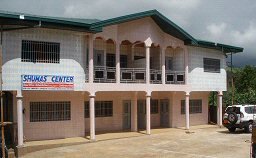 In February 2009 SHUMAS started the construction of an inspirational new building that combined facilities for both staff and vocational training for disabled people. The building was completed later that year. The SHUMAS head office combines facilities for administrative staff with those providing vocational training for disabled people. The object is to provide disabled people with the means to become economically self-reliant and the ability to effectively participate in the development of their communities.
The objectives of the Centre are to:
- Train disabled people in self-reliant skills so that they will be able to carry out economic activities which enhance their self-esteem and enable them to be part of the mainstream of development of their communities.
- Train them in basic management and leadership skills.
- Continuously monitor and evaluate graduates for some years to assess their progress.
- Set up a revolving micro-finance scheme to benefit ex-trainees.
- Advocate for the rights of disabled people.
The Eucalyptus Replacement Project

Project launch
The project was launched in 2000 and was supported by all sections of the community and government authorities and provided the framework for the introduction of new ideas to the women.
The womens network was to play an important role in the day-to-day management of the project which involved the felling of 1,017,200 eucalyptus and the raising of 2,624,000 mainly indigenous African trees (60 species) carried out in two phases between July 2000 and October 2008.
The projects cleared about 463 ha of eucalyptus trees resulting in the recovery of 105 springs and 140 water taps during the dry season. Over 9,000 women who had previously walked long distances to farm and collect water, were able to farm close to their homes.
Statistics in 6 rural health centres and 1 hospital recorded an average 27% reduction in water born disease during the life of the project. It was estimated that an additional 5,153 children were able to go to school because of the increase in family incomes resulting from the projects.
The local authority and many individual farmers copied the example of the project and hence the figures shown above are an underestimate of the project’s impact.

School building and education in Yonibana, Tonkolili District
 Background and problem analysis
Before the advent of the 11 years long civil conflict in Sierra Leone, education was regarded as one of the corner stones of socio-economic development of the country. During this era, the country used to be called the ‘antens of West Africa’ where people along the West African coast came to acquire quality education.
But this situation changed during and after the war when the country experienced massive destruction of the social and educational structures which in turn made its citizens vulnerable and jeopardised the future of children thereby denying their protection right which is education. This has also been compounded by the outbreak of the Ebola Virus disease which denied effective schooling for children during 2014 and most of 2015.
The Rosari Benthee, Fouthernefor, Mayolah, Mayebo and Magbanapoli communities are found in these remote parts of Kunke chiefdom in the Tonkolili District where children trek over four miles to access educational facilities in chiefdom headquarter town (Masingbe) and the neighbouring chiefdoms.
During the rains children reached the schools with their uniform and books soaked and most times returned home without learning.
In addition, most children had to go across streams from their different villages and during the peak of the rainy seasons most streams became over-flooded stopping the children from reaching the school.
Through community initiative and support, in 2008 a three classroom building was constructed with mud and roofed with thatch but leaked profusely during heavy rains. This coupled with poor sanitary conditions (no water well and toilets facilities) made these children prone to health hazards.
This school, with a population of 110 pupils, was supported by community voluntary teachers with limited sitting accommodation, teaching and learning materials hence making learning difficult for these children in classes 1, 2 & 3.
However, this classroom building could not accommodate the increased population of children. With the growth of the school to classes 4,5 & 6, there was a need to provide basic educational facilities for these disadvantaged children as the facilities used were not educationally productive.
It is against this backdrop the Rosarr Primary Education project was designed to provide a conducive learning environment for 200 children drawn from five village communities in the Kunike Chiefdom in the Tonkolili District.
Objectives
- To construct a 3-classroom building with a staff room and store
- To construct a hand pump water well in the school compound
- To construct a 4-apartment VIP toilet
- To furnish building with desks, benches, chairs, chalk, exercise books, pens, pencils and rulers.
This project is one of several school building projects partly funded by the FIOH Fund. During 2014/15 the FIOH Fund provided grants of £5,040 for a school building programme in the district with the generous support of Georg Hansen from Norway.


If you would like to support the work of the FIOH Fund please make a DONATION:
Follow us on Facebook:
www.facebook.com/fiohfund
Follow us on Twitter:
twitter.com/fiohnet
Please share our links with your friends to help us reach a wider audience.
Future in Our Hands Sierra Leone
 Future in Our Hands Sierra Leone
Background
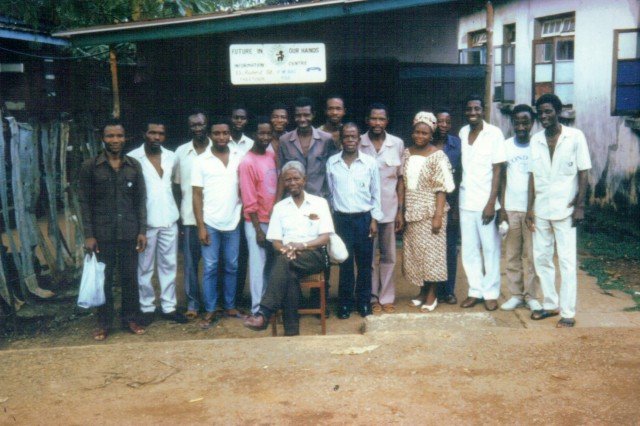 An FIOH group was established by Olatunde Johnson in Freetown in the 1980s and registered as a national non-government organisation by Edward Kargbo in 1995. The first interest in FIOH arose from an article in the New Internationalist and the second from a seminar at Port Loko when Mike Thomas paid a second visit to the country in 1993. Edward, who attended the seminar, formed an association of 13 farmers groups which was then named the FIOH Farmers Union. The name was later changed to FIOH Sierra Leone.
Edward Kargbo testimony: EDWARD TESTIMONY
Mission Statement
The Mission of FIOH Sierra Leone is to co-ordinate and facilitate the efforts of village development groups by enabling them to access farming inputs, modern farming techniques, education and skills poverty alleviation programmes, sanitation and credit facilities for self-sustainability and self reliance.
Programme interventions – capacity building, food security, women and youth empowerment, environment, health and sanitation, advocacy.
Brief History Of The Organisation:
 The Future In Our Hands Sierra Leone (FIOH-SL) is an indigenous non-governmental organization with a Head Office in Makeni (Bombali district) and sub-offices in Kabala town (Koinadugu District) and Mile 91 (Tonkolili District). It was established in 1993 as an offshoot of what was formally the Yoni Farmers’ Union. In 1994, as the situation in Sierra Leone deteriorated, the membership decided that FIOH had a vital role to play in providing assistance to those affected by the escalating conflict. The main focus of the organization during the rebel war was to complement the emergency and relief work of the Government of Sierra Leone, as well as that of international and national NGOs.

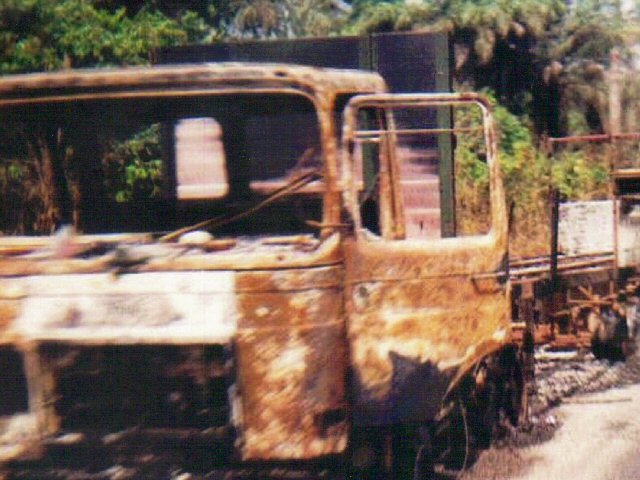
During and immediately after the war, FIOH worked in collaboration with CARE International, Department for International Development (DFID) UK, Voluntary Service Overseas (VSO) UK and the World Food Programme (WFP) UN, distributing food and other relief items to internally displaced persons in their operational areas. Further activities included providing psychosocial support to affected communities and raising awareness on human rights, HIV and AIDS prevention and control.


Edward Kargbo and his family surviving in the bush
Youth group in Freetown
Displaced people queuing for food at Mile 91
FIOH vocational training centre at Mile 91
Following the end of the conflict in 2002, FIOH shifted its focus from emergency relief to development which involved building the capacity of communities for self reliance. It has continued to build partnerships and linkages with a variety of local and international organizations and has implemented two projects (Conservation Agriculture Project (CAP) and Villages Savings and Loans (VS&L) project with CARE-SL in Koinadugu District whilst the Voluntary Services Overseas (VSO) has provided the human resource support. In addition, the FIOH Fund-UK and UN/WFP supported Life Skills Trainings and Community Asset Creation for marginalized youths and communities.
FIOH-SL also enjoys strong links with community based organisations (CBOs) at grassroots level aimed at building their capacities to better serve their communities.
Food for work
 During 2003 FIOH Sierra Leone was able to increase its operational area to include 3 chiefdoms (Kissy Tongi, Njaluahun and Dea) in the Kailahun District and two chiefdoms (Kalansogoia and Sambaia Benduga) in the Tonkolili District.
In August 2012, FIOH Norway member, Nini Haeggernes, visited Sierra Leone and was made aware of the work of Edward Kargbo by Mike Thomas. Subsequent to her visit she wrote an article which appeared in the FIOH Norway magazine, Folkevette: FOLKEVETT-FIOH SIERRA LEONE
Norwegian, Georg Hansen, read this article and decided to visit the country and see the the work of FIOH Sierra Leone. He has raised a considerable sum of money to support a school building programme and has contributed funds to address the ebola crisis in 2015.
Future in Our Hands Sierra Leone
37 Lunsar Road
Makeni City
Northern Region
Sierra Leone
Health, Education, Awareness, Rehabilitation and Treatment Society, India
 Background

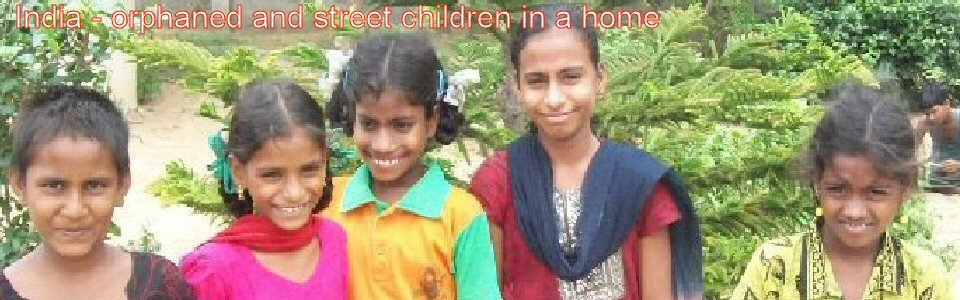
HEARTS is an indigenous registered charitable organisation established by a group of committed citizens from various fields with a strong desire to uplift abandoned, runaway and destitute children.
Despite the UN Convention on Child Rights and various policies of member countries and their Acts, the problem of street children looms large, worsening day by day. Street children congregate mostly at railway stations and bus terminals where they have a place of shelter and can beg for their livelihood. Also children prefer railway stations where free travel is possible.
Railway platform children in India have made railway stations their home, a place of living, eating and sleeping.
They live in a situation where there is no protection, supervision or direction from responsible adults. The main reasons these children leave their homes include poverty, lack of love, alcoholic parents and family disputes.
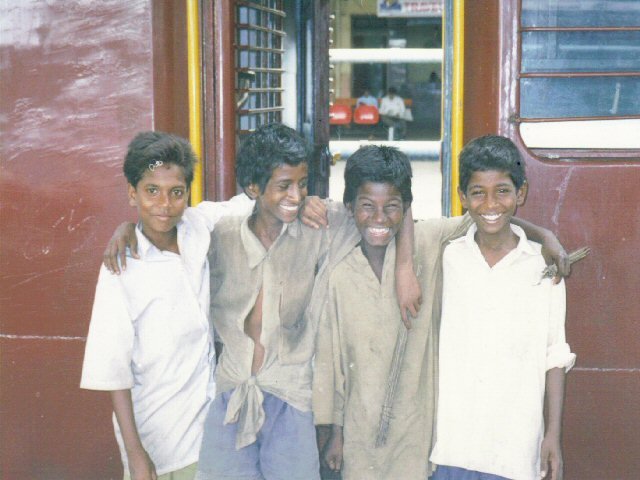
The main problems they face as street children are lack of food, shelter, harassment from antisocial elements, police, drug abuse, etc. Hence it is essential to rescue these children who are in the utmost danger. They have no access to education and information to help them grow as normal, healthy and happy children. Begging is their first occupation for survival. In addition to struggling for food, street children are not bothered about dress, health care, washing, bathing, etc. Because of their lifestyle they have a very poor health condition. There is no one to care for them in times of emergency or illness. They have no savings to pay for medicines and doctors fees. When injured they leave wounds unattended. Thus they learn to live with diseases.
Children who left home for relief might in fact face abuse, harassment, exploitation and deprivation. They often undergo oppression from officials or older boys and their behaviour often becomes submissive. With such abnormal situations their lives are slowly destroyed.
The experience of this boy, Tangavelue, illustrates the severe problems that street children face. This boy was beaten by a ticket collector when he tried to enter a train carriage. HEARTS director, Mohan Rao made a complaint to the station inspector and sought to trace the offending person.
The next day a sub-inspector from the Railway Police brought 11 children to HEARTS requesting that they be taken care of by the organisation. HEARTS is now working in close association with this official to help children who arrive at Guntur station.
Objectives
- To reach out to street children found begging and living on the railway stations in and around Guntur City, Andhra Pradesh
- To provide need based services for their growth and development.
- To offer facilities for literacy, numeracy and life education.
- To arrange facilities for vocational training for better living.
- To improve the children’s self respect, self confidence, voting opportunities and dignity through the provision of love, care, concern and friendship.
- Health care
- Nutrition
- Formal and non-formal education
- Vocational training
- Counselling
- Recreation
- Outings and camps
- Referral services
- Services for saving
 A terrible accident occured at midnight on 23rd September 2002 in Guntur railway station. Chandu, a 12 year old boy, fell from a moving train and lost his right hand and seriously damaged his right leg. He was taken to hospital by some of the other street children and HEARTS staff were informed of the accident. HEARTS immediately took steps to arrange blood and medicines for him.
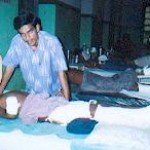 He was operated on and put in plasters for several days. His mother was then called to stay with him. He is seen here with HEARTS director, Mohan Rao Dasari.
Initially HEARTS operated from lock-up garages situated near the Guntur railway station, but now has a home for street children and orphans with better facilities for education and accommodation.

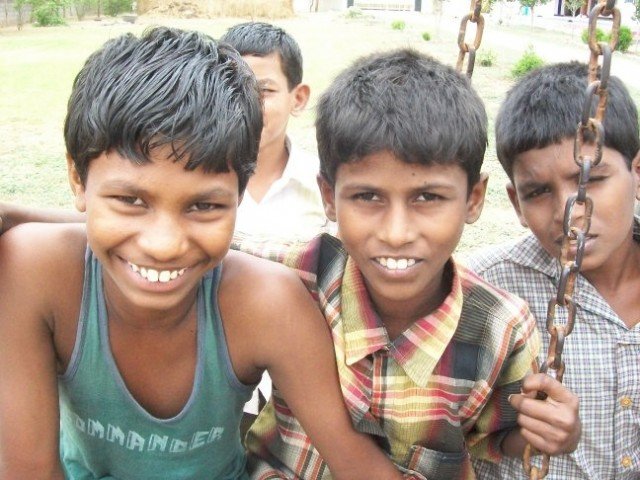
HEARTS has also assisted with:
Tsunami relief in Andhra Pradesh in December 2004
Cyclone relief in Andhra Pradesh in November 2013

New Hope Rural Leprosy Trust
 Background

Probably the best way of introducing the work of New Hope is to recount some of the early experiences of the founder of the Trust, Eliazar Rose, in the introduction to his book “The Ring of Capital L”:
 I was in a leprosy colony taking skin biopsies when one day a woman came in and sat on the broken step of the small temple which a local businessman had built. He had in fact encroached on a piece of Government land allocated to the colony.
The land was barren and stony – wasteland except for one corner of approximately one acre. That piece was almost prime rice land as it had a small spring fed irrigation canal at one point. The businessman owned the adjoining land and simply encroached on the piece that would at least have given the patients a few bags of rice. The temple was an appeasement to the colony to get them to back off with their constant appeal to the local government land revenue officer. The temple of course was built with sun baked mud bricks bonded with a mortar with very little cement. The building, not surprisingly, started crumbling with the first monsoon rains.
Jokingly I told her not to sit on the cracked step as the wall behind her might collapse and fall on her. She asked if that happened would she be killed?
I didn’t answer.
Her story was simple. She had leprosy for many years, taken treatment and stayed in her home because her husband was the village leader. He believed it was his responsibility to care for her against the social norms of the time.
He died and the village turned her out with the threat that, if she didn’t go, they would burn her house down.
She left alone and her married family stayed behind in the village.
In the same colony a year later a woman came in while we were distributing rations. It was mid summer and simply too hot for the old people to go begging. This was long before we started a programme of custodial care by having people sponsor the aged.
At the end of the long queue an argument started. I stopped helping the two paramedics weighing out rice to see what had happened.
The argument was about this woman who had been in the colony for a couple of weeks and was not on our register. The elders of the colony had said that she couldn’t get a ration because they feared that one extra would mean a fraction less for them.
Life in a leprosy colony is tough – Life in India for the poor is tough.
She argued that she had a piece of paper like them. Everyone had been issued with a ration medical card. She did have a piece of paper. It was a hand-written notice certifying that her husband had divorced her because she had contracted leprosy.
In the same year I watched from a small first aid post we had constructed in a colony as a bullock cart wandered slowly down the dusty track in the middle of the afternoon. The wind was hot and it had been a long day dressing ulcers. I wasn’t really in a good mood.
The cart creaked to a halt and a woman slipped off the back and squatted on the ground. Three men climbed down and came over. They announced they had decided to send her away as she had leprosy. They of course said they were doing a kind deed bringing her to a colony instead of simply sending her away with nothing.
One man was her husband, another was her eldest son and the third was from the lowest caste in the village. It had been his job to help her climb onto the cart.
They nodded when I asked if the ‘well conditioned bullocks and cart were theirs. They smiled with pride.
Something cracked inside me. I had the colony men drive the three of them out of the colony without their bullocks and cart.
They went to the local police station and tried to register a case. A lone constable came to the colony, or should I say as near as he dared; to the path leading to the colony. I told him that indeed the colony did have a cart and two good bullocks and that two men had come into the colony and tried to steal them. Did he want to come into the colony and verify it all?
The police inspector saw me in town that night and stopped me. We made a deal that the cart and bullocks should be sold within three days and that I should report that there were certainly no bullocks or cart in the colony.
The proceeds built the outcast woman a small mud-walled hut with a grass roof. Majji lived there in the colony for almost twelve years. She died in 1996.
I don’t know how often she smiled, but whenever I visited the colony she would nod and smile as I passed her hut.
It was during this time that I was employed to visit 13 leprosy colonies to see more than 2,500 patients on a monthly basis. Things seemed to happen when I was in the colony. I know these experiences have influenced the policy of our Trust to adopt an ‘open door’ approach.
One cold winter’s morning I cycled from the town where I stayed to five surrounding leprosy colonies.
The turn into one colony was at a junction on the highway. There was a tea shop on the corner where I went each month. The owner asked me where it was that I went when I visited. I told him ‘To the leprosy colony down the road’. He did not smile.
After that, whenever I stopped he would take a cup down from the top shelf and wash it out with hot water before pouring my tea. When I had finished he would pour hot water over the cup and place it back on the top of the cupboard.
The fear associated with leprosy is not something that is described in words, but rather by the actions, of others.
One month later I arrived at Jigabur leprosy colony. I was late because the monsoon rains had caused a river to flood. Thirteen houses in a small colony on the bank had been washed away when an embankment upstream had broken.
We got no sympathy from the local government flood relief officer. He considered it a blessing that the houses and people had been washed away in the night as it meant they were no longer ‘polluting the river’.
I didn’t know what to say when a new patient appeared before me for an ulcer dressing. I asked her name. She began to cry. She had been warned by her family never to mention her name even when they forced her to leave their home and village.
She showed me a two rupee note her husband had given to her. He gave it to her with the advice that the best thing she could do with the money was to buy rat poison for herself.
I am not very fond of speaking at service clubs in India. I have the feeling they are out of touch with the social fabric of our society. A few times I have not been able to come up with excuses quickly enough and have felt obliged to attend.
At one such meeting (it certainly wasn’t at a Rotary Club), a member asked if I could please visit his home the next day. I knew by the way he spoke there was ‘leprosy in the house’.
His brother’s wife was in what I will simply describe as border line leprosy trauma. She was pregnant with her third child. The husband was a lawyer and the brother, incredibly as it seems, was a doctor.
Money was not the problem. Their request was simple – could I find a place in one of ‘those places’ where ‘they’ lived and build her a ‘nice place’. The end of this story is too sad for me to write about, even after 15 years.
It is my belief that if we can change the attitude of people in India towards this now curable disease, we can make other social changes.
If we can change the attitude to a disease whose name strikes terror just by its utterance, then getting other social changes will be easy. This policy, this belief, is happening in areas where we work.
Nowadays we see fewer and fewer people being turned away from their families, their homes and their villages because of the stigma associated with leprosy.
Some people allege that young people become leprosy paramedics simply because they can’t get a job elsewhere, or because it pays reasonably well (at least today it does).
I disagree, because you need to have a heart in the right place, you have to have a depth of compassion and courage, to write LEPROSY PARAMEDICAL on papers, that goes far beyond the negative comments that some people still make.
Although New Hope was established originally to help those suffering from leprosy, its work has expanded to include tribal people in general, street children and victims of ‘natural’ disasters.
Since its foundation New Hope has carried out health inspections on over one million people in western Orissa. Over 6,000 people have been identified with leprosy and most have received treatment. Over 5,000 have been cured.
In addition to the hospital, the only one of its kind in western Orissa, the Centre accommodates:-
· a hostel for children with physical and mental disabilities (mainly polio) –
· calliper and shoe making units
· administrative block, and staff and patient accommodation
· accommodation for visitors, surgeons and students
· a weaving unit
· a shop for the use of patients
· laboratory
· vegetable gardens for patients
· occupational therapy unit
· savings and credit facility
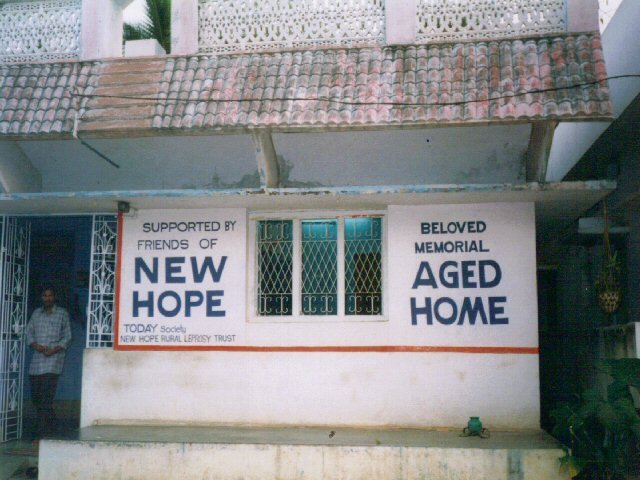
New Hope also has homes for old people, disabled children and for street children.



Leprosy Colonies
In the leprosy colonies it serves, New Hope treats 2,500 patients on a monthly basis and has extended its work to the 76 villages of a remote hilly and forested tribal area named Raghubari.
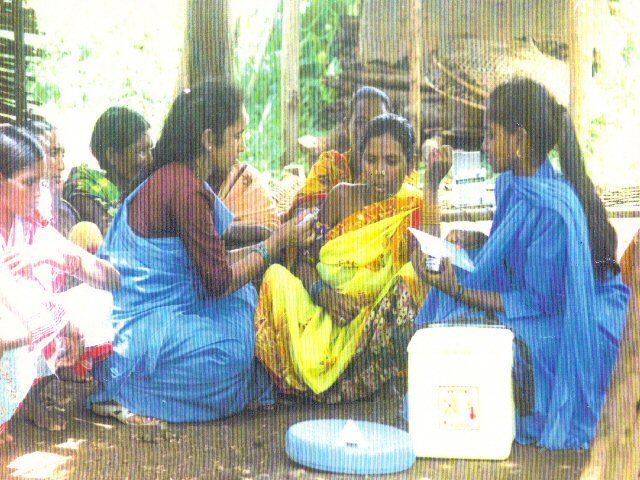
In all its areas of operation New Hope provides anti-tetanus and polio immunisation, iron and folic acid supplements and safe delivery kits for pregnant women.
Street children
Street children are a manifestation of societal malfunctioning and an economic and social order that does not take timely preventive action. Today, street children command a great deal of attention because of their sheer numbers and high visibility. Street children are found in large numbers in all Indian cities. They are forced onto the streets because they cannot cope with their family situation. A street child is forced to be an adult at an early age. He/she has to struggle for survival and earn an income for day-to-day living. By running away from their families, these children are making a major decision and even displaying their anger towards their irresponsible parents.
The need for systematically observing and deeply understanding the behaviour of street children must be emphasized. These children are not substandard ignorant kids. They have acquired the valuable knowledge, attitudes, emotions, abilities and skills that are necessary for their survival on the street. Though self-esteem is the answer to all childhood problems, street children have a weakly developed identity. This identity is derived from their interactions with their peers on the street and with adults who often abuse or deceive them, instilling in them fear or rejection.

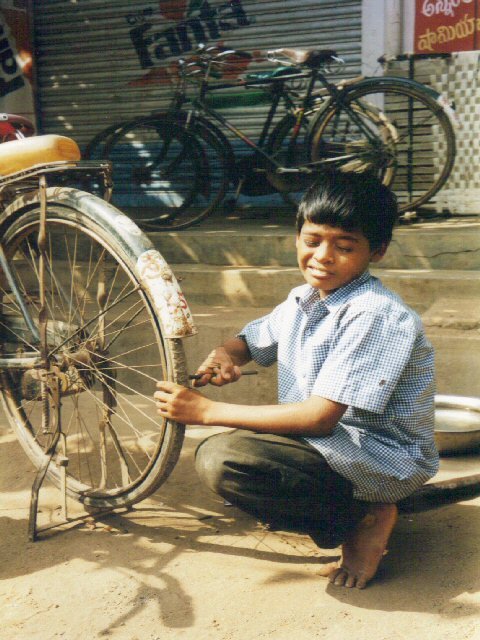

Although each child has a different story to tell, most of them have irresponsible parents and experience poverty and marginalisation. Parents are models, whether they want it or not. It is in the give and take of the parent-child and other relationships that the child finds a sense of security and self-esteem and the ability to deal with complex inner problems. But in the context of street children, the parents’ behaviour is often so cruel that the child makes a heroic decision to walk out on them into urban uncertainty. Poverty often overwhelms and infuriates the child rummaging through a garbage bin for discarded food. Ironically, food becomes an escape for street children. Their ravenous appetite and the fear of hunger compel them to eat every scrap they can get their hands on. Thus the street children have a combination of different characteristics. In varying proportions they can be emotionally vulnerable, physically resilient, naïve, wary and street-smart.
In spite of the increasing visibility of India’s ‘overall’ development on the international scene, the ‘inner contribution’ has been that the enrichment of a few is accompanied by the marginalisation or exclusion of millions of others. The real issue is that development continues to benefit some people, while many others are left out and pushed out. The phenomenon of street children has its roots not just in what meets the eye (poverty, family problems, etc.) but also in this whole gamut of development itself.
Child labour
Working children are everywhere but invisible, toiling as domestic servants in homes, labouring behind the walls of workshops or hotels or on hidden from view plantations. Millions of children who work as domestic servants and in unpaid household help are especially vulnerable to exploitation and abuse. Millions of others work under horrible circumstances. Child labour is a pervasive problem throughout the world, especially in developing countries. It is prevalent in rural areas where the capacity to enforce minimum age requirements for schooling and work is lacking. Children work for a variety of reasons, the most important being poverty and the induced pressure upon them to escape from this plight. Though children are not well paid, they still serve as major contributors to family income. Working children are the objects of extreme exploitation in terms of toiling for long hours for minimal pay. Their work conditions are especially severe, often not providing the stimulation for proper physical and mental development. Many of these children endure lives of pure deprivation.
Despite restrictions on child labour, children do work. This vulnerable state leaves them prone to exploitation. The International Labour Office reports that children work the longest hours and are the worst paid of all labourers. They endure work conditions which include health hazards and abuse. Employers take advantage of the docility of the children, recognizing that these small ones cannot legally form unions to change their condition. Such manipulation stifles their development. Deprived of the simple joys of childhood, these children are relegated to a life of drudgery.
However, abolishing child labour has its own limitations. First, there is no international agreement defining child labour. Countries not only have different minimum age work restrictions, but also have varying regulations based on the type of labour. This makes the limits of child labour ambiguous. Most would agree that a six-year-old is too young to work, but whether the same can be said about a twelve-year-old is debatable. Until there is global agreement which can isolate cases of child labour, it will be very hard to abolish.
Child labour is a significant problem in India. The major determinate of child labour is poverty. Even though children are paid less than adults, whatever income they earn is of benefit to poor families. Some parents are of the opinion that formal education is not beneficial and hence children learn work skills through labour at a young age. Another determinate is access to education in some areas. Education is not affordable, or is found to be inadequate. With no other alternative, children spend their time working.
Child labour can’t be eliminated by focusing on one determinant, be it education or brute enforcement of child labour laws. National and state Government must ensure that the needs of the poor are fulfilled before attacking child labour. If poverty is addressed, the need for child labour will automatically diminish. Children are growing up illiterate because they have been working and not attending school. A cycle of poverty is formed and the need for child labour is reborn after every generation.
If you would like to support the work of the New Hope Rural Leprosy Trust this can be done through its sister organisation in the UK: The New Hope Rural Community Trust.
