Emergency response provided by FIOH to disastrous fire
How did FIOH respond to disaster relief, fire in Sierra Leone with our network partner Youth Leading the World.
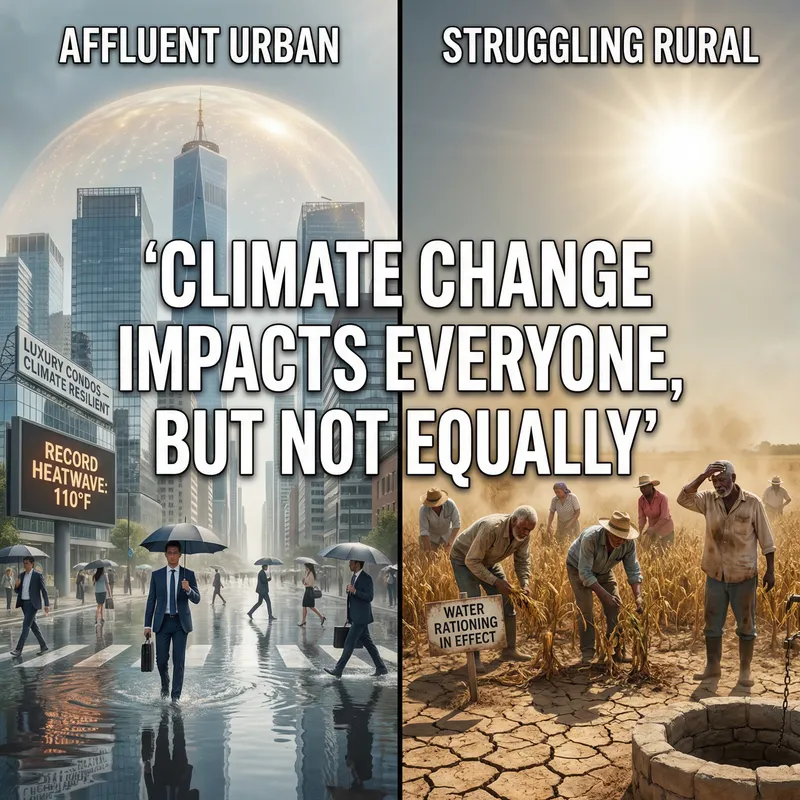
The unreported world as climate induced extreme dry season has devastating impact
I am writing to you today with a very heavy heart. Today, I went to our mother’s village, and what I witnessed there has left me in tears. We all know how harsh the dry season can be, with the sun beating down and the heat becoming almost unbearable—but today, that heat turned into a nightmare.
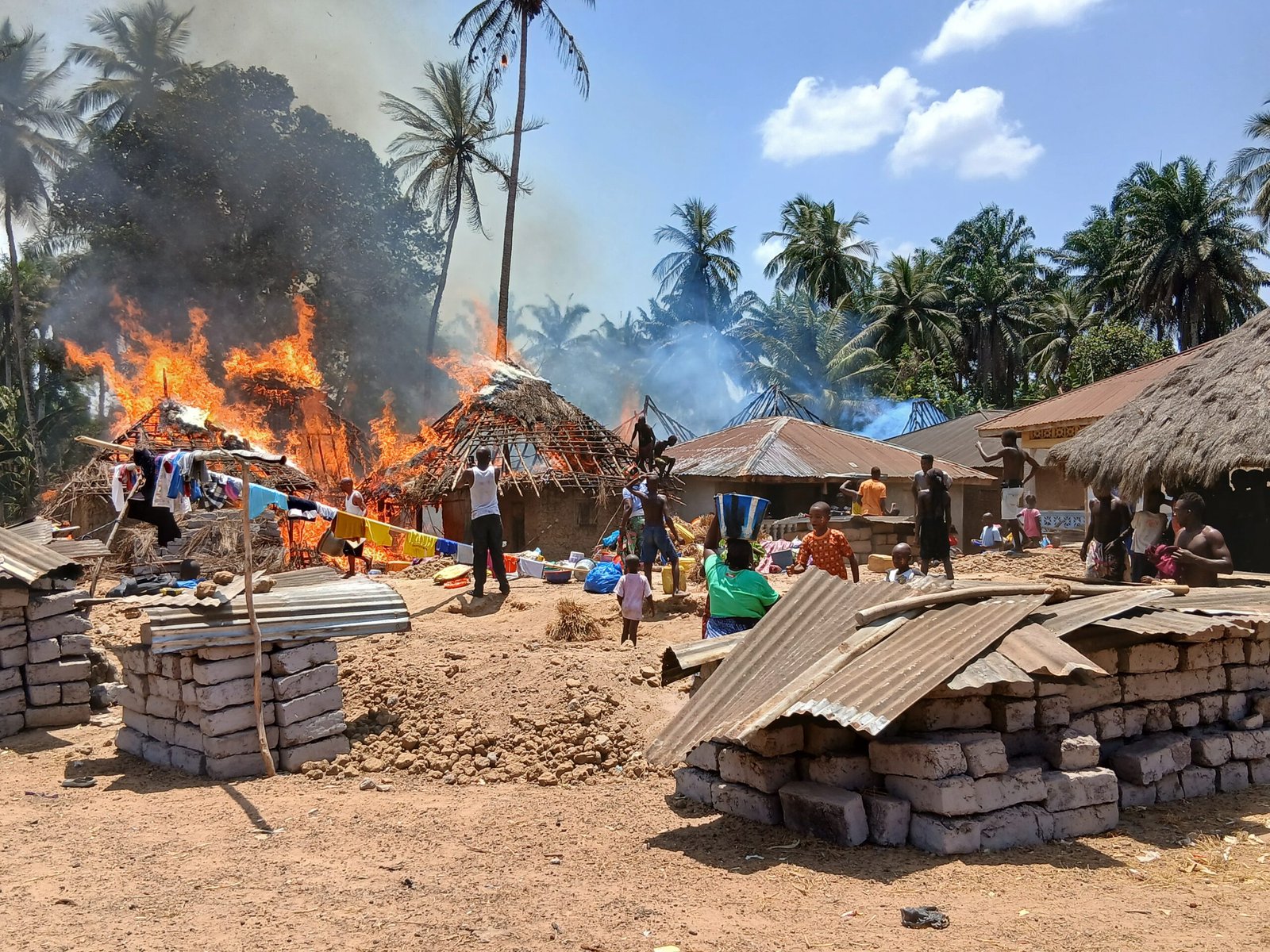
As we were gathered for a settlement meeting between two villages, the peace was suddenly shattered. We heard shouting and screaming from the back. When we ran toward the noise, the sight was terrible: houses were already being swallowed up by fire.
In the village, our people work so hard. You know how they plant and harvest their rice with such care. They eat what they need and then, with such hope for the future, they store the rest high up in the ceilings of their homes to keep it safe for the months ahead. It is their life savings, their only security.
Today, that security turned to ash.
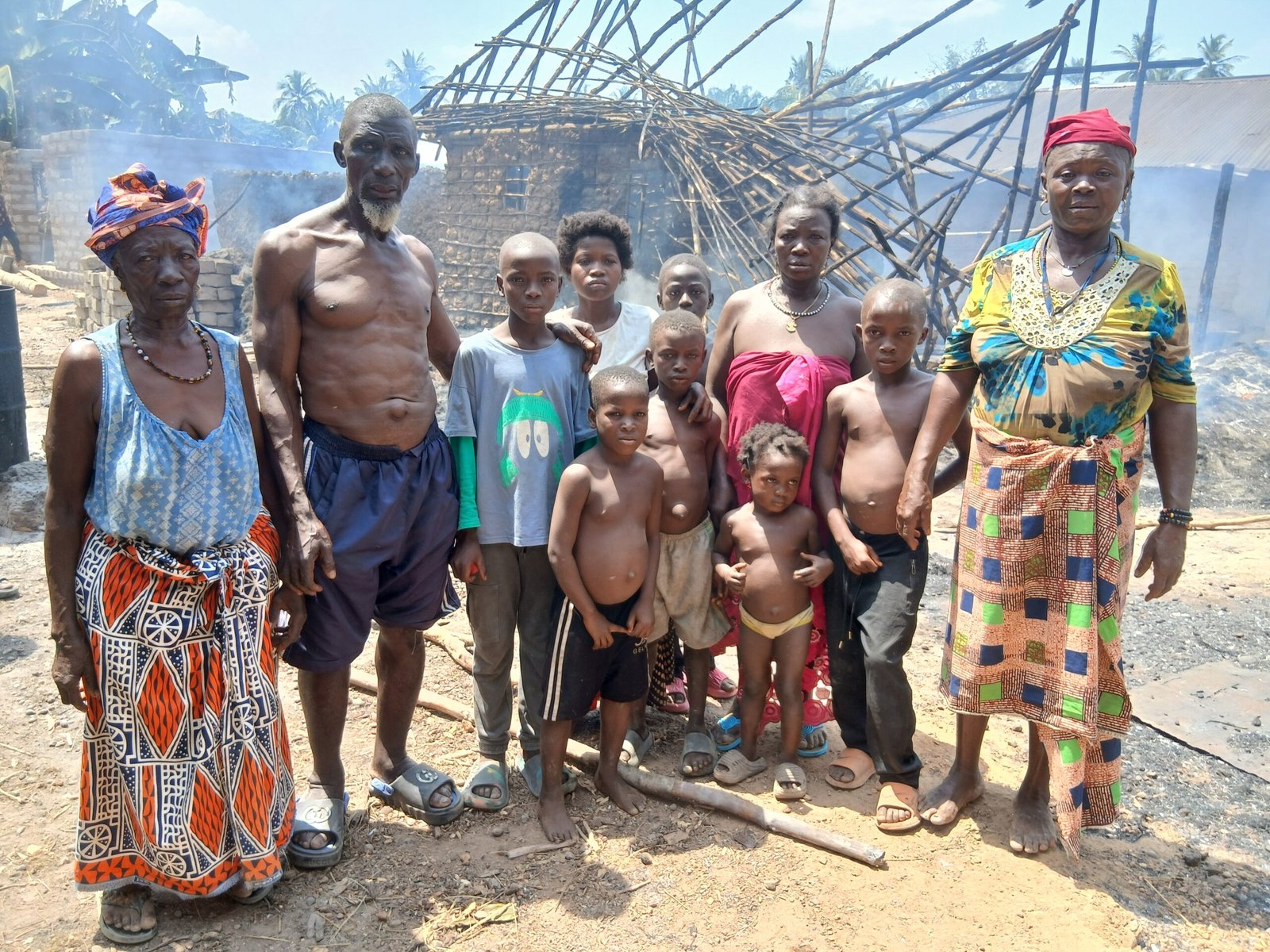
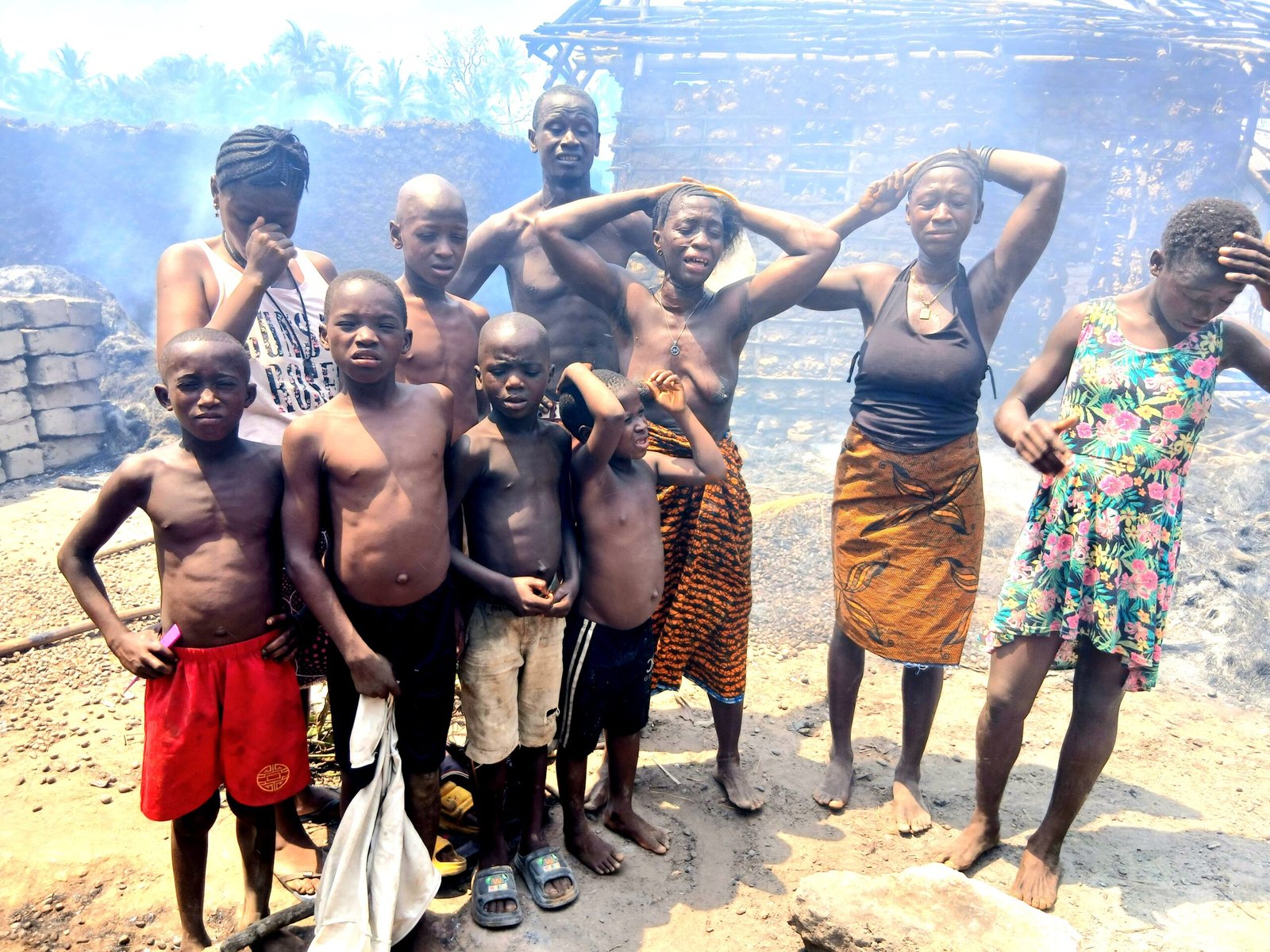
I stood there and watched as six homes and then a seventh were completely destroyed.
The villagers fought the flames with everything they had, but the fire was too fast. I saw the very rice they had reserved for their children’s meals falling from the burning roofs, blackened and ruined.
Everything—their clothes, their properties, their shelter—is gone.
As I walked through the scene, taking pictures and talking to the families, I couldn’t stop the tears from falling. These people are now homeless and helpless, and the food they counted on to last for months has vanished in a single afternoon.
I am stepping forward as a humanitarian to coordinate help for them. I have documented the damage and the households affected, but the need is far greater than what one person can do alone.
I am pleading with you, on behalf of YLTW SL, that whatever little support you can provide whether it is for food, clothing, or helping them get materials to start rebuilding their roofs would be a blessing beyond measure.
Even the smallest contribution will help a family find their footing again after losing everything.
Please, let us come to their aid in this darkest hour
With love and hope,
Alpha Mohamed Kargbo
Three of the affected extended families
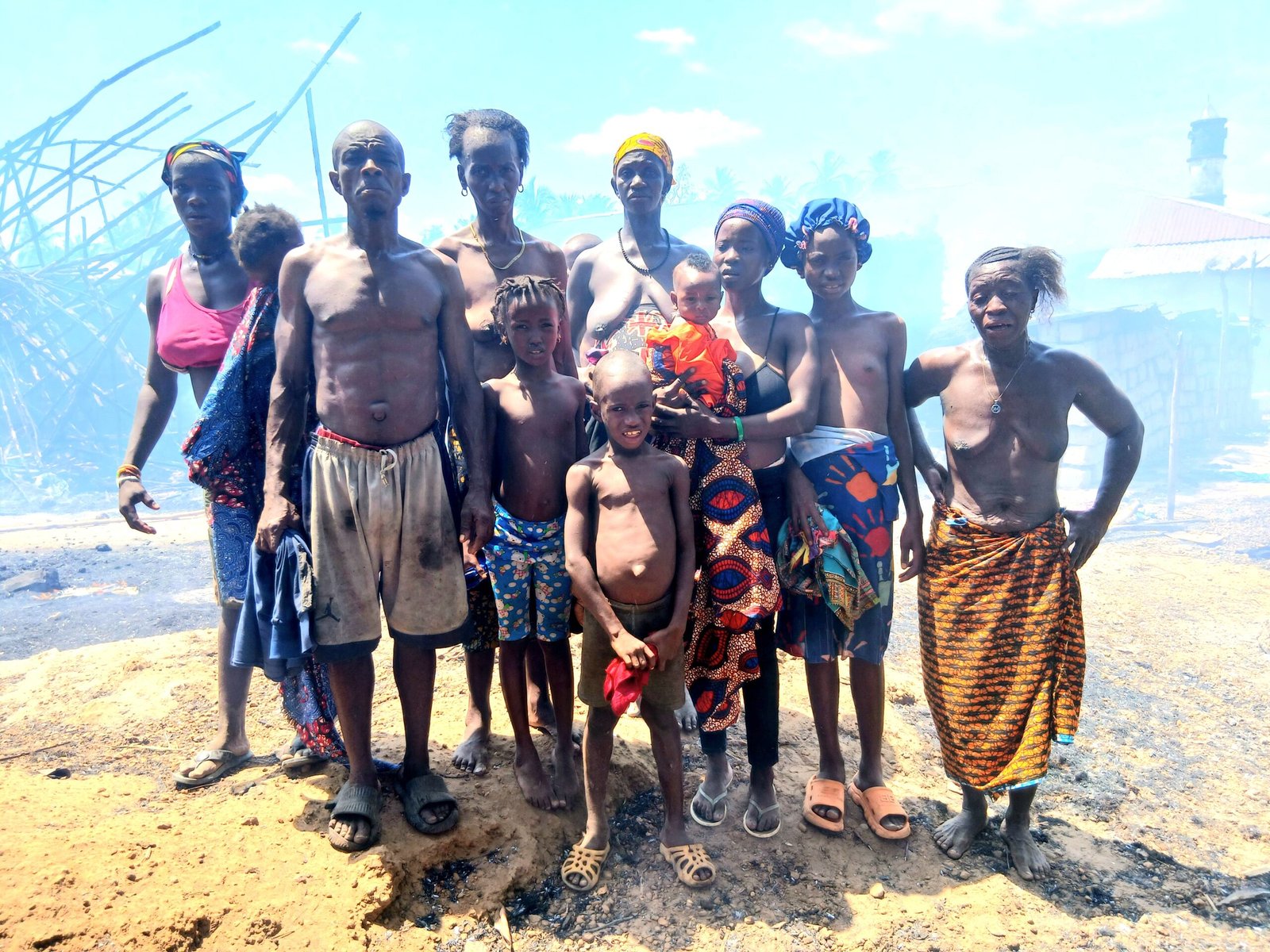
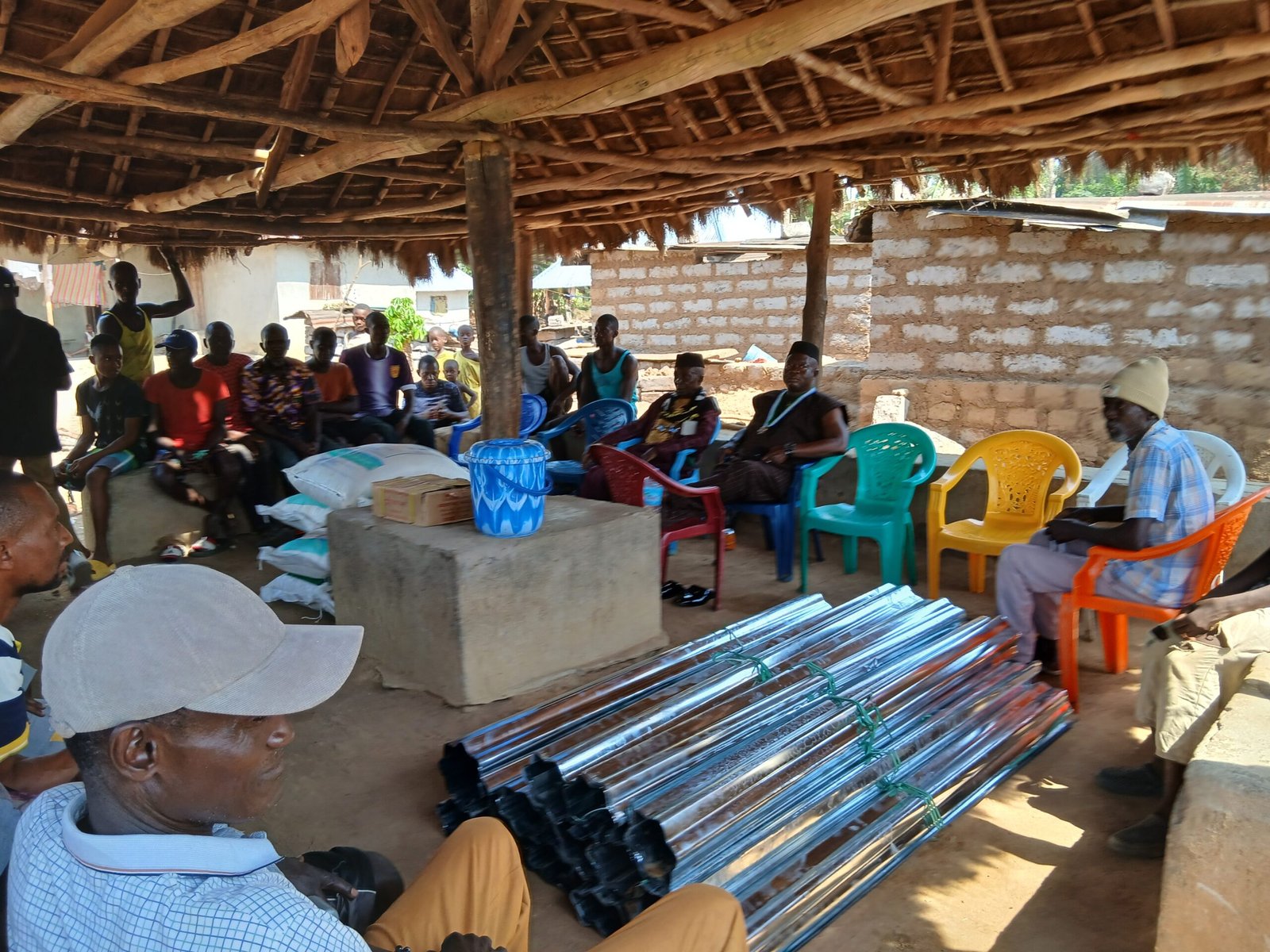
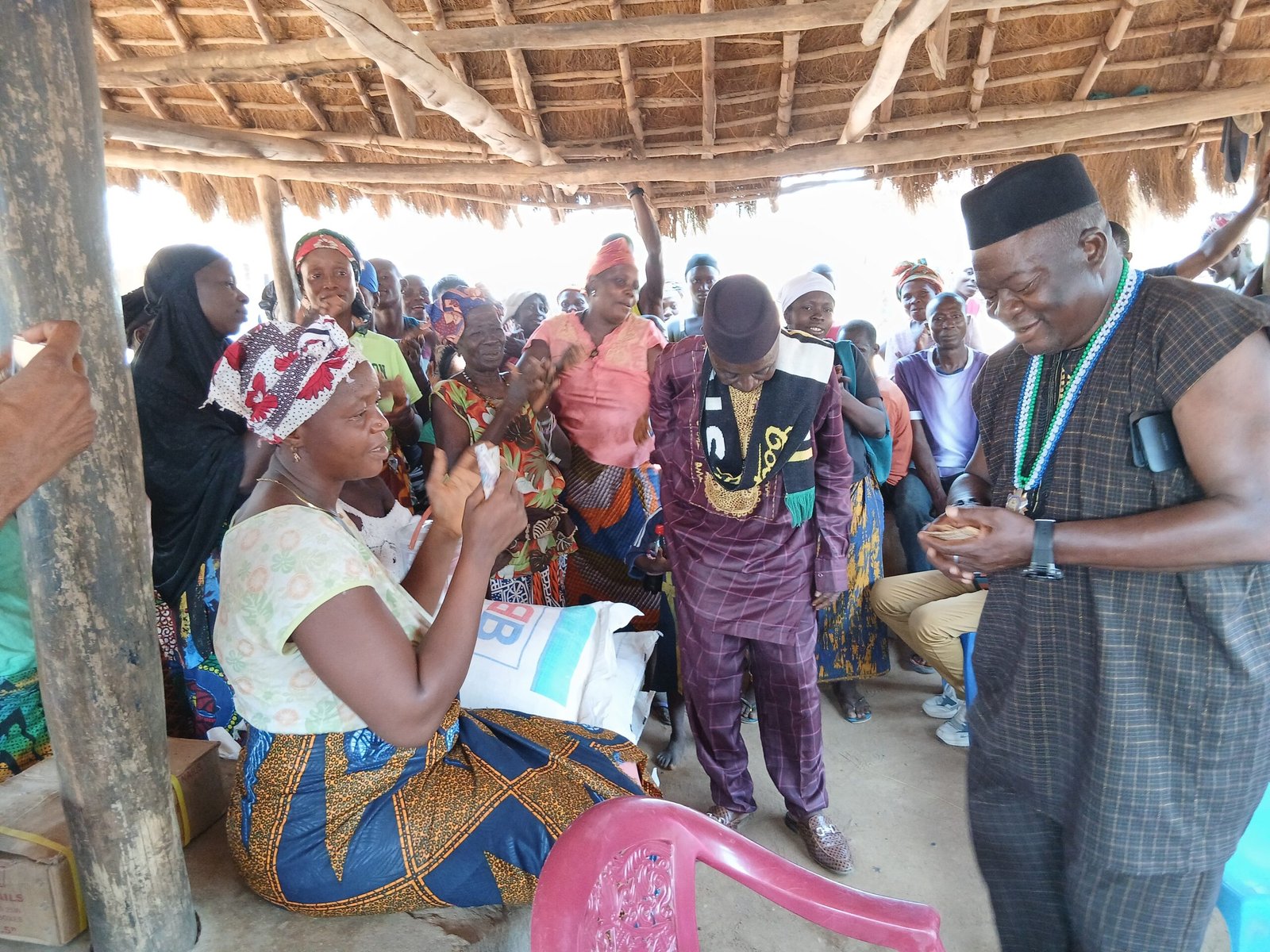
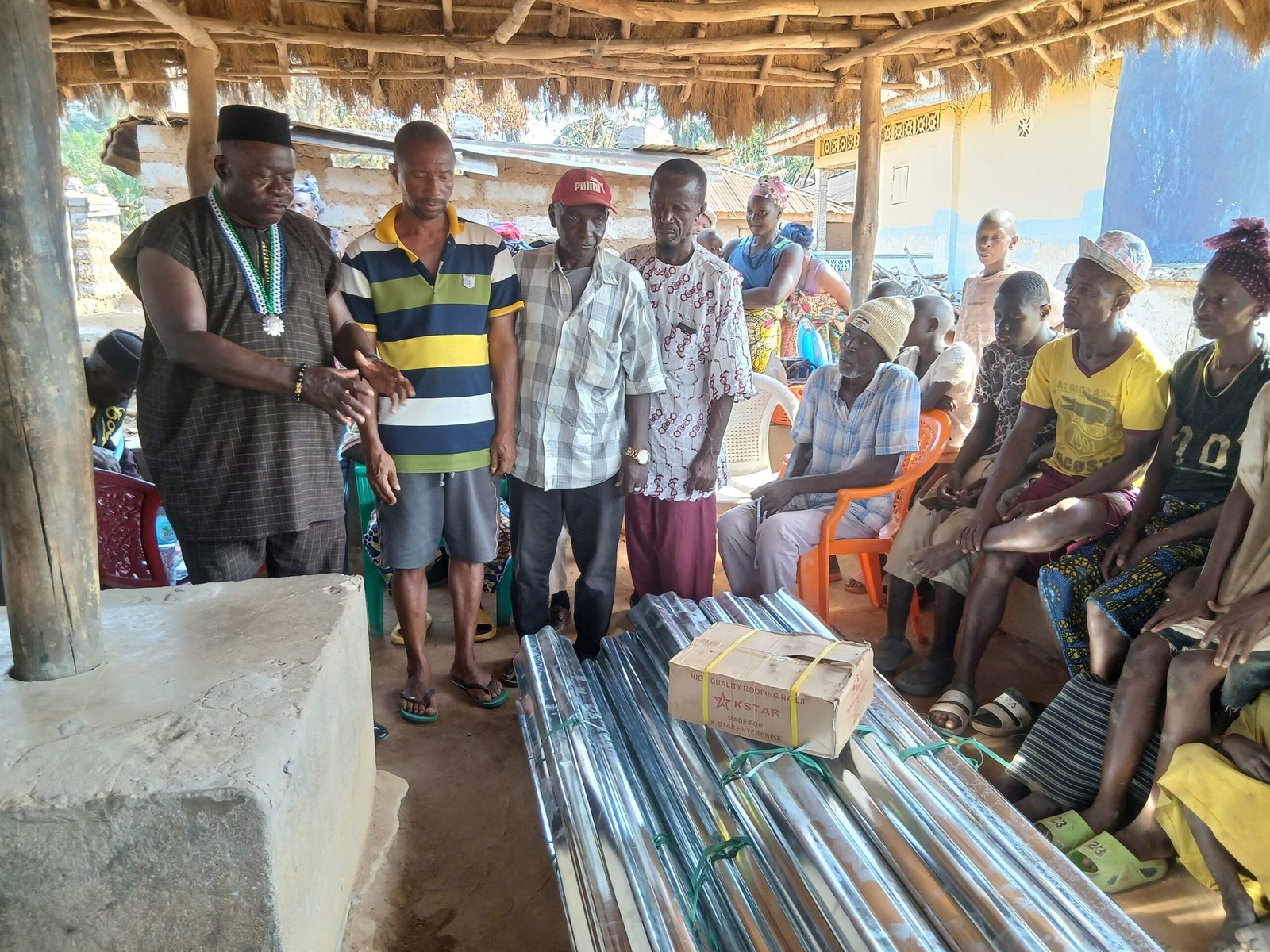
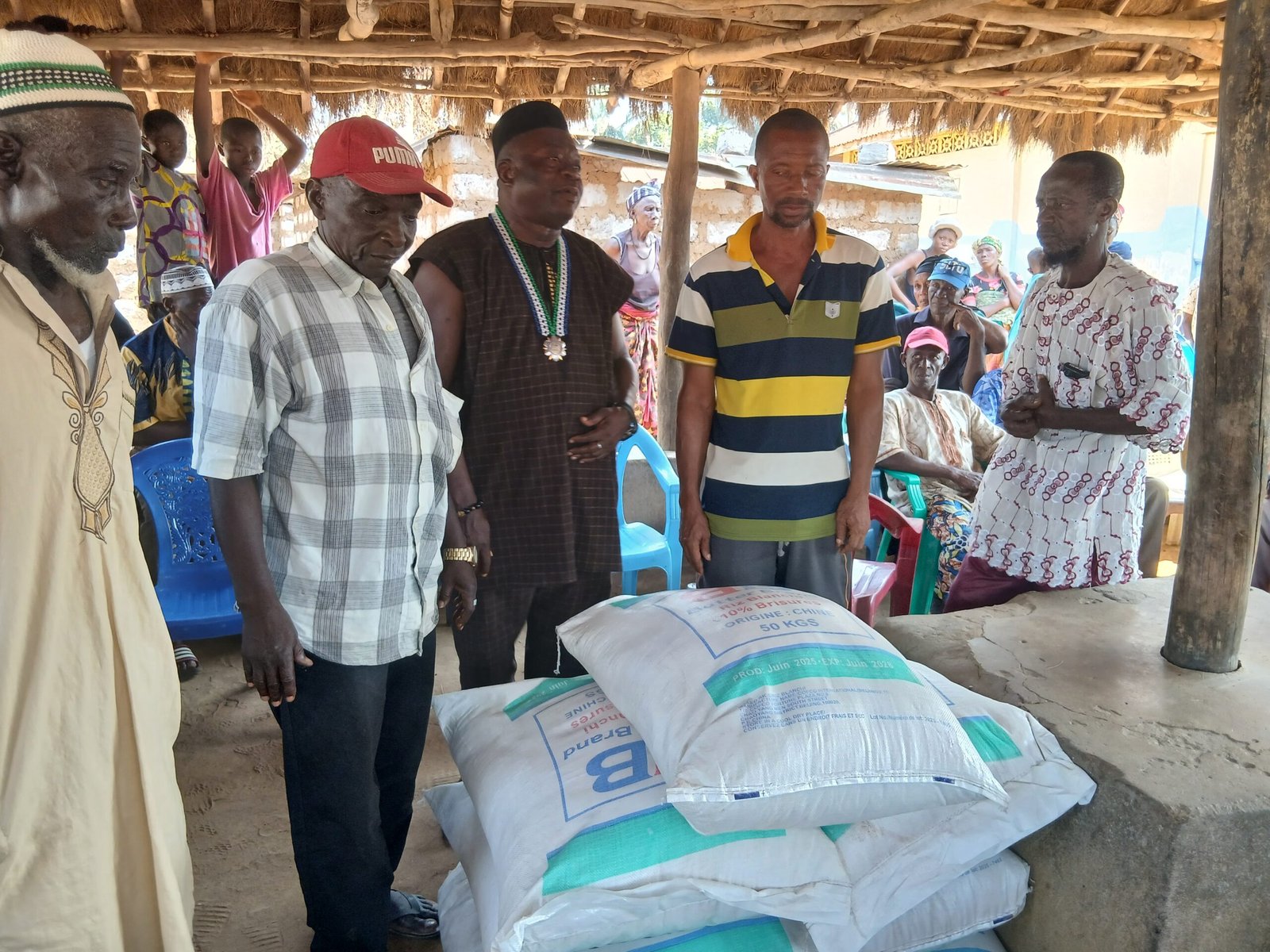
We are pleased to announce that emergency aid was available directly from FIOH through our cooperation with Youth Leading the World in Sierra Leone. Our response was instantaneous, with aid to rebuild the damaged dwellings with more substantial infrastructure and rice to replace what was lost in the fire. The community responded with thanks and celebrations.
Thank you for reading this article, if you would like to support us please Donate. If you would like to read more articles about disaster relief, try this.
IAA Cameroon reaps the rewards of sustainability
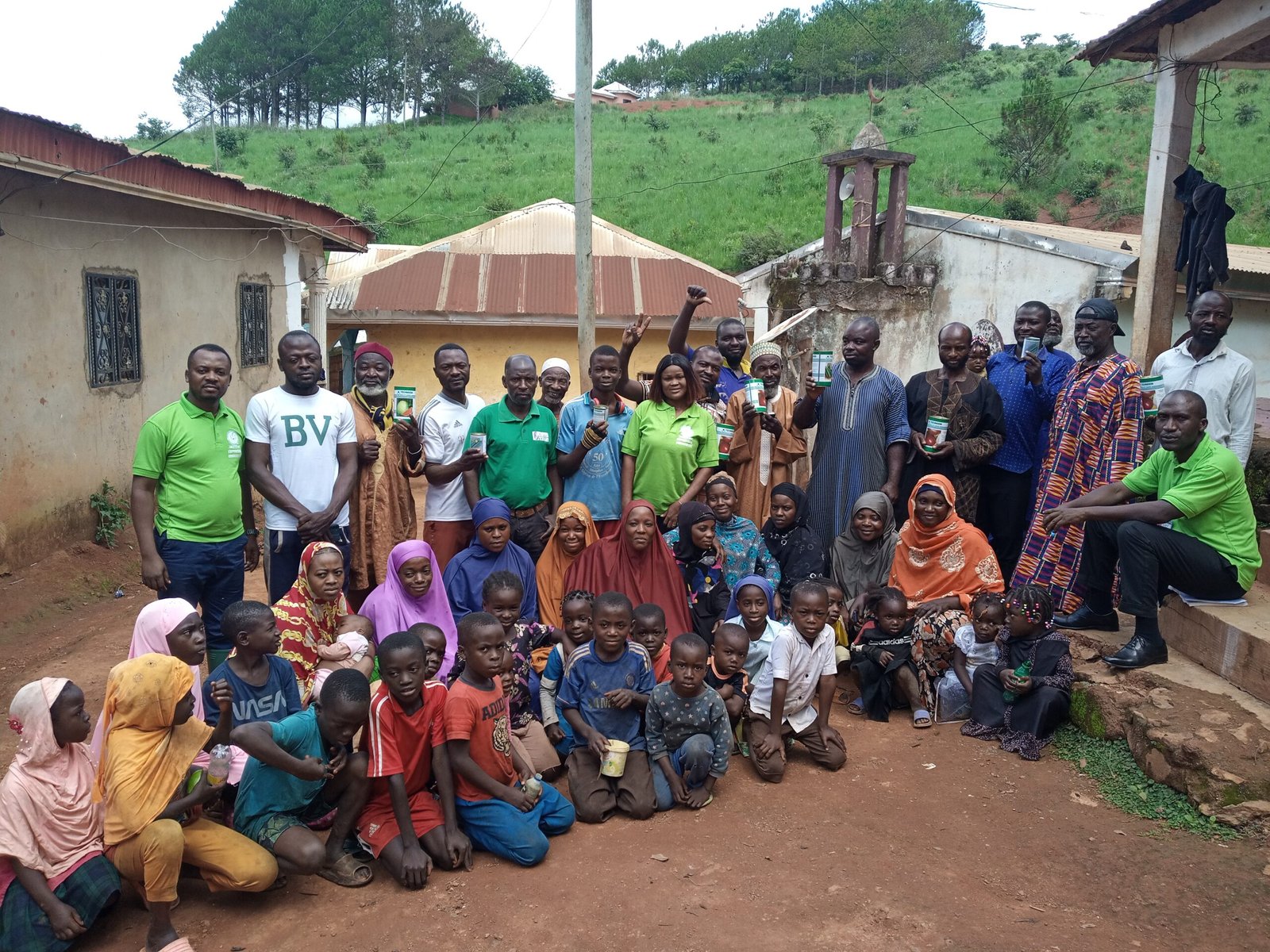
From seed distribution
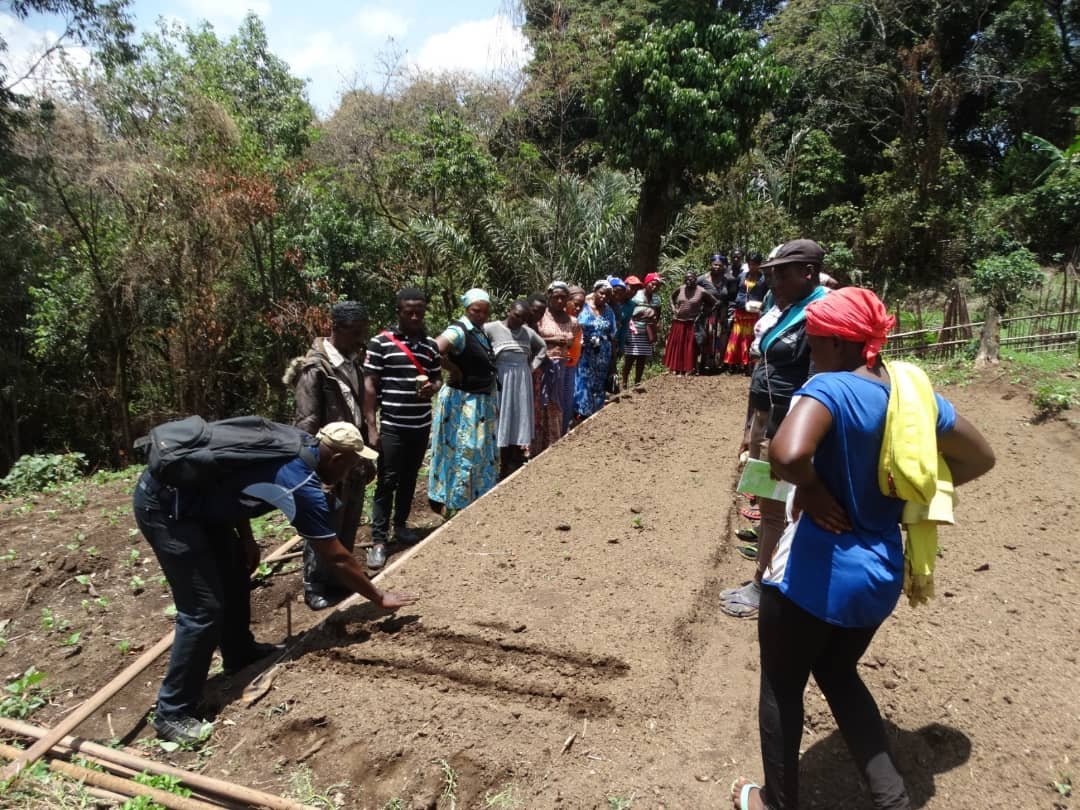
To planting out
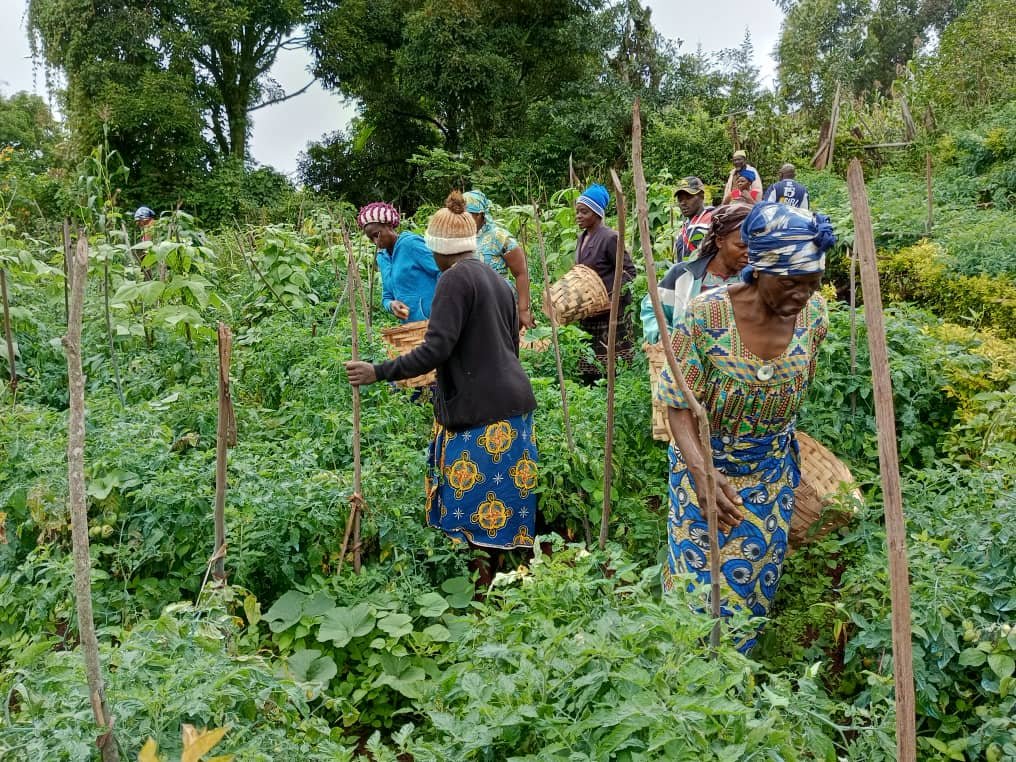
to harvesting
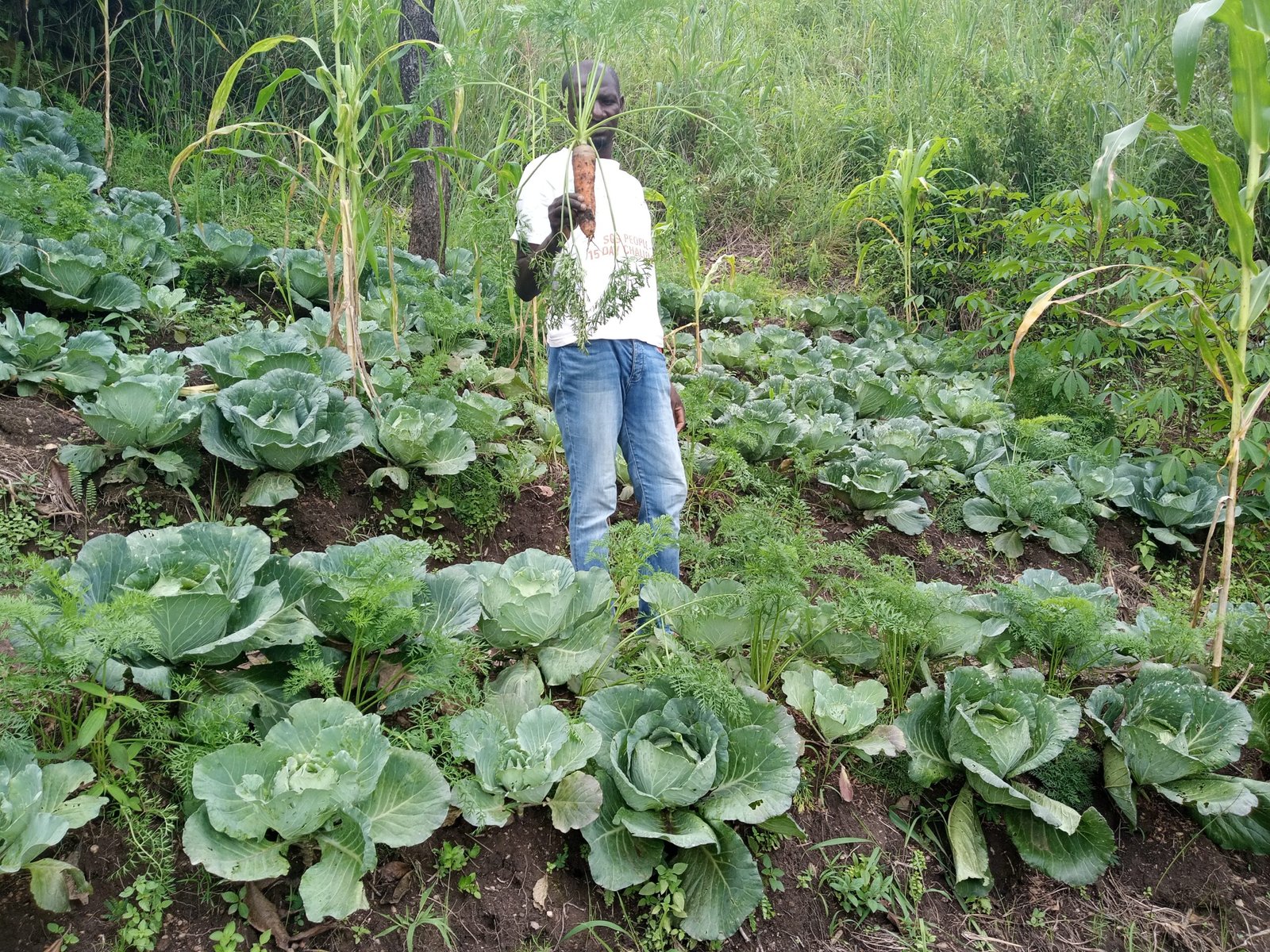
IAA receives international recognition with prestigious award
1) RECENT AWARD RECOGNITION
Regenerative Agriculture/Agroforestry, IAA has been honored as National Winner of 2024 Energy Globe Award.
The project aimed at training small-holder farmers in regenerative agriculture techniques and agroforestry. Specifically the project focused on climate adaption, carbon sequestration and conservation agriculture techniques, including the use of cover crops; “no till” practices, rotating crops, conserving water. Primarily using native crop varieties and trees to manage pests.
These approaches not only contribute to long term climate resilience, but also increase productivity, decrease farming input costs, and improve soil fertility. The project also increased local availability of safe, quality vegetables and fruits for the poorest and most vulnerable populations in the region. IAA trains and supports rural smallholder farmers in conservation agriculture and agroforestry. We promote sustainable practices that reduce water and chemical use, prevent land degradation, and protect biodiversity.
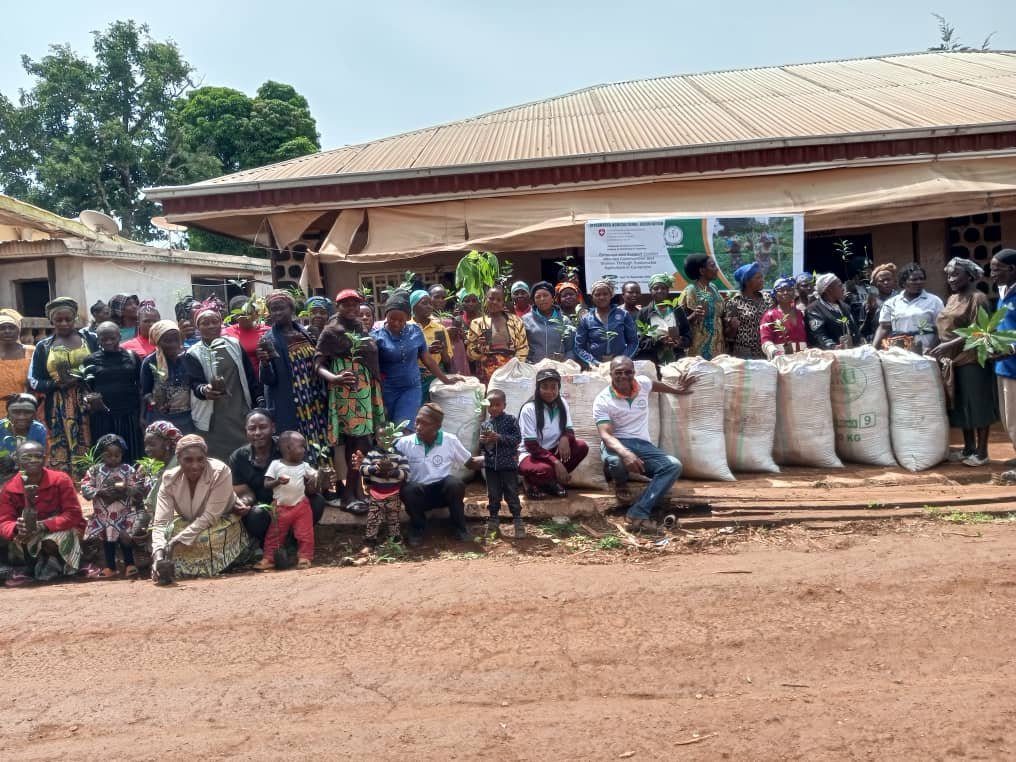
2) ANNUAL WORLD OF DIFFERENCE AWARD 2022
Founder and Executive Director of Integrated Agricultural Association (IAA): Dungrila Pascal Mbimenyuy has been selected and recognized by TIAW as a 2022 extraordinary man under the champion of Women’s Economic Empowerment in Cameroon
The World of Difference Awards – recognize up to 100 women (and men) around the world whose efforts have advanced the economic empowerment of women locally, regionally or worldwide.
Since 2017, Integrated Agricultural Association (IAA) under the leadership of Dungrila Pascal Mbimenyuy has supported thousands of women directly through sustainable agriculture, entrepreneurship and livelihood projects in rural communities within Cameroon.
Other News:
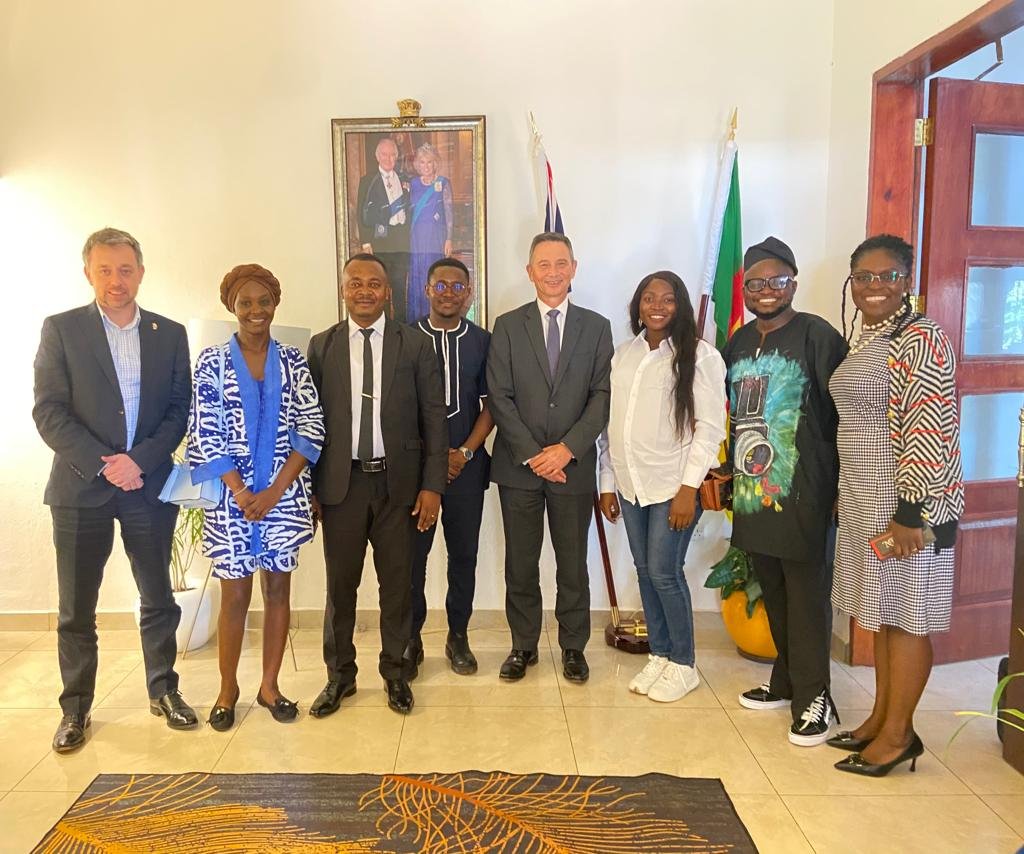
One Young World Ambassadors in Cameroon met with The British High Commissioner to Cameroon
Dungrila Pascal and other One Young World Ambassadors had a meeting with The British High Commissioner to Cameroon, on the 9th of November 2023, at his residence in Bastos, Yaounde. One Young World Ambassadors spent a great moment together with the British High Commissioner, sharing ideas and experiences of their organizations and activities in their respective communities.
Dungrila had the opportunity to have a site meeting with the British High Commissioner, where he discussed the mission, objectives and activities of IAA with the BHC and explored opportunities for possible collaboration and to secure support for Integrated Agricultural Association (IAA).
3) THE CURRENT PROJECT 2025
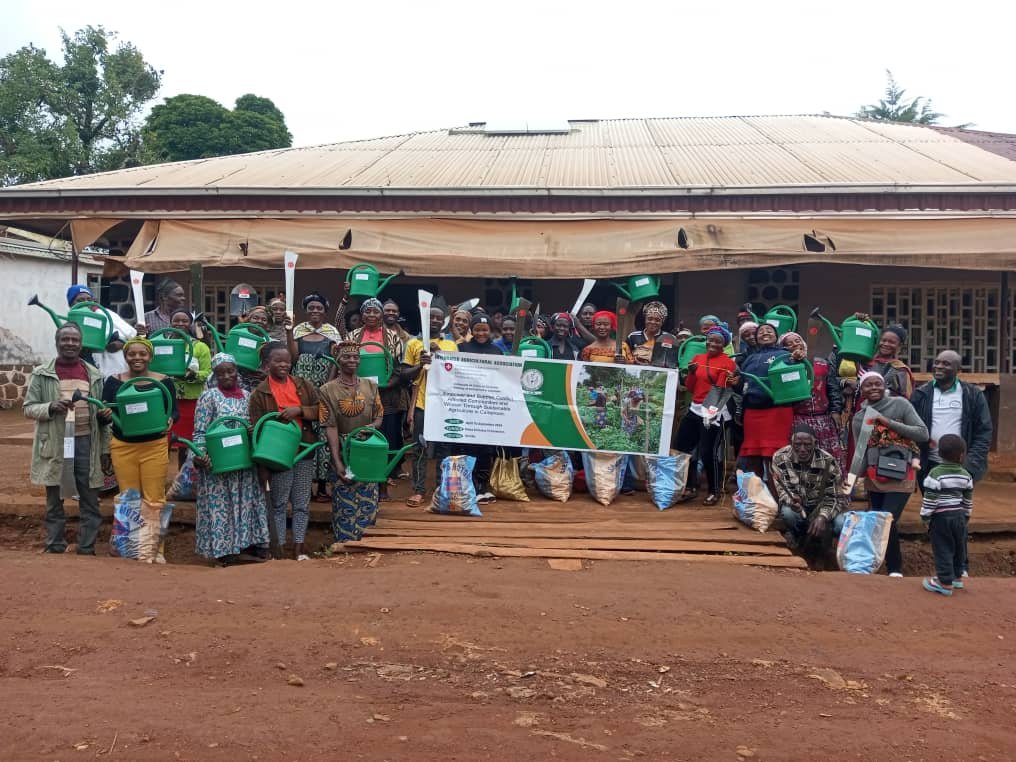
The ongoing project aimed at increasing local availability of safe, quality vegetables and empower conflict affected women and communities to enhance food security. In addition achieving nutritional balance for 100 households, through diversification of diets of the poorest segments of the vulnerable populations in Kumbo, Bui Division, Northwest Region of Cameroon. The project targeted diverse groups of beneficiaries including; ethnic communities, female-headed households, newly settled families, resource-poor herders and smallholder farmers, and other vulnerable groups without access to secure livelihood. The objective was to implement and mainstream innovative, sustainable, affordable and regenerative approaches to improve food security amongst 100 of the most vulnerable people in Kumbo area. Also to enhance the capacity of resource-poor and poverty-stricken farmers and herders at low income brackets through training and support to produce a wide variety of vegetables like onions, cabbages, carrots, pepper, Irish potato, huckleberry. Using regenerative practices with integrated social ownership, management and involvement. In response to global climate change, the project also aimed at promoting conservation agriculture, which is the foundation of climate-smart agriculture to help vulnerable communities understand the impact of climate change on agricultural productivity and how to reduce their carbon footprint.
The grant from The Embassy of Switzerland in Cameroon and Earth Rising Foundation with support from Seed Programs International has helped Integrated Agricultural Association (IAA) to strengthen the country’s food system in light of changing weather patterns and other challenges caused by the ongoing armed conflict in NW/SW regions and strengthen the affected communities with outreach and support. With the grants received in August 2023 and April 2024, IAA have reached 1028 people directly, from diverse backgrounds; including women, men and youths with essential gardening skills, nutritional education and agroforestry resources and skills, created awareness about climate change through environmental education outreach We have helpied to achieve larger goals like food security, adequate nutrition, increased livelihood opportunities, climate smart or resilient agriculture, community building and gender equality for thousands of people in the following ways:
i.) Community Development: IAA boosted its integrated demonstration garden in Kumbo with land capacity of 5 hectares, which will serve as a community hub for learning and access to planting resources. The garden involves an apiary, seed multiplication, agroforestry promotion, hands-on learning on ecological and bee farming and the distribution of potato tubers and fruit seedlings to smallholder farmers to support the ongoing agricultural development.
ii.) Home gardens support in Kumbo and Foumban: IAA empowered households with essential gardening skills and resources which resulted in the distribution of over 100,000grams of vegetables seeds and gardening tools to boost food production. Seed types distributed include; Cabbage, Carrot, Onion, Pepper, huckleberry, Cucumber, Okra, Tomato , Potato tubers, Sweet pepper, tree seedlings and Organic manure (2000kgs of cow dung) which resulted in 1350 gardens supported to increase food security and income level for 1350 people at the family/household level. Each seed type represents one garden and average family size is 10 members for 135 farm families supported. Tools include; 100 hoes, 100 watering cans, 100 machetes and 25 pairs of rain boots and 4000 tree seedlings.
In Foumban, IAA empowered 240 households with essential gardening skills and nutrition information which resulted in the distribution of 11,000 grams of vegetables seeds to boost food production. Seed types distributed include; Cabbage, 540 grams, Carrot, 5400 grams, Onion, 3500 grams , Pepper, 250 grams , Tomato, 250 grams , Cucumber, 400 grams which resulted in 1440 gardens to increase food security and income level for 2400 people at the family/household level in Foumban, West region of Cameroon
iii.) Nutrition and Diet: Empowered women on good nutrition practices, diet control and different nutrition options to reduce diet related diseases and malnutrition. With the message “Food is Medicine”, IAA implemented 10 workshops with 300 people that contributed to promoting public health and wellness through essential education on adequate nutrition and how to reduce food waste amongst conflict affected communities and women.
iv.) Environmental education and Agroforestry promotion: IAA engaged mixed age groups and community members on topics like deforestation, dangers of chemical fertilizers on agriculture, carbon emission and created awareness about climate change through regular environmental education outreach. IAA shared knowledge on agroforestry practices and distributed planting materials to 265 smallholder farmers who operate on less than 5 hectares of land. Ultimately, 15,000 trees were planted including, Moringa 1000, Cocoa 1000, Ricinodendron Heudeloti Known as Njansang or Essessang in Cameroon, 1000 and grafted pears (Avocado) 8000, and Prunus Africana 4000 in the Northwest and West regions of Cameroon.
EVOLUTION:
However, IAA recognizes that sustainable development requires continuous learning and adaptation to new challenges. This grant presents an opportunity for IAA to enhance the leadership skills of its team, gain advanced knowledge in sustainable agriculture, and network with global experts in environmental management. By deepening their understanding of innovative practices and policies, IAA aims to scale up this initiative, increase its impact, and empower more women in Cameroon and beyond. To go further, the Project Leader has partnered with Earth Guardian International to lead the Earth Guardian Crew of young climate leaders at the Integrated Agricultural Association (IAA) in Cameroon, as efforts to train and inspire young and community members on environmental and climate justice.
With increased demand for quality seedlings and vegetable seeds amongst the vulnerable farmers there is a need for consistent support. IAA will increase the production capacity of its demonstration garden. Grafted avocado, oranges, lemons, seedlings and seed potatoes will be subsidized to support the communities searching for secure nutrition. We will also train community members on seed multiplication and preservation to gain independence from over reliance on external support for seed donation.
4.) FIGHT AGAINST TOBACCO AND DRUGS USE AMONG YOUNG PEOPLE – NON-COMMUNICABLE DISEASES PREVENTION
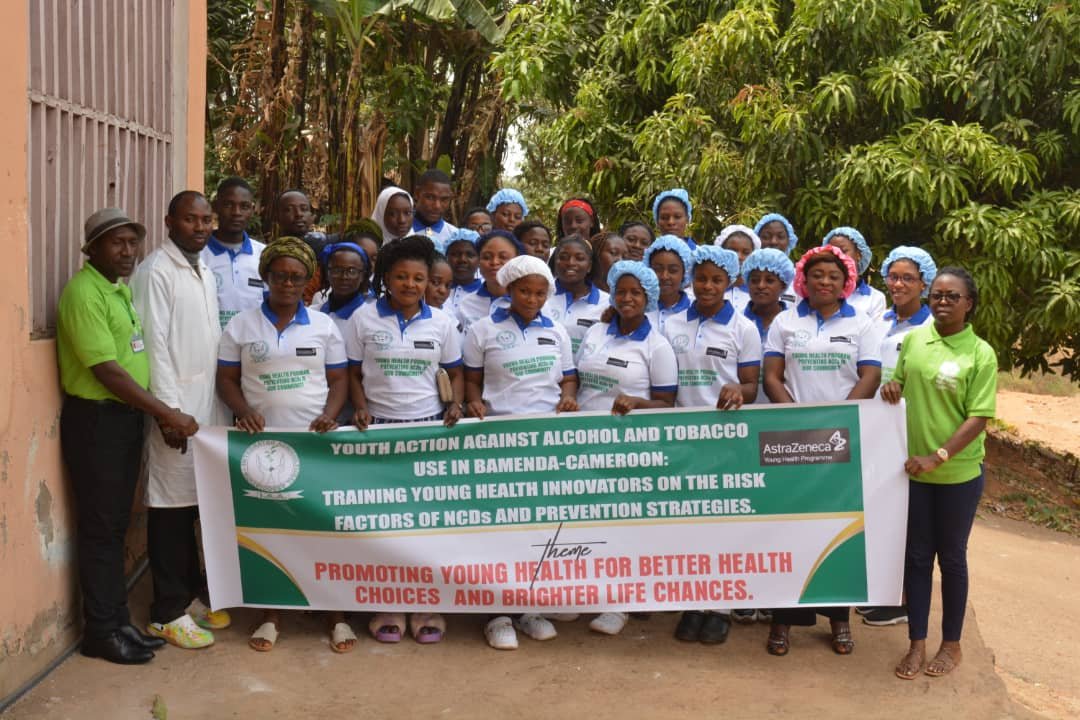
Building Healthier Communities and Brighter Life Chances for the Younger Generation: (IAA) shape the future of their community by raising awareness of non-communicable disease (NCD) risk factors by leading mobile NCD therapy interventions and health ambassador training workshops to build the capacity of community health workers. (IAA) uses an evidence-based approach to prevent the harmful use of alcohol and tobacco by building knowledge for medical students and community health workers.
IAA seeks to deliver impactful public health literacy campaigns and community outreach, delivered by and for young people with support from the YHP Impact Fellowship grant awarded by AstraZeneca in 2023.
We champion local initiatives by working with community structures, health units, municipal councils, community health workers, health providers and health academic institutions to reduce the impact of NCDs and their risk factors among young people. In 2023, IAA reached over 500 people directly through in-person workshops and door-to-door sensitization and over 50,000 people through media outreach with NCD information. Over 30% of violence in schools is as a result of drug addiction and tobacco use involving young people in Cameroon and over 20% death annually is related to the consumption of tobacco products. The program also raised awareness of Type 1 diabetes (T1D) risk factors and utilized the Household Cluster Health Education Model to train and deploy Health Education Volunteers, supported by Community Health Teams and the project team. The focus was on educating households about the risk factors of T1D. Our mobile T1D health initiative tackles health challenges posed by lifestyle, environmental and nutrition factors. The program reached over 207 T1D patients with essential health information and counseling, and 480 families in 2023 and 2024. However, this program did not only work with children and young adults, but also with community structures, health units, municipal councils, community health workers, health providers and health academic institutions through 10 capacity building workshops and health advocacy for 350 people, helping them to reduce the risk factors of T1D, which did not only have a direct impact on children and young people affected by T1D, but on public health as a whole.
5.) VEGANISM FOR HEALTHY LIFESTYLE AND PLANET EARTH!
WHY BECOME A VEGAN!
Compassion for Animals:
In every livestock system, animals are denied their basic needs and interests. Dairy cows are separated from their young shortly after they give birth, so that humans can take their milk. Bull calves are either killed or exported for veal. Even those with bigger cages end up in the same slaughterhouses. Vegans enjoy a variety of delicious and nutritious food with a clear conscience.
Justice for People:
The world’s population is set to exceed 9 billion by 2050. We’ve got to find fairer and more sustainable ways of feeding everyone – and fast. Currently, 40% of the world’s grain harvest goes to feed livestock instead of hungry people. Vegans reduce food waste by getting everything they need directly from plants.
Protecting the Planet:
Animal farming is responsible for at least 14.5% of greenhouse gas emissions globally. Up to ten times more land and water is needed to support a typical diet of meat, fish, eggs, and dairy than a plant-based diet. Ditching animal products could reduce your carbon footprint significantly. Vegans also have less impact on the rainforests and ease water shortages….and it’s good for your health. Naturally rich in vitamins, high in fibre, and low in saturated fats, plant based foods can provide all the nutrition we need in all stages of life.
Plant-Based Food for Non-Vegans Cameroon:
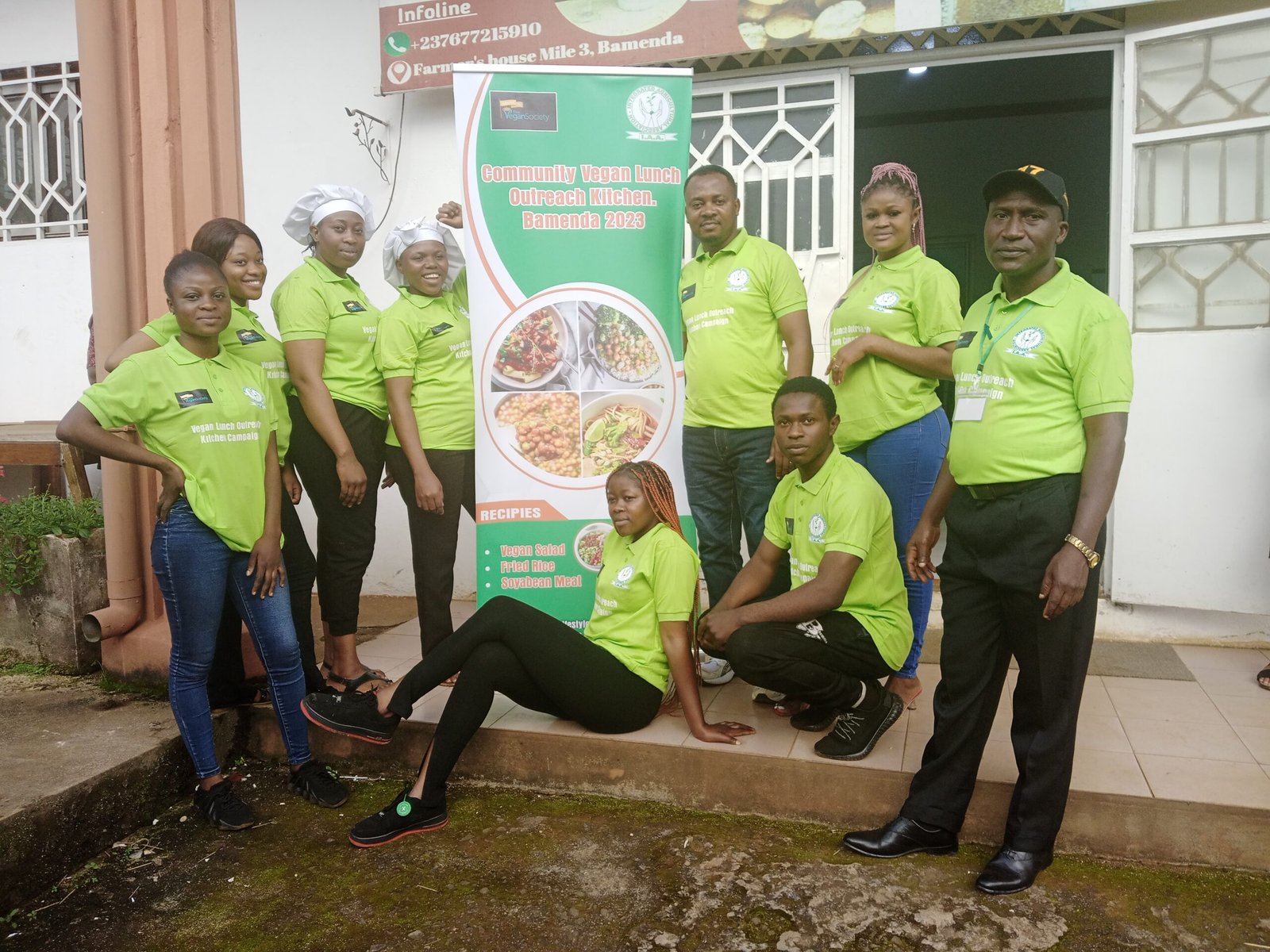
The project was designed to reduce meat consumption and farming by working with non-vegan communities in Cameroon to create awareness about veganism and the importance of plant based diet and farming, with support from the vegan society. It organized vegan advocacy workshops with heads of dormitory schools, restaurants and provided training on vegan recipes and protein, advocated for restaurants to include vegan dishes on their menu to affect public demand for meat and purchasing patterns. We also carried out a school vegan lunch campaign to expose children to veganism. The project also worked with Fulani community, carrying out vegan education and advocating for fully plant based farming and regenerative agriculture.
Community turnout was very impressive and more than 228 people have been exposed to veganism. 5 chefs trained on 3 vegan recipes and 1 trainer restaurant recruited, while 35 women trained on how to make meat out of soybean, vegan salad and fried rice. Funding and lack of knowledge about veganism was a concern because veganism is still a new concept and needs massive sensitization in Cameroon. Funding for restaurant food demo cannot be raised by the participants because we are a nonprofit organization and cannot sell food to generate profits. We will continue to create more awareness of veganism and work with trainee restaurants to expose the public to veganism by organizing regular vegan food demonstration events and including vegan recipes (dishes) on restaurant menus.”
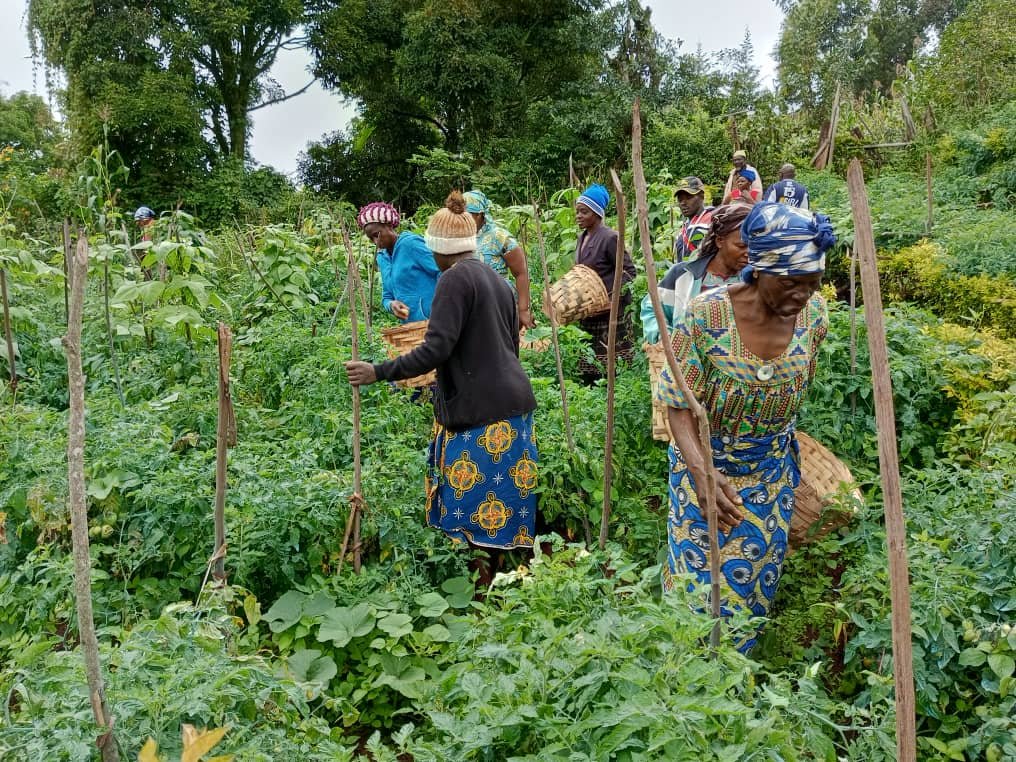
6.) VEGETABLE GARDENING, AN IMPORTANT SOURCE OF INCOME AND NUTRITION FOR LOW INCOME FAMILIES
Healthier lives and more resilient livelihoods through sustainable vegetable gardening: Integrated Agricultural Association (I.A.A) carries out experiment, builds collaboration, planting kitchen gardens and promotion activities to raise awareness of the role of vegetables for improved health and rural poverty alleviation.
Vegetables can alleviate poverty by creating new jobs and new sources of income for farmers and landless laborers, improve health by providing essential micronutrients lacking in diets, enhance learning and working capacities of adults and children through improved diets and health, and improve the sustainability of food production practices through mixed cropping. Our development work focuses on smallholder empowerment, developing and promoting safe production practices, reducing postharvest losses, and improving the nutritional value of vegetables. It increases smallholder farmer income and improve the quality of life as it is a major source of cash money for many families. Vegetable production provides an opportunity for poor rural population to come out of poverty, as it is a major source of fast income for most of the families. It generates income and jobs for smallholder farmers and landless especially the young and women. It has many advantages over most other agricultural enterprises. In 2023/2024, (IAA) distributed thousands grams of vegetable seeds in Northwest and West regions of Cameroon, which is enough to grow sufficient food rich in vitamin, minerals, energy and fibre for malnourish households and the society as a whole.
7.) COMMUNITY YOUTH MICRO ENTREPRENEURSHIP PROGRAM.
In 2019, the world experienced the COVID-19 pandemic outbreak that resulted in many businesses and institutions closing down, which meant thousands of young people lost jobs and educational opportunities in Cameroon. Lack of vocational training services and entrepreneurship opportunities for young people has the devastating potential to create a severe and prolonged economic impact. Young people have struggled with life since the COVID-19 outbreak and they need a hand that can support them through vocational training to equip them with constructive knowledge and reliable business skills. The creative abilities and livelihood skills of young people also remain low because of limited exposure to skills development opportunities and lagging behind in entrepreneurship opportunities, information and support.
The skills gap has led to high unemployment rates even at national level. 65% of Cameroonians are below 30 years while 75% still live in rural areas. The focus of this project is on Micro Entrepreneurship development for youth in order to promote self-employment because it’s projected that Cameroon will not be able to generate enough jobs for those entering the labour market during the COVID-19 pandemic and post COVID-19 recovery world. Unless young people are supported through skills development, they stand a risk of being trapped in viscous cycles of poverty yet in Cameroon, youths contribute 50% to the economy of the country.
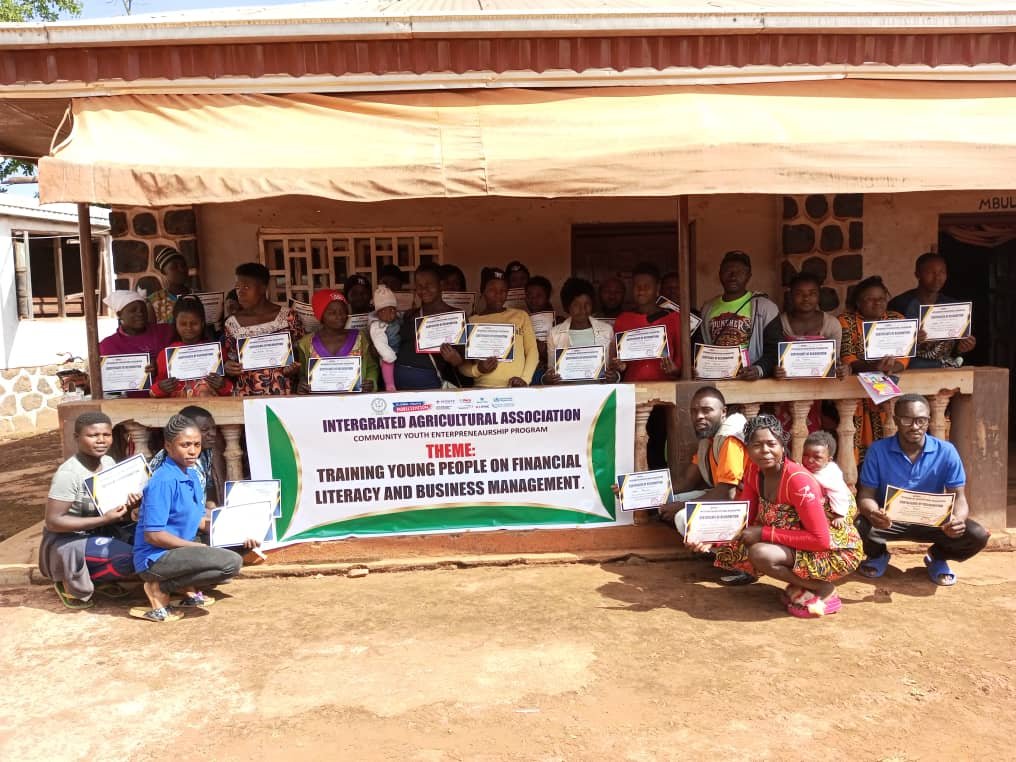
IAA implemented a project on agribusiness in 2022 with the mission to contribute to the improvement of young people’s lives through Micro Entrepreneurship and community based sustainable skills in Agriculture, with the overall aim to empower both in and out of school rural youths with Vocational Skills in agriculture/Market gardening, to keep them out of current dangers (HIV/AIDS, Early pregnancy , child/early marriage, recruitment into armed groups), Breaking the yolk of vulnerability and become responsible citizens of today and tomorrow in the society.
With support from Global Youth Mobilization, 275 youths have been trained and supported in the following areas:
Micro Business: Participants received intensive training, covering the following areas of a microbusiness common in a rural area: Steps in becoming a successful entrepreneur, Advantages and Disadvantages of micro business, How to prepare a simple business plan, sources of business funding, importance of savings in micro business, venturing into business, what does it take? loan management, record keeping and costing.
Sustainable agriculture: Participants received intensive training on sustainable vegetable gardening, Environmental management, horticulture production and marketing. The training was facilitated by a team of youth agricultural professionals that have extensive knowledge and skills in their field, agronomy and rural engineering.
8.) RISE AGAINST CHILD/EARLY MARRIAGE
Given that girls are victims of child marriage and other forms of sexual exploitation, Governments of many nations tries to delay marriage until the age of 18 years without necessarily empowering girls with the knowledge they deserve to make informed decisions about their lives and relationships. IAA implemented the project in 2021 which aimed at creating awareness about the dangers of child/early marriage and empowering young girls with skills and knowledge to advocate for themselves. With support from Global Youth Mobilization, IAA used integrated approach to help young people develop skills to challenge cultural norms and make informed choices about their bodies and sexuality.
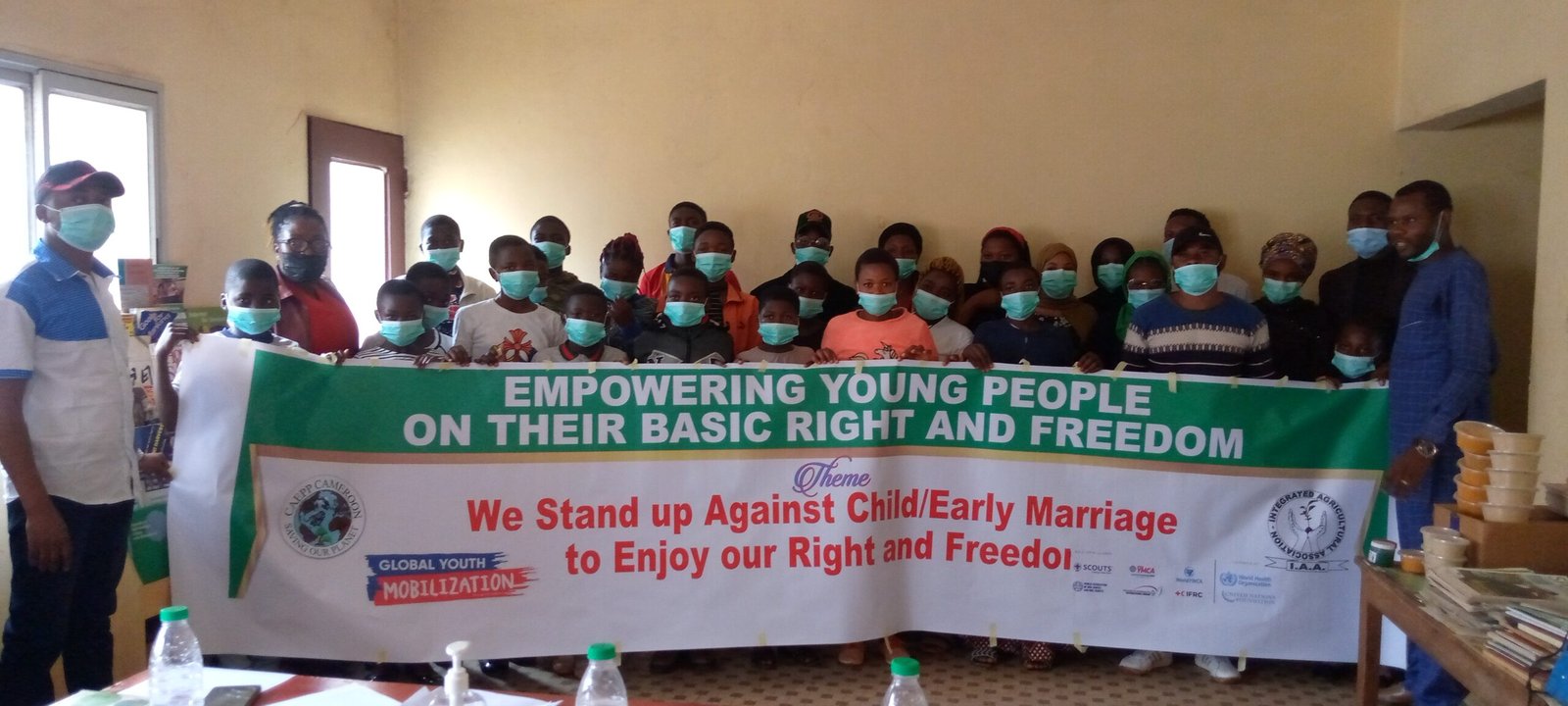
1.) Child/Early marriage and sexual abuse in Bamenda. Integrated Agricultural Association organized a series of workshops on the child/early marriage/sexual abuse. It aimed at empowering young people with skills and knowledge to challenge the physical and cultural norms that do not respect their rights and freedom. Over 750 young people between 16 and 30 years have been reached
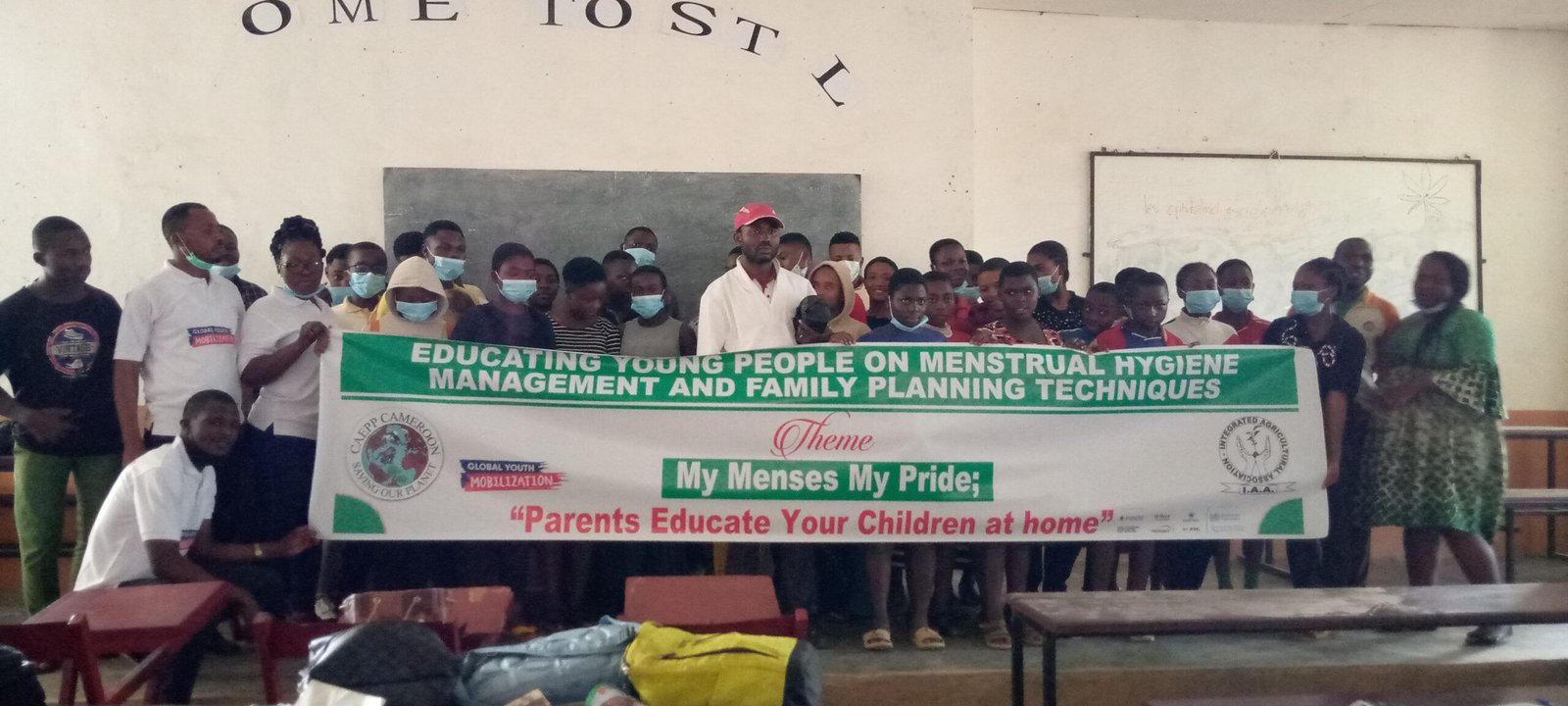
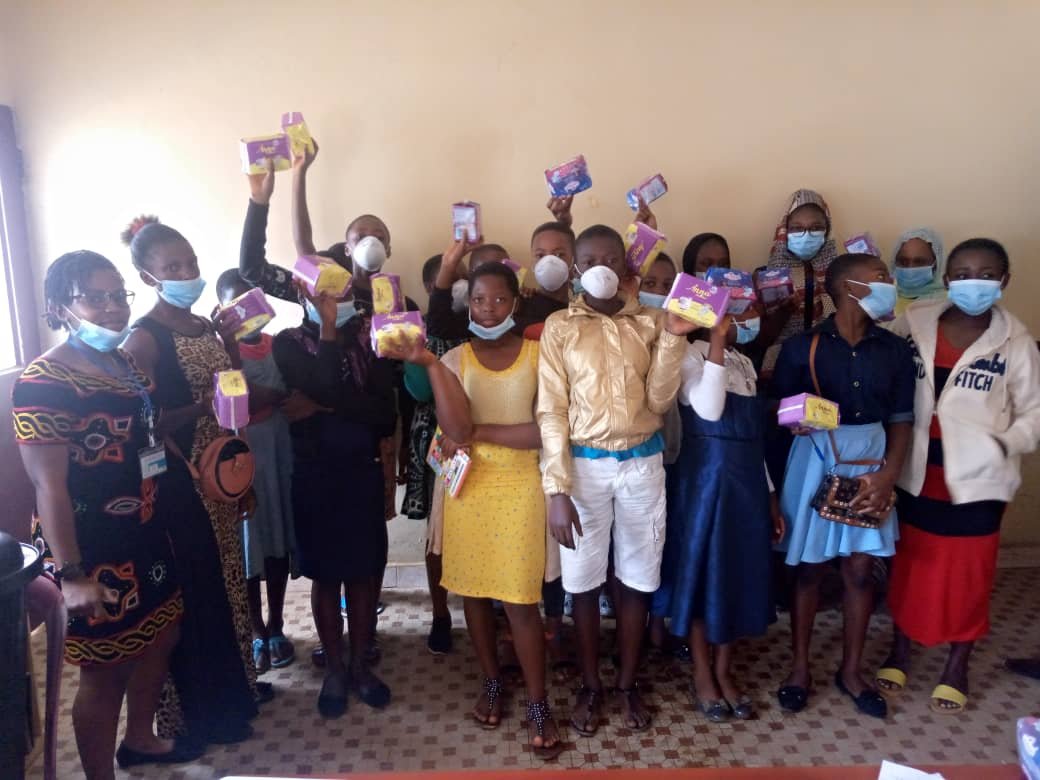
2.) Menstrual hygiene management and family planning in Bamenda. I.A.A trained and supported young people on family planning techniques, on how to make and use re-useable menstrual pads and safe sex practices in Bamenda, and given that thousands of vulnerable girls are not able to afford a packet of menstrual hygiene pads, at the current pricing, which cost at least, 1$ per pack. IAA continued to promote gender equality and fight poverty amongst the vulnerable girls by support them with tools and skills to make and use their own pads; to secure their own livelihood and reduce menstrual related stigma and trauma. IAA trained and supported over 1500 girls between 10 and 30 years, with funding from The Global Youth Mobilization. IAA also provided mental health support to children in conflict with the law at the Bamenda Central Prison, where 350 juveniles received food items, soap and COVID-19 protective equipment from IAA.
Other useful Youtube links:
https://www.iaa-africa.org/author/integrated-agricultural-association/
https://web.facebook.com/IntegratedAgriculturalAssociation
https://www.linkedin.com/company/integrated-agricultural-association/
https://www.instagram.com/iaaafrica/
Climate Change solution Cap CO2 and Share the income

FIOH Sierra Leone – responding to climate change and Covid 19
ACTIVITY REPORT
PROJECT : Local response to climate change and Covid19
Funder : FIOH Fund -UK
COST : GBP 545
REPORTING DATE: 4thJune 2020
Brief background
In a bid to integrate climate change in development projects, FIOH-SL in collaboration with FIOH-UK supported farmers to mitigate climate change through scaling up the adoption of regenerative agriculture. This involved farming practices that work together not just to sustain, but to increase the carrying capacity of the land, restoring the natural fertility of agro-ecosystems. Core practise involves permanent soil cover with living plants, minimum or zero tillage, maximization of biodiversity, composting from zero waste in the farming system and reduction of agrochemicals with a view of their elimination.
FIELD ACTIVITY RESULT
Result of activity 1: Organize community sensitization meetings on climate change:
- Two community sensitization meetings were organized which attracted 50 participants, farmers, stakeholders, facilitator and participants to share learning on the following:
WHAT IS CLIMATE CHANGE?
Following the discussion on the literal understanding of climate change, participants also brainstorm, on the kinds of climate hazards.
- Heavy wind
- Increase in the frequency and magnitude of warm daily temperature (extremes and decreases)/prolong day seasons from October May)
- Frequency heavy precipitation/rainfall.
- Spring/small rivers completely dry up during the day season.
IMPACTS OF CLIMATE CHANGE
- Water shortage
- Floods
- Heat waves
- Droughts
- Outbreak of infectious diseases.
Traditional/cultural practices adopted in the past to mitigate climate change as:
- Establishment of fire belts around forest reserves in March.
- No bush clearing around water catchment areas.
- Secret society bushes as protected as forest reserves.
- Forest reserves known as village green surrounding the entrance of villages protected.
- Bush fallowing for 15 years to encourage regrowth.
RESULTS OF ACTIVITY 2 – Practical training on Agroecological/ farming.
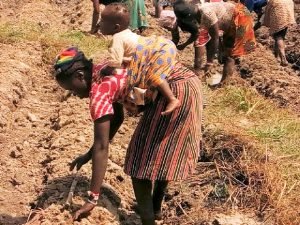
25 farmers (15F,10M) received practical training (5 per session) of farm design, planting methods, plant spacing, zero or minimum tillage practice, composting from zero waste and field application. Monitoring results reveal that farmers are gradually adopting these practices on their own farms.

RESULTS OF ACTIVITY 3 – Seeds and tools support. Following the procurement of assorted seeds and tools, these items were distributed to farmer field school representatives.
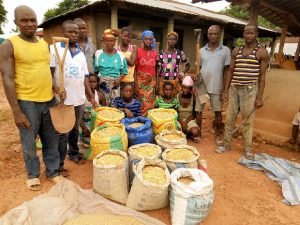


FIOH-SL seeds and tools support to cross-section of farmers.
RESULTS OF ACTIVITY 4 – Seed multiplication and demonstration farms.
Two multiplication and demonstration farms were established in two communities using permaculture/agroecological principles – farmers working with natural forces or farming using natural approaches, the wind the sun and water to provide food, shelter, and everything else including compost, farm/ gardens needs beside seeds and plants. Any farm established using these principles is a permaculture /agroecological farm.

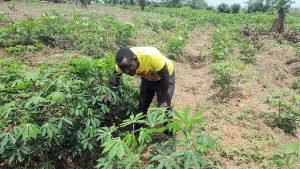
FIOH -SL support to the establishment of two permaculture farms.
CHALLENGES
- Overwhelming demand for the project activities by other FIOH operational communities in Tonkolili and Koinadugu districts.
- Frequent lockdown caused by Covid19 is affecting farm management.
- Lack of on farm hand washing stations to prevent Covid19.
- Farm work rationed with a batch of 5 Farmers per day as a result of Covid19.
WAYS OF OVERCOMING CHALLENGES
- Overwhelming demands
Representatives from the demanding villages were included in the on-farm training and promised to be given some proceeds from the established multiplication farms as starter seeds to establish their own farms. Development of community pilot projects by FIOH-SL is underway to service other communities.
- FREQUENT LOCK DOWN CAUSED BY COVID 19
A detailed concept Note will be shared with National and International donors for possible support.
LESSONS LEARNT.
Household food insecurity exacerbated by the global lock down by Covid19 reveal the extent that existing food systems (and the people underlying them) have been undervalued and under-protected.
Please support the work of the Future in Our Hands Education and Development Fund whose aim is to help and empower some of the world’s poorest and most marginalised people by:
- UK residents can provide long term support by completing the FIOH FUND DONATION FORM and sending to the address shown on the form:
- Direct grant to the charity’s bank account or by cheque to:
 Bank account details:
Co-operative Bank
IBAN: GB07CPBK08929965050707
BIC: CPBKGB22
Cheques should be made payable to the
Future in Our Hands E&D Fund
—————————————————————————-
Fundraising to help the work of the charities would be greatly appreciated
Future in Our Hands Kenya activities 2016
FIOH-KENYA REPORT – 2016
- WOMEN CREDIT UNION: The women have been going on well with their loaning program. The money received from Ebay boosted their kitty very well. The capacity building workshop held for the women groups has really motivated them and the results can be seen from their return reports.
- THE YOUTH GROUP: The poultry project by Usoma Shiners youth group is still stable. The group now has 500 hens . This project was co–funded through FIOH-USA in 2013. The group plans to venture into fish farming by putting up a fish pond along Lake Victoria so as to preserve the rare species that are facing extinction due to use of poor fishing methods.
- THE COW PROJECT: This is known as the Poor Man’s Bank Initiative whereby we fund women groups to purchase dairy cows that they can easily manage and take care of. They are taught to use the wastes from the cow to practice organic farming in their gardens so as to help in nutrition. The little money they get from sale of milk is used for subsistence. So far, two groups have been funded and we have proposal for 4 more groups.
- WELLS: The latest well in Wathorego Kibos is complete and is serving the residents well. All the other wells are in good working condition. The well was donated by a volunteer from USA at a cost of $3000. It serves approximately 300 households in this village with an average of 6 people per household. FIOH- K has identified 3 more villages that are in dire need of water i.e Mawego village, Seme Village and Alego. Both Geological and hydrological surveys have been carried out . We are looking for sponsors or donors to fund these projects. The wells that have been dug through donation from FIOH-USA have reached 20 in number.
5.TREE NURSERY: Due to the effect of global warming,
deforestation is rate is alarming. We have started a campaign
for reforestation in Kisumu County .We envisage to start tree
seedling nurseries in each of the 7 sub counties of Kisumu in
order to create awareness on importance of trees. It has not
rained since May. Even the long rains of April and May which
is normally used for planting season failed that people are
facing starvation. A proposal for this too is ready and has been
sent several organizations with no response yet.We are looking
for partners towards this endeavour.
- COMMUNITY LIBRARY AND RESOURCE CENTER:
It was Rom’s wish and dream to have a community Library
and resource center in Usoma village where he taught for his
entire teaching career. This he said would stump out illiteracy
and create awareness among the vulnerable people in the
village. Land has been donated for this, and a proposal ready
for the same. We haven’t submitted the proposal to any
organization.
Our main partner is still FIOH-USA which primarily funds the
orphans education program and HIV and AIDS program.
Their resources are limited as they too depend on donors.
We are very much in contact with Sr.Linda and she visited for
2 months this year with another volunteer.
Paul Odhiambo, Co-ordinator.


Follow us on Facebook:
www.facebook.com/fiohfund
Follow us on Twitter:
twitter.com/fiohnet
Please share our links with your friends to help us reach a wider audience.
Centre for Community Regeneration and Development
ACTIVITY UPDATE AUG 2016
Education for sustainable development through sports in schools
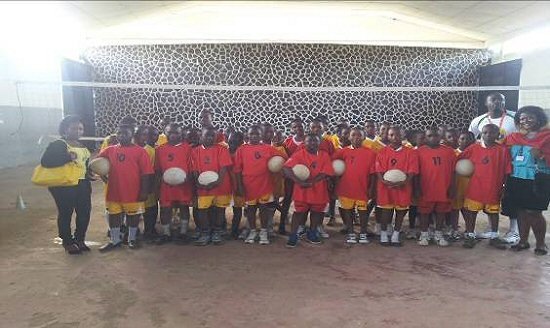 CCREAD-Cameroon in continuation of its Education for Sustainable Development Programme, has mobilized more than 300 children and youths through environmental and conservation leadership camps, with sports as a uniting factor, to educate the children on climate change mitigation and adaptation, sustainable development goals, biodiversity conservation, sexuality and family planning, human rights, leadership and good governance. We need more volunteers for this ongoing programme.
ICT for development programme for youths within poor communities


CCREAD has set up a free ICT daily training unit which serves children, women and youths from extremely poor countries to gain generational skills on computer and ICT skills for development. The facility also trains students daily who are enrolled in schools without computer laboratories so they can be able to take official examinations in computer sciences. This project needs more trainers and those who can support to buy more computers, a projector and more desks for trainees.
Sexual and reproductive health rights education for abandoned teenage and single mothers
 CCREAD volunteers are currently organizing weekly workshops for 25 single and teenage mothers on sexual and reproductive health rights. The aim is to educate teenage mothers to stay away from sexual and different forms of gender base violence, organizing them into action groups and linking them up with mentors for social and economic empowerment.
Supporting women and widows living with disabilities
 CCREAD is currently supporting unmarried women with children living with disabilities and who are not employed through granting of micro financial support to start small micro enterprises which will enable them take care of themselves, send their children to school and meet their health needs. We have identified a total of 320 of such women with pressing needs and have been able to assist 15 of them already. We need more people to help this initiative.
To support any of these ongoing projects, kindly drop an email to: projects@ccreadcameroon.org


The advantages of cycling
The advantages of cycling
 Why do so many people feel it necessary to acquire cars in the many parts of the affluent world where there are good public transport systems? Even though the public transport networks are good in these regions, they could be so much better were it not for the congestion caused by far too many cars on the road!
For many the car is regarded as a necessity for both social and work demands and they would think that giving up the car would greatly diminish their quality of life. The hope is that the following suggestions will prompt a rethink.
 Whilst poverty and hunger are major causes of ill health for most people in the world, in the rich countries an increasing number of health problems are related to lack of exercise, over eating, drinking excessive alcohol and the over-use of both proscriptive and prescriptive drugs. These are often refered to the ‘diseases of affluence’ but are also even more common amongst the poorer sections of the affluent society and often related to pollution and a poor diet coupled with lack of exercise.
Most people in the West have come to regard the car as a basic necessity. Families without cars are now considered to be poor. Sadly this mentality is now spreading to many so called developing countries, especially in South East Asia, thus making transport a growing cause of respiratory health problems and global warming.
For example air pollution in Beijing has reached a crisis level (2015) .
It is hard to understand this love affair with the car given the stress, health problems, pollution, accidents and congestion it causes. Yes it is often convenient, especially during inclement weather, but do the advantages of car travel outweigh the disadvantages, which include the initial purchase and running costs? Has the car now become an extension of the home, like a new summerhouse, rather than just a means of getting around?
Congestion, pollution, fatal and serious accidents, environmental and aesthetic degradation are reasons enough to abandon cars as a means of transport, but to these must now be added new direct and indirect links car transport has to ill health, especially of children, and global warming.
For a very small number of people the car may be legitimately be regarded as a necessity. However, the purpose of this web site is to urge most people, especially young people, to rethink their attitude towards transport and consider the role cycling has in improving health and reducing pollution and carbon dioxide emissions.
Cycling is good for your health and your pocket and the greater the number of people who give up their cars, or decide not to own one in the first place, the safer will be roads for cycling on and the greater the focus on providing safe routes for cyclists. Also, public transport will become more economically viable and general efficiency will increase for those who must use vehicles for their business activities. Holiday and leisure facilities will become more pleasureable without the environment being spoilt by the presense of large numbers of cars. Traffic congestion will also be reduced.
Cycling is good for your health
Most able bodied people should be able to use a bike for most journeys under 5 miles (Most car journeys are under 5 miles). Among the likely benefits of regular cycling are:
- The chances of getting a heart disease are likely to be cut by a half
- The likelihood of getting strokes, diabetes and some kinds of cancer will be reduced
- Improvement in general health
- Reduces the cost of travel. In the UK alone 72% of all journeys are made by car of which 59% are less than 5 miles in length. These shorter journeys are the most polluting ones and could be very easily shifted to cycling, public transport or walking.
- Bicycles occupy less road space than motor vehicles per person and increase the efficiency of existing roads.
- Bicycles offer door-to-door mobility and you are not constrained by public transport timetables.
- Bicycles can be obtained at reasonable cost, are reliable and economical to operate
- Cycling is a low-cost alternative transport option for people below driving age or without a car, especially in outer metropolitan areas and rural towns.
- Cycling is much faster than walking and, in congested urban areas, is as quick (or quicker) for short journeys as other forms of transport.
- About 16 bicycles can be parked in the space required for one car. Bicycles occupy less road space than motor vehicles per person and increase the efficiency of existing roads, while reducing wear and tear of road surfaces.
- Increased bicycle use by school children would result in savings in school transportation .
- Reduces stress and helps reduce weight. The prevalence of obesity in England has tripled over the last 20 years and continues to rise. Most adults in England are now overweight, and one in five is obese. Nearly two thirds of men and over half of women in England are now overweight or obese. And the problem in the UK is increasing faster than in most other European countries. [ About 40% of older youths were overweight in 2015 ]. One third of the world’s population and are now overweight. One billion people in developed countries are obese. This will significantly increase the incidence of associated diseases, such as coronary heart disease and diabetes. Less than 50% of Americans get any real exercise, and less than 10% get enough.
- Surprisingly a person in a car will breath in more exhaust pollutants than someone riding a bike in the same situation.
- Can increase alertness and reduce tiredness at work.
- Cyclists are a considerable boon to other road users, but do motorists appreciate how little space cyclists take up on the road as opposed to a car?
Cycling can help make you feel good about yourself
Consider for a moment how much better you would feel arriving at the office after an invigorating morning bike ride, rather than a rushed and busy trip through morning traffic. Or how about at the end of your busy work day, letting all of your stress melt away as you take a leisurely ride home on your bicycle, avoiding the even more stressful rush hour traffic? It is likely that your trip home wouldn’t take much more time than traveling by car. Also consider how much time you’ll save by not having to spend so much of it at the health club. You may even decide to save some money and not sign up for membership during your cycling months.
If the money saving aspect is not all that important to you, consider the environmental benefits. Bicycling is very environmentally friendly, and you’d be making a measurable contribution to its preservation. It takes a great deal less of our planet’s resources to build a bicycle than it does to build and maintain a car. Cyclists do not pollute the air with toxic gases or leak dangerous oil and antifreeze into the earth. They also do not contribute to the growing problem of grid lock and noise pollution the UK is facing. And just think how much friendlier people would be to one another if they were all on bicycles. Think of how much less road rage there would be!
Cycling does not require so much exertion as jogging and can be carried on well into old age.
This may be too obvious to mention, but cycling will save you a lot of money. The savings from swapping the car, bus or train for a bicycle are considerable.
Cycling can increase efficiency and profits for employers
Employers should consider the benefits they can gain by promoting bicycling, too. Employees over-all health improves, the number of sick days that your company pays for are likely to decline (and if your employees do get sick, they’ll recover faster). Medical costs decrease, your employees feel better (physically and emotionally), and they’ll be more effective and happier at their jobs.
Obesity accounts for about 18 million days of sickness absence each year and 30,000 premature deaths. On average, each person whose death could be attributed to obesity lost nine years of life. Treating obesity costs the NHS at least 4 billion a year (2011). The total cost to the UK economy is estimated at £47 bil per year. Two bil people in the world are overweight and this is likely to increase to a half by 2030.
Problems for cyclists
For some people the decision to abandon the car in favour of a bike requires some courage. Probably the greatest disincentive to cycling is fear of accidents caused by motorised traffic. Lack of consideration and yobbish behaviour on the part some people travelling by car towards cyclists can also be a problem. However, it must also be said that the behaviour of some cyclists (like night riding without lights and inconsiderate behaviour towards pedestrians) can give cyclists a bad name.
There would appear to be a stong case for promoting the use of the bicycle as the primary means of transport for most journeys made across the world and provide more safe cycling routes in urban areas.
 If you have ever struggled from a supermarket or city centre with a heavy load of groceries on each arm you might consider how much easier it might have been to carry the same load on a bike. The picture on the left shows just how many items can be carried with ease on a bicycle – which can be wheeled around with you as you move from one shop to another.
If you think that using a bike for shopping might be time-consuming, then stop to consider the number of times you spent half an hour or more looking for a parking space and then several minutes to find the ticket machine and take the ticket back to your car.
With increasing concerns about global warming and the growing numbers of people with diseases related to obesity and lack of exercise, does it not make sense to use a bicycle for getting around whenever possible?
Cameroon Gender and Environment Watch
Cameroon Gender and Environment Watch (CAMGEW)
 CAMGEW works to see social and environmental justice put at the centre of development. It works with all age groups. It works to see that the social welfare of children in Cameroon is improved, especially the girls who in many communities are deprived of opportunities to grow up to be future leaders.
It sees it necessary also to work to improve the lives of children in many rural and urban areas who lack the means to go to school and to meet their needs. It does this by trying to meet their basic needs, instilling in them the spirit of positive thinking and encouraging them to strive for excellence.
 It seeks also to build the capacity of women especially those in the rural areas where most women are poor farmers. These women lack the agricultural skills and inputs to increase farm yields. They also lack crop storage techniques and facilities. This means they are unable to gain an income sufficient to meet their basic needs and pay for the education of their children. They need to be empowered to be economic and social leaders. Many of them are bread winners of their families. CAMGEW also works to provide women and children with basic needs like water, food, education, energy and shelter.
It works with children, youths and the old to create environmental awareness. and works with children through environmental education to instil in them the spirit to grow up to live in harmony with nature. It educates children about ecology e.g. rivers and lakes; marine ecosystems like the Atlantic ocean; land ecosystems like natural forests, botanical gardens, Zoos; pollution and waste management; gardening and tree nurseries.
It fights poaching, the bushmeat trade, illegal wildlife trade, deforestation, bushfires and climate change by trying to bring about a positive behavioural change in people involved in activities that are environmentally unfriendly. To bring this change CAMGEW carries out sensitisation, lobbying and advocacy at various levels of the society (policy makers, private sector, civil society and grass root populations).
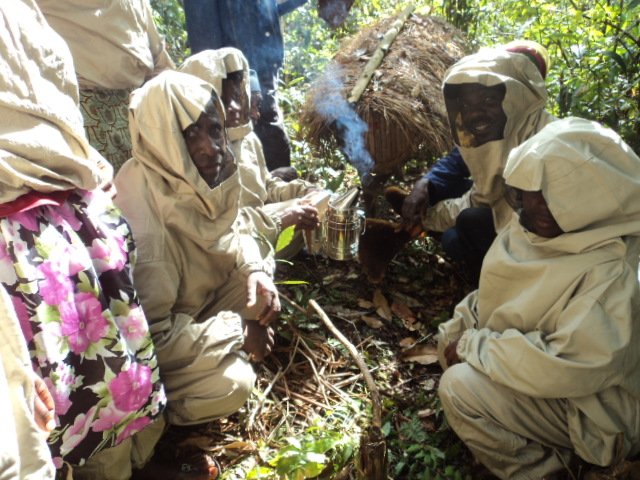
 CAMGEW encourages organic farming by improving on soil fertility with organic matter and encourages household organic waste sorting for use in farms to increase crop yields and also as a means of managing household waste. Agroforestry is another way CAMGEW promotes ecofarming. This was a traditional method used to improve the soil. It promotes integrated organic farming, horticulture (flower, vegetable and fruit farming) and apiculture (bee farming).


To discourage the use of plastic papers which are known to be non-biodegradable and to reduce the aesthetics of our environment, CAMGEW promotes the use of bags and baskets made from locally available materials like bamboo, jute, rattan etc that are biodegradable. These bags and baskets have been used in the past when plastics were not yet common. CAMGEW is building a campaign to see how biodegradable materials could be used for packaging instead of plastics.
The availability and affordability of modern energy is paramount to every development. Many rural areas lack this energy because they are far away from the national grid and also because they cannot afford it. Another, problem faced by Cameroon is the shortage of power due to dependency on one energy source – hydropower that is always affected by droughts brought by the changing climatic.
It promotes decentralised and diverse energy systems like small hyro, solar, wind and biogas systems exploited from the available natural energy sources like river fall, sun, wind and animal waste or plant matter respectively. It also engages in a campaign to reduce dependency on environmentally unfriendly energy sources like fossil fuels.
It takes part in fighting climate change from four key perspectives – mitigation, adaptation, finance and technology as identified in the global Climate Change Conference that took place in Bali, Indonesia in December 2007. During the Bali conference, the UN Secretary General, Ban Ki moon said “no one-rich or poor-can remain immune from the dangers of climate change”.
To achieve all of above, CAMGEW uses media, gatherings, posters, newsletters and organised events like workshops. It therefore, sees creativity and innovations as a way forward to solve the global problems that plague humanity.
These innovations and creative ideas therefore need to be replicated and/or scaled-up to tackle global challenges. It believes that through partnership, networking, research and volunteerism this shared vision for long-term cooperative action among the people of the world to improve on lives and promote sustainable development, can be achieved.
A video showing activities at its vocational training centre in Oku can be seen here:

Centre for Community Regeneration and Development
Centre for Community Regeneration and Development
 (CCREAD-Cameroon) is a youth led development organization established in 2004 and legally registered as a non profit organization in December 2006 with Registration Number: 379/AG/G.42/162/AJPAS under Cameroon Law of 1990 governing non political associations. CCREAD-Cameroon won the 2011-2012 World Bank Development Marketplace Competition on the promotion of good governance, is affiliated to Peace Child International, (UK), MIYC South Korea, an active member of United Network of Young Peacebuilders (Worldwide) and an NGO participant of UN Global Compact. CCREAD-Cameroon is also in Special Consultative Status with UN-ECOSOC
Vision
CCREAD-Cameroon helps to empower marginalised children, youths, women and indigenous populations merged with environmental sustainability through united youth actions.
Mission
Working in response to adopted community driven strategic plans, CCREAD-Cameroon currently has a mission to enhance the social, economic, cultural and political empowerment of children, youths, women and indigenous groups for poverty alleviation, better community organization, improved governance/human rights and environmental conservation and management.
Objectives
The activities implemented by CCREAD-Cameroon are guided by the following objectives:
- Increase the application of good goverance, decentralisation, and democratic practices in hard to reach/marginalized regions.
- Reduce the high incidence of poverty among marginalized women and youths with focus on hard-to-reach forest communities.
- Increase basic education and health facility access for children, women and youths in poor communities.
- Foster peacebuilding and conflict resolution initiatives in selected communities.
- Increase the respect of the rights of children, and women
- Raise environmental sustainability awareness and promote management actions among youths.
Operational area
South West, North West, West and Eastern Regions of Cameroon as core regions.
Activities undertaken
Leadership and peacebuilding training for women and youths. Through this activity, Cameroonian youths in Kupe Muanenguba Division through schools and women were drilled on leadership qualities, peacebuilding and conflict prevention/resolution skills mainstreamed with human resources management abilities/decentralisation education. A total of 4,692 youths and 1,982 women have received training.
Leadership training
Recognizing that corruption remains a key development limiting factor in most sectors in Cameroon, CCREAD-Cameroon has also joined other stakeholders in fighting corruption starting with schools in 2011. A national baseline study on the challenges of corruption and governance was completed and adopted.
A governance Education Manual was developed and 1,200 copies distributed to major stakeholders and 82 school anti corruption campaigns and advocacy forums were organised.
Schools management Boards were instituted and trained to fight and report corruption in schools in the South West Regions.
Governance training and fight against corruption campaigns were organised through youth actions.
Many inter tribal conflicts result from land problems and the marginalization of particular groups. CCREAD-Cameroon has been responding to these problems by organizing communities into groups, educating them and assisting them to start group initiatives for poverty alleviation/solving land conflicts.
Training women and indigenous groups on project planning, fundraising and networking
Started in 2011, this project helps women and youths constituted into development common initiative groups on identifying community problems, documentation, elaboration of micro projects, finding and mobilizing resources, creating relevant partnership monitoring and evaluation/reporting of their result to the general public. CCREAD-Cameroon has organized 12 regional trainings/follow-up workshops reaching 12 groups through 120 group leaders and members in the South West Region of Cameroon
Rise for Nature Programme
This is an integrated environmental sustainability programme which CCREAD-Cameroon launched in 2011 to respond to nature conservation and rural development needs in many hard-to-reach forest communities of Kupe Muanenguba region. Activities were targeted towards forest and wildlife conservation unsustainable practices campaigns, environmental education through schools, climate change and adaptation education, instituting alternative livelihoods activities with indigenous forest communities and advocacy for the respect of the rights to benefits from natural resources. Through campaigns and field actions, 25 communities have been reached, 27 schools covered and 2 regional advocacy forums held by the end of 2012.
In many parts of Cameroon, women still experience violation of their sexual/reproductive rights, cultural and political rights and exclusion from cultural inheritances. By December 2012 CCRead organised 6 regional advocacy and education forums on the rights of women. 30 women leaders were trained on human rights education and counseling and over 2,000 human rights education leaflets were handed to policy and traditional leaders.
Women’ rights activities
 CCREAD-Cameroon has continued the donation of hygiene and sanitation materials (toilets, water, waste management materials and facility management). From 201o-2012, 5 toilets have been constructed for 5 community primary schools, 10 volunteer teachers were sent to teach in schools and 200 water drinking buckets and cups were distributed to school children.
Direct assistance to needy schools in marginalized forest communities
Working to end high mortality rates in rural communities CCREAD has focused on the training of traditional Birth Attendants (TBAs) in rural areas with emphases on communities with no health units. In collaboration with BKFA, CCREAD-Cameroon distributes each month 500 birthing kits to rural women and community centers to help in safe and clean delivery.
Planned projects for the future
- Vocational training for youths and women on ICTs, Tailoring entrepreneurship, and leadership.
- Scaling up of youth leadership and governance training.
- School base peace, human rights, governance and environmental education.
- Start of Rise for Nature Program Phase 3 in 5 communities on environmental sustainability and climate change adaptation.
- Integrated poverty alleviation scheme for women and youths in need.
- Assistance to 10 schools through classroom and toilet constructions.
- Donation of birthing kits to rural women for safe and clean delivery
Team members
 Hilary Ewang Ngide – Executive Director MS.c(Development/Environment, PGC(PPME), BS.c(Geo& planning)
Belinda Menyange – Programs Officer BS.c (Sociology/Anthropology)
Etienne Mponne – Projects officer BS.c (Environmental mgt)
Sylvie E. Epolle – Outreach manager LL.B
Cirus Msumbe Epie – Communications officer B.ED, Dip(Communications)
Ntungwe Remitus – Administrator LLB, Dip in PME
Lucy Etuge – Partnerships BA, Community development
Lyn Tim – Outreach Assist. LLB, Dip HRM
Anna Dressler – Coordinator.
Future in Our Hands Womens Co-operative, Oku
Future In Our Hands Cooperative Oku
 FIOH Oku is a women’s farming cooperative made of over 5 Common Initiative Groups (CIGs) representing over five villages in Oku Subdivision. It was created on the 22nd of September 1999. It encourages the spirit of hard work, cooperation and togetherness in women. It is called a women’s cooperative because 95% of members are women. Her creation was thanks to the interest SHUMAS NGO and Future Our Hands had to empower women and the vulnerable in the Oku community. It has as motto: educate a man, educate an individual; educate a woman to educate a whole nation. This is because of the socio-economic importance of a woman in the purely African village community like Oku. Some of the projects realised by FIOH-Oku:-
- Improving the processing and transformation of corn and cassava through mills and haulers donated by SHUMAS and her partners.
- Offering loans to members at very minimal interest rates through a scheme developed by SHUMAS.
- Through SHUMAS there has been the development of community health infrastructure for the village of Lui.
- Regular production of organic food crops and other natural products for income generation and food security.
- Attending agro-pastoral shows to market their produce.
- Training and practising sustainable and integrated farming and livestock productions methods amongst her members.
- Training and application of agroforestry techniques to her membership.
Oku is located in Bui Division of the North West Region of Cameroon. It is made up of 36 village communities mostly living along the slopes of the Kilum Mountain. The people depend mostly on forest resources, subsistence agriculture, cash crop farming, livestock production and local artisan work for their livelihood. The Kilum Ijim Forest found in the community is a naturally preserved moist montane forest with a surface area of about 20,000 hectares. It is located in the Mount Oku Ridge in the Bamenda Highlands and forms part of the High Plateaus Agro-ecological Zone of Cameroon. The geographic location of the area is latitude 6°07’N – 6°17’N and longitude 10°20’E – 10°25’E. It has very important and threatened Afro-Montane endemic animal and plant species such as Prunus africana amongst others. It is an internationally important biodiversity hotspot and a critical zone for carbon sequestration within the High Plateaus Agro-ecological Zone.
The Kilum area is one of the highly populated locations in Africa and Cameroon in particular, accommodating 144,800 people occupying about 328 km2 (439.3persons/km2); hence, high pressure on resources is inevitable. There has been progressive deforestation and degradation mainly due to agricultural expansion, forest fire and overgrazing. Fuel wood harvesting has also been a major cause of deforestation and forest degradation. The late 1980s decline in coffee prices triggered many farmers to migrate further up the slopes in search of new land to increase income through alternative crops.
Within two years of its formation the activities of the co-operative had a profound positive impact on the lives of the women:
Former situation
- We were scattered and never cared to come together because we did farming far away from our homes because of the eucalyptus trees that were planted around our homes by men.
- We thought that only men had the right to inherit the property of parents. We never attended seminars and training programmes.
- We were shy to express ourselves among men and only played the part of listening.
- Our opportunities for income-generation were very limited.
- We thought HIV/AIDS was a curse from God and an opportunity for white people to sell us condoms.
- We thought that bread and cakes production was the duty of men. We did not know the importance of business – buyam sellam.
- If a woman was illiterate when she married we thought this was the last chance for her to become literate.
- Single parents had to resort to work on farms just to feed the family. They had insufficient income for their children’s education.
- Women believed that only men had the right to determine how many children they should bear.
- Husbands decided which political party their wives should vote for in Elections.
- Only men had the right to erect buildings and got the credit for doing so despite the help of women.
- Men brought in second wives without the consent of the first wife, claiming it is their right.
- Women thought only of their own needs and rarely discussed problems together. We did not engage with women from other villages.
- Widows used to sleep on bare floors in very smokey houses that constituted a breeding ground for germs and diseases.
Current situation
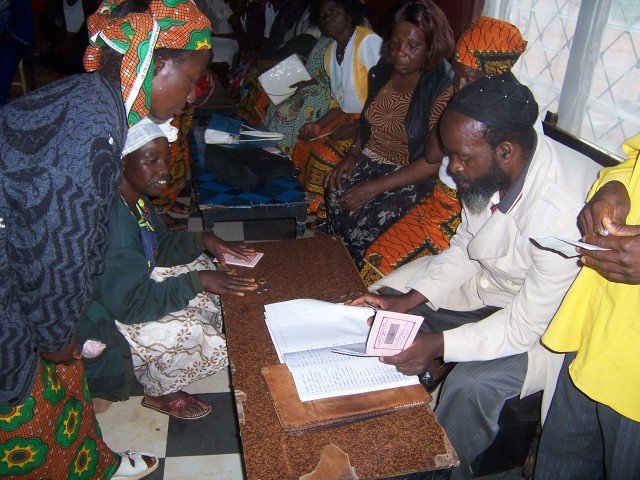
- We now farm around our homes and have enough time to come together. Children now attend school as they do not have to come with us to distant farms. We have gained experience by coming together e.g. joined savings and credit groups with small interest charged on loans. We now have small businesses that help to solve some of our problems like paying for school fees and drugs. We are healthy and do not have to rely on our husbands for money.
- We have attended many seminars organised by SHUMAS and the Diocesan Commission for Justice and Peace, Bishops House, Kumbo, Human Rights agent and the International Federation of Female Lawyers in Cameroon.
- Now we express ourselves freely because of the lectures from SHUMAS and human rights agent who told us that every person is the same before the law and has the right to express his/her views freely.
- We now produce tablet and powder soap and hire a hand cart for transporting items.
- Through seminars we have learned that HIV/AIDS is real. We go out to schools and talk on the rural radio about the dangers and the precautioins that must be taken. There have been significant changes in sexual behaviour as a result.
- We now have our own small bakery and members can take part in bread making and poff poff production. We sell what we make and employ male youths to carry to far distant places by motorbike to sell.
- The eucalyptus replacement project has enabled women to have more time to engage in adult literacy classes. These include married women who were once illiterate.
- FIOH Oku has encouraged single parents to join the co-opertive and learn how to engage in income generating activities. The co-operative has provided them with small loans and they are now able to sell items in the market. Some have been able to send their children to school and have given testimonies on how their lives have improved.
- From the lectures and seminars women became more aware that men and women should jointly agree the number of children they should bear.
- Through the education of the human rights agent and messages from Mike Thomas of the FIOH UK Fund, women now know their rights to vote in their own right.
- Women now realise that they can take the initiative in putting up a building. Our women have bought a plot of land and have erected their own meeting hall.
- Through the co-operative we have taught women the importance of marriage certificates and various types of marriage . If monogamy is the choice then men have no right to bring in a second wife or mistress.
- We now have exchange visits with other womens co-operatives in our network. We exchange ideas and learn from each others experience.
- Now most women, especially FIOH women, do not now sleep in such houses. When their husbands die they sit in a special room with friends who comfort them.
Follow us on Facebook:
www.facebook.com/fiohfund
Follow us on Twitter:
twitter.com/fiohnet
Please share our links with your friends to help us reach a wider audience.