
CAMGEW AWARDED THE EQUATOR PRIZE
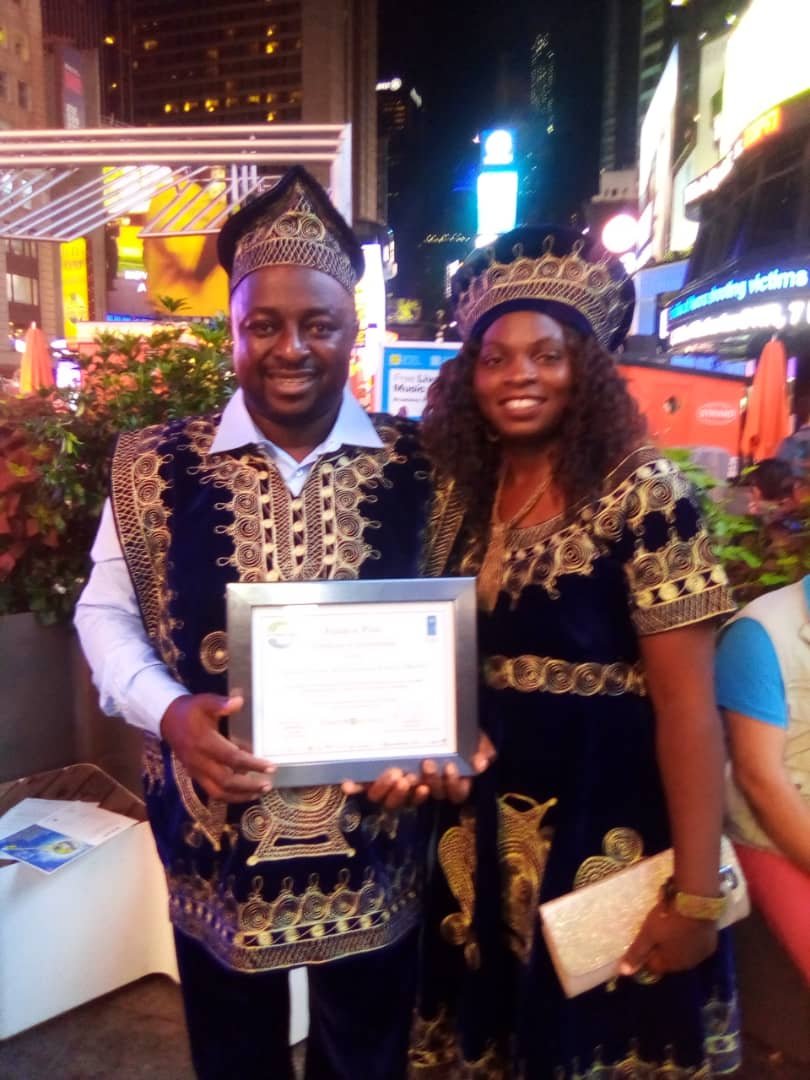
Cameroon Gender and Environment Watch was one of the 21 non-government organisations from around the world to be awarded the Equator Prize.

Created in 2007, Cameron Gender and Environment Watch (CAMGEW) brings together women’s empowerment, community livelihoods, and ecology to address environmental challenges in northwestern Cameroon. Recognizing that local livelihoods are deeply integrated with the health of local ecosystems, the group has planted 75,000 bee-loving African cherry trees (Prunus Africana) in degraded areas of Kilum-Ijim Forest to serve as a carbon sink and protect key watersheds. At the same time, they have trained over 1,000 bee farmers in honey production for market, while a complementary programme has trained 772 farmers on agroforestry to bolster soil health and provide alternative firewood sources. To empower women farmers, CAMGEW offers both business training and microloans through a programme that has, to date, trained 1,580 women and provided 1,325 loans. In a time of ongoing conflict in Cameroon, the organization has made a powerful impact on the health of local ecosystems and the well-being of local communities.
Key Facts
Equator Prize Winner: 2019
Founded: 2007
Location: North West Region, Cameroon
Ecosystem: Forests, Mountains

Please support the work of the Future in Our Hands Education and Development Fund whose aim is to help and empower some of the world’s poorest and most marginalised people by:
- UK residents can provide long term support by completing the FIOH FUND DONATION FORM and sending to the address shown on the form:
- Direct grant to the charity’s bank account or by cheque to:
 Bank account details:
Co-operative Bank
IBAN: GB07CPBK08929965050707
BIC: CPBKGB22
Cheques should be made payable to the
Future in Our Hands E&D Fund
—————————————————————————-
Fundraising to help the work of the charities would be greatly appreciated
Future in Our Hands Sierra Leone Report Sept 2019
Achievements
For the period January – September 2019 FIOH SL undertook the following activities:
Regenerative agriculture
 Rice permaculture farm
 Training farmers on ridges construction
 Vegetable farm inspection
 Agro ecological training on compost making
Establishment of village savings and credit associations
 Training meeting on share purchase and loan disbursement and repayment
Nutrition

Training on baby positioning during exclusive breast feeding
 Training on methodologies to ensure a balanced diet for pregnant women and lactating mothers
Future in Our Hands Sierra Leone
37 Lunsar Road
Makeni City
Northern Region
Sierra Leone
Cameroon Gender and Environment Watch report 2016
This is a summary of the CAMGEW 2016 annual report a complete copy of which can be seen here:
CAMGEW 2016 ANNUAL REPORT READY

CAMGEW logo
Cameroon Gender and Environment Watch (CAMGEW) reflects its holistic approach to development through the activities described in its 2016 annual report prepared by its director, Wirsiy Emmanuel Binyuy. Most of these activities are located in and around Kilum-Ijim Forest area in the NW Region of Cameroon with her office in Oku.
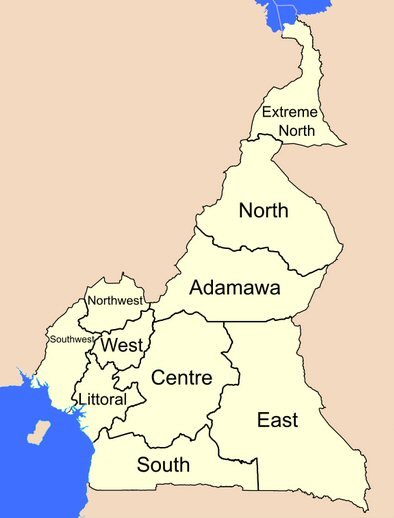 Activities included:
- Planting of indigenous trees to regenerate the important Kilum-Ijim natural forest.
- Training and practical support for bee farming to produce the local distinctive white honey.
- Marketing training and the establishment of a shop in Bamenda (capital of the region of North West) to sell the honey, its products and equipment.
- Training in organic farming methods and raising of nitrogen-fixing trees for agroforestry.
- Vocational training in dress-making, hair dressing, shoe making and repair.
- Establishing a micro-credit and savings scheme for women and training in business management, including the use of computers.
- Training for women in health and nutrition.
- Training for communities in the basic human, statutory and legal rights of women.
- Provision of counselling and advice for women who are subjected to physical and/or mental abuse.
- Environmental and computer education for children.
- Tree planting around the new centre for the treatment of disabled children which is located in Bafoussam, West Region.
Forest regeneration
The Kilum-Ijim natural forest contains several endangered species of flora and fauna, including the Bannerman’s Turaco (fauna), Newtonia camerunensis(flora) and has an important role to play in the mitigation of global warming. Despite these and the many economic benefits which can be derived directly from the forest, a large section of the original forest has been cut down to create farming land.


CAMGEW has played an important role in safeguarding the remaining forest by educating people about the environmental importance of preserving the forest and showing local people how they can gain an economic benefit from the natural products the forest provides.

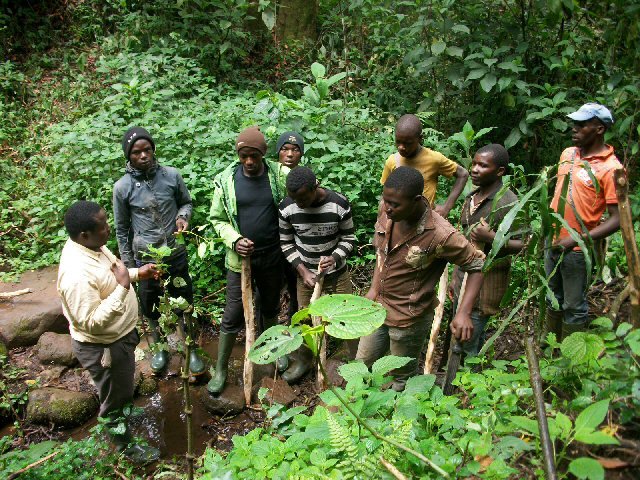

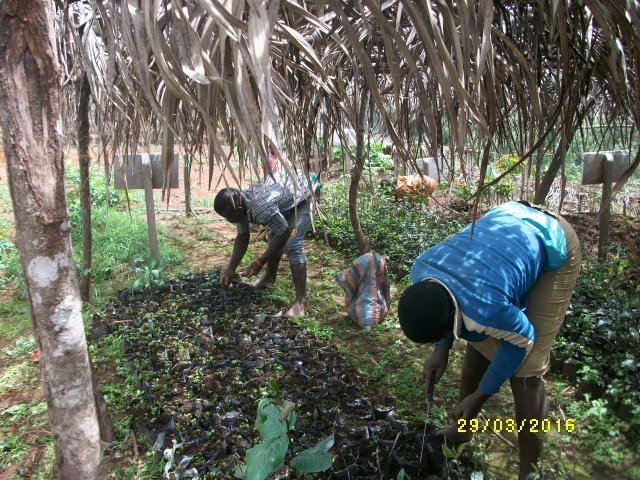
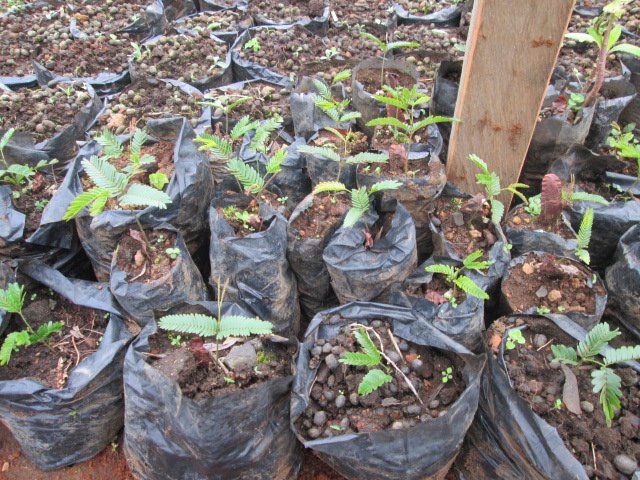

CAMGEW has established nurseries to grow native tree species, including Prunus Africana, Croton Macrotachyst, Carapas Grandifolia, Pittusporum Veridiflorium, Zysigium Staundtii, Solanecio Mannii, Newtonia Camerunensis, Psydrax Dunlapii, Briellia Speciosa, Pyschotria Pendularis, Acacia, Leuceana, Mysposis, Tephrosia, Sesbania and Tree Tomatoes. Many of these have been planted in the forest by children and local community groups to regenerate sections of forest destroyed by domestic animals and fire.


Nitrogen fixing seedlings have been distributed to local farmers who are using agroforestry methods. Three nurseries have been established (Manchok, Mbockenghas and Ikal) with a capacity to raise 200,000 trees. The different species have been labelled with scientific and local names and their uses to educate the local community and school children.

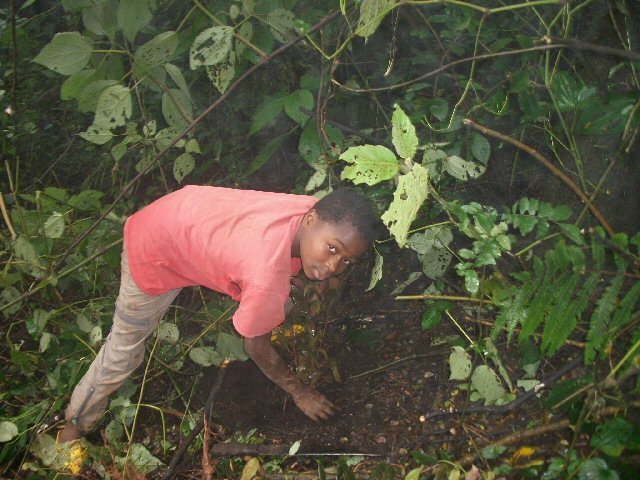

In order to restrict the spread of ferns cuttings of Schefflera abysisinica and Solanecio mannii have been planted in the forest. The fern plants die once the trees grow above them.
Bee farming
Bee farming is an important activity in the preservation of the Kilum Ijim forest as the farmers have a vested interest in preserving the natural flora which provides nectar for the bees and preventing forest fires. CAMGEW has provided hives, training in good bee management activities and organised the farmers into cooperatives/village groups. It has also provided a shop in Bamenda to assist with marketing the honey. The training has involved 212 farmers and 85 cooperative executive members in 22 villages in 2016. CAMGEW has also provided training in the production of bee wax which is more profitable than honey. It also involves full utilization of the honey combs which might otherwise be discarded. 116 community members were trained in 2016, 21 of whom were women.


CAMGEW distributed 10 honey drainers, 100 suits, 30 buckets and provided management training including the establishment of a constitution and by-laws and the production of an instruction manual in cooperative law.
Organic farming and agroforestry training
CAMGEW distributed more than 900,000 seeds of Leucena, Tephrosia and Sesbania (for animal fodder) to over 139 farmers, including 38 women in 7 villages. These species are nitrogen fixing and can be grown together with crops including coffee, potatoes, beans, huckleberry, cabbage, yams, corn. In addition to providing nitrogen for crops, the trees provide shade and help prevent erosion on sloping ground.
CAMGEW also distributed 60Kg of bracharia seeds for obtaining fodder in the dry season when other feed is scarce. This will prevent farmers having to move their animals long distances to find pasture.
Vocational training
Unfortunately the CAMGEW training centre had to close down as a result of the lack of funding. However, the equipment was distributed to the trainers who then located to Elak where there was a greater customer base. Also since the CAMGEW initiative other training centres have been established in the community. Many of the trainees at the CAMGEW centre have established workshops in their own communities.


Health, human rights and nutrition training for women
 CAMGEW has provided training about women rights to health services, nutrition, legal marriage and counselling as a result of physical and psychological abuse. This included education to reduce early pregnancies and nutrition to improve the health of teenage mothers and their children.
Information was also provided about sexually transmitted diseases and the benefits of legalised marriages. Information was also provided with the aim of reducing child trafficking.
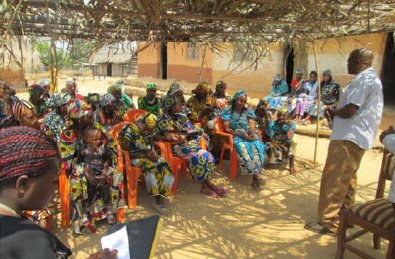

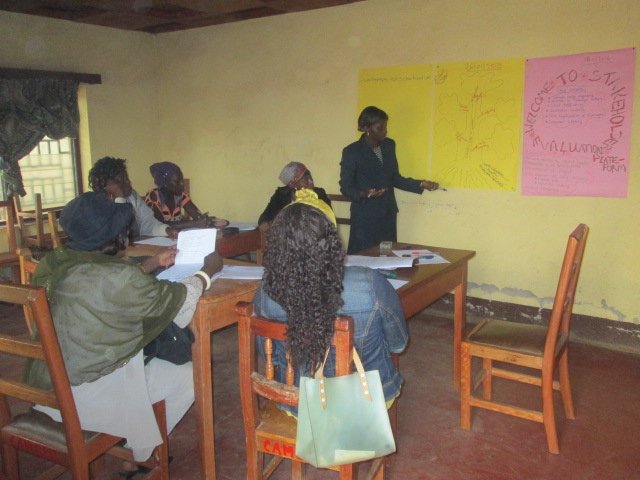
Much of this work has been carried out with the young women of the Muslim Mbororo tribe who are known for high birth rates and low literacy. Most of the men keep grazing animals which are their main source of income. Counselling of the girls involved marital crises physical and psychological abuse, frustration arising from child trafficking, loneliness and stigma from unplanned teenage pregnancy.
Micro credit and savings scheme training for women
CAMGEW has been running a micro-credit scheme for women since 2015. Loans are given at an interest rate of 2% per CFA 1,000 with a 6 month repayment period. Each recipient must have undergone training provided by CAMGEW. 500 women had benefited from the scheme by December 2016.
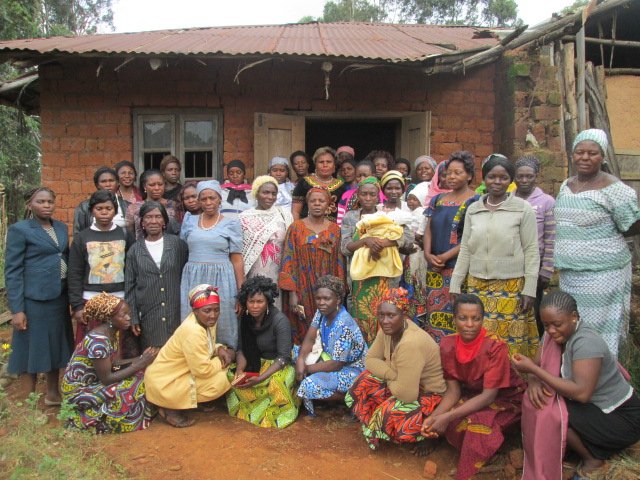 Most women do not have enough the money required to open a bank savings account. The CAMGEW savings scheme enables women to open an account with as little as 500 CFA (about 35p). CAMGEW keeps its funds with the Manchok Credit Union. In 2015 CAMGEW trained 193 women and 153 received loans and in 2016 trained 483 women and gave loans to 390 women. Loans ranged from 30,000 to 120,000 CFA.
Environmental education
The nurseries established by CAMGEW have served as learning areas for children, schools and community groups in types of forest trees and their uses. Children have gained hands-on experience working in the nurseries and also gathering seeds from the forest.
Computer training for women and children
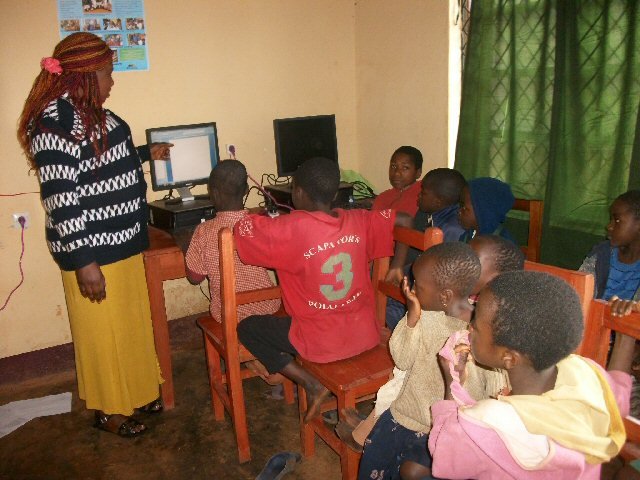
CAMGEW has provided basic computer training for women and children.


Tree planting at the GLORES treatment centre for disabled children
In 2016 CAMGEW planted 500 tree seedlings around a new centre for the treatment of severely disabled children based in Bafoussam in the West Region. These included, prunus africana, pittosporum, ornamental, palms, mangoes, plums and oranges.
Video productions about CAMGEW and its director
The following productions provide clear presentation of the comprehensive range of CAMGEW activities and how they contribute to the inter-relationship between various aspects of sustainable development:
Kilum-Ijim forest apiculture:
https://www.youtube.com/watch?v=TBqEgnjsWSg
Organic coffee farming in Oku:
https://www.youtube.com/watch?v=hHKY15LEuos
Short video featuring CAMGEW director, Emmanuel Wirsy
http://www.dw.com/en/money-for-forest-honey/a-37473719
CAMGEW in other documentaries. (Emmanuel’s work is featured about 9 minutes into the video)
https://www.youtube.com/watch?v=rCVVzGDXQmw&t=129s
CAMGEW FOREST VIDEO. This video is an excellent presentation of the work of CAMGEW and illustrates the link between bee farming and the preservation of the forest. It also shows children actively involved in the both the raising and out-planting of seedlings in to the forest :
https://www.youtube.com/watch?v=4TwdiXGj3zk
CAMGEW GENERAL ACTIVITIES VIDEO. This is a brief overview of activities of CAMGEW including its vocational training: https://www.youtube.com/watch?v=zyM89iaLnHw&feature=youtu.be&hd=1
WEB SITE:
www.camgew.org or www.camgew.com.
Future in Our Hands Womens Co-operative, Oku
Future In Our Hands Cooperative Oku
 FIOH Oku is a women’s farming cooperative made of over 5 Common Initiative Groups (CIGs) representing over five villages in Oku Subdivision. It was created on the 22nd of September 1999. It encourages the spirit of hard work, cooperation and togetherness in women. It is called a women’s cooperative because 95% of members are women. Her creation was thanks to the interest SHUMAS NGO and Future Our Hands had to empower women and the vulnerable in the Oku community. It has as motto: educate a man, educate an individual; educate a woman to educate a whole nation. This is because of the socio-economic importance of a woman in the purely African village community like Oku. Some of the projects realised by FIOH-Oku:-
- Improving the processing and transformation of corn and cassava through mills and haulers donated by SHUMAS and her partners.
- Offering loans to members at very minimal interest rates through a scheme developed by SHUMAS.
- Through SHUMAS there has been the development of community health infrastructure for the village of Lui.
- Regular production of organic food crops and other natural products for income generation and food security.
- Attending agro-pastoral shows to market their produce.
- Training and practising sustainable and integrated farming and livestock productions methods amongst her members.
- Training and application of agroforestry techniques to her membership.
Oku is located in Bui Division of the North West Region of Cameroon. It is made up of 36 village communities mostly living along the slopes of the Kilum Mountain. The people depend mostly on forest resources, subsistence agriculture, cash crop farming, livestock production and local artisan work for their livelihood. The Kilum Ijim Forest found in the community is a naturally preserved moist montane forest with a surface area of about 20,000 hectares. It is located in the Mount Oku Ridge in the Bamenda Highlands and forms part of the High Plateaus Agro-ecological Zone of Cameroon. The geographic location of the area is latitude 6°07’N – 6°17’N and longitude 10°20’E – 10°25’E. It has very important and threatened Afro-Montane endemic animal and plant species such as Prunus africana amongst others. It is an internationally important biodiversity hotspot and a critical zone for carbon sequestration within the High Plateaus Agro-ecological Zone.
The Kilum area is one of the highly populated locations in Africa and Cameroon in particular, accommodating 144,800 people occupying about 328 km2 (439.3persons/km2); hence, high pressure on resources is inevitable. There has been progressive deforestation and degradation mainly due to agricultural expansion, forest fire and overgrazing. Fuel wood harvesting has also been a major cause of deforestation and forest degradation. The late 1980s decline in coffee prices triggered many farmers to migrate further up the slopes in search of new land to increase income through alternative crops.
Within two years of its formation the activities of the co-operative had a profound positive impact on the lives of the women:
Former situation
- We were scattered and never cared to come together because we did farming far away from our homes because of the eucalyptus trees that were planted around our homes by men.
- We thought that only men had the right to inherit the property of parents. We never attended seminars and training programmes.
- We were shy to express ourselves among men and only played the part of listening.
- Our opportunities for income-generation were very limited.
- We thought HIV/AIDS was a curse from God and an opportunity for white people to sell us condoms.
- We thought that bread and cakes production was the duty of men. We did not know the importance of business – buyam sellam.
- If a woman was illiterate when she married we thought this was the last chance for her to become literate.
- Single parents had to resort to work on farms just to feed the family. They had insufficient income for their children’s education.
- Women believed that only men had the right to determine how many children they should bear.
- Husbands decided which political party their wives should vote for in Elections.
- Only men had the right to erect buildings and got the credit for doing so despite the help of women.
- Men brought in second wives without the consent of the first wife, claiming it is their right.
- Women thought only of their own needs and rarely discussed problems together. We did not engage with women from other villages.
- Widows used to sleep on bare floors in very smokey houses that constituted a breeding ground for germs and diseases.
Current situation
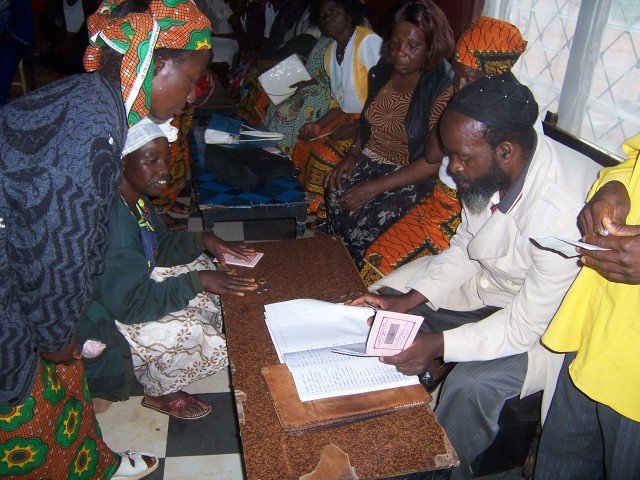
- We now farm around our homes and have enough time to come together. Children now attend school as they do not have to come with us to distant farms. We have gained experience by coming together e.g. joined savings and credit groups with small interest charged on loans. We now have small businesses that help to solve some of our problems like paying for school fees and drugs. We are healthy and do not have to rely on our husbands for money.
- We have attended many seminars organised by SHUMAS and the Diocesan Commission for Justice and Peace, Bishops House, Kumbo, Human Rights agent and the International Federation of Female Lawyers in Cameroon.
- Now we express ourselves freely because of the lectures from SHUMAS and human rights agent who told us that every person is the same before the law and has the right to express his/her views freely.
- We now produce tablet and powder soap and hire a hand cart for transporting items.
- Through seminars we have learned that HIV/AIDS is real. We go out to schools and talk on the rural radio about the dangers and the precautioins that must be taken. There have been significant changes in sexual behaviour as a result.
- We now have our own small bakery and members can take part in bread making and poff poff production. We sell what we make and employ male youths to carry to far distant places by motorbike to sell.
- The eucalyptus replacement project has enabled women to have more time to engage in adult literacy classes. These include married women who were once illiterate.
- FIOH Oku has encouraged single parents to join the co-opertive and learn how to engage in income generating activities. The co-operative has provided them with small loans and they are now able to sell items in the market. Some have been able to send their children to school and have given testimonies on how their lives have improved.
- From the lectures and seminars women became more aware that men and women should jointly agree the number of children they should bear.
- Through the education of the human rights agent and messages from Mike Thomas of the FIOH UK Fund, women now know their rights to vote in their own right.
- Women now realise that they can take the initiative in putting up a building. Our women have bought a plot of land and have erected their own meeting hall.
- Through the co-operative we have taught women the importance of marriage certificates and various types of marriage . If monogamy is the choice then men have no right to bring in a second wife or mistress.
- We now have exchange visits with other womens co-operatives in our network. We exchange ideas and learn from each others experience.
- Now most women, especially FIOH women, do not now sleep in such houses. When their husbands die they sit in a special room with friends who comfort them.
Follow us on Facebook:
www.facebook.com/fiohfund
Follow us on Twitter:
twitter.com/fiohnet
Please share our links with your friends to help us reach a wider audience.
Future in Our Hands Sierra Leone
 Future in Our Hands Sierra Leone
Background
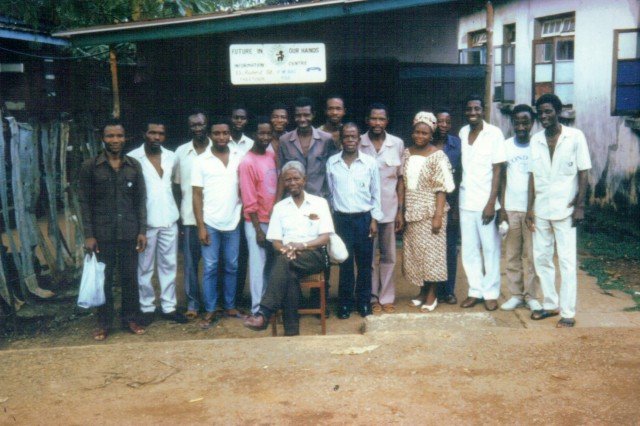 An FIOH group was established by Olatunde Johnson in Freetown in the 1980s and registered as a national non-government organisation by Edward Kargbo in 1995. The first interest in FIOH arose from an article in the New Internationalist and the second from a seminar at Port Loko when Mike Thomas paid a second visit to the country in 1993. Edward, who attended the seminar, formed an association of 13 farmers groups which was then named the FIOH Farmers Union. The name was later changed to FIOH Sierra Leone.
Edward Kargbo testimony: EDWARD TESTIMONY
Mission Statement
The Mission of FIOH Sierra Leone is to co-ordinate and facilitate the efforts of village development groups by enabling them to access farming inputs, modern farming techniques, education and skills poverty alleviation programmes, sanitation and credit facilities for self-sustainability and self reliance.
Programme interventions – capacity building, food security, women and youth empowerment, environment, health and sanitation, advocacy.
Brief History Of The Organisation:
 The Future In Our Hands Sierra Leone (FIOH-SL) is an indigenous non-governmental organization with a Head Office in Makeni (Bombali district) and sub-offices in Kabala town (Koinadugu District) and Mile 91 (Tonkolili District). It was established in 1993 as an offshoot of what was formally the Yoni Farmers’ Union. In 1994, as the situation in Sierra Leone deteriorated, the membership decided that FIOH had a vital role to play in providing assistance to those affected by the escalating conflict. The main focus of the organization during the rebel war was to complement the emergency and relief work of the Government of Sierra Leone, as well as that of international and national NGOs.

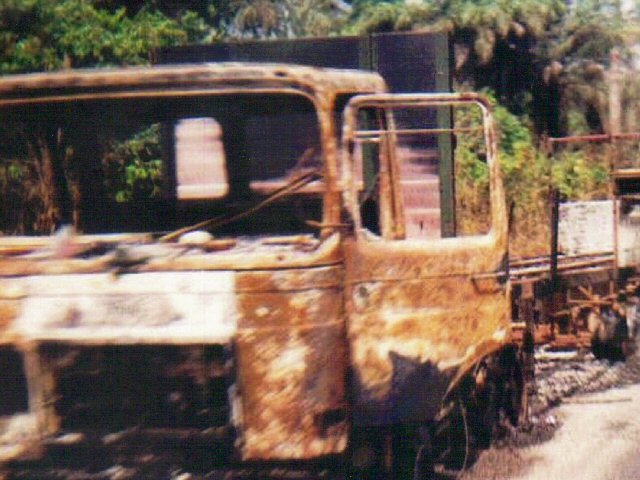
During and immediately after the war, FIOH worked in collaboration with CARE International, Department for International Development (DFID) UK, Voluntary Service Overseas (VSO) UK and the World Food Programme (WFP) UN, distributing food and other relief items to internally displaced persons in their operational areas. Further activities included providing psychosocial support to affected communities and raising awareness on human rights, HIV and AIDS prevention and control.


Edward Kargbo and his family surviving in the bush
Youth group in Freetown
Displaced people queuing for food at Mile 91
FIOH vocational training centre at Mile 91
Following the end of the conflict in 2002, FIOH shifted its focus from emergency relief to development which involved building the capacity of communities for self reliance. It has continued to build partnerships and linkages with a variety of local and international organizations and has implemented two projects (Conservation Agriculture Project (CAP) and Villages Savings and Loans (VS&L) project with CARE-SL in Koinadugu District whilst the Voluntary Services Overseas (VSO) has provided the human resource support. In addition, the FIOH Fund-UK and UN/WFP supported Life Skills Trainings and Community Asset Creation for marginalized youths and communities.
FIOH-SL also enjoys strong links with community based organisations (CBOs) at grassroots level aimed at building their capacities to better serve their communities.
Food for work
 During 2003 FIOH Sierra Leone was able to increase its operational area to include 3 chiefdoms (Kissy Tongi, Njaluahun and Dea) in the Kailahun District and two chiefdoms (Kalansogoia and Sambaia Benduga) in the Tonkolili District.
In August 2012, FIOH Norway member, Nini Haeggernes, visited Sierra Leone and was made aware of the work of Edward Kargbo by Mike Thomas. Subsequent to her visit she wrote an article which appeared in the FIOH Norway magazine, Folkevette: FOLKEVETT-FIOH SIERRA LEONE
Norwegian, Georg Hansen, read this article and decided to visit the country and see the the work of FIOH Sierra Leone. He has raised a considerable sum of money to support a school building programme and has contributed funds to address the ebola crisis in 2015.
 Future in Our Hands Sierra Leone
37 Lunsar Road
Makeni City
Northern Region
Sierra Leone