
FIOH Sierra Leone – responding to climate change and Covid 19
ACTIVITY REPORT
PROJECT : Local response to climate change and Covid19
Funder : FIOH Fund -UK
COST : GBP 545
REPORTING DATE: 4thJune 2020
Brief background
In a bid to integrate climate change in development projects, FIOH-SL in collaboration with FIOH-UK supported farmers to mitigate climate change through scaling up the adoption of regenerative agriculture. This involved farming practices that work together not just to sustain, but to increase the carrying capacity of the land, restoring the natural fertility of agro-ecosystems. Core practise involves permanent soil cover with living plants, minimum or zero tillage, maximization of biodiversity, composting from zero waste in the farming system and reduction of agrochemicals with a view of their elimination.
FIELD ACTIVITY RESULT
Result of activity 1: Organize community sensitization meetings on climate change:
- Two community sensitization meetings were organized which attracted 50 participants, farmers, stakeholders, facilitator and participants to share learning on the following:
WHAT IS CLIMATE CHANGE?
Following the discussion on the literal understanding of climate change, participants also brainstorm, on the kinds of climate hazards.
- Heavy wind
- Increase in the frequency and magnitude of warm daily temperature (extremes and decreases)/prolong day seasons from October May)
- Frequency heavy precipitation/rainfall.
- Spring/small rivers completely dry up during the day season.
IMPACTS OF CLIMATE CHANGE
- Water shortage
- Floods
- Heat waves
- Droughts
- Outbreak of infectious diseases.
Traditional/cultural practices adopted in the past to mitigate climate change as:
- Establishment of fire belts around forest reserves in March.
- No bush clearing around water catchment areas.
- Secret society bushes as protected as forest reserves.
- Forest reserves known as village green surrounding the entrance of villages protected.
- Bush fallowing for 15 years to encourage regrowth.
RESULTS OF ACTIVITY 2 – Practical training on Agroecological/ farming.
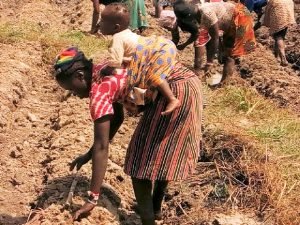
25 farmers (15F,10M) received practical training (5 per session) of farm design, planting methods, plant spacing, zero or minimum tillage practice, composting from zero waste and field application. Monitoring results reveal that farmers are gradually adopting these practices on their own farms.

RESULTS OF ACTIVITY 3 – Seeds and tools support. Following the procurement of assorted seeds and tools, these items were distributed to farmer field school representatives.
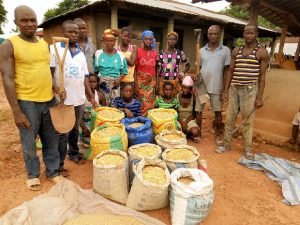


FIOH-SL seeds and tools support to cross-section of farmers.
RESULTS OF ACTIVITY 4 – Seed multiplication and demonstration farms.
Two multiplication and demonstration farms were established in two communities using permaculture/agroecological principles – farmers working with natural forces or farming using natural approaches, the wind the sun and water to provide food, shelter, and everything else including compost, farm/ gardens needs beside seeds and plants. Any farm established using these principles is a permaculture /agroecological farm.

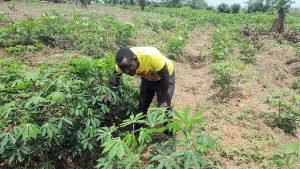
FIOH -SL support to the establishment of two permaculture farms.
CHALLENGES
- Overwhelming demand for the project activities by other FIOH operational communities in Tonkolili and Koinadugu districts.
- Frequent lockdown caused by Covid19 is affecting farm management.
- Lack of on farm hand washing stations to prevent Covid19.
- Farm work rationed with a batch of 5 Farmers per day as a result of Covid19.
WAYS OF OVERCOMING CHALLENGES
- Overwhelming demands
Representatives from the demanding villages were included in the on-farm training and promised to be given some proceeds from the established multiplication farms as starter seeds to establish their own farms. Development of community pilot projects by FIOH-SL is underway to service other communities.
- FREQUENT LOCK DOWN CAUSED BY COVID 19
A detailed concept Note will be shared with National and International donors for possible support.
LESSONS LEARNT.
Household food insecurity exacerbated by the global lock down by Covid19 reveal the extent that existing food systems (and the people underlying them) have been undervalued and under-protected.
Please support the work of the Future in Our Hands Education and Development Fund whose aim is to help and empower some of the world’s poorest and most marginalised people by:
- UK residents can provide long term support by completing the FIOH FUND DONATION FORM and sending to the address shown on the form:
- Direct grant to the charity’s bank account or by cheque to:
 Bank account details:
Co-operative Bank
IBAN: GB07CPBK08929965050707
BIC: CPBKGB22
Cheques should be made payable to the
Future in Our Hands E&D Fund
—————————————————————————-
Fundraising to help the work of the charities would be greatly appreciated
CAMGEW AWARDED THE EQUATOR PRIZE
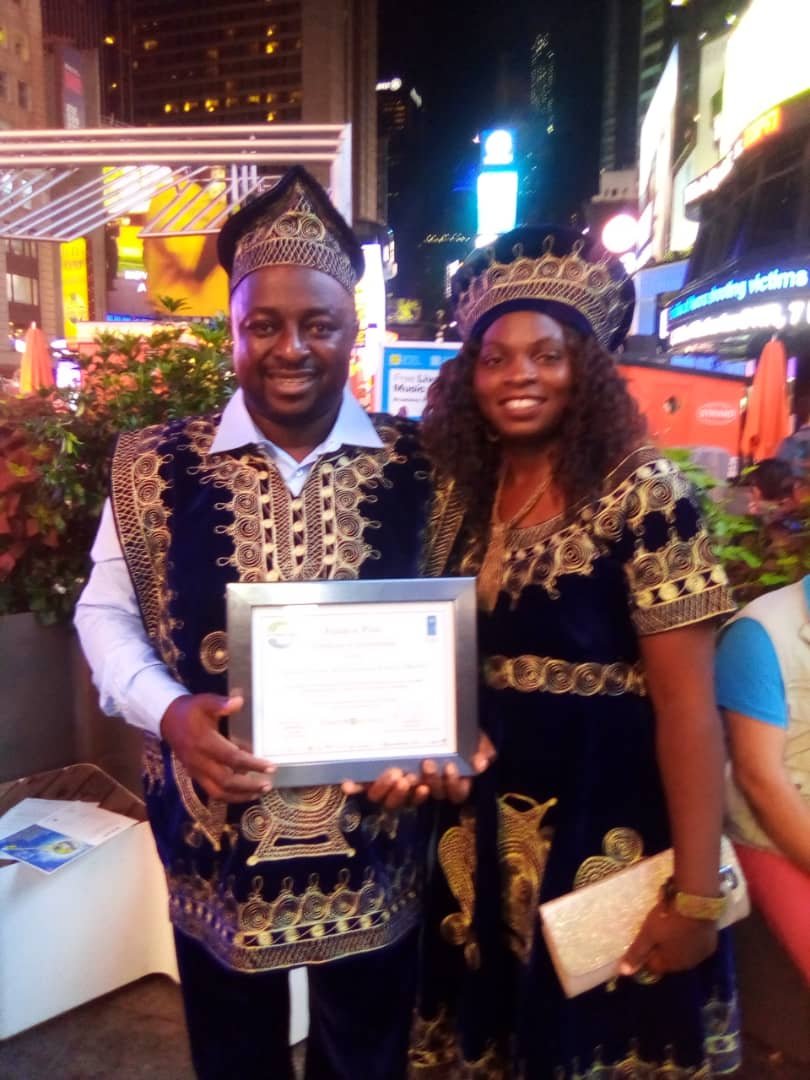
Cameroon Gender and Environment Watch was one of the 21 non-government organisations from around the world to be awarded the Equator Prize.

Created in 2007, Cameron Gender and Environment Watch (CAMGEW) brings together women’s empowerment, community livelihoods, and ecology to address environmental challenges in northwestern Cameroon. Recognizing that local livelihoods are deeply integrated with the health of local ecosystems, the group has planted 75,000 bee-loving African cherry trees (Prunus Africana) in degraded areas of Kilum-Ijim Forest to serve as a carbon sink and protect key watersheds. At the same time, they have trained over 1,000 bee farmers in honey production for market, while a complementary programme has trained 772 farmers on agroforestry to bolster soil health and provide alternative firewood sources. To empower women farmers, CAMGEW offers both business training and microloans through a programme that has, to date, trained 1,580 women and provided 1,325 loans. In a time of ongoing conflict in Cameroon, the organization has made a powerful impact on the health of local ecosystems and the well-being of local communities.
Key Facts
Equator Prize Winner: 2019
Founded: 2007
Location: North West Region, Cameroon
Ecosystem: Forests, Mountains

Please support the work of the Future in Our Hands Education and Development Fund whose aim is to help and empower some of the world’s poorest and most marginalised people by:
- UK residents can provide long term support by completing the FIOH FUND DONATION FORM and sending to the address shown on the form:
- Direct grant to the charity’s bank account or by cheque to: Bank account details:
Co-operative Bank
IBAN: GB07CPBK08929965050707
BIC: CPBKGB22
Cheques should be made payable to the
Future in Our Hands E&D Fund
—————————————————————————-
Fundraising to help the work of the charities would be greatly appreciated
Integrated Agricultural Association

Integrated Agricultural Association (I.A.A) is a Cameroonian non-profit, non-sectarian and apolitical Organization founded on the 5th of March 2016 by the founder Dungrila Pascal Mbimenyuy to promote social, economic, and environmental well-being by:
(i) helping to create “sustainable economic development in rural communities in Cameroon,
(ii) empower and train youths and women-owned producer cooperatives, and
(iii) educate Cameroonians about the importance of organic farming and organic food.

Dungrila giving demonstration
I.A.A is a Youth led Organization with a main focus on empowering farmers through organic food production and commerce.
I.A.A also transforms subsistence farms into profitable businesses by helping smallholder farmers access good training, affordable capital, quality inputs and better crop prices.
I.A.A is passionate about creating social change and has over two years of experience in nonprofit leadership with a focus on smallholder farmer empowerment, defending indigenous minority rights, education, health care and community development.
Specific Objectives.
To build and strengthen the capacities of peasant farmers through local trainings on cultivation and marketing techniques.
- To ensure the greater involvement of the youths in agriculture through sensitization, trainings and support.
- To promote innovative ideas among farmers which are concerned with soil management.
- To alleviate poverty by working in collaboration with communities and implementing programs and projects that increase their income through the encouragement of collective production and marketing among farmers.
- To strive for socio-economic empowerment of the disadvantaged farmers and other community member groups through improved agriculture.
- To promote farming practices that lead to sustainable agriculture and meet the needs of small scale farmers. That is, discouraging the use of chemicals and encouraging natural farming.

Working on farm
Area of Action: North West, Southwest and West Regions of the Republic of Cameroon and beyond.
Target Groups: Peasant women, Children, Youths, Farmers and Persons living with disabilities.
Values
- Competence
- Accountability
- Justice and equity
- Democracy
- Citizenship
- Responsibility
- Admissibility
Approach
We seek to meet our objectives in two different ways. The kinds of approaches we use are as follows:-
- Participatory approach.
We Provide an enhanced and alternative local livelihoods, including sustainable agriculture and value-added products to support local economies, which engages all stakeholders in the community and other development groups. We foster civic engagement of communities through creative facilitation and other methods of stakeholder involvement (such as, public meetings and community-mapping exercises). - Systematic approach.
We collaborate with like-minded organizations worldwide and create possible partnerships, which can help us mobilize resources needed to address community challenges. These include financial, human and material resources. We collaborate with technicians and development agencies as well as community development associations to help us attain our objectives.
PROGRAMMES:
Integrated Agricultural Association (I.A.A) is working under eight different programme areas which include:
AGRICULTURAL TRAINING AND DEVELOPMENT.
I.A.A helps to transform subsistence farms into profitable businesses by helping smallholder farmers access good training, affordable capital, quality inputs and better crop prices. She also launches food safety awareness raising campaign to educate the public in nutrition.
Many farmers’ livelihoods are stable but vulnerable. When working with these communities, we use conservation agriculture techniques and territorial value-chain development. The goal is sustainable growth while building stronger production and marketing groups, and creating market links between producers and buyers. Our approach enables farmers to access and manage financial services and improve their use of natural resources. We also strengthen the capacity of farmers and field agents to help them plan businesses and evaluate profitability. With our experience, farmers can connect better to markets and use technologies that raise yields. To help farmers and field agents succeed, we developed a digital tool kit called ICT4Ag Suite which facilitates training, business planning, and monitoring and evaluation, making it easier for farmers to grow their businesses.
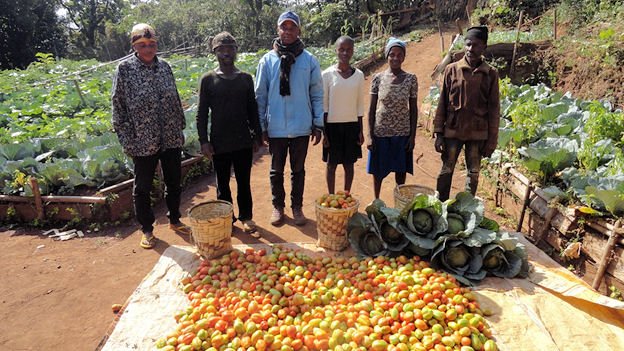
Workers on vegetable plot
METHODS USED.
Territorial approach to value-chain development: We work with farmers to identify and develop products that have potential for local, regional and national markets. We emphasize improving farmers’ production and market opportunities, but we work to improve the entire value chain so it will function more efficiently for all stakeholders. This process increases production, strengthens services for business development, improves post-harvest utilization and builds better market engagement.
Conservation agriculture: In response to global climate change, we help farmers learn techniques for conservation agriculture, which is the foundation of climate-smart agriculture. Techniques include using cover crops, planting with green manure and “no till” practices, conserving water and using native varieties of crops to manage pests. These approaches increase productivity, decrease costs and improve soil fertility.
ENVIRONMENTAL PROTECTION AND MANAGEMENT. We organize meetings to raise awareness of the importance of protecting the local environment and adopting strategies to deal with a changing climate. We carry out tree planting exercises and train local groups and families to establish tree nurseries to supply tree seedlings to the local community, with the aim to foster community engagement in afforestation. We train more than 5,600 people each year in tree planting and care and work with school children to educate them on the importance of trees to the environment and the value of agro-forestry. We also conserve biological diversity, indigenous forests and maintain ecosystem services (water, soil, and carbon sequestration).
EDUCATION AND CAPACITY BUILDING.
We provide scholarship opportunities for children from low income families and marketable skills for those with special needs.
We provide vocational training to children with disabilities and support them with equipment to set up workshops that will enable them to be economically self-reliant, participate in community activities and be socially recognized.
We promote ICT and quality education both in urban and rural communities by equipping schools with computers and books libraries, construction and equipping school classrooms as well as the provision of sanitation equipment and water.
HEALTH EDUCATION.
In Cameroon the rural population does not have access to quality health care and services. The situation remains the same in public hospitals everywhere in the country. The rural population travel an approximate distance of 25 kms or more just to have medical attention, while those visiting public hospitals complain about poor approach by medical personnel. I.A.A strives to overcome these health disparities by training community health workers, building the capacities of hospital personnel, refurbishing and constructing community health facilities and offering nursing scholarship to rural youths especially those coming from poor families.
WATER AND SANITATION.
In Cameroon, water crisis has become the order of the day both in urban centres and rural areas. This is a critical issue that affects mostly women and their children which have had severe consequences on their lives, notably; education and health. Children stay away from school just because they don’t want to carry water on their head every day. And women travel 5 kms or more to fetch dirty water. I.A.A provides access to safe and clean water (water pumps and distribution systems, well drilling, bore holes, spring capping).
HUMAN RIGHTS.
I.A.A is working to advocate for peace through peace building initiatives and humanitarian response, defending children against trafficking, early marriages and forced labour and ensuring that the rights and dignity of women, children and persons living with disabilities are protected and fulfilled.
WOMEN EMPOWERMENT.
Women are often marginalized, less educated, lack access to finances, collateral security and are not always able to participate in decision making processes locally. Opportunities on entrepreneurship, capacity buildings and access to land are always limited. Where these facilities are available, they are not reliable, affordable and accessible. They suffer from domestic violence and their girls fall victims of child trafficking and early marriages. These situations are common in rural areas in Cameroon and elsewhere in the world. I.A.A is empowering women with micro- business skills and supporting them with startup loans for new businesses and improve existing ones. I.A.A assists women with entrepreneurial skills through micro-business training and financing so that they can be able to build wealth for their families and participate in nation building.
APICULTURE
Bees are important insects that play an important role in the environment by increasing ecosystem services through pollination. It remains imperative to understand and manage pollination services; farmers in rural communities have the potential to substantially increase their crop yields and income, as well as safeguarding micronutrient supplies from foods such as fruits, nuts and vegetables. This has important implications for food security, poverty alleviation and global health. However, promoting bee farming increases pollination services and provide progress towards several important UN Sustainable Development Goals. It is important that development and environmental outcomes are closely aligned, such that there is a long-term sustainability. Beekeeping, pollination and ecological farming are important goals of development and environmental protection.

Apiculture
APICULTURE AND FOREST GOVERNANCE PROJECT
We train forest communities in sustainable forest management. Many of these communities depend on agriculture for their livelihood which often results in the destruction of the forest for farm land. We train these communities in bee farming and foster their engagement in aforestation as alternatives to protect the forest and fight poverty. We provide opportunities for rural people in tree nursery management, planting and care, and in agro-forestry techniques. I.A.A. distribute forest seeds, agro-forestry seeds and bee farming materials as well as locally manufactured bee hives to vulnerable people. The goal of this project is to promote apiculture as a strong financial incentive for rural people to alleviate poverty and protect biodiversity.
The objectives of this project are as follows:-
(1) Teaching beehive construction, apiary set-up and maintenance, honey harvesting and tree-planting.
(2) Establishment and capacity building for community-based beekeeper cooperatives.
(3) Establish a honey shop and marketing hub; give advice and training about honey marketing.
EXPECTED OUTCOMES.
- Improved honey-based livelihood opportunities.
- Community led sustainable management of honey bees.
- Increased levels of understanding of different issues relating to honey bees from biological, economical, policy and social viewpoints.
SEXUAL AND REPRODUCTIVE HEALTH PROJECT
In Kumbo, Secondary school girls become pregnant as a result of lack of understanding about family planning. This is also because the information on reproductive health is not widely disseminated for better access by young girls and women of reproductive age. School girls’ records show poor academic performance as a result of menstruation. During this period, these girls stay away from school because of stigmatization and lack of basic menstrual hygiene information and the school administration do not make available a safe environment for these girls to take care of the menstrual situation with dignity. Married women deliver children too close as a result of lack of reproductive health information and family planning which result in poor health, and unsafe abortions. I.A.A has designed this project to increase access to reproductive health information among school girls and the women of Kumbo.
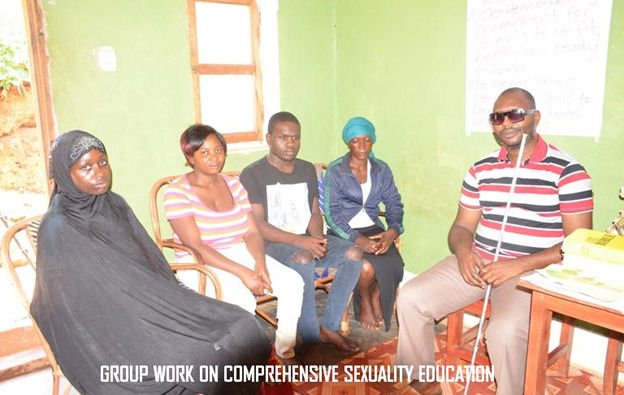
Sex education
I.A.A set-up workshops throughout Kumbo with different groups of individuals in order to discuss reproductive health, and address the questions of the participants. The workshops involved secondary school students (one for male students and one for female students), sex workers, and local communities. For each workshop, every effort is made to make the participants feel that they are in a safe environment.
All workshops usually start with an open question session to answer the sexual health questions of all participants. In addition to these workshops, radio talk shows are held in local languages, which also include a call-in question and answer session.
PROJECT GOAL.
The overall goal of this project is to increase access to reproductive health information by providing young people with the knowledge and skills to promote their health and well-being as they mature into sexually healthy adults.
OBJECTIVES.
- To work with community leaders to widely disseminate reproductive health information among young girls and women.
- To increase access to comprehensive reproductive health services.
- To address stigma and discriminatory social norms related to menstrual hygiene management with health providers, media, parents, teachers and wider community stakeholders.
Integrated Agricultural Association
Foncha Street, Nkwen, Bamenda
Nw Region, Cameroon, Central Africa
EMail: integratedagriculturalass@gmail.com
Tel (+237) 682 v98 51
Strategic Humanitarian Services
 Strategic Humanitarian Services (SHUMAS), a Cameroonian Development NGO, after working on its own for sometime, considered possible networking and collaboration with northern NGOs who shared common objectives and methods of approach to development. Between 1997 and 1999, the General Co-ordinator of SHUMAS, Stephen Ndzerem and the President of Plant a Tree in Africa (PATIA)/Co-ordinator of Future in Our Hands Education and Development Fund UK, Mike Thomas, were involved in some intensive correspondence.
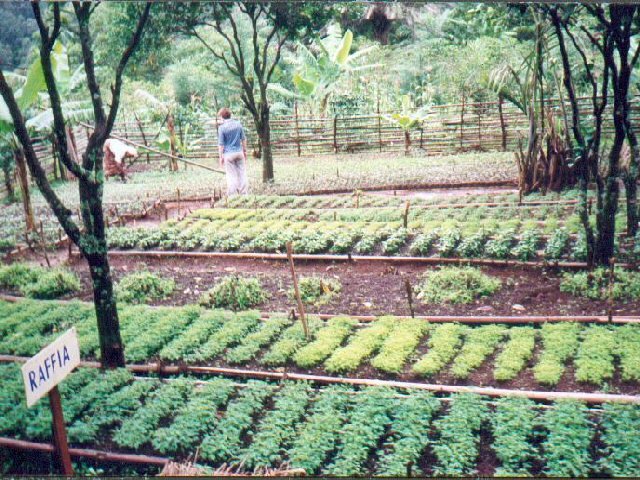 One of the issues they discussed was how to seek a sustainable solution to the adverse effects of eucalyptus plantations on water sources and farming areas. Women were the principal victims.
In 1999 Mike Thomas visited to carry out a site assessment and provided £500 from PATIA (matched by SHUMAS) to establish a nursery for 40,000 tree seedlings (10 species) and fell several thousand eucalyptus.
Because of the encroachment of the trees into existing and potential farming areas, many women have to walk long distances (often 15 miles or more) to find new areas to farm. They will then live in temporary self-made huts for 2 to 4 weeks before returning home with whatever they can carry on their heads. Many will carry babies or take young children with them. People in general, usually women and children, have to walk further and further each year to fetch water. A summary of the project and its outcomes are shown below.
Information gained from the pilot project was used in support of an application to the Big Lottery Fund to fund a large project named the Eucalyptus Replacement Project .
A 10 page brochure summarising the first phase of the project can be seen here:
CAMEROON – EUREP I – BROCHURE
Since then SHUMAS has established partnerships with AidCamps International and Building Schools for Africa both of which have resulted in a comprehensive school building programme involving a partnership between local communities and the schools’ parent teacher associations.
A Buildings Schools for Africa report can be seen here:
BUILDING SCHOOLS FOR AFRICA Newsletter October 2014
SHUMAS is now a well respected organisation in the area and has established many projects, including those summarised below, which have improved the lives of poor people in both urban and rural areas. More details can be seen at the SHUMAS web site:
STRATEGIC HUMANITARIAN SERVICES
SHUMAS integrated organic farming training centre

Another inspirational development has been the establishment of an Organic Farming Training Centre in the NW Region near Kumbo.
Details of the operation of the Centre can be seen in this 34 page report: BIOFARM
Primary health care
A partnership with Spreading Health [Founded by Dr Peter Hearn] is facilitating primary health care training for people in the rural areas. This has included a scheme to sponsor local village candidates to train for three years at the St Louis Higher Institute of Health & Biomedical Sciences in Bamenda (the capital of NW Cameroon).
Womens co-operative network
 During his visit in 1999, SHUMAS gave Mike Thomas an opportunity to present his idea for establishing savings and credit cooperatives to about 300 women. There were some initial setbacks but before 2000 more than five co-operatives had been trained and became fully operational.
By 2014 sixty two autonomous co-operatives all of which have again come under the single umbrella called Future in Our Hands Womens Credit Union Cooperative- Cameroon.
The FIOH co-operatives are quite different from conventional co-operatives. FIOH concentrates on building the capacities of grass roots women through encouraging the spirit of sharing, co-operation and fellowship, rather than on too much external dependency and a quest for individual material gain.
The SHUMAS head office and rehabilitation centre
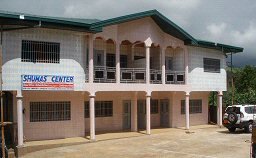 In February 2009 SHUMAS started the construction of an inspirational new building that combined facilities for both staff and vocational training for disabled people. The building was completed later that year. The SHUMAS head office combines facilities for administrative staff with those providing vocational training for disabled people. The object is to provide disabled people with the means to become economically self-reliant and the ability to effectively participate in the development of their communities.
The objectives of the Centre are to:
- Train disabled people in self-reliant skills so that they will be able to carry out economic activities which enhance their self-esteem and enable them to be part of the mainstream of development of their communities.
- Train them in basic management and leadership skills.
- Continuously monitor and evaluate graduates for some years to assess their progress.
- Set up a revolving micro-finance scheme to benefit ex-trainees.
- Advocate for the rights of disabled people.
The Eucalyptus Replacement Project

Project launch
The project was launched in 2000 and was supported by all sections of the community and government authorities and provided the framework for the introduction of new ideas to the women.
The womens network was to play an important role in the day-to-day management of the project which involved the felling of 1,017,200 eucalyptus and the raising of 2,624,000 mainly indigenous African trees (60 species) carried out in two phases between July 2000 and October 2008.
The projects cleared about 463 ha of eucalyptus trees resulting in the recovery of 105 springs and 140 water taps during the dry season. Over 9,000 women who had previously walked long distances to farm and collect water, were able to farm close to their homes.
Statistics in 6 rural health centres and 1 hospital recorded an average 27% reduction in water born disease during the life of the project. It was estimated that an additional 5,153 children were able to go to school because of the increase in family incomes resulting from the projects.
The local authority and many individual farmers copied the example of the project and hence the figures shown above are an underestimate of the project’s impact.


Eucalyptus replacement project, NW Region
 Eucalyptus replacement project

Between 1997 and 1999, the General Co-ordinator of SHUMAS, Stephen Ndzerem and the President of Plant a Tree in Africa (PATIA)/Co-ordinator of Future in Our Hands Education and Development Fund UK, Mike Thomas, were involved in some intensive correspondence. One of the issues they discussed was how to seek a sustainable solution to the adverse effects of eucalyptus plantations on water sources and farming areas.

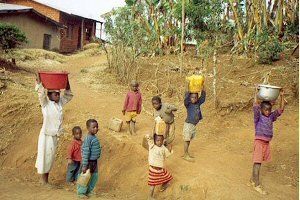

Women were the principal victims. Women and children were forced to walk long distances to fetch water because the eucalyptus trees were taking up large quantities of water and this was lowering water tables and drying up water taps and springs during the dry season.

The adverse social effects of the trees was brought to the attention of SHUMAS by Angela Wirkom, leader of the Bonkeh Womens Common Initiative Group. The women complained that the trees were taking up so much water during the dry season that they were having to walk long distances to collect water and find suitable areas to farm.
In 1999 Mike Thomas visited to carry out a site assessment and provided £500 from PATIA (matched by SHUMAS) to establish a nursery for 40,000 tree seedlings (10 species) and fell several thousand eucalyptus.

 Because of the encroachment of the trees into existing and potential farming areas, many women have to walk long distances (often 15 miles or more) to find new areas to farm. They will then live in temporary self-made huts for 2 to 4 weeks before returning home with whatever they can carry on their heads. Many will carry babies or take young children with them. People in general, usually women and children, have to walk further and further each year to fetch water. A summary of the project and its outcomes are shown below.
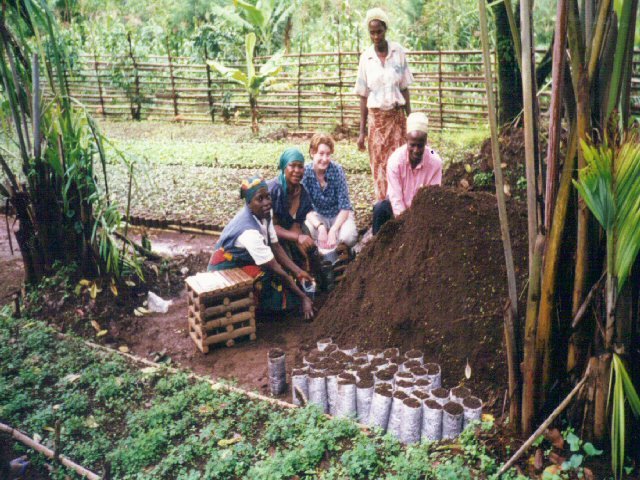 Information gained from the pilot project was used in support of an application to the Big Lottery Fund (previously named the Community Fund) to fund a large project named the Eucalyptus Replacement Project .
A 10 page brochure summarising the first phase of the project can be seen here:
CAMEROON – EUREP I – BROCHURE
Project launch
The project was launched in 2000 and was supported by all sections of the community and government authorities. The project involved the felling of 1,017,200 eucalyptus and the raising of 2,624,000 mainly indigenous African trees (60 species) carried out in two phases between July 2000 and October 2008.
The projects cleared about 463 ha of eucalyptus trees resulting in the recovery of 105 springs and 140 water taps during the dry season.


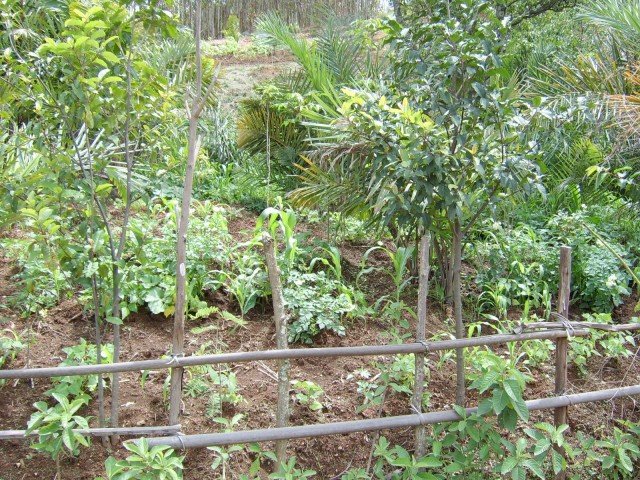


The photos above show (1) a large area of Council land cleared of eucalyptus, (2) women clearing former eucalyptus plantation land in preparation for planting crops, (3) Pygum africanus trees raised from seed in Phase I of the project. This species is nitrogen-fixing and an important cash crop. The bark is used in cancer treatment, (4) part of the large nursery established in Phase II of the project and (5) areas of agroforestry using seedlings outplanted from the nurseries.
Outcomes
Over 9,000 women who had previously walked long distances to farm and collect water, were able to farm close to their homes.
Statistics in 6 rural health centres and 1 hospital recorded an average 27% reduction in water born disease during the life of the project. It was estimated that an additional 5,153 children were able to go to school because of the increase in family incomes resulting from the projects.
The local authority and many individual farmers copied the example of the project and hence the figures shown above are an underestimate of the project’s impact.
Monitoring visits were carried out by Michael and Glenys Thomas for the Phase I project in 2004 and by Alan and Teresa Stewart for the Phase II project in 2008. Mike Thomas visited the project and that of Global Rehabilitation Services in 2009:
EUREP II REPORT – MONITORING VISIT MAR 2009 EUREP II


The photos above show Glenys Thomas helping to sow seeds in the pilot project in April 2004 and Alan and Teresa Stewart who monitored Phase II of the project in 2008.


During his visit Mike Thomas and representatives of SHUMAS accompanied women on a part one of their 15 mile trips to their farming area at Nkuf. The project not only assisted the women, but also provided economic benefits for land owners who were generally men.

A short term benefit came from the sale of the eucalyptus logs for construction timber, fencing a electricity poles. An important outcome of the project was that land owners gained more from growing crops than they previously gained from their eucalyptus trees. Thus many men joined women in planting crops for local consumption rather than cash crops for export. It is also hoped that the project will support long term sustainable development because of greater opportunities for young people to gain employment locally.

If you would like to support the work of the FIOH Fund please make a DONATION:
Poverty alleviation in the Thar Desert
 Poverty Alleviation in the Thar Desert

For the people living in the Thar Desert region of Sindh, drought is a frequent threat and one of the major causes of poverty and deprivation.
This project (June 2004 – Nov 2008) involving the following activities helped 1,100 families (6,600 people) in 20 villages cope with this situation and build up resilience for the future:
- Village Development Organisations were
established in 10 villages. - Provision of 800 water harvesting tanks and 800 fuel efficient stoves.
- Provision of materials and training of women in embroidery and their civil and political rights.
This video gives an indication of what life is like for people living in the region:

Training was also provided for the families and the community as a whole in HIV/AIDS awareness, controlled grazing practices and management techniques.
Water harvesting tank


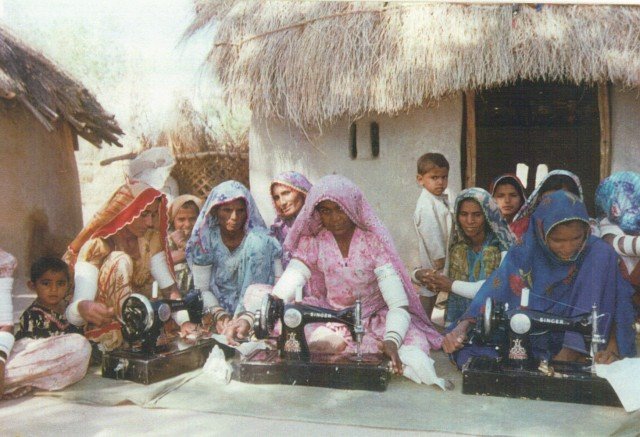


The outcomes of the project included:
- A 12% increase in the numbers of girls being enrolled in primary education.
- A drop of 10% in the incidences of cholera and infant mortality.
- A 27% decrease in eye problems and chest infections of women beneficiaries.
- Better access to water by all the beneficiaries during periods of drought.
- Communities gaining more confidence to campaign for their statutory rights and the women becoming more involved in village decision making.
The project managing partner, Participatory Village Development Programme (PVDP), was well established before this project started.


The project was visited by FIOH Fund assessors, Eddie Thomas in 2005 and Joanna Heaven in 2008.
The PVDP poverty reduction model, which involved establishing Village Development Organisations and an Integrated Management Committee, was used in the Eucalyptus Replacement Project in Cameroon and proved to be a very effective method of involving all the stakeholders.
Poor people benefitting from the project:
Three case histories
If you would like to support the work of the FIOH Fund please make a DONATION:
