
Cameroon Gender and Environment Watch report 2016
This is a summary of the CAMGEW 2016 annual report a complete copy of which can be seen here:
CAMGEW 2016 ANNUAL REPORT READY

CAMGEW logo
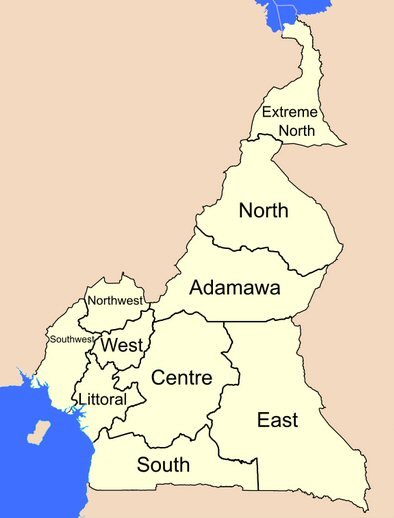
Cameroon Gender and Environment Watch (CAMGEW) reflects its holistic approach to development through the activities described in its 2016 annual report prepared by its director, Wirsiy Emmanuel Binyuy. Most of these activities are located in and around Kilum-Ijim Forest area in the NW Region of Cameroon with her office in Oku.
 Activities included:
- Planting of indigenous trees to regenerate the important Kilum-Ijim natural forest.
- Training and practical support for bee farming to produce the local distinctive white honey.
- Marketing training and the establishment of a shop in Bamenda (capital of the region of North West) to sell the honey, its products and equipment.
- Training in organic farming methods and raising of nitrogen-fixing trees for agroforestry.
- Vocational training in dress-making, hair dressing, shoe making and repair.
- Establishing a micro-credit and savings scheme for women and training in business management, including the use of computers.
- Training for women in health and nutrition.
- Training for communities in the basic human, statutory and legal rights of women.
- Provision of counselling and advice for women who are subjected to physical and/or mental abuse.
- Environmental and computer education for children.
- Tree planting around the new centre for the treatment of disabled children which is located in Bafoussam, West Region.
Forest regeneration
The Kilum-Ijim natural forest contains several endangered species of flora and fauna, including the Bannerman’s Turaco (fauna), Newtonia camerunensis(flora) and has an important role to play in the mitigation of global warming. Despite these and the many economic benefits which can be derived directly from the forest, a large section of the original forest has been cut down to create farming land.


CAMGEW has played an important role in safeguarding the remaining forest by educating people about the environmental importance of preserving the forest and showing local people how they can gain an economic benefit from the natural products the forest provides.

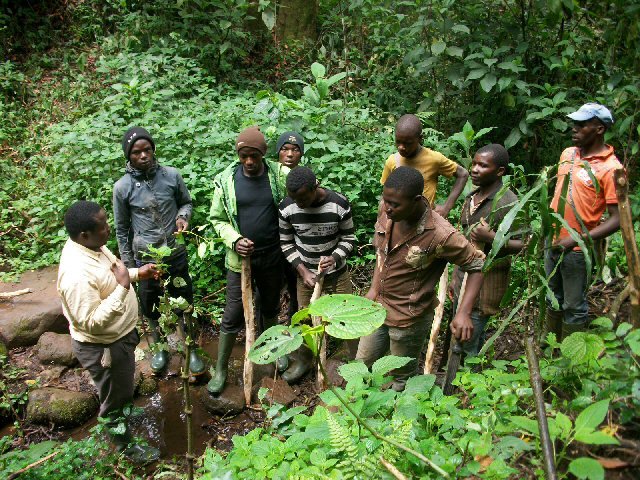

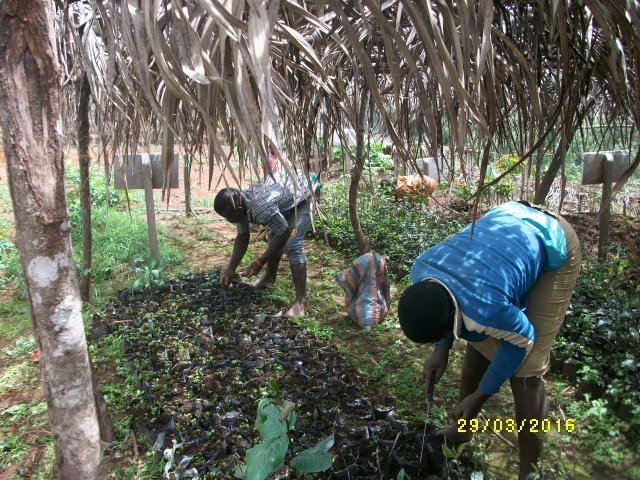
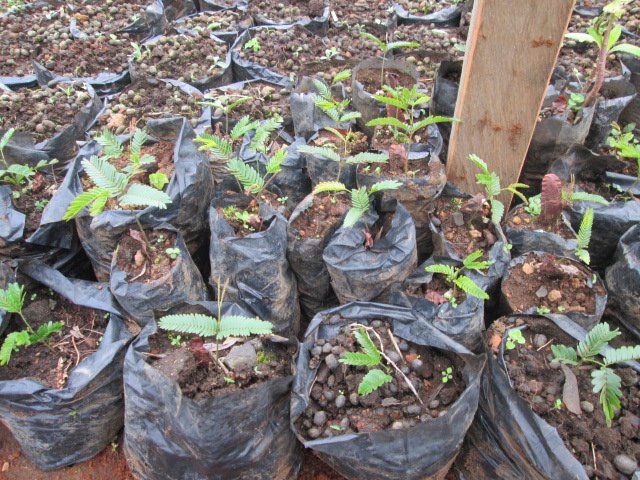

CAMGEW has established nurseries to grow native tree species, including Prunus Africana, Croton Macrotachyst, Carapas Grandifolia, Pittusporum Veridiflorium, Zysigium Staundtii, Solanecio Mannii, Newtonia Camerunensis, Psydrax Dunlapii, Briellia Speciosa, Pyschotria Pendularis, Acacia, Leuceana, Mysposis, Tephrosia, Sesbania and Tree Tomatoes. Many of these have been planted in the forest by children and local community groups to regenerate sections of forest destroyed by domestic animals and fire.


Nitrogen fixing seedlings have been distributed to local farmers who are using agroforestry methods. Three nurseries have been established (Manchok, Mbockenghas and Ikal) with a capacity to raise 200,000 trees. The different species have been labelled with scientific and local names and their uses to educate the local community and school children.

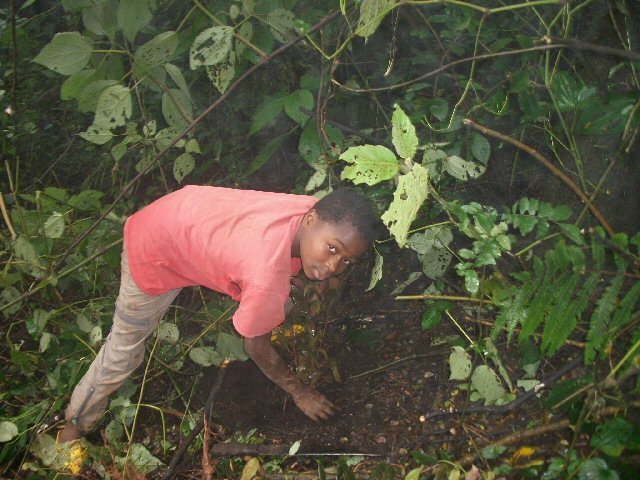

In order to restrict the spread of ferns cuttings of Schefflera abysisinica and Solanecio mannii have been planted in the forest. The fern plants die once the trees grow above them.
Bee farming
Bee farming is an important activity in the preservation of the Kilum Ijim forest as the farmers have a vested interest in preserving the natural flora which provides nectar for the bees and preventing forest fires. CAMGEW has provided hives, training in good bee management activities and organised the farmers into cooperatives/village groups. It has also provided a shop in Bamenda to assist with marketing the honey. The training has involved 212 farmers and 85 cooperative executive members in 22 villages in 2016. CAMGEW has also provided training in the production of bee wax which is more profitable than honey. It also involves full utilization of the honey combs which might otherwise be discarded. 116 community members were trained in 2016, 21 of whom were women.


CAMGEW distributed 10 honey drainers, 100 suits, 30 buckets and provided management training including the establishment of a constitution and by-laws and the production of an instruction manual in cooperative law.
Organic farming and agroforestry training
CAMGEW distributed more than 900,000 seeds of Leucena, Tephrosia and Sesbania (for animal fodder) to over 139 farmers, including 38 women in 7 villages. These species are nitrogen fixing and can be grown together with crops including coffee, potatoes, beans, huckleberry, cabbage, yams, corn. In addition to providing nitrogen for crops, the trees provide shade and help prevent erosion on sloping ground.
CAMGEW also distributed 60Kg of bracharia seeds for obtaining fodder in the dry season when other feed is scarce. This will prevent farmers having to move their animals long distances to find pasture.
Vocational training
Unfortunately the CAMGEW training centre had to close down as a result of the lack of funding. However, the equipment was distributed to the trainers who then located to Elak where there was a greater customer base. Also since the CAMGEW initiative other training centres have been established in the community. Many of the trainees at the CAMGEW centre have established workshops in their own communities.


Health, human rights and nutrition training for women
 CAMGEW has provided training about women rights to health services, nutrition, legal marriage and counselling as a result of physical and psychological abuse. This included education to reduce early pregnancies and nutrition to improve the health of teenage mothers and their children.
Information was also provided about sexually transmitted diseases and the benefits of legalised marriages. Information was also provided with the aim of reducing child trafficking.
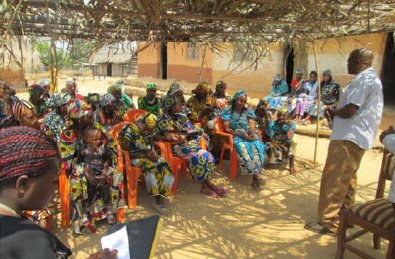

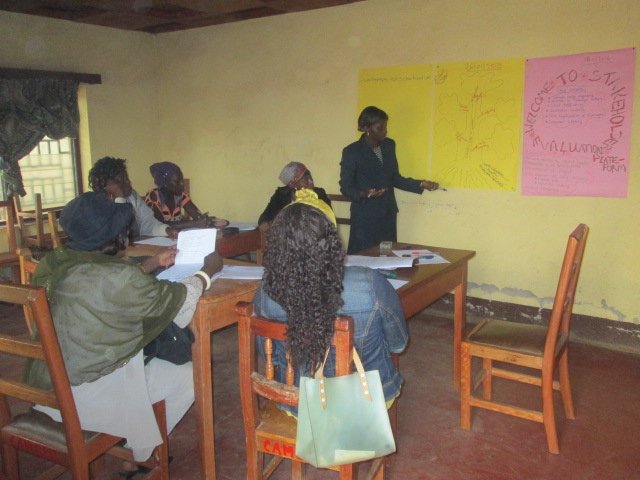
Much of this work has been carried out with the young women of the Muslim Mbororo tribe who are known for high birth rates and low literacy. Most of the men keep grazing animals which are their main source of income. Counselling of the girls involved marital crises physical and psychological abuse, frustration arising from child trafficking, loneliness and stigma from unplanned teenage pregnancy.
Micro credit and savings scheme training for women
CAMGEW has been running a micro-credit scheme for women since 2015. Loans are given at an interest rate of 2% per CFA 1,000 with a 6 month repayment period. Each recipient must have undergone training provided by CAMGEW. 500 women had benefited from the scheme by December 2016.
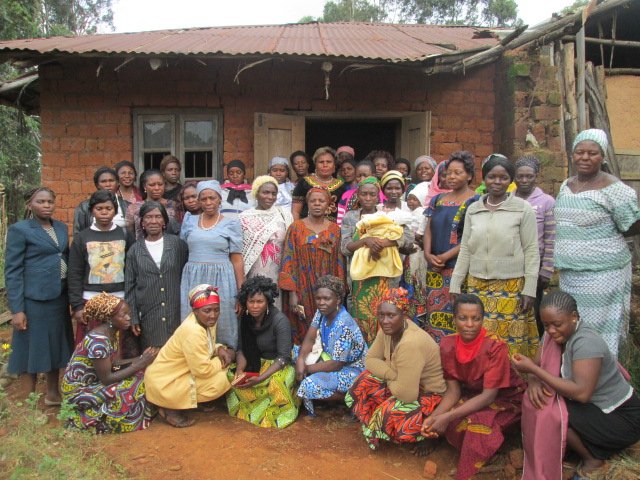 Most women do not have enough the money required to open a bank savings account. The CAMGEW savings scheme enables women to open an account with as little as 500 CFA (about 35p). CAMGEW keeps its funds with the Manchok Credit Union. In 2015 CAMGEW trained 193 women and 153 received loans and in 2016 trained 483 women and gave loans to 390 women. Loans ranged from 30,000 to 120,000 CFA.
Environmental education
The nurseries established by CAMGEW have served as learning areas for children, schools and community groups in types of forest trees and their uses. Children have gained hands-on experience working in the nurseries and also gathering seeds from the forest.
Computer training for women and children
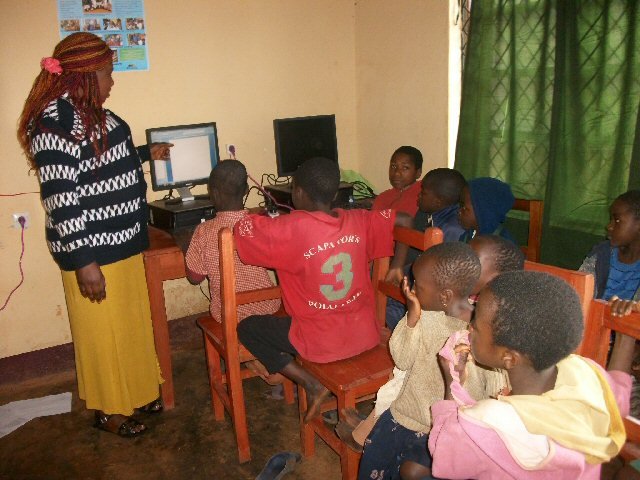
CAMGEW has provided basic computer training for women and children.


Tree planting at the GLORES treatment centre for disabled children
In 2016 CAMGEW planted 500 tree seedlings around a new centre for the treatment of severely disabled children based in Bafoussam in the West Region. These included, prunus africana, pittosporum, ornamental, palms, mangoes, plums and oranges.
Video productions about CAMGEW and its director
The following productions provide clear presentation of the comprehensive range of CAMGEW activities and how they contribute to the inter-relationship between various aspects of sustainable development:
Kilum-Ijim forest apiculture:
https://www.youtube.com/watch?v=TBqEgnjsWSg
Organic coffee farming in Oku:
https://www.youtube.com/watch?v=hHKY15LEuos
Short video featuring CAMGEW director, Emmanuel Wirsy
http://www.dw.com/en/money-for-forest-honey/a-37473719
CAMGEW in other documentaries. (Emmanuel’s work is featured about 9 minutes into the video)
https://www.youtube.com/watch?v=rCVVzGDXQmw&t=129s
CAMGEW FOREST VIDEO. This video is an excellent presentation of the work of CAMGEW and illustrates the link between bee farming and the preservation of the forest. It also shows children actively involved in the both the raising and out-planting of seedlings in to the forest :
https://www.youtube.com/watch?v=4TwdiXGj3zk
CAMGEW GENERAL ACTIVITIES VIDEO. This is a brief overview of activities of CAMGEW including its vocational training: https://www.youtube.com/watch?v=zyM89iaLnHw&feature=youtu.be&hd=1
WEB SITE:
www.camgew.org or www.camgew.com.
Community tree planting nursery in Oku – FIOH Co-operative
Nursery Development for Environmental Education and Forest Regeneration in Oku
 In 2014 the FIOH Fund provided grants of £500 each for community tree planting to two non-government organisations with offices based in Oku on the edge of Kilum Ijim natural forest, in the NW Region of Cameroon:
- Cameroon Gender and Environment Watch (CAMGEW) and
- Future in Our Hands Womens Co-operative, Oku
This report was prepared by the FIOH Oku co-operative leader, Gangli Mary Nkeng.
1. Presentation of FIOH-Oku and the current project
Future In Our Hands Cooperative is a women’s farming cooperative made up of over 5 Common Initiative Groups (CIGs) representing over five villages in Oku Subdivision. It was created on the 22nd of September 1999. It encourages the spirit of hard work, cooperation and togetherness in women. It is called a women’s cooperative because 95% of members are women. Her creation was thanks to the interest SHUMAS NGO and Future Our Hands–Oku had to empower women and the vulnerable in the Oku community. It has as its motto: educate a man, educate an individual; educate a woman to educate a whole nation. This is because of the socio-economic importance of a woman in the purely African village community like Oku. Since its creation FIOH-Oku has realised the following projects (just summaries):
- Improving the processing and transformation of corn and cassava through mills and haulers donated by SHUMAS and her partners.
- Offering loans to members at very minimal interest rates through a scheme developed by SHUMAS.
- Through SHUMAS there has been the development of community health infrastructure for the village of Lui.
- Regular production of organic food crops and other natural products for income generation and food security.
- Attending agro-pastoral shows to market their produce.
- Training and practising sustainable and integrated farming and livestock productions methods amongst her members.
- Training and application of agroforestry techniques to her membership.
In 2014, FIOH-Oku received a grant of £500 pounds from Michael Thomas of FIOH Fund-UK to develop a nursery of indigenous trees. We developed two nurseries with the funds, one of 3,000 indigenous trees in 2014 and another of 3,500 indigenous trees in 2015.
2. Presentation of the project area
Oku is located in Bui Division of the North West Region of Cameroon. It is made up of 36 village communities mostly living along the slopes of the Kilum Mountain. The people depend mostly on forest resources, subsistence agriculture, cash crop farming, livestock production and local artisan work for their livelihood. The Kilum Ijim Forest found in the community is a naturally preserved moist montane forest with a surface area of about 20,000 hectares. It is located in the Mount Oku Ridge in the Bamenda Highlands and forms part of the High Plateaus Agro-ecological Zone of Cameroon. The geographic location of the area is latitude 6°07’N – 6°17’N and longitude 10°20’E – 10°25’E. It has very important and threatened Afro-Montane endemic animal and plant species such as Prunus africana amongst others. It is an internationally important biodiversity hotspot and a critical zone for carbon sequestration within the High Plateaus Agro-ecological Zone.
The Kilum area is one of the most highly populated locations in Africa and Cameroon in particular, accommodating 144,800 people occupying about 328 km2 (439.3persons/km2); hence, high pressure on resources is inevitable. There has been progressive deforestation and degradation mainly due to agricultural expansion, forest fire and overgrazing. Fuel wood harvesting has also been a major cause of deforestation and forest degradation. The late 1980s decline in coffee prices triggered many farmers to migrate further up the slopes in search of new land to increase income through alternative crops.
3. Project goal and activities
The project goal was to train community members on agroforestry techniques which are soil conserving, fight poverty and hunger and to establish a nursery of indigenous trees for planting in farms and the community forests.
The objective was to offer practical agroforestry skills to at least 50 persons including men, women and children and to enable the participants to set up a nursery composed of indigenous trees for out planting within the community.
4. Project activities
Planning meeting:
After the FIOH Cameroon Network seminar and workshop held on May, 10th 2014 at SHUMAS Head Office Bamenda, FIOH-Oku had a planning meeting on May, 16th whose objective was:
- To report on the conduct of the seminar
- Present to FIOH members the cash gift given by Mike Thomas from FIOH-UK to enable members to nurse and plant indigenous trees
- Plan on when to start work on the project.
Collections of seeds and seedlings:
 On the 29th of May we met to plan on how to get sticks of the nursery fence. It was agreed that each member was to provide five sticks and men in addition will help make the fence. We equally planned on the collection of seeds and young seedlings for the nursery. We agreed to collect from the forest and from our farms. We equally decided to involve school children. The president was assigned to contact the head teacher of the school which she did.
Clearing, tilling and fencing of the nursery site:
The men did the clearing while the women did the tilling. This activity took place in the month of July, 2014.
Formation of nursery beds and nursing of seeds and seedlings:
Formation of beds and planting proper took place in July. Before nursing and planting the school children were taught by their teachers on the spot about the importance of trees to man and nature. The names of the trees in the Oku language were also made known to them. The planting was done with the children and their teacher. They were given some money for food and transport.
Weeding and monitoring of nursery:
Since the cooperative is made up of CIGs, the work was divided into groups and each group had a given task for weeding and monitoring. We jointly sold the young trees to CAMGEW for the sum of 178,000 CFA.
5. Detailed methodology and activities used during the project
We had a planning meeting with our members. Participants were trained by-doing in the field (a small demonstration plot we had at Manchok-Oku) on agroforestry nursery development using many locally sustainable approaches easily understood by the community. They were also trained on the importance of organic manure (compost) and how to produce organic pesticides. Lessons were given on the importance of trees in their farms, the advantages of enclosing their animals (goats, sheep, cows, fowls, pigs etc) to get animal dung to use in their farms for soil fertility improvement and increase food production. Through on-the-spot field work they were able to identify the dangers of Eucalyptus planting and why the trees should be cut down and replaced by agroforestry species and indigenous trees. The training was offered in the local languages (Oku) and in Pidgin English.
The principles of agroforestry were taught in the first part of the field learning. These included lessons on sustainable land management, trees and global climate change, agroforestry technologies (windbreaks, living fences, alley cropping terraces and contour plantings, firebreaks, forest gardening, and integrated production systems) and agroforestry for livestock management, conservation techniques, integrated pest management, composting, perceived needs of the community, income-generating activities, major agroforestry species (Leuceana, Calliandra, Acacia, Tephrosia), seed collection, storage, and pre-treatment, bare root nurseries and bare stem seedlings. Practical work was done on the second part of the training. Participants had to do practical nursery development activities. They tilled the soil; they planted some seeds while getting information on how to plant them. Prunus africana and other indigenous trees were nursed from where the seedlings will be planted into farms and other areas in the community.


6. Participants at the demonstration plot in Manchok, Oku
May – July 2014: 4 men, 36 women and 35 children
June – July 2015: 5 men, 35 women and 45 children
7. Challenges
From the beginning of the project, many of our plants did not germinate or they died after germination, but our team and the participants did not give up. We benefitted from the technical support of the chief of post of forestry just of recent. He is very much willing to work with us. He told us the first error was because we collected the seedlings poorly and the roots got infected or dried up. We were able to nurse over 7,000 trees and 3,000 survived. Some of the trees were out planted during the CAMGEW tree planting exercise in the community forest.
8. Conclusion
Currently we have developed another nursery of 3,500 trees consisting of Prunus africana, Schefllera species and other locally known species. The trainings went on smoothly with the participants learning during the practical steps. We saw that participants were participatory in the activities. Old mothers and fathers who do not know how to speak English raised their hands and asked questions or shared their knowledge on agroforestry techniques using the local language. We learned a lot in the process from indigenous knowledge on agroforestry techniques from participants. There was an integration of the traditional methods of farming and agroforestry techniques by the participants.
If you would like to support the the tree planting projects of the FIOH Fund please make a DONATION:
Follow us on Facebook:
www.facebook.com/fiohfund
Follow us on Twitter:
twitter.com/fiohnet
Please share our links with your friends to help us reach a wider audience.