
Schools environmental programme
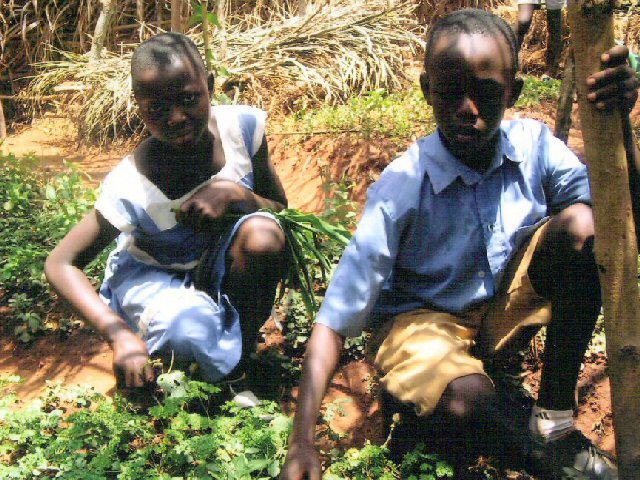 Schools environmental education project
The project established the following programmes in 10 rural primary schools (average of 500 in each school) in the NW Region of Cameroon. The programme involved:
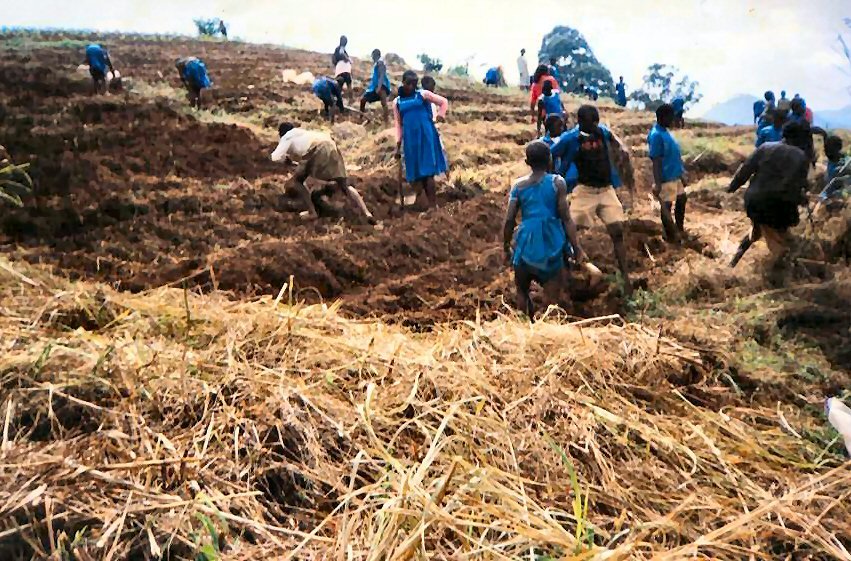
- Establishing a model school farm at each school where children will gain practical farming knowledge (seed selection, planting crops, nursing of seeds, growing crops, harvesting, storing, marketing etc).
- Educating and conveying practical knowledge on the importance of trees in the community; children will also influence their parents concerning environmental issues and rural development.
- Providing skills for employment. The parents of as many as 60% of children will not be able to afford to pay secondary school fees. This programme encouraged many more children to gain skills in sustainable agriculture, so that they find interesting and gainful farming employment in villages.
- Income from the sale of school farm produce was used to pay the salary of at least one more teacher in each of the five schools.
- Some of the income was used to buy educational materials, equipment and teaching aids.
The project was managed and organised by Strategic Humanitarian Services, based in Bamenda. The programme involved:
- Acquiring land for the school farm: The school farm must be situated near the school for ease of mobility of pupils, so as not to waste too much time trekking to the farm.
- Each of the five schools owned a farm of about 1 acre. The land was divided into small plots. Each plot grew a different crop or vegetable. Crop rotation was practiced.
Seeds collection: Pupils were organised to make trips to the forest and taught how good seeds can be gathered. Thereafter there were practical lessons on how to treat the seeds, nurse them in seedbeds, transfer them into polythene pots and finally plant at their permanent site. The children continued to care for the seeds and the plants.
Environmental lectures were organised once a month in each of the schools: The lectures included the economic and ecological advantages of different indigenous species, the social and environmental problems associated with eucalyptus and the danger of using chemical fertilisers.


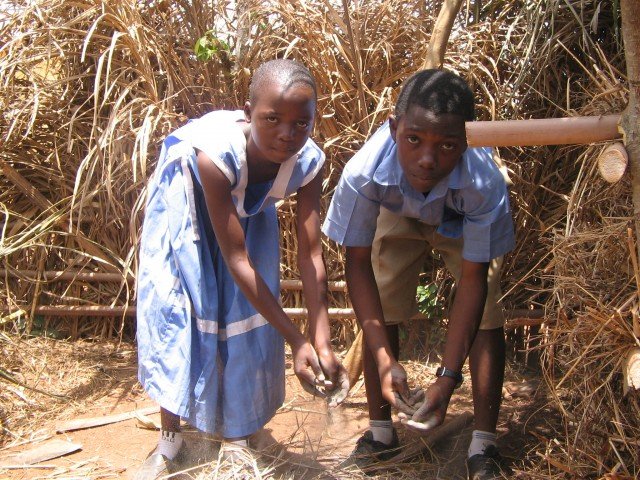



School competitions involved quizzes and prizes were awarded to deserving pupils.
Publication of a hand out: An educational illustrated booklet was produced that can be used in schools.
With the support of the FIOH Fund the NGO Cameroon Gender and Environment Watch (CAMGEW) working in Oku, launched a similar project which expanded the work it was already doing with schools in the area.
The FIOH Fund obtained grants of approx £12,000 from the Funding Network and the Network for Social Change for this project.
If you would like to support the work of the FIOH Fund please make a DONATION:


Farm and tree planting nursery, Muniguda, Orissa
Background
In 1984 Eliazar Rose, whose parents once suffered from leprosy , established a Research Trust with some of his friends to help the the tribal people in the Rayagada District of Orissa suffering from leprosy, cholera, malaria TB and hepatitis. Although this early work was focused on these diseases, it was soon recognised that addressing the needs of the people required a more holistic approach that would increase incomes whilst at the same time preserving the natural environment on which the tribal people depended.
In 1985 an organisation named the New Hope Rural Leprosy Trust was established to develop this approach. The FIOH Fund has supported some of the smaller projects of New Hope since 1995. FIOH UK has also supported projects before the affiliated charity (FIOH Fund) was established.
Farm and tree planting nursery
 An 11 hectare plot of land was purchased by New Hope with a grant of £2,500 from the FIOH Fund in 1990. Part of the land was used to establish a nursery for 60,000 tree seedlings. These were later supplied to tribal people living in the surrounding hills where demand for fuelwood had been causing deforestation and erosion.
Bricks were also produced here from the local clay and fired using waste rice husks. Some of the bricks were used to construct on-site facilities for vocational training for both leprosy and polio patients.
If you would like to support the work of the FIOH Fund please make a DONATION:
Follow us on Facebook:
www.facebook.com/fiohfund
Follow us on Twitter:
twitter.com/fiohnet
Please share our links with your friends to help us reach a wider audience.