Global Rehabilitation Services

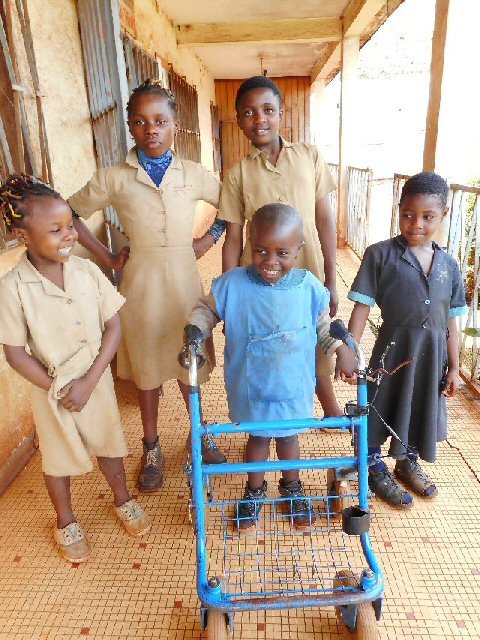
Mike Thomas with some of the children
Global rehabilitation Services (GLORES)
GLORES was started in 2004 by Cameroonian, Alfred Wingo, after receiving prosthetics training in the USA.
The work of GLORES in a poor rented building in Bafoussam, capital of the West Region of Cameroon, was observed by FIOH Fund trustee, Mike Thomas in 2009. He was impressed by what GLORES was achieving with very basic equipment.


A video showing Mike Thomas interviewing Alfred Wingo.
Disabled people in the West Region of Cameroon, especially children, suffer from neglect and discrimination due to ignorance and cultural beliefs about disability. There is a general lack of care and rehabilitation planning in the country and disabled children, who are mostly from poor families, rarely obtain an education and employment. They are often viewed as being possessed of evil spirits and a curse upon their parents. Hence they may be locked up at home and fed like animals and hidden from society. It is estimated that about 70% of disabled children suffer from neglect and discrimination.
GLORES organises its work in three major sections:
- Prevention of disabilities through health education and encouragement of parents to vaccinate their children against diseases causing disabilities. Part of the education focuses on prenatal/postnatal care, nutrition, hygiene, genetic information and environmental pollution.
- Physical therapy that includes therapeutic exercises, mobility training, functional re-education, occupational therapy and activity training for coping with everyday life.
- Vocational training in 3 trades. The disabled person makes the choice of trade and is then able to undergo training in that trade for one year in a sheltered workshop environment. Younger children who cannot work are sent to local schools for their education. While the child is in school parents will take an active part in its education and prepare to take over responsibility for the child’s welfare later on. After successful completion of the training disabled persons are settled in their individual group ventures or employment and there will be follow-up by GLORES for a few months after treatment and training has finished.
Once a disabled person goes through the GLORES project he or she becomes a member of the GLORES family. GLORES monitors all the outcomes of its work in order to evaluate its effectiveness and introduce improvements where necessary.
The pictures below show some of the disabled youths and children before, during and after treatment:


Moving testimonials of six of the children treated by GLORES
If you would like to support the work of the Future in Our Hands Education and Development Fund please make a donation:
Please support the work of the Future in Our Hands Education and Development Fund whose aim is to help and empower some of the world’s poorest and most marginalised people by:
- UK residents can provide long term support by completing the FIOH FUND DONATION FORM and sending to the address shown on the form:
- Direct grant to the charity’s bank account or by cheque to:
 Bank account details:
Co-operative Bank
IBAN: GB07CPBK08929965050707
BIC: CPBKGB22
Cheques should be made payable to the
Future in Our Hands E&D Fund
—————————————————————————-
Fundraising to help the work of the charities would be greatly appreciated
Cameroon Gender and Environment Watch
Cameroon Gender and Environment Watch (CAMGEW)
 CAMGEW works to see social and environmental justice put at the centre of development. It works with all age groups. It works to see that the social welfare of children in Cameroon is improved, especially the girls who in many communities are deprived of opportunities to grow up to be future leaders.
It sees it necessary also to work to improve the lives of children in many rural and urban areas who lack the means to go to school and to meet their needs. It does this by trying to meet their basic needs, instilling in them the spirit of positive thinking and encouraging them to strive for excellence.
 It seeks also to build the capacity of women especially those in the rural areas where most women are poor farmers. These women lack the agricultural skills and inputs to increase farm yields. They also lack crop storage techniques and facilities. This means they are unable to gain an income sufficient to meet their basic needs and pay for the education of their children. They need to be empowered to be economic and social leaders. Many of them are bread winners of their families. CAMGEW also works to provide women and children with basic needs like water, food, education, energy and shelter.
It works with children, youths and the old to create environmental awareness. and works with children through environmental education to instil in them the spirit to grow up to live in harmony with nature. It educates children about ecology e.g. rivers and lakes; marine ecosystems like the Atlantic ocean; land ecosystems like natural forests, botanical gardens, Zoos; pollution and waste management; gardening and tree nurseries.
It fights poaching, the bushmeat trade, illegal wildlife trade, deforestation, bushfires and climate change by trying to bring about a positive behavioural change in people involved in activities that are environmentally unfriendly. To bring this change CAMGEW carries out sensitisation, lobbying and advocacy at various levels of the society (policy makers, private sector, civil society and grass root populations).
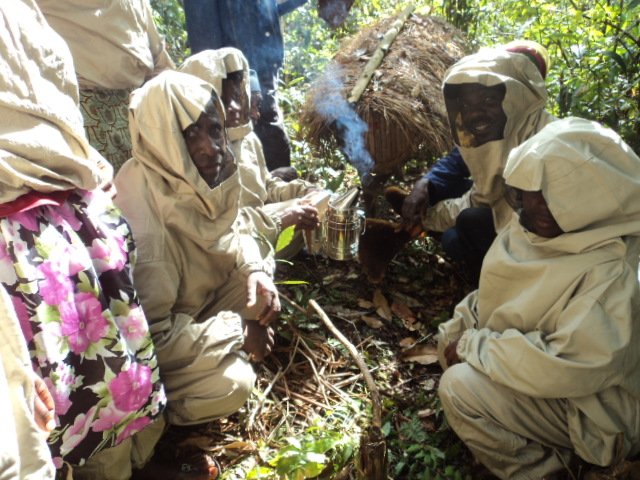
 CAMGEW encourages organic farming by improving on soil fertility with organic matter and encourages household organic waste sorting for use in farms to increase crop yields and also as a means of managing household waste. Agroforestry is another way CAMGEW promotes ecofarming. This was a traditional method used to improve the soil. It promotes integrated organic farming, horticulture (flower, vegetable and fruit farming) and apiculture (bee farming).


To discourage the use of plastic papers which are known to be non-biodegradable and to reduce the aesthetics of our environment, CAMGEW promotes the use of bags and baskets made from locally available materials like bamboo, jute, rattan etc that are biodegradable. These bags and baskets have been used in the past when plastics were not yet common. CAMGEW is building a campaign to see how biodegradable materials could be used for packaging instead of plastics.
The availability and affordability of modern energy is paramount to every development. Many rural areas lack this energy because they are far away from the national grid and also because they cannot afford it. Another, problem faced by Cameroon is the shortage of power due to dependency on one energy source – hydropower that is always affected by droughts brought by the changing climatic.
It promotes decentralised and diverse energy systems like small hyro, solar, wind and biogas systems exploited from the available natural energy sources like river fall, sun, wind and animal waste or plant matter respectively. It also engages in a campaign to reduce dependency on environmentally unfriendly energy sources like fossil fuels.
It takes part in fighting climate change from four key perspectives – mitigation, adaptation, finance and technology as identified in the global Climate Change Conference that took place in Bali, Indonesia in December 2007. During the Bali conference, the UN Secretary General, Ban Ki moon said “no one-rich or poor-can remain immune from the dangers of climate change”.
To achieve all of above, CAMGEW uses media, gatherings, posters, newsletters and organised events like workshops. It therefore, sees creativity and innovations as a way forward to solve the global problems that plague humanity.
These innovations and creative ideas therefore need to be replicated and/or scaled-up to tackle global challenges. It believes that through partnership, networking, research and volunteerism this shared vision for long-term cooperative action among the people of the world to improve on lives and promote sustainable development, can be achieved.
A video showing activities at its vocational training centre in Oku can be seen here:


Future in Our Hands Womens Co-operative, Oku
Future In Our Hands Cooperative Oku
 FIOH Oku is a women’s farming cooperative made of over 5 Common Initiative Groups (CIGs) representing over five villages in Oku Subdivision. It was created on the 22nd of September 1999. It encourages the spirit of hard work, cooperation and togetherness in women. It is called a women’s cooperative because 95% of members are women. Her creation was thanks to the interest SHUMAS NGO and Future Our Hands had to empower women and the vulnerable in the Oku community. It has as motto: educate a man, educate an individual; educate a woman to educate a whole nation. This is because of the socio-economic importance of a woman in the purely African village community like Oku. Some of the projects realised by FIOH-Oku:-
- Improving the processing and transformation of corn and cassava through mills and haulers donated by SHUMAS and her partners.
- Offering loans to members at very minimal interest rates through a scheme developed by SHUMAS.
- Through SHUMAS there has been the development of community health infrastructure for the village of Lui.
- Regular production of organic food crops and other natural products for income generation and food security.
- Attending agro-pastoral shows to market their produce.
- Training and practising sustainable and integrated farming and livestock productions methods amongst her members.
- Training and application of agroforestry techniques to her membership.
Oku is located in Bui Division of the North West Region of Cameroon. It is made up of 36 village communities mostly living along the slopes of the Kilum Mountain. The people depend mostly on forest resources, subsistence agriculture, cash crop farming, livestock production and local artisan work for their livelihood. The Kilum Ijim Forest found in the community is a naturally preserved moist montane forest with a surface area of about 20,000 hectares. It is located in the Mount Oku Ridge in the Bamenda Highlands and forms part of the High Plateaus Agro-ecological Zone of Cameroon. The geographic location of the area is latitude 6°07’N – 6°17’N and longitude 10°20’E – 10°25’E. It has very important and threatened Afro-Montane endemic animal and plant species such as Prunus africana amongst others. It is an internationally important biodiversity hotspot and a critical zone for carbon sequestration within the High Plateaus Agro-ecological Zone.
The Kilum area is one of the highly populated locations in Africa and Cameroon in particular, accommodating 144,800 people occupying about 328 km2 (439.3persons/km2); hence, high pressure on resources is inevitable. There has been progressive deforestation and degradation mainly due to agricultural expansion, forest fire and overgrazing. Fuel wood harvesting has also been a major cause of deforestation and forest degradation. The late 1980s decline in coffee prices triggered many farmers to migrate further up the slopes in search of new land to increase income through alternative crops.
Within two years of its formation the activities of the co-operative had a profound positive impact on the lives of the women:
Former situation
- We were scattered and never cared to come together because we did farming far away from our homes because of the eucalyptus trees that were planted around our homes by men.
- We thought that only men had the right to inherit the property of parents. We never attended seminars and training programmes.
- We were shy to express ourselves among men and only played the part of listening.
- Our opportunities for income-generation were very limited.
- We thought HIV/AIDS was a curse from God and an opportunity for white people to sell us condoms.
- We thought that bread and cakes production was the duty of men. We did not know the importance of business – buyam sellam.
- If a woman was illiterate when she married we thought this was the last chance for her to become literate.
- Single parents had to resort to work on farms just to feed the family. They had insufficient income for their children’s education.
- Women believed that only men had the right to determine how many children they should bear.
- Husbands decided which political party their wives should vote for in Elections.
- Only men had the right to erect buildings and got the credit for doing so despite the help of women.
- Men brought in second wives without the consent of the first wife, claiming it is their right.
- Women thought only of their own needs and rarely discussed problems together. We did not engage with women from other villages.
- Widows used to sleep on bare floors in very smokey houses that constituted a breeding ground for germs and diseases.
Current situation
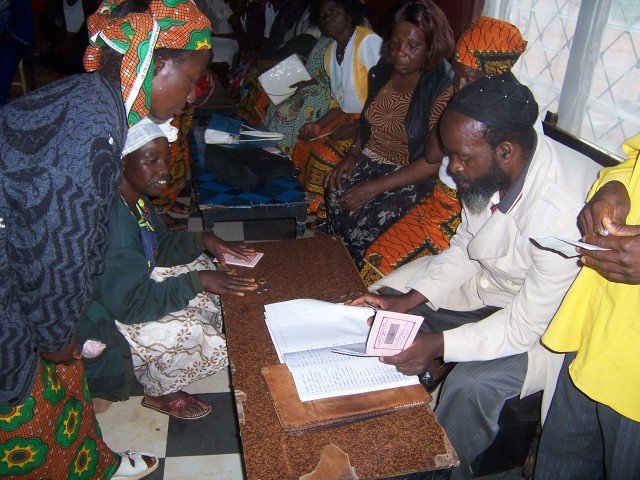
- We now farm around our homes and have enough time to come together. Children now attend school as they do not have to come with us to distant farms. We have gained experience by coming together e.g. joined savings and credit groups with small interest charged on loans. We now have small businesses that help to solve some of our problems like paying for school fees and drugs. We are healthy and do not have to rely on our husbands for money.
- We have attended many seminars organised by SHUMAS and the Diocesan Commission for Justice and Peace, Bishops House, Kumbo, Human Rights agent and the International Federation of Female Lawyers in Cameroon.
- Now we express ourselves freely because of the lectures from SHUMAS and human rights agent who told us that every person is the same before the law and has the right to express his/her views freely.
- We now produce tablet and powder soap and hire a hand cart for transporting items.
- Through seminars we have learned that HIV/AIDS is real. We go out to schools and talk on the rural radio about the dangers and the precautioins that must be taken. There have been significant changes in sexual behaviour as a result.
- We now have our own small bakery and members can take part in bread making and poff poff production. We sell what we make and employ male youths to carry to far distant places by motorbike to sell.
- The eucalyptus replacement project has enabled women to have more time to engage in adult literacy classes. These include married women who were once illiterate.
- FIOH Oku has encouraged single parents to join the co-opertive and learn how to engage in income generating activities. The co-operative has provided them with small loans and they are now able to sell items in the market. Some have been able to send their children to school and have given testimonies on how their lives have improved.
- From the lectures and seminars women became more aware that men and women should jointly agree the number of children they should bear.
- Through the education of the human rights agent and messages from Mike Thomas of the FIOH UK Fund, women now know their rights to vote in their own right.
- Women now realise that they can take the initiative in putting up a building. Our women have bought a plot of land and have erected their own meeting hall.
- Through the co-operative we have taught women the importance of marriage certificates and various types of marriage . If monogamy is the choice then men have no right to bring in a second wife or mistress.
- We now have exchange visits with other womens co-operatives in our network. We exchange ideas and learn from each others experience.
- Now most women, especially FIOH women, do not now sleep in such houses. When their husbands die they sit in a special room with friends who comfort them.
Follow us on Facebook:
www.facebook.com/fiohfund
Follow us on Twitter:
twitter.com/fiohnet
Please share our links with your friends to help us reach a wider audience.