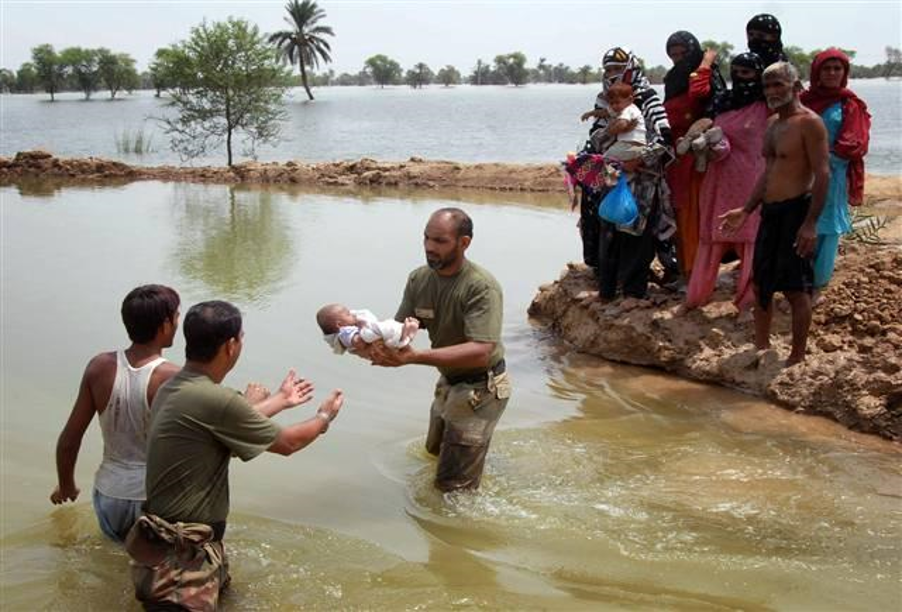
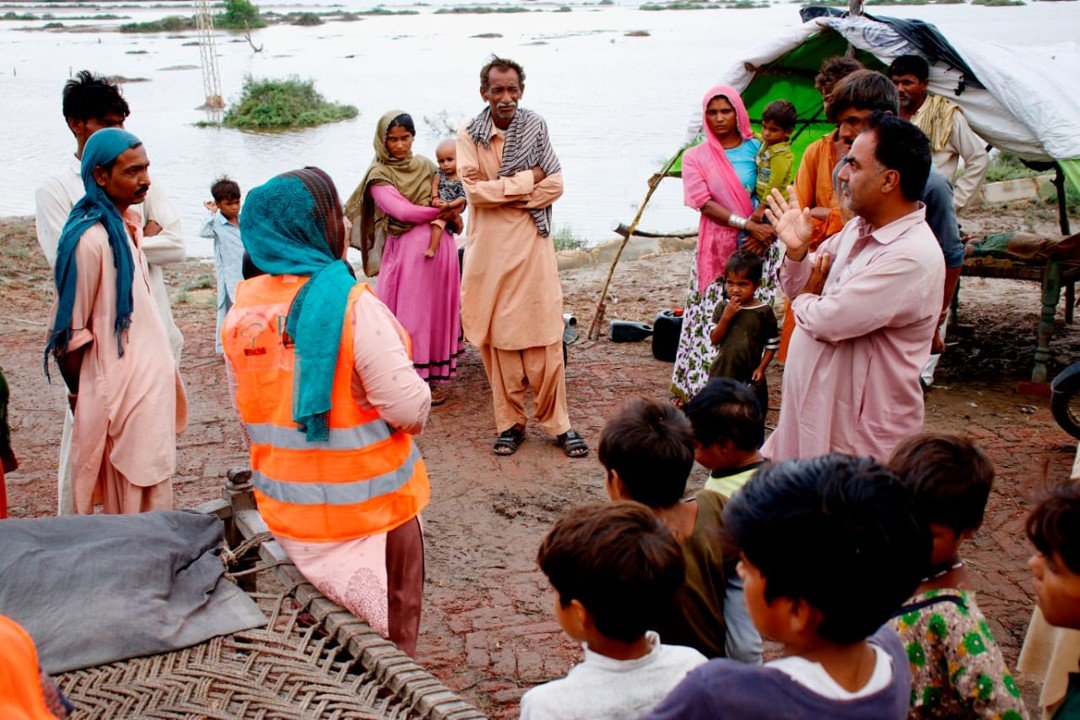
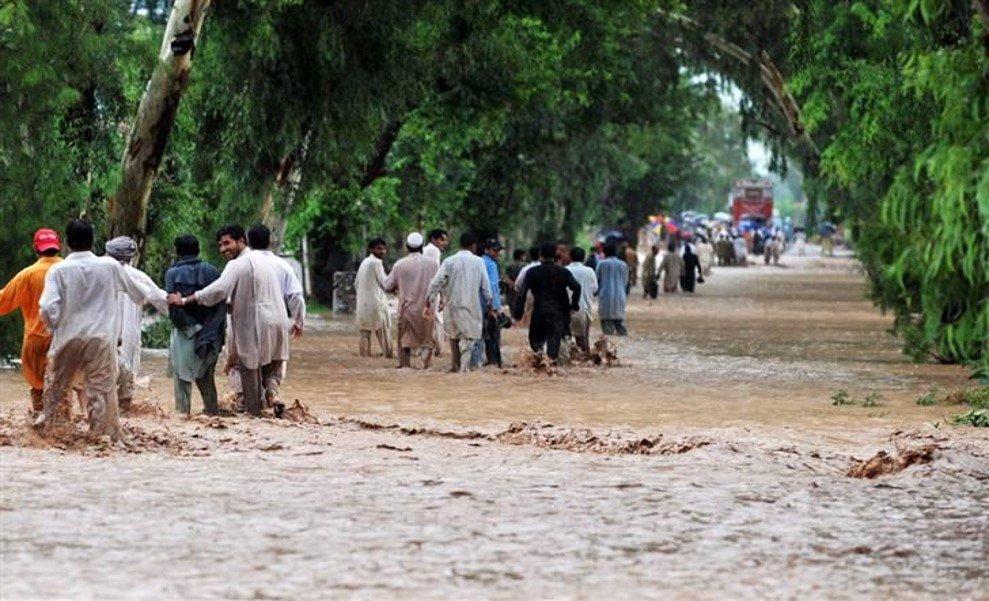
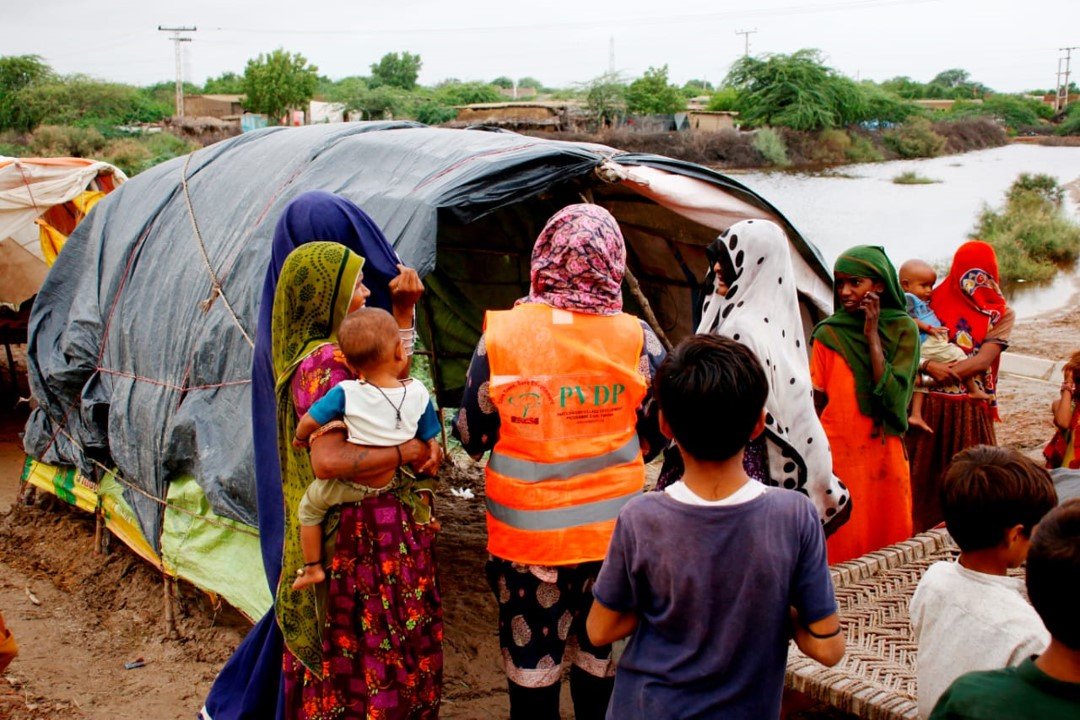
Disaster Relief – Flood 2022
Sindh Province, Pakistan

Introduction of PVDP
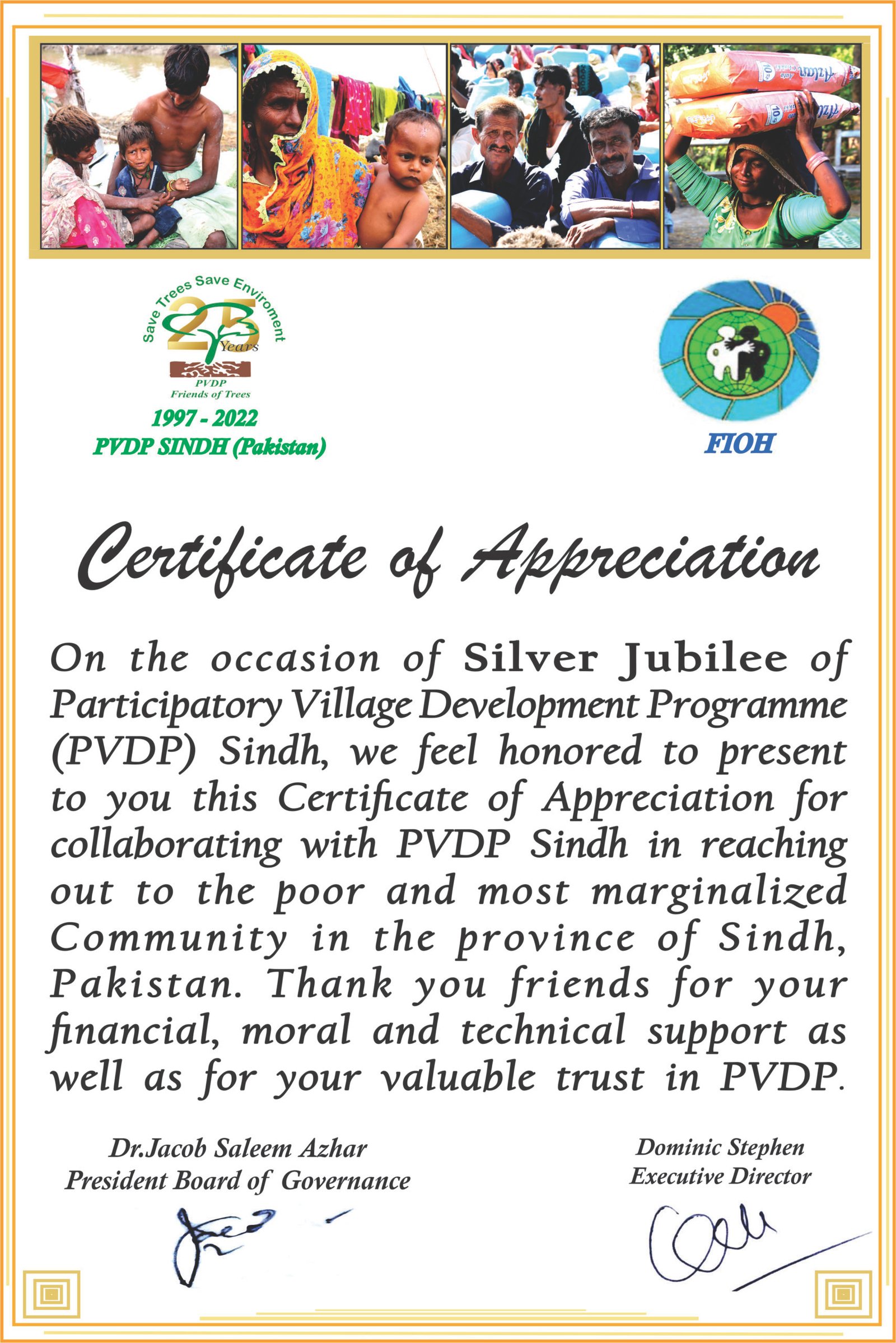
Participatory Village Development Programme (PVDP) established in 1997. PVDP was registered
on 15th June 1998 under the Societies Registration Act 1860 with Registration Number 3830. The
organization was formed with a mission to support the poor and disadvantaged communities in
improving the qualities of their lives, through encouraging people to organize and mobilize
themselves for holistic social change.
Pakistan Flood situation analysis 2022
SINDH FLOODS 2022-OVERVIEW
- According to flood extent mapping using Sentinel-1 satellite images acquired during
22–28 August, over 18% of Sindh’s total area was directly inundated. - In the summer (KHARIF) season, most of the area in Sindh is cultivated under three commercial crops: rice, cotton, and sugarcane. The flood inundation is highest in the rice crop zone, which has resulted in an
overall estimated loss of 1.8 million tons of rice, or an 80% loss of the expected total rice production in Sindh
In economic terms, rice, cotton, and sugarcane together faced a direct loss of USD 1.30
billion (rice: USD 543 million, cotton: USD 485 million, and sugarcane: USD 273 million).
- As per estimates, floods killed 42,174 livestock, causing USD 13 million loss.
- Overall, the province faced a combined loss of USD 1.7 billion in rice, cotton, sugarcane, tomato, onion, chili, and livestock.
- Economic losses in agriculture are much beyond the estimated direct losses to crop production and livestock.
Summary of findings and recommendations
The key findings are compiled in to key humanitarian needs sectors thus:
Food Security, Agriculture and Livestock – Needs
- Food or Cash/Voucher Assistance (CVA) to reduce food consumption gaps, supporting
the most affected and food insecure population while restoring livelihoods and resilience. - Construction/rehabilitation of animal shelters and irrigation infrastructure and
equipment. - Protection of remaining livestock through provision of feed and vaccinations.
- Provision of seeds to restart vegetable crops and support for long-term restoration of
orchards.
Health – Needs - Provision of essential medicine, tents, blankets, medical equipment, face masks, hand
sanitizers and mosquito nets. - Strengthening disease surveillance in flood-affected districts and mitigating the outbreak
and spread of diseases. - Monitoring the health of the affected population.
- Provision of medicines and other medical supplies.
- Targeted repairs of health facilities.
- Support for integrated outreach activities such as medical practitioners, lady health
visitors, medicines and transport.
Protection – Needs - Psychosocial support for the affected population.
- Dignity Kits and other non-food items (NFI) for vulnerable households.
- Scaling up assessments to identify people who may have lost civil documentation.
Water, Sanitation and Hygiene (WASH) – Needs - Emergency Latrines
- Water Purification Tablets
- Bio sand Nadi water filters.
- Hygiene Kits
- Water Tanks
Shelter and Non-Food Items (S/NFI) – Needs
Shelter items including tents, tarpaulins, blankets, mattresses and mosquito nets are needed to
support displaced