
Permaculture Ghana

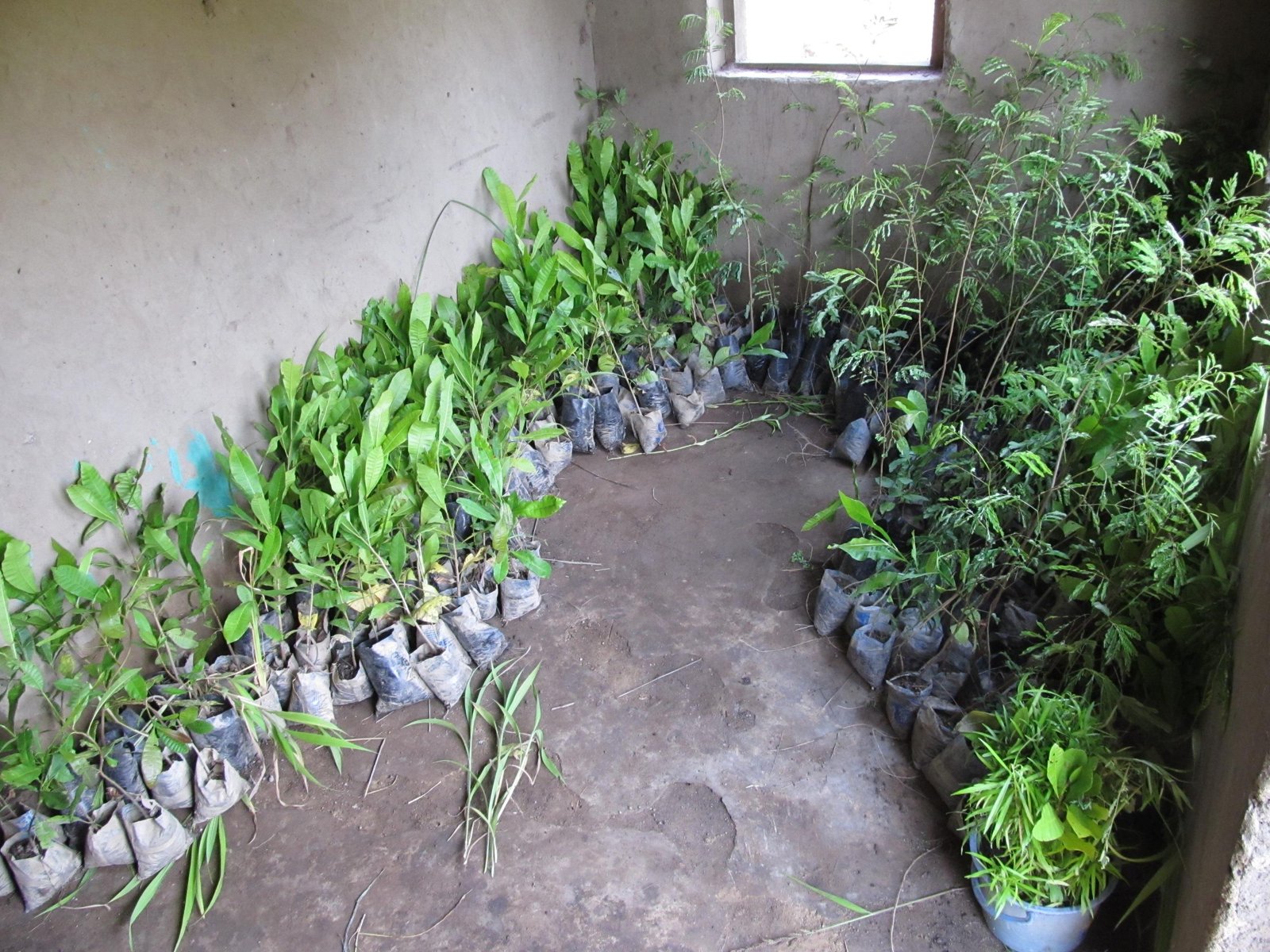
Transplanting seedlings
Permaculture Ghana

Location
The following photographs illustrate projects initiated by Permaculture Project in Ghana co-ordinated by Paul Yeboah. There has been a large focus on working with women farmers and environmental education with children of all ages eg. Carbon credit/oxygen from trees, food and nutrition, soil improvement and animal fodder. After such a workshop with the schools the project also provides them with tree seeds and polypots for nursery practices and management. Our vegetation cover in the region is being lost very fast and the project training is expected bring about a big change in attitudes in the area towards the environment and the value of tree planting by the year 2017. Tree species being planted include acacia siamea, moringa, mango, citrus, mahogany, cocoa, cederella, albizia, teak, leucaena, gliricidia, ofram and millitia. The project also includes instruction in organic methods of gardening. Ghanaens in general do not add enough vegetables/fruits to their food as such and education is provided to the school pupils in the importance of a balanced diet.
The focus of the organisation’s activities recognises the importance of a balanced diet of vitamins, minerals and amino acids for good health. Deficiencies in any of these nutrients can lead to health problems – scurvy can be caused by a lack of vitamin C, night blindness by a lack of vitamin A, kwashiorkor by a lack of protein, anaemia by a lack of iron. Other health problems can be caused by a lack of vitamins obtained from vegetables, fruits and moringa leaves.


Tree planting at Dupari in the Upper West Region

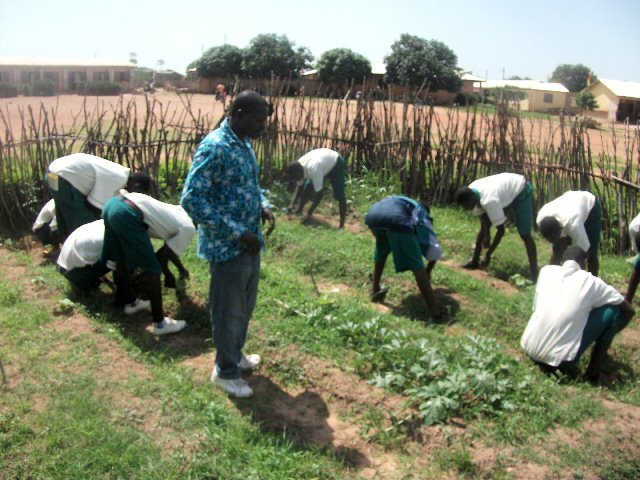
Kulpong D.A. Primary School at Wa in the Northern Region (left). Akunfi Ameyaw Senior High School (right).


Training in the production of cream, soap, ointment and shampoo made from the leaves of the moringa tree. The powder from the leaves can be used as a food supplement.


Process of wood sawdust compost for growing mushrooms being shown to a group of Peace Corp visitors from the USA.
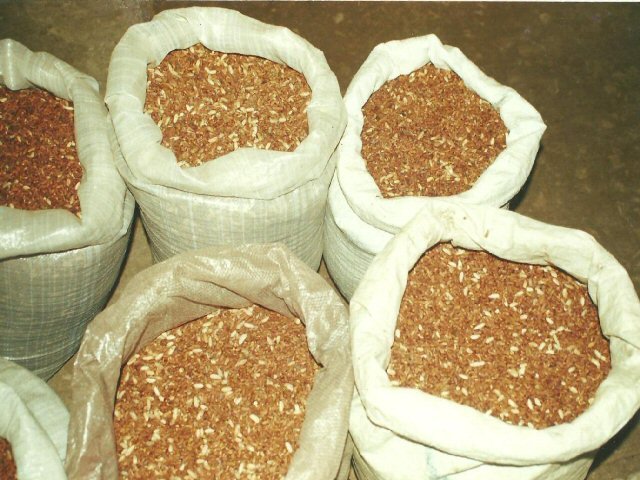


Neem seeds, neem oil processing, neem cake fertilizer, neem products – insecticide, shampoo, soap.

Pesticides are made from neem tree leaves and the process can be seen here:
PROCESS OF MAKING NEEM OIL AS A PESTICIDE


Participatory Village Development Programme, Pakistan
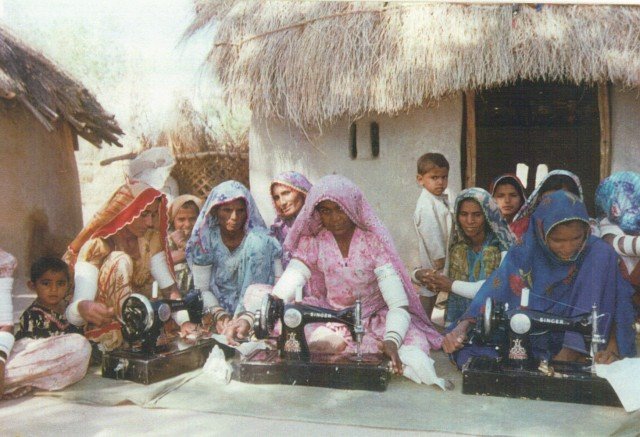 Background
 The Participatory Village Development Programme (PVDP) is a locally registered development non-government organisation (NGO) established in 1997 with a vision to see in the time to come a healthy, literate, civic and socio-economically self reliant community. The organization was formed with a mission to support the poor and disadvantaged communities in improving the qualities of their lives, through encouraging people to organize and mobilize themselves for social change.
PVDP was formed with a clear aim to tackle the causes of poverty and deprivation and bring about a long term difference to the lives of the most disadvantaged people of Tharparkar district of Sindh Province in Pakistan. To achieve this aim PVDP and the community embarked upon the challenging task of improving the natural resources upon which 90% of the poor and disadvantaged people depend.
PVDP and the Community will work together towards long term change by improving, the water resources, the livestock resources and the general tree and fodder resources of the target area. The improvement in the natural resources will contribute directly to the improvement of living conditions of the poor and marginalized people. When this happens, it will help the target groups to sustain the project’s benefits in the longer term.
The economy of Tharparkar is mainly based on livestock and cattle which people raise to eke out their daily living. 90% of the population of Tharparkar district live below the poverty line and women and girls are especially disadvantaged.

PVDP project area
Besides, improving the natural resources, PVDP and the community also work towards improving the health, education and the development of capacities of the communities, particularly the poor and marginalized groups.
The basic values of PVDP
PVDP respects the rights, culture and dignity of all people and stakeholders it is working with.
- PVDP considers all human beings as equal irrespective of gender, caste, creed, beliefs, affiliation or political commitment.
- PVDP gives top priority to the interests of the vulnerable groups such as women and children.
- PVDP believes in participatory approaches in all its work and intervention.
- PVDP opposes discrimination of all kinds.
The target group
 The target groups of PVDP are the poorest households in the project villages. These households are carefully selected by PVDP staff and the village organization. The main object of the programme is to enhance the socio-economic, health and educational status the selected beneficiaries, 90% of which are women and children.
Major issues PVDP and the community aim to tackle are:
Gender inequality and poverty
Women and girls are more vulnerable to poverty in Tharparkar. This is mainly because of the gender inequality which has aggravated discrimination due to social cultural and economic reasons. There is unequal participation of women and girls in community life and there is hugely unequal access to assets such as livestock, land, health and education. PVDP is striving with the local communities to address the issues of gender inequality in order to reduce poverty and marginalization of women and girls.
Together with building assets of women, the project aims to bring about changes in attitudes, roles and behaviour that are essential for gender equality to be achieved.
Land degradation
The environment, which produces the most essential means of survival, namely food, fodder and fuel, is badly degraded due to human and animal pressures. PVDP and the community have taken the challenge to restore the land’s fertility through developing its pastures and grazing lands. PVDP is motivating the community to raise small flocks of animals, which are manageable and more economical to the households. At the same time PVDP also advocates and motivates the community towards smaller family units to reduce the overall pressure on resources.
Food security
For this purpose a poverty reduction model based on improving the assets of households and providing regular income to the households has been developed together with the project communities. The poverty reduction model calls for improving the natural resources with which the livelihood of majority is directly linked.
The objective of the poverty reduction model is to ensure secured livelihood for the poor and disadvantaged communities and reduce their vulnerability related to droughts and other disasters (earthquake).
Poverty reduction model of PVDP
To address the causes of poverty and vulnerability of disadvantaged communities, PVDP and its partner community organizations have developed a poverty reduction model based on production and harnessing of natural resources on sustainable grounds. A six activity based model is introduced through women at household levels. The model ensures development of permanent assets for women and a sustainable livelihood from livestock and land resources.
PVDP’s approaches to development work
Working with all the relevant partners – the stakeholders
PVDP strongly believes in participatory approaches in all its programmes. Consulting and involving marginalized people right from identification of problems to the planning, implementation, monitoring, review and evaluation stages is the normal practice of PVDP. PVDP believes that involving the community at every stage of the project development is vital to increase the chances of making a long-term difference and ensure that the benefits of the project will be shared fairly among the poor and marginalised communities. PVDP also seeks the collaboration of local government bodies particularly those relating to agriculture, health, education and veterinary services at district level.
Building the capacities of community staff and volunteers
PVDP believes in the capacity building of the community organizations it is working with, the staff implementing the programmes and of the volunteers, to be able to tackle the causes of poverty more effectively, more efficiently and in a sustainable way.
The aim of PVDP is to eventually shift the responsibilities of the project over to the community organizations over a number of years. It also means that over the years, the role of PVDP will reduce and role of the community will increase to the extent of taking over project activities and the management of community development work by the “Goth Sujag Markaz” – The Village Development Organizations of the villages.
Influencing opinion
Our constant interaction with project communities, government bodies and other stakeholders provides us an opportunity to use our combined energies and resources for the development of marginalized people and enable them to have more control over their lives.
PVDP, in the course of its work, aims to create more awareness of basic rights and equity issues at the family level, at government and civil society levels. This kind of awareness at various levels will help to influence attitudes and practices among decision and policy makers. The aim is also to create effective channels of communication between the grassroots and policy makers which is fundamental to influencing sustainable changes to the lives of the most disadvantaged people.
Building alliances and networking
PVDP has developed networking with various NGOs and government organizations in the development field. This kind of networking is helping PVDP to share experiences and exchange resources to create an environment of co-operation to bring about sustainable development initiatives for the most disadvantaged groups. Networking is helping to share lessons learned from project implementation of various network partners and in maximising impact and building organizational expertise.
Learn as we go along
PVDP is a learning organization. It learns from everything it does with the community and other stakeholders. The learning sharpens our vision and helps us to improve the way in which we work as an organization.
PVDP is a rights-based NGO
PVDP is a rights-based organization. It respects the rights, culture and dignity of all people and stakeholders it is working with. The organization considers all human beings as equal irrespective of gender, caste, creed, beliefs or political affiliation. PVDP gives top priority to the interests of the vulnerable groups such as women and children and their rights. PVDP opposes discrimination of all kinds.
Major programmes of PVDP
Community mobilization, awareness raising and forming of village organizations of men and women is part and parcel of PVDP’s development initiatives with local communities. The major programmes undertaken with the community are as follows:
Natural Resource Management Programmes:
– Livestock development programme
– Fodder and fuel development programme
– Water development programme
Health Development Programme:
– Safe Motherhood
– Expanded programme of Immunization
– Promotion of smaller family units.
Emergency Response Programme:
– Drought Relief and Rehabilitation Programme
– Emergency preparedness trainings
Capacity building programme:
– Capacity building at community level
– Capacity building at staff level
– Capacity building at volunteer level.
Lobbying, networking and influencing opinions:
– Lobbying for major issues of the district Tharparkar
– Networking with government bodies
– Networking with other NGOs
– Working to influence policies and practices.
Major achievements of PVDP
PVDP started its work with only 10 villages in 1997 when it was established. Work gradually expanded over last five years and at present this organization is working with communities in 60 villages with a population of about 50,000 comprising of about 7,000 households.
PVDP so far has supported the communities in forming 22 men and 27 women’s organizations who are regularly trained to build their capacities for self reliance. PVDP and village organizations have worked together to plant about 52,000 trees, grafted about 2,600 bair fruit trees, 400 rainwater harvesting tanks, supported 14,104 poor families in times of droughts and earthquake.
Besides these activities, the links of PVDP within and outside Pakistan has increased.
– PVDP’s work is widely recognized by the community and local government
– PVDP’s image as a development NGO is good in the Province of Sindh
– The staff has gained on the job experience in regular development activities and relief work.
– PVDP is member of Indus NGO Network, which only admits value based and functional NGOs as members.
– PVDP is mentioned as one of the leading NGOs of Tharparkar in the website www.tharparkar.sdnpk.org
 This two- stove model provides the facility to cook two meals at one time. As the stove is smokeless, it saves women’s eyes from smoke related eye diseases besides preventing the internal portion of house and cooking pots from blackening. The major benefit of this stove is that it saves about 1/3rd of the fire wood. It is estimated that each household in Thar burns about 10 kgs of wood per day. With this stove, about 3.3 kgs of wood is saved daily and in one year about 1200 kgs of wood is saved..
The Thar population is about 1 million comprising of about 140,000 households. If one household saves equal to 1200 kgs of wood, all the 140,000 households together can save up to 168 million kgs or about 4.2 million mounds of wood equal to about 42,000 full grown trees per year if they are using this fuel efficient stove.
The stove has a great environmental impact. The use of this stove helps to improve our badly degraded environment due to cutting down of trees for fire wood. It also helps to reduce land degradation and desertification processes.
Cost of material for one fuel efficient stove Rs. 300
Cost of training per household Rs. 250
Cost of monitoring Rs. 150
Total cost on one fuel efficient stove Rs. 700 (£8)
(Value of annual saved wood per household: 1200 kgs x Rs. 3/- per kg= Rs. 3,600) (£40).
The objective of this programme is to motivate the community for raising small flocks of animals to reduce the overall pressure of animals on the grazing land which in turn will help to reduce land degradation and desertification due to over grazing.
Under this programme a poor family is supported with a unit of 6 she goats. The benefit of this activity to a poor family is two-fold; goat milk is used to overcome the problem of malnutrition commonly found in women and children due to poor diet and secondly, the male goat kids are sold to supplement poor family’s meagre income.
This is a revolving loan programme in which two goats are recovered by the project each year, this way all the six goats come back to the project in three years to help another poor family with the recovered goats.
The selection of a poor family for the Small Flock Programme support is made jointly by PVDP field staff and the Goth Sujag Markaz Committee (Village Development Committee) of the village.
The cost of a unit of 6 goat is about Rs. 7,200
Benefit to beneficiary family in three years:
Value of milk Rs. 20,000, (£222) and income from the sale of a male goat Rs. 15,000 (£167).
 Grafting bair trees: This activity is conducted to support poor Thari households in raising bair fruits on their land for income generation. 50 bair trees of local variety are grafted with improved variety of marketable bair. It takes from two to three years to produce bair fruit which can be sold in the market to supplement family income.
Traditionally three rains are needed to ripen the Thari crop of Bajra and Guwar. If three rains do not occur on time, the crop becomes a failure. The bair fruits can be raised in one good rainfall. Even if subsequent rainfall does not occur, this activity still gives good results to the farmers.
One bair tree can produce a minimum of 20 kgs when it is in its prime. So 50 bair trees can produce up to 1000 kgs of bair fruits in one season. Normally the price of 1 kg of bair is between Rs.10 and 15 per kg. But even in the village it sells for Rs.5 per kg. The income that can be earned on 1000 kg production will be (1000xRs.5/-)
Rs. 5,000/-.
The cost:
Cost of grafting one bair tree comes to Rs. 50 including cost of transporation, staff time and cost of graft from another bair tree. So cost of 50 bair graft cost Rs. 2500 (£28).
The Benefit:
Annual bair sale (minimum) is Rs. 5,000 (£55).
 Handicrafts: This activity is undertaken by PVDP and Goth Sujag Markaz to provide earning opportunities for poor women to meet the basic food needs for their families through sale of handicraft work.
The activity also helps to address the problem of food security among the poorest families in times of drought when food shortages lead to an increase in the illness and mortality rates amongst the poorest section of the community.
PVDP supports women with quality raw material for making embroidery which they can sell in the market. PVDP helps in improving the quality and design of the products so that they can fetch a market inside and outside of the country.
Cost
Cost of supporting one women with raw material comes to Rs.1000 (£11)
Benefit:
One woman on average can earn upto Rs.30 per day and in a year she can earn up to Rs. 10,000 (£111) without disturbing her daily chores (fetching water, cooking , tending goats, looking after children, helping in agriculture activities).

Health, Education, Awareness, Rehabilitation and Treatment Society, India
 Background

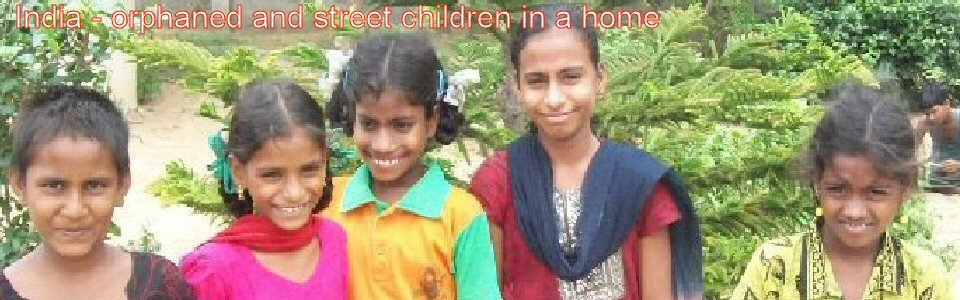
HEARTS is an indigenous registered charitable organisation established by a group of committed citizens from various fields with a strong desire to uplift abandoned, runaway and destitute children.
Despite the UN Convention on Child Rights and various policies of member countries and their Acts, the problem of street children looms large, worsening day by day. Street children congregate mostly at railway stations and bus terminals where they have a place of shelter and can beg for their livelihood. Also children prefer railway stations where free travel is possible.
Railway platform children in India have made railway stations their home, a place of living, eating and sleeping.
They live in a situation where there is no protection, supervision or direction from responsible adults. The main reasons these children leave their homes include poverty, lack of love, alcoholic parents and family disputes.
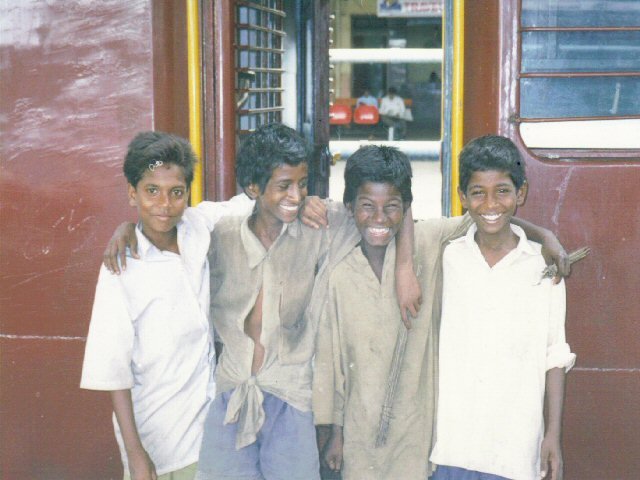
The main problems they face as street children are lack of food, shelter, harassment from antisocial elements, police, drug abuse, etc. Hence it is essential to rescue these children who are in the utmost danger. They have no access to education and information to help them grow as normal, healthy and happy children. Begging is their first occupation for survival. In addition to struggling for food, street children are not bothered about dress, health care, washing, bathing, etc. Because of their lifestyle they have a very poor health condition. There is no one to care for them in times of emergency or illness. They have no savings to pay for medicines and doctors fees. When injured they leave wounds unattended. Thus they learn to live with diseases.
Children who left home for relief might in fact face abuse, harassment, exploitation and deprivation. They often undergo oppression from officials or older boys and their behaviour often becomes submissive. With such abnormal situations their lives are slowly destroyed.
The experience of this boy, Tangavelue, illustrates the severe problems that street children face. This boy was beaten by a ticket collector when he tried to enter a train carriage. HEARTS director, Mohan Rao made a complaint to the station inspector and sought to trace the offending person.
The next day a sub-inspector from the Railway Police brought 11 children to HEARTS requesting that they be taken care of by the organisation. HEARTS is now working in close association with this official to help children who arrive at Guntur station.
Objectives
- To reach out to street children found begging and living on the railway stations in and around Guntur City, Andhra Pradesh
- To provide need based services for their growth and development.
- To offer facilities for literacy, numeracy and life education.
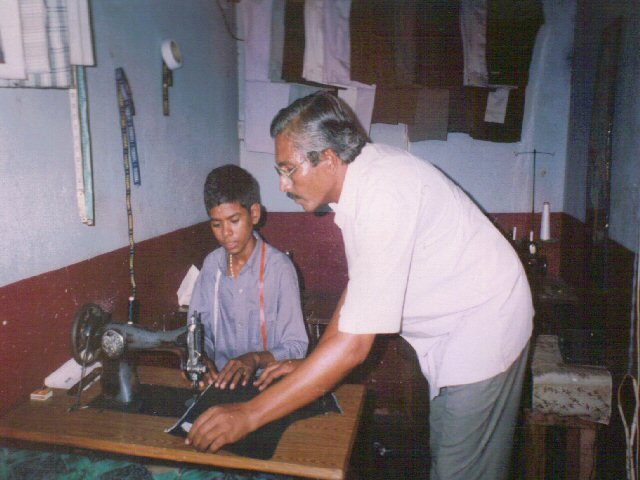
- To arrange facilities for vocational training for better living.
- To improve the children’s self respect, self confidence, voting opportunities and dignity through the provision of love, care, concern and friendship.
- Health care
- Nutrition
- Formal and non-formal education
- Vocational training
- Counselling
- Recreation
- Outings and camps
- Referral services
- Services for saving
 A terrible accident occured at midnight on 23rd September 2002 in Guntur railway station. Chandu, a 12 year old boy, fell from a moving train and lost his right hand and seriously damaged his right leg. He was taken to hospital by some of the other street children and HEARTS staff were informed of the accident. HEARTS immediately took steps to arrange blood and medicines for him.
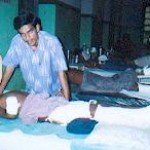 He was operated on and put in plasters for several days. His mother was then called to stay with him. He is seen here with HEARTS director, Mohan Rao Dasari.
Initially HEARTS operated from lock-up garages situated near the Guntur railway station, but now has a home for street children and orphans with better facilities for education and accommodation.

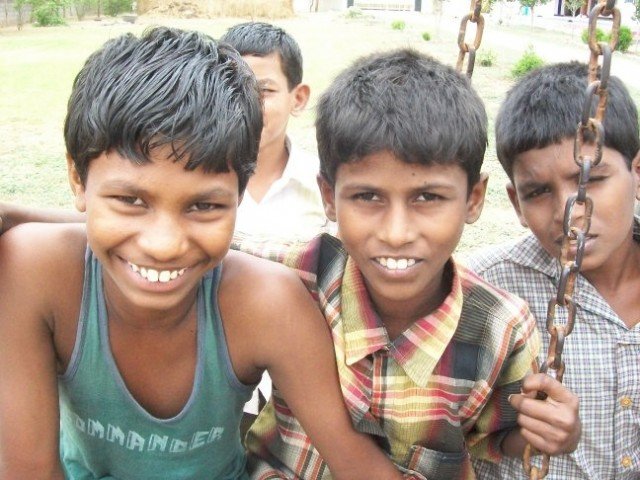
HEARTS has also assisted with:
Tsunami relief in Andhra Pradesh in December 2004
Cyclone relief in Andhra Pradesh in November 2013

New Hope Rural Leprosy Trust
 Background

Probably the best way of introducing the work of New Hope is to recount some of the early experiences of the founder of the Trust, Eliazar Rose, in the introduction to his book “The Ring of Capital L”:
 I was in a leprosy colony taking skin biopsies when one day a woman came in and sat on the broken step of the small temple which a local businessman had built. He had in fact encroached on a piece of Government land allocated to the colony.
The land was barren and stony – wasteland except for one corner of approximately one acre. That piece was almost prime rice land as it had a small spring fed irrigation canal at one point. The businessman owned the adjoining land and simply encroached on the piece that would at least have given the patients a few bags of rice. The temple was an appeasement to the colony to get them to back off with their constant appeal to the local government land revenue officer. The temple of course was built with sun baked mud bricks bonded with a mortar with very little cement. The building, not surprisingly, started crumbling with the first monsoon rains.
Jokingly I told her not to sit on the cracked step as the wall behind her might collapse and fall on her. She asked if that happened would she be killed?
I didn’t answer.
Her story was simple. She had leprosy for many years, taken treatment and stayed in her home because her husband was the village leader. He believed it was his responsibility to care for her against the social norms of the time.
He died and the village turned her out with the threat that, if she didn’t go, they would burn her house down.
She left alone and her married family stayed behind in the village.
In the same colony a year later a woman came in while we were distributing rations. It was mid summer and simply too hot for the old people to go begging. This was long before we started a programme of custodial care by having people sponsor the aged.
At the end of the long queue an argument started. I stopped helping the two paramedics weighing out rice to see what had happened.
The argument was about this woman who had been in the colony for a couple of weeks and was not on our register. The elders of the colony had said that she couldn’t get a ration because they feared that one extra would mean a fraction less for them.
Life in a leprosy colony is tough – Life in India for the poor is tough.
She argued that she had a piece of paper like them. Everyone had been issued with a ration medical card. She did have a piece of paper. It was a hand-written notice certifying that her husband had divorced her because she had contracted leprosy.
In the same year I watched from a small first aid post we had constructed in a colony as a bullock cart wandered slowly down the dusty track in the middle of the afternoon. The wind was hot and it had been a long day dressing ulcers. I wasn’t really in a good mood.
The cart creaked to a halt and a woman slipped off the back and squatted on the ground. Three men climbed down and came over. They announced they had decided to send her away as she had leprosy. They of course said they were doing a kind deed bringing her to a colony instead of simply sending her away with nothing.
One man was her husband, another was her eldest son and the third was from the lowest caste in the village. It had been his job to help her climb onto the cart.
They nodded when I asked if the ‘well conditioned bullocks and cart were theirs. They smiled with pride.
Something cracked inside me. I had the colony men drive the three of them out of the colony without their bullocks and cart.
They went to the local police station and tried to register a case. A lone constable came to the colony, or should I say as near as he dared; to the path leading to the colony. I told him that indeed the colony did have a cart and two good bullocks and that two men had come into the colony and tried to steal them. Did he want to come into the colony and verify it all?
The police inspector saw me in town that night and stopped me. We made a deal that the cart and bullocks should be sold within three days and that I should report that there were certainly no bullocks or cart in the colony.
The proceeds built the outcast woman a small mud-walled hut with a grass roof. Majji lived there in the colony for almost twelve years. She died in 1996.
I don’t know how often she smiled, but whenever I visited the colony she would nod and smile as I passed her hut.
It was during this time that I was employed to visit 13 leprosy colonies to see more than 2,500 patients on a monthly basis. Things seemed to happen when I was in the colony. I know these experiences have influenced the policy of our Trust to adopt an ‘open door’ approach.
One cold winter’s morning I cycled from the town where I stayed to five surrounding leprosy colonies.
The turn into one colony was at a junction on the highway. There was a tea shop on the corner where I went each month. The owner asked me where it was that I went when I visited. I told him ‘To the leprosy colony down the road’. He did not smile.
After that, whenever I stopped he would take a cup down from the top shelf and wash it out with hot water before pouring my tea. When I had finished he would pour hot water over the cup and place it back on the top of the cupboard.
The fear associated with leprosy is not something that is described in words, but rather by the actions, of others.
One month later I arrived at Jigabur leprosy colony. I was late because the monsoon rains had caused a river to flood. Thirteen houses in a small colony on the bank had been washed away when an embankment upstream had broken.
We got no sympathy from the local government flood relief officer. He considered it a blessing that the houses and people had been washed away in the night as it meant they were no longer ‘polluting the river’.
I didn’t know what to say when a new patient appeared before me for an ulcer dressing. I asked her name. She began to cry. She had been warned by her family never to mention her name even when they forced her to leave their home and village.
She showed me a two rupee note her husband had given to her. He gave it to her with the advice that the best thing she could do with the money was to buy rat poison for herself.
I am not very fond of speaking at service clubs in India. I have the feeling they are out of touch with the social fabric of our society. A few times I have not been able to come up with excuses quickly enough and have felt obliged to attend.
At one such meeting (it certainly wasn’t at a Rotary Club), a member asked if I could please visit his home the next day. I knew by the way he spoke there was ‘leprosy in the house’.
His brother’s wife was in what I will simply describe as border line leprosy trauma. She was pregnant with her third child. The husband was a lawyer and the brother, incredibly as it seems, was a doctor.
Money was not the problem. Their request was simple – could I find a place in one of ‘those places’ where ‘they’ lived and build her a ‘nice place’. The end of this story is too sad for me to write about, even after 15 years.
It is my belief that if we can change the attitude of people in India towards this now curable disease, we can make other social changes.
If we can change the attitude to a disease whose name strikes terror just by its utterance, then getting other social changes will be easy. This policy, this belief, is happening in areas where we work.
Nowadays we see fewer and fewer people being turned away from their families, their homes and their villages because of the stigma associated with leprosy.
Some people allege that young people become leprosy paramedics simply because they can’t get a job elsewhere, or because it pays reasonably well (at least today it does).
I disagree, because you need to have a heart in the right place, you have to have a depth of compassion and courage, to write LEPROSY PARAMEDICAL on papers, that goes far beyond the negative comments that some people still make.
Although New Hope was established originally to help those suffering from leprosy, its work has expanded to include tribal people in general, street children and victims of ‘natural’ disasters.
Since its foundation New Hope has carried out health inspections on over one million people in western Orissa. Over 6,000 people have been identified with leprosy and most have received treatment. Over 5,000 have been cured.
In addition to the hospital, the only one of its kind in western Orissa, the Centre accommodates:-
· a hostel for children with physical and mental disabilities (mainly polio) –
· calliper and shoe making units
· administrative block, and staff and patient accommodation
· accommodation for visitors, surgeons and students
· a weaving unit
· a shop for the use of patients
· laboratory
· vegetable gardens for patients
· occupational therapy unit
· savings and credit facility
New Hope also has homes for old people, disabled children and for street children.


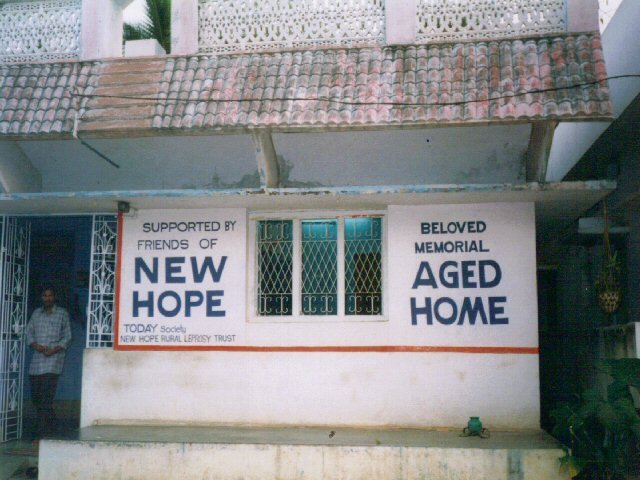
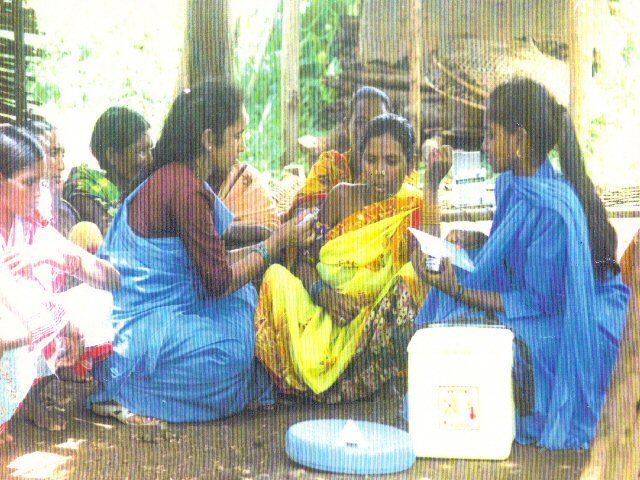

Leprosy Colonies
In the leprosy colonies it serves, New Hope treats 2,500 patients on a monthly basis and has extended its work to the 76 villages of a remote hilly and forested tribal area named Raghubari.
In all its areas of operation New Hope provides anti-tetanus and polio immunisation, iron and folic acid supplements and safe delivery kits for pregnant women.
Street children
Street children are a manifestation of societal malfunctioning and an economic and social order that does not take timely preventive action. Today, street children command a great deal of attention because of their sheer numbers and high visibility. Street children are found in large numbers in all Indian cities. They are forced onto the streets because they cannot cope with their family situation. A street child is forced to be an adult at an early age. He/she has to struggle for survival and earn an income for day-to-day living. By running away from their families, these children are making a major decision and even displaying their anger towards their irresponsible parents.
The need for systematically observing and deeply understanding the behaviour of street children must be emphasized. These children are not substandard ignorant kids. They have acquired the valuable knowledge, attitudes, emotions, abilities and skills that are necessary for their survival on the street. Though self-esteem is the answer to all childhood problems, street children have a weakly developed identity. This identity is derived from their interactions with their peers on the street and with adults who often abuse or deceive them, instilling in them fear or rejection.

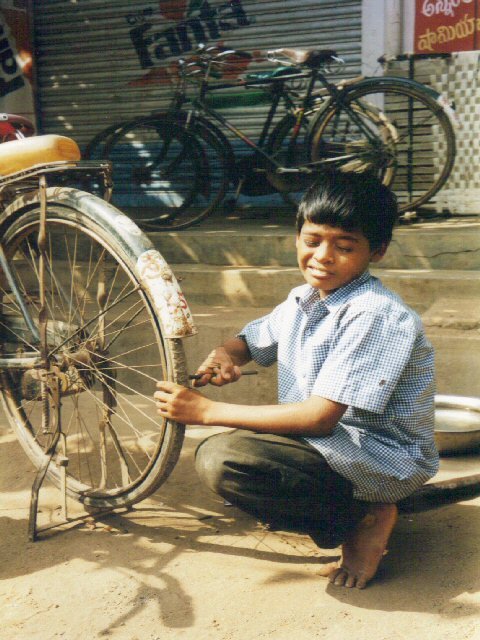

Although each child has a different story to tell, most of them have irresponsible parents and experience poverty and marginalisation. Parents are models, whether they want it or not. It is in the give and take of the parent-child and other relationships that the child finds a sense of security and self-esteem and the ability to deal with complex inner problems. But in the context of street children, the parents’ behaviour is often so cruel that the child makes a heroic decision to walk out on them into urban uncertainty. Poverty often overwhelms and infuriates the child rummaging through a garbage bin for discarded food. Ironically, food becomes an escape for street children. Their ravenous appetite and the fear of hunger compel them to eat every scrap they can get their hands on. Thus the street children have a combination of different characteristics. In varying proportions they can be emotionally vulnerable, physically resilient, naïve, wary and street-smart.
In spite of the increasing visibility of India’s ‘overall’ development on the international scene, the ‘inner contribution’ has been that the enrichment of a few is accompanied by the marginalisation or exclusion of millions of others. The real issue is that development continues to benefit some people, while many others are left out and pushed out. The phenomenon of street children has its roots not just in what meets the eye (poverty, family problems, etc.) but also in this whole gamut of development itself.
Child labour
Working children are everywhere but invisible, toiling as domestic servants in homes, labouring behind the walls of workshops or hotels or on hidden from view plantations. Millions of children who work as domestic servants and in unpaid household help are especially vulnerable to exploitation and abuse. Millions of others work under horrible circumstances. Child labour is a pervasive problem throughout the world, especially in developing countries. It is prevalent in rural areas where the capacity to enforce minimum age requirements for schooling and work is lacking. Children work for a variety of reasons, the most important being poverty and the induced pressure upon them to escape from this plight. Though children are not well paid, they still serve as major contributors to family income. Working children are the objects of extreme exploitation in terms of toiling for long hours for minimal pay. Their work conditions are especially severe, often not providing the stimulation for proper physical and mental development. Many of these children endure lives of pure deprivation.
Despite restrictions on child labour, children do work. This vulnerable state leaves them prone to exploitation. The International Labour Office reports that children work the longest hours and are the worst paid of all labourers. They endure work conditions which include health hazards and abuse. Employers take advantage of the docility of the children, recognizing that these small ones cannot legally form unions to change their condition. Such manipulation stifles their development. Deprived of the simple joys of childhood, these children are relegated to a life of drudgery.
However, abolishing child labour has its own limitations. First, there is no international agreement defining child labour. Countries not only have different minimum age work restrictions, but also have varying regulations based on the type of labour. This makes the limits of child labour ambiguous. Most would agree that a six-year-old is too young to work, but whether the same can be said about a twelve-year-old is debatable. Until there is global agreement which can isolate cases of child labour, it will be very hard to abolish.
Child labour is a significant problem in India. The major determinate of child labour is poverty. Even though children are paid less than adults, whatever income they earn is of benefit to poor families. Some parents are of the opinion that formal education is not beneficial and hence children learn work skills through labour at a young age. Another determinate is access to education in some areas. Education is not affordable, or is found to be inadequate. With no other alternative, children spend their time working.
Child labour can’t be eliminated by focusing on one determinant, be it education or brute enforcement of child labour laws. National and state Government must ensure that the needs of the poor are fulfilled before attacking child labour. If poverty is addressed, the need for child labour will automatically diminish. Children are growing up illiterate because they have been working and not attending school. A cycle of poverty is formed and the need for child labour is reborn after every generation.
If you would like to support the work of the New Hope Rural Leprosy Trust this can be done through its sister organisation in the UK: The New Hope Rural Community Trust.
