Remarkable humanitarian GLORES Director Alfred Wingo (Obituary)
Alfred was a remarkable man who has improved the life chances of thousands of children born with disabilities by adopting physiotherapy techniques. He was instrumental is combating the misinformed beliefs of the local population. There were widely held beliefs that disability was because the parents had done something wrong and that disability was a punishment for previous misdemeanors. The debilitating effects of associated stigmas served to compound the negative impact on these children’s lives. He remained a voice of reason.
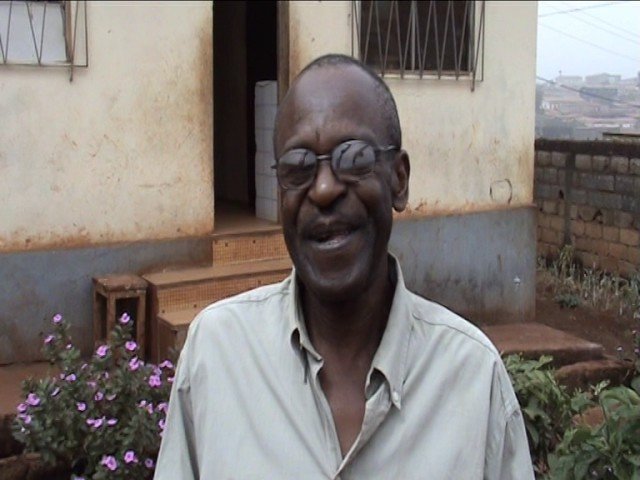
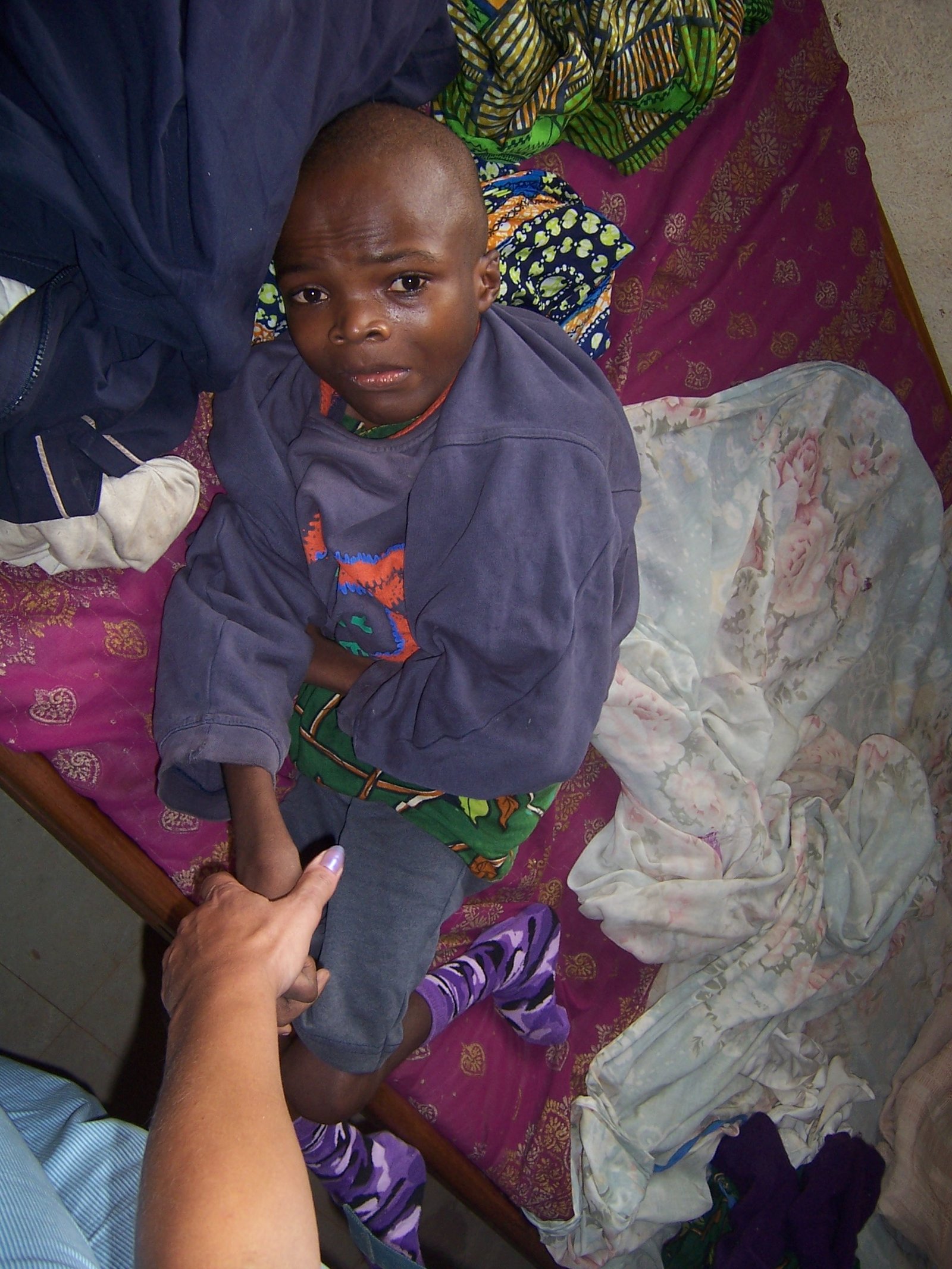
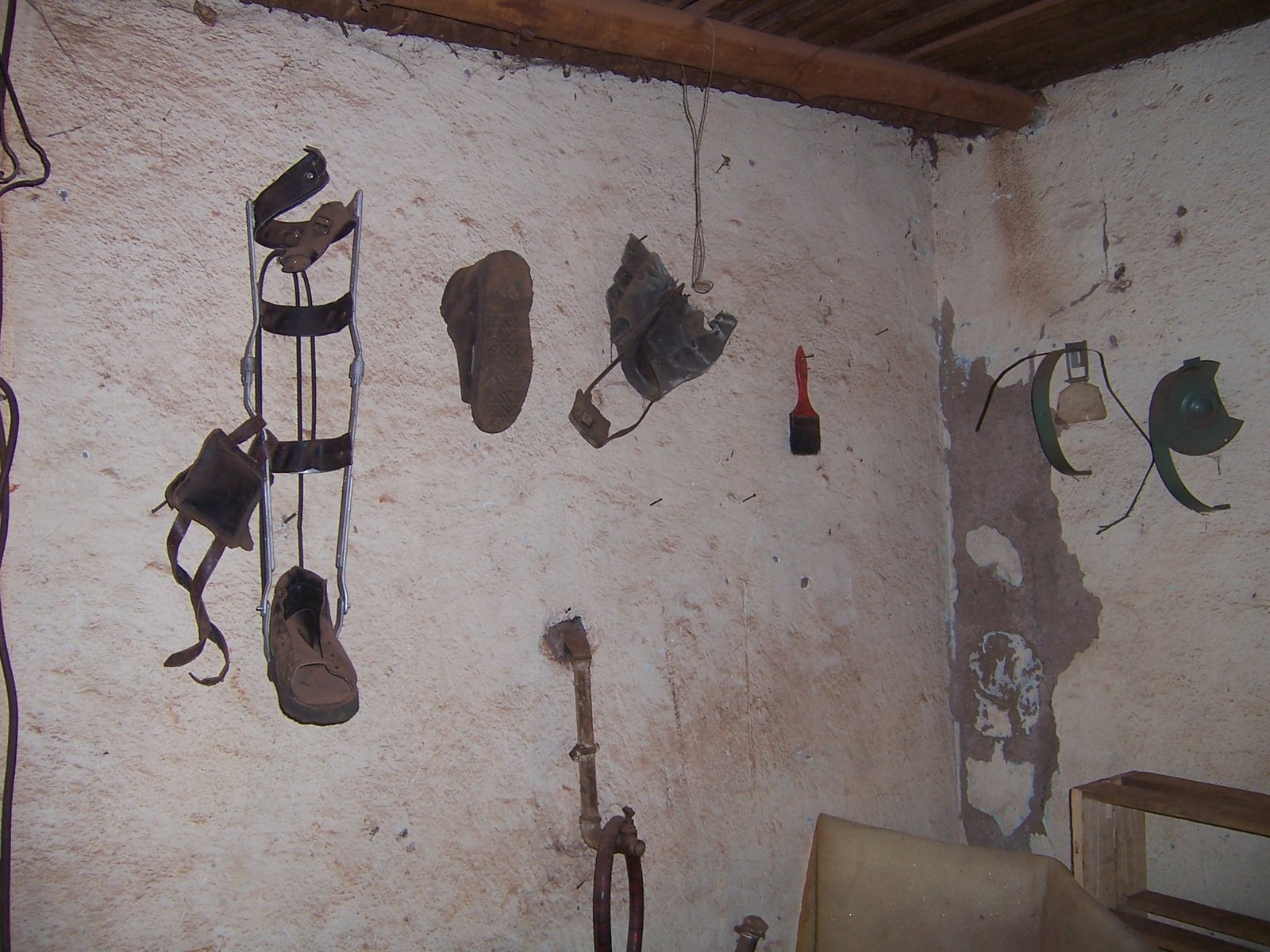
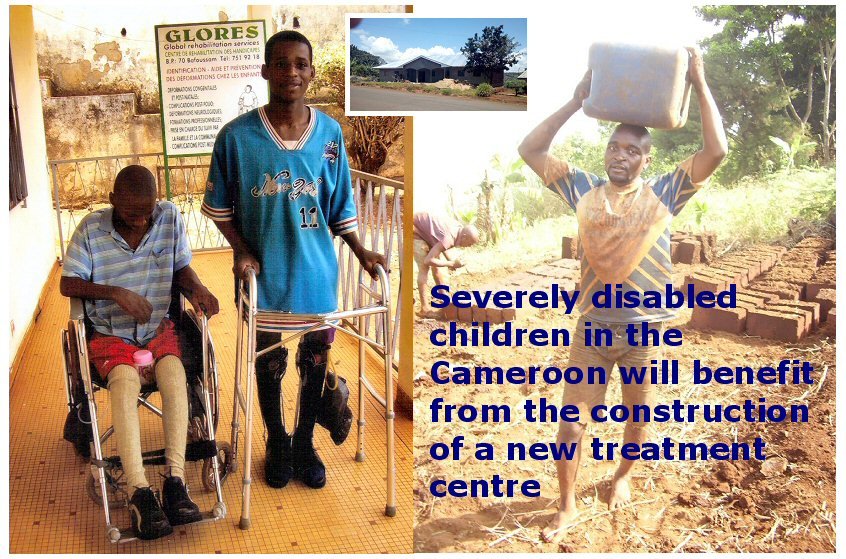
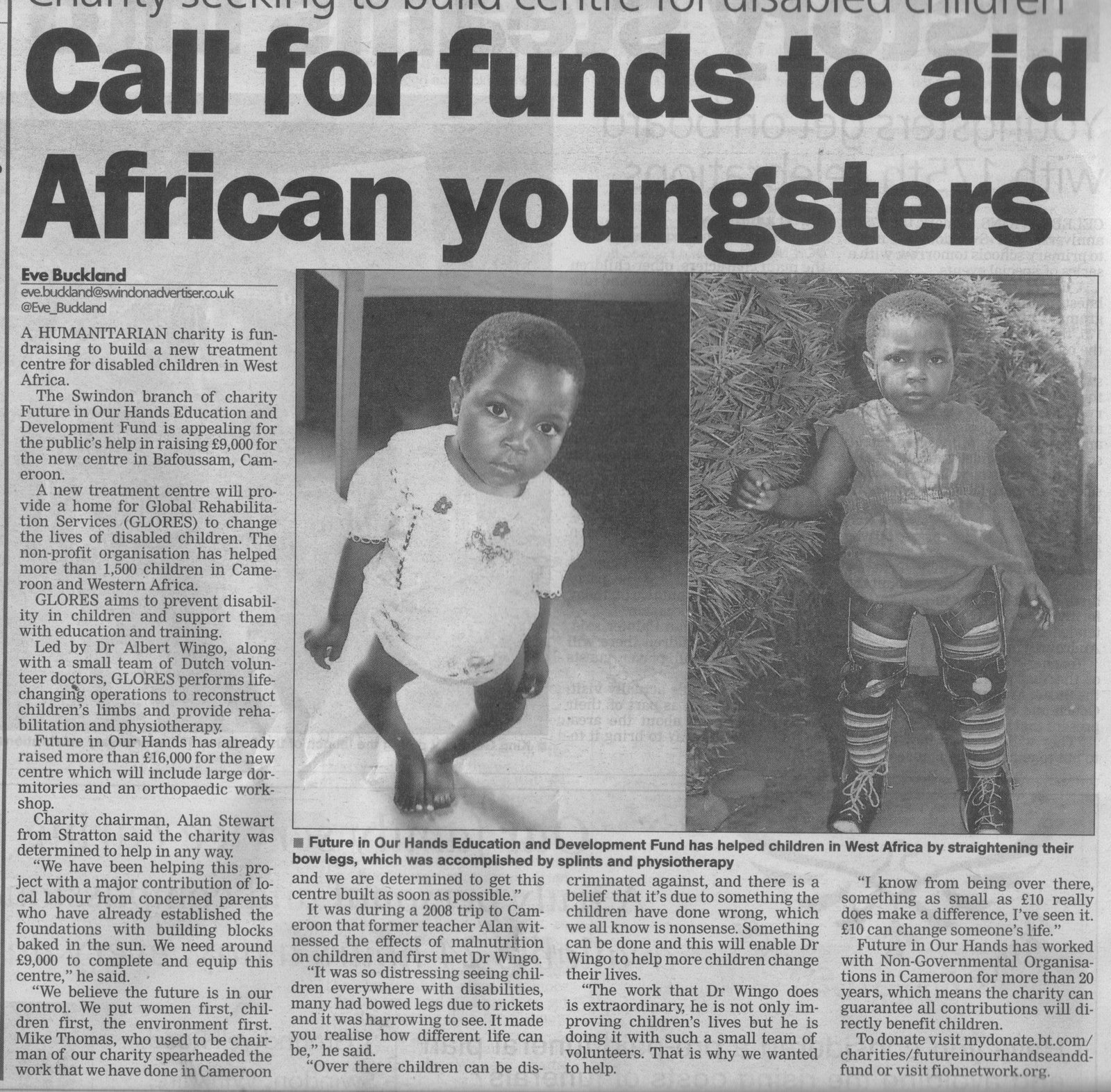
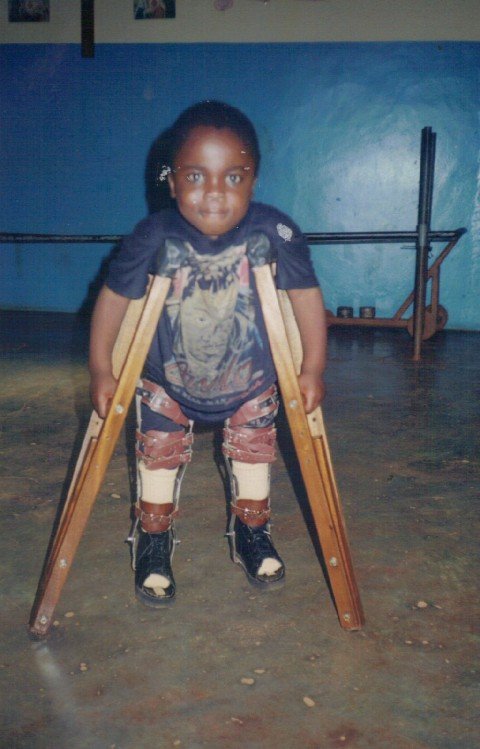
It is with enormous sadness that we report the loss of our main contact in Bafoussam, Cameroon. After meeting Alfred in 2008 we established assistance for GLORES (Global Rehabilitation Services) a unique service provided for the most vulnerable in society. Modelled on United Kingdom National Health Service treatment should be free at the point of access and based on need. We first encountered Alfred in rented accommodation making do with minimal equipment to transform the life chances of disabled children in Cameroon. The photographic record below vividly shows the rudimentary conditions we witnessed first hand.
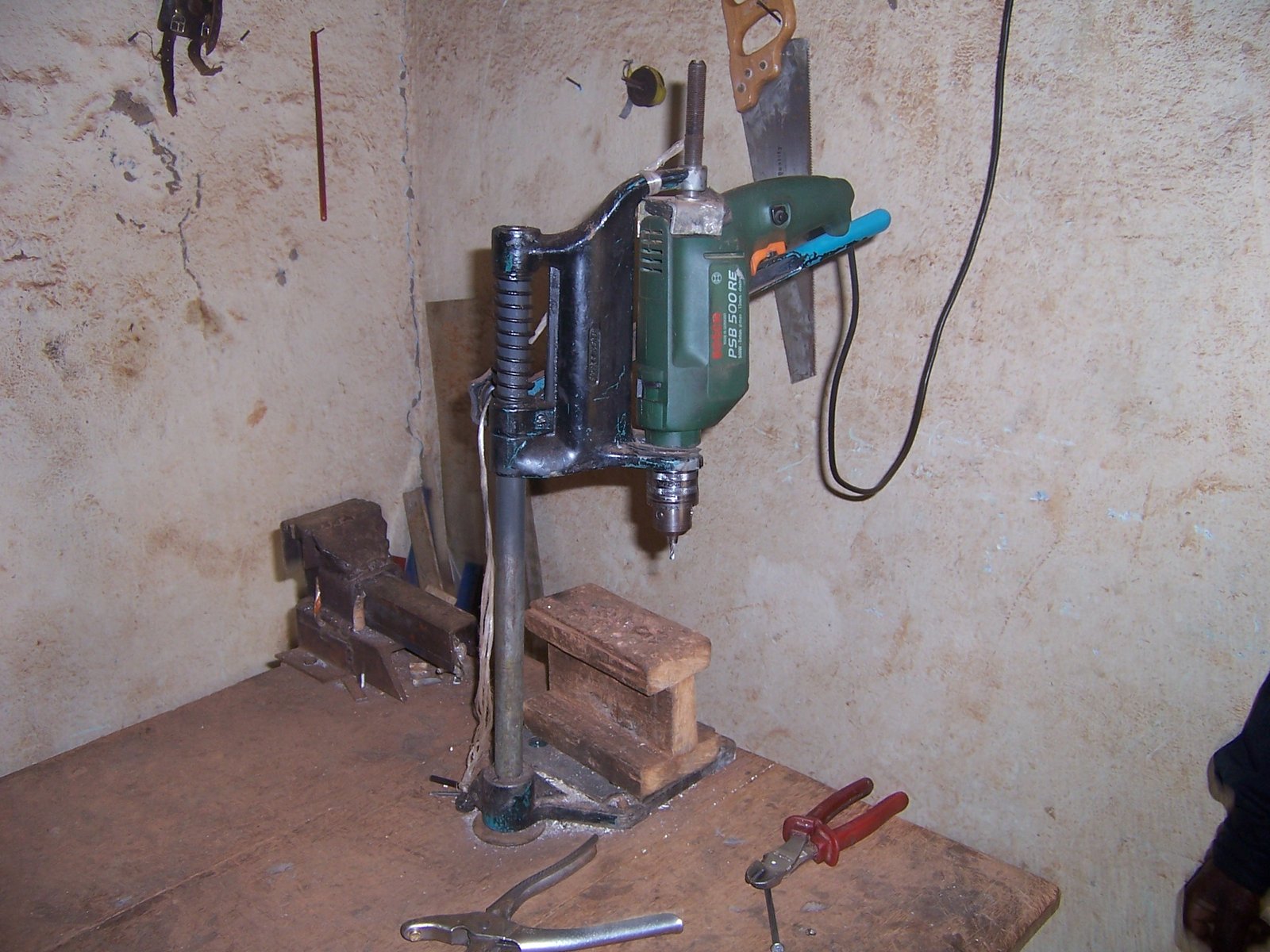
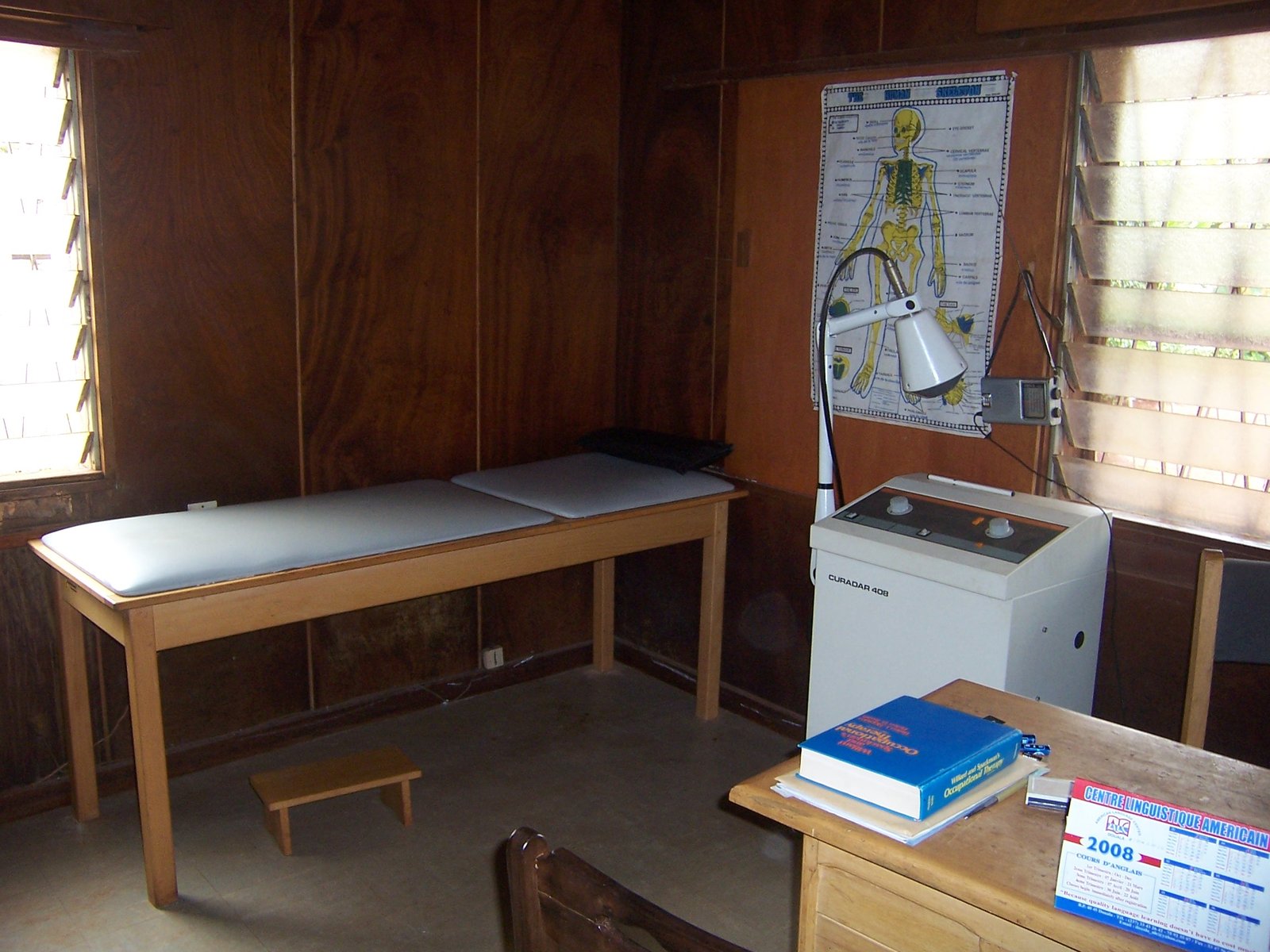
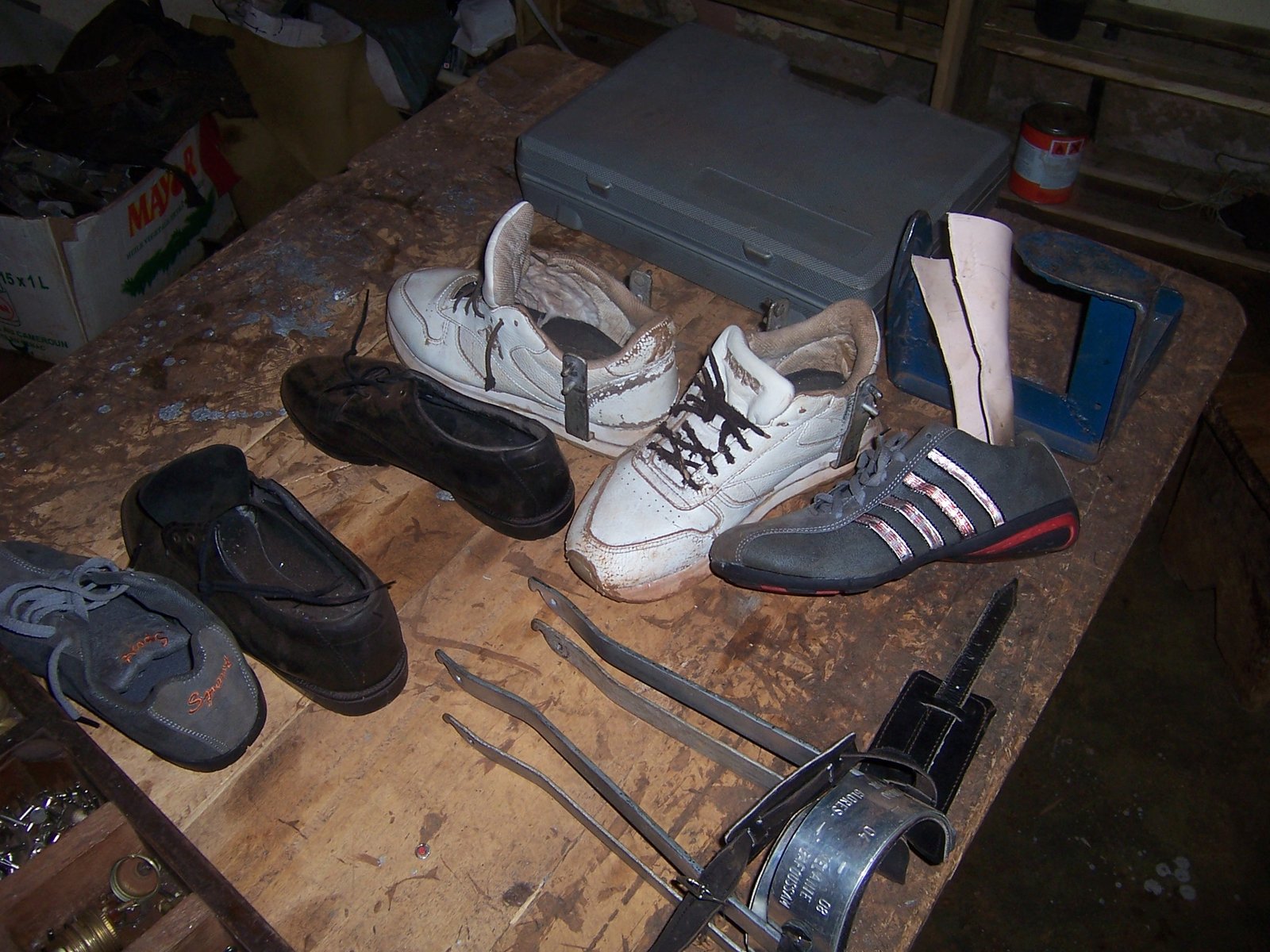
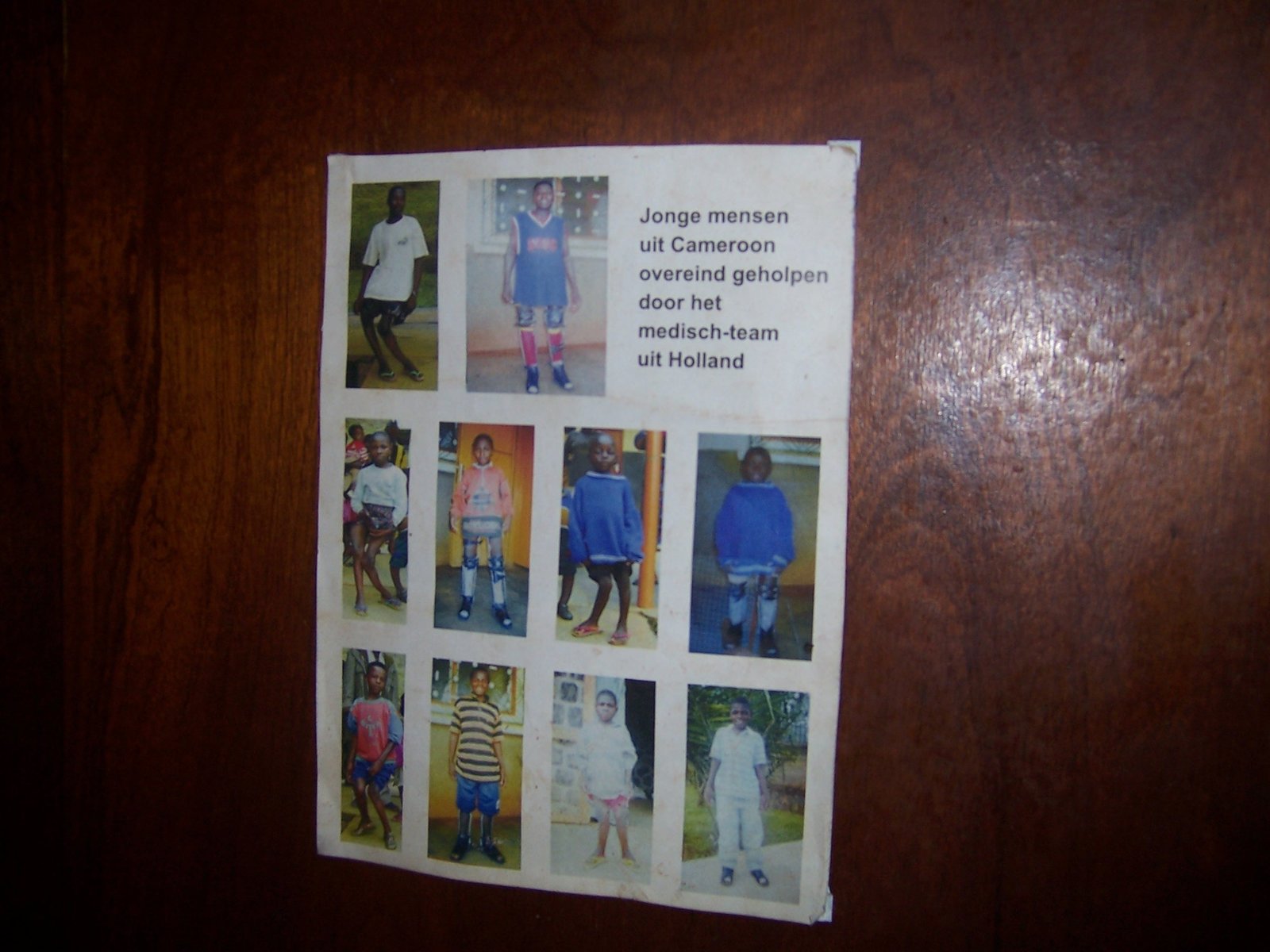
Immediate support required
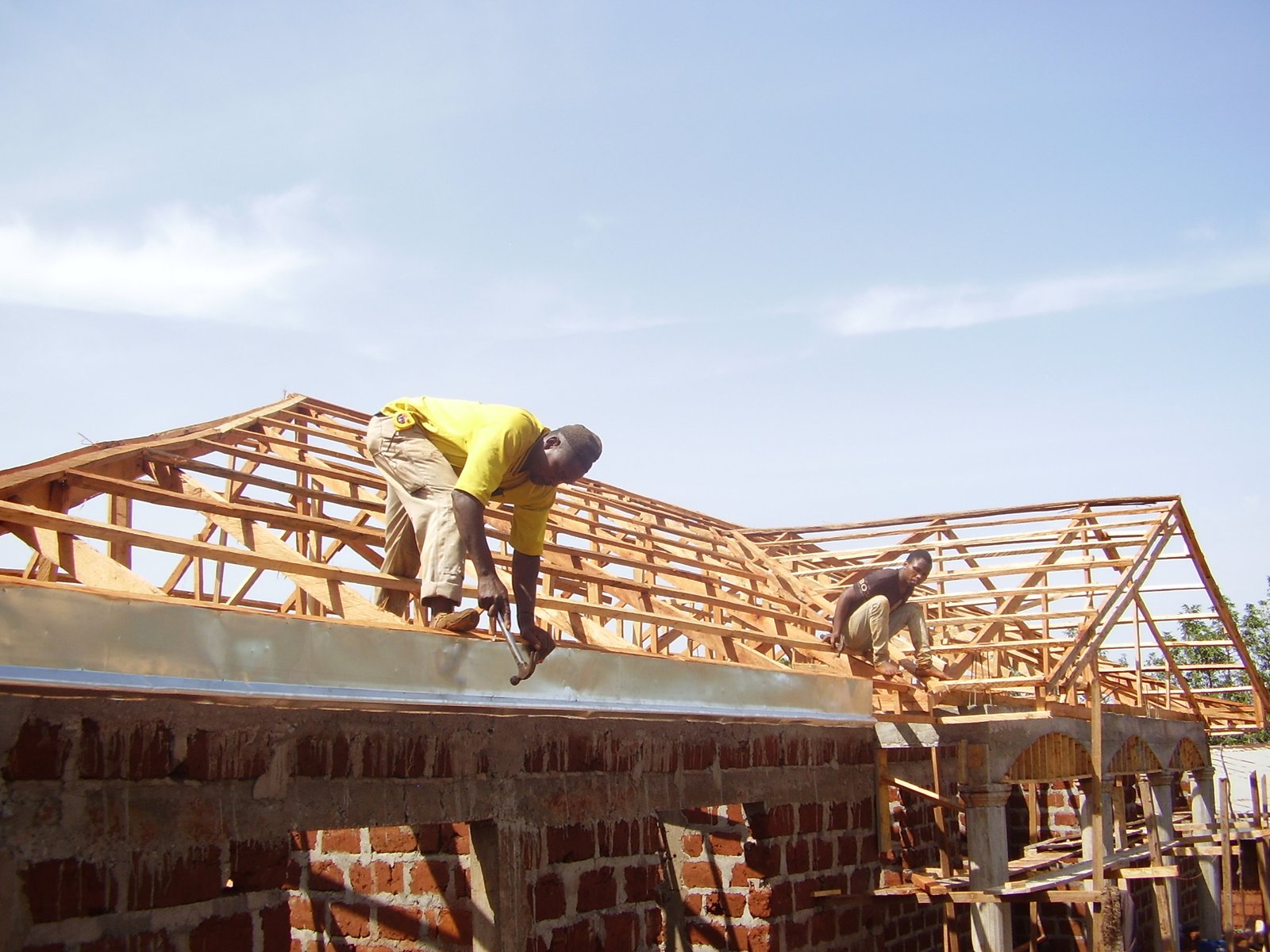
The need for immediate support was self evident and through a sustained programme of support the FIOH fund financed the development of a new bespoke treatment facility , unique to Cameroon. The construction infrastructure was finally completed in 2016.
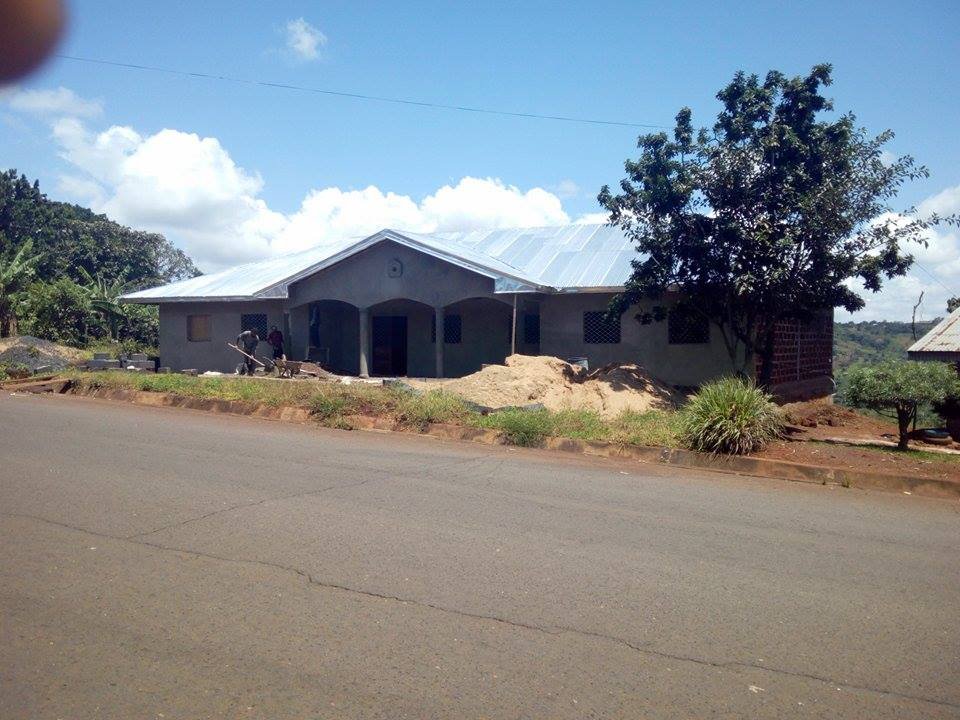
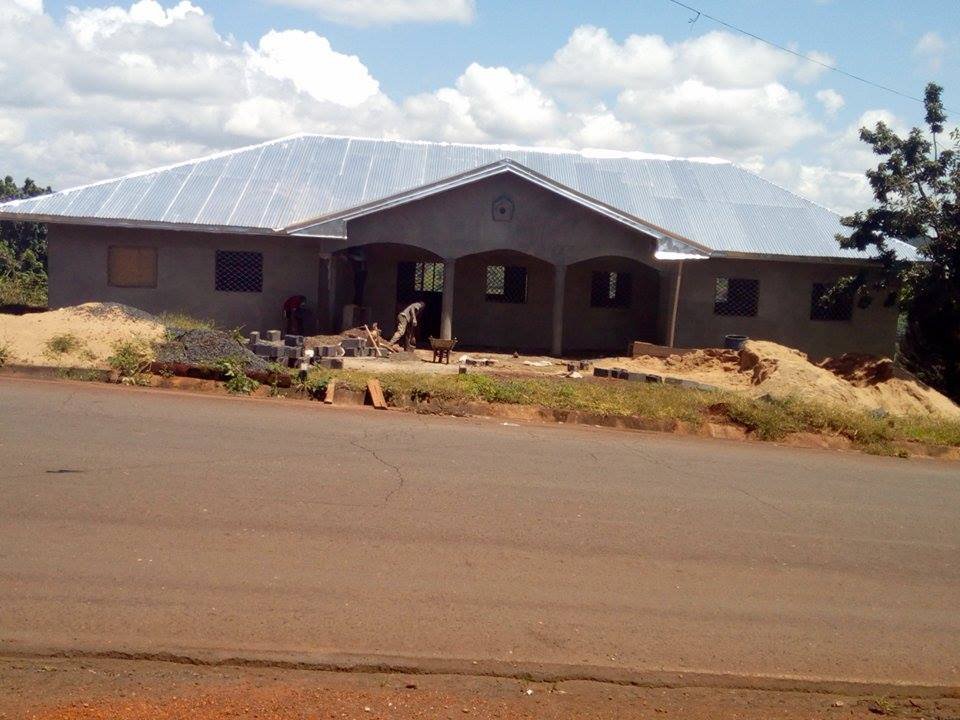
Alfred was instrumental in developing this idea from it’s planning to inception and continued to serve the disabled children of Cameroon until his untimely Death in Nov 2024. We express our condolences to his family and pay tribute to a remarkable humanitarian. FIOH remain honoured to have been a vital part of his story alongside additional support from a team of Dutch doctors who regularly performed the more complex surgery.
Verification of progress
As overseas donors we endeavoured to promote networking to solve issues and problems and so engaged officers from our partner organisation in Cameroon to visit and produce a comprehensive report on the progress towards the final construction of the bespoke facility.
A VISIT TO GLORES IN BAFOUSSAM BY CAMGEW 5th of October 2015 Requested by: Michael Thomas of Future In Our Hands – UK Objective Assess the progress of work in the GLORES CENTRE Contruction site Discuss challenges of GLORES Determine the date when GLORES will come for exchange visit to CAMGEW Discuss on procedure to apply for a service car for GLORES Time CAMGEW through Wirsiy Emmanuel and Sevidzem Ernestine left for Bafoussam to visit.
Methodology
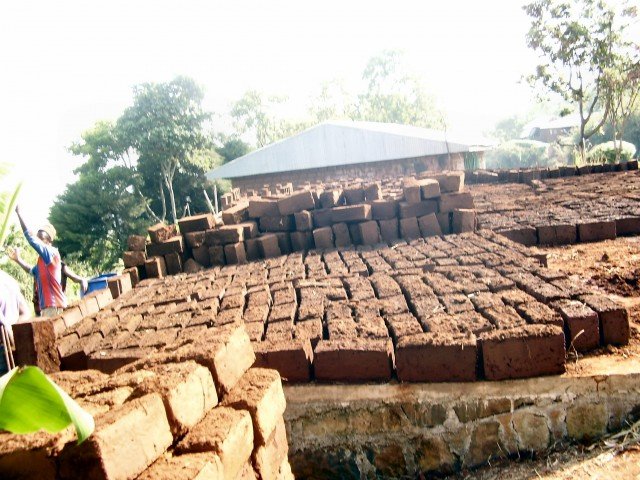
We arrived the GLORES office and prepared a programme of work. The visit started with movement round the various departments of GLORES. We then moved to the GLORES Centre contruction site using CAMGEW car. After working there, Emmanuel and Alfred had a working session to close closely at construction activities, possibility of completion of work, means of mobility for GLORES and possibility of exchange visit. Activities CAMGEW staff visited all the offices and activities of GLORES in the GLORES office CAMGEW and GLORES move to the GLORES Centre construction site. This visit was done together with technicians to do the work. Alfred told us that the technicians will do the work with the assistance of volunteers who are beneficiaries (parents and guardians of patients). I did ask Alfred to call the technicians for us to reflect together on how to proceed with work. There, ALFRED told us that the small two room house constructed to serve as packing store for material collapsed 2 days ago after continuous rain fall and heavy wind storm. With the technician and Alfred we discussed what must have happened and what lessons must have been learned. We saw that the house was poorly built with poor mixture of sand and cement. The builder promised to redo the work on his cost. We also discovered that the wind blowing from down upward was too strong and needed wind breaks. It was agreed that Alfred should plant some fast growing trees to rescue the situation. Alfred said this was to be done the next day. The technicians that came were different from the ones that constructed the collapsed house. These ones looked more professional. The bricks for the house were still to be moulded this dry season starting from November. It was agreed that bricks made out of soil be used. The bricks were to be constructed on site because the soil is good for bricks. We deliberated on how to get water to the construction site. The government was still putting water pipes around the road close to the site but it was not clear when the water will start flowing. There was a small spring that is always available in the dry season and we assessed and saw that the water from the spring was small. We also looked at possibility of digging a well to get water but saw that the area was too rocky with high possibility of meeting a big rock before getting to see water. We also thought of pumping water from the river down in the valley to the construction site but saw that this was costly in pipes to connect the water, in fuel for the pump and in buying the pump. We thought of getting a land down beside the river to mould bricks and pay students during holidays like Christmas holidays to carry the blocks up to the site and saw that the hill was too steep for somebody to climb. We finally agreed that the spring will be used but Alfred will buy 10 containers of 20 Litres each and use them to carry additional water using his small vehicle every day for use in brick moulding and construction. Renting a car to do this work is costly. In terms of construction Alfred and technicians agreed that the centre has to be constructed to be solid since it will be beside a heavily used road by huge trucks. He said he hope that the house should be constructed and roofed before January. Alfred told me he has 5000 pounds at hand to start the work. He says he need an additional 10000 pounds to finish the work. This does not involve the fence construction and I saw the fence very important. Discussing with Alfred and from the reality he need a good secretary to handle finances, secretariat duties and communication We also agreed that Alfred will come to Oku for exchange visit when he comes we will use the opportunity to work on the GLORES MIVA car project. The visit will involve radio programme to advertise and sentise community on GLORES activities. Alfred could do consultation of his target group who needs help and could later be taken to GLORES Bafoussam for further treatment.
I did admire Alfred’s work. I have a soft spot for it. I pray God bless him and give him energy to do this work and take care of his children
Report prepared by WIRSIY EMMANUEL BINYUY Director of CAMGEW 2
Amabazonia mourns the loss of Transformational humanitarian leader in Cameroon
It is with great sadness that we mourn a true compassionate leader of SHUMAS. It was FIOH through initial contact with Mike Thomas, that were around to stimulate the origins of his story.
Tribute by Emmanuel Wirisy Director of CAMGEW
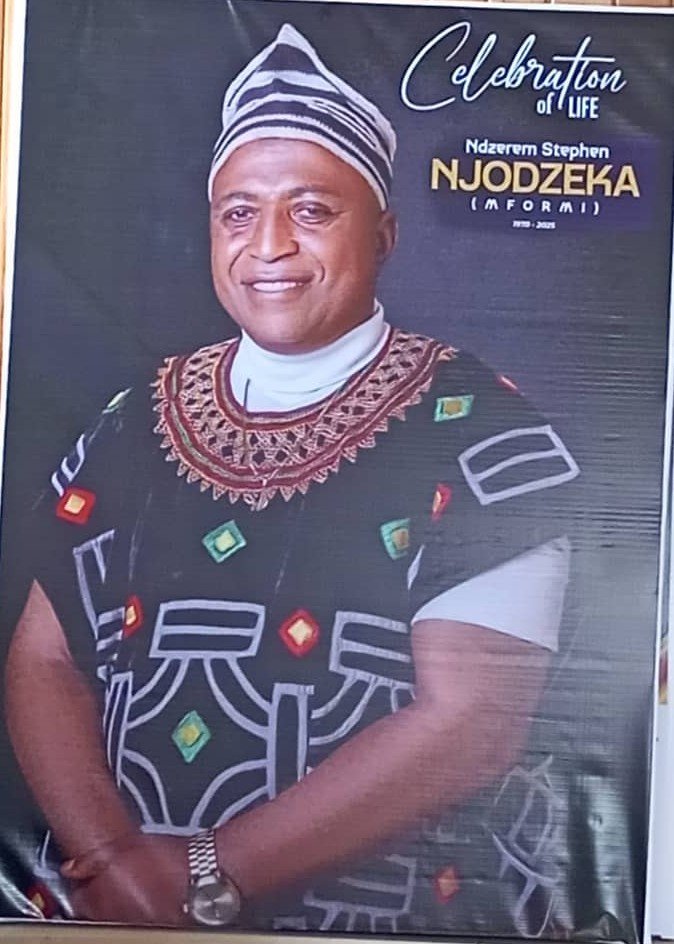
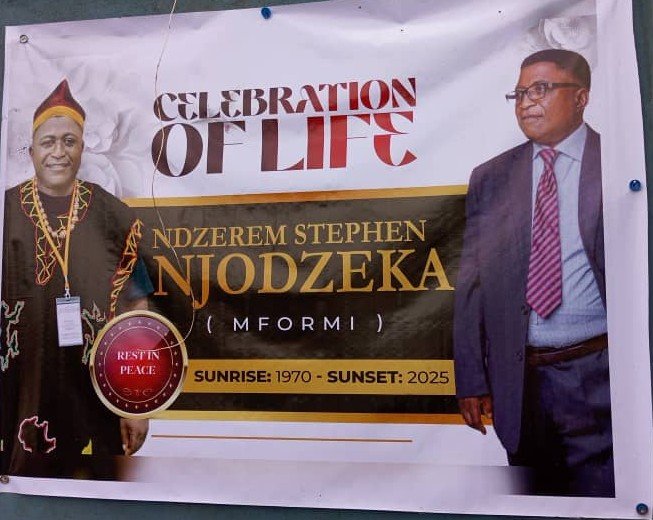
Our family has lost a great civil society leader, mentor and role model. SHUMAS director Mforme Ndzerem Atephen Njodzeka was a member of this group and guided its functionality. He made little noise but did more in actions. He did much in community development and moreover mentored and coached many who now lead their own NGOs non governmental organisations. We thank you for being an exemplary mentor and our hearts bleed with your premature departure. To make you proud , we pledge to continue your humanitarian and environmental work and to assist the most disadvantaged in society. We pray you rest in peace and send condolences to your family.
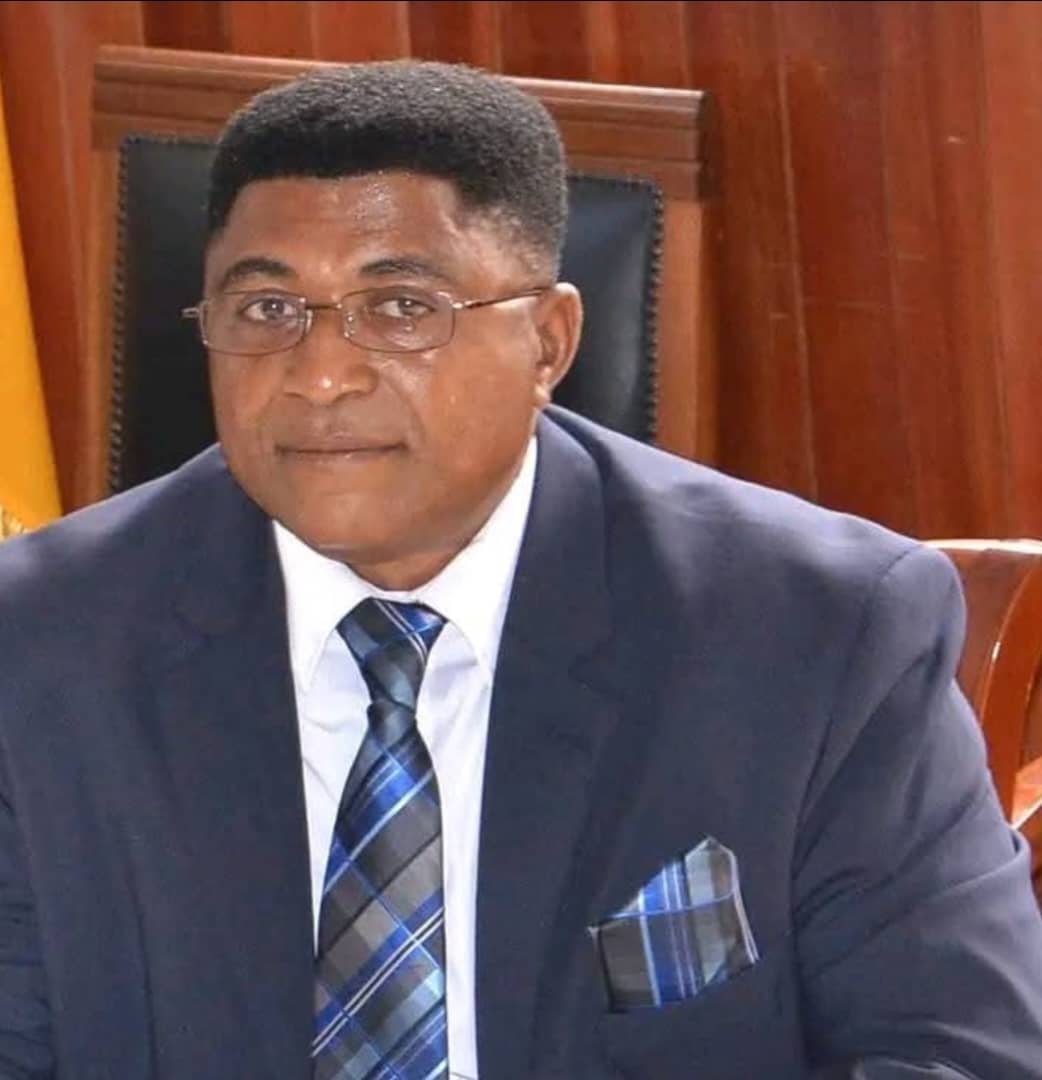
12 April 2025 we will be seeing off our Hero, Mentor, Model and Father that death took away from us in January 2025. This is Mforme Ndzerem Stephen Njodzeka who was Director of SHUMAS. He was one of us in this family here. His impact to humanity speaks loud and his forging spirit is what CSO leaders can hold as legacy to keep moving. Our condolence to his family. Go Well Our Hero to join the Great People of Our Community. We love you our Hero.
Refugee crisis in NW and W Cameroon
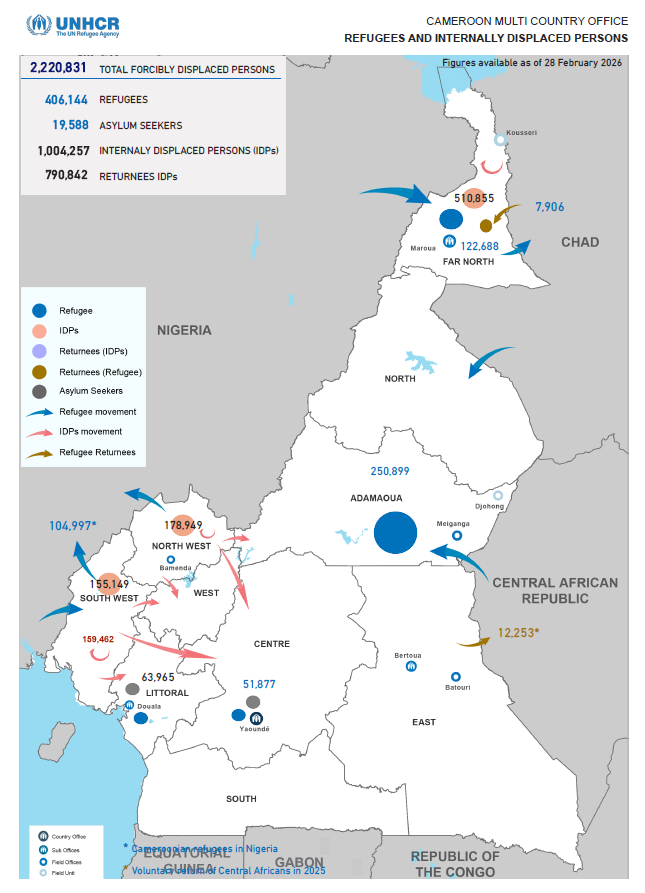
Situation mapped by UNHCR Feb 2025
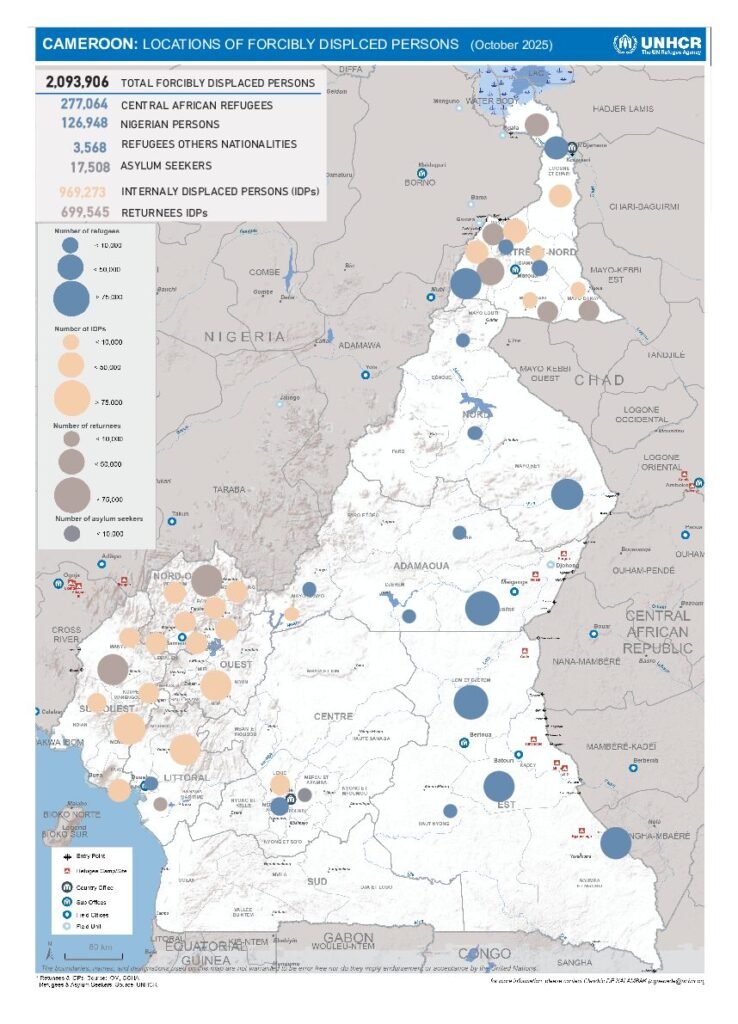
Situation update UNHCR Oct 2025
The situation continues to worsen with the civil unrest in Anglophone Cameroon. A most disadvantaged region with a Francophone government. This hidden issue continues to be under reported in a world of more newsworthy conflicts.
This initiated in 2014 when Cameroon began taking refugees from less stable Central African Republic and Chad
Families forcibly displaced from their villages and schools fleeing from coercion and impact of civil war compounded and exacerbated by impacts of climate change and terrorist groups like Boko Haram.
GLORES Global Rehabilitation Services Bafoussam, Cameroon

Building work

Completed building GLORES Rehabilitation Centre
Since 2004 the FIOH Fund has been supporting the work of GLORES treating severely disabled children and in 2016, helped build a new treatment and rehabilitation centre near
Bafoussam in the Western Region of Cameroon. In 2017, GLORES moved from its rented building into the new centre to continue treating children with disabilities.
Project updates can be read here:
GLORES update – September 2021
GLORES Update – September 2019
To see the difference this project is making, please read the testimonies of six children who have all been successfully treated at the centre and beyond through outreach

Mike Thomas our founder at the clinic in 2009


New Nursery School for Malawi Summer 2025
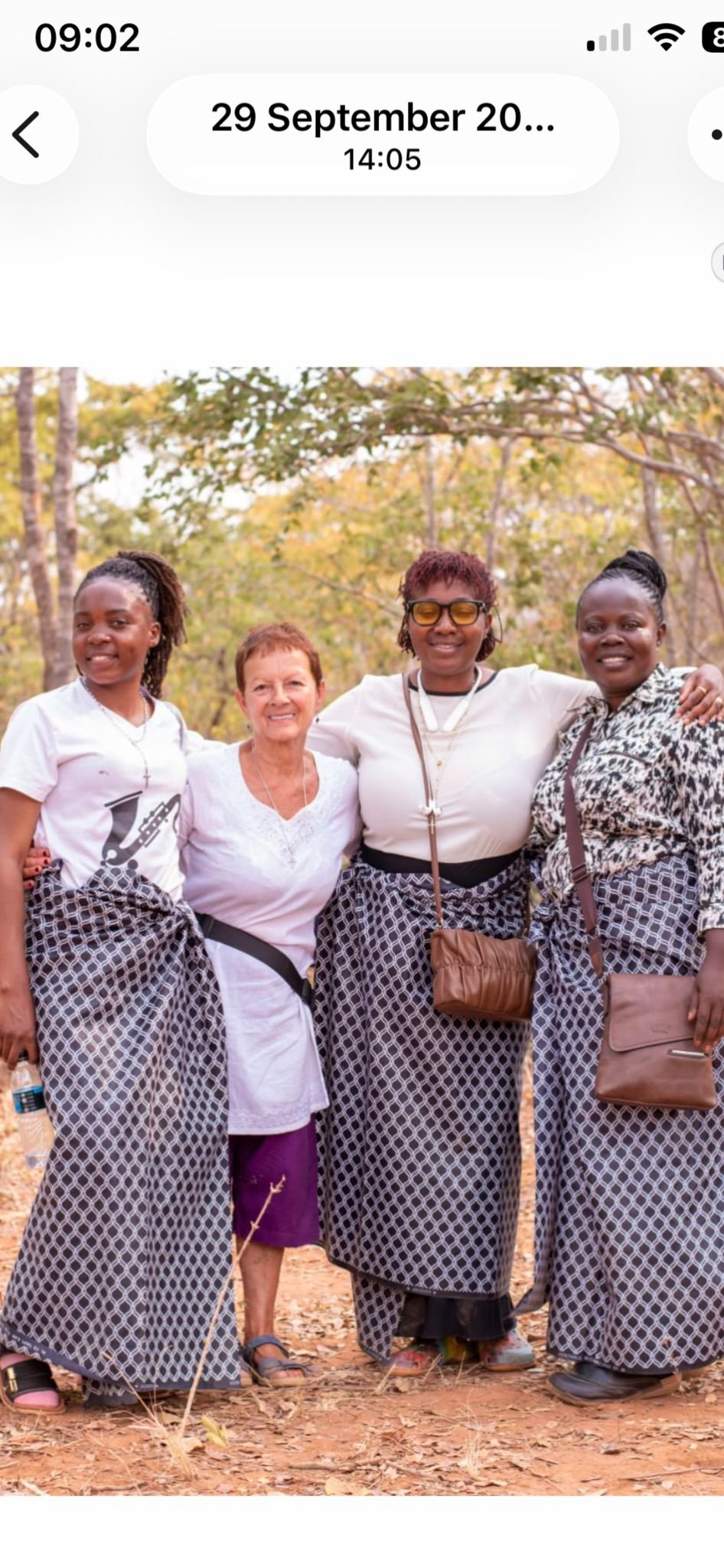
Village of Wamuzare Euthini near Mzuzu. Malawi
Lasallian Outeach Projects. A chance meeting with a lovely lady from Malawi (Leah),who has requested that, if possible, we could make best use of the land that they own in her village Wamuzare Euthini. Her mother (Ella) died last year and she would like to dedicate the efforts we hope to make a suitable dedication to her mother. Moreover, the local community are invested in this initiative are willing to help in whatever way they can.
Proposal for the Establishment of Ella’s Foundation
Introduction
The Ella’s Foundation is dedicated to uplifting the community of Wamazure Euthini Village by fostering a collaborative approach to sustainable farming, education, and female empowerment. Central to our mission is the belief that change is a two-way street—the foundation aims to work hand-in-hand with the community, empowering the youth and local residents to take an active role in the development and execution of initiatives. Through dynamic partnerships, we seek to create a sustainable environment where the community thrives, with the youth leading the charge in building a brighter future.
Vision
To create a dynamic, self-sufficient community in Wamazure Euthini Village, where the youth, in partnership with Ella’s Foundation, are actively involved in shaping a future of empowerment, education, and sustainable living.
Core Focus Areas
The foundation will focus on the following key areas, with a commitment to community involvement and leadership:
- Youth-Led Development and Empowerment:
- Engaging the youth as active partners in the planning and implementation of farming, educational, and entrepreneurial initiatives.
- Establishing youth leadership teams to collaborate with the foundation, bringing fresh ideas and local knowledge to the forefront.
- Providing educational programs that focus not just on skill development of Maths, Science and English but also on but on developing the child as a whole, creating an understanding and awareness of their mental health, providing leadership programs, decision-making, and community responsibility training.
- Female Empowerment and Health Education:
- Involving young women in shaping and leading programs aimed at reducing early pregnancies and promoting gender equality.
- Creating mentorship opportunities for young females, with a focus on helping them design their own paths toward independence and career success.
- Offering reproductive health education and life skills training, while ensuring young women have an active role in running these programs.
- Sustainable Farming and Income Generation:
- Partnering with the community to co-design and co-manage sustainable farms that provide food security and economic opportunities for the village.
- Encouraging innovation and local input into farming methods, empowering the community to adapt traditional knowledge with modern techniques.
- Building cooperative farming models where profits are shared, and decision-making is collective.
- Community-Led Early Education and Adult Learning:
- Developing nursery schools that are run by local teachers and community volunteers, with the foundation acting as a facilitator and resource provider.
- Empowering parents by offering adult education and life skills training, helping them contribute to the community’s economic growth.
- Co-creating programs where community members, parents, and educators contribute to curriculum development and early learning activities.
Nursery School Now completed Sept 2025
This facility will cater to the early learning needs of children in the community. It will include:
- Classrooms designed for children aged 2-5 years, promoting early childhood development.
- Outdoor play areas for physical activity and social interaction.
- Facilities such as restrooms, a small kitchen for snack preparation, and nap rooms.
Primary School Vision and target for 2026
The primary school will provide education for children aged 5-11 years. The building will include:
- Classrooms for each grade level.
- A multi-purpose hall for assemblies, sports, and school events.
- Administrative offices for staff, a staff room, and meeting spaces for teachers.
- A playground for physical education and recreation.
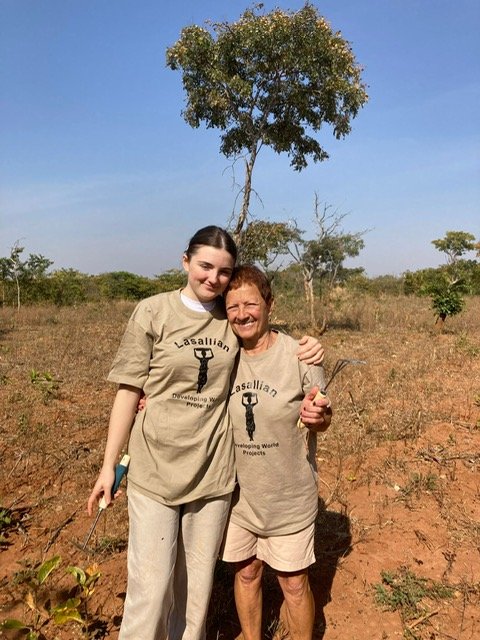
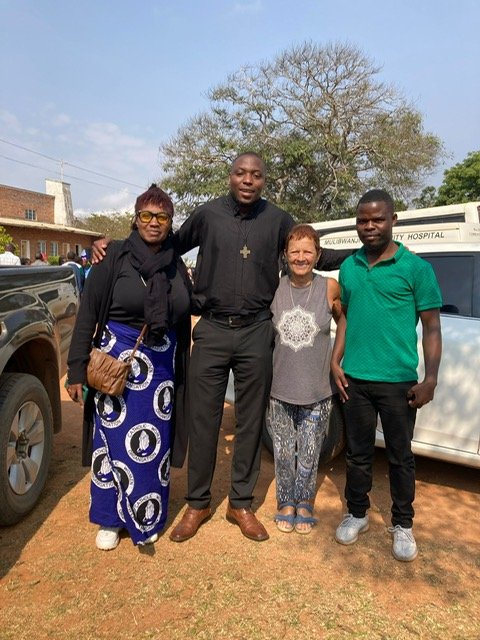
The build team of locals, clergy and Lasallian outreach volunteers
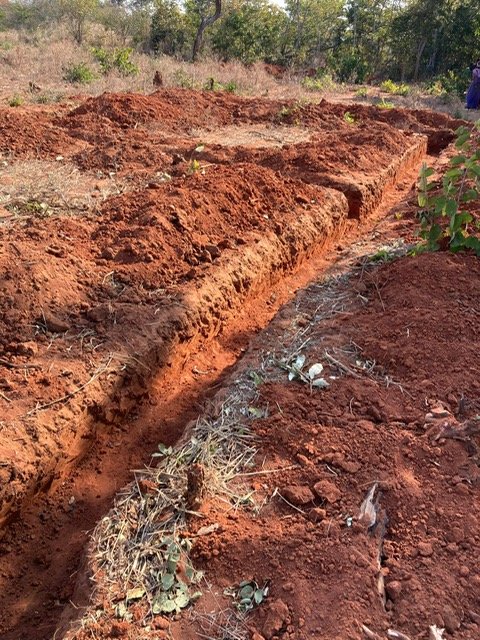
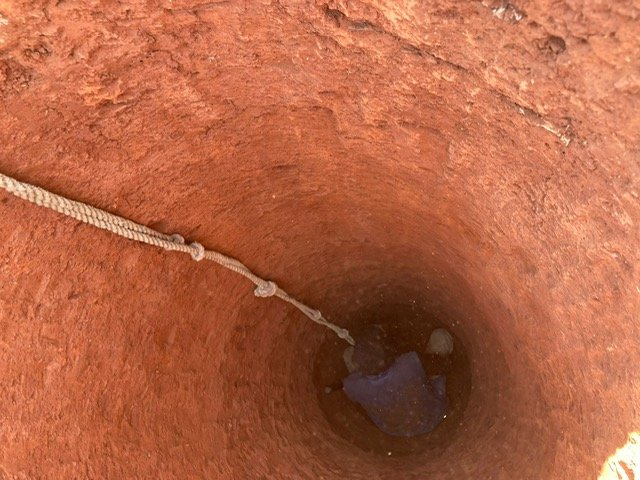
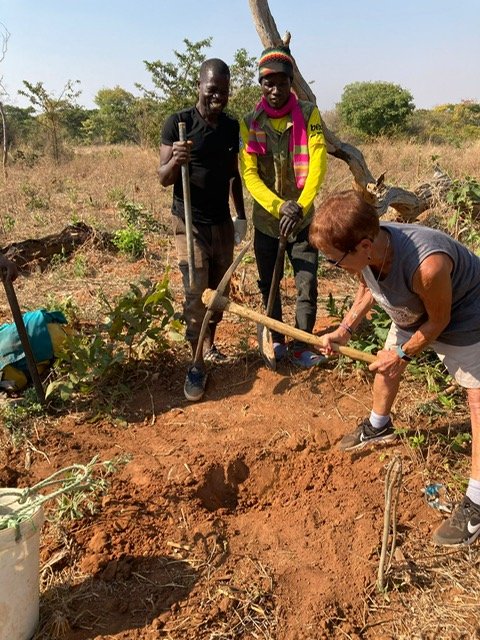
Initial preparation of footings and well for clean water
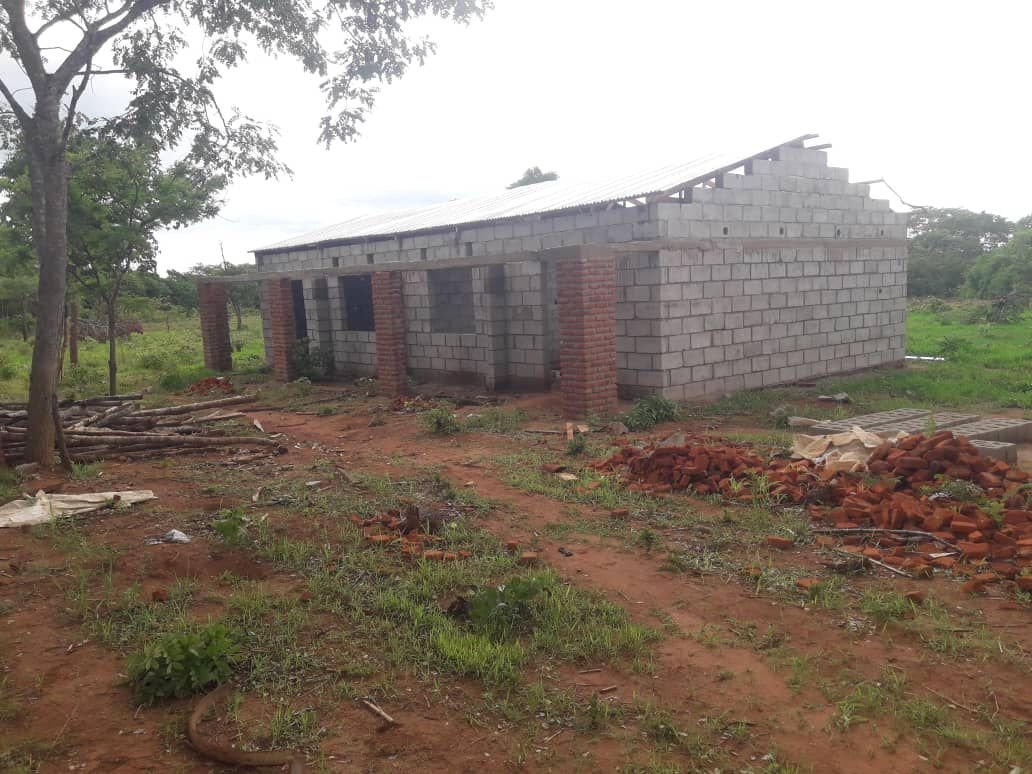
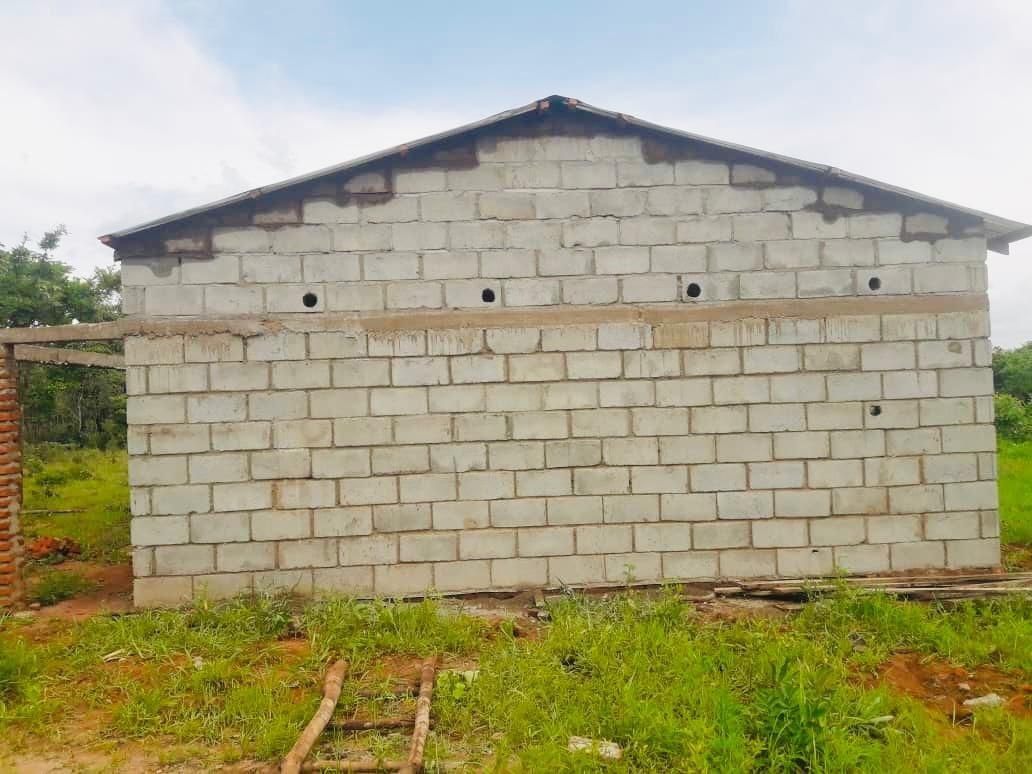
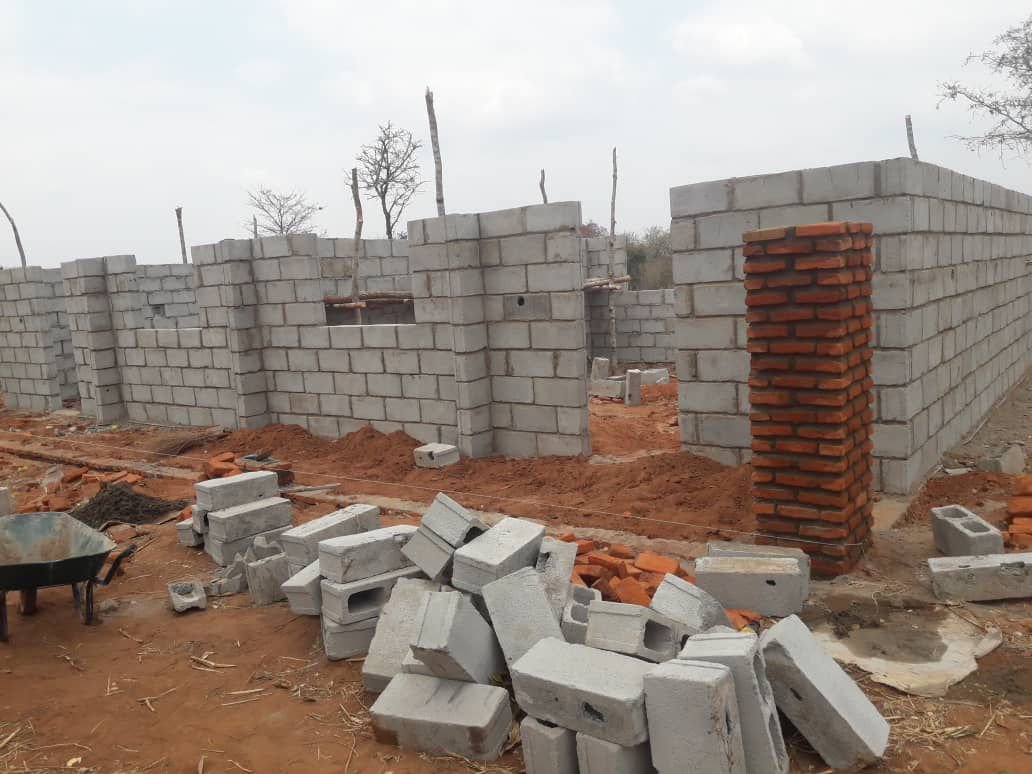
Transformation by block work
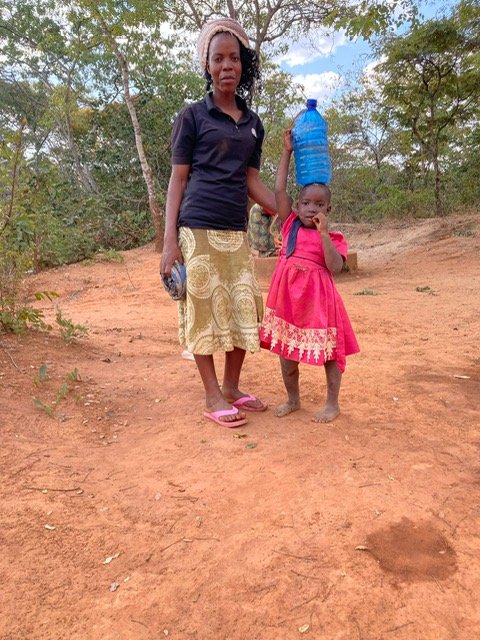
Happy new parents and customers
- Additional objectives
- To highlight the risks in the area of HIV and how best to cope.
- How do we keep our young people from leaving Malawi because of lack of opportunity and employment
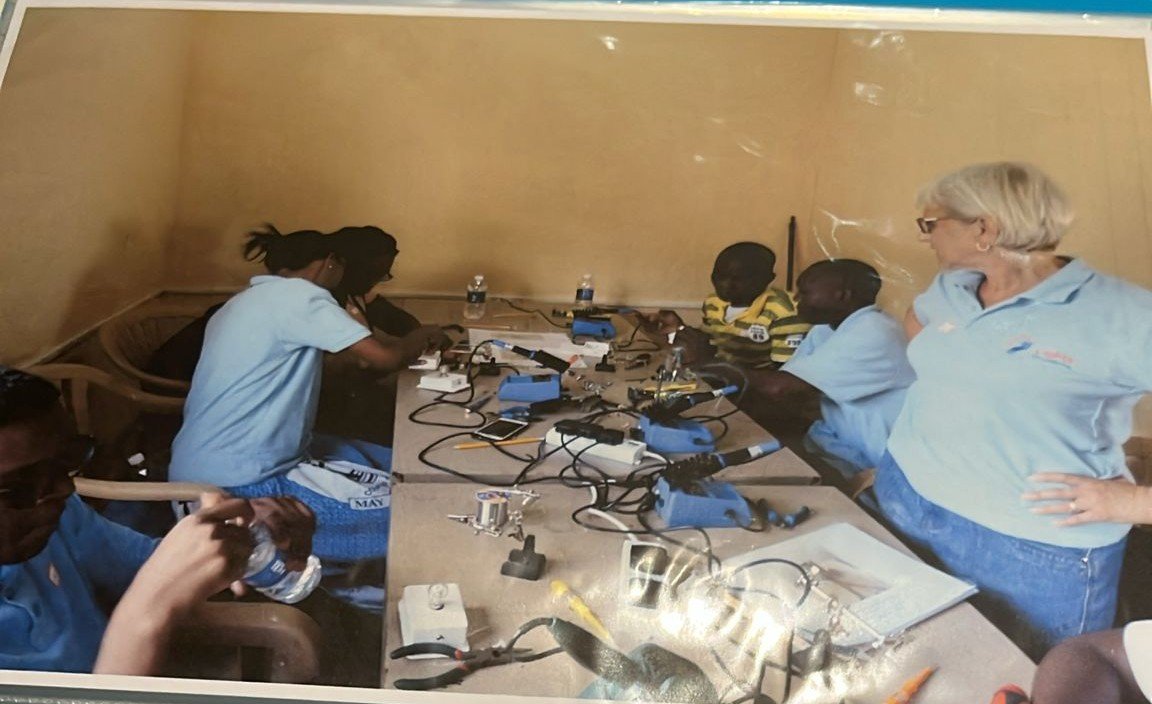
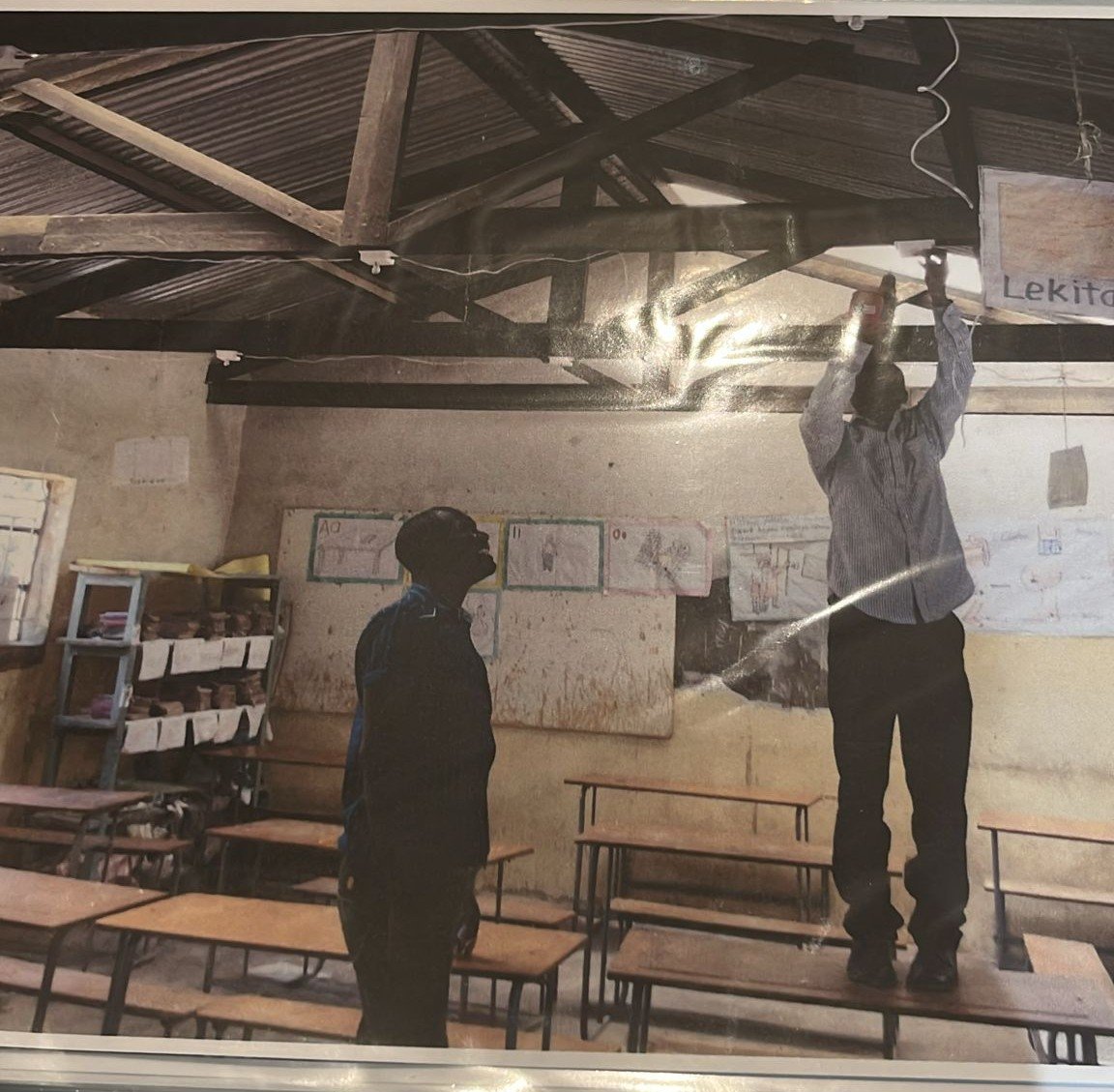
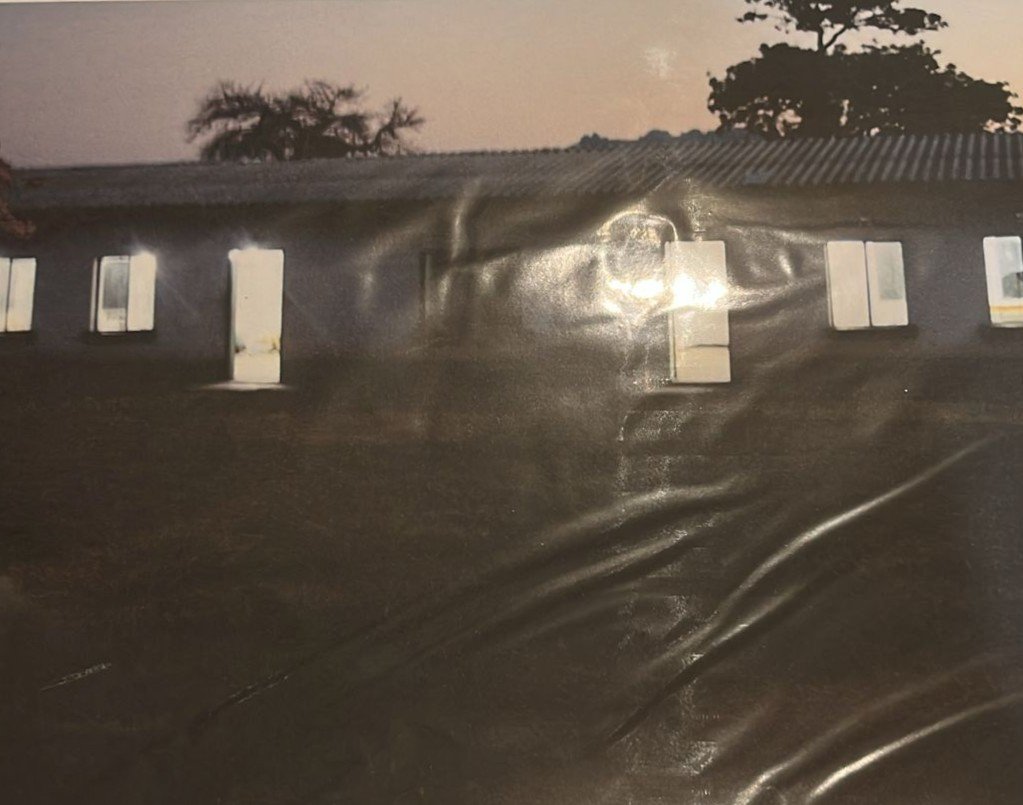
Installation of Solar panels for sustainability in collaboration with www.lightsforlearning.org
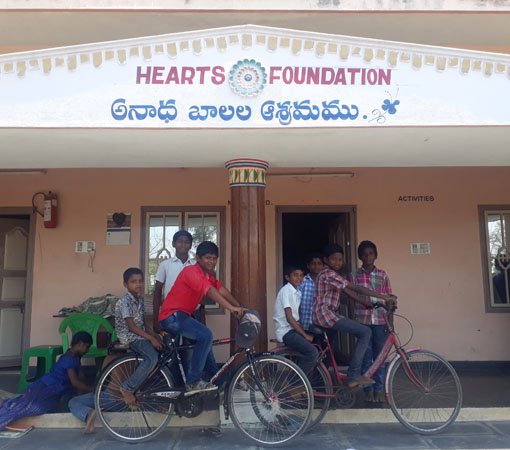
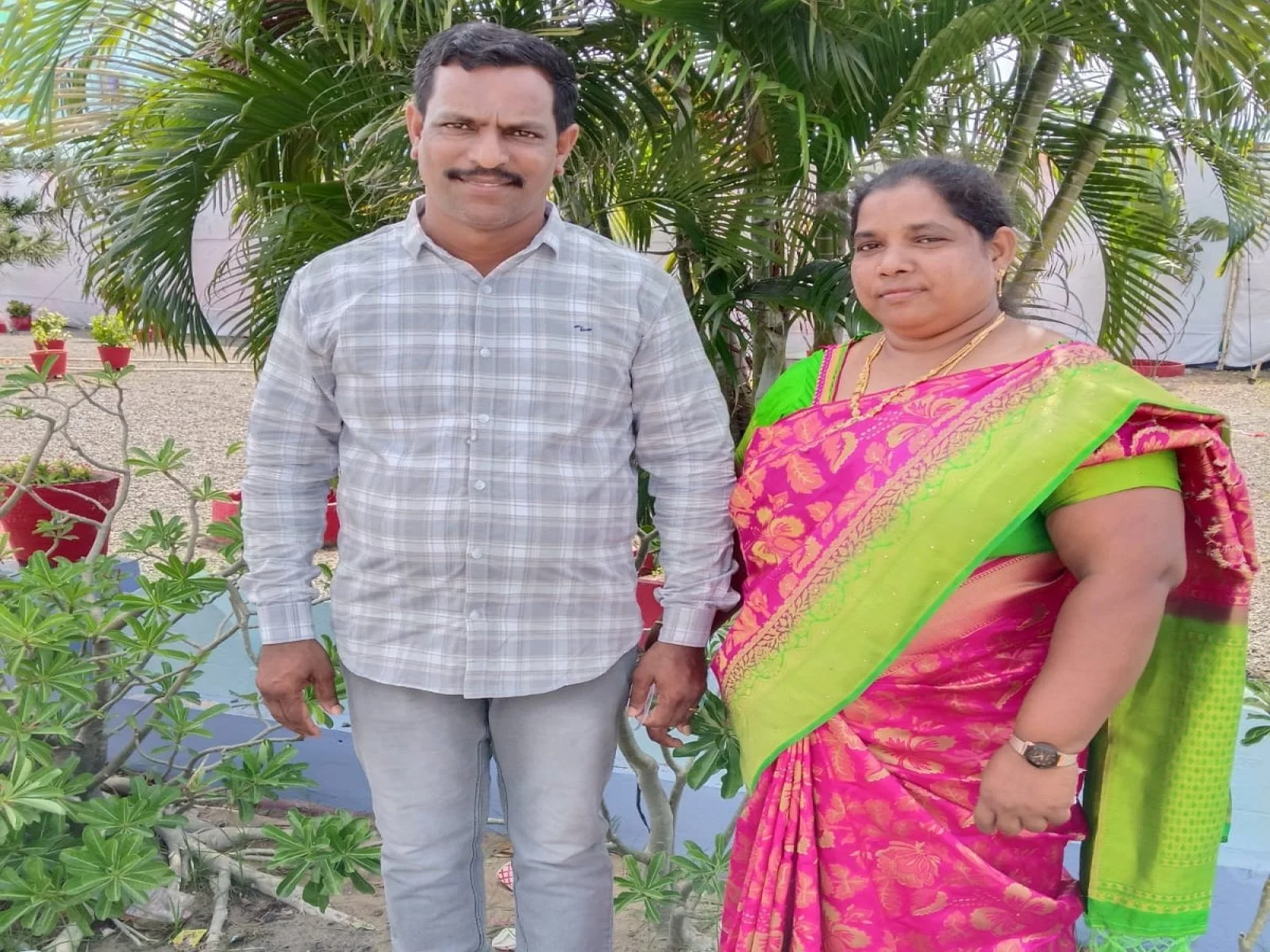
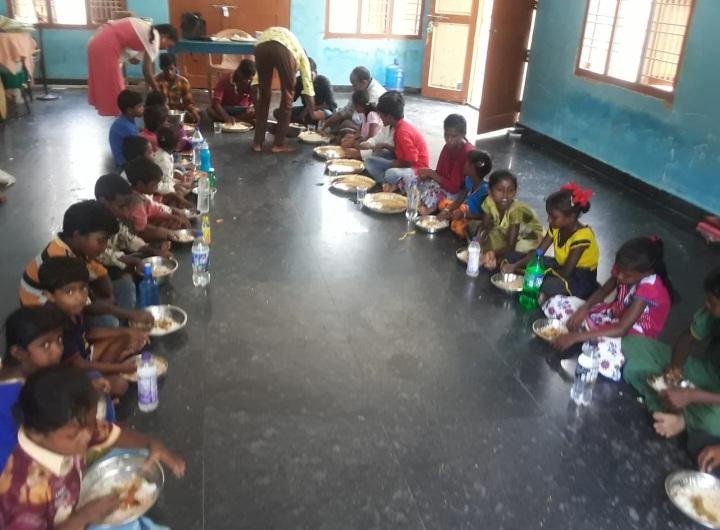
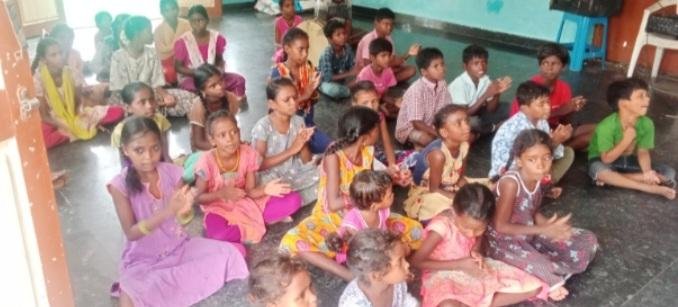
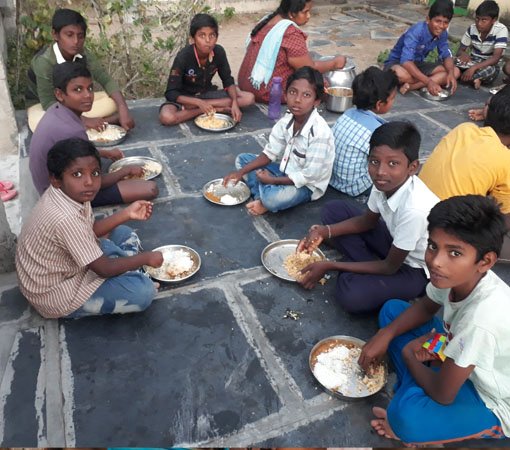
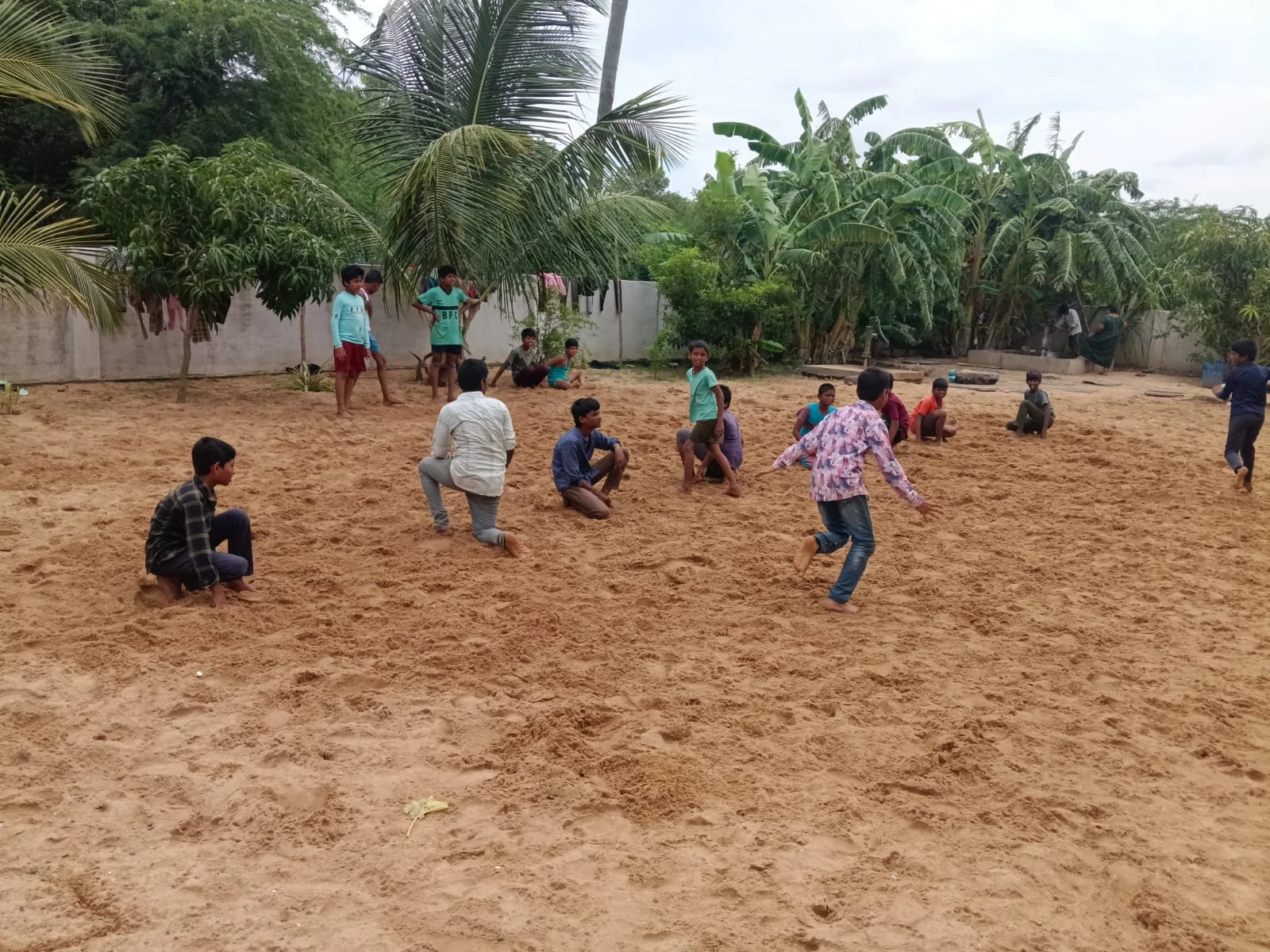
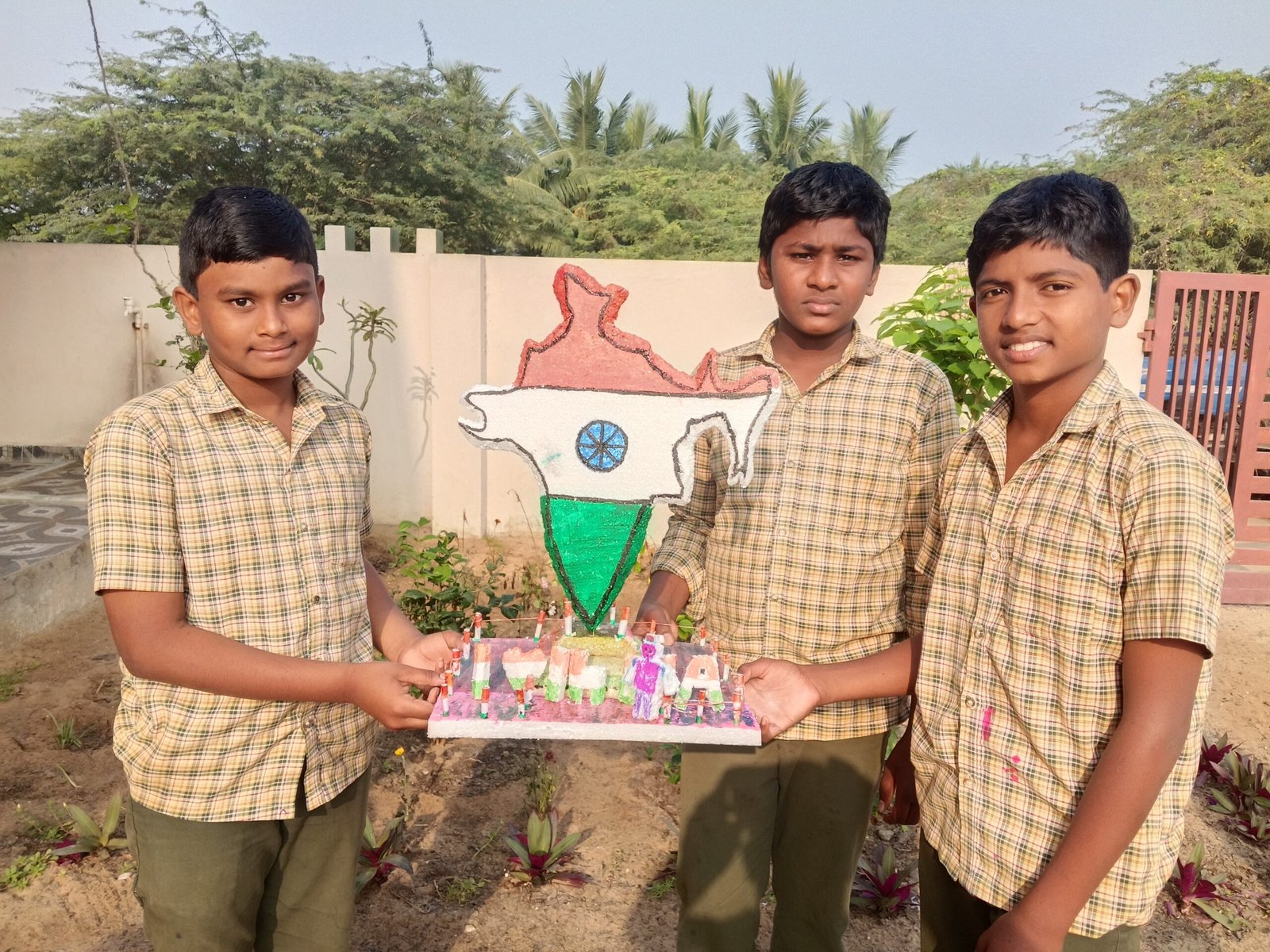
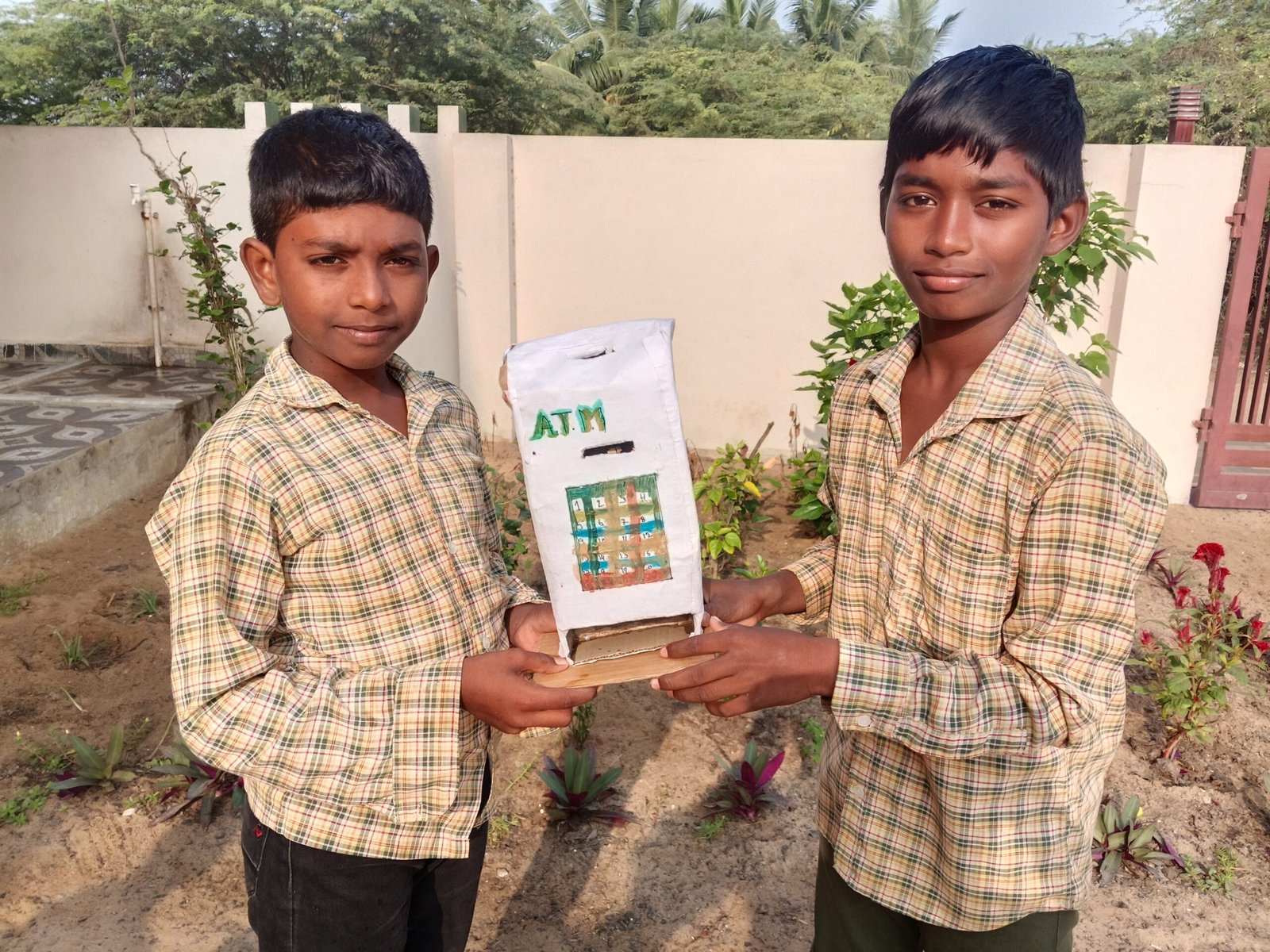
Hearts Indian Charitable Trust NGO working in collaboration with FIOH
Helping today for a better tomorrow
Our Vision
To provide nutritious food, clean drinking water, and safe shelter for underprivileged children.
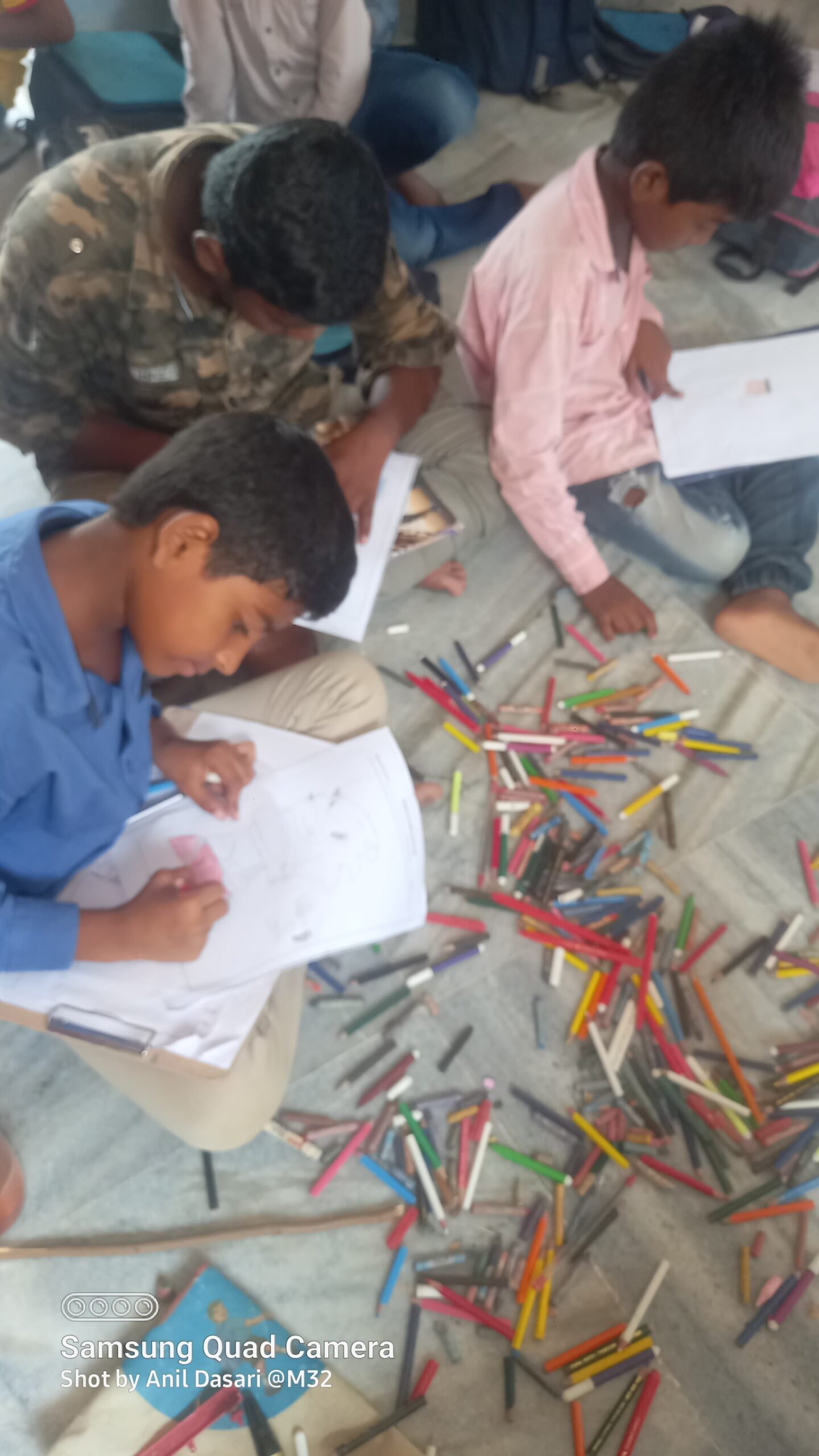
To ensure access to quality education, school supplies, and digital learning support for poor and orphaned children.
To organize health camps, vaccinations, and regular medical check-ups for children and mothers.
To support orphans, differently-abled children, and children with special needs with love, care, and rehabilitation services.
To create awareness on child rights, stop child labour, and protect children from abuse and exploitation.
To provide skill development, art, sports, and cultural opportunities for holistic child development.
To empower poor families and single mothers with livelihood programs, ensuring better care for their children.
To establish children’s libraries, play centers, and safe spaces that encourage creativity and learning.
To promote environmental awareness among children through tree plantation, cleanliness, and plastic-free campaigns.
To provide scholarships and sponsorships for poor and meritorious students for higher education.

CRISIS RECOVERY PROJECT IN THE WEST REGION OF CAMEROON
Website: https://www.iaa-africa.org
Email: info@iaa-africa.org
Tel: +237652130115
1.1) BUDGET: 550GBP, YEAR: 2025
2.) BRIEF OVERVIEW
The scourge of Internal displacement has continued unabated despite international attempts to address its root causes. Ironically the so called anglophone crisis in SW and NW Cameroon has been largely ignored despite the untold misery it has caused the local people, many of whom have been displaced. The human rights of the victims of this violent insurgency have also been conveniently ignored. Questionnaires posed to those involved illustrate that the respondents live in immense fear of losing family members or being killed themselves. Moreover, they have been denied basic freedoms living in indignity with minimal access to water, food or means of subsistence. The greatest aspiration of the respondents is to simply return to their families and resume their livelihoods. The initiatives presented by IAA are an attempt to redress this unacceptable situation.
The situation began in 2014 with instability in Central African Republic which became exacerbated by the impacts of Climate change, unpredictable extremes of rainfall and resultant flooding and soil erosion compounded by unprecedented droughts. Add into the mix the rise of the terrorist sect Boko Haram and you have the perfect storm.
Presented in map form below is a situation analysis produced by UNHCR at the end of February 2025
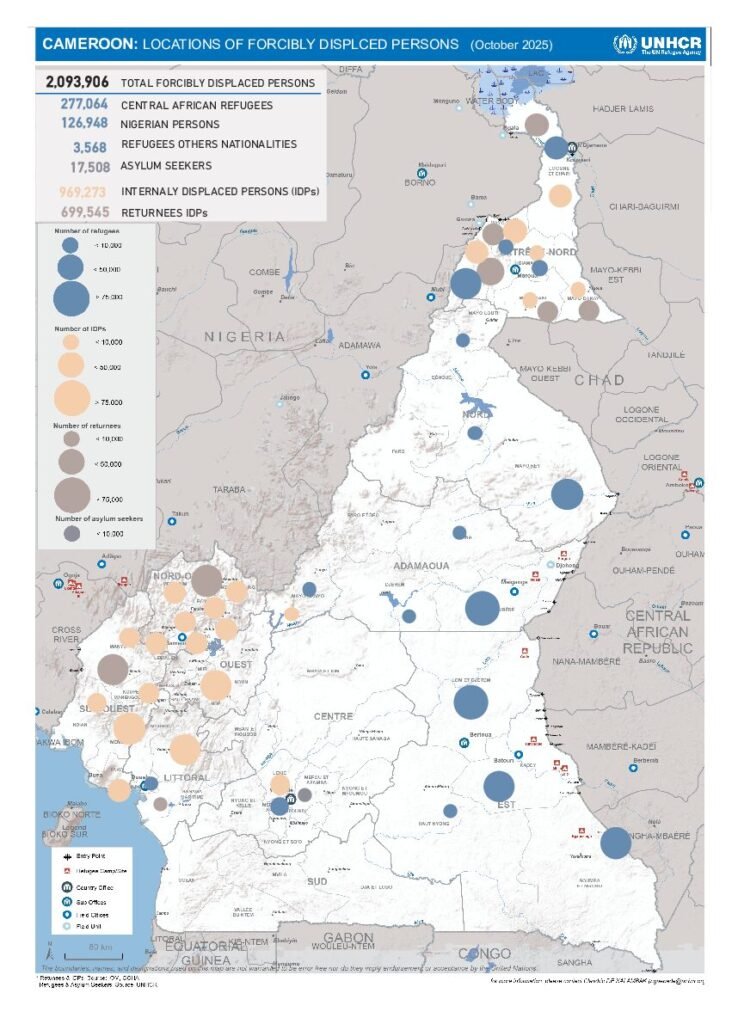
Anglophone region of Cameroon has almost 1 million IDPs to manage fleeing from civil war Oct 2025
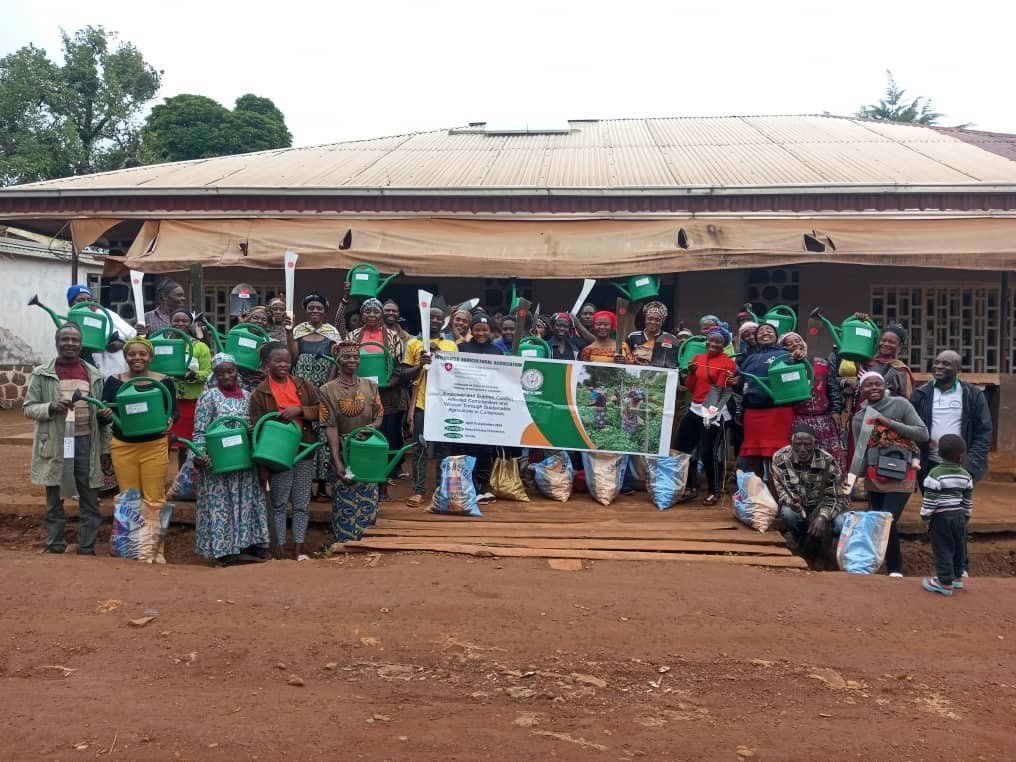
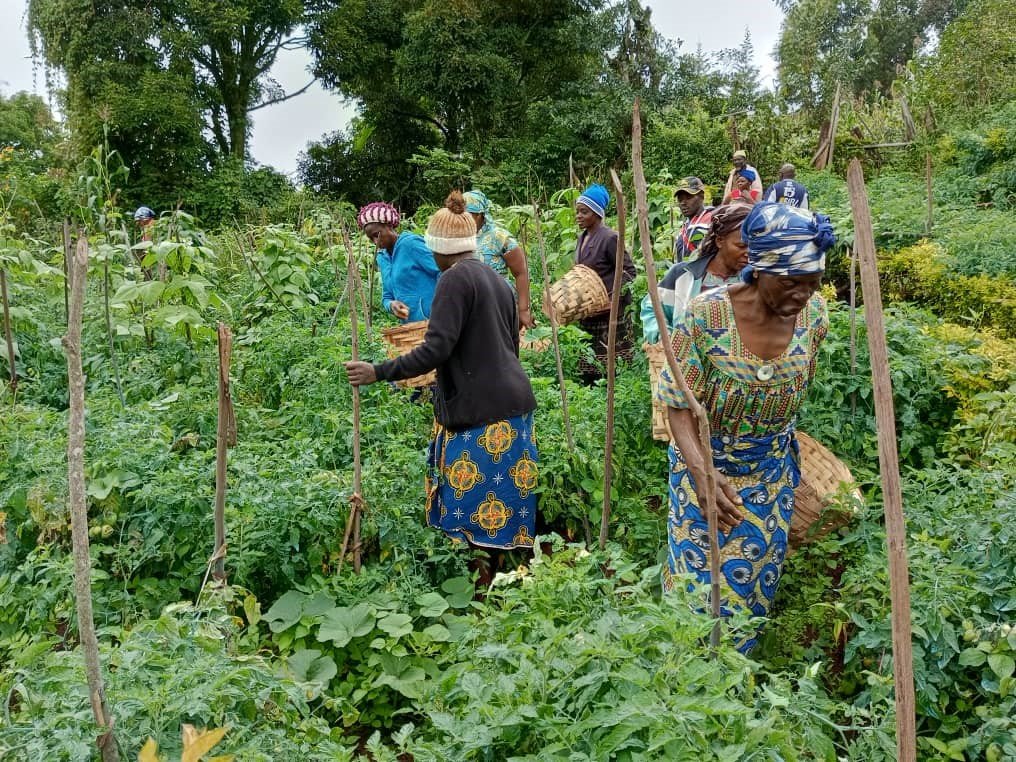
The project aimed at addressing food shortage by empowering Internally Displaced Persons (IDP) and their host community of Foumbot through climate-smart agriculture to be able to grow vegetables during the dry season and increasingly during prolonged dry periods. We seek to end seasonal hunger and poverty, focusing activities in Mogny village of Foumbot sub-division in the West region of Cameroon.
The objective of the project was to empower and support IDPs with innovative, sustainable, affordable and locally owned approaches to improve food security and rebuild their lives, and enhance the capacity of 100 IDPs to produce a wide variety of vegetables using sustainable and environmentally-friendly technologies with integrated social ownership, management and involvement while increasing economic capacity and securing livelihoods and the planet for the future.
3.) IMPACT:
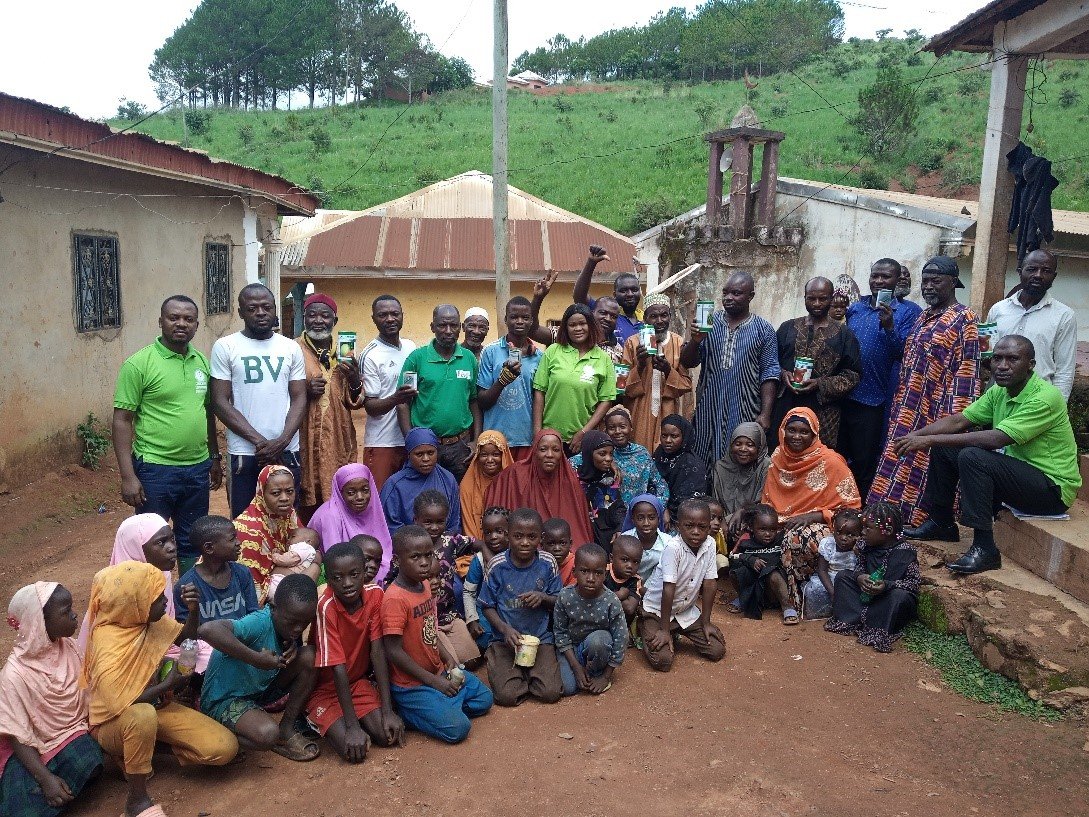
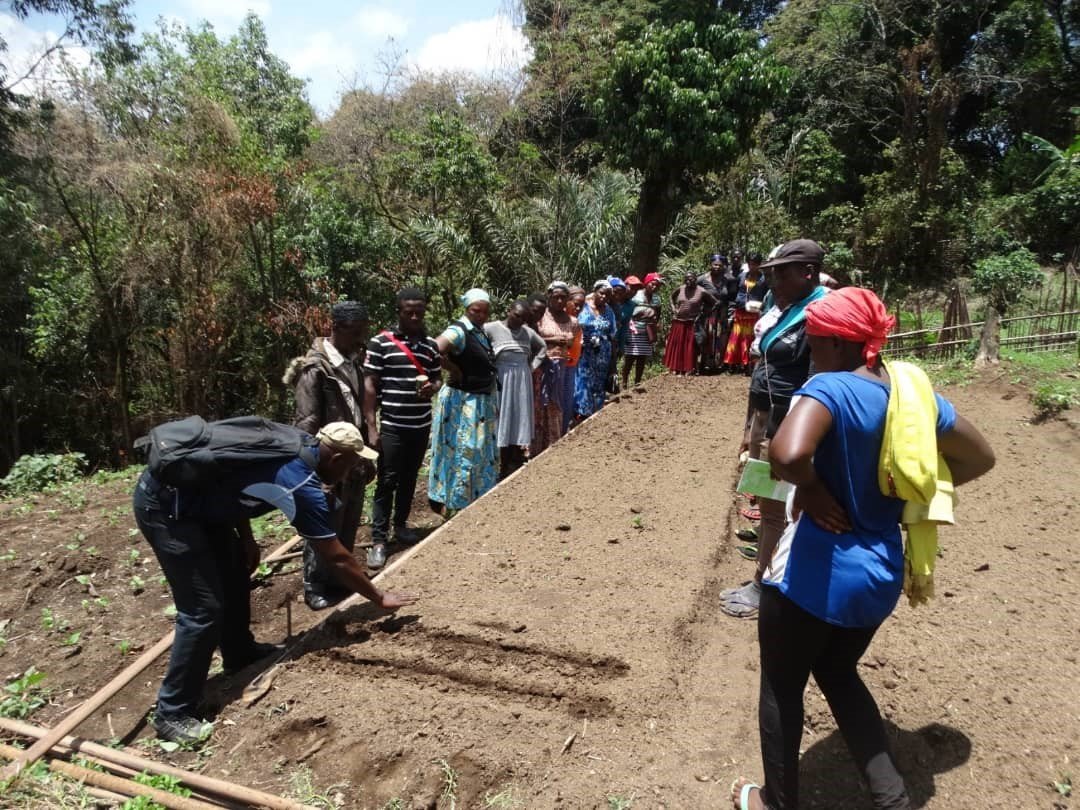
With the funding received from FIOH UK in February, 2025, Integrated Agricultural Association (I.A.A) trained diverse community members on climate-smart agriculture on topics including regenerative vegetable gardening, nutrition, water management, integrated pest management and soil health improvement. 127 people have been directly involved in training activities, with 71% women participation. 60,000 grams of huckleberry seed was donated to 120 IDPs, 500 grams per beneficiary who already had a farm plot of approximately ¼ hectare. 120 gardens were cultivated across 30 hectares of land and each garden generated approximately 1700 GBP per year for a family of 5 members which achieved larger goals including food and nutrition security, gender equality, health and wellbeing and improved livelihood for over 1000 people.
With the help of this funding, I.A.A also trained 34 trainers on climate-smart agriculture to monitor the program and continue to provide ongoing technical support and advice on best practices to smallholder farmers in the area. I.A.A also created a Huckleberry Producers Union in Mogny with current membership of 80 and the registration process is in progress. These efforts aimed at building local autonomy to sustain the project beyond the funding period.
4.) CHALLENGES:
- Inflation in local currency reduced the value of the project budget by 30% which impacted the ability to successfully distribute three different types of vegetable seeds.
- Follow up of program beneficiaries afterward was difficult due to their remote locations, no internet and network, bad roads in the rainy and dry season.
- Farmers often have to travel long distances to access inputs, extension services, or marketplaces, leading to high transaction costs and limited engagement with modern agricultural practices.
- Lack of clean drinking water and irrigation tools to boost productivity, health and nutrition.
5.) WAY FORWARD:
- I.A.A selected only huckleberry to support as many women as possible because of it economic and nutrition value and seeds can be sourced and saved locally. This decision minimized high cost on conventional seeds to focus on indigenous seeds that are locally adapted with moderate prices.
- I.A.A used private motorbikes in remote inaccessible locations and SMS to connect to participants.
- Trainers have been trained to support farmers locally and huckleberry union created to facilitate development, access to seeds, training and markets.
- I.A.A will construct and install a well with hand pump in the community, and provide smallholder farmers with irrigation kits including solar pumps to address water gaps in agriculture and household use.
6.) CONCLUSION:
Climate Change and disasters affect communities to varying degrees. Women on forced displacement and persons living with disabilities face considerable challenges in accessing help. Most disaster and conflict responses focus on short-term needs: shelter, food and medicine. While critical, this approach must be supplemented with medium-term recovery plans to rebuild lives. By working on vegetable-growing programs for crisis relief, IAA aims to bring stability to the lives of the internally displaced persons (IDPs) and empower the most vulnerable to enable sustainable and resilient livelihoods that are self-sufficient and not dependent on aid.
I extend my sincere gratitude to FIOH for supporting me and my team in this incredible mission which I so much have passion and enjoy doing while inspiring others in the same and similar fields.
DUNGRILA PASCAL MBIMENYUY; TEAM LEADER
The Future in Our Hands Education and Development fund achieves a significant milestone
Future in Our Hands Education and Development Fund having been established by founder Mike Thomas in 1995 is just reaching its 30th anniversary this year. We would like to thank all our regular donors and helpers for their selfless support over this time period.
As treasurer, I have trawled through our detailed accounts and aggregated all of our past donations. What began in the 1990’s, as a grant of £20 to test the water has grown into multiple affiliated NGOs across Africa and India. The incredible final total raised and donated stands at £548,748. All of this fundraising has gone to the most marginalized and deserving of causes and is far beyond our expectations at the outset. Who would have believed that a small official UK registered charity, administered from a small front room in Swindon, would issue grants way in excess of half a million pounds.
The list of individual beneficiaries must run to tens of thousands as our grants have been able to transform lives and livelihoods. Our updated website fiohnetwork.org illustrates a detailed archive of our work and highlights a network of organizations which share the same ethos. We have always encouraged individuals and non governmental organizations who share our ideas of a bottom up grassroots approach to solving problems of development.
Our goal is to help some of the poorest and most marginalized people in the world by empowering them and their local communities to find sustainable ways to overcome poverty, raise ecological and environmental awareness and create lasting just and equitable social change.
- Reafforestation schemes developing tree nurseries of millions of indigenous trees
- Built and continue to fund a medical clinic for disabled children
- Support the education of orphaned street children in India
- Assisted displaced persons from Civil wars
- Built and developed 5 schools in Sierra Leone
- Responded to climate induced emergencies in India and Pakistan
- Supported educational programmes of sustainability Cameroon and Sierra Leone
- Helped fund Integrated Organic Agricultural Development
- Promoting gender equality through womens’ banking cooperatives
- One of our partners even achieving U.N. Equator Prize award recognition
- Supported Youth Leading the world in Sierra Leone
- Encourage effective networking between organizations
People helped by the work of Global Rehabilitation Services
Global Rehabilitation Services has since its foundation carried out successful prosthetics treatment, including the arrangement of corrective surgery when required, for over 1,500 severely disabled children and youths.
Testimonials of six of these children are given below:
Jackson Kuetche
This child at the age of five had a severe cogenetal deformation (Bilateral valgus knees). The picture on the right shows the boy after corrective surgery and physiotherapy.
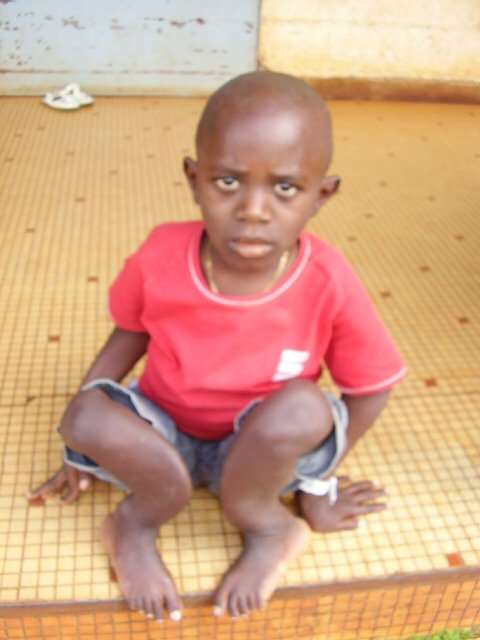

My Name is Jackson Kuetche and I am 7 years of age. My mother told me that when I was born, my legs were normal but later started deforming as I developed.
I went to school like other children until my legs got so serious that I found it difficult to walk to school. There came a time that I could not walk any more. I could only drag my buttucks on the ground to displace myself from one place to the other. Other children were laughing at me at school and I felt so bad and could not stop crying. The problem became so serious that my parents asked me to stop schooling and stay at home. I was sad because my brothers and sisters were going to school and I could not.
My parents were informed in the village meeting that there was a Handicap Treatment Centre called GLORES. The village group helped my parents through contributions to pay transportation to the GLORES Centre in Bafoussam.
In GLORES they told me that my deformations were so serious that surgery was needed. They also told my parents that I had ricketitis, a disease that causes severe deformations of the bones and retards growth and develoment. My parents did not have money for the operation. I started crying with my mother. GLORES worked out a financial assistance for the operation of my legs and put me on medical treatment. My parents only paid a small portion of the operation charges.
My legs are corrected and are straight. I can now go to school. I am happy with my family because I have returned to school. My family and I do not know how to thank GLORES programme.
——————————————————————-
2. Mapta Yomgue
This two days old baby had a severe cogenetal deformity. The picture on the right shows her after one month of physiotherapy.


This testimony was given by the mother of a three year old child who was refered to GLORES for treatment for a severe congenital deformation of the right leg by the Bafoussam Regional Reference Hospital.
Mother’s observation
God still continue to perform miracles today through individual and charitable organizations like GLORES. I believe in what I am saying because of my experience with my little girl whom I brought to GLORES at the age of two days with serious deformation of the right leg after birth. The hospital where the child was born told me that something can only be done through surgery when the child reaches the age of 25 years. They, however, refered the child to the Handicap Treatment Centre called GLORES. If the hospital of that calibre could not do anything, I was left with no choice than to cry.
I brought the child to GLORES in tears. I was comforted and told not to worry. I could not believe what they were saying. They consulted the child and put her on treatment for one month. To my utter amazement the child’s leg returned to normal. I could not believe myself. I thought I was dreaming.
Now my little girl is growing up normally like other children and shows no sign of any problem at birth. This was a miracle to me. I started thanking the therapists in GLORES but they told me that they only treat and God heals.
Thank God for giving us a treatment Centre like GLORES. God through GLORES prevents disabilities in Children! Let God give more inspiration to the Therapists in GLORES so that they can help more handicap children in Cameroon.
Knefack Evelyn Yomgue
« Mother of Mapta Yomgue »
———————————————————————
3. Efone Jacque
This boy was without a left femur. The picture on the right shows him after physiotherapy
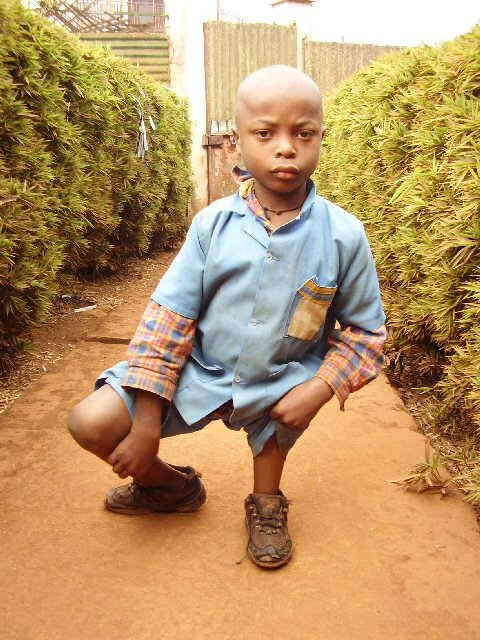

My name is Efone Jacques from Bafoussam. My parents did not want to send me to school because I found it difficult to walk due to my left leg that was deformed and shorter than the right leg from birth. They said that going to school was not necessary since I would not be able to walk making it difficult to find a job.
When I went to GLORES they made it possible for me to walk with the help of splints and now I am in school and doing very well with my school work. My parents, villagers and I am happy.
Efone Jacques
Note: The splints this child is using are temporal and he will continue to wear them until the age of 25 when the deformed leg will be amputated and replaced with a permanent prosthesis.
——————————————————————-
4. Freddy Pokam
This boy had a severe limb deformation (bilateral valgus knees). The picture on the right shows him after corrective surgery, physiotherapy and splinting.


I am speechless. I returned to the village after treatment and people could not recognize me again, even my relatives. One of them even asked if I went to the native Doctor for the magic done on my legs. This is really like magic.
It was already getting difficult for me to go to school. My legs were crossing over each other making it hard to walk. The worst thing is that other children in my school were often laughing at me. Some of them called me distorted legs. Things like these made my school grades to go down because I was not at ease at all.
To the utter amazement and to the surprise of the villagers, I can walk normally with no sign of disability any more. I am like other children.
Thanks be to GLORES and to God above all.
Freddy Pokam
——————————————————————
5. Patrick Kenfack
This young man had a cogenetal deformation. The picture on the right shows him after prosthetics treatment.


I am an 18 year old boy from Bafoussam, Cameroon. I was born with my legs deformed. To displace myself from one place to the other I had to creep and roll. I was brought to see the Orthopaedic surgeons from Holland for corrective surgery. They consulted me and said that nothing could be done to my legs. My mother and I started crying in the hospital. The Physiotherapist from GLORES told us not to cry and that we should come to GLORES so they can see what could be done.
We did not have the confidence because the surgeons said that nothing could be done. We, however, went to GLORES treatment Centre in Bafoussam. I was evaluated and internalized there for three months. They were able to straighten my deformed legs, put on prosthesis and trained me to walk.
Now I can walk and go to school and I am the secretary of the handicapped people organization (Arc -En- Ciel) in Bafoussam. I am looking forward to finding a job after my education.
Patrick Kenfack
——————————————————————–
6. Brunhilda Tsakong
This girl had varus knees when she was five years old. The picture on the right shows her with legs straightened by physiotherapy.


My name is Brunhilda Tsakong. I am now 10 years of age. My legs were deformed when I was 5 years of age. I am from a family of 10 children and my father is a village chief with 3 wives. My father is a farmer and his income is so small that he is unable to send all the children to school. The 5 children that go to school are boys. Girls are encouraged to go to the farm with their mothers.
My father could not afford to send me to the hospital for the treatment of my legs. He once attended a village meeting which was organised by GLORES. In the meeting, they talked about disability, treatment of handicaps and showed pictures of treated children. My father was thrilled and took me to the GLORES Treatment Centre in Bafoussam, Cameroon. There I was consulted and referred for corrective surgery followed be physiotherapy.
They invited my parents and encouraged them to send the girls to school with the help of GLORES. Now I am preparing to go to the secondary school. And my legs are straight and normal. As a girl I feel beautiful.
Thanks to GLORES Treatment Centre. Because of GLORES programme I can walk straight, go to school and feel beautiful.
Please support the work of the Future in Our Hands Education and Development Fund whose aim is to help and empower some of the world’s poorest and most marginalised people by:
- UK residents can provide long term support by completing the FIOH FUND DONATION FORM and sending to the address shown on the form:
- Direct grant to the charity’s bank account or by cheque to:
 Bank account details:
Co-operative Bank
IBAN: GB07CPBK08929965050707
BIC: CPBKGB22
Cheques should be made payable to the
Future in Our Hands E&D Fund
—————————————————————————-
Fundraising to help the work of the charities would be greatly appreciated
k:
www.facebook.com/fiohfund
Follow us on Twitter:
twitter.com/fiohnet
Please share our links with your friends to help us reach a wider audience.
New treatment centre for disabled children
Donate
Global Rehabilitation Services (GLORES) is a non-government organisation based in Bafoussam, Cameroon treating severely disabled children. GLORES is badly in need of a new centre to expand its services to meet a growing need.
The sum of £29,770 is needed for this of which £25,721 has already been provided by the FIOH Fund.

 Background
GLORES rehabilitation approach is global, as its name implies. That is, we are not only concerned about treating disability, but ensure that our beneficiaries lead self-reliant and socio-economically independent lives.
GLORES major mission, therefore, is to prevent disability in children; identify and treat those already affected; support education, provide vocational training, placement and follow-up in their communities to achieve effective socio-economic integration.
Global Rehabilitation Services was authorized by administrative order No 238/RDA/F35/BAPP of November 2004 and registered as a non-profit association at the service of disabled children. GLORES is made up of a group of Cameroonians of all walks of life, men and women, concerned about the plight of an increasing number of underprivileged disabled children in the West Region, who decided to make their contribution in the fight against poverty, specifically among disabled children. GLORES is the first comprehensive rehabilitation centre in the region.
GLORES opened its doors to physically disabled children in July 2005. Despite the micro resources available, 1,500 physically disable children have received direct services while 4,500 persons have had indirect services from GLORES.
These beneficiaries came not only from this region but also from the northwest, littoral and central provinces of Cameroon. GLORES organises the following activities from a basic rented building in Bafoussam:
PHYSIOTHERAPY DEPARTMENT
 This is the first objective in our rehabilitation process where functional re-education is provided through intensive physical therapy, functional re-education, and mobility training. The aim is to ensure mobility and use of limbs because we believe that without mobility a disabled person cannot lead a productive and independent life. During therapy, parents and the disabled persons are themselves educated to become their own therapists upon discharge from the centre.
ORTHOPAEDIC WORKSHOP
This is where splints and mobility aids are produced including orthopaedic shoes, splints and other assistive devices. This serves as a training place for those disabled who would like to become either shoemakers or orthopaedic technicians.
VOCATIONAL TRAINING
After treatment, beneficiaries choose from such income-generating professions as shoe making, tailoring, hairdressing and cane work. Upon successful completion of the training, beneficiaries are placed in either individual or group business ventures in their communities with follow-up to ensure success.
COMMUNITY BASED REHABILITATION
This is a follow-up programme in which maintenance treatment is also assured. This involves the family and the community at large. In this programme, the families and the disabled become their own therapists. Preventive measures are taken and disabled children are identified and referred for appropriate treatment. Disability prevention services, human rights education, information about discrimination against the disabled are provided and self help, social, and group activities including community development participation are introduced and supported.
ASSISTANCE PROGRAMME
GLORES also runs assistance programmes to sponsor treatment and corrective orthopaedic surgery for those children with severe disabilities who are unable to afford the symbolic treatment fees. GLORES pays particular attention to orphaned disabled children. GLORES hopes to extend the project to include other disabilities other than physical disabilities as the project expands and develops.
The need for the new centre
Despite the successes of the activities of GLORES, the most important difficulty has been the lack of space in the present Centre to accommodate the many children being referred for treatment. The present rented building only has four small bedrooms, a small physiotherapy treatment room, an adapted internal kitchen that is being used as the administrative office and treatment room at the same time and an external kitchen which is being used as the orthopaedic workshop. Besides these, there is a small external traditional toilet, and two internal toilets which often fail to function due to mechanical malfunctioning and shortage of water which is common in the Bafoussam town. In fact the house was conceived as a residential house not for other activities.
GLORES, therefore needs a larger space in order to effectively carry out the many activities as specified above. To summarise, a larger building is needed for the following reasons:
- A larger building will help cut down the high rents we have to pay for the existing house. The heavy rents could be use in purchasing other items for the centre.
- We will be able to serve the many children who are asking for our help from neighbouring regions in Cameroon, GLORES being the only comprehensive rehabilitation centre for physically disabled children.
- A more spacious workshop will help us in the production of more orthopaedic equipments without leaving children to wait for long to get ambulation and other equipments. It will also provide space for the training of disabled children in the production of orthopaedic equipments.
- A larger treatment room will help us better position treatment equipments and consequently we will be able able to treat many children simultaneously. With the present structure children have to be put on the waiting list to have treatment.
- There will be enough dormitories to accommodate children, most of whom come from distant villages and have no place to stay for follow-up treatment.
- The hygiene situation will be solved with available toilets and the water system.
- The New building will be situated by a major surfaced road and is more reachable by public transport unlike the present centre.
- The new building will be more adapted for handicapped persons.
- There will be space to train disabled children to engage in income-generating professions.
- A new centre will provide a conference room which will be rented by the public for meetings thus generating income for the centre.
The land for the centre was purchased in 2014.



Delivering sand
The completed foundations.
Making blocks.
Wall construction

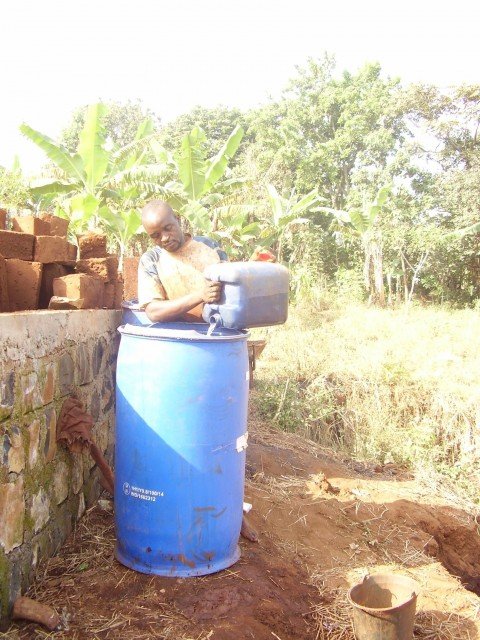

Water is collected by hand from a local stream.


Roof construction.
Completed roof.
Window protection – September 2016.
Alfred Wingo assists visiting Dutch surgeons with an operation.


Moving testimonials of six of the children treated by GLORES
Mike Thomas with some of the children in 2009
Fo
Please support the work of the Future in Our Hands Education and Development Fund whose aim is to help and empower some of the world’s poorest and most marginalised people by:
- UK residents can provide long term support by completing the FIOH FUND DONATION FORM and sending to the address shown on the form:
- Direct grant to the charity’s bank account or by cheque to: Bank account details:
Co-operative Bank
IBAN: GB07CPBK08929965050707
BIC: CPBKGB22
Cheques should be made payable to the
Future in Our Hands E&D Fund
—————————————————————————-
Fundraising to help the work of the charities would be greatly appreciated
Future in Our Hands Education and Development Fund
48 Churchward Avenue
Swindon, Wiltshire SN2 1NH
United Kingdom
Registered Charity No. 1047953